Trojan | Indianapolis digital marketing agency

Get found in search and AI answers.
Get the call.

SEO, AI search, Google and Meta ads, and websites built to turn visits into inquiries. Based in Indianapolis, Trojan works with local businesses and national brands. For a website build, the site and domain belong to you.

Prefer to call? (317) 981-2386

Jeff Clerisier holds the Google Ads Search, Google Ads Measurement and AI-Powered Performance Ads certifications.

LET’S TALK ABOUT YOUR BUSINESS

What would you
like to improve?

More relevant inquiries. A better website. A clearer plan for search. Tell us what you need and where you want to grow.

We’ll review your goals and follow up to discuss the next step.

Prefer to talk? (317) 981-2386

During business hours we aim to reply within five minutes. Privacy policy

Woman in a white top standing in a sunlit archwayGeorgetown Market logoFlorentine Skincare and Cosmetics logoLynwood and Co Café logo

1,400+ live websites built and run by Trojan. Hear from businesses we’ve worked with

Some of the businesses we’ve worked with

Florentine Skincare and Cosmetics logoStratus Tech logoLynwood and Co Café logoGrain Theory logoGeorgetown Market logo

What do you need
working better?

Hire one service or combine them. We agree on the scope before work starts and review calls, forms, and booked work with you.

SEO + AEO + GEO

Technical SEO, useful answers, and evidence that helps customers evaluate your business in search and AI results.

Explore SEO + AEO + GEO

How AEO differs from SEO · Measuring AI visibility

Paid Advertising

Google, Meta, and TikTok ads with call and form tracking, so you see cost per lead instead of clicks.

Explore Paid Advertising
Website Design

Fast, structured sites with a clear path to a call or a quote. You own the site and the domain.

Explore Website Design
Microsite Networks

Branded local sites that send inquiries straight to your crew, instead of a shared lead you bought four times.

Explore Microsite Networks
Marketing Startup Kit

Website, brand identity, foundational SEO, and Google Business Profile in one fixed-price launch: $7,997.

Explore Marketing Startup Kit
AI Automation

Chatbots, CRM workflows, and lead follow-up built around the systems your team uses.

Explore AI Automation
Video Editing

Reels, ad creative, and YouTube edits cut for the platform they run on.

Explore Video Editing
Social Media

Content and scheduling across Instagram, Facebook, LinkedIn, and TikTok.

Explore Social Media

YOUR BUSINESS. YOUR NEXT MOVE.

Choose where you want to grow.

A local business, several locations, or a national audience can need different starting work.

Local business

Become the business your community finds.

A neighborhood shop, a contractor, a practice. Connect local search, your website, and the conversation that turns interest into a customer.

Plan my local growth
Your community
  1. 1
    Show up in local search
  2. 2
    Show the work you do
  3. 3
    Make contacting you easy

Multiple locations

One brand. A relevant experience in every market.

Give each branch a clear role: accurate service areas, local project evidence, and inquiries routed to the team that can help.

Connect my locations
Your locations
  1. 1
    Define each service area
  2. 2
    Build useful location pages
  3. 3
    Route inquiries to the right team

National brand

Reach a bigger audience with a clearer message.

Connect SEO, AI search, creative, and conversion across the United States. Build around what your customers need to see before they choose you.

Explore national marketing
Across the United States
  1. 1
    Understand customer demand
  2. 2
    Create a consistent brand experience
  3. 3
    Connect discovery to action

SEO · AEO · GEO, EXPLAINED

Different search experiences. One clear business.

We connect search, answer-focused content and the website around the questions your customers need answered.

SEO: Plan for the searches your customers make.

Technical foundations, original service content, internal links, and relevant evidence help people and search engines understand what you offer. We begin with the queries that already bring impressions and the pages that deserve a stronger answer.

  1. Crawlable pages and reliable images
  2. A clear answer for the search intent
  3. A useful next step that can be measured
Explore SEO services
AEO: Make your expertise easy to understand.

Answer engine optimization starts with specific customer questions. Clear definitions, comparison tables, visible evidence, and concise answers give your detailed content structure without turning the page into a list of keywords.

  1. Direct answers with supporting detail
  2. Real questions from sales and customer service
  3. Sources, limitations, and a relevant consultation
Explore AEO services
GEO: Give AI systems something worth referring to.

Generative engine optimization connects clear business facts with useful original information. We make your service, experience, and supporting resources consistent and accessible so people can evaluate you wherever discovery begins.

  1. Consistent business and service information
  2. Original examples and case studies
  3. Readable pages with sensible structured data
Explore GEO services
Google Maps: Connect the local search to the real business.

Google Business Profile optimization brings together accurate services, real coverage, current photos, customer reviews, and a relevant destination page. Service areas describe where you work; they do not require inventing an office address.

  1. Accurate profile and service details
  2. Useful reviews and genuine business photographs
  3. Local landing pages that explain coverage
Explore Google Maps services
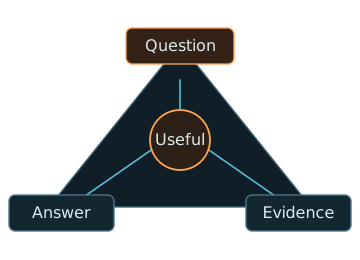
Connect an answer to its evidence
Question
Identify what the customer needs to know.
Answer
Explain it clearly.
Evidence
Support the answer with a source.
Connect an answer to its evidenceA useful answer explains the question, supports the claim and identifies the source.
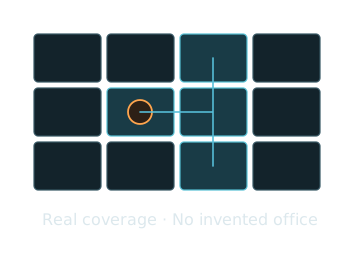
Separate service coverage from an office
Business
Start from the real business.
Coverage
Identify the places it actually serves.
Office
Do not turn a service area into an invented office.
Separate service coverage from an officeThis is a planning grid, not a ranking map. Publish only the areas the business actually serves.

SEO helps search engines discover and understand useful pages. AEO describes content that answers specific questions clearly. GEO concerns how your business facts and original information are understood in AI search experiences. An AI citation cannot be guaranteed.

WHERE SHOULD YOU START?

Choose the problem. See a practical first move.

This is a starting point for a conversation about what you want to improve.

Get found locally

Start with the places customers look.

Check your business information, the services people search for, and the pages that help them decide whether you serve their area.

  1. Confirm your profile details and real service areas.
  2. Review the pages for your highest-priority services.
  3. Connect inquiries to the work your team can deliver.
Explore local visibility
Improve search & AI visibility

Make your expertise easy to find and evaluate.

Start with accessible pages and clear, well-supported answers. SEO, AEO and GEO share that foundation; visibility in an answer is never guaranteed.

  1. Check whether useful pages can be crawled and indexed.
  2. Answer specific buyer questions with evidence.
  3. Review search performance and qualified inquiries.
Explore SEO, AEO and GEO
Turn visits into inquiries

Give the right visitor a clear next step.

Look at the journey from the first page to a successful contact. A stronger offer, useful project evidence and a usable form can matter more than another new page.

  1. Match the page to the visitor’s question.
  2. Review the mobile experience and contact form.
  3. Measure successful inquiries and their fit.
Explore website design
Improve lead follow-up

Keep the inquiry moving after the click.

Make ownership, qualification and follow-up visible. Decide which steps software can support and where a person needs to review the details.

  1. Define the information that makes an inquiry useful.
  2. Assign a clear next action and a responsible person.
  3. Review missed handoffs and qualified outcomes.
Explore automation
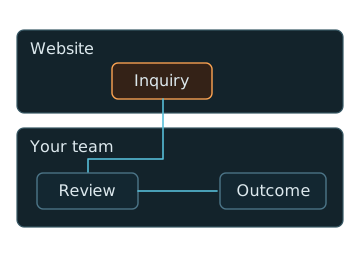
Give the next action an owner
Website
Receive the inquiry.
Your team
Review it and record the outcome.
Give the next action an ownerA simple handoff connects the inquiry, a review by your team and a recorded outcome.

MAKE THE NEXT STEP COUNT

Traffic is the beginning. What happens next?

A marketing plan follows the visitor through the inquiry and the sales conversation. Keep visits, inquiries and requests that fit your work separate when discussing the figures.

Hypothetical planning example: 1,000 monthly visits multiplied by a three percent inquiry rate gives 30 inquiries. If half fit your work, that gives 15 qualified inquiries. This is arithmetic, not Trojan results or a forecast.

Booked work depends on the later sales conversation. Use your own records and definitions when discussing those steps.

Work with your assumptions in the lead cost calculator

Start with your actual Search Console data

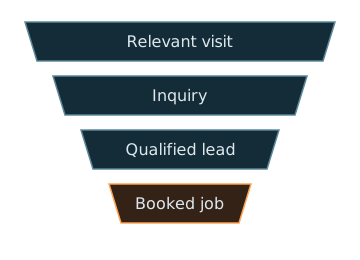
Keep the outcome definitions separate
Relevant visit
A person reaches the page.
Inquiry
The person contacts the business.
Qualified lead
The inquiry meets the agreed rules.
Booked job
The customer chooses to proceed.
Keep the outcome definitions separateA visit is not an inquiry, and an inquiry is not a booked job. Widths are conceptual, not reported results.

THE WORK, UP CLOSE

Websites, tools, signs and video.

Explore what was made and the choices visible in the project. Read each project’s scope and the design choices behind the finished work.

Jev Website Scanner web app
Yahweh House of Prayer church website
Westfield Roofer website design
Georgetown Market department signage
Redefined Body Holistic Skincare website
Texas Electrician Exam learning interfaces
American Veteran Service Corp website
Jerry Super video editing
Browse every project

OWNED LEAD SYSTEMS

One brand. A network of possibilities.

Garrison is Trojan’s microsite software. We build and manage branded websites around your services and markets, with inquiries routed to your team.

Garrison diagram connecting one business, useful microsites and its inquiry team

Your business at the center.

Begin with the services and markets your team can support. Each destination needs a purpose, relevant information and a clear relationship to your business.

Your network’s agreed contact routes connect inquiries with your team. The business handles the next conversation.

Why own your lead source?
Garrison roofing

Roof replacement · roof repair · commercial roofing

Explore this trade’s microsite information
Garrison water restoration

Water damage cleanup · drying · restoration planning

Explore this trade’s microsite information
Garrison window replacement

Replacement windows · whole home upgrades · installation

Explore this trade’s microsite information
Garrison hvac

Heating repair · AC replacement · maintenance plans

Explore this trade’s microsite information
Garrison remodeling

Kitchen remodeling · additions · whole home renovation

Explore this trade’s microsite information
Garrison foundation repair

Foundation assessment · structural repair · settlement concerns

Explore this trade’s microsite information
Garrison custom window coverings

Custom shades · blinds and shutters · drapery consultation

Explore this trade’s microsite information
Garrison tree removal

Tree removal assessment · storm related requests · stump scope

Explore this trade’s microsite information
Garrison concrete driveways

Driveway replacement · new concrete driveways · project estimates

Explore this trade’s microsite information
Garrison inground pools

Inground pool installation · pool design consultation · new pool planning

Explore this trade’s microsite information

OUR SPECIALTIES

Bring the business into the work.

A distinctive website draws on your people, work and customer questions. We connect those details with the content and design that help someone understand the offer.

Trojan promotional creative featuring founder Jeff Clerisier
Promotional creative with a stated business subject.Explore creative
Moto Supreme Cabins website project
A real project with a clear next step.Explore the project

Quality

Useful content, careful design, and working tools give your audience something they can evaluate.

Personalization

The plan begins with your services, your customers, and the work your business actually wants.

Collaboration

Your team knows the questions customers ask. We turn that knowledge into pages and clearer handoffs.

Reliability

A website needs upkeep, dependable images, functional contact routes, and a process for finding broken links.

Customer focus

People should understand your offer, see the relevant evidence, and reach the right person without searching for the next step.

Long term relationships

We review what changes, retain useful work, and improve the next priority using evidence from the business.

From the businesses we’ve worked with.

“Trojan Digital Marketing gave our website a complete make over. The board members and I are absolutely thrilled!”
C. Teague McClendonAmerican Veteran Service Corp
“Sales have been better the last few months thanks to some additional marketing efforts. Way to go, Jeff!”
Andrew MontiethGeorgetown Market · Jeff was its marketing director, 2023 to 2025

BUILT FOR YOUR BUSINESS

Find your industry. Bring your own challenges.

Browse resources for trades, professional services, healthcare, education, retail and commercial businesses. Bring the customer question and the work your own business wants to discuss.

Explore every industry plan

Put your numbers
to work.

Check spending, lead costs, and missed calls before deciding what to change.

See all free tools

USEFUL BEFORE WE MEET

A wider toolkit. Yours to use.

Find a search opportunity, organize your business answers, prepare a document or work through marketing fundamentals. Choose the tool that fits the job you want to do.

See all free tools

Indianapolis roots.
National reach.

Find your local service page, or explore the work for your industry.

INDIANAPOLIS ROOTS · NATIONAL REACH

A plan for the market you want to reach.

General agency services are available to businesses across the United States. Explore these resources, or tell us about the city or audience your business wants to reach.

Carmel

Service positioning, useful local pages, and clear next steps for people comparing providers.

Fishers

Connect your business profile, website, paid campaigns, and inquiry process.

SEE HOW THE PIECES WORK

Marketing, made visible.

Explore fifteen teaching diagrams, from a customer’s first question to a recorded business outcome. Each has a related guide.

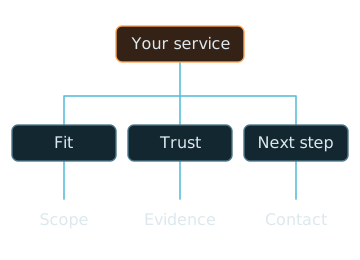
Buyer question tree
Start with the decision
Fit
Explain the service scope.
Trust
Show supporting evidence.
Next step
Give a clear contact route.
Start with the decisionOne service can lead to different questions about fit, evidence and the next step.
Read the related guide
Answer and evidence triangle
Connect an answer to its evidence
Question
Identify what the customer needs to know.
Answer
Explain it clearly.
Evidence
Support the answer with a source.
Connect an answer to its evidenceA useful answer explains the question, supports the claim and identifies the source.
Read the related guide
Service coverage grid
Separate service coverage from an office
Business
Start from the real business.
Coverage
Identify the places it actually serves.
Office
Do not turn a service area into an invented office.
Separate service coverage from an officeThis is a planning grid, not a ranking map. Publish only the areas the business actually serves.
Read the related guide
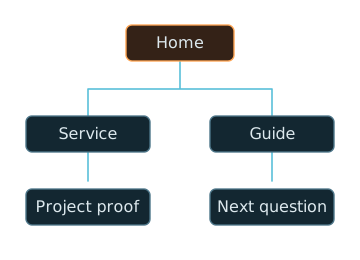
Crawl path diagram
Give useful pages a path from the site
Home → service
Link the service to project proof.
Home → guide
Link the guide to the next useful question.
Give useful pages a path from the siteDescriptive internal links connect a discoverable page to supporting details and a next step.
Read the related guide
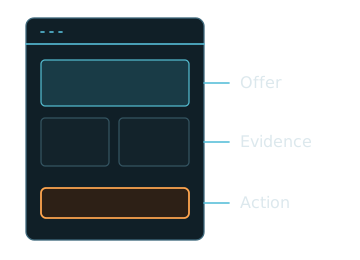
Page anatomy blueprint
Give each part of the page a job
Offer
Explain what the customer can get.
Evidence
Support the offer.
Action
Make the next step easy to use.
Give each part of the page a jobThe offer, evidence and contact route should work together on a small screen.
Read the related guide
Qualification funnel
Keep the outcome definitions separate
Relevant visit
A person reaches the page.
Inquiry
The person contacts the business.
Qualified lead
The inquiry meets the agreed rules.
Booked job
The customer chooses to proceed.
Keep the outcome definitions separateA visit is not an inquiry, and an inquiry is not a booked job. Widths are conceptual, not reported results.
Read the related guide
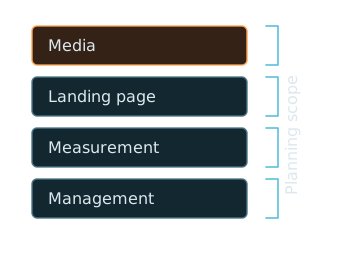
Budget composition
Include the work around media spend
Media
Advertising spend.
Landing page
Work on the destination page.
Measurement
Tracking and review.
Management
Campaign planning and upkeep.
Include the work around media spendA planning budget separates media, page work, measurement and management. Blocks do not represent spending shares.
Read the related guide
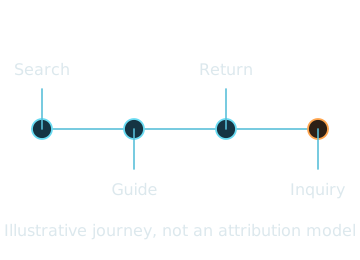
Attribution timeline
A customer may meet you more than once
Search → guide
First discovery and useful reading.
Return → inquiry
A later visit can lead to contact.
A customer may meet you more than onceAn illustrative sequence of touchpoints shows why one click does not explain an entire buying decision.
Read the related guide
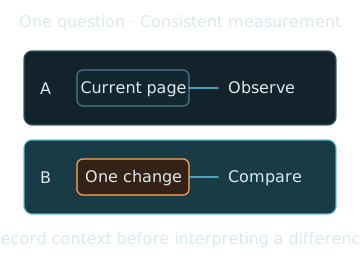
Experiment comparison
Change one thing you can learn from
A: current page
Observe the starting version.
B: one change
Compare with the same measurement.
Change one thing you can learn fromKeep the goal and measurement consistent, record the change and compare the result in context.
Read the related guide
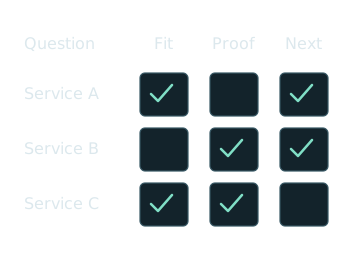
Content coverage matrix
Map questions to the right page
Service A
Planned coverage: fit and next step.
Service B
Planned coverage: proof and next step.
Service C
Planned coverage: fit and proof.
Map questions to the right pageAn editorial planning example pairs a service with a buyer need. Filled cells identify planned coverage, not performance.
Read the related guide
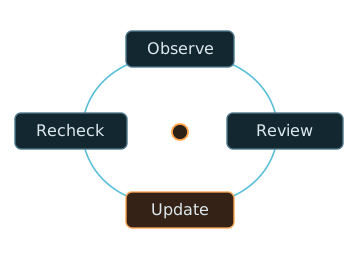
Content maintenance cycle
Keep useful information dependable
Observe → review
Check the page and its evidence.
Update → recheck
Publish the change and check the result.
Keep useful information dependableReview the evidence, update what changed and check the published result. A new date alone adds no value.
Read the related guide
Team handoff lanes
Give the next action an owner
Website
Receive the inquiry.
Your team
Review it and record the outcome.
Give the next action an ownerA simple handoff connects the inquiry, a review by your team and a recorded outcome.
Read the related guide
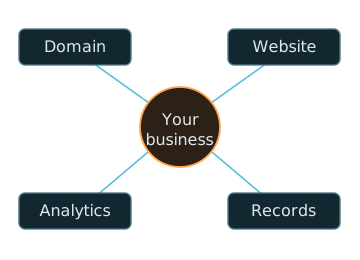
Asset ownership map
Make account access explicit
Domain and website
Document ownership and access.
Analytics and records
Define access and the handover.
Make account access explicitDomain, website, analytics and customer records need clear ownership and a workable handover.
Read the related guide
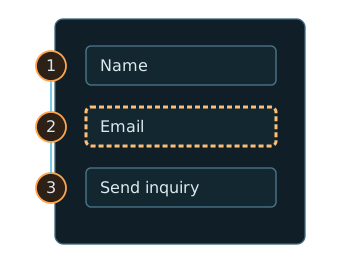
Keyboard focus path
Make the next step usable
1. Name
Move to the name field.
2. Email
Keep keyboard focus visible.
3. Send inquiry
Complete the action without a mouse.
Make the next step usableVisible focus and a logical control order help a person navigate without a mouse. Test the complete action.
Read the related guide
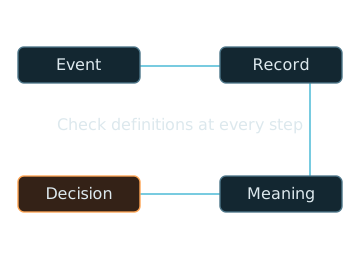
Measurement evidence chain
Connect an observation to a decision
Event → record
Define the event and check the record.
Meaning → decision
Review the business meaning before acting.
Connect an observation to a decisionDefine the event, check the record, review its business meaning and choose the next action.
Read the related guide

GO DEEPER, WITH A PURPOSE

A useful read. A job you can finish.

Start with the guide that matches the question you want to work through.

FIELD GUIDE 01

Make local search useful

Work through profile accuracy, service boundaries, customer reviews and the website pages that support a local decision.

Use the Business Profile guide
FIELD GUIDE 02

Find the friction on your website

Build an evidence-based audit, prioritize the fixes and turn findings into a practical brief for the person doing the work.

Work through the website audit
FIELD GUIDE 03

Connect marketing to booked work

Define the result, compare the same reporting period and separate an inquiry from a qualified lead or a booked job.

Understand cost per booked job

Before we talk.

Scope, timing, pricing, and what SEO can realistically do for your business.

Ask about your project
What makes Trojan Digital Marketing different from other agencies?

We begin with the business, its target customers, existing website, and current priorities. The agreed scope sets out the work, responsibilities, and review process for that engagement.

What services does Trojan Digital Marketing offer?

We offer SEO, AEO, GEO, website design, paid ad campaigns, video editing, social media management, and AI automation. Every service is available on its own or as part of a full digital growth strategy.

Do you work with businesses outside of Indianapolis?

Yes. While we are based in Indiana, we work with clients across the United States. Whether local or global, our strategies are designed to fit your target market and business model.

What is SEO and why is it important?

SEO covers the content and technical work that helps search engines discover and understand a website. A useful review considers relevant customer questions, accessible pages, and the steps visitors can take to contact the business.

How long does it take to see results from SEO?

Timing depends on your starting point, the work required, and competition. Technical fixes and clearer pages can help early; building a useful body of content and authority takes sustained work. We agree on meaningful benchmarks and review progress with you.

What are the key factors that influence SEO rankings?

Relevant content, discoverability, page experience, and external references are among the areas considered in an SEO review. The agreed scope identifies which technical, content, and linking tasks the project includes.

Do I need to hire an SEO agency, or can I do SEO myself?

You can handle SEO in house if you have the time and relevant skills. An agency is another option when you need help with technical work, content, research, or ongoing reviews. Compare the proposed scope with the work your team can already manage.

How much does SEO cost?

SEO pricing depends on the size of your site, the competitiveness of your market, and the scope of work needed. Contact us and we will give you a straight answer based on what your business actually needs, not a one size fits all number.

Can I rank #1 on Google for any keyword?

A specific ranking cannot be guaranteed. We prioritize relevant customer questions, commercial intent, and opportunities your business can support with useful content and credible evidence.

Is SEO a one time effort, or does it require ongoing maintenance?

Websites and search conditions change, so content and technical work benefit from periodic review. The frequency depends on the site, the market, and what has changed since the last review.

Jeff Clerisier, Founder of Trojan Digital Marketing
Jeff Clerisier · Founder of Trojan Digital Marketing

I built Trojan Digital Marketing for owners who want a clear plan and practical work.

I started Trojan to make marketing easier to understand. Today, we build and run 1,400+ live websites across client and owned properties. We'll agree on the work before it starts and review what needs attention next.

Our work covers SEO and AI search, paid ads, web design, content, video, and automation. On our website builds, ownership of the site and domain stays with you. Indianapolis is our base, and we work with businesses nationwide.

From search to call

How a search turns into a phone call.

Four moments decide whether a nearby customer calls you or the next business.

  1. They search Someone nearby types what they need and where they are.
  2. They find you Your business shows up with a clear answer and a way to reach you.
  3. Your site loads It opens fast on a phone and says what you do.
  4. They tap to call One tap on a real phone link, and your phone rings.

From the field notes.

Browse the articles
Explore the practical guides

KNOW YOUR NEXT STEP

From Indianapolis. Across the United States.

Tell us where your business serves customers and what you want to discuss. We can talk through the services and market information that belong in your plan.

Talk with Trojan

United States area reference

Explore the United States on OpenStreetMap

Area reference; this is not an office pin. Map © OpenStreetMap contributors.

Buy work that clears the next customer hurdle

Choose a starting service by finding where a willing customer gets stuck. We can discuss that point before you commit to a wider marketing effort.

Match the problem you can describe to the work you might buy
What happens todayWhat to examineWhat to bring us
People know your name and still ask basic questionsYour main page may leave the offer unclear. We can start with the words, service boundaries, and contact route that a stranger sees.Bring the questions your staff answer repeatedly. Include questions from people who chose another business, if you know what held them back.
Visitors arrive, then leave without an inquiryCheck the page on a real phone. A broken form, vague button, or hard-to-read price condition can stop a person who already wants help.Show us the actual page and the intended next action. An account summary alone won't show what the visitor encountered.
Your team gets inquiries for work it can't acceptCompare the advertised service with your real capacity and coverage. More reach may add work for your staff without adding suitable customers.Bring examples with private details removed. Explain which requests fit, which don't, and how your team currently sorts them.
A good offer is hard to find through searchLook at whether the relevant page can be found and understood. Our search discussion starts with the offer that deserves attention.Tell us which offer you're trying to sell. Identify the places your team can serve and the customer questions that matter before a sale.
A new offer needs a route into the marketWork through the offer, destination page, creative, and available staff. We need to know what happens after someone responds to an ad.Bring the offer conditions and the person who approves them. Include any limits on stock, appointment slots, or territory.

A channel name can make a purchase feel simpler than it is. Asking for SEO, ads, or a new website still leaves a business question open. Which part of the customer journey needs attention first? We can have a better conversation when you describe one real obstacle. A single example often tells us more than a list of services you think you need.

You may already have work underway elsewhere. Tell us what that team owns and what you want to keep doing internally. We don't need to treat every existing choice as a reason to start over. The first task should fit the business you have, including the people who will carry it forward.

Make Indianapolis geography match the job

Your selling area should follow how customers reach you and where your team can work. We ask about those limits before widening a campaign.

Hypothetical example A Broad Ripple appointment business separates travel from service coverage

Before

  • The page calls the business local but gives no arrival details. A visitor can request an appointment without learning whether the visit happens at the shop or at home.
  • Its ad covers places the team sometimes serves. Staff then have to explain travel limits after the customer has already chosen a date.

After

  • The appointment page identifies where the visit takes place. It explains the entrance and any access details the business has confirmed. Customers can decide whether the trip works for them.
  • The booking route asks for the location only when staff need it. The business states that availability is confirmed after checking the request. We can discuss matching the ad to that process.
  • For a storefront, distinguish people who can walk in from people who need an appointment. State any visit conditions near the button they will use.
  • For mobile work, explain where crews actually accept jobs. We need your operating boundary rather than a list of nearby towns copied into a footer.
  • For a downtown appointment, use current instructions from the business. Customers need to know which door to use and whether your posted directions are still accurate.
  • For a product that can ship, separate delivery limits from the location of the business. Our conversation should cover what the customer can order from their own address.
  • For an expanding territory, discuss staffing and travel with the people who schedule the work. A place name on a page can't settle those questions.

Indianapolis, Indiana is a starting point for our work, but each business draws its own map. A nearby prospect can still be a poor fit for an offer. A farther customer may fit well when delivery or remote service is part of it. We want the page to help that person understand the difference before asking your staff to resolve it.

Keep temporary access information separate from the lasting description of your business. If a street closure affects visits, link to the responsible source and give the update an owner. Check it when conditions change. We wouldn't turn an old detour into a permanent claim about the neighborhood.

Consider a hypothetical retailer in Broad Ripple and a business that travels to appointments across Indianapolis. Their pages need different location answers. The retailer might need confirmed arrival instructions for its shop. The mobile business needs a clear boundary for accepting jobs. We would ask each owner about those needs before treating nearby searchers as one audience. A customer should understand how the location relates to the offer.

Bring the shop floor into the website brief

A page should reflect what staff can actually explain and deliver. Jeff's Indianapolis retail background gives us a concrete reason to ask about those details.

Georgetown Market functional-beverages sign with English and Spanish category text
Georgetown Market signage. Inspect the category wording and contrast in this existing retail design project. View the project

At Georgetown Market in Indianapolis, Indiana, Jeff held marketing director and assistant store manager roles from July 2023 through July 2025. Those roles sit on both sides of the sale. A message may look clear at a desk, while the question at the counter reveals what it left out. We bring that perspective into conversations about what a business needs its website to explain.

The customer doesn't separate the ad from the staff member who answers the phone. If a promotion leaves a condition unclear, the team has to fill that gap. Our questions should reach the person who handles those conversations. They may know why a product gets mistaken for another, or why visitors arrive expecting something the business doesn't offer.

Our Georgetown Market signage portfolio shows a hanging sign for functional beverages, with both English and Spanish wording. The image gives you a concrete design to inspect. You can assess the category label and the text contrast without assuming a sales result. Ask how a provider would carry that same approved language onto a product page. A business with both store and website material should discuss which description customers see in each place.

  1. Start with the counter question Ask your staff which question takes the longest to clear up. Bring the customer's wording if you can. We can discuss where a direct answer belongs in the online journey.
  2. Name the condition behind the answer A service may depend on location, a product may have limited stock, or an appointment may need confirmation. Find the condition your page must carry with the offer.
  3. Show the material customers already see Bring a label, menu, sign, or email that helps people choose. Our web conversation can build from approved language instead of creating a separate story for the same business.
  4. Check the handoff with staff Read the proposed page as the person who will receive its inquiries. Ask whether the button invites the right request and whether the team can fulfill the expectation it creates.
  • A shelf sign can show which product attribute matters at the moment of purchase. On the web, that detail may belong beside the product choice.
  • A front-desk explanation can expose a missing eligibility rule. We can discuss adding the rule before the customer starts a form.
  • A staff workaround can reveal a weak booking process. Ask why the workaround exists before buying automation that repeats the same confusion faster.
  • A common return or cancellation reason may point to an expectation gap. Our conversation can examine the promise that the customer saw before committing.
  • An approved photo of the actual product can answer a size or finish question. Keep its caption tied to what the photograph truly shows.

A phone visit should finish without extra effort

Fast loading and accessible controls belong in the same buying conversation. We want customers to read the offer and complete its next step in their own way.

American Veteran Service Corp homepage presentation on a laptop
American Veteran Service Corp website presentation. See the displayed layout in the original portfolio project. View the project
  • Open the page on the phone you normally use away from the office. Ask whether the service and the next action appear before you have to hunt for them.
  • Try the form without relying on placeholder text. Our discussion should include clear labels, understandable errors, and a way to correct an entry.
  • Use the keyboard to reach the important controls on a computer. The active control should remain visible, including when a menu or panel is open.
  • Enlarge the text and check the offer conditions again. A layout that loses the last line of a price explanation can change what a customer thinks they are buying.
  • Read the page with motion reduced. We want product information and contact choices to stay available without a moving effect completing first.
  • Ask what each image contributes. A real product photo may earn its download. A decorative image should have a reason to sit in the customer's path.
Check the action itself when comparing website proposals
Visitor's taskWhat to ask the provider
Read before images finish loadingCan the visitor see the service description and use the contact route? We can discuss which visual assets matter most and which can arrive later.
Understand an input fieldDoes the field keep its name after typing begins? Ask how that name is connected to the control for someone using assistive technology.
Recover from a form mistakeWill the page explain the problem near the field and keep the other entries? Our concern is the customer's ability to finish without starting again.
Use the page with less motionDoes the content remain readable when animation is reduced or unavailable? Ask to see the final visible state rather than relying on a recorded demo.

A page can feel quick and still prevent someone from finishing. It can also have well-labeled controls while making a phone visitor wait for oversized media. Discuss both with the same provider. We want the route from reading to responding to hold together, including for customers who enlarge text, use a keyboard, or prefer less motion.

Put launch costs beside the work you can support

The purchase price is one part of a marketing commitment. We also need to understand the staff time, advertising spend, and upkeep your business can carry.

What does the published Startup Kit price tell me?
The Marketing Startup Kit is priced at seven thousand nine hundred ninety-seven dollars. The offer includes brand identity work alongside a website. It also includes foundational SEO and work on your Google Business Profile. Ask us how it applies to your business before treating the price as your entire marketing budget. Advertising spend, ongoing needs, and work outside the offer deserve their own discussion.
Should an existing business buy a full launch package?
Start by naming what is already in place and what you want to keep. A working brand, accurate service information, and an owned website change the conversation. We can discuss the missing part without assuming the business needs to repurchase everything. Bring access information and examples of the current materials so the starting point is concrete.
How should I compare a monthly service with a one-time project?
Ask what happens during the paid period and what remains afterward. A project might produce a defined site or creative asset. An ongoing engagement may involve continuing work that depends on your team's input. We need to discuss who supplies that input, what requires approval, and which other costs sit beside the fee.
Costs to discuss beside the provider's fee
Budget itemBusiness question
Media spendDoes the quote include money paid to the advertising platform? We need to separate that spend from the work of preparing and running a campaign.
Tools and hostingWhich services keep the page, form, or workflow running? Ask who pays for them and what happens to access when an engagement ends.
Staff inputWho can approve copy and answer product questions? Our work needs a point of contact who can resolve those details without guessing.
Customer responseCan someone handle the requests the campaign invites? Include the time needed to qualify, schedule, or follow up with each suitable inquiry.

Use the same assumptions when comparing providers. A lower fee may cover a smaller job, while a wider offer may include things you already own. Our price conversation should make those boundaries understandable. You should be able to name what the business is buying and what it must still arrange. Keep optional additions separate until you know why they belong.

Treat creative as a product explanation

A photo, edit, or design should answer something the customer needs to know. We ask what the asset must explain before discussing its style.

Hypothetical example A small Indianapolis retailer chooses the job for a product video

Before

  • The brief asks for a dramatic video to introduce a new product. Nobody has decided whether viewers should visit the shop, compare options, or order online.
  • The footage looks appealing but leaves the product's size unclear. Staff keep answering the same question after customers see the post.

After

  • The business chooses a demonstration that shows the product beside a familiar object. The caption explains the available option and points to the page where its conditions appear.
  • Our creative discussion centers on that explanation. A short edit for the social post and a still image for the product page can serve different parts of the purchase.
  • The retailer approves the description and checks that the shown item matches what it can sell. No sales increase is assumed from publishing the asset.
  1. Name the unanswered question Decide what a buyer should understand after seeing the asset. It could be the fit of a product, the setting for a service, or how an appointment works.
  2. Choose material you have permission to use Tell us who owns the photo, footage, or design. Get the necessary permission before including an employee, customer, or partner in public material.
  3. Match the destination Check the page that receives the click. We want its offer to match the asset's claim, including any condition that would affect the customer's next step.
  4. Keep meaning available without the effect Put essential information in readable text as well. Our conversation should cover captions, image descriptions, and any detail a person might miss with sound off.

Good creative can also reveal what the business still needs to decide. If nobody can name the product shown or the audience it serves, pause the visual brief. We can talk about the offer first. A precise answer makes it easier to choose the photo, wording, and destination that belong together. It also gives the person approving the asset something concrete to check.

Keep a real project tied to its actual job. A photograph of store signage can show material, layout, and placement. It can't establish a sales lift on its own. When we discuss portfolio work, ask what the asset demonstrates and which outcome would need separate support. That helps you compare the work without adding claims the image can't carry.

Ask where each number came from

A marketing number needs a definition and a source before it can guide spending. We distinguish customer activity from the business outcome you hope it produces.

What should count as an inquiry?
Choose the event your team can recognize. A form submission, connected phone call, and appointment request can describe different stages. We need to know which are suitable for your business and whether repeat contacts are counted again. Ask the provider to explain the term before using its total to judge the spend.
Can a search screenshot prove lasting visibility?
It shows what appeared in that search at that moment. The wording, location, date, and search product all matter. We can discuss a screenshot as an example, but a single appearance leaves wider questions open. Keep a record of how it was obtained before using it in a public claim or a spending choice.
How do I connect marketing activity to booked work?
Ask the person who accepts the inquiry what happened next. Your sales or scheduling record may show whether the request fit and whether a booking followed. Our discussion should include the gaps between those records. When the path can't be matched, say so. An inquiry without a linked booking shouldn't quietly become a completed sale.
  • Write down the date range behind a total. We can't compare two periods fairly if one includes a busy event and the other covers a different season.
  • Ask whether the count includes people outside your service area. A large audience can still contain requests your staff will decline.
  • Separate repeated contacts when the system allows it. The same customer may call after submitting a form, so two recorded events may describe one opportunity.
  • Keep a change in the offer beside the numbers. Our conversation should include a price change, stock limit, or booking restriction that affects the comparison.
  • Check that a claimed result belongs to the named project. A portfolio image and a growth figure need a supported connection before appearing together.

You don't need a complex dashboard to start asking these questions. A staff record and a clear definition can be enough to expose a counting problem. We want the business to understand what happened before choosing more spend. If the source is incomplete, the next conversation can focus on that gap instead of treating a tidy chart as certainty.

Set up the relationship so the business can move

Account access and ongoing responsibilities belong in the purchase conversation. We want you to understand what your business controls before the work begins.

  1. Find the current account owner Identify who controls your domain, site, and advertising accounts. If that person has left, resolve the access issue before assuming a provider can make changes.
  2. Use an account the business can retain Keep the business's ownership clear when granting a provider access. We can discuss the permissions needed for the task without asking you to share passwords casually.
  3. Name who can approve public claims Choose someone who knows the offer and its conditions. Our copy conversation needs an approver who can verify service details and remove anything the business can't support.
  4. Discuss what follows the initial work Ask who handles changes to hours, offers, or staff details. A finished page still needs attention when the underlying business changes.
  5. Clarify the end of the engagement Ask which assets you receive and which services need a continuing payment. We want those terms understood before a change of provider becomes urgent.
Ownership questions that affect everyday operations
ItemQuestion to settle
Domain renewalWho receives the renewal notice and can pay it? Keep that responsibility with a person who will remain reachable within the business.
Website changesWho can update an offer, and how are changes approved? We need the public page to stay aligned with what staff can fulfill.
Advertising billingWhich account pays the platform and who can see the charge? Ask how spending authority differs from permission to prepare an ad.
Creative filesWhich final files are included and what rights come with them? Our conversation should cover any licensed material that limits later use.

For a Trojan website build, the website and domain belong to you. Discuss the practical details that make ownership usable, including access and the services that keep the site running. We can talk through those questions alongside the build you are considering. An account in your business's name still needs someone who knows how to maintain it.

Bring one live business question to the call

You can start with the issue you understand today. We can discuss your starting point without requiring you to diagnose every part of the marketing system.

  • Tell us what the business sells and where the customer receives it. We need to understand whether the job happens online, at your location, or at theirs.
  • Point to the actual page or campaign you are concerned about. Describe what you expected a customer to do and what seems to happen instead.
  • Name the person who receives new inquiries. Their experience can help us understand whether the problem begins before contact or during the handoff.
  • Explain what you can change within the business. If staffing, stock, or territory is fixed, our conversation needs to work within that boundary.
  • Bring any current provider's responsibilities in your own words. It helps us understand where a new task would fit and who needs to be involved.
Hypothetical example A clear opening question from an Indianapolis owner

Before

  • I think we need every marketing service. Our current page feels old, and I'd like more customers.

After

  • We offer appointments at our Indianapolis location. Visitors ask whether we travel to them, although we don't offer home visits. Can we discuss making that clear before they submit the form?
  • That question gives the conversation a specific page, a customer misunderstanding, and a real limit. We can start there and discuss other needs as they become clear.

You don't have to arrive with a polished brief. A real description of the business is a stronger starting point than borrowed marketing terms. We can ask about the customer, the offer, and the part that needs attention. The goal of the first conversation is to understand whether the work you are considering fits the problem you brought.

Sources