Indianapolis marketing. Follow the local decision.
Explore service plans for five Indianapolis commercial areas, with separate paths for SEO, website design, AI SEO, AI Overviews, and Google Maps.
Choose a commercial area and the work you need. Each service page connects the customer journey, practical deliverables, evidence, and a way to review progress.
The first strategy call is free, and during business hours we aim to reply within five minutes.
An Indianapolis search can lead to very different decisions.
A shopping visit, a professional appointment and a facilities contract need different evidence. Use the commercial areas below to choose the customer decision your page will help someone make. Start with the work you can deliver and the customers you already understand.
Customer decisionPage priorityEvidence to publish
Mass Ave and Fountain Square
Can someone plan a visit?
Page priorityFor a shop, venue or restaurant, make current offerings, visit details and a direct booking or purchase route easy to find. Give dated events their own expiry plan.
Evidence to publishCurrent hours, entrance photos, accurate menus or inventory details, and a named person who updates changes.
Castleton and Keystone Crossing
Can someone compare the appointment?
Page priorityFor retail or office services, explain the service, who it suits, what happens at the appointment and how to request it. Separate consumer appointments from business inquiries.
Evidence to publishA clear service scope, appointment instructions and examples relevant to that service.
Park 100
Can a business buyer assess fit?
Page priorityFor an industrial supplier or contractor, organize pages by capability and project type. Let a buyer submit a scope, site requirements and timing before a sales call.
Evidence to publishActual capabilities, project constraints, relevant credentials and an inquiry form that accepts useful specifications.
The first useful move
Review recent qualified inquiries by service and area. Choose one combination with usable project evidence before commissioning another location page.
Based in Indianapolis, we serve businesses across central Indiana, including Carmel, Fishers, Zionsville, Westfield, Noblesville, Greenwood, Avon and Plainfield, and clients across the United States.
Choose the page that matches the work you need next
Use this Indianapolis market page to choose a service question before you request project terms. We can discuss that question with your current website and the business records behind it.
A buyer's route through the Indianapolis service pages
Question to resolve
Page to inspect
Material for the conversation
Our public profile details conflict
Google Business Profile optimization can help frame a profile information task.
Bring the public listing and the business-approved facts it should reflect. We need the actual location arrangement before discussing edits.
Our team serves customers at their premises
Service-area business SEO addresses work described by a real operating territory.
Bring the dispatcher's coverage limits and examples of jobs your staff can accept. Our page brief should use that territory.
Visitors use the wrong website action
The relevant Indianapolis district website-design page can help frame the page task.
Bring the page and an anonymized inquiry sent to an unintended recipient. We can follow the visitor's choice through that page.
We want to test a paid message
Paid ad campaigns is the destination for questions about a defined advertising test.
Bring the offer and the outcome you can confirm after an inquiry. Our discussion needs to distinguish a contact from an accepted job.
We are comparing an owned microsite option
Owned lead generation describes the client-owned network offer and its terms.
Bring the task the separate property would support and the ownership terms you want to inspect. We can compare that need with your current pages.
We need department material for a shop
Independent grocery marketing offers a more specific retail conversation.
Bring approved signs or product material with permission to use it. Our creative brief needs the business's actual wording.
A market directory gives you routes into different kinds of work. It does not determine which route will produce revenue for your business. Start with the customer action that currently creates a problem. We can often narrow the question before discussing a broad package. That makes the first conversation easier for you to assess.
Keep a second question in reserve if the first task reveals another gap. For example, a contact page may work while the staff response process needs attention. We should understand that sequence before adding a new campaign. A service title alone cannot establish the cause of an inquiry problem. Your own records supply the missing context.
Keep a district label separate from a service boundary
Indianapolis place names can describe a district, a city or the customer's own idea of an area. Our page selection should preserve those differences when defining the work.
A customer may use Indianapolis to describe a broad destination without meaning the municipal boundary. Staff may instead use a postal address or a dispatch zone. We ask which meaning matters for the proposed page. A place term can help a visitor recognize the area while a service promise still needs confirmation from the business.
Fishers provides another reason to check the label. Fishers is in Hamilton County. A directory path for Indianapolis should not quietly turn that separate place into an Indianapolis district. Our brief can identify the appropriate town page when that is the actual market being discussed. The business still supplies its own coverage limits.
A district-specific page can suit a question about a real visit in that district. A mobile service request may need a broader territory explanation instead. We would ask how staff decide whether an address is eligible. The answer should come from the operating team, rather than from the list of districts available in a website filter.
Can we use the city customers put in their address?
Use accurate address wording for the task it serves, while confirming any geographic claim separately. A postal label may differ from the municipality responsible for the place. We can identify that distinction in the content brief. Do not assume that one label settles dispatch coverage or the premises where customers will attend.
What makes a district page relevant to our business?
The district needs to change something the buyer has to understand. That might be the destination of a visit or a service requirement staff handle there. We ask for a real question that gives the label a purpose. If the customer task remains identical, an existing service page may cover it without another geographic page.
Does being listed on a market page imply a local office?
A market page can describe an area served without claiming premises there. Trojan's profile covers its service territory and does not display a public street address. Your business copy needs to reflect its actual arrangement. We ask the owner to confirm any customer-facing office before presenting it as a destination.
Use a profile page when the business facts are the problem
A storefront buyer should start with the profile question when public business details conflict. We can compare those details with the website before proposing a wider local campaign.
What should we bring if a public listing has the wrong details?
Bring its public link and the facts your business approves for publication. Explain whether people attend that premises and who controls the listing account. We can inspect the visible conflict first. Any access request should follow a defined task, so your team knows why an account permission is needed.
What if the listing seems right but visitors still get confused?
Look at the page the listing opens. A correct business name can lead to a website that leaves the visit destination unclear. We ask which question visitors call about after opening the page. That may point toward the district website-design route rather than a profile correction. Bring a safe example of the confusing public wording.
Should we start with the Fountain Square Google Maps page?
Use that route when Fountain Square is the actual setting of the business question. It gives you a more specific way to discuss the visit and its public information. We need the business to confirm its destination and account arrangement. The district reference does not establish eligibility or an agency relationship by itself.
Check the public business name against the wording customers see from the business itself. Record the conflict without guessing why it happened. Our discussion can then distinguish a factual correction from a new marketing message.
Find the website destination attached to the listing. Open it from a phone and state the first unanswered visit question. We can consider that linked page as part of the task rather than assuming the profile alone is responsible.
Name the staff member who approves public opening information. A correct current entry still needs an owner for later changes. Our project terms should identify how the business supplies and approves those details.
Ask the account owner to check the current platform guidance before an edit involving location eligibility. Our content discussion can proceed with the known facts while that policy question is resolved through the appropriate source.
A storefront photograph can help explain what a visitor should recognize. It does not prove that the business can publish every location claim suggested by the picture. We would ask for the owner's approved facts and permission to use the image. The profile page is a starting point for that task, rather than a promise of a search position.
Use the service-area route when staff travel to the customer
A field-service buyer should choose a territory question before commissioning district copy. Our service-area discussion starts with the work and addresses your staff can actually accept.
Ask dispatch how it answers an address check Use an anonymized example that staff accepted and one they declined. Identify the reason for each response. We can use those reasons to understand whether the page needs a territory description, a job-type question or a clearer instruction to contact dispatch.
Separate recurring coverage from exceptions A special job outside the normal area does not automatically expand the public service promise. Ask the operating team which coverage it can repeat. Our proposed wording should describe the ordinary offer and a contact route for cases that require confirmation.
Choose the service page before the place page A customer still needs to understand the work available at their premises. Start with the service that staff can describe accurately. We can then decide whether local context changes the request. A named district offers little help if the page never explains which jobs the business handles.
Check what happens to an uncertain request An address field can gather a question for dispatch without confirming coverage. The message after submission should reflect that status. We would compare its wording with the staff record in a test. A sent request is different from an accepted appointment.
A business taking a hypothetical request from Lawrence, Indiana needs to verify that address against its own coverage process. Lawrence's municipal identity does not decide whether a technician can attend. We should ask the dispatcher about the service and the applicable limits. That gives the page language a basis beyond a general metropolitan label.
Park 100 service pages may help a buyer compare a question tied to that commercial setting. They cannot replace the capabilities a field-service company must explain. Our conversation should establish whether the business seeks consumer visits or a commercial inquiry. The answer changes the information required before staff can assess the request.
Can one inquiry form serve several covered places?
It can when staff use the same process to assess the request. Ask for the details needed to route the job, then explain what staff will confirm. We can check whether a separate district page adds anything to that process. A coverage list should reflect the dispatcher's approved limits.
Do we need a separate address for every district page?
Only publish real location details that the business can support. A service territory does not create customer-facing premises. We can describe work performed in an area while preserving the actual location arrangement. Your owner should approve that wording before any new geographic claim reaches a public page.
Tell us whether the missing piece is content or functionality
A website buyer should show the task that fails before choosing a district design page. We can distinguish missing information from a booking or implementation problem by following that task.
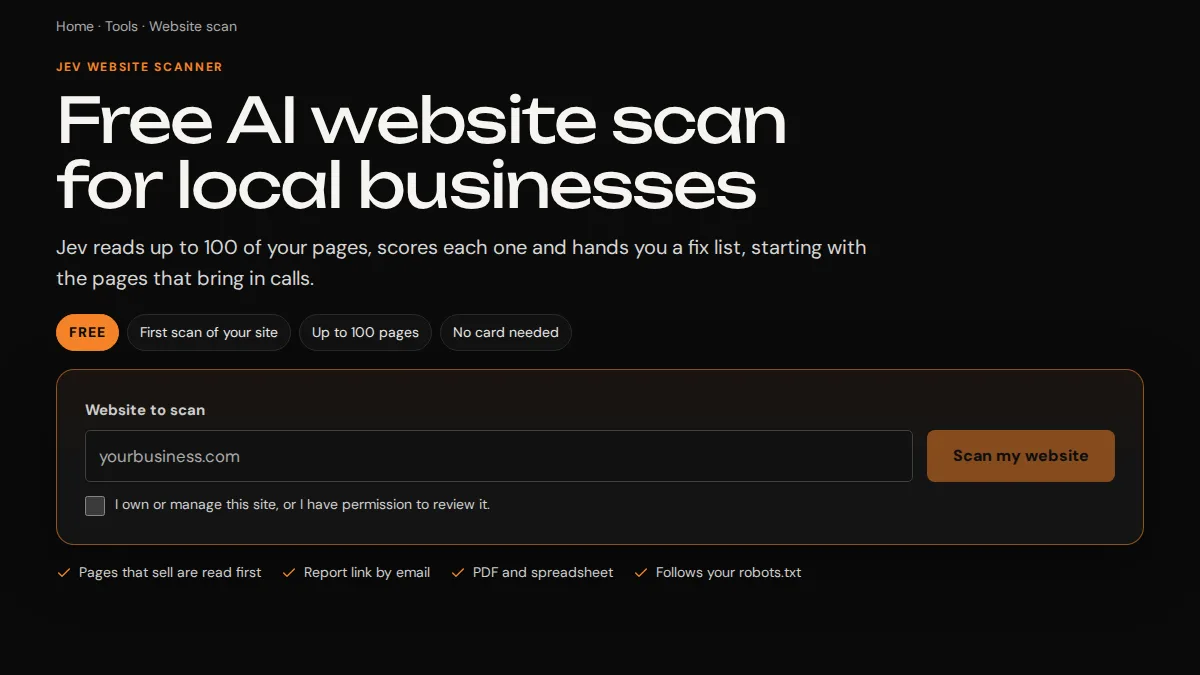
The Jev scanner interface is an existing project screen. It illustrates a website task rather than a market-performance claim. View the projectHypothetical example Hypothetical Indianapolis appointment page with an unclear change request
Before
A booked customer opens the website to move an appointment. The page has a general inquiry button and no explanation of how changes work. The customer sends a preferred time and assumes the booking has moved. Staff later receive a message without enough detail to identify the current visit.
After
The business first approves its change process. If a staff-confirmed request fits that process, the page explains its pending status and asks for the agreed details. We would check the resulting staff record with a safe test. That establishes whether content and routing work together.
If the business instead needs the booking system to change an appointment immediately, the proposed work must account for that system. Its owner confirms the available functions and access. We can then discuss implementation terms. The choice comes from the required behavior, rather than the page's district label.
When is a content change enough?
It may be enough when the existing action works and customers lack an accurate explanation. Ask staff what the button does and compare that with the visible wording. We can draft clearer content for the approved process. A test should confirm that the explanation matches the result a customer will receive.
When do we need implementation work?
A change that alters what a system does needs a technical check. Connecting a new booking provider or routing a request into another account may require work beyond page copy. We need the system owner to confirm permissions and available functions. Those details help us define the proposed implementation before setting project terms.
What does the scanner image tell us here?
The Jev project screen shows an input and an action for a website task. It gives us an interface example to discuss. It cannot establish whether your form works or how your customers behave. Our conversation should use the page you want changed and the task your staff can verify.
Choose the district website-design destination that matches the real setting of the task. A Fountain Square studio and a Park 100 supplier may need different information from an inquiry. We can compare those needs without assigning either a client story. Bring the current destination and one failure you can explain without sharing customer data.
Choose a learning question before choosing a channel
Paid campaigns and organic search need separate questions about what you want to learn. Our first discussion should identify the customer action and the records that can verify it.
For a paid test, name the offer you can fulfill during the proposed run. Bring the destination customers would open and explain how staff confirm a suitable inquiry. We need that outcome definition before a campaign conversation can establish what should be counted.
For organic work, bring the existing page intended to answer the customer's question. Describe the gap in its content or access that you can observe. Our SEO discussion should connect the page task to the query rather than treating another district name as a complete plan.
For an AI-search question, save the observed answer with its question and capture date. Identify the factual issue you want to discuss. We can compare that answer with your approved public information without treating one observation as a stable placement.
For a channel comparison, use the same business outcome definition where the records permit it. A contact click and an accepted request measure different events. Our conversation needs the distinction before either channel is credited with a customer.
Google's conversion-goal documentation explains that goals organize conversion actions. That setup describes what the account is configured to count. It does not establish that staff accepted a submitted request. We would ask for the business outcome record as well as the campaign definition. This helps frame the paid-agency route around a question that can be answered.
Google's AI-feature guidance states that AI Overviews and AI Mode need no extra technical requirements beyond its existing search approach. The guidance does not promise that a particular page will appear. Our district AI routes can help frame a content and observation question. They should not be read as a guaranteed place in an answer.
Should we read both the SEO and AI pages?
You can compare them when the same public content supports the questions you are asking. Keep your observed search issue in view while reading. We can discuss which existing page needs accurate facts or clearer answers. The service labels do not require separate duplicate content for each type of search experience.
What if a campaign gets contacts but staff reject most of them?
Bring the rejection reasons with private details removed. The destination may need clearer qualification, or the offer may attract requests the team cannot fulfill. We should compare those reasons with what the campaign asked people to do. That question belongs in the paid discussion before expanding the run.
Bring the store wording into the creative conversation
An Indianapolis retailer can start with approved material already used in the store. We can use that wording to discuss a specific page or campaign without inventing its meaning.
This photographed Indianapolis store sign provides concrete retail material to bring into a design conversation. View the project
A photographed sign gives a retailer something concrete to assess. Ask which name staff use for the department and whether that wording is still approved. We can compare the sign with the website label a shopper sees. The store owner should confirm any current product description before it becomes part of a public page.
Jeff worked at Georgetown Market as marketing director and assistant store manager from July 2023 through July 2025. That context should stay clear when discussing the public signage project. We do not turn a workplace role into a new agency client claim. The image supports a discussion of visible material, without establishing sales or shopping behavior.
Choose an approved item Bring a sign, an existing page or another item the business permits us to inspect. State what the material was intended to explain. Our conversation can focus on that purpose without collecting a large archive before the task is clear.
Confirm the wording with the store Ask the department contact whether the public label still reflects the current offer. A photo may show an earlier arrangement. We need the owner-approved wording for new copy and a separate check for any product claim that the image cannot support.
Set the page task Describe what a shopper should learn or do after seeing the item online. A department introduction differs from an order page. We can choose the grocery service destination when that is the actual task and discuss website work if the required action needs it.
Identify who keeps it current Name the staff contact who approves later changes to the department material. Our proposed content setup should fit that person's task. The business needs to maintain its offer even when a campaign or design project has ended.
Can we use the bilingual sign as proof of a shopper audience?
It proves the visible wording in that photograph. It does not establish who shops there or which language a customer prefers. We can discuss the label as an approved creative item. Audience claims need the business's own supported information before they shape new public copy.
Does the signage image establish a current product benefit?
No. A department label cannot verify the benefits of a product that may be sold there. Ask the business for approved product information and the basis of any claim. We can keep the creative discussion grounded in the observable sign while the product wording receives its own check.
Bring records that connect the public question with the staff answer
A short set of connected records can make the first service conversation concrete. We need enough context to trace the task while keeping private customer information out of the sample.
Records to pair before an Indianapolis service discussion
Public item
Staff-side context
Question it can help us answer
Profile destination link
The approved business facts and the account owner.
We can ask whether the correction concerns a listing fact or the page a visitor opens.
Appointment request page
A safe sample of the status staff receive.
Our discussion can compare a visible success message with what the booking process actually completed.
District service headline
The operating team's coverage rule.
We can assess whether the place wording matches the service promise staff can support.
Paid campaign destination
An outcome definition and anonymized rejection reasons.
We can identify whether qualification needs clearer wording before discussing a broader run.
Retail department image
The store's approved current label and its content contact.
Our creative conversation can use visible material without assuming a current stock claim.
These records need a connection that you can explain. A collection of traffic screenshots may leave the business question unclear. Tell us which request the page was intended to produce and what staff do when it arrives. We can ask for additional context after that link is established. Account access can follow an agreed need.
Keep dates with the records. A public page may have changed after the staff sample was captured. That difference can explain a conflict without establishing a trend. Our conversation should compare the versions that actually belong together. A later screenshot should not be used to describe an earlier customer journey.
Remove personal customer details from the example before sharing it. Keep the service type and the relevant status if those facts are needed to explain the task. We do not need a private conversation copied into a public creative brief.
Identify the original record when a screenshot only shows part of the process. Staff may need to inspect the system to confirm what happened. Our initial discussion can use the visible sample while treating the missing step as an open question.
Tell us which fact the business can approve for publication. Internal capacity or rejection notes may help define a job without belonging on a landing page. Our copy needs the public instruction the owner is willing to stand behind.
Include the person who can correct the source record. A website editor may have no authority over a booking or profile account. We should understand that ownership before defining a change that depends on another system.
Use a short page shortlist to expose different project needs
A buyer shortlist should compare the question each destination can help resolve. We can use a hypothetical set of Indianapolis-area tasks to show how that choice changes the proposed work.
Hypothetical example Hypothetical local owners choose pages for three different business questions
Before
A Fountain Square venue wants clearer public visit information. A field-service operator is assessing requests from Lawrence. A retailer wants a department page that agrees with approved store material. Each owner begins at the same market directory, but their first operational questions differ.
The venue has an unclear arrival destination attached to its appointment message. The operator has a form that appears to accept every address. The retailer has a web label that differs from the visible sign. These are invented planning situations, without customer names or measured outcomes.
After
The venue starts by comparing the Fountain Square website-design and Google Maps pages. Its owner can show where the public facts conflict and who approves the visit instructions. We would establish whether the first task concerns the profile destination or the page that opens from it.
The operator starts with service-area business SEO and brings dispatch rules. Its page may need to explain that a submitted address awaits confirmation. We can frame that work around the actual operating boundary. Lawrence's municipal label supplies context without deciding which requests the operator can accept.
The retailer compares the grocery service route with the website question. It brings an approved department sign and explains what a shopper should learn online. Our conversation can distinguish copy work from a new purchase function. The photograph supplies material, without proving current inventory or sales.
The shortlist ends with a different next question for each owner. None has to select a large package from the directory alone. We can examine the relevant public page and its operational context before discussing project terms. This example describes possible choices rather than completed agency work.
A shortlist earns its place when it helps you explain a real task. If every destination seems equally relevant, narrow the question further. Ask staff what happened at the point where a customer needed help. We can then connect that moment to the service page most suited to discussing it. The directory is a route into that conversation.
What if our business has more than one of these problems?
Choose the one that blocks the next customer action you care about. Tell us about the related issue so the proposed work accounts for it. We can discuss dependencies after tracing the first task. Several service pages may inform the conversation without requiring a separate project for every label.
Can we begin with a general Indianapolis agency question?
You can when you need to understand the broader relationship before discussing a task. The agency overview is the appropriate destination for that question. This market directory helps you narrow the work once the business need is clearer. Our conversation can move between those pages without treating them as interchangeable briefs.
Arrive with a concise question that your business can answer
A first conversation is easier to assess when you bring a specific customer task and its current page. We can use those details to discuss the work and the information still needed.
Write the customer's immediate goal Use an ordinary sentence such as a request to change a visit or confirm coverage. Explain the service involved. We can ask about related tasks after the first goal is clear, rather than beginning with a list of every channel the business might use.
Name the point where the task fails Show the public screen or message involved and say what the customer expected. Keep the sample free of private information. Our discussion can then compare the intended action with the result your staff actually see.
Choose the service destination to inspect Select the page that addresses the question most directly. Note any district context that changes the task. We can use that page as a starting reference without assuming its general description settles the requirements of your business.
Identify the fact owner Tell us who approves the service wording and who controls the connected system. Different people may hold those roles. Our proposed work needs their input before it can depend on a changed booking rule or public location fact.
State the limit you need the work to respect Explain the constraint that affects the project. It could be a staff editing need or a system that the business must keep. We can consider that limit while discussing the work, then establish timing and terms once the requirements are understood.
Do we need to bring private account access to the first conversation?
A public page and an anonymized task example can be enough to start. Tell us which systems are involved and who owns them. We can identify any access needed for a defined check later. That lets your account owner assess the purpose before a permission is granted.
What makes a quote question specific enough?
State the page or process you want changed and the behavior you need it to support. Include the material your business can supply. We can discuss the missing facts before setting project terms. A channel name or district name by itself leaves too much of the actual work unclear.
Where should we send the starting question?
Use the contact route linked from the service page you selected. Include your current website and the customer task you want to discuss. We can begin by looking at that public route together. Keep private customer records out of the message and describe their relevant status instead.
The aim is a question that leads to work your business can assess. You do not need to adopt every term in the directory. Tell us what your customer is trying to do and what staff need to happen next. Our conversation can then connect that need with a suitable page and the project requirements it raises.