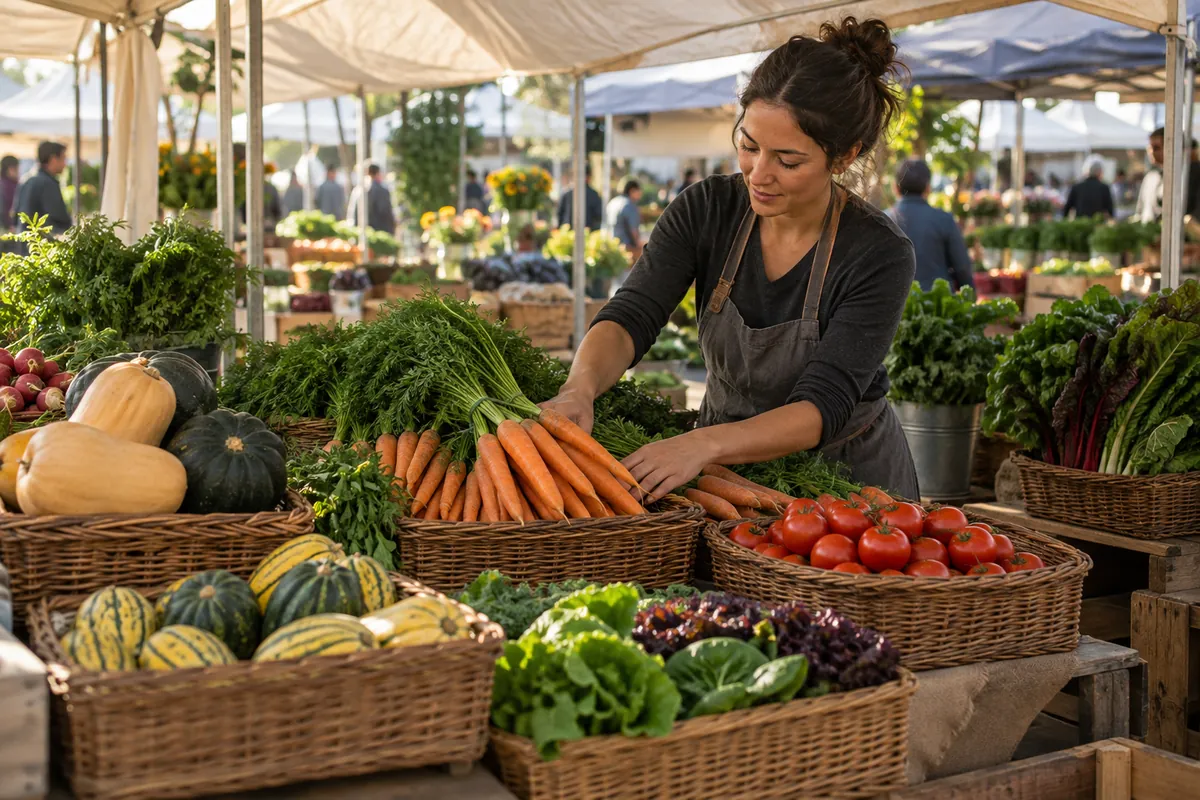
A shopper should be able to choose your supermarket before leaving the house. Which location has the bakery? Is the advertised price available at that store? Can they collect an order today? Trojan Digital Marketing connects those answers through supermarket website design, local SEO, Google Business Profile optimization, and campaigns built around the way your stores operate.
We work with supermarket owners and marketing teams across the United States, with roots in Indianapolis. Whether you manage one large store or a regional group, the aim is a recognizable brand with useful information at every location. Start with the locations, departments, and shopping actions that matter most to your business.
Supermarket marketing questions
What does supermarket marketing cost for several stores?
Supermarket work is priced after the free strategy call, and the store count drives much of it, since each location needs its own page and profile. A first Jev scan of your domain costs nothing and covers up to 100 pages. Groups with larger sites can move to the $99 audit, which reads up to 3,000 pages and rewrites the opening of the weakest one.
Can you support supermarkets outside Indiana?
Yes. Trojan works with retail businesses across the United States. We organize the work around your actual stores, approved information, and team responsibilities. Indianapolis is our foothold, not the boundary of our supermarket marketing service.
Do we need a new ecommerce platform?
Only if the buying journey requires it. A store finder, useful department pages, and accurate offers can support physical shopping. Existing ordering systems can remain part of the journey when they serve shoppers well and the handoff is clear.
How do several stores share content without losing local details?
Separate shared brand content from store facts. A campaign can have an approved master message with explicit location participation. Hours, services, and ordering destinations stay attached to the correct store and have a named reviewer.
Can you help promote a department rather than the whole supermarket?
Yes. Bakery, prepared food, produce, or another important department can be a focused starting point. We identify the customer's decision, verify the service details, and connect the page to the appropriate store or ordering route.
What do you need to prepare a proposal?
Send your website, store list, key departments, current promotional materials, and the systems used for product information and orders. We can then propose a defined project around the shopping journey you want to improve.
Does each supermarket location need its own Google Business Profile?
Yes, every store that serves shoppers in person should have its own profile with its own hours and phone number, linked to that store's page on your site. Pointing every profile at the home page makes a shopper hunt for their store all over again. We check that the name, address and phone agree between each profile and its store page.
How should department hours appear on a store page?
List them on their own lines whenever a department keeps a different schedule, like a pharmacy that closes before the store does. On Google Business Profile, the More hours section can carry some of these, such as pickup hours. A shopper who drives over at 8 pm for a prescription remembers which store had it wrong.
Should a store page name its town or just say Indianapolis?
Name the town the store is actually in. Beech Grove, Lawrence, Southport and the town of Speedway sit outside the consolidated city of Indianapolis and govern themselves, though their residents still pay countywide taxes and follow countywide ordinances. A shopper searching for groceries in Speedway should see Speedway on that store's page and profile, matching its mailing address.
What should a store page say while road work blocks the way in?
Post a short, dated access note at the top of that store's page and on its profile, then take it down when the work ends. IndyGo is building the Blue Line from 2025 to 2028 along a route that includes Washington Street, in 12 construction areas, so stores along it may see several phases. Update the note each time the open entrance changes.
Can Trojan show results from Google Business Profile work?
Yes, with one caution. For a local Indianapolis-area business we work with, the profile appeared in 2,087 searches in August 2026, 118.8% more than in August 2025, and website clicks rose 45.9% to 334. That business isn't named here, and this page makes no claim about results for any supermarket.
Does Trojan take on supermarket groups outside Indianapolis?
Yes. Trojan is based in Indianapolis, and its service area covers Marion County plus Carmel, Fishers, Noblesville and Greenwood, while groups in other states work with Trojan remotely. Either way, each store page is built from that store's own hours and departments, whichever town it sits in, and the first strategy call is where you'd walk through the list of locations.
What Marion County details affect a supermarket's store pages?
Marion County's self-governing towns and the Blue Line's long construction both change what an Indianapolis supermarket group's store pages need to say.
Marion County, Indiana
Four Marion County municipalities sit outside the consolidated city and still govern themselves: Beech Grove, Lawrence, Southport and the town of Speedway. Their residents still pay countywide taxes and fall under countywide ordinances.
A store in one of them should use that town's name on its page and Google Business Profile, since that's the name nearby shoppers search.
Encyclopedia of Indianapolis, Excluded CitiesChecked September 25, 2026Indianapolis and Marion County share a consolidated city-county government called Unigov, in effect since January 1, 1970. It grew the city from 82 to 402 square miles.
A store locator covering 402 square miles needs search by ZIP code or neighborhood, since one city name covers very different trips.
Encyclopedia of Indianapolis, Structure of UnigovChecked September 25, 2026IndyGo plans to open its Blue Line bus rapid transit in 2028. The 24-mile route will run from Indianapolis International Airport through downtown to Cumberland, using I-70, Holt Road and Washington Street, and IndyGo says construction runs from 2025 to 2028 across 12 construction areas.
Stores along the route can post a dated access note on their page and profile while their segment is under work.
IndyGo, Blue Line ConstructionChecked September 25, 2026Marion County had 992,196 residents in 2025. It grew by 1,983 people that year, its smallest annual gain since 2021 and far below the 9,886 it added the year before.
A group weighing a new location can set this beside the faster suburban counties before planning new store pages.
Indiana Capital Chronicle, New estimates show Indianapolis area continues as key for state's population growthChecked September 25, 2026In 2025 Hamilton County added 7,351 residents, the most of any Indiana county, and Boone and Hancock were the fastest-growing counties for the third straight year.
Stores near a county line can name the neighboring towns on their pages, since growth is concentrated just outside Marion County.
IU News, Indiana population estimates: Strong growth continued in 2025Checked September 25, 2026
Public facts from Trojan's research, checked September 25, 2026. Construction phases shift, so recheck access notes often. No supermarket clients are named or implied.
How does a supermarket group get every store page right?
An Indianapolis supermarket group gets its store pages right one location at a time, matching each page with that store's Google Business Profile before adding anything new.
- List every store as it really isGather each location's street address, main phone, store hours and every department that keeps its own schedule.
- Match profiles to pagesWe compare each Google Business Profile with its store page and flags any name, address or phone that disagrees.
- Separate department hoursPharmacy and pickup hours get their own lines wherever they differ from the store's hours.
- Tie weekly ads to storesEach ad page names the participating stores and ends on the date merchandising sets.
- Check each profile monthlySomeone reviews each profile for suggested edits from the public and new reviews, then fixes anything that drifted.
What should each store send before its page goes live?
Store managers at a supermarket group in and around Indianapolis send accurate details once, then flag changes the day they happen.
Each store manager sends
- The address exactly as it appears on mail, town name included
- Store hours plus holiday closures for the year
- Department phone numbers that ring the department itself
- Pickup or delivery windows, if the store offers them
- A contact who approves changes to that store's page
Trojan sets up
- A store page template that keeps each location's facts separate
- A link from each Google Business Profile to its own store page
- Structured data naming each location on its own page
- A spot at the top of each store page for temporary access changes
Give every store a clear role in the website
- Offer
- Explain what the customer can get.
- Evidence
- Support the offer.
- Action
- Make the next step easy to use.
A supermarket website needs two levels of information. The brand explains why someone should shop with you. Each store page confirms what that specific location offers. Mixing those levels can advertise a service at the wrong branch or hide a useful department behind a corporate introduction.
We organize store pages around verified hours, contact details, directions, departments, collection arrangements, and current offers. A visitor who selects a store should keep that context when opening its specials or ordering options. The page should explain any change of location before the shopper commits to a journey.
- Brand level: your identity, general shopping experience, and store finder.
- Store level: actual services, operating information, and local contact route.
- Department level: selection, ordering requirements, and relevant expertise.
One promotion, several departments, a usable shopping plan
Consider a hypothetical supermarket promoting a weekend family meal. Produce, meat, bakery, and prepared food each contribute an item. The website should help a shopper assemble the meal while keeping each price, quantity, and participating location clear. A single image of a crowded circular cannot answer all those questions on a phone.
| Customer decision | What the page supplies | Store responsibility |
|---|---|---|
| Choose a location | Participating stores and department availability | Manager confirms the correct store list |
| Understand the offer | Item size, price basis, dates, and any purchase conditions | Merchandising approves the offer facts |
| Plan the meal | Related departments and practical serving suggestions | Staff checks that suggested items match the range |
| Shop or order | Directions or the actual ordering destination | Operations confirms the handoff works |
The useful output is a maintained campaign page with readable offers and a clear store choice. After the promotion ends, expired prices come off the active shopping route. The broader department information stays useful for the next campaign.
Make local SEO match the store people will visit
Supermarket local SEO begins with dependable location information. We review the relationship between each store page and its Google Business Profile, including the website destination and real customer contact details. Department hours deserve separate attention when they differ from the supermarket's opening hours.
Read more
Google's local ranking guidance emphasizes complete, accurate business details. We use that foundation to make store information easier to maintain. Search placement also depends on factors beyond the agency's control.
Our Google Business Profile optimization and Google Maps and local pack SEO services can support a coordinated location review. A practical first improvement is often correcting the destination behind a listing so shoppers arrive on their selected store page.
Show the selection your data can support
Product discovery works best when the website knows which information is dependable. A department page can explain a usual range. An exact product listing needs a clear connection to the actual item. A claim about current availability needs a maintained source and a process for resolving discrepancies.
Read more
Google's store product guidance describes ways eligible merchants can surface inventory. We assess the store's systems before proposing a connection. Product feeds, manual collections, and delivery partner catalogs need an agreed owner and review process.
We also make distinctions visible to shoppers. Delivery selection may differ from the physical shelves. A bakery request may need staff confirmation. Clear wording at these decision points can prevent the website from creating expectations the store cannot meet.
Build supermarket SEO, AEO, and GEO around useful answers
Search engine optimization helps people discover relevant store and department pages. Answer engine optimization, or AEO, focuses the explanation around a question. Generative engine optimization, or GEO, applies that clarity to information that AI search systems may use. For supermarkets, the raw material is practical: pickup instructions, department services, ordering deadlines, and clear offer terms.
Read more
A bakery page might answer how to request a celebration cake and what information the team needs. A prepared food page might explain portion choices and collection arrangements supplied by the store. Those answers should lead directly to the relevant service.
Google's AI search guidance keeps established SEO practices central. Our SEO, AEO, and GEO service combines accessible pages with useful facts and relevant internal links. No separate label can guarantee an AI recommendation.
Make the screen and the shopping aisle feel connected
A supermarket's visual identity should survive the move between a small phone screen, an aisle sign, and a campaign display. We plan typography, department names, image crops, and offer hierarchy as a system. Staff should be able to recognize the same department in the website navigation and on the sales floor.
Our Georgetown Market signage project shows this design principle through photographed bilingual store signs. It is evidence of signage design work. A supermarket website engagement has its own scope, implementation, and measurement.
Connect campaigns to the evidence your stores collect
A report should help a supermarket team choose its next action. We separate store page visits, ordering clicks, directions requests, completed orders, and recorded offer redemptions. A directions action is useful intent data, but it is not a confirmed shopping trip or purchase.
Where reliable transaction information is available, we can compare campaign activity with the relevant store and department records. Stock changes, competing promotions, and operating changes remain part of the interpretation. The review should identify what the data supports and which customer questions still need better answers.
Turn your supermarket's selection into a reason to visit
Discuss supermarket marketing with Trojan or request a website audit. For a smaller owner operated business, explore independent grocery marketing. We also support international grocery stores and health food retailers.
Related projects

Sources & further reading
YOUR NEXT MOVE
Make the next step count.
Based in Indianapolis, we serve businesses across central Indiana, including Carmel, Fishers, Zionsville, Westfield, Noblesville, Greenwood, Avon and Plainfield, and clients across the United States.