Need help?Jamie

Paid search

PPC Audit Services for Google Ads and Lead Quality

Your agency's report looks great, your office says the calls are junk, and you want someone outside the account to tell you which story is true.

A PPC audit from Trojan Digital Marketing, based in Indianapolis, Indiana, checks your Google Ads account against the jobs you booked, so you know what to cut and keep. It's for the owner who says, "The dashboard shows conversions, but the phone's gone quiet." We also mark local detours, like Brownsburg's E. County Road 700 N. closure from March 2 to August 30, 2026.

Jeff Clerisier holds the Google Ads Search, Google Ads Measurement and AI-Powered Performance Ads certifications.

Note the date range that worries you and roughly how many ad calls became jobs. The first strategy call is free, and during business hours we aim to reply within five minutes.

  • Conversions checked against booked jobs
  • Search terms read beside your services
  • Landing pages followed past the click

When we audit an account, we keep going after the click, into the landing page and the form or call where the inquiry actually happens. Jeff Clerisier has built websites since 2016 and founded Trojan in March 2018, and with more than 1,400 live websites behind us, reading a landing page the way a searcher would is everyday work here. We work from Indianapolis, Indiana and audit accounts for businesses in any market, checking only the towns you actually serve.

Tablet with orange and neutral design references on a desk
IllustrationHow paid search flowsThis page’s three priorities drawn as a path from the first contact to the next step. It’s an illustration with no platform or client data.HOW IT FLOWSPaid searchCurrent account01Conversions checked against booked jobs02Search terms read beside yourservices03Landing pages followed past theclickNEXT STEP

CAMPAIGN FIT

The channel is a choice.
The customer is the starting point.

Compare the buying situation, then mark what your business already has. Your choices travel with your inquiry.

GOOGLE ADS

Start with the search.

Is someone already searching for the service you sell?

Search campaigns connect an existing question to a relevant offer. Separate urgent requests, considered purchases, and research before choosing keywords.

Query · offer · inquiry · sales outcome

Measure: Qualified opportunities from relevant searches.

Explore Google Ads management

Check what’s ready

This is a conversation brief. It does not score your account or predict campaign performance.

Discuss my Google Ads plan

LINKEDIN ADS

Start with the buying team.

Can you describe the companies and roles involved in the purchase?

A useful B2B offer needs a reason for a busy professional to respond. Match the message to their responsibility, buying stage, and next decision.

Audience · evidence · conversation · opportunity

Measure: Accepted prospects and pipeline progress.

Explore LinkedIn Ads management

Check what’s ready

This is a conversation brief. It does not score your account or predict campaign performance.

Discuss my LinkedIn Ads plan

META ADS

Start with a reason to care.

Can your creative show a relevant problem, service, or decision?

Facebook and Instagram campaigns need recognizable creative and a clear next step. Match forms, messages, or a landing page to the questions your team needs answered.

Creative · interest · qualification · follow up

Measure: Useful inquiries and appointment outcomes.

Explore Meta Ads management

Check what’s ready

This is a conversation brief. It does not score your account or predict campaign performance.

Discuss my Meta Ads plan

SEE HOW THE PIECES CONNECT

Explore the decisions
behind the plan.

THE TROJAN SYSTEMPAID
The path from campaign investment to a useful inquiryCampaign & audienceRelevant visitUseful inquiryFollow up
  1. Campaign and audience
  2. Relevant visit
  3. Useful inquiry
  4. Follow up
The path from campaign investment to a useful inquiry

A PPC audit should explain what to change, what to keep and what the available data cannot tell you. Trojan reviews Google Ads accounts against the business offer and the sales process so a campaign decision has a clear basis. The useful output is a prioritized set of findings, not a long list of automated warnings.

This service suits an owner questioning campaign performance, a marketing manager preparing a handover or a team considering a larger budget. It can also help when the dashboard reports conversions but the office describes poor fit. Start by telling us the decision you need the audit to support through the PPC audit inquiry.

Questions business owners ask

Will an audit prove how much money was wasted?

Only where the evidence supports a specific calculation. Missing records, incomplete query reporting and sales delays can limit what historical data establishes.

How much does a PPC audit cost?

The ad account review is priced after the free strategy call, once we know how many campaigns and how much history there is to read. The landing page side can start for nothing: our free website scan reads up to 100 pages, and the $99 full audit covers every page up to 3,000, plus one rescan after your fixes.

Will the audit show how much money was wasted?

Only where the records support a real number. If calls weren't tracked or nobody logged which jobs came from ads, we'll say what can't be known and what to set up so future spending can answer the question. A number built on guesses would just move the argument somewhere else.

Is a PPC audit the same as ongoing management?

No. An audit diagnoses a defined set of questions and recommends actions. Ongoing management covers implementation and recurring campaign decisions under a separate agreed scope.

Can you audit campaigns without changing them?

Yes, a diagnostic scope can be reviewed using appropriate read access and supplied reports. Live edits or spending changes require their own authorization.

Do you only look at clicks and keywords?

No, the review can also include conversion definitions, actual inquiry outcomes, geography, landing pages and handoffs. Confirm which systems and paths are included in the scope.

Should I pause all my campaigns while an audit happens?

There is no universal reason to pause an account for review. Decisions about live delivery should depend on a specific issue, available evidence and the business impact.

Do you need to change anything in my account to audit it?

No. Read access is enough for the review, and nothing gets edited or paused unless you ask for it. Keeping the audit apart from any changes means you can hand the findings to whoever runs the account now, or to your own team, without us touching a single bid.

What does the audit actually check?

It starts with what the account counts as a conversion, since a tap on a phone number or a form someone opened and abandoned can look like a lead when nobody called. Then we read the search terms beside the services you sell, compare ad locations with where your jobs were, and follow the click onto the landing page.

Why compare this year with last year instead of last month?

Because local calendars repeat and months don't match. The NHRA U.S. Nationals fill Labor Day weekend at the Brownsburg-area track every year, and a road closure like the one on E. County Road 700 N. can reshape a whole season. Setting the same weeks side by side keeps an event or a detour from being blamed on the ads.

What happens after the audit?

You decide what to do with it. You can hand the findings to whoever runs the account today, or ask us to take over management under a separate agreement. The audit doesn't depend on you signing up for anything more, and the findings are meant to be usable by anyone running the account.

Should I pause my campaigns during the audit?

Usually not. Pausing stops the very activity the audit needs to watch, and a live account shows how searches and calls behave right now. If the review turns up something costing money every day, like ads running in towns you don't serve, we'll flag it straight away so you can decide.

What local events can skew a PPC audit near Indianapolis, Indiana?

A PPC audit for accounts running around Indianapolis, Indiana has to mark closures, big events and population shifts before judging any drop in calls.

Public facts about the area around our Indianapolis base. They describe local conditions and don't come from any account we've audited.

Where does a PPC audit look first for the problem you're seeing?

A PPC audit from Trojan for accounts run from Indianapolis, Indiana or anywhere else starts where your symptom points, then checks what the records can actually prove.

What you're seeingWhere the audit looks firstWhat the records can show
Plenty of conversions, few booked jobs
How each conversion is counted
Whether counted leads were real inquiries
Calls dropped after a change
The account's change history for that week
What changed, when and who changed it
Clicks from towns you don't serve
Location settings and location reports
Which places got clicks and spend
Good calls for the wrong service
Search terms beside the ad text
Which searches triggered those ads

What should you have ready for a PPC audit?

A PPC audit for a business near Indianapolis, Indiana or across the country goes faster when the sales side of the story arrives with the account access.

  • Read access to the Google Ads account
  • The inquiries from the audit period, marked with which became paid jobs
  • The services and towns you actually take work in
  • Any price, staffing or service area changes during that period
  • Every counted conversion against real calls and forms
  • Search terms sorted into services you sell and ones you don't
  • Ad locations compared with the addresses of booked jobs
  • Each landing page read the way a searcher would read it
  • Findings ranked by cost and effort to fix

Define the audit question before opening reports

Start with the decisionYour serviceFitTrustNext stepScopeEvidenceContact
Fit
Explain the service scope.
Trust
Show supporting evidence.
Next step
Give a clear contact route.
Start with the decisionOne service can lead to different questions about fit, evidence and the next step.

An account with declining inquiry volume needs a different investigation from one receiving more inquiries but fewer accepted projects. A new service launch creates another question: whether the current campaign and page are suitable for that offer. Scope the review around the problem and the period that represents it.

We ask what changed in services, pricing, capacity, geography and follow up during that period. A campaign can remain technically unchanged while the business conditions around it change substantially. An audit that ignores those facts can recommend the wrong intervention.

Reconcile the events being counted

Begin with the conversion definitions. A submission event should represent a completed inquiry, not an attempt to open the form. A phone link click should retain its own label unless connected call data confirms a conversation. Review repeat submissions, test records and whether the same action appears through more than one measurement connection.

Read more

Compare a sample of platform events with actual business records. This establishes what the numbers mean before anyone interprets a cost per conversion. Google distinguishes qualified and converted lead stages; an audit should assess whether the selected goals reflect your own sales process.

The review can identify measurement gaps without claiming to reconstruct information that was never collected. Where history is incomplete, the finding should say what a future test or configuration change needs to establish.

Review search intent with actual service boundaries

Reported search terms can reveal supplier, job seeker, training or unrelated service intent. They can also show good opportunities being sent to a page that explains the wrong offer. Read terms beside the services you accept, geographic scope and resulting inquiries rather than judging a phrase in isolation.

Read more

Google's negative keyword guidance explains that exclusions use their own match rules. The audit should therefore examine the scope of a proposed exclusion, including whether it would block a useful service. A maintenance company could lose valid contract inquiries by excluding a broad word without context.

Not every unconverted search is waste. A small sample or a longer buying cycle may leave the answer unresolved. Our search terms review guide shows how to classify evidence before changing a list.

Check geography and campaign structure

Connect an answer to its evidenceUsefulQuestionAnswerEvidence
Question
Identify what the customer needs to know.
Answer
Explain it clearly.
Evidence
Support the answer with a source.
Connect an answer to its evidenceA useful answer explains the question, supports the claim and identifies the source.

Compare targeting settings with real delivery areas. Google supports targeting based on physical location and location interest. The right setting depends on the offer: a local service appointment differs from a destination business people research before travel.

For brands operating in several markets, assess whether separate campaigns represent meaningful differences in capacity, cost or service. Too much fragmentation can leave each segment with little useful evidence. Too little separation can hide a market that needs different messages or a different destination.

Inspect the full page and inquiry journey

The audit follows the destination a visitor actually reaches. Check whether the ad sets a service, promotion or response expectation that the page can fulfill. Confirm the inquiry path, important form errors, confirmation language and the people responsible for receiving the request.

Google offers a landing page performance report. Platform data can guide investigation, while page review addresses the real experience: mobile usability, meaningful content, credible evidence and a next step matched to the buyer's stage. These findings often belong with website design and development work as well as account management.

Give each finding a reason and a next action

Example findingEvidence to recordUseful next action
The same submission appears twice
Event names, record samples and collection paths
Review duplication before using the count for bidding decisions.
Queries request a service the business declines
Query examples and the confirmed service list
Assess exclusions and revise the ad or page where needed.
Many inquiries remain uncontacted
CRM status and attempted response records
Assign follow up responsibility and review office capacity.
A campaign reaches a poorly matched territory
Targeting settings and actual project locations
Review the geographic plan against delivery economics.

These are illustrative findings, not issues we claim exist in your account. Every real recommendation should include an evidence reference, confidence level, responsible owner and a sensible way to verify the change. Separate urgent measurement failures from experiments that need time and a controlled comparison.

Keep account diagnosis separate from a sales pitch

Make account access explicitYourbusinessDomainWebsiteAnalyticsRecords
Domain and website
Document ownership and access.
Analytics and records
Define access and the handover.
Make account access explicitDomain, website, analytics and customer records need clear ownership and a workable handover.

Audit scope should state which platforms, time periods, campaigns and website paths are included. Access should match the work being reviewed. A diagnostic conversation does not itself authorize spending changes, live campaign edits or a new advertising commitment.

Some findings may be handled by your existing team. Others may require a defined implementation project or ongoing Google Ads management. The next step should follow the evidence. Rebuilding a functioning account solely to make the work look more extensive does not improve the decision.

Prepare a focused PPC audit request

  1. Name the question: lead fit, budget allocation, tracking accuracy or a service launch.
  2. Describe the offer, accepted customers and actual service areas.
  3. Identify the account, analytics and CRM systems available for review.
  4. Note major changes during the period you want to assess.
  5. Explain who can approve and verify recommended improvements.

Discuss the audit scope with Trojan. Bring a short description of what feels wrong and what evidence you currently have. That makes it easier to decide whether an account review, a measurement investigation or a destination page project is the most useful starting point.

Sources & further reading

YOUR NEXT MOVE

Make the next step count.

Based in Indianapolis, we serve businesses across central Indiana, including Carmel, Fishers, Zionsville, Westfield, Noblesville, Greenwood, Avon and Plainfield, and clients across the United States.
Reduce the dispute to one finding that can be checked

A disputed PPC suggestion needs a precise claim and a matching record. We would choose one finding so the business can examine why the proposed action follows.

  1. Quote the disputed finding Use the actual sentence from the audit and the action it recommends. We can ask whether the dispute concerns a measured fact or the meaning assigned to it. Those questions need different answers. A vague complaint about the whole account makes it harder to name which claim should be checked first.
  2. State the competing explanation Ask the reviewer what they think the finding has missed. We would keep that explanation beside the audit claim. It might concern a changed offer or an incomplete sales record. We would examine that competing explanation and ask what record could support its account of the issue.
  3. Choose the narrow check question Write what a record would need to show to resolve this one dispute. We can focus on a claimed duplicate event or the reason an inquiry was marked unsuitable. The check should have a possible inconclusive outcome. If no available record could answer it, a confident historical claim is already too strong.
  4. Keep the proposed action separate Name what the audit suggests changing after its diagnosis. We would examine the finding before treating that suggestion as approved implementation. The business may accept the fact while choosing a different action. Our check question should leave both choices available until their reasons have been assessed.

An audit can be useful even when a business disputes one suggestion. We can inspect the claim and its support without reopening every part of the account. The narrow task is to establish what the available record shows and what it leaves open. That approach also helps distinguish a factual correction from a reasonable disagreement about the next action.

What should the first message to Trojan contain?
Bring the finding you want checked, the proposed action, and the reason your team doubts it. We can discuss which existing records may answer that question. If the audit gives no specific support, say so. Our initial discussion should not require a full customer export or assume permission to edit an account. A redacted sample may be enough to name the right check task.
What if several findings depend on the same disputed fact?
Start with the fact they share and list which suggestions rely on it. We would avoid checking each conclusion as though its premise had already been established. Resolving the common question may clarify several actions. If the premise remains uncertain, each dependent suggestion should retain that uncertainty and describe which missing fact still affects its basis.

Find the record that matches the actual claim

A finding should point to a record that can support its meaning. We would compare the account observation with the relevant business record and identify what both actually establish.

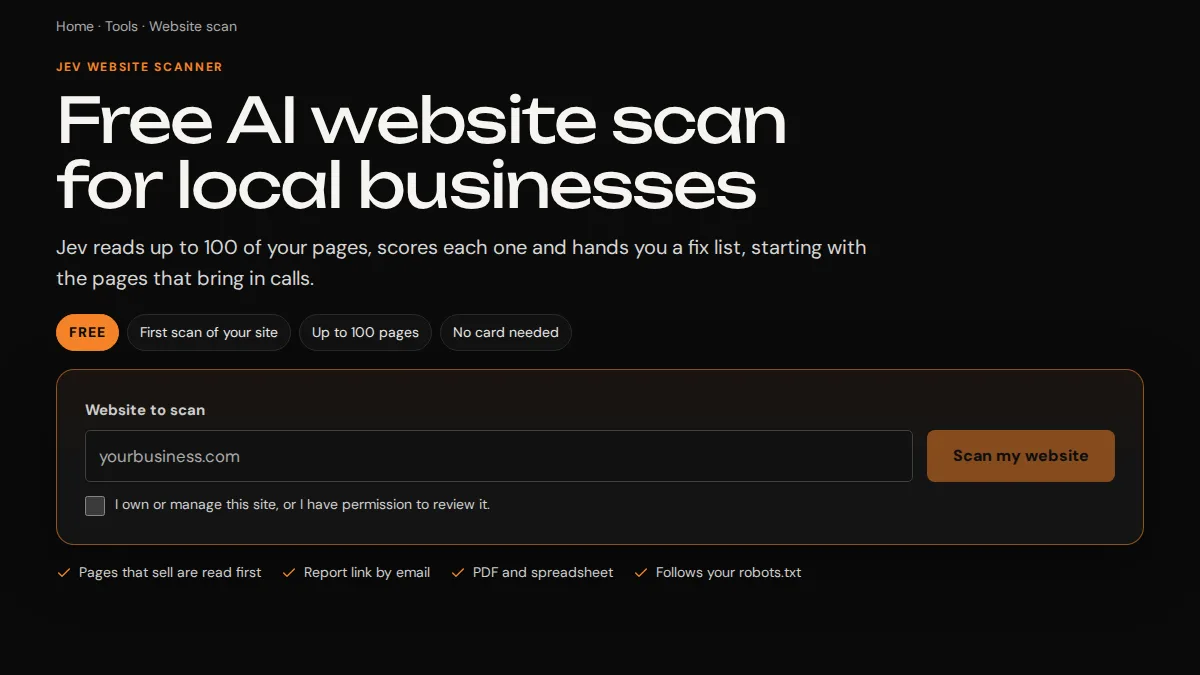
Jev scanner website input and scan action
Disputed PPC finding validation: Scanner website input and button. View the project
What makes a record relevant?
It addresses the same action, service, and period as the disputed claim. We can ask whether the record identifies the event being counted and whether the business outcome is known. A total from another period cannot settle a claim about one sample. The comparison needs enough shared context to connect the records, with any missing link clearly stated.
What can a named starting input teach us about an audit sample?
Jev's pictured website field sits beside Scan my website, so the requested input names the task the visitor is beginning. We can use that pairing to describe an audit sample clearly. Name the business question first, then identify the record needed to inspect it. Our proposed check would use the relevant account detail and permitted business record. That connection helps the reader understand why a particular sample belongs in the finding.
What if the finding has only an aggregate number?
Ask which records make up that number and whether they can be inspected under the agreed access. We would avoid inferring individual outcomes from a total that lacks those links. The finding may support a broad observation while leaving the specific cause uncertain. Its suggestion should state that limit and identify the detail that remains unverified.
Which customer details are needed?
Use only the details relevant to the claim under the business's permitted handling. We can begin with redacted descriptions and account fields that explain the mismatch. A broad private-data export should not be assumed necessary for a first discussion. The actual scope should name which records the reviewer may inspect and how the business makes them available.

A useful record comparison might ask whether two counted events refer to the same intended action. We can define that question without declaring either event wrong. The available identifiers and timestamps may support a match, or they may leave it uncertain. Our finding should describe the degree of support that actually exists before recommending a change to how the action is interpreted.

Distinguish an observed mismatch from a proposed explanation

The record may show a difference while leaving its cause open. We would preserve that distinction so a suggestion does not gain certainty the observation cannot support.

Disputed PPC finding validation
Finding partRecord needed to check itConclusion the record permits
Finding wordingThe exact audit claim and the competing explanation.The dispute concerns a specific fact or proposed action.
Matching recordThe available account observation and relevant business entry.They concern the same action and period, with missing links stated.
Permitted actionThe narrow next task and the actual access granted for it.A read-only check does not imply permission for a live change.
Open outcomeThe evidence the available records fail to establish.The claimed conclusion stays within what the available records actually support.
How should the original finding be restated?
Use one sentence for the observation and another for the possible explanation. We can write that two records appear similar while still asking whether they represent one inquiry. That phrasing gives the business something to inspect. Calling the similarity a confirmed duplicate would require support the initial observation may not contain.
What if the proposed explanation is plausible?
Plausibility can justify a further check, but it does not settle the historical fact. We would ask what additional record would support or contradict it. If that record is unavailable, the finding can remain a hypothesis. The business can then decide whether a future test is worth doing without treating the unverified explanation as a measured result.
Can the business reject the suggestion but accept the finding?
Yes. We can distinguish agreement about what happened from agreement about how to respond. A corrective task may have costs or dependencies the audit did not fully examine. Keep those reasons beside the accepted fact. Our check should make the choice easier to understand while leaving the final action with the business that controls the account.

Match the next check task with real permissions

A read-only check can clarify a claim without changing live delivery. We would define the access needed for the specific check and keep implementation as a separate choice.

Permission should match the question being investigated. If the task is to inspect a historical record, the reviewer needs the appropriate view of that record. We can ask what access the business is prepared to provide. A proposed test that submits a message or changes a setting raises a different permission question. The initial audit discussion should not silently authorize those actions.

The smallest useful next task may be a second reading of the existing evidence with the business reviewer. We would choose that when it can answer the dispute. If a future check is needed, state what it would do and what it could establish. A planned check remains a proposal until its permission and actual result are recorded.

  1. Describe the read task Name the report or business entry to be inspected and the fact it may establish. We can keep unrelated account areas outside the request.
  2. Confirm the granted access Ask the account owner what the reviewer may view. We would avoid treating access to one report as permission to change campaigns or spending.
  3. Specify any proposed test If the claim needs a fresh check, state the action and its expected observation. We can name whether it affects a live route before the business decides.
  4. Record what remains untested Leave the proposed result open until the check occurs. We would not turn an expected outcome into an observed finding merely because the task seems straightforward.
What if the business wants implementation after the check?
Agree that work on its own terms and name who may approve the actual change. We can discuss the validated finding as its basis. The review itself does not establish permission to alter a budget, pause delivery, or change a destination. Our suggestion should make clear which decision is now supported and which action still needs authorization.
What if no further access is available?
Describe what the supplied records establish and stop the claim at that limit. We would avoid guessing at the missing cause. The business may accept an inconclusive result and improve future records separately. That can still be a useful audit outcome because it prevents a disputed number from being presented as a proven explanation.

Use a visible input screen to plan a specific check

An input reference can help define what a sample is meant to show. We would describe the proposed check precisely and keep its result open until it is observed.

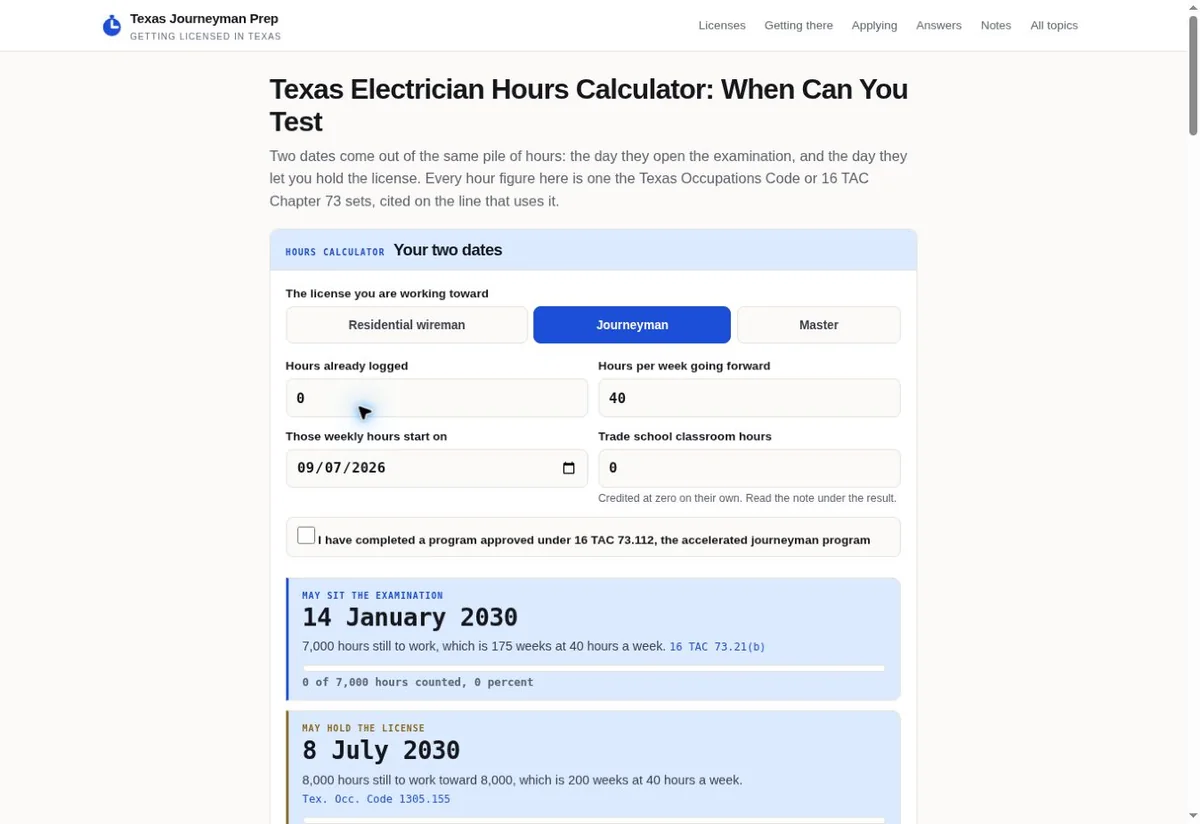
Texas Journeyman Prep calculator with labeled fields
Disputed PPC finding validation: The Texas hours screen distinguishes a logged total from a weekly estimate. View the project
Hypothetical example A fictional business disputes one account suggestion

Before

  • An unnamed business receives an audit finding that two counted actions may represent the same inquiry. A reviewer says the actions might belong to different stages. The supplied aggregate report does not name which business record matches each action. This is a hypothetical dispute, with no real account or spend result claimed.

After

  • The proposed check asks for the relevant event definitions and a permitted redacted record comparison. If the match remains uncertain, the finding says so. A separate future test could inspect the intended path under agreed permission. No live setting has been changed, and no amount of wasted spend has been calculated from the incomplete records.

The Texas Journeyman Prep calculator separates the logged-hours entry from the weekly hours planned going forward. That visible distinction helps describe a known starting value and a chosen future value. We would name those roles when proposing an audit check. Which record is already available, and which input would a permitted future action supply? Our note would specify the question each value answers. If the action occurs, its observed result would be recorded beside the original expectation.

What belongs in a proposed test note?
State the question, the chosen input, and the observation that would help answer it. We would also name the route and permission required. Keep the expected result clearly marked as expected. If the check never occurs, the note remains a proposal, which means the audit must not report its outcome as a completed check.
Can a successful future check reconstruct the past?
It may explain current behavior, but historical behavior still depends on the old records. We can compare versions where the relevant details exist. A current successful submission does not prove that every earlier inquiry behaved the same way. Our report should distinguish the actual period inspected from the period the business originally questioned.

Keep an inconclusive outcome useful and honest

An incomplete record can limit a finding without making the review pointless. We would state the missing fact and the practical next choice without inventing a historical loss.

  • State the fact the record supports in plain words. We can separate that observation from a cause that remains unverified.
  • Name the missing link that prevents a conclusion. Our explanation should help the business understand why the historical question cannot yet be settled.
  • Describe a future check only when it addresses the open question. We would keep its result proposed until the permitted task is actually performed.
  • Avoid turning an unqualified inquiry count into wasted spend. We can discuss that calculation only when the relevant cost and outcome records support it.
What can we accept after an inconclusive check?
The business can accept the observation and the stated limit. We would name any suggestion that still depends on an unverified premise. The next action may be better future records that let the business answer the question accurately.
How should we return the finding to the current account manager?
Use the exact question and the relevant support so they can inspect the same issue. We can keep the disagreement factual and narrow. A useful check does not require blaming a person or replacing the whole account arrangement.
How can Trojan help define the next step?
Bring the disputed sentence and the record you can make available. We can discuss whether a read-only comparison can answer it. If the missing evidence requires a separate implementation or test, its scope and permission should be agreed before action.

Sources

From the businesses we've worked with

“Jeff was the best social media manager and campaign manager strategist I ever had”
L. LaBeachIzzy's Empanadas · Jeff ran its marketing, 2018 to 2021