
Start with the kit description the owner has approved
Prepare for a Startup Kit discussion with the actual offer and the facts your business can supply. We would keep new requests separate until their inclusion is agreed.
A new business can have a clear idea for its website while lacking the facts needed to write the first page. Before gathering files, read the published Startup Kit offer and note the part you want to discuss. We can then ask what your business already has and what remains open. Your input list should help that conversation without adding tasks to the offer by assumption.
A file supplied for a project does not itself establish that every use of that file is included. The same applies to a request mentioned in a call. We would keep the current kit description beside any added request so the business can compare them. If the request needs further work, its inclusion and terms belong in the agreement. Preparing good inputs makes that distinction easier to discuss.
- Which version of the offer should we use?
- Use the current published description when preparing the conversation, then compare it with the terms proposed for your project. We can discuss a difference without pretending the public page settles every detail. If you saved an older version, include it so the changed wording is visible. Our input discussion should identify what you expect and which expectation still needs confirmation. That is especially helpful when a business has planned around a remembered inclusion while the exact current text may state a different inclusion.
- How much of our business story should we prepare?
- Start with the offer you plan to launch and the buyer it can serve. State what the buyer receives and which question they need answered before making contact. We can use a short explanation as a starting point; it does not need to be polished marketing copy. Add facts that change the service meaning, such as a required assessment or separate quote. Leave unsupported superlatives out so the first draft can grow from information your business is willing to approve.
- Who should speak for the business?
- Choose the person who can approve the offer and the words used to describe it. Other staff can supply practical details, but the final promise needs an owner. We would ask who can answer a service question when the supplied material conflicts. If the launch team has several founders, settle who may approve the public wording before a draft moves between them. This helps us discuss the actual offer while keeping an internal disagreement from appearing as a finished page.
- What if we only have an idea for the service?
- Describe what is settled and what the business is still deciding. We can discuss how that affects the writing task, but a draft should not invent inclusions to make the idea sound complete. If you cannot yet explain what someone will receive, mark that as an open offer question. The first useful step may be defining the service before a page can describe it. Our conversation can identify that dependency without claiming the kit includes every kind of business planning.
- Which launch service needs facts first?
- Choose the offer the business is ready to discuss with a visitor, then state the facts that make it clear. We can ask whether a second planned service is ready too or still being defined. A future idea should not silently appear as a current inclusion. Keep the first service's approved terms available so the draft can explain that purchase accurately. Our input discussion can note the later idea without assuming its page or launch work belongs in the agreement. This gives the first writing choice a firm starting point while keeping future requests visible for a separate decision.
- Keep a copy of the offer you are using to prepare. We can compare any requested additions with that description and the proposed agreement.
- Write the launch service in words your own staff would use. Our first questions can then concern the actual purchase and the facts its page needs to explain.
- Name one person who can settle a disputed promise. We would need that answer before treating a changed inclusion as approved.
- Mark a request as open when you have not confirmed its place in the project. We can discuss it without implying that it is already included.
Prepare brand files with their permitted uses
A useful asset list identifies the file and where the business allows it to appear. We would ask about those uses before treating every supplied image as ready for publication.

- Identify the logo version you want used on the first website draft. Include its file name and any guidance the business already follows. We can ask whether alternate versions are for light or dark backgrounds. A folder with several similar exports may leave the designer guessing which one reflects the approved identity.
- List photographs the business is allowed to publish and explain what they show. We would keep a project image distinct from a stock reference or an inspiration photo. A picture of someone else's work should not become proof of your service. Tell us when an image is only a style reference so its intended use stays clear.
- Keep a supplied quote beside its approved wording and allowed attribution. We can discuss where it might help a page, while its permitted use still comes from the business. Do not assume that a private message is ready to become a public testimonial. If its use is unresolved, hold that item apart from material cleared for the draft.
- Note any existing brand guide and which part applies to the project. We would ask whether a color or type choice is required or simply preferred. A first draft can reflect clear preferences without implying that a wider identity redesign is included. New logo requests should remain separate until their place in the agreement is confirmed.
- What if our logo exists only as a small image?
- Bring the file you have and describe where you want it used. We can discuss whether its size and format are suitable for that use. A low-resolution export may limit how clearly it displays in a large placement. The input check should state that limit and leave any new master file request open for agreement. If recreating or revising the logo needs extra work, confirm that task in the agreement. Your current file still helps explain the identity you want the website to carry.
- Should we send every photograph we own?
- Start with images that explain the offer and that you can approve for the intended public use. We would ask what each image proves and where it belongs. A large unsorted folder can hide the few useful files among duplicates and unrelated material. Keep the source image available if a crop is proposed, since the crop can change the apparent meaning. Our discussion can select relevant candidates without claiming every supplied file will be edited or published.
- How do we use an inspiration website?
- Explain the particular feature you find helpful, such as a clear service choice or a readable page layout. We can use that reference to discuss your own needs. It does not give the project permission to copy another business's wording, images, or identity. The resulting design needs to express your approved offer. A reference is most useful when you can name the buyer task it handles and explain why that task matters on your website.
- What if a photo shows an older version of our work?
- Explain what has changed and which part of the image still describes the business accurately. We can ask whether a caption would provide enough context or whether the image should stay out of the launch material. An old sign, product, or service name can create a promise the new business no longer makes. Keep the original file beside the note so a proposed crop can be assessed fairly. Our asset discussion should avoid editing away a meaningful difference and presenting the result as current proof. The business decides which use it can approve from the facts the photo actually shows.
The Texas Journeyman Prep homepage separates Get my exam date from Check my application. Both choices begin with the visitor's task. We can use that clear split when preparing a new business's first page copy. Ask which question its main action should answer and which other question needs a separate route. Our first draft would draw those labels from the owner's approved offer. The supplied brand files can then support that specific page purpose.
Map account access before anyone shares credentials
Account preparation should identify the resource, its owner, and the access the agreed task needs. We would discuss that map without asking for passwords in the business brief.
- What belongs in the initial account list?
- Name the accounts that matter to the proposed work and who currently controls them. A domain account and a website login may have different owners. We can ask which person can provide the required permission through the relevant service. The first discussion usually needs that ownership information before it needs any login. Keep account names separate from credentials so the brief can explain the access question without containing secrets or assuming the project requires every account you use.
- What if a former supplier controls an account?
- State that clearly and identify the person who can discuss the handover. We would avoid promising that the new project can recover an account whose control is disputed. The business may need to obtain the required access before work on that resource can proceed. Bring the relevant ownership facts and any agreed handover terms. Our discussion can identify the dependency and its effect on the proposed task without making claims about legal rights or third-party cooperation.
- Should we provide administrator access from the start?
- Match permission to the work that has actually been agreed. We can discuss which role is needed for a specific task once the account is known. A general marketing conversation does not establish a need for the broadest access. Use the account's supported access process and confirm who may approve it. The brief should explain the available route, while the real permission choice belongs with the person who controls that resource and the agreed project needs.
- What if we have no accounts yet?
- Say which resources still need to be created and who should own them. We would discuss that alongside the kit terms and confirm which account setup the agreement includes. The business should understand which identity will control the resource and what handover it expects. Keep a needed account distinct from an optional tool someone suggested. This allows the project conversation to focus on resources required for the agreed launch, with added services confirmed separately.
- What if we have several accounts with similar names?
- Identify which account belongs to the resource the agreed work concerns. We can ask for the public domain or other non-secret context that distinguishes it. The account owner should settle that match before granting permission, since an old or unused account may have a familiar label. Our initial brief can mark the uncertainty without including login details. Once the correct resource is known, connect the access request with the specific task. This helps keep the preparation question precise and avoids treating a list of plausible account names as proof that the project has the access it needs.
- Identify the actual resource Use the account or service name and the business owner of that resource. We can ask for a clarifying description if several accounts appear to serve the same purpose. Avoid putting a password into the input list.
- Connect access with one task Explain why the proposed work needs that resource. We would keep an account outside the initial access request when no agreed task depends on it. This makes the permission discussion more precise.
- Name the permission approver Identify who can grant the relevant access. We can discuss the service's normal access route with that person once the task is defined. An informal introduction should not be treated as permission to change the account.
- Mark missing access as a dependency If the required permission is unavailable, state that fact before planning the affected work. We would avoid claiming a setup is ready merely because the account name appears on a list. The access question remains open until resolved.
A new owner may think the domain and website are the same account because a previous supplier managed both. We can help make the question clear by asking where the name is registered and where the site is managed. The answer affects access and handover. It does not itself authorize a transfer or establish that any related task belongs in the Startup Kit.
Assign an approver to the facts needed for the first draft
A first draft needs facts the business can stand behind. We would connect each important claim with the person who can approve its meaning before it becomes public copy.
| Preparation item | Owner input for first draft | Inclusion needing agreement |
|---|---|---|
| Offer description | The current kit description and the business service to be launched. | The requested work matches the terms being discussed, with additions still open. |
| Asset permission | The selected brand files and the uses approved by their owner. | A file supplied for reference is distinct from an image cleared for publication. |
| Draft facts | The service details and the person who may approve their public wording. | Unsettled inclusions remain open questions for the person who approves the offer. |
| Open request | A requested task whose inclusion has not been confirmed. | The business can discuss it in the agreement without assuming it is included. |
- Which facts should we settle before the first page?
- Begin with the business identity and the launch offer. We can ask which customer request the page should support and what the business actually supplies. If the service has a required assessment or excluded task, include that fact. Those details affect the buyer's understanding more than a broad claim about quality. Keep temporary plans separate from approved current facts, so the draft can describe a service that the business is ready to discuss with a real visitor.
- How should we handle contact information?
- Provide the public details the business wants readers to use and name who can approve them. We would distinguish a contact address from a visitor location if their purposes differ. An address supplied for administration should not silently become a public office claim. If a contact route is not ready, state that limit. The project can then discuss the required next step without pretending that an unconfirmed number or inbox has been checked.
- What if the business has no completed projects?
- Use accurate explanations of the service and clearly labelled illustrative material when it helps. We can describe the planned process without inventing a customer story. A new business does not need a fake testimonial to explain what it offers. If a founder has relevant prior work, confirm exactly what may be claimed and how it should be attributed. The page should preserve that distinction and attribute the approved prior experience to the person who gained it.
- Who should approve technical or specialist wording?
- Use a person who can verify the particular subject for your business. We would avoid turning a writer's research into an unsupported professional claim. The responsible reviewer can correct a term or explain a condition that matters to the buyer. Give them the exact passage so they can approve the specific fact and wording it contains. Our draft can then express the checked fact plainly, while any unverified specialist statement remains open.
- Can we supply old brochures as the starting facts?
- They can show how the business has described the offer, but mark which details remain current. We would ask about old service names, prices, and inclusions before carrying them into new copy. A brochure is a useful reference when the business explains its status. It should not be treated as current approval merely because the file looks finished. Keep the changed facts beside the old wording so our questions can focus on the actual difference.
The published Startup Kit page describes a custom website and related launch work. Preparing the business facts helps define the material used in that work. It does not expand the offer into every service a launch might need. We would compare the requested facts and assets with the agreed project, with any additional production, integration, or ongoing support discussed on its own terms.
Explain the intake screen through the task it asks a person to perform
A starting screen should ask for information that fits its action. We would use a specific input to discuss clarity, with any actual test carried out under separate agreed permission.
- Name the first visitor task Decide what a person should be able to request from the launch page. We can ask whether that is a general question, an assessment request, or another approved action. The form wording needs that purpose before its fields can be judged. A broad contact box may be appropriate when the business is not ready to accept a more specific request.
- Explain each requested value Read each field label as if the visitor has no internal knowledge of the business. We would ask what information the value should contain and why it is needed at this stage. A field named reference may be unclear without a description. The input should help the first response by asking for details the staff can use at that stage.
- State what follows the action Draft the confirmation around what has actually happened and what the team can say next. We can distinguish sending a question from receiving service approval. If the business has no approved response deadline for that action, leave one out. A clear next step can explain the process without adding a timing promise to the kit or the business offer.
- Define a proposed sample before using it Write a fictional input that fits the chosen task and identify the expected meaning. We would mark it as an internal sample if a real check is later authorized. The proposal should state which parts have not been observed. A sample description alone does not establish successful delivery, staff receipt, or the behavior of a launch form.
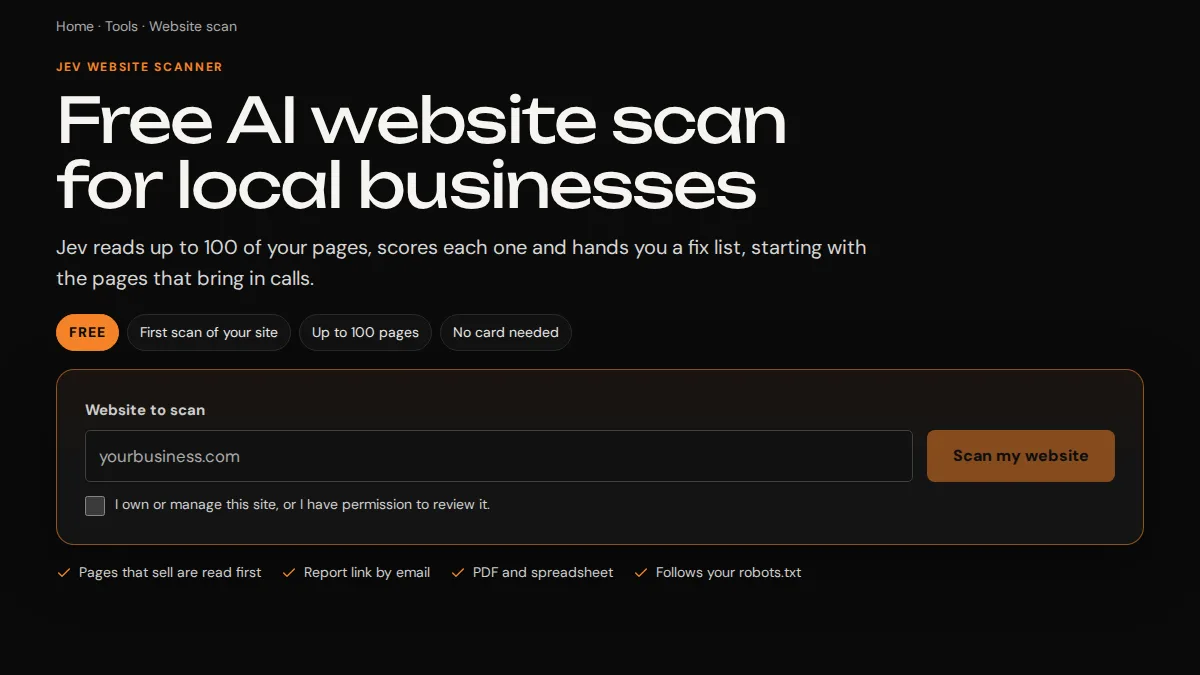
The Jev screen places a website field beside Scan my website. The field's subject matches the named action, giving a visitor a specific starting task. We would use that relationship when discussing a new business's contact wording. Ask the owner which detail is needed to begin the actual service conversation. Our preparation notes would connect that input with the proposed action label. The business can then approve the wording alongside the offer facts used in its first draft.
- What does a helpful label say?
- It identifies what the person should enter and stays clear within the task. We would ask a reader to explain the expected value before they type. W3C's form labels guidance discusses identifying the purpose of controls and associating labels with them. Our recommendation can use that principle without claiming the new form has passed an accessibility audit. The actual interface still needs its own implementation and checks under the agreed work.
- What if the visitor cannot answer a field yet?
- Ask whether the business needs that fact before responding. We can discuss an optional field or a clearer way to ask the question when the initial contact does not require a precise answer. A new buyer may know the problem without knowing the service term. The page should help them describe that need. Any change to required fields should follow the actual receiving process and the implementation work agreed for the project.
- How should errors be described?
- Point to the input that needs attention and explain what the person can do next. We would avoid a vague message that leaves them guessing which value caused the issue. W3C's user notification guidance provides a reference for form feedback. The discussion can define useful expected behavior, while an actual test must record what happened with a chosen input. We should not present the proposed message as an observed repair.
- Should every intake question appear on the website?
- Use the questions the visitor needs for the first request. We can leave later preparation details for the stage where staff actually need them. A long internal business brief and a public contact form serve different purposes. The kit discussion can identify both without assuming every detail belongs in the form. Our suggested first screen should make the action understandable and request information that the receiving team can use.
- What if the launch uses both a form and a phone route?
- State what each route is meant to handle and who can approve its public wording. We can ask whether the same service question belongs in both or whether staff need different preparation details. A phone number beside a form does not itself establish that both routes are ready for the launch. The business should confirm the actual contact details and what its team can say next. Our proposed page can then explain each action accurately. Any check of a call or submitted message needs its own permission and observation before the project describes that route as working.
Keep unresolved additions in the agreement discussion
An incomplete input list and an unconfirmed service request are different questions. We would identify both so the business can discuss the work without inventing included deliverables.
Before
- An unnamed new business has a small logo image and an approved service name. Its founders have not agreed the service inclusions, and a former supplier still controls the domain account. They also ask for a new booking system without checking whether that request belongs in the proposed kit agreement. This is a sample input situation, with no actual customer or launch outcome claimed.
After
- The business marks the logo format and account control as input questions. It names an offer approver and supplies the settled facts for a first discussion. The booking request remains an open addition until the agreement confirms its inclusion and terms. We would use this separation to discuss a sensible next step; it does not imply that a booking system or account recovery is already included.
- How do we distinguish a missing input from extra work?
- A missing input is a fact, file, or permission needed for a task already agreed. Extra work changes what the project is expected to provide. We can discuss that distinction using the exact request and the kit terms. A question about the existing logo file differs from a request to create a new identity. Keep those questions separate so the business can understand what it needs to supply and what still needs its own agreement.
- What if an added request seems small?
- Describe the request clearly and ask whether it fits the agreed work. We would avoid declaring it included based only on how short the request sounds. A small visible change may depend on an account or a new process. The project terms should settle its place and any effect on the work. Our input conversation can expose the dependency without supplying a price, deadline, or deliverable that has not been approved.
- How should we prepare for the first discussion?
- Bring the offer you are using, a brief account of the service, and the selected assets you can approve for use. We can begin from that material and identify the questions still open. Name the person who can settle the service facts. You do not need to invent finished copy to make the brief look complete. Accurate gaps give the discussion a better starting point than polished statements the business cannot yet support.
- What can we accept before all questions are closed?
- The business can approve settled facts and suitable files while leaving a specific addition unresolved. We would state which part of the draft is ready and which task still depends on an answer. That allows a precise conversation about next steps without treating the whole launch as complete. The final agreement should reflect the work actually accepted, with any further request and its terms stated before it becomes an assumed project obligation.
- Keep new feature requests beside the agreement question they raise. We can discuss them without treating the supplied brief as an approved expansion of the kit.
- Hold an unsupported service promise until its owner answers. Our draft can use the settled facts while identifying the clause that remains open.
- State what has not been tested on a proposed intake path. We would need an actual authorized check before describing successful receipt or a repaired error.
- Bring the smallest missing fact that blocks the next writing choice. We can ask a focused question about it while the business prepares the other launch material it needs.
Sources