Need help?Jamie

GARRISON · MICROSITE SOFTWARE BY TROJAN

Garrison water restoration microsites.
Your brand. Your leads.

Your crew can be on site fast, but storm-night calls keep landing with brokers and big franchises before homeowners ever find your number.

Trojan Digital Marketing builds water restoration websites on Garrison, our microsite software, for restoration companies in US markets outside Indiana. Each site carries your company's name, so the person standing in a soaked basement calls your own intake line. It's for the owner who says, "That midnight call should've rung my crew, and a broker got it." EPA guidance says to dry water-damaged areas within 24 to 48 hours to prevent mold.

Bring your after hours routing and the incident types you accept. The first strategy call is free, and during business hours we aim to reply within five minutes.

  • Emergency calls ring the intake number you pick
  • Response wording matches what your crew really does
  • Mold and flood pages your office approves first

Jeff Clerisier founded Trojan Digital Marketing in March 2018, and we have more than 1,400 live websites. On every restoration site, the hours and arrival times come from your dispatch sheet and get your sign-off before launch, so a homeowner calling on a flood night hears the same promise the page made.

For local businesses, regional teams, and national brands. Scoped around your target markets and the work your team can deliver.

Illustrative professional water restoration equipment in a property interior.Focused websites. Direct inquiries. Your brand.
“I had a great experience working with Jeff…”
Heather DoanGoogle review

Jeff Clerisier founded Trojan Digital Marketing in March 2018.

We have more than 1,400 live websites.

Based in Indianapolis, we serve businesses across central Indiana, including Carmel, Fishers, Zionsville, Westfield, Noblesville, Greenwood, Avon and Plainfield.

We also work with clients across the United States.

Read our Google reviews

Looking for a defined annual membership? Compare branded website counts, included qualified leads and renewal prices on our exclusive water restoration leads page. These memberships serve eligible markets outside Indiana. The network overview below explains the broader project and territory options.

Want the domains registered to your business?

That’s the owned-network offer, which includes every inquiry the sites produce, with a one time build fee and annual site renewal. Compare owned-network prices, content tiers and ownership terms. Roofing, water restoration and window treatment networks are available in eligible markets outside Indiana.

FROM SEARCH TO YOUR TEAM

A customer has a question.
Your brand has a useful answer.

Who can help with this water damage? A focused microsite connects that question to evidence, clear service information, and the right next step.

  1. 01

    The search

    Water damage cleanup · drying · restoration planning

  2. 02

    The useful website

    Explain accepted incidents, the response process, owner authorization, and what happens after a request.

  3. 03

    The direct inquiry

    Send the incident details and contact information directly to your intake team. A request does not mean a crew has been dispatched.

OWN YOUR LEAD SOURCE

Paid leads can be a channel.
Your website can be an asset.

Purchased leads depend on a provider’s terms. Paid advertising can send visitors to your own website. Organic microsite lead generation works by making useful pages discoverable for relevant searches. Each approach has costs and a role; an owned microsite can support paid and organic traffic together.

Build lasting property manager resources alongside urgent need pages, and maintain accurate answering hours. That is the practical idea behind compounding organic growth: later improvements build on useful work already in place. It requires maintenance and does not guarantee rising lead volume or rankings.

Compare organic leads, paid leads, and ownership

THE WATER RESTORATION MICROSITE PLAN

We sort out your after-hours answering before a single page is written. A 2 a.m. call that nobody picks up goes to the next company on the list, so we ask who answers in each period you advertise. Then we agree the markets and the incidents you take, and every site names your company as the one doing the work.

We write the pages, set up call and form routing and track where each inquiry came from. Your company supplies what it really does: the incidents you accept, your territory, your answering hours and your crew's judgment on site. Nothing goes on a page your office hasn't confirmed.

Put the asset under your business's control

An owned system should leave your business with control of the brand, domain, commissioned content, intake destinations, and permitted inquiry records. We define those items in the scope instead of treating ownership as a slogan. Account access, vendor dependencies, recurring costs, export formats, and handoff responsibilities belong in the same conversation.

A maintained website can accumulate useful content, recognition, referral relationships, and a better understanding of what customers need. That accumulated value depends on continued investment and execution. A domain purchase or a group of pages does not guarantee inquiries, search visibility, revenue, or a future sale price.

The proposed microsite network must have a clear audience and purpose. A residential water damage information site and a commercial property manager resource may warrant different journeys. Several near identical sites representing the same offer usually create more maintenance work without creating a better customer experience.

Which water damage jobs should your sites ask for?

We begin with a service and capacity interview. Which inquiries can your team evaluate? Which require a different provider? Does the business handle residential work, commercial work, reconstruction, or a defined subset? Who answers during each advertised period? Which property types require a specialist review before any scheduling discussion?

Those answers become an approved offer register. Each public service has an owner, a boundary, supporting evidence, an intake route, and a review date. That register keeps a content writer from turning a general restoration capability into an unsupported promise about specialized work, insurance coverage, emergency arrival, or equipment availability.

WorkstreamWhat we defineWhat your team approves
Territory
Where inquiries can be accepted and how exceptions route
Actual service area and response coverage
Content
Buyer questions and distinct page purposes
Capabilities, evidence, and service language
Intake
Minimum information and responsible recipient
Qualification and escalation decisions
Reporting
Source, status, and outcome definitions
What counts as a qualified opportunity

What does someone with water on the floor need to see first?

A homeowner needs to understand whom they are contacting and what happens next. A facility manager may also need to establish authorization, building access, an internal purchasing contact, and documentation expectations. We design those paths separately so an urgent visitor is not asked to complete a commercial procurement questionnaire before making contact.

Service content explains the business's role, accepted property types, coverage, contact options, and the limits of preliminary information. Guides answer a specific planning or communication question. We avoid publishing do it yourself restoration instructions, diagnosing a property from a form, or converting uncertainty into reassuring claims that a contractor has not approved.

The main company site remains the source of business identity. Any focused site should clearly identify the responsible restoration company and connect to the wider brand. We don't create fake local offices or present ourselves as the company that will restore the property. Local relevance comes from genuine service decisions and useful information.

Connect contact capture to a responsible person

We map the first contact through acknowledgement, human review, qualification, and the next agreed action. A form receipt says that information was received; it must not imply that a crew has been dispatched. If telephone availability varies, the site and answering workflow should describe the same arrangement.

The minimum intake usually begins with contact details, property location, caller role, and a short description in the caller's own words. Additional questions should earn their place by changing routing or preparation. Sensitive documents, insurance identifiers, photographs, and access information should move through an appropriate approved process only when needed.

A practical workflow also handles the unwanted cases: duplicate submissions, wrong service requests, a person outside coverage, a caller who cannot authorize work, and a missed connection. We give these outcomes explicit labels. Otherwise an unanswered form can disappear into a dashboard that still calls it a conversion.

A hypothetical commercial inquiry

Suppose a building manager contacts a contractor through a commercial microsite after discovering water in a leased office. This is an illustrative scenario, not a client result. The first contact captures the property address, the manager's relationship to the building, a callback method, and the requested assistance. It routes to the designated human recipient.

The recipient confirms whether the property and request fit the business's current coverage. If the caller needs an owner's approval, the record identifies that dependency without pretending authorization exists. If coverage is unavailable, the outcome is recorded promptly. The marketing report then separates a relevant inquiry from an accepted opportunity and any later job outcome.

That distinction makes a real commercial decision possible. If relevant inquiries consistently fail because the business cannot cover an advertised period, buying more traffic is not the first fix. If the wrong property types dominate, the offer and content may need revision. If accepted opportunities stall, the team can examine the follow up process.

Choose a territory strategy the operation can sustain

Scope the network around the restoration brand’s operating model. A homeowner contact journey may prioritize a short explanation of the contractor’s role and a clear phone path. A commercial property resource may need caller authority, building access questions, and the receiving account contact. A business with several staffed branches may also need routing rules that distinguish an inquiry received centrally from one accepted by the responsible team. These are separate planning decisions; publishing more domain names does not resolve them.

The first territory may be narrower than the business's eventual ambition. A useful launch contains enough content to explain the offer and enough routing discipline to serve the audience responsibly. Additional cities or microsites follow distinct customer needs and the ability to maintain them, rather than a predetermined page quota.

What a scoped engagement can include

An initial engagement can produce the ownership inventory, offer register, territory map, content architecture, approved page drafts, and intake specification. Implementation can then connect the chosen pages to forms, phone paths, analytics, and the agreed customer management workflow. The proposal identifies which systems and integrations are included and which require separate vendor work.

Acceptance checks should use real tasks: an authorized reviewer can edit a page, a test inquiry reaches the correct recipient, a record retains its source, and an export can be opened. We also review mobile contact access and the consistency of response language. These checks make delivery assessable before anyone debates marketing outcomes.

Ongoing work includes content corrections, route testing, access reviews, capacity updates, and analysis of qualified opportunities. The maintenance guide explains that operating discipline; the ownership and attribution guide explains the records behind it. Both support the broader owned restoration lead generation guide.

Start with a reviewable commercial scope

Bring your current websites, service boundaries, answering arrangements, and a small anonymized sample of inquiry outcomes. We can use those inputs to define an owned lead generation scope with concrete deliverables and dependencies. Our restoration marketing agency service places that work within your broader marketing priorities.

The right next step is an agreed asset and response plan: what your business will own, which audience the first release will serve, who will handle inquiries, and how progress will be evaluated. Request a water restoration lead generation scope to turn those decisions into a practical build plan.

Plan the network around your brand’s next market

A market fit review is the first step toward a scoped microsite proposal. Bring the markets you want to pursue, the websites you already control, your approved service offer, and the capacity behind it. We use that brief to identify the first useful destination, the content and inquiry routes it needs, and the responsibilities that make the network maintainable. Discuss your water restoration microsite plan or explore the owned lead generation approach.

For a brand with a separate foundation assessment division, the foundation repair microsite plan shows how that audience needs its own offer and handoff. Separate the service responsibilities clearly when more than one trade shares a brand.

Questions about water restoration microsites.

What does a water restoration microsite network cost?

Restoration memberships begin at $399 monthly for a 50 site network, and qualified leads come included. The pay per lead route costs $800 in its first year. Would you rather have the domains registered to your company, with every inquiry included? That's the owned network, and it's priced after the free strategy call once we know how many sites your response area supports.

What should my sites promise about response time?

Only what your crew hits on an ordinary night. EPA guidance says to dry water-damaged areas within 24 to 48 hours to prevent mold, so homeowners call whoever sounds fastest, and a page that overpromises costs you the job once the truck runs late. We write arrival and answering wording from how you actually dispatch, and your team approves it before launch.

Can my sites talk about flood insurance?

Yes, as plain background that never promises coverage. FEMA says most homeowners insurance doesn't cover flood damage, and a new NFIP policy typically waits 30 days before it takes effect. Your pages can explain those basics and send coverage questions to the homeowner's own agent, while your office decides how it handles claim paperwork.

What if my restoration sites stay quiet, or I want to stop?

Quiet towns happen in restoration, so the monthly membership gives you a way out. The terms read: "The first 90 days are a proving window billed monthly. After that the membership continues month to month and you can stop with 30 days notice." Pay per lead members get renewal credit, capped at the renewal price, for included qualified leads that never arrived.

Which markets can a restoration network serve?

Eligible markets across the US, with Indiana left out. Houston, Tampa, Dallas, Phoenix, Atlanta and Charlotte already have water restoration market pages on our site, and other metros are scoped on the call. Keep your town list inside the area your crews can reach on a flood night, because every site repeats the response promise you approve.

What do you need from my team before building?

Your after hours routing and a list of the incidents you accept. Basement flooding and sewage cleanup might be on it, and large commercial losses might not. We also ask who handles insurance conversations at your office. The first call is free, and nothing gets built until the scope has an answer for each of those.

Understand the model.
Then choose your next move.

Three connected guides explain the strategy, the lead economics, and the ongoing work behind your network.

YOUR BRAND. YOUR NEXT MARKET.

See your water restoration network take shape.

Explore a state, then connect the right territory, content and inquiry process. Each state survey highlights example markets to compare against your real service area.

TX

YOUR NEXT MARKET
Texas

Texas network illustration with a survey grid, schematic connections and a central lock.
Your brand at the center
Schematic connections, not site locations. We confirm your towns and service area before planning the network.

WATER RESTORATION MICROSITES

Texas.
Start with a serviceable market.

One state. Separate metro decisions.

  1. Define the territory

    Choose real service areas and available capacity.

  2. Give each site a purpose

    Explain accepted incidents, the response process, owner authorization, and what happens after a request.

  3. Keep the inquiry connected

    Branded pages, direct delivery, and an agreed lead definition.

Price my network.Explore the national water restoration offer

Explore a local microsite plan.

See how ownership, useful content, and direct inquiries fit together in a specific market.

LET’S MAKE IT YOURS

A water restoration network.
Built around your business.

Bring your website, target markets, and examples of the work you want to win. We will define the first useful destination, the ownership details, and the follow up plan.

Price my network.

The first strategy call is free, and during business hours we aim to reply within five minutes.

Review restoration intake and network choices.

These Texas guides connect restoration network terms with the intake decisions your team controls.

Roofing and water restoration networks serve eligible markets outside Indiana. A guide does not confirm territory availability.

Identify who can act on a commercial site request

A commercial inquiry needs a caller role and a responsible site contact. Keep those details visible while the restoration company determines who can approve the next action.

Commercial restoration inquiry handoff
Request detailWhat the caller suppliesWhat the business must establish
Reported concernA brief account of what prompted contact.Whether the reported issue fits the services actually offered.
Site contactThe person who can explain the request.How that contact relates to the property and purchasing process.
Location contextThe affected business location, as known.Whether the responsible team can consider work there.
Dispatch acceptanceThe requested assistance and callback route.Whether an authorized person has accepted a response task.

An office assistant may make the first call because they found water near a work area. The caller may still lack approval to order work there. We suggest capturing the caller's role in ordinary language so the receiving team knows what to ask next. Our form discussion can account for this handoff. The company still sets its purchasing rules.

Ask who answers access questions. Then ask who can approve a purchase. They may be different people. A useful request record preserves that distinction. We can discuss how a microsite carries those names or roles into your existing process. Show which approval is still needed. Staff shouldn't have to infer it from a job title.

Should every caller have to choose a purchasing role?
Ask only for a role that changes the first staff action. A free-text answer may be more accurate than a list that excludes the caller's situation. We can help frame that question around your receiving process. Leave an unsure option where needed. The provider decides what else it needs to ask about approval later.
Can a facilities contact approve everything?
The business needs to establish that from its actual arrangements. A facilities role can give useful context without proving authority for a particular expenditure. We suggest recording any further approval needed as a pending task. Keep the contact's reported role intact even when another person must authorize work.
  • A caller role can change while a request is open. Keep the earlier role and add the new contact where staff can find it. We suggest asking who now holds the next task.
  • A purchasing contact may need to hear from the site team first. Show that task as pending. A name in a required field shouldn't imply the person has agreed to the work.
  • If the caller leaves before staff respond, keep another approved way to reach the site. Ask the business what details it needs. Our form discussion can then reflect the real handoff.

Preserve the caller's account without adding a diagnosis

A commercial water request should retain what the caller observed and what they are asking for. Professional findings belong to the provider's later assessment.

Westfield Roofer homepage and contact choices
Request limit: Westfield screen shows visible contact routes. View the project
What should the description field ask?
Ask what prompted the request in the caller's own words. They might describe water noticed in a room or a concern about an existing work area. We don't need them to identify a technical cause to make contact. The receiving company can decide which clarification is appropriate. A label that demands a diagnosis can produce inaccurate information before the conversation begins.
How should staff correct an unclear category?
Keep the original description and add the staff classification after a qualified person handles it. Our report can show that correction apart from a new request. If the caller selected the wrong service, record what staff established and why. Silently replacing the original wording can hide a page label that repeatedly confuses visitors.
What if the page wording sounds like a finding?
Have the provider approve language that describes its offered service and assessment process. We can adjust the website explanation once those facts are available. Avoid making a form response sound as though the property has already been evaluated. A request can be routed and acknowledged while its cause and appropriate response remain unknown.
  • Keep a customer's location description beside their stated concern. Staff should be able to tell whether both describe the same part of the site.
  • Mark a staff-added service label as a classification. We suggest preserving who added it and which information supported the change.
  • Separate an existing-project question from a new commercial request. Our content can give the provider a useful route for each without assuming both are sales opportunities.
  • Check a supplied image for its stated purpose. A photograph may illustrate what the caller noticed while leaving the cause and service response unresolved.

The Westfield Roofer screenshot provides a separate contractor-interface reference. It shows a service headline and visible ways to contact that business. We use those observable choices to discuss the clarity of a request route. It supplies no restoration finding or commercial dispatch result. Your own company must provide the service wording that its team can stand behind.

Keep site documents out of an unnecessary first form

A first request should gather what the receiving team needs to respond. Add a document path only when the provider can explain its purpose and handling responsibilities.

  1. Name the document question Ask what staff need to learn from a proposed upload. A general request to attach everything can collect irrelevant site details. We suggest defining a specific purpose before adding the field. The business should also decide whether that purpose can be met during a conversation instead of through the public form.
  2. Choose the receiving owner Identify who can access the supplied material and how it reaches that person. Our website work can account for an approved route, but the operator must establish the actual handling arrangement. Keep credentials and private access instructions out of a general content brief. They belong in the business's authorized process.
  3. Explain a failed upload Tell the caller what happened and how to proceed without claiming a document was received when it wasn't. We can discuss a recovery message and a suitable alternate contact route. Test that message with labeled internal material. A missing attachment shouldn't disappear behind a general submission confirmation.
  4. Retain the relevant context Keep an accepted attachment associated with the request it supports under the business's record rules. An isolated file name can be hard for staff to interpret. We suggest preserving enough context to identify its purpose. Avoid copying the entire document into a wider marketing report when the task only needs a status.

Insurance or purchasing documents can carry claims the website team cannot establish from an upload. Ask the provider what information belongs in the initial request and what needs an authorized later exchange. Our role is to discuss the agreed contact path. File possession alone doesn't establish permission to publish the contents or a particular coverage outcome.

What if staff cannot open an attachment?
Keep the request available while staff resolve that gap. The message can say a file needs another route, if that is true. We suggest agreeing who asks for it again. Don't tell the caller to resend the whole request just to replace one missing file.
Should an upload be required to make contact?
Ask what that requirement achieves. A caller may be away from the file or unable to share it yet. We can discuss a later document step if the first contact needs only a callback. The operator decides what its staff need before they can proceed.

Collect location context the receiving team can use

A location field should help the provider identify the commercial property. Access and response arrangements still require the operator's own confirmation.

  • A site may have a public address and a different receiving entrance. Ask the operator which detail matters for the first conversation. We can add an appropriate prompt without inventing instructions for the premises.
  • The caller may know the affected area while lacking a full street address. Allow the business to decide how that situation should route. A forced complete address can encourage a guess that staff later have to untangle.
  • Record whether the person supplying access context is also the contact available for a callback. Our handoff discussion should keep those roles distinguishable when a property team shares responsibilities.
  • Keep a requested response time in the request as a preference. The provider must confirm what it can actually do. We don't turn that preference into an arrival commitment in a website acknowledgement.
  • If contact availability changes, update the page using the operator's approved facts. Keep an exceptional instruction separate from the usual route so staff can retire it when it no longer applies.
How do we handle a property outside the approved market?
Use the business's actual routing rule and record the outcome. Our discussion should begin with the locations the operator has approved for this network. The water restoration offer is for eligible markets outside Indiana. A page name shouldn't be taken as proof the company can dispatch there or accept every commercial site in that market.
Should the page publish access codes?
Use an appropriate operator-approved exchange for sensitive access details. A public service page can explain who to contact without exposing a code. We suggest deciding the handling task with the actual property contact. A website brief shouldn't become a convenient place to store details the general public doesn't need.

A commercial contact route can be concise while leaving room for uncertainty. Use a short description and a reliable callback method first, then ask the questions that change the receiving action. We can discuss that balance from your actual incoming requests. More required fields aren't automatically better if the caller lacks the answers and abandons the form.

Test an unaccepted commercial request as a complete handoff

A labeled test can show whether the form and receiving record agree. Use an invented commercial request so the exercise never becomes a claimed customer result.

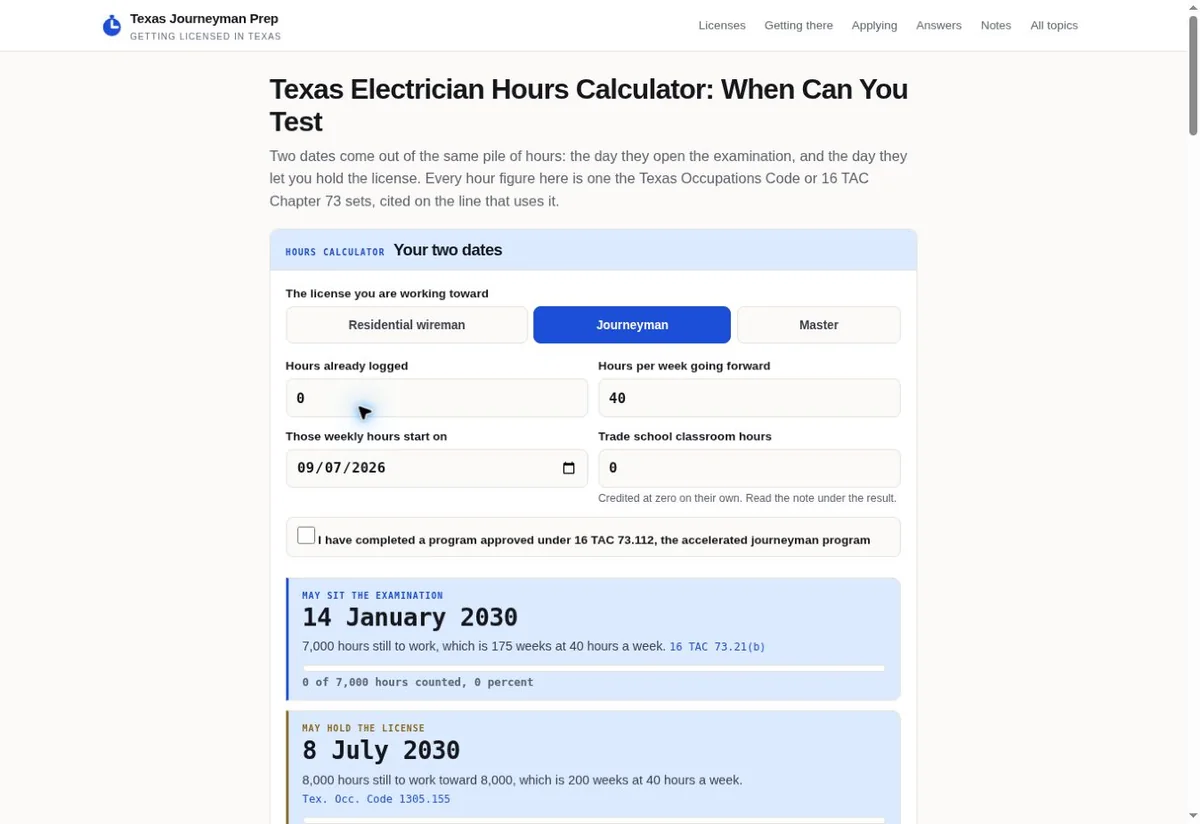
Texas Journeyman Prep calculator with labeled fields
Interface example: Texas calculator presents labeled planning inputs. View the project
Hypothetical example An unnamed commercial property team submits a hypothetical water restoration request

Before

  • A building contact describes water noticed near an office area and asks for a callback. The contact can explain the concern but says another person approves expenditure. In this invented exercise, the form records the message while the receiving notification omits the approval dependency. No property assessment or accepted response has occurred.
  • A general confirmation tells the contact the team is on its way. That message goes beyond the exercise's facts. We would flag both the missing dependency and the response wording. Adding an attractive contact button wouldn't answer the question of who can approve the next step or what the provider has actually accepted.

After

  • The proposed correction carries the reported concern and the pending approval role into the receiving record. A revised message accurately describes receipt and the operator's approved next contact step. We can then repeat the marked test and inspect whether the intended staff member can find those details. Dispatch remains a separate provider action.
  • The test shows only what someone checked at that time. It doesn't establish commercial service availability or a revenue outcome. Our exercise lets the owner assess whether the agreed information survived the website handoff. Any professional findings and further authorization belong to the actual restoration company's later work.

The Texas Journeyman Prep calculator displays labeled planning fields and distinct choices. That existing screen gives us a useful reference for understandable input. It isn't a restoration system or a tested dispatch route. Your own commercial request needs labels suited to its task, and those labels must be checked alongside the receiving record.

Keep the test recognizable to staff from the outset. We suggest agreeing its label and destination before sending it, so it isn't mistaken for a live incident. Use only approved test material. The business can inspect its own receiving path without importing fabricated customer details into routine lead totals.

  • Test the staff view as well as the caller view. We need to see whether the pending approval detail survives the handoff.
  • Record the file or page version used for the sample. A later form change may require a fresh check of the same path.
  • Ask the receiving owner which missing detail blocks their next action. Our correction should address that detail before adding another field.

Price the handoff work using observable acceptance checks

Website work is easier to assess when the owner can check what was completed. Separate website receipt from provider acceptance and commercial outcomes in the package discussion.

What work affects the marketing quote?
A changed form, an additional receiving system and a document route can require different implementation work. Tell us which ones are needed and who maintains the existing tools. We can discuss the assignment from those facts. There isn't a supported universal price for this commercial handoff, and the request form shouldn't imply a restoration service price.
Who signs off on the receiving behavior?
Name the business person who can confirm the request reaches a usable record. We suggest including the person who actually handles commercial inquiries in that check. The website owner can approve the interface while the receiving owner verifies the operational handoff. Keep both observations attached to the same marked test.
When can a received request be called accepted?
The operator needs to define that stage and record its action. A form's success state doesn't establish that the company accepted a site response. Our analysis can preserve each stage without predicting the eventual job. Show the approval still needed until its owner resolves it.
Which commercial handoff details help us assess the website work?
Bring the approved commercial service boundaries and a description of the current receiving path. An anonymized example of a lost approval detail can help explain the problem. We can discuss your marketing handoff from our Indianapolis, Indiana base. The actual restoration business still supplies its territory and professional response arrangements.

Ask how the package handles a later contact change or a failed receiving test. A new staff destination can require updates in more than one place. We can discuss which maintenance tasks belong in the agreement after the initial path is accepted. Keep that work distinguishable from a promise about lead volume, crew availability or the value of an eventual commercial project.

  1. Inspect the saved request Have the receiving person find the marked sample and explain their next task. We suggest checking the original message beside that record. A test that merely opens the form hasn't reached this point.
  2. Check the stated promise Read the caller's confirmation and the staff notice together. Our check asks whether they describe the same stage. If staff still need to accept the response, keep that fact visible in both places.
  3. Close the test task Name who checked the corrected path and which part they observed. Retain any open issue. We can discuss a further task if the test exposes a different system problem beyond the agreed website work.

Sources

Read more on this