

Yahweh House of Prayer
A website for an Indianapolis church that brings worship information, ministry introductions, faith articles and contact options into one place.
An SEO proposal should make the work understandable before it begins. For each priority, ask which page or customer journey is involved, what problem has been observed, what will change, and how the completed work will be checked. That creates a useful conversation even when an issue takes several steps to resolve.
Consider an illustrative service page that explains an offer but leaves visitors unsure whether they need an assessment or a formal quote. The observation is that the decision is unclear. The action could be a clearer process explanation and inquiry option. The check is whether a new reader can identify the correct next step and complete it successfully.
When several pages cover similar services, ask the team to explain the purpose of each before commissioning another one. A broad agency introduction, a focused service explanation, and an educational guide can all be useful when their roles are clear. Preserve helpful existing material as those roles are refined.
Review acceptance with the person who actually handles customer inquiries. Their understanding of the service can expose an inaccurate promise or a missing qualifier that a purely editorial review would miss.
The guides to overlapping page intent and useful agency reports provide questions to bring to that review.
Discuss an Indianapolis SEO work plan. Send one important page and the customer problem you want the work to resolve.
A business with an established website needs to understand its current resources before adding another search page. Identify the important service, the page that explains it and the questions customers ask before contacting the team. The SEO plan should improve the relationship between those pieces and document why each change belongs in the scope.
Trojan's Indianapolis SEO and AEO service brings technical diagnosis, useful answer content, local information and conversion clarity into that review. The initial inputs are your approved services, actual operating coverage, relevant work evidence and available search and inquiry records. A location label alone is not a strategy.
A service page helps a buyer evaluate the offer. A supporting guide explains a question in depth. An agency page helps someone choose a partner across channels. When several URLs discuss SEO, investigate which needs and search observations belong to each before deciding whether to revise or consolidate anything.
Search Console's performance documentation explains the available page and query views. A page average and a query average from separate exports do not establish which URL appeared for that query. The work plan should distinguish an editorial assignment from an observed query to page relationship.
Use the content overlap guide to document the intended roles. Preserve useful URLs while that evidence is reviewed. A redirect or a new landing page should follow an established need rather than a desire to increase the page count.
| Work | Customer question | Evidence to inspect |
|---|---|---|
| Technical repair | Can I reach and use the important page? | The affected URL, confirmed issue and completed check. |
| Service content | Does this business handle the work I need? | Approved scope, fit criteria and a clear next step. |
| Answer content | What do I need to understand before asking for a proposal? | A useful explanation with relevant original evidence. |
| Local accuracy | Can this business serve me? | Consistent operating details and a truthful coverage explanation. |
| Measurement | Are the inquiries relevant to the business? | Available source and qualification records with clear definitions. |
The Westfield Roofer design showcase documents an inquiry path that separates types of roofing requests and collects property information. It illustrates how form design can support the next conversation. It does not establish a ranking lift, a lead forecast or a result for an Indianapolis client.
Apply the lesson to the actual service: what information does your team need to respond accurately? Place approved examples and preparation guidance beside that decision. A relevant explanation can be more useful than adding another general paragraph about the agency.
Google's generative AI guidance connects AI search work to its existing SEO foundations. Ask which answer, access issue or evidence gap a proposed AI task addresses. A special label should not hide the absence of a concrete deliverable.
Google AI impressions can be examined in the Generative AI performance report where available. Record them separately from qualified inquiries and do not treat overlapping report totals as additional traffic. Use the AI measurement guide to keep the review consistent.
Document the first scope, required account access, business reviewer and completion checks. Include how the team will maintain changed content and handle a service update. Keep the release record so future reporting can be interpreted alongside the work and business conditions.
The agency report questions help make that review useful. Discuss an Indianapolis SEO scope with one important page and the customer decision it should support. The next step is a defined project, not an unqualified promise of a particular ranking.
“Getting help with search visibility made sense for my business. I'm glad I decided to work on it”
Based in Indianapolis, we serve central Indiana and clients across the United States.
Request a free strategy callService area map
People look for help by neighborhood and by suburb, and the details that get a business found change from one place to the next. Each line pairs a sourced fact with the search fix it points to.
For contractor growth beyond Indiana, we can scope an exclusive Garrison network alongside your existing search work.
Roofing and water restoration offers serve eligible markets outside Indiana. We confirm territory and routing before you commit.
Explore branded exclusive roofing leads or branded exclusive water restoration leads for your service area.
Ask about window replacement lead options when that’s the trade your team serves.
Select one service answer and read it as a standalone quotation. We would check whether its meaning stays accurate when a reader misses the rest of the page.
A service page may explain a condition in its introduction, then give a much broader answer in an FAQ. If someone copies only the answer, the opening condition disappears. We can identify that risk by reading the selected passage without nearby text. The correction is usually a specific fact added to the answer, supplied by the person who can approve the business promise.
A condition that changes the offer belongs in the quoted passage. We would connect it directly to the promise so the reader can understand both together.
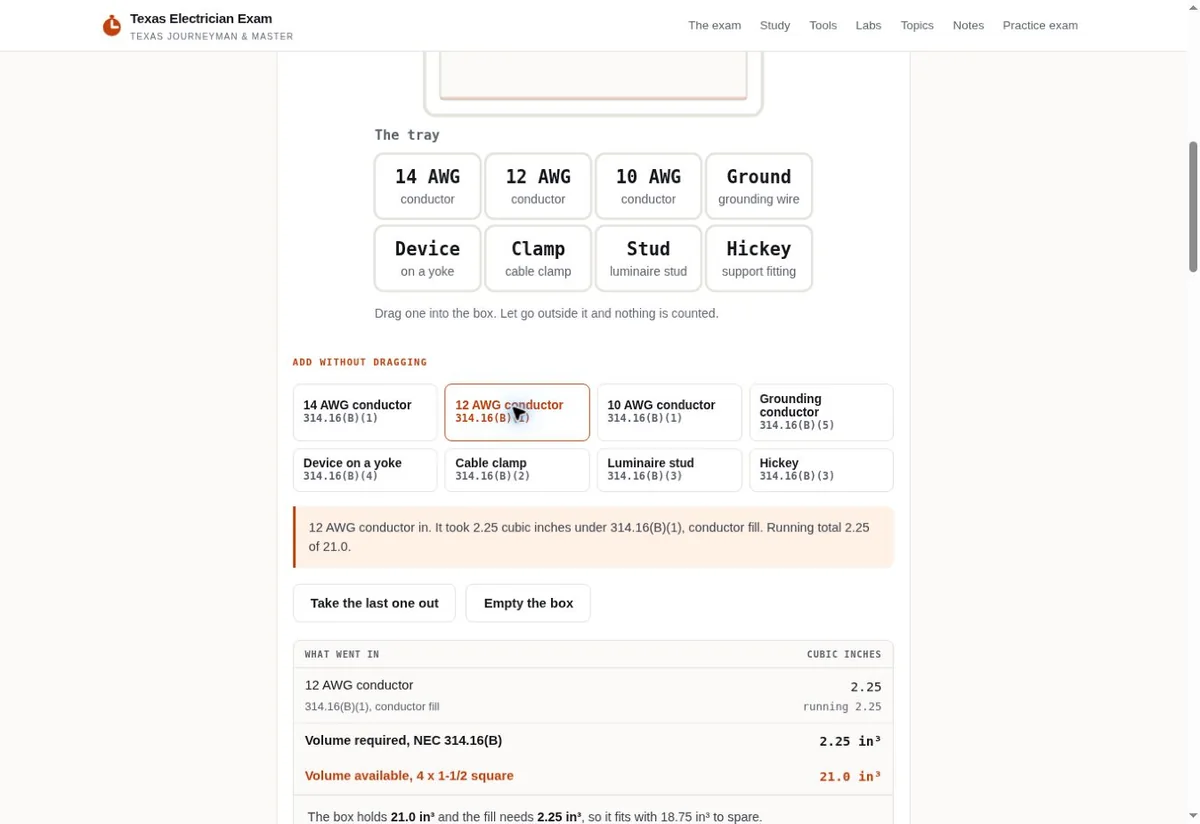
The Texas Electrician Exam box-fill image displays selected items beside a calculation area. The item names help a reader understand the context of the shown value. We can apply that relationship to an Indianapolis service answer copied into another message. Name the service alongside the statement, then keep the condition that changes its meaning close by. Our proposed passage would give a reader enough context to understand the claim when the rest of the page is absent.
For an Indianapolis business, the missing context may be whether an assessment includes implementation. A sentence describing the assessment should preserve that boundary if it matters to the offer. We would place the qualification near the claim so a reader can understand it with no other heading. Our proposed answer should retain its approved meaning even in a brief internal email.
Break the answer into factual claims and identify their support. We would preserve the approved service facts and remove any extra certainty introduced during editing.
A detached answer should identify its subject and the condition that matters. We would inspect the words that rely on surrounding layout to supply their meaning.
A nearby heading might say preparation advice while the answer says you will receive a plan. The heading limits the context, but the copied answer may sound like a promised deliverable. We can rewrite the answer to describe the actual discussion or resource being offered. That prevents a layout choice from carrying a service boundary the sentence itself fails to express.
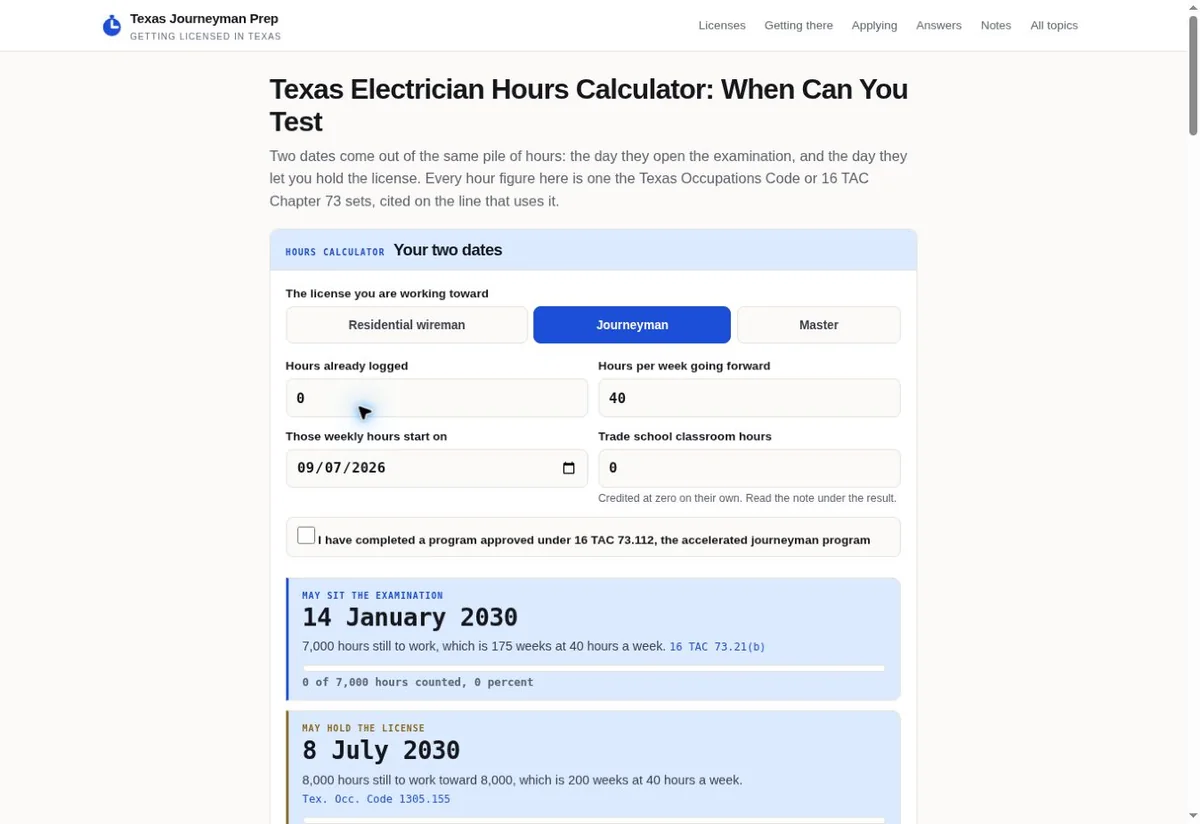
Labels can show what a person must understand before entering a value. We would use the pictured planning screen to discuss meaning, while treating any reading exercise as proposed.
Before
After
The Texas Journeyman Prep calculator shows a logged-hours field and another labelled Hours per week going forward. Each input has a named role. We would give a quoted service answer the same care with its subject and condition. A detached passage should say which assessment it describes and whether implementation requires another agreement. Our reading exercise would compare that short passage with the business's approved offer before suggesting it for publication.
The business can approve an answer's accuracy and context. We would state those completion checks clearly while leaving search and assistant inclusion to actual later observations.
| Quoted passage | Context the business approves | Meaning a lone quote retains |
|---|---|---|
| Selected answer | The exact passage and the service question it addresses. | Its subject is clear when the surrounding page is absent. |
| Attached condition | The business rule that changes the promise or eligible request. | The short answer retains that rule beside the statement it qualifies. |
| Detached reading | A copied passage with nearby headings and layout removed. | The reader can still identify what the answer means and where to ask more. |
| Publication approval | The authorized approver and the final wording they accepted. | The claim has support; external selection remains unverified. |
Sources
