Need help?Jamie

Market service plans

Park 100 SEO for Industrial Capabilities and Quote Requests

Your shop can handle far more than the website shows, and the RFQs that do come in are for jobs you'd never quote.

Trojan plans SEO strategy for industrial suppliers and job shops in Park 100, Indianapolis, Indiana, so every capability you actually quote gets a page a buyer can find. It's for owners who say, "Our best work is buried in a PDF line card." Unigov stretched Indianapolis to 402 square miles, so your pages should say you're on the northwest side.

Send the form with your site's address and the one process or product line you'd most like to quote more often. The first strategy call is free, and during business hours we aim to reply within five minutes.

  • A page for each capability you actually quote
  • RFQ forms that ask what your estimator needs
  • Jev grades 100 of your pages free before any work

For a Park 100 supplier, the judgment calls on your account sit with the owner, Jeff Clerisier, like which capability earns the next page and which RFQs your site should screen out before they reach the estimator. More than 1,400 sites Trojan built are live now.

Illustrative creative production workspace.
IllustrationSearch snippet preview for “seo park 100 indianapolis”A preview built from this page’s title tag and meta description for that search. It isn’t a live search result and shows no ranking.SNIPPET PREVIEWseo park 100 indianapolis|Trojan Digital Marketingtrojandigitalmarketing.com › indianapolis-p…Park 100 SEO for IndustrialCapabilities and Quote RequestsPark 100, Indianapolis SEO for industrialsuppliers: capability pages buyers can find,from an owner-run agency since 2018. Book a…

YOUR WORKING BRIEF

Choose where to start

Select the parts you want to discuss. Your choices carry into the inquiry form.

Discuss this service0 priorities selected

SEE HOW THE PIECES CONNECT

Explore the decisions
behind the plan.

THE TROJAN SYSTEMSEARCH
From a useful page to a relevant searchUseful websiteRelevant discoveryCRAWL · UNDERSTAND · CONNECT
  1. Useful website
  2. Crawl and understand the page
  3. Connect it to a relevant search
From a useful page to a relevant search

Trojan provides Park 100 SEO for industrial suppliers and business service firms that need more precise capability pages. We connect the work you actually accept with equipment and scope information, useful technical evidence, and an inquiry route built for review.

Link Logistics: Park 100 Industrial Center 13: Link Logistics lists industrial property at Park 100 in the Northwest Indianapolis market, including distinct office and industrial space. The industrial listing informs our focus on capabilities and purchasing questions. It does not identify your customers, establish local demand, or prove a supplier relationship.

Questions about local SEO in Park 100, Indianapolis, Indiana

What does SEO strategy cost for a Park 100 supplier?

Pricing comes after the free strategy call, because a job shop with two core processes needs far less work than a distributor carrying forty product lines. Before that call, a free Jev scan grades up to 100 of your pages. If your catalog runs deeper, the $99 audit covers as many as 3,000 pages, and a $19 rescan later shows what moved after the fixes.

Should our pages say Park 100, northwest Indianapolis or just Indianapolis?

Use the name your buyers already use, then add the wider one. Unigov folded nearly all of Marion County into the city in 1970, so Indianapolis alone could mean anywhere across 402 square miles. Link Logistics files Park 100 under its Northwest Indianapolis market, and a line like "Park 100, on the northwest side" tells a buyer planning a pickup how far they'll drive.

Does every process or material need its own page?

No, only the ones a buyer would pick you for on their own. If your estimator can name RFQs that came in for one process alone, that process has earned a page. Work you always quote together, like a couple of finishing steps, usually reads better on one page with a short section for each. A thin page with nothing new just competes with its neighbor.

What happens first after we get in touch?

Start with the free scan or the contact form. After that, we compare two lists: the capabilities your team wants more of and the pages Google already shows for them. On the free call, you pick the one process or product line you'd most like to quote more often. That call costs nothing, and during business hours we aim to reply within five minutes.

When will SEO changes start showing up in our RFQs?

Nobody can give you an honest date, since Google sets its own crawl schedule and its own rankings. Industrial buying adds its own lag, because an engineer may read your capability page weeks before purchasing sends the RFQ. Search Console shows impressions and clicks for each reworked page as they arrive, and your form can ask which page a buyer read first.

What if the new capability pages don't bring better RFQs?

Then the RFQ log shows it, and we rewrite that page or aim it at a different search. Each request carries the page it started on, so a run of mismatched requests stands out quickly. Sometimes the fix sits on the form, such as asking for material and quantity before anything else. Nobody controls Google's rankings, so treat a guaranteed position as a warning sign.

Which Indianapolis facts shape SEO for a Park 100 supplier?

Two sourced facts about Indianapolis, Indiana change how a Park 100 SEO strategy names your location and which capability searches it plans for first.

Neither fact is about Park 100 itself, and neither one names a Trojan client or a buyer for any Park 100 company.

Which page should answer each kind of industrial search?

SEO strategy for a Park 100 supplier in Indianapolis, Indiana starts by matching how buyers search to the single page that should answer, shown here for a hypothetical job shop.

How the buyer searchesPage that should answerWhat that page has to show
By process, like a cutting or finishing method
A capability page for that one process
The size or thickness limits you will quote, with approved photos of real parts
By material or part number
A material or product line page
What you keep on hand and what needs a lead time
By problem, like a failed part or a rush job
A short guide that ends at the RFQ form
What to send so the estimator can answer on the first reply
By your company name
The home and contact pages
Where you sit in Park 100, which door to use and who answers RFQs
By area, like northwest Indianapolis
A location section on the contact page
The counties you deliver to or service, named plainly

What are the first steps in a Park 100 SEO project?

A Park 100 SEO strategy in Indianapolis, Indiana moves from a free scan to one rewritten capability page, with your estimator involved before anything is published.

  1. Run the free Jev scanJev scores up to 100 pages and flags capability pages that never say what you make or where you are.Your team
  2. Pull ten recent RFQsYour estimator marks which ones you quoted and which you turned down, with the reason, so the pages attract more of the first kind.Your team
  3. Pick one capability to reworkOn the free strategy call, choose the process or product line you'd most like to quote more often.Together
  4. Rewrite that page and its formWe rebuild that page around your approved specs and photos, and the form opens with the details your estimator checks before anything else.Trojan
  5. Tag every RFQ by pageEach request is logged with the page it came from, so you can see whether better-fit requests follow the rewrite.Together

Define the work before choosing the search terms

An industrial buyer may search by equipment, material, application, or the operational problem they need to solve. A general statement about quality service may not tell them whether your team accepts the work. We start by documenting the actual capabilities and the distinctions that determine whether a request deserves technical review.

The resulting SEO map connects those buyer questions with existing pages. It identifies which capabilities need an explanation, which belong together, and which requests should be declined or referred. This gives the website a useful structure without claiming that every nearby industrial operation is a prospective customer.

Write capability pages for several decision makers

A technician may understand the equipment problem while a buyer needs purchasing information and an operations manager needs to understand the review process. A useful capability page can serve those roles with clear sections. It should explain accepted applications, the information needed to assess fit, and the next conversation.

Trojan can turn approved technical material into readable page content while retaining the meaning of specifications. The client’s subject expert reviews technical claims. We do not replace a qualified assessment with a marketing answer or imply that a form submission establishes compatibility, capacity, or acceptance.

Create a proposed fabrication inquiry architecture

Imagine a hypothetical supplier that handles selected fabrication work but receives vague requests for unrelated processes. Its current website lists materials in one paragraph and gives no examples of accepted applications. We would propose distinct capability sections, an approved project illustration, and a request page that asks for the broad application and relevant file when appropriate.

A supporting guide could explain what makes an initial request for quotation useful. It would distinguish preliminary context from the full specification needed later. The service page would state the actual review sequence, with the technical team retaining the decision about feasibility and commercial terms.

Make technical content accessible without losing its detail

Give useful pages a path from the siteHomeServiceGuideProject proofNext question
Home → service
Link the service to project proof.
Home → guide
Link the guide to the next useful question.
Give useful pages a path from the siteDescriptive internal links connect a discoverable page to supporting details and a next step.

Brochures and specification sheets can remain useful, but customers also need a readable introduction and an understandable route to them. We inspect whether key capabilities exist only in image text or downloads with uninformative labels. Important pages should have descriptive titles and clear links from the site’s main service structure.

Google’s SEO Starter Guide supports clear organization and descriptive content. Our technical list can include broken document links, inconsistent preferred URLs, inaccessible text, and orphaned capability pages. Repairs are prioritized by the buyer task and the importance of the affected service.

Plan implementation with sales and operations

The client supplies a current capability inventory, approved technical evidence, purchasing requirements, and examples of requests that did or did not fit. We involve the people who review quotations so the content reflects the information they need. This prevents a broad lead generation goal from creating a flood of poorly specified messages.

The first scope can include an intent map, capability copy, a technical document index, an inquiry brief, and measurement definitions. Each deliverable identifies its reviewer and acceptance criteria. Existing useful URLs remain part of the plan, with changes documented before implementation.

Measure opportunities at the stage actually reached

A technical inquiry can require several reviews before a quote is possible. We distinguish received requests, relevant opportunities, specifications complete enough for assessment, quotations issued, and accepted work where those stages match the business. A request value is not automatically revenue, and a quoted project may remain undecided.

Search observations help explain which pages attract the right applications and where the content creates confusion. The next task might be a clearer material boundary or a better preparation guide. Trojan scopes the website and content work directly, with no promise of rankings, quotation volume, or industrial contracts.

Put the first scope in order

  1. Inventory accepted applications and the information required for a quotation review.
  2. Organize capability pages and public documents around those buyer decisions.
  3. Measure relevant requests without treating specifications under review as accepted work.

Explore Park 100 marketing planning for the wider district approach, or return to Indianapolis marketing services. The full SEO service explains the broader engagement.

Discuss Park 100 SEO priorities with Trojan. Bring the current website and the customer decision you want the project to address so we can define the relevant work, approvals, and review evidence.

Sources & further reading

YOUR NEXT MOVE
Make the next step count.

Add a branded lead source to your search plan.

For contractor growth beyond Indiana, we can scope an exclusive Garrison network alongside your existing search work.

Roofing and water restoration offers serve eligible markets outside Indiana. We confirm territory and routing before you commit.

Explore branded exclusive roofing leads or branded exclusive water restoration leads for your service area.

Ask about window replacement lead options when that’s the trade your team serves.

Discuss your trade and service area.

Attach each published capability statement to an approver

A capability phrase can make a technical promise in very few words. We should ask who can approve its meaning before using it in a page written for search.

Who should approve the material description?
Ask the person responsible for the work which material groups may be named publicly. A familiar trade term can cover grades the supplier does not accept. We can draft the page from the approved range and ask about exceptions. The editor should know who answers a material question when the wording needs to change. A search phrase alone cannot establish that the business can perform the requested work.
Should sales approve the technical claim?
Sales can explain the question buyers ask and the work the company wants to discuss. A technical statement may need another owner to approve its accuracy. We should identify both roles when they differ. The page can then use buyer language without making an unsupported ability claim. The business determines the approval process that fits its operations.
What if the capability is supplied through another company?
Ask how the business is authorized to describe its role. The public page may need to distinguish work performed directly from a service coordinated elsewhere. We can make that relationship clear using the supplier's approved terms. Naming a process without its role can leave a buyer with the wrong expectation about who performs or accepts the work.
Does an existing brochure settle the wording?
It gives us a starting statement to check. Ask its owner whether the brochure is still current and which claims are permitted online. Older printed material may describe equipment or terms that have changed. We should not copy a capability just because it has appeared before. The current approver needs to confirm what the website may state today.

Bring one public capability sentence that staff often need to qualify during a call. We can discuss the difference between what it says and what the buyer takes from it. Your technical owner supplies the correction. This is a specific writing task that can be assessed before anyone discusses a larger set of search pages.

A Park 100 supplier may use a process name differently from its purchaser. We ask how that difference affects the work being requested. A short explanation near the name can prevent the page from making a broad promise. It should describe the approved service in practical terms and identify when a buyer needs to ask staff about fit.

Describe the range the supplied facts can actually establish

A material name or process label needs its own boundary. We can help the buyer understand that boundary while leaving technical acceptance with the supplier's authorized staff.

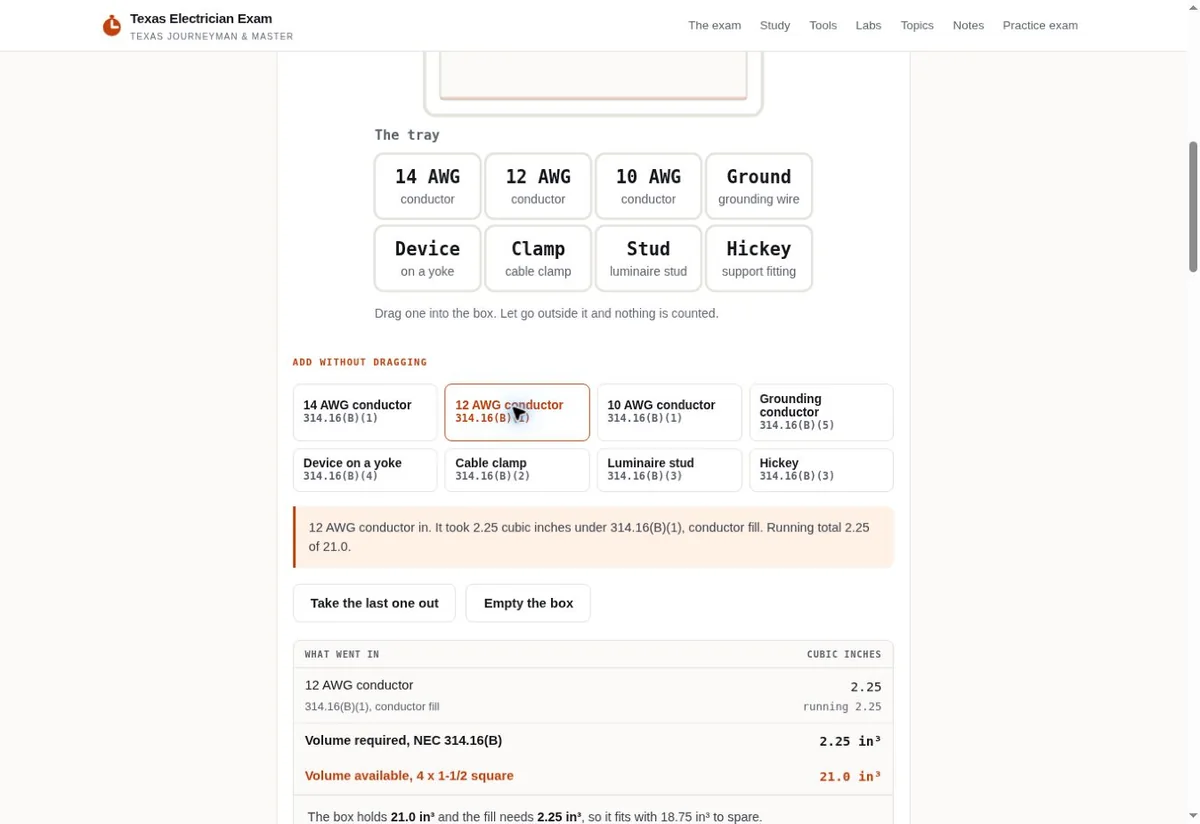
Texas Electrician Exam box fill calculator controls
Capability limit: Exam lab displays controls and calculation output. View the project
Capability claim verification inputs
Question or recordBusiness inputAcceptance check
Material scopeThe technical owner identifies the public material groups and any variant that needs an individual question.Read the published phrase beside its qualification. We should find the same range the owner approved, without added material grades.
Process termYour staff explain which operation the buyer's phrase refers to and which meaning would be inaccurate for this offer.A reader can identify the described operation and find the right question route when their intended meaning differs.
Published toleranceThe business supplies the exact statement it permits, including the conditions needed to understand any number.The number stays attached to those conditions. Our content check does not convert a general illustration into an accepted specification.
Changed capabilityThe approver names the changed statement and the public files or pages known to rely on it.Inspect each named reference against the replacement wording. We can flag an unresolved old claim before the page is treated as current.
Should the page include a tolerance number?
Only when the supplier approves the number and its necessary context for public use. A figure without its conditions can suggest a promise about work the staff have never seen. We can ask which explanation needs to sit beside it. The business should also state when a particular drawing requires its own assessment. A website paragraph cannot accept an individual production requirement.
Can a tool screenshot support a material claim?
The pictured Texas Electrician Exam box fill tool contains controls and a displayed output. It can illustrate the distinction between input and result on a screen. It supplies no basis for a Park 100 material or tolerance claim. We should describe the visible interface when discussing it and use your technical owner's information for the offered capability.
What if the most searched term is broader than our work?
Explain the narrower work clearly and use a contact route for a fit question. We can compare the broad phrase with the approved operation. The page should not promise the wider category merely to match a query. The buyer needs to recognize that limit before choosing to ask your team about the request.

Separate a public explanation from an accepted specification. The explanation helps a buyer recognize whether a conversation makes sense. Your staff still need the required job details before accepting work. We should ensure the page does not turn a representative size or material example into a promise that applies to every inquiry.

An approved limitation can belong beside the claim rather than in a distant footer. We can inspect how the two read together on a small screen. A large capability heading followed by an easily missed condition can create a misleading first impression. The content and layout should preserve the meaning the technical owner approved.

Ask what operation the buyer means by the technical term

A shared phrase can refer to different work across purchasing teams. We can resolve its meaning on the page using your supplier's approved explanation and a clearly defined next question.

  • Collect a recurring ambiguous phrase in the form staff hear it. A purchasing contact may use a broad process name for one stage of a larger job. We should ask the technical owner to describe the offered stage. That description gives the page a concrete answer without assuming that every visitor uses the phrase in the same way.
  • Write the distinguishing action in plain words beside the term. It may describe preparing a supplied component or working from a certain type of drawing. We can keep the technical name while giving the reader enough context to recognize the operation. The supplier approves the explanation and any examples used to teach it.
  • Explain which adjacent meaning the business does not offer when that distinction changes fit. We should use factual wording the owner permits. A relevant boundary can save a buyer from filling out an inquiry for the wrong operation. It should still provide a route for a person whose request needs a more detailed technical conversation.
  • Check the wording with someone who handles incoming questions. Ask what they would need after reading the public description. We can compare that answer with the proposed form fields. The website should help staff recognize the intended operation without making the buyer solve a technical classification problem before they can speak to the business.
Hypothetical example An unnamed Park 100 supplier corrects an ambiguous process phrase in a hypothetical content exercise.

Before

  • The supplier uses a process name on its website without explaining the operation. In this invented situation, a purchaser reads it as a broader service than the supplier performs. The first message asks for that wider task. No real inquiry is represented here. The scenario is designed to expose how a technically familiar phrase can leave its public meaning unclear.

After

  • The fictional supplier approves a description of the specific operation and states which adjacent work requires another provider. We would place the definition near the capability name and preserve a route for a genuine fit question. Staff then test the description with an invented request using the broader meaning. That checks the wording; it does not establish a new customer, improved ranking, or accepted production job.
Should an alternate term become a separate page?
First ask whether it represents a distinct question with enough approved information to answer. A short definition may fit within the existing capability page. We can inspect whether two proposed pages would describe the same operation. If so, a clear shared explanation may be easier for buyers and staff to maintain than separate pages that differ only in their term.
Can we use the purchaser's exact phrase in a heading?
We can consider it when the paragraph makes the supplier's meaning clear. The heading should not imply the broad service if the business only offers one part. Ask the approver to read the heading by itself as well as with the explanation. A reader may first encounter that isolated wording in a search result or shared link.

Find the places that still repeat a changed capability

A corrected service paragraph can leave an older claim in a downloadable sheet. We should follow the named references before treating the capability explanation as current.

  1. Start from the approved replacement Ask the owner to state what changed and why the old phrase no longer describes the offer. We should use that answer to guide the content task. A new modification date alone gives no instruction about which technical sentence needs correction.
  2. Follow the capability page links Open the public files that a buyer can reach from the page. Compare their relevant statements with the new wording. We can identify an older sentence even when the download button itself remains correct. The document owner decides whether to replace or withdraw the file.
  3. Check known internal references Inspect business-owned pages that the owner says rely on the claim. A related application page might use the same phrase in a different context. Our check should preserve any qualification that remains accurate and change only what the approver identifies as outdated.
  4. Name unresolved items If a public file cannot yet be replaced, ask the business what instruction should appear while it remains accessible. We can explain the status when authorized. Avoid labeling every item current merely because the main service page has been edited.

The dependency check needs a defined starting set. We can inspect named public references and discuss whether a wider search of the business website belongs in the work. A narrow edit should not be presented as a complete archive inspection. The first call can establish which paths matter most to the capability question your team wants to resolve.

Older printed or forwarded material may persist outside the website. Staff should know how to recognize the previous phrase when a purchaser brings it back. We can help the current page state the approved offer and its question route. The supplier chooses whether and how to communicate the change to people who received earlier material.

Use a sample question to separate lookup from technical acceptance

An invented question can expose a missing capability explanation. We can compare that task with a real interface reference while keeping both examples within their stated purpose.

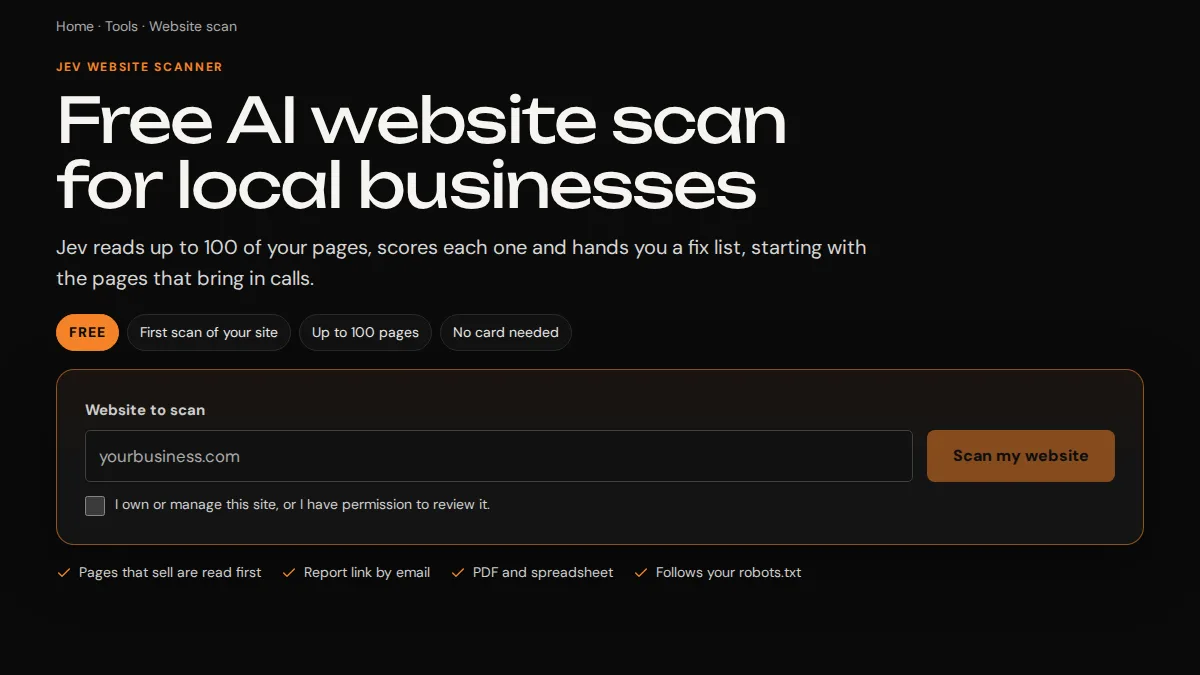
Jev scanner website input and scan action
Spec example: Scanner screen has a website starting input. View the project
Hypothetical example A hypothetical purchaser asks whether a broadly named material falls within an unnamed supplier's offer.

Before

  • The invented purchaser holds a general material description, without the grade details the supplier would need to assess fit. The website shows a broad capability phrase and a general quote button. The purchaser cannot tell whether the material belongs in the published range. This is a teaching question, with no actual part, buyer, or technical finding behind it.

After

  • In this exercise, the supplier approves a narrower public range and tells the purchaser which missing detail staff need next. We would write that question near the capability explanation. A marked test could then check whether the request retains the supplied description. Staff still assess the actual material. The exercise demonstrates a content task without claiming that a website has accepted a job.

The Jev Website Scanner screen pictured here presents a website input and an action that starts a scan. That visible starting point can help us discuss how a tool asks for its subject. It does not prove report accuracy or establish a supplier capability. Your material question requires its own approved labels and a staff process suited to technical information.

A public sample should use details the business is willing to show. We can invent a broad question for testing, but its label must make that purpose clear. Avoid a realistic-looking customer drawing that implies the supplier performed an actual job. The sample checks whether the page explains the next question. We can ask staff to read that answer before the sample is shared.

What should a sample inquiry establish?
It should reveal whether a reader can locate the relevant approved explanation and reach the right staff route. We can ask the recipient to identify the supplied material description from the marked request. That checks the website context. The recipient's technical assessment of a real job remains a separate business action with different information requirements.
How should we label the tool reference?
Name the actual screen and the visible feature being discussed. We can point to its starting input without treating a different tool as an industrial inquiry system. The surrounding text should connect that observation to a design question. It should leave the supplier's substantive material and process claims attached to its own approved information.
Can we begin without public customer examples?
Yes. Bring the capability statement and one approved public document that helps explain it. We can use an invented question to identify a content gap. A genuine project account can be added when the supplier has facts and permission. The initial task does not need an identifiable customer or a claim about work the business cannot substantiate.

Check the approved claim before interpreting its search activity

Search activity can show how people encounter a capability page. We should first confirm what the page is authorized to state, then assess the available observations without assuming technical fit.

  1. Read the isolated page title Ask the technical owner what a buyer could infer from the title alone. We can narrow wording that promises more than the page is permitted to explain. The qualification should not rely on a sentence the reader has yet to open.
  2. Check the material and process statements Compare the published draft with the approved range and operation definition. We should inspect any numbers in their full context. The content is ready to assess when those statements preserve the owner's meaning, rather than when every available query phrase has been added.
  3. Try an unsupported sample request Use an invented question outside the stated range. Ask whether the page helps the reader recognize the boundary. We can also check that a remaining uncertainty has a reasonable staff route. The sample should not imply a genuine customer rejection.
  4. Compare available search observations later If search records are available, inspect the terms and pages involved in the observed activity. We can discuss a mismatch between a broad phrase and the narrower offer. An impression or click does not tell us that the supplier can perform the requested work.
Does Google's guidance guarantee discovery for the revised page?
Google's Search Starter Guide explains how clear content and descriptive links can help people and search systems understand pages. It offers no guarantee that a particular page will be indexed or rank as desired. We can assess the wording and links directly. Search outcomes need their own observed records after the page is available.
What if inquiries still use the wider technical meaning?
Ask the receiver which phrase or file the purchaser referred to. We can inspect that named source with the approver. The confusion may come from an old attachment rather than the current paragraph. Keep the conclusion tied to the actual request details instead of assuming that every mismatch has the same cause.
What is needed to price this SEO content task?
Bring the public capability page and the statement your technical owner wants corrected. Explain which related files use it and who approves replacements. We can discuss whether the work is a narrow clarification or affects several document paths. The resulting requirements inform project terms and timing, without a promised inquiry count or ranking date.

Sources

From the businesses we've worked with

“Sales have been better the last few months thanks to some additional marketing efforts. Way to go, Jeff!”
Andrew MontiethGeorgetown Market · Jeff was its marketing director, 2023 to 2025

KNOW YOUR NEXT STEP

Let’s talk about
Indianapolis.

Based in Indianapolis, we serve businesses across central Indiana, including Carmel, Fishers, Zionsville, Westfield, Noblesville, Greenwood, Avon and Plainfield, and clients across the United States.

Talk with Trojan

Indianapolis, Indiana

Service area map

Explore Indianapolis on OpenStreetMapArea reference; this is not an office pin. Map © OpenStreetMap contributors.