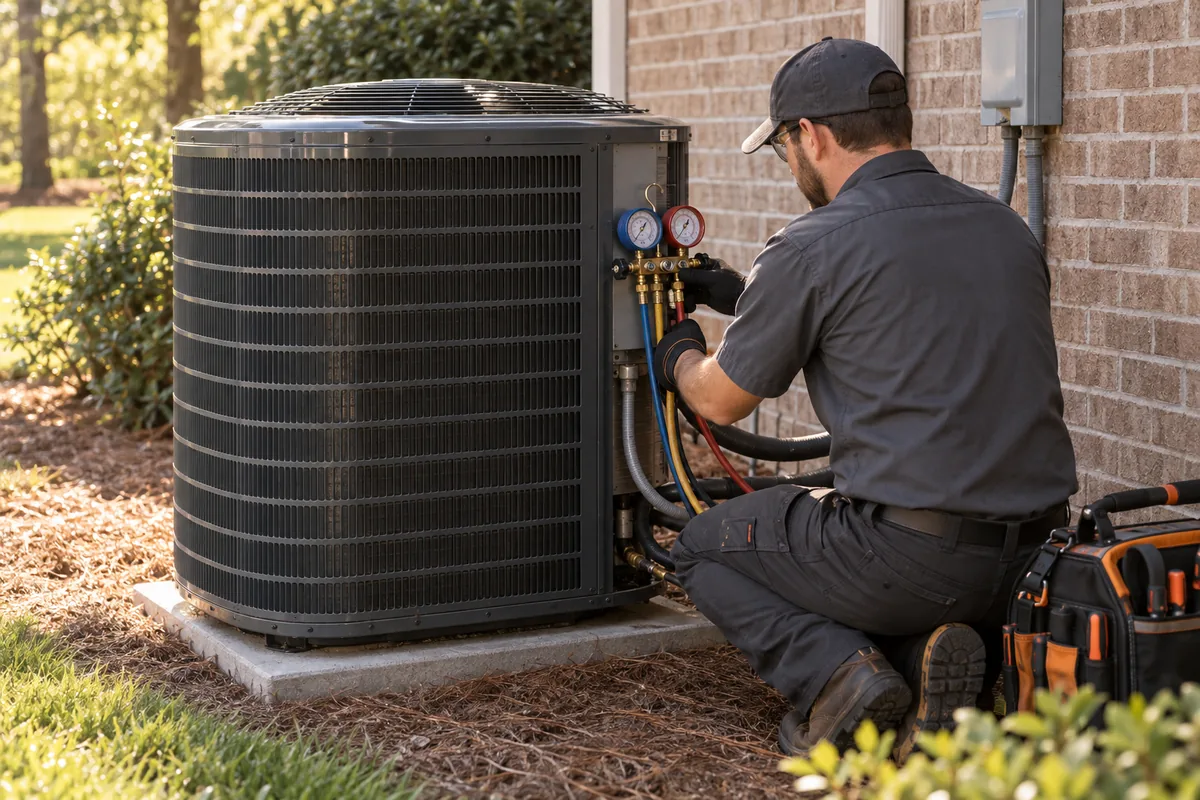
A commercial HVAC company can receive a current service request, a planned project inquiry, and a conversation about an ongoing facility relationship on the same day. Each may be valuable, but each asks something different of the business. Marketing should help the right contact reach the right process.
Trojan Digital Marketing builds commercial HVAC marketing around those differences. We connect SEO, AEO, GEO, AI search content, paid campaigns, and inquiry handling with the work your team is prepared to support. The goal is suitable demand that becomes an accepted service request, a useful project opportunity, or a qualified account conversation.
For Indiana companies and commercial teams serving wider U.S. territories, the starting point is a clear operating offer. The website should state genuine coverage, approved service capabilities, and the contact process customers can actually expect.
Commercial HVAC marketing FAQs
How much does commercial HVAC marketing cost?
We price it after the free strategy call, when we know your service area and how many technicians can take on new agreement work. When a new website is part of the job, the Marketing Startup Kit is $7,997 or three monthly payments of $2,799. If you'd like to see where your current site stands first, the free website scan reads up to 100 pages and emails you the report link.
Can you separate service calls from planned projects?
Yes. We can create distinct content and contact routes while preserving one coherent company identity. The service lane determines the information collected, the person receiving it, and the business stage used to measure progress.
Can marketing support recurring commercial relationships?
It can explain the offer and help suitable facility contacts begin a conversation. The business still defines the actual service arrangement and account process. Reporting should distinguish an early relationship inquiry from agreed recurring work.
What if our available capacity changes quickly?
Assign a business owner who communicates material changes to the marketing team. Agree on which changes affect schedules, targeting, or public wording. The campaign should reflect an approved operating decision rather than an assumption about availability.
How do you judge commercial lead quality?
We use the company's service, territory, project, and timing criteria, then track how opportunities progress. Existing accounts, new requests, and planned projects remain distinct. A contact total alone does not establish that the source supports the commercial objective.
What can we start with?
An initial scope can focus on the most important service lane, its website explanation, inquiry handoff, and measurement. The audit identifies the gaps and the proposal defines the deliverables and approvals needed to address them.
Request a free commercial HVAC marketing audit to review your service and project journeys. Or contact Trojan Digital Marketing to discuss a scoped plan for the commercial work your team wants to support.
Can one website handle emergency calls and maintenance agreements?
It can, as long as each has its own route. A restaurant owner whose rooftop unit quits during dinner needs a phone number and honest response hours right at the top. A hotel's chief engineer comparing service partners wants to read how you handle work orders and after-hours coverage. Put both behind one form and the agreement prospect ends up waiting in line behind the emergencies.
Which Indianapolis buildings are worth building pages around?
Start with the building types you already service well. Downtown hotels booked 1.8 million room nights in 2024, and the downtown alliance counts IU Health's new campus and the Signia hotel among more than 4 billion dollars in development. If hotels or healthcare are your strength, each gets a page written around that facility team's questions and approval steps.
How long does it take to get a new commercial HVAC site live?
With the Marketing Startup Kit the published schedule is twelve weeks and four milestones: discovery in week one, the website in weeks two to four, content and your Business Profile in weeks five to eight, then launch with consulting from week nine. Check-ins are weekly for the first month and every two weeks after that through the consulting period.
What should I bring to the free strategy call?
Bring a month of call records with each call marked as an emergency or planned work, plus any replacement projects you quoted. We'll look at which calls came from search or ads and where agreement prospects dropped off. The call's free, and during business hours we aim to reply within five minutes, so you aren't left waiting on a callback.
What if the campaign brings mostly homeowners?
Then we tighten it fast, because every inquiry is tagged residential or commercial from day one. Ads get residential phrases excluded and shift toward the terms facility managers type, like preventive maintenance agreement. The site's first lines say you serve commercial buildings, and if you also do homes, that side sits behind a single link where it won't crowd the commercial form.
Do you work with HVAC contractors outside Indianapolis?
Yes. Trojan works from Indianapolis and takes on businesses anywhere in the United States. Around home, the service area runs through Carmel, Fishers, Zionsville, Westfield, Noblesville, Greenwood, Avon and Plainfield. For HVAC, the pages follow your technicians' real routes, so a Fishers page only goes up if your trucks already work north of I-465.
A PRACTICAL MARKETING WORKSHOPSeparate the service call from the facility agreement
Open this walkthroughClose this walkthrough
Commercial HVAC marketing needs room for an immediate facility request and a longer evaluation of a service relationship. A building contact comparing providers may want to understand reporting, communication, and portfolio coverage before discussing equipment. We would organize the website around those business decisions, using the contractor’s approved service descriptions. The site should clearly distinguish requesting contact, discussing an agreement, and beginning a project review; these actions do not represent the same commitment.
Worked example · hypothetical planning scenario
Suppose a hypothetical HVAC business wants more planned facility relationships but its contact page is dominated by “Emergency repair.” We would add a facility service introduction asking about the property type, number of locations, geographic coverage, and the contact’s role. A separate route remains available for current service requests, with truthful availability. An agreement discussion page can explain what information the team reviews and what the proposed scope will define. For an illustrative property account, the CRM records an initial conversation, property information received, scope discussion, proposal, and decision. A repair call from that same account remains a service event, rather than being counted again as a newly acquired agreement.
| Commercial need | Website route | Meaningful progression |
|---|---|---|
| Current service request | Direct service contact | Request accepted for the appropriate response |
| Planned facility relationship | Agreement discussion with property context | Scope conversation and proposal decision |
| Equipment or building project | Project introduction and document route | Reviewable project opportunity |
Make operating expectations visible
- Collect the company’s approved definitions of service coverage, answering hours, and who communicates with the facility contact after an inquiry.
- Build one factual project or account story that explains the engagement and communication process without inventing energy savings, uptime, or response results.
- Identify the facility information required before a commercial scope discussion and leave technical recommendations to the contractor’s qualified team.
- Document whether opportunities originate from new accounts, existing customers, referrals, or another property within a known portfolio.
Choose the commercial relationship you want to grow
Tell us whether the priority is a specific project type, planned facility relationships, or a defined service territory. Trojan can align the page structure and inquiry records with that commercial objective instead of reporting every HVAC contact as interchangeable.
Where are the facility contacts for commercial HVAC around Indianapolis, Indiana?
Commercial HVAC marketing in Indianapolis, Indiana starts with the buildings that buy planned service, from downtown's hotels and restaurants to the new offices going up in Fishers.
Downtown Indianapolis and Fishers, Indiana
Downtown Indianapolis hotels booked 1.8 million room nights in 2024, and the Downtown Indy Alliance lists more than 4 billion dollars in downtown development, including the Signia hotel and Convention Center expansion and IU Health's new campus.
Hotel engineers and hospital facility teams pick service partners through a review, so a page per building type should answer their onboarding questions in writing.
FOX59, 2025 State of Downtown Indy report lists Mile Square progressChecked September 25, 2026The 2025 State of Downtown report counted more than 400 restaurants, coffee shops and bars in downtown's six square miles, and 23 new businesses opened there in the previous 12 months.
A restaurant owner calls when equipment quits mid-service, so the restaurant page puts the phone number and real response hours first.
FOX59, 2025 State of Downtown Indy report lists Mile Square progressChecked September 25, 2026The Union at Fishers District, near I-69 and 116th Street, is planned with a 135-room boutique hotel and 70,000 square feet of Class A office space alongside 251 apartments.
New buildings need a service partner once they open, so a Fishers page makes sense if your technicians already work north of I-465.
Thompson Thrift, The Union at Fishers DistrictChecked September 25, 2026
Public facts about buildings and businesses near Indianapolis. None of them is a Trojan client, and we don't claim HVAC work at any of these places.
How does a one-off HVAC repair call turn into a service agreement?
For a commercial HVAC contractor around Indianapolis, Indiana, these steps move a facility contact from a single repair call toward a planned agreement, with the source tracked throughout.
- Tag the callerYour office marks each call with the caller's role and how many buildings they look after, so a property manager isn't filed like a one-time tenant.
- Follow up after the repairA short note after the job links to the agreement page for that building type, written in the facility team's own terms.
- Agreement page by building typeHotels, healthcare, restaurants and offices each get a page that says what a planned visit covers and how work orders are reported back.
- Count agreements apart from repairsSigned agreements are reported by source, and a later repair at the same building is logged as service work, so one account is never counted twice.
- Move the budgetSpend shifts toward the searches and pages that led to signed agreements and away from ones that only bring homeowner calls.
Separate three kinds of commercial demand
A single “get a quote” button may not explain the next step for every facility contact. We plan the inquiry routes around the business decisions that follow the first contact.
| Demand lane | What the visitor needs | What the business needs to record |
|---|---|---|
| Current service request | A clear way to reach the appropriate team and understand availability | Service fit, location, account status, and accepted next action |
| Planned project | Relevant capability information and a project discussion route | Project stage, scope context, decision contact, and review timing |
| Ongoing relationship | An explanation of the commercial services available and how to discuss a facility account | Property context, relationship owner, and agreed follow up |
The exact lanes depend on your offer. We do not assume every commercial HVAC business provides every service or operates continuously. Advertising and website messages should describe the approved arrangement rather than borrow a competitor's availability promise.
Make the facility contact's first conversation useful
A commercial inquiry can begin with the property location, the contact's role, the requested service, and whether the business already serves the account. Planned projects may need additional context about the current stage and the information available for review.
Read more
The form should not require a customer to diagnose equipment or make technical decisions before speaking with your team. Its job is to route the request and collect enough context for the next conversation. Your qualified staff remain responsible for service assessment and project recommendations.
When a customer requests an appointment, distinguish a request from a confirmed commitment. A receipt message should explain what happens next and who will respond. The marketing system should not imply that dispatch has accepted work before the business makes that decision.
Connect new demand with account history
An existing customer contacting you about another property or service need should not disappear into a new lead total. The relationship may already contain useful context, an account owner, and an established communication process. Preserve that information where the systems support it.
Read more
At the same time, a new project within an existing account can be commercially meaningful. Reporting should distinguish the person, the account, and the opportunity. Otherwise, repeated contacts can inflate acquisition volume while genuine account development remains invisible.
We can help define those records and the office handoff. The initial scope should reflect what your team can maintain consistently, rather than requiring an elaborate CRM model that nobody updates.
Show commercial capability through approved evidence
Useful service pages explain what the company provides, the properties or project categories it accepts, and how a facility contact begins a review. Keep equipment, system, credential, and coverage claims tied to business approved information.
Read more
Project stories should identify the company's actual role and the relevant service context. A photograph of equipment does not establish what work your team performed. Captions and short explanations can make the evidence understandable to someone comparing providers.
Where client names or property details cannot be used, choose an approved level of description. A clear process explanation is preferable to an invented case study. The content should support a credible business conversation without presenting unverified technical or performance claims.
Commercial HVAC SEO, AEO, and GEO
- Question
- Identify what the customer needs to know.
- Answer
- Explain it clearly.
- Evidence
- Support the answer with a source.
Search content can answer the questions that precede a useful commercial inquiry: which services are offered, what coverage is available, how planned projects are reviewed, and what information helps a new account discussion. The answers should reflect your process and be maintained when the offer changes.
Read more
Our SEO, AEO, GEO, and AI SEO services organize those explanations alongside capability evidence and clear conversion routes. We distinguish commercial customer intent from residential demand, employment, product searches, and general technical research where those do not match the objective.
Google connects generative search with established SEO practices. We use direct, substantive business information to support search understanding. We do not promise that AI Overviews or another answer system will recommend the company.
Use local detail to explain real service coverage
Commercial HVAC coverage should reflect the places the business is prepared to support and the conditions of the offer. A broad service territory is different from a network of physical locations. The website should make that distinction clear.
Read more
Area specific pages can be useful when they provide genuine coverage information, approved local project evidence, or a distinct service process. If the content changes only a town name, review whether a regional capability page would serve the buyer better.
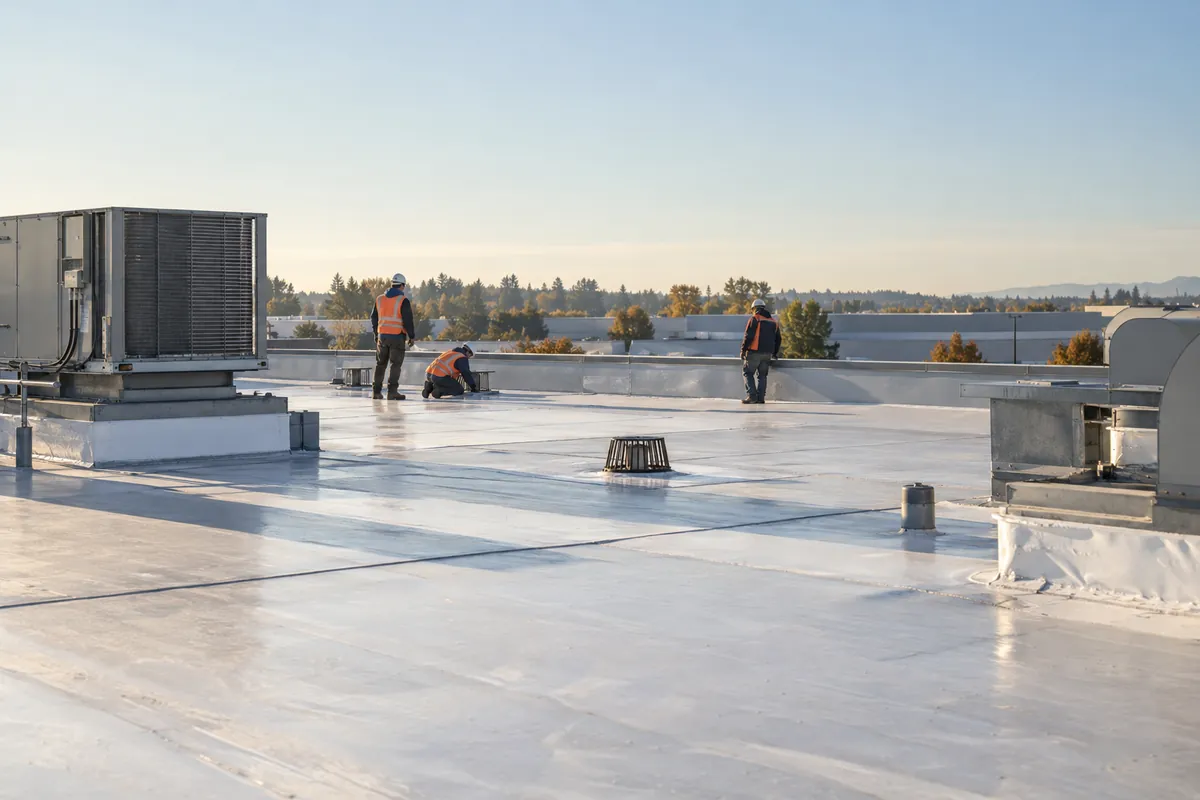
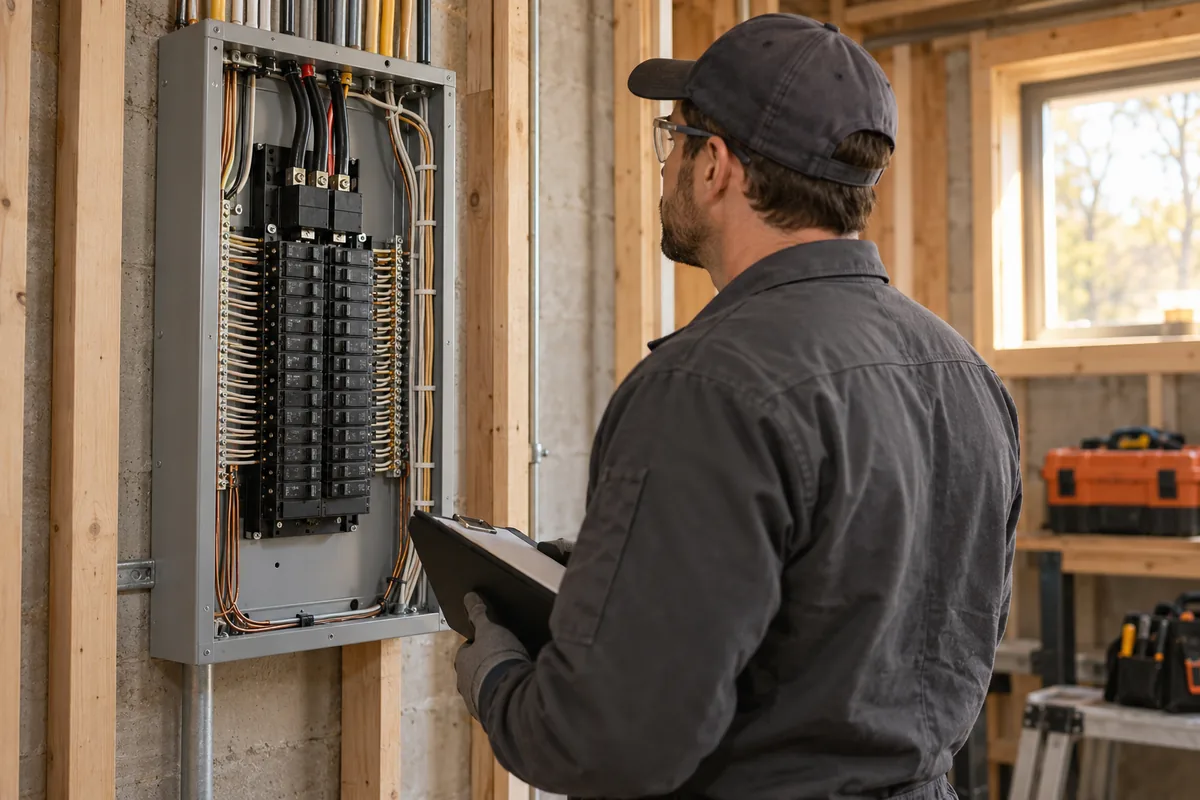
Facility buyers may evaluate several trades, but each trade needs its own service promise. Commercial electrical marketing and commercial roofing marketing use different capability evidence and project routes. A broad property services audience is not a reason to flatten those differences.
Align paid campaigns with dispatch and sales capacity
Commercial HVAC PPC should begin with the service lane being promoted. A campaign for a current service need has different handling requirements from one inviting a planned account conversation. The landing page and response process should match the campaign's objective.
The Google Ads search terms report helps review actual searches behind available campaign activity. We combine that evidence with the office's fit reasons and the stages opportunities reach.
A paid advertising scope can specify the service, geography, schedule, exclusions, spending boundary, and review process. If answering or dispatch capacity changes, the marketing team needs an approved way to update the campaign and public messages.
Use automation to support the handoff
- Website
- Receive the inquiry.
- Your team
- Review it and record the outcome.
An inquiry route can assign a new request, create a review task, and notify the responsible person. It can also flag missing information or a failed delivery. The important point is that the business knows who owns the next action.
Read more
Our automation work can support those repeatable steps while keeping acceptance and technical decisions with the appropriate people. A message should not claim a service visit is confirmed or a solution selected when the workflow has only created an inquiry record.
Test the whole route: submission, record creation, assignment, notification, and response. A form's success screen is not enough evidence that the facility contact will receive a useful follow up.
Evaluate lead sources against the actual commercial offer
If you purchase inquiries from another provider, compare the specific product and distribution terms with your qualification needs. The exclusive versus shared lead guide explains why a category label does not establish commercial value.
The lead fit framework helps separate a valid request from one that matches your service, territory, and capacity. An exclusive contact can still be outside the commercial work you want.
Use the vendor scorecard to compare known terms, handling effort, and opportunity progression. Keep the business's response performance visible so that an internal delay is not mistaken for a source problem.
Measure new accounts, projects, and repeat service separately
A useful commercial HVAC report distinguishes new account inquiries, accepted service requests, planned opportunities, booked work, and repeat account activity. Add the service category and the current stage so the owner can understand what the demand means.
Read more
In a hypothetical review, ten contacts include four existing customers, three suitable new service requests, two planned projects, and one unsupported request. Reporting ten new leads would obscure the actual acquisition result. The business needs the relationship context and next action for each group.
Do not turn a potential recurring relationship into an assumed lifetime value without evidence. Track the work actually agreed and completed, then use the business's own history for planning. Quoted projects, accepted work, and collected revenue should remain distinct measures.
Define the service team's acceptance checks
A first scope should identify what the office and account team need to demonstrate. For a current service route, the acceptance check may be a labeled request that reaches the right queue with its account status and next action intact. For a planned project, it may be a record that preserves the property context and assigns a responsible reviewer.
Read more
Keep a short list of unresolved exceptions, such as a missing account identifier or a notification that depends on an individual login. Each exception needs an owner and a due date. The purpose is to leave the business with a process it can operate during ordinary work, not only during a guided demonstration.
A hypothetical 90 day commercial HVAC plan
Days 1 to 30: define the demand lanes, genuine coverage, current account process, and capacity constraints. Review website claims, inquiry delivery, and available reporting. Agree on which business outcome the first scope should support.
Days 31 to 60: publish approved service explanations, improve the contact routes, and establish consistent opportunity stages. Introduce a focused campaign where the response process and budget support a useful evaluation.
Days 61 to 90: review accepted requests, new account conversations, planned project progression, and the operational burden created. Choose the next adjustment from that evidence. This is a planning sequence, not a forecast of service volume or search results.
Sources & further reading
YOUR NEXT MOVE
Make the next step count.
Based in Indianapolis, we serve businesses across central Indiana, including Carmel, Fishers, Zionsville, Westfield, Noblesville, Greenwood, Avon and Plainfield, and clients across the United States.