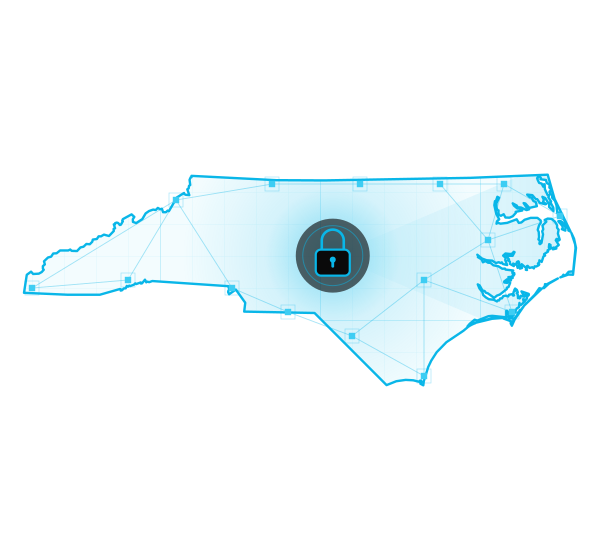
A North Carolina microsite portfolio should help each branch earn a clearer conversation with the customers it serves. Trojan develops branded organic lead resources around specific services, useful local information, and a direct inquiry path. The state plan connects those resources without making every market look interchangeable.
Start with the trade, the buying decision, and the team responsible for the answer. A Charlotte replacement consultation, a Triangle project planning inquiry, and a request involving a property in western North Carolina may need different context. A useful portfolio makes those differences visible while keeping the company’s identity and ownership clear.
Questions about North Carolina microsite strategy
What does a North Carolina microsite network cost?
A roofing or water restoration membership is $399 a month for 50 microsites with every qualified lead included, or $800 for year one if you'd rather pay per lead. Your branches can share one network or each get a separate one. Our published sizes stop at 300 sites, and past that Jeff prices the network himself. We price other trades after the free strategy call.
Do I need separate sites for every North Carolina city?
No. Choose the structure that fits real differences in customers, content, and service delivery. Closely related markets may work better within one strong regional resource. A separate microsite needs a useful reason to exist.
Can the plan cover more than Charlotte?
Yes. The state planning conversation can consider the Triangle, Triad, western, coastal, and other markets your business serves. Each area still needs accurate coverage, a credible offer, and an identified team for inquiries.
How should a company with several branches count leads?
Keep one record for the inquiry and track its origin, assignment, qualification, and sales progress. Internal transfers should remain visible without automatically creating another lead. Agree on duplicate and invalid inquiry rules before reporting begins.
What ownership questions matter before starting?
Clarify the domain registrant, content rights, hosting and analytics access, tracking numbers, customer records, renewal costs, and export arrangements. Include responsibilities for updates and inquiry routing in the written scope.
Do I need an assumed name certificate in every county my sites cover?
Yes, for each county where you do business under a name other than your legal one. The certificate is filed with that county's Register of Deeds, and Mecklenburg County's has to be notarized. We print your business name on every site exactly as you've filed it, so send a copy of each county's certificate before launch.
Will the sites show a city business license number?
No. Charlotte businesses haven't needed a city or county privilege license since July 1, 2015, after Session Law 2014-3 took that tax away from North Carolina cities. Licenses from a trade or professional board still apply, though, so we put whatever license your trade requires on the sites exactly as the board issued it.
How does a request reach the right North Carolina branch?
By the town the visitor is looking at. Each microsite covers one town, and its phone number and form go to the branch you've assigned that town to. We set up and test that routing during onboarding. A town two branches both want gets settled on paper before launch, so nobody argues over a call later.
Who can vouch for Trojan's work?
Google reviewers can. Mike Bamosi's review says the work "drove a noticeable uptick in leads within just a few weeks," and a local Indianapolis-area business we work with had 7,860 Google profile views in August 2026, up 92.3% on August 2025. We don't claim any clients in North Carolina.
What if one branch's sites stay quiet?
Look at that branch's call log with us before changing anything. The monthly plan bills its first 90 days one month at a time as a proving window, and after that you can stop with 30 days notice. Because each branch keeps its own town list, we can see whether one office is quiet while another rings, and Jeff talks it through with you.
Which North Carolina rules change what your microsites say?
We read these facts from Charlotte and Mecklenburg County sources, and they change which business name and license lines we print on each site.
Charlotte region, North Carolina
Since July 1, 2015, businesses haven't needed a City of Charlotte or Mecklenburg County privilege license, because Session Law 2014-3 took away cities' power to levy that tax. Industry-specific licenses still apply.
No city license line on the sites, and any trade board license shown as issued.
Charlotte Mecklenburg Library, 'Legalities for Starting a Business'Checked September 25, 2026A business using an assumed name files an Assumed Business Name Certificate with the Register of Deeds in each county where it does business. Mecklenburg County takes it by mail or in person, notarized.
The name on each town site matches the certificate on file in that town's county.
Mecklenburg County Register of Deeds, 'Assumed Names Information'Checked September 25, 2026The Charlotte Regional Business Alliance, the region's combined chamber and economic development group, serves 15 counties across North Carolina and South Carolina.
A site for a South Carolina town says South Carolina, and goes up only where your crews already work.
Charlotte Regional Business AllianceChecked September 25, 2026Charlotte had 964,784 residents on July 1, 2025, by the Census Bureau's Vintage 2025 estimate.
A city that size can be split into neighborhood sites when one branch covers all of it.
U.S. Census Bureau QuickFacts: Charlotte city, North CarolinaChecked September 25, 2026
Read from Charlotte Mecklenburg Library, Mecklenburg County Register of Deeds, Charlotte Regional Business Alliance and Census Bureau pages, checked September 25, 2026. Confirm filing steps with each county's Register of Deeds.
What goes on a North Carolina branch routing sheet?
We need one routing sheet per branch before any site is built, and here's what each branch fills in next to our part.
Each branch sends
- The towns it covers and the towns it turns down
- The phone number that should ring for those towns
- A backup person for days the main line goes unanswered
- Its assumed name certificate for each county, if it uses one
- Trade licenses exactly as the board issued them
- Photos of finished jobs it's allowed to show
We handle
- One site per town, grouped under the right branch
- Routing and tracking set up and tested during onboarding
- Manual review of flagged inquiries before any pay per lead charge
- A fresh batch of local articles each membership year
Plan across North Carolina’s regional markets
The North Carolina Department of Commerce organizes business support into eight Prosperity Zones and provides county demographic profile links. This offers a starting framework for regional research. It does not make administrative boundaries equal to your service territory or establish the demand for a particular trade.
In the Triangle area, Central Pines Regional Council publishes regional data and resources covering housing, economic development, mobility, and resilience. Our planning inference is straightforward: investigate the property and operating context behind a market instead of treating the entire state as one pool of identical customers.
| Area to consider | Question for the portfolio | Evidence worth collecting |
|---|---|---|
| Charlotte and nearby operating areas | Which requests belong to this branch, and which require another team? | Actual service boundaries, accepted work, and an identified intake owner |
| Raleigh, Durham, and the Triangle | Does the customer need a shared regional resource or a distinct service guide? | Project examples, recurring questions, and differences in the offer |
| Greensboro, Winston Salem, and the Triad | How should the brand organize related markets without repeating every page? | Existing content coverage, search intent, and the business’s scheduling model |
| Asheville and western markets | Which properties and access conditions can the team assess and serve? | Confirmed travel arrangements, project eligibility, and consultation requirements |
| Wilmington and coastal markets | What needs to be explained before an owner can request the right service? | Property details, approval responsibilities, and documented scope boundaries |
| Fayetteville, Greenville, and other operating markets | Is there a distinct customer need the current website does not address? | Relevant search results, inquiry history, and original evidence available |
These are areas to evaluate with your business. They are not claims about existing deployments, local Trojan offices, or reserved territories. The right portfolio can be broad, but every advertised service area must be accurate.
Make branch boundaries work for the customer
- Fit
- Explain the service scope.
- Trust
- Show supporting evidence.
- Next step
- Give a clear contact route.
Before writing a new page, decide how a request moves from the website to a person. A visitor should not need to understand your internal branch structure to ask for help. A short form can collect the property location and service, then route the inquiry according to rules approved by your business.
Read more
That routing needs an owner and a fallback. If the assigned person is unavailable, who receives the request? If the property sits near a boundary, which team decides whether the job is accepted? If a prospect asks about a service that only one branch provides, how is that limitation explained? A clear handoff makes the content useful beyond the first click.
The state resource should explain the overall offer and help visitors choose a relevant market or trade. A city microsite page should explain the specific customer decision. Supporting guides should answer narrower questions. Keeping those roles distinct reduces the chance that several pages compete to explain the same thing.
Choose a trade resource with something useful to show
The existing Charlotte plans address roofing microsites, water restoration microsites, window replacement microsites, HVAC microsites, remodeling microsites, and foundation repair microsites. Their role is to help businesses evaluate trade specific content and inquiry handling within that city.
Read more
For a wider North Carolina portfolio, ask what your team can contribute that a generic competitor page cannot. A remodeler may have documented project stages and helpful preparation photographs. An HVAC company may explain the systems it services and what happens during a replacement consultation. A window installer may show how opening types and installation scope affect the information needed for an estimate.
For foundation and restoration offers, keep the boundary between information and assessment especially clear. Explain the process and what details to submit. Do not diagnose property conditions online, imply that every inquiry needs a particular repair, or advertise response arrangements the company cannot support.
Branded organic leads begin with an identifiable business
Every microsite should make the service provider easy to identify. Connect the logo, company description, contact details, and relevant work to the same business story. If the domain describes a service or place, explain its relationship to the main company. Visitors should know whether they are contacting your team or submitting information to a separate marketplace.
Read more
Exclusive lead generation is a distribution arrangement, not a statement about everything the customer does. Define who receives an inquiry from the site and whether anyone else receives it. Explain the handling of duplicates, out of area requests, and contacts that do not meet the agreed qualification criteria. Someone can independently contact several contractors even when your own inquiry system routes directly to you.
For a brand with several offices or service teams, document whether internal reassignment changes reporting or billing. That prevents an inquiry from being counted repeatedly as it moves through the business. Review the ownership and operating questions in microsite memberships before selecting a continuing scope.
Give each SEO page one clear search purpose
- Offer
- Explain what the customer can get.
- Evidence
- Support the offer.
- Action
- Make the next step easy to use.
We begin with the services the business wants to sell, the customer questions already appearing in calls, and the pages it already has. Then we examine relevant search results and keyword estimates to identify intent. Search terms need more than apparent volume: the offer must fit, the answer must be credible, and the next step must help the person searching.
Read more
A state overview should not reproduce a complete Charlotte trade article, and a blog should not become a second version of the service page. For example, a planning checklist can support a remodeling offer by helping a homeowner prepare for a consultation. It should link to the service when the reader is ready, while retaining a useful purpose of its own.
Google’s spam policies address doorway pages and large scale content intended primarily to manipulate search. Our content review asks whether the proposed page contributes a new answer, useful evidence, or a clearer buying path. When an existing page can do that job, improving it is a valid growth decision.
Help AI search understand accurate service information
AEO and GEO work starts with consistent facts and readable answers. Google states that no special optimization or additional technical requirements are needed for its AI Overviews and AI Mode. It recommends normal SEO practices, useful text, relevant media, and structured data that matches visible information.
For a North Carolina trade resource, that means explaining accepted work, service coverage, company identity, and the assessment process in straightforward language. Keep questions close to their answers. Link from a planning guide to the appropriate trade and market resource. Use current, authorized project photographs when available. None of these steps promises an AI citation or a first place ranking.
Separate paid lead tests from organic asset development
Paid campaigns can test a defined offer and provide information about landing page behavior. Organic SEO develops search accessible resources that customers may discover without an ad click. A microsite can support both, but the acquisition channel and the inquiry outcome should remain distinguishable.
Read more
Track the original page or campaign, the requested service, branch assignment, qualification decision, and sales progress. Avoid rewarding a campaign for forms the office cannot use. If requests repeatedly miss the intended service or geography, change the targeting, explanation, or form before expanding the portfolio.
Compounding organic leads is a useful way to describe the potential value of maintained assets working together. A service explanation can gain supporting project evidence and better answers over time. Results can also stall or decline. The continuing investment should respond to what the business learns, rather than assume another year automatically produces more leads.
Keep a practical expansion gate
Before adding another North Carolina market, review the resource already live. Does it load quickly on a phone? Are the pages discoverable through sensible links? Do forms and phone routes reach the intended team? Are offers and photographs current? Are staff recording why inquiries are accepted or rejected?
- Document the next market’s customer, trade, and actual service boundary.
- Identify the question the current website does not answer well.
- List the original evidence and expertise available for that answer.
- Choose the page, section, or microsite structure that fits the task.
- Assign responsibility for inquiries, updates, and operating costs.
- Review results before making the next expansion decision.
Budget for more than construction. Domains, hosting, analytics, content, image maintenance, form delivery, reporting, and changes to the offer require continuing attention. Ownership records should also explain access and export arrangements if the service relationship changes.
Plan the next useful North Carolina resource
Discuss your North Carolina microsite strategy with your trades, existing websites, and operating areas. Use the state atlas to compare national portfolio options, or review owned organic lead generation to understand the underlying model.
Sources & further reading
YOUR NEXT MOVE