Need help?Jamie

Paid Advertising

Meta Ads Agency for Facebook and Instagram Lead Generation

You've boosted posts or run a few Facebook ads yourself, and the likes showed up while the phone stayed quiet.

Trojan Digital Marketing manages Meta ads from Indianapolis, Indiana for businesses across Indiana and the U.S., building Facebook and Instagram campaigns that end in an inquiry your team can actually answer. It's for owners who say, "We boosted posts and got likes, but no customers called." Downtown Indianapolis counted 30,467 residents in the 2025 State of Downtown report, with a median age of 31.5.

Bring a screenshot of your last Facebook or Instagram ad and a rough count of the inquiries it brought. The first strategy call is free, and during business hours we aim to reply within five minutes.

  • Ads written from real customer questions
  • One lead route your team can answer
  • Leads followed through to booked work

We build and run more than 1,400 live websites, so the page a Facebook or Instagram ad sends people to gets fixed by the same team that writes the ad. On Meta that handoff matters, because a slow or confusing page can waste a good ad, and Jeff Clerisier has done web work since 2016, before founding Trojan in March 2018.

Editorial illustration for meta ads agency for facebook and instagram lead generation
IllustrationHow paid advertising flowsThis page’s three priorities drawn as a path from the first contact to the next step. It’s an illustration with no platform or client data.HOW IT FLOWSPaid AdvertisingMeta ad01Ads written from real customer questions02One lead route your team can answer03Leads followed through to bookedworkNEXT STEP

CAMPAIGN FIT

The channel is a choice.
The customer is the starting point.

Compare the buying situation, then mark what your business already has. Your choices travel with your inquiry.

GOOGLE ADS

Start with the search.

Is someone already searching for the service you sell?

Search campaigns connect an existing question to a relevant offer. Separate urgent requests, considered purchases, and research before choosing keywords.

Query · offer · inquiry · sales outcome

Measure: Qualified opportunities from relevant searches.

Explore Google Ads management

Check what’s ready

This is a conversation brief. It does not score your account or predict campaign performance.

Discuss my Google Ads plan

LINKEDIN ADS

Start with the buying team.

Can you describe the companies and roles involved in the purchase?

A useful B2B offer needs a reason for a busy professional to respond. Match the message to their responsibility, buying stage, and next decision.

Audience · evidence · conversation · opportunity

Measure: Accepted prospects and pipeline progress.

Explore LinkedIn Ads management

Check what’s ready

This is a conversation brief. It does not score your account or predict campaign performance.

Discuss my LinkedIn Ads plan

META ADS

Start with a reason to care.

Can your creative show a relevant problem, service, or decision?

Facebook and Instagram campaigns need recognizable creative and a clear next step. Match forms, messages, or a landing page to the questions your team needs answered.

Creative · interest · qualification · follow up

Measure: Useful inquiries and appointment outcomes.

Explore Meta Ads management

Check what’s ready

This is a conversation brief. It does not score your account or predict campaign performance.

Discuss my Meta Ads plan

SEE HOW THE PIECES CONNECT

Explore the decisions
behind the plan.

THE TROJAN SYSTEMPAID
The path from campaign investment to a useful inquiryCampaign & audienceRelevant visitUseful inquiryFollow up
  1. Campaign and audience
  2. Relevant visit
  3. Useful inquiry
  4. Follow up
The path from campaign investment to a useful inquiry

Meta ads management brings your offer, Facebook and Instagram creative, campaign setup, inquiry experience, and measurement into one plan. For a service business, a useful campaign should help the intended customer understand the work and take an appropriate next step. A form count by itself is not a complete business result.

Trojan helps national brands and regional businesses plan paid social campaigns around customer decisions. We start by identifying the work you want to sell, the evidence available to support it, and the response your team can deliver. This page covers Facebook and Instagram advertising within our broader paid media service.

How much does Meta ads management cost?

Meta ads management is priced after the free strategy call, because the work depends on how many offers you promote and how many ad versions each one needs. For a low-cost check first, the $99 full website audit reads up to 3,000 pages of your site, including the page your ads would send people to, and scores up to three competitors you name the same way.

How soon do Facebook and Instagram ads bring in leads?

There's no honest fixed date, because lead speed depends on the offer and on how quickly your team calls people back. Launch waits until the landing page and tracking pass a test on a phone, so the very first inquiries get counted. Google reviewer Mike Bamosi wrote that our work "drove a noticeable uptick in leads within just a few weeks," and your own pace will show up in the tracking.

What happens first when we hire you for Meta ads?

It starts with a free strategy call about the service you want more of and the people who buy it. Bring any ads you've already run, even boosted posts, and the page they pointed to, because the first review opens that page on a phone before new money goes anywhere. During business hours we aim to reply within five minutes of your request.

Should we use Meta lead forms or send people to our website?

Pick the route your team can answer well, then test the other one once leads are flowing. A form inside Facebook or Instagram asks very little of the customer, so it can bring more submissions that need careful follow-up. A page on your own site has room for photos and reviews before someone commits. We build websites too, so the same team can fix the page side of that test.

Can you use the photos and videos we already have?

Yes, as long as you have the rights to them and they show your real work. Phone footage from an actual job often reads as more believable than stock images, since viewers can tell it's yours. We edit every video on Jerry Super's YouTube channel, which grew from 8,380 subscribers in January 2023 to 119,000 by September 2026 while we edited them.

What if our Meta ads don't bring in customers?

Then the tracking shows where the path broke, and that point decides what changes next. When people click and leave, the page or the offer needs work. When forms arrive and nobody books, the gap sits in follow-up, so the first fix is a faster callback before any extra ad money goes out. Either way, each change should trace back to a number you can check yourself.

Can Meta ads reach just our side of Indianapolis?

Yes, a Meta campaign can be limited to the areas you name, and we check that map before launch. Beech Grove, Lawrence, Southport and the town of Speedway sit inside Marion County but govern themselves, so an Indianapolis campaign should include or skip them on purpose. We take on Meta ads work for businesses in Indianapolis and nearby towns such as Carmel, Fishers, Greenwood and Plainfield, plus businesses in other states.

Which Indianapolis facts change a Facebook and Instagram campaign?

These public figures about downtown Indianapolis and Fountain Square decide who a Facebook or Instagram ad should speak to and which blocks the map should cover.

  • Nearly 6% more people lived in downtown Indianapolis in 2025 than in 2023, for a total of 30,467 in the Downtown Indy Alliance's count. Their median age is 31.5, and 43% belong to Gen Z or Gen Alpha.

    A downtown audience this young calls for creative made for phone screens first, with the offer in the opening line and a separate ad set for suburban families if you serve both.

    WTHR, 'State of Downtown report shows signs of strength in Indy'Checked September 25, 2026
  • The 2025 State of Downtown report put 2024 hotel bookings in downtown Indianapolis at 1.8 million room nights.

    Visitors have never seen your page, so an ad aimed at them has to say what you are and how close you are before it asks for anything.

    FOX59, '2025 State of Downtown Indy report lists Mile Square progress'Checked September 25, 2026
  • Two events at Lucas Oil Stadium were on downtown planners' list of major events to prepare for: the December 2025 Big Ten Football Championship and the 2026 NCAA Men's Final Four.

    Big event dates are public months ahead, so ads for event crowds can be written and scheduled with fixed start and end dates before visitors arrive.

    FOX59, '2025 State of Downtown Indy report lists Mile Square progress'Checked September 25, 2026
  • As a 14 million dollar flood reduction project in Fountain Square entered its final phase, WRTV reported owners asking for support after months of construction cut into sales. One owner put the drop in lunch business at 80%.

    When street work cuts walk-in traffic, a small campaign aimed at nearby blocks can tell regulars you're open and show them the way to the door.

    WRTV, 'Fountain Square businesses plead for support as 14M project enters final phase'Checked September 25, 2026

These are public facts about downtown Indianapolis and Fountain Square. None of them describes a Trojan client or a campaign Trojan ran.

Is boosting a post the same as running Meta ads?

No. Boosting pushes a post that's already on your Facebook Page or Instagram account to more people, while a Meta Ads Manager campaign starts from a goal you pick, such as leads.

QuestionBoosting a postA campaign in Ads Manager
Where it starts
A post already on your Facebook Page or Instagram account
A goal you choose first, such as leads or website visits
How many settings you get
A shorter menu of audience, budget and duration choices
More settings, including placements and several ad versions side by side
What it gets judged on
The reach and reactions the post collects
The inquiries and booked jobs your tracking records
When it makes sense
Giving a post that's already doing well a wider audience
Asking new people to take one specific next step

In what order does a Meta ads campaign get built?

We build every Meta campaign in the same order, so the landing page and the inquiry tracking both pass a phone test before the first ad spends anything.

  1. Pick one offerChoose the service you want more of and the neighborhoods or towns you can actually serve.Free strategy callTogether
  2. Test the landing pageOpen the page or form the ad will use on a phone, submit it, and confirm the inquiry reaches a real inbox.Before launchTrojan
  3. Count real inquiriesSet up tracking for form sends and calls so each ad is judged on the contacts it produced.Before launchTrojan
  4. Write distinct anglesBuild ads around different customer worries, using your own photos or phone video wherever you have them.Before launchTogether
  5. Name who calls backDecide which person follows up on new leads and how quickly, since a slow callback wastes a good ad.Launch weekYour team
  6. Compare leads with booked workMatch leads to the jobs they became and move budget toward the angle that brought paying customers.After launchTogether

Where can Facebook and Instagram ads fit?

Consider the moment in which a customer discovers the offer. A household comparing a renovation, a family exploring a program, or a shopper learning about a specialty store may need a visual explanation before searching for the brand. That is a different situation from an urgent service request already expressed in a search query.

Read more

Our planning question is whether the offer can be made understandable and relevant in that setting. We review the audience, genuine service area, decision complexity, and available creative. A national brand may need regional variations in availability and response. A local business may need a much tighter brief around the customers it can actually serve.

Paid social should also fit your operating capacity. If inquiries cannot reach a responsible person, or the service is not currently available, the campaign needs a different objective or a later launch. More traffic does not fix a broken customer handoff.

Make the offer recognizable before asking for details

A useful ad answers three questions quickly: what is offered, who it is relevant to, and what the customer can do next. Explain the appointment, assessment, product, or event in terms the customer already uses. Avoid a generic growth slogan when a specific decision can be described.

Read more

For a window company, that might mean explaining the consultation and the difference between repair and replacement inquiries. For a supermarket, the useful information may be product categories, shopping options, and verified store details. These are planning examples rather than claims about Trojan campaign results.

We develop the message from actual customer questions, approved business facts, and evidence you have permission to publish. Use the customer language miner to organize recurring questions before choosing which creative concepts to produce.

Choose a lead route your team can support

Meta's official lead generation course covers forms, messaging, and calls. These routes create different expectations. A form can collect an inquiry for later contact; a message starts a conversation; a call requires someone to answer appropriately.

RouteUseful planning questionOperational requirement
Native lead form
Can the customer understand the offer before submitting?
Accurate lead delivery and a clear response process
Website landing page
Does the customer need more scope, imagery, or explanation?
A fast page and a tested submission path
Messaging
Would a conversation help determine fit?
A person or approved workflow that can answer and escalate
Calling
Is a live discussion the appropriate next action?
Staffed response and useful call outcome records

We scope the route around your business, then decide what comparison is worth testing. The Meta lead form and landing page guide shows how to evaluate lead quality alongside completion behavior.

Build creative concepts with distinct reasons to respond

Strong creative has a job beyond filling a rectangle. A demonstration can show how a product works. A clear project sequence can explain the service process. A comparison can help customers recognize the option that fits their situation. Real photographs and accurate footage make those explanations more concrete.

Read more

Meta's creative diversification course distinguishes variation by concept and format. We use that distinction in planning: different buyer concerns deserve different concepts, while each concept may need an appropriate visual treatment.

Creative production should have approved claims, an identifiable source for evidence, and a destination that continues the same story. Our video and creative work can be scoped alongside campaign management when your existing material does not answer the buyer's questions.

Connect ad content to a useful mobile experience

The page after the click should recognize the offer the visitor just saw. Make the service, relevant area, scope, and next step easy to find. Let people inspect meaningful evidence without forcing them through a series of promotional sections that never explain the work.

Read more

Check the experience on a phone before sending traffic. Images need suitable dimensions and compression, fields should be understandable, and errors should explain how to recover. A successful submission should mean that the business actually received the request. A button tap alone is not enough.

Our Georgetown Market design case study offers a way to discuss recognizable business content and website presentation. It is design evidence, not a claim of Meta ad performance. The same distinction applies when selecting portfolio examples for your own campaign.

Measure lead quality beyond the initial submission

Define a suitable inquiry before evaluating the campaign. The criteria might include the requested service, a location you can serve, accurate contact details, and a customer expectation your team can reasonably meet. The definition should be useful enough that two staff members would label the same inquiry consistently.

Read more

Meta documents connecting customer relationship management data through Conversions API for CRM to support optimization for lead quality. Whether that integration belongs in your scope depends on your systems, data practices, and available implementation options.

Keep the underlying sales record understandable even when an integration is used. Show submitted inquiries, relevant inquiries, conversations, appointments, and outcomes separately. Explain rejected inquiries by reason. This makes a conversation about quality more useful than a single blended cost per lead.

Know what the engagement includes

  1. Review the business offer, current advertising, approved evidence, and customer response process.
  2. Choose an initial audience and creative brief with a defined business objective.
  3. Plan the lead route and qualification questions needed for the next action.
  4. Scope campaign setup, tracking checks, and lead delivery responsibilities.
  5. Review creative observations together with inquiry and sales outcomes.
  6. Document what to continue, revise, or stop and why.

Your scope should make clear whether original filming, graphic production, landing pages, CRM work, and ongoing campaign management are included. Account access and business ownership of the relevant assets should also be documented. There is no useful universal package when businesses begin with different systems and evidence.

Start with an offer and a real business question

Bring the product or service you want to promote, your intended customer, and the questions that currently slow a sale. If you already advertise, share available performance reports and examples of suitable and unsuitable inquiries with personal information removed where possible.

We use that material to identify a practical campaign brief. Request a Meta ads review to connect the creative, customer experience, and qualification process before choosing the next campaign.

Sources & further reading

YOUR NEXT MOVE

Make the next step count.

Based in Indianapolis, we serve businesses across central Indiana, including Carmel, Fishers, Zionsville, Westfield, Noblesville, Greenwood, Avon and Plainfield, and clients across the United States.
Keep the published promotion attached to its actual version

When an offer changes, retain the exact promotion people could have seen. The revised business condition needs a traceable starting point before anyone chooses which creative or page to edit.

  1. Save the ad people saw Keep the actual wording with its artwork and the page it pointed toward. We can inspect that set when you provide it. A draft in a shared folder may differ from the version that reached customers. Use the released material as the starting point for the change, with any uncertainty about where it appeared clearly stated.
  2. Describe the changed offer in plain terms Ask the business to state what has changed and when the new condition should apply. We need the approved meaning before rewriting the promotion. An editor can shorten a sentence, but that edit should not choose who qualifies for the offer. The owner supplies the condition that the new text must express.
  3. Identify the material still in use Name the known creative versions and their linked pages. Our task list can follow those references, while marking any version you cannot identify. A screenshot may show an older promise without proving that it remains in delivery. Separate the wording you can inspect from an account state you have not checked.
What if the earlier creative is only partly available?
Keep the part you actually have, with the missing portion stated. We can inspect a cropped screenshot without pretending it contains the complete offer. Ask whether another person retained the caption or linked page. The business can still approve its new condition, but the older message needs an honest record of what is known. Do not rebuild missing copy from memory and present it as the published version. If a staff member recalls a phrase, label that as their account until the actual material is found.
Should we infer the older offer from a customer quote?
Keep the quote as the customer account and seek the actual promotion where possible. We can assess what the customer expected without treating their words as a complete published version. The revision record should identify which part is retained artwork and which part comes from that account.

Have the business approve the changed condition

The advertiser should settle what the new offer means before creative work proceeds. An agency can prepare clearer language, while the business decides which customer promise it can actually honor.

Jev scanner website input and scan action
Promotion revision dependencies: Scanner website input and button. View the project
Promotion revision dependencies
Published itemBusiness answer requiredChange to inspect
Offer conditionThe rule the business now approves for this promotion.The revised creative states that rule without widening it.
Earlier creativeWhich released version contains the previous rule.The note preserves the older words and their source.
Linked pageWhere the customer can read the offer in full.The relevant page section expresses the same approved meaning.
Open customer questionWhether the person refers to the earlier or later wording.The response recognizes the version they describe.
Release permissionWho can authorize changes to the named materials.The task leaves each release under its actual approval.

The Jev Website Scanner screen pictured here has a website entry field and a clear starting action. It is a concrete interface we can inspect when discussing how short text sets expectations. Its visible button does not establish how a Meta promotion performs. Your revised offer needs its own words approved for the people who will see that promotion.

We can help distinguish a wording edit from a business-rule change. If the old promotion offered a broad appointment choice and the new one has a narrower condition, a shorter headline alone may hide the difference. Ask the advertiser to approve a complete sentence first. The creative can then express that sentence in the space available without quietly removing its limit.

  • Write the old condition in one field and its approved replacement in another. We can compare their meanings without treating a new artwork filename as the approval itself.
  • Identify any exception that remains in the revised offer. A shortened creative line should still give the customer a way to understand that exception before sending a request.
  • Ask which staff role can explain the revised condition to a person who saw the earlier promotion. Our page text can support that answer, while the business chooses how to handle the existing expectation.

Follow the changed condition onto the destination page

A revised ad can still send a person to older offer wording. Check the linked page passage that explains the changed condition and decide which edit belongs in the same release.

Which page passage needs attention?
Find the sentence that sets the affected offer condition. We can inspect its relation to the revised creative rather than treating every page paragraph as part of the task. A changed service limit may belong beside the inquiry action. If it is buried elsewhere, the person responding to the ad may still rely on the earlier promise.
Can the page use a longer explanation?
Yes, provided the longer explanation preserves the meaning approved for the ad. Our page work can make room for a limit that artwork cannot explain fully. The wording should remain readable before someone sends a request. A click should not be the point where a new condition appears for the first time.
What if the page edit has another owner?
Keep that dependency named in the release note. We can prepare the creative, but the destination editor may need separate access or approval. Record the page passage still awaiting change. A finished artwork file does not establish that another person has released the matching page. Agree on how the business will handle that gap before publication.

Read a customer question against the version they encountered

A question about an older promotion can identify a message conflict. Preserve its context before using it to revise the offer or treating it as a measured campaign result.

Hypothetical example A fictional advertiser changes an offer while an older creative points to its page

Before

  • In this invented exercise, the advertiser approves a narrower appointment condition. One saved creative contains the previous wording and links to a page that still describes it. A customer asks whether the older promise remains available. There is no real campaign, response count or completed appointment in this example.
  • The draft response tells the customer to read the new ad, without identifying which version prompted the question. The proposed artwork is ready, but the page has no approved replacement. We would retain the customer question with the older material before deciding how the message should change.

After

  • The proposed task identifies the earlier text and obtains the business-approved condition. Our creative note states which sentence changes. The linked page editor receives the same approved meaning and the passage that needs attention. The customer-facing response can then recognize that the person described the previous promotion.
  • The exercise ends with a planned coordinated message revision. It does not claim a released account change or an increase in suitable inquiries. We can discuss the actual checks needed for your materials separately. The example shows how the original customer context remains available while the business changes its offer.
  • Retain the customer wording without unnecessary personal details. We need the offer reference they describe, rather than a guessed reason they responded.
  • Identify whether the question concerns an earlier published promise or the proposed replacement. Our message task should follow that distinction.
  • Keep any later campaign figures in their own dated record. A single question can reveal unclear wording without establishing the frequency of that problem.

Check whether the inquiry message reflects the revised offer

After a page edit, inspect how the request describes the offer to the business. A new headline should not leave the receiving team with an older or unclear customer expectation.

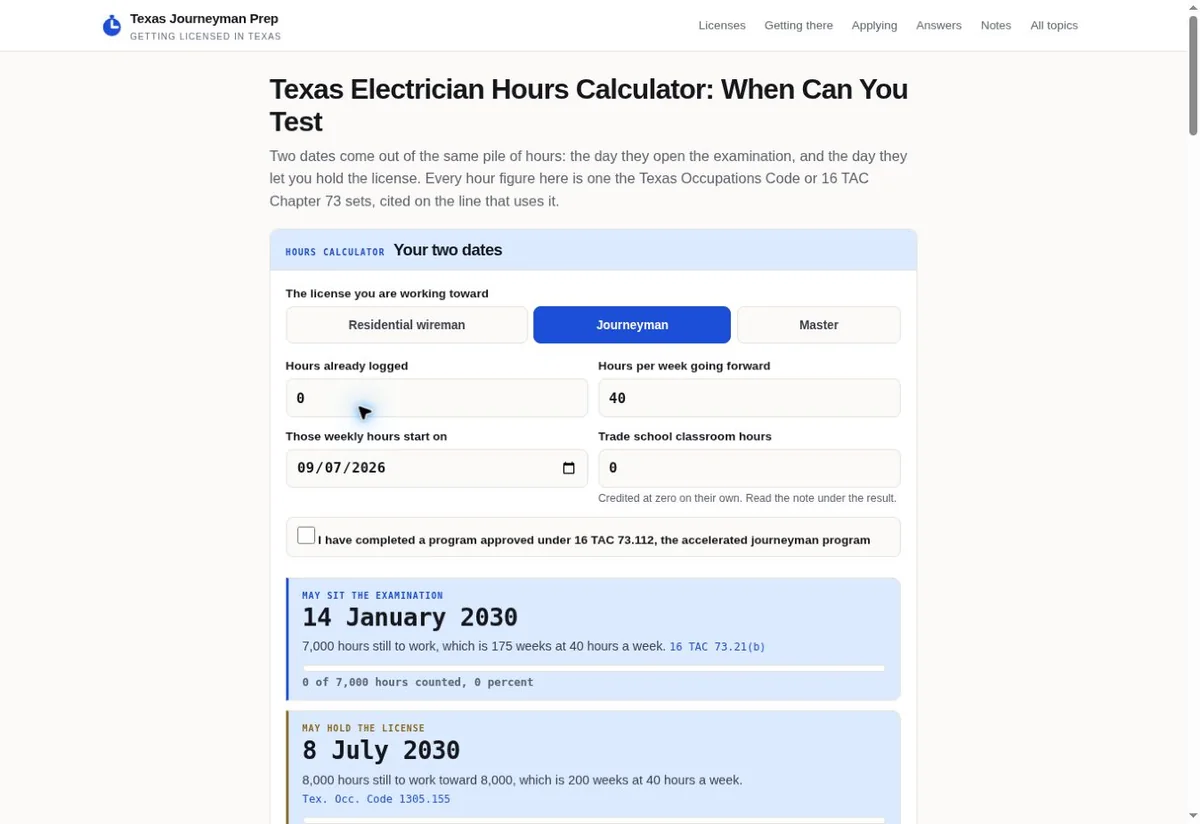
Texas Journeyman Prep calculator with labeled fields
Promotion revision dependencies: Texas planning inputs with labels. View the project
  1. Read the prompt beside the action Locate the wording that invites the request. We can inspect whether it carries the approved condition in terms a customer can understand. The pictured Texas Journeyman Prep calculator lets us inspect named input fields. It provides a visible reference for discussing field purpose, with no claim that it is a Meta lead destination.
  2. Use marked details when a test is agreed A test belongs under the access and checks approved for your page. Our note should distinguish what appeared on the screen from what arrived with the receiving team. If the offer version is included in that message, check its actual value. Do not infer that value solely from the new page heading.
  3. Read the feedback a person receives Inspect the success or error message as part of the same task when access permits. We can assess whether it explains the next action. A success message should not turn an inquiry into a guaranteed appointment. The business needs to approve the response it can deliver under the revised offer.
What if only a screen inspection is included?
State that limit in the task. We can inspect visible offer text without claiming a successful submission. The receiving message then remains untested unless a separate check is agreed. The buyer should know which part of the revised path was actually opened, and which part still needs access or a business answer.
Who approves the offer name in the receiving message?
Ask the business to name that role and the meaning the label should carry. We can prepare a clearer message under the agreed task. The receiving team needs the revised offer to remain recognizable without making the message announce an accepted appointment.

Agree on the release before changing campaign assets

The final revision needs approval for each material being changed. Define the creative and page work clearly, then keep any account action within its own authorized task and current access.

What should the revision request contain?
Share the published promotion, the affected page reference and the business-approved replacement condition. We can discuss the material covered by a quote and who releases each part. Original filming or a broader campaign change may need a separate brief. The message edit should have a clear completion point tied to the named versions.
Does the draft approve an account change?
A draft describes proposed wording. It does not itself authorize campaign access or a change to account settings. We need the agreed task and the appropriate approval before those actions. The buyer should distinguish a finished creative file from a released promotion. That keeps the handoff understandable even when different people control the account and page.
How does the next person know what changed?
Keep the previous text beside the released wording and note any material still awaiting its owner. Our handoff can identify the passage checked without promising a business result. A later question can then be read against the right promotion version. If the business changes the condition again, that record provides a concrete starting point.

Bring the actual promotion that now needs a different customer promise. We can work from the condition your business approves and the page it affects. The initial conversation should establish which versions are known, who can release their replacements and how the receiving team will recognize the revised offer. Those answers make a message revision ready to price and inspect.

How should we handle two approved creative versions?
Name both versions in the task and state which condition each one carries. We can prepare distinct wording when the business has a real reason for two offers. The note should help the page editor identify their matching explanations. If both point to one page, ask how that page will let the reader find the right condition. A single generic headline may hide a difference that matters to the customer. Approval should therefore cover the route as well as each piece of artwork.
Can a customer response reveal another affected page?
Yes. Keep the reference supplied by the customer and inspect its actual words. We can then ask whether that page belongs in the same revision. It should enter the task through an identified message conflict, with its own owner and release permission. The new reference does not establish the state of every promotion the business has used.

Sources

From the businesses we've worked with

“I love the way it scrolls better. Thank you so much, Jeff.”
Alexa MahaberRedefined Body skincare