A Florida microsite strategy starts with a practical question: which customers can your team serve well, and what do those customers need to understand before calling? Trojan builds branded microsites around that answer. Each resource gives a defined service, market, and buying decision a useful home, with inquiries directed to the business identified on the site.
The goal is an organic lead generation asset your company can develop over time. A roofing comparison guide, a window project checklist, and a restoration intake page have different jobs. Giving each the right content and next step matters more than putting another Florida domain online.
Questions about Florida microsite lead generation
What does a Florida microsite network cost?
Our roofing and water restoration memberships start at $399 a month for 50 microsites, with every qualified lead included. If you'd rather pay as leads arrive, our pay per lead plan is $800 for year one on those same 50 sites. The 50 can sit on one coast or be divided between branches, and we price any other trade after the free strategy call.
Can one company build resources for several Florida cities?
Yes, when it genuinely serves those markets and each resource has useful, distinct information. We first check service coverage, content ownership, and inquiry routing. A single strong regional website may be the better starting point for overlapping markets.
Does an exclusive microsite lead mean the customer contacted nobody else?
No. Exclusivity describes the distribution agreed for the inquiry collected through your system. It does not limit a customer’s independent research or guarantee a sale. Ask for the routing and duplicate handling terms in writing.
Can the same microsite support SEO and PPC?
It can, if the page fits both visitor needs and campaign requirements. Separate paid and organic attribution, then evaluate accepted inquiries and sales outcomes. Do not treat paid visits as evidence that organic visibility has improved.
What should I bring to a Florida planning conversation?
Bring the trades you want to sell, real service areas, current websites, examples of good and poor inquiries, and who answers each branch. That is enough to start identifying useful research and ownership questions without assuming a site count.
Can one network cover towns on both Florida coasts?
Yes, as long as your crews really work both sides of the state. Every microsite covers one town, so an east coast town and a west coast town each get their own site, and we route each one to the branch that can actually reach it. With only one office, start on its coast and add the other when a second crew is ready.
Has Jeff done marketing in Florida before?
Yes. Jeff Clerisier was a marketing specialist and manager for a West Palm Beach business from April 2018 to May 2021, which overlaps our first three years. We don't claim any Florida microsite clients. We plan Florida networks from Indianapolis over the phone, so your first conversation is with Jeff himself.
Will my sites talk about hurricanes?
Only in the terms your company actually works. If your crews tarp roofs or dry out flooded rooms after a storm, a page can describe that work, and we'll send those calls to whoever answers after hours. We keep hurricane dates and building code claims off the sites until someone reads them at the official source, because one wrong figure would repeat on every town site.
What proof can Trojan show a Florida owner?
The numbers we can show come from Indiana. A local Indianapolis-area business we work with had its Google profile show up in 2,087 searches in August 2026, up 118.8% on August 2025, and Mike Bamosi's Google review says the work "drove a noticeable uptick in leads within just a few weeks." Neither figure predicts Florida call volume.
What happens if one coast stays quiet?
You're not locked in. On the monthly plan the first 90 days are a proving window billed one month at a time, and after that you can end the membership with 30 days notice. No site count guarantees calls, so Jeff goes through your call log with you coast by coast before you decide whether the network stays.
What happens between enrollment and day 90 of a Florida network?
On the monthly plan, we take your network through four stages whichever coast you start on, and each stage below follows the plan's published terms.
Typical plan
- Settle the town map
- Jeff goes over your coasts and town list with you on the free strategy call
- We confirm your trade, real service areas, site list and lead definition in writing before you enroll
- Build and test
- We put each site up under your company name, one town per site
- We set up routing and tracking and test them against each branch's number
- Proving window
- Billed one month at a time, the same price with every qualified lead included
- Your call log shows which coast is ringing
- Month to month
- Stop whenever you like with 30 days notice
- We add a fresh batch of local articles each membership year
How does the network change with one office or branches on both coasts?
We build the same kind of town sites for a single office and for branches on both coasts, but we set up the routing and town lists differently.
| What gets set | One office | Branches on both coasts |
|---|---|---|
| Phone that rings | Your main office line | The branch covering that town |
| Town list | Towns your one crew reaches | A separate list for each coast |
| Project photos | Jobs from your own service area | Each coast shows its own finished jobs |
| A town neither branch wants | Left off the network | Left off, or assigned to one branch in writing |
| After hours calls | Whoever you name for nights | Each branch names its own person |
Build a Florida portfolio around response coverage
Florida planning organizations already work at a regional level. The Tampa Bay Regional Planning Council publishes economic development, resilience, and regional data resources. The East Central Florida Regional Planning Council identifies eight counties in its coverage, including Orange, Osceola, Seminole, Brevard, and Volusia. These are useful research starting points, not evidence that every community offers the same search opportunity.
For your business, the working map should begin with crews, estimators, appointment windows, and services accepted. A Tampa company considering Orlando needs a real handoff plan before another site. A brand with separate Florida branches may need several regional resources with a shared identity. A specialist serving one area may be better served by a stronger section of its existing website.
| Portfolio under consideration | Question to resolve | Evidence for the brief |
|---|---|---|
| Tampa Bay | Which side of the market can each team cover reliably? | Actual job locations, answering hours, estimator schedules, and accepted services |
| Orlando and surrounding Central Florida markets | Is this a separate operating area or a stretch beyond current capacity? | Named intake owner, scheduling process, local project evidence, and coverage boundaries |
| Jacksonville and Northeast Florida | Which customer and property types justify a focused resource? | Qualified inquiry history, property types served, and service specific search results |
| Miami, Fort Lauderdale, and Palm Beach markets | Can the business support the languages, approvals, and property requirements it advertises? | Staff capabilities, approved content, and verified customer decision steps |
| Southwest Florida or Panhandle markets | Who owns the request when the prospect is outside the first branch? | Routing rules, branch responsibilities, and a clear acceptance process |
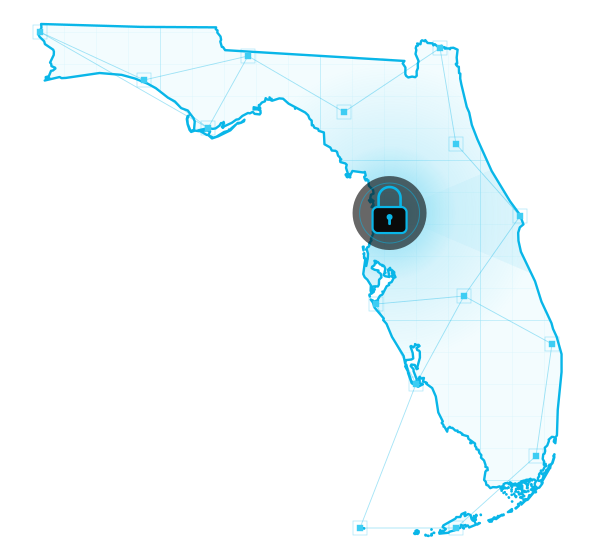
These are planning examples across the state. Your operating footprint determines the final selection. The map is not an inventory of existing client deployments, and a marked city does not reserve a territory.
Choose the trade before choosing the next domain
- Domain and website
- Document ownership and access.
- Analytics and records
- Define access and the handover.
A roofing microsite should help someone decide whether your company handles the roof system and project they have. It needs relevant photographs, scope boundaries, and a clear inspection or estimate process. An HVAC resource should separate repair requests from replacement research and maintenance inquiries. A broad contact form can hide those differences and leave the office to reconstruct the conversation.
Read more
Water restoration needs particularly clear intake language. Describe the incidents accepted, actual answering arrangements, and how the team confirms availability. A submitted form is an inquiry, not confirmation that a crew is traveling. Window replacement and remodeling often need more comparison content: project preparation, product choices, decision makers, and the information required for a useful consultation.
Explore the established Tampa plans for roofing microsites, water restoration microsites, window replacement microsites, HVAC microsites, remodeling microsites, and foundation repair microsites. Those pages address trade decisions within Tampa. This state plan addresses how a business chooses and manages several Florida markets.
Make branded and exclusive leads understandable
Branded lead generation means the visitor can identify the company behind the offer before sharing information. Display the business name, relevant work, service details, and the next step consistently. A descriptive domain can support discovery, but it should never make a single company look like an independent comparison service or imply an office that does not exist.
Read more
For an exclusive lead arrangement, define who receives the request, whether it is distributed elsewhere, and how duplicates are handled. A homeowner may independently contact other contractors; exclusivity cannot control that behavior. The useful distinction is how your own system collects and routes the inquiry. Put those terms in the agreement and make the customer journey consistent with them.
Ownership should be equally specific. Before work begins, document domain registration, content rights, hosting access, tracking numbers, customer records, renewal responsibilities, and export arrangements. A branded website and a monthly service agreement are different assets. The microsite membership overview is the place to review the continuing work and ask how those responsibilities fit your plan.
Connect organic SEO to a useful answer
Start keyword research with the service sold and the questions that affect a purchase. A window buyer comparing installation scope needs a different page from a property manager asking about occupied building scheduling. Search volume is one signal; a term also needs a clear relationship to your service, credible content you can provide, and a sensible conversion path.
Read more
SEO, AEO, and GEO work should make that information easier to discover and understand. Google explains that its AI search features use the same core SEO practices and require no special AI markup. Clear answers and accurate business details help readers evaluate the offer; they do not secure an AI citation.
Each proposed microsite needs a content reason to exist. Google’s spam policies identify doorway abuse and scaled content created primarily to manipulate search. Our planning test is practical: could a buyer use this resource to make progress without being passed through a chain of nearly identical pages? If the answer is no, improve an existing resource before adding a domain.
Give organic leads and paid leads separate jobs
Organic SEO leads come through unpaid search discovery. Paid search brings visits through an advertising campaign. A microsite can support both, but the reporting should distinguish them. Keep campaign tags, landing page records, and inquiry outcomes connected so an increase in paid traffic is not presented as organic growth.
Read more
Use paid media planning to test a defined offer and learn which questions block inquiries. Use those findings to improve the persistent service information, comparison guides, and project evidence. A landing page made for one campaign does not automatically deserve a separate place in the organic search index.
Compounding organic lead generation describes the possibility that maintained content, accumulated evidence, and repeated discovery become useful together. It is not a promise that inquiries rise each year. Pages can lose relevance, competitors can improve, and demand can change. Continued work should follow the evidence from search and the conversations your staff actually handles.
Measure the handoff, then decide whether to expand
A call count alone does not tell you whether another Florida market makes sense. Record the originating page, requested service, property location, valid contact details, acceptance decision, and eventual sales stage. Separate spam, existing customers, duplicate requests, and inquiries outside your coverage. An accepted roofing assessment and an unrelated supplier call should not share one success label.
- Confirm that the current resource is crawlable, accurate, and usable on a phone.
- Check which queries and pages receive impressions and visits.
- Review whether visitors can identify the business and request the right service.
- Inspect missed calls, delivery failures, and office follow up before blaming demand.
- Compare accepted inquiries and booked work with the full operating cost.
- Add another market only when its audience, content, and response plan are distinct.
Continuing costs can include domains, hosting, content research, imagery, tracking, form delivery, reporting, and maintenance. Request a written scope showing what is included, what needs approval, and what happens when a market underperforms. That gives the next investment a decision framework instead of a page count target.
Plan the Florida markets your business can support
Request a Florida microsite planning conversation with your preferred trades and operating areas. We can discuss where to strengthen an existing website, where a focused microsite has a clear purpose, and how to connect its inquiries to your business. Compare other states in the microsite state atlas or explore the broader owned lead generation approach.
Sources & further reading
YOUR NEXT MOVE