
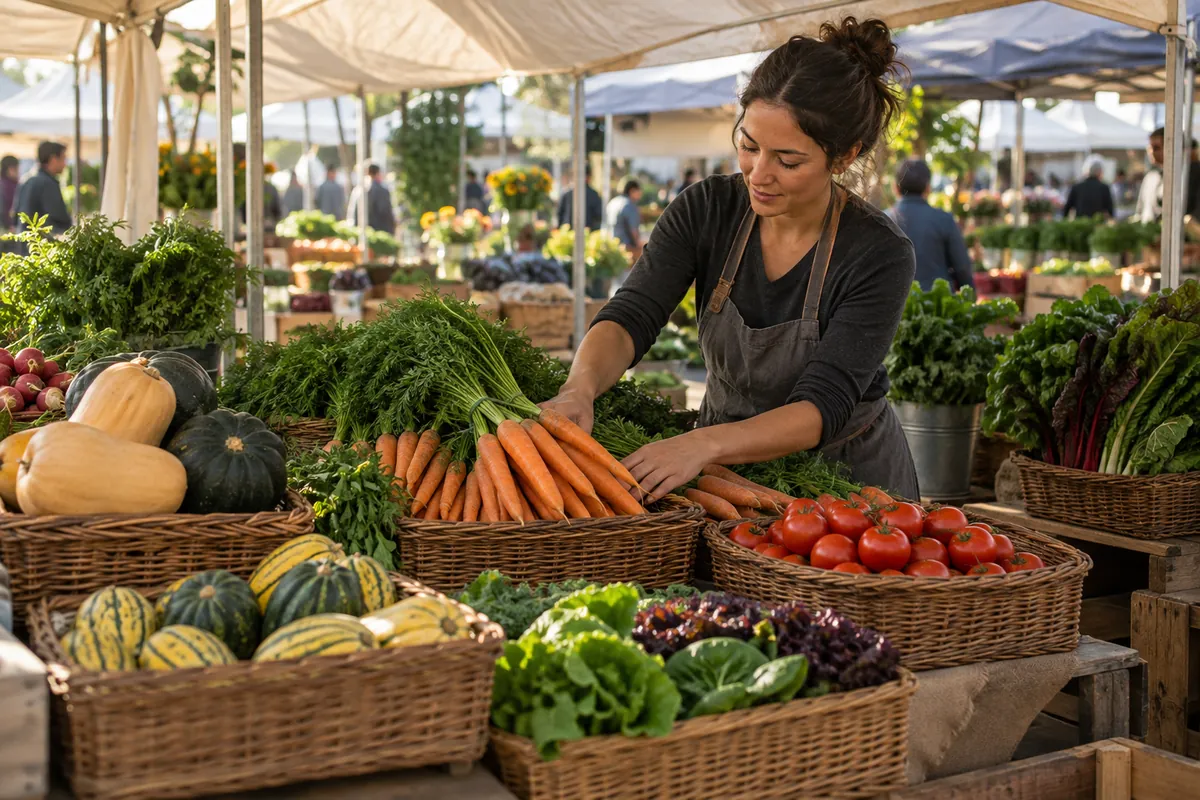
A farmers market vendor can be easy to recognize at a stall and difficult to find again online. A customer may remember a product but not the next market date, the vendor's name, or whether preorders are available. Marketing should connect that interest with current, practical information.
Trojan builds farmers market vendor marketing around a clear business identity, real products, and an accurate market calendar. We connect local discovery with the actions your operation supports, such as finding an upcoming appearance, asking a product question, or using an actual preorder process. The aim is a useful customer relationship that continues beyond one passing encounter.
Farmers market vendor marketing questions
Before each promoted appearance, compare the vendor's current schedule with the organizer's official information and confirm the vendor's own participation. If a change occurs, update the main schedule first and use other channels to point customers toward it. This gives a small operation one dependable reference to maintain and helps returning customers find the latest information without searching through a long history of posts.
What does marketing cost for a farmers market vendor?
It's priced after the free strategy call, and for a lot of vendors the right fit is a small site plus a well-kept Google Business Profile. If you're ready for the whole package, the Marketing Startup Kit is $7,997, or three monthly payments of $2,799. You can also start with a free scan of up to 100 pages of the site you already have.
Should every market have a separate vendor page?
Only when the page adds useful, maintainable participation information. A clear central schedule with links may be sufficient for several appearances.
Can a market address be presented as our shop?
Only if it's genuinely your shop, because the actual relationship should be described accurately. A temporary stall or scheduled appearance should not be represented as a permanent storefront the vendor does not operate.
Do we need online ordering?
Only if the business wants and can support it. A dependable schedule and product inquiry route can be useful without adding a new fulfillment process.
How should availability be described?
Use current product information and explain how offerings are confirmed for a date. Avoid treating a static photograph or old list as guaranteed stock.
What should an audit check first?
Business identity, current appearances, product claims, ordering expectations, and mobile usability. Those details help customers reconnect with a real vendor and offer.
Can a vendor be at the Carmel and Franklin markets on the same Saturday?
Not with one booth, since both fill Saturday mornings. Carmel's summer market runs 8 to 11:30 am on Carter Green, and Franklin's runs 8 am to noon at the DriveHubler.com Amphitheater in Youngs Creek Park. If you rotate between them, your site's schedule and your social posts need to name this week's market by Thursday. Trojan serves Indianapolis and nearby towns such as Franklin, Carmel, Greenwood and Greenfield.
How should we handle preorders so we don't oversell?
Cap them. A preorder form with a fixed number per item and a pickup window at the start of the market lets regulars skip the line. You still keep enough on the table for walk-ups. We'd close the form the night before so you can pack orders at home, and the confirmation tells people which market and which booth to come to.
Do we need a sales tax certificate to sell at a market in Indiana?
If you sell taxable goods, yes. Indiana businesses that sell taxable goods register through INBiz for a Registered Retail Merchant Certificate from the Department of Revenue, which lets them collect the state's 7% sales tax. Which of your products are taxable is a question for the Department of Revenue or your accountant. We keep tax claims off your product pages unless you've confirmed them.
What happens after I book the free call?
The call is free, and during business hours we aim to reply within five minutes to find a time. Have your market schedule for the rest of the season and your top five sellers handy. We'll talk about where regulars look for you now, whether that's Instagram or a market's own vendor list, and what would stop the Friday night messages.
What do Trojan's clients say about working with Jeff?
Heather Doan's Google review starts, "I had a great experience working with Jeff..." Mike Bamosi's describes a "noticeable uptick in leads within just a few weeks." You can read both in full on Trojan's Google profile. The free call is the place to ask how Trojan would approach your own booth.
A PRACTICAL MARKETING WORKSHOPMake “Where can I find you this week?” effortless to answer
Open this walkthroughClose this walkthrough
A market vendor’s customers need dependable information about where the business will appear, when, and what it expects to bring. We would make a current schedule the center of the digital journey, connected with the vendor’s actual products and ordering options. The content should distinguish a confirmed appearance from a tentative plan and a representative assortment from guaranteed stock. A permanent website can then support discovery even while the physical selling location changes between market days.
Worked example · hypothetical planning scenario
Imagine a hypothetical food vendor attending two weekly markets and occasional special events. Social posts announce each appearance, but an older post keeps sending customers to the wrong day. We would create a maintained “Find us this week” page using the approved market name, date, hours, location link, and status. Product stories can explain the vendor’s real offering and preparation background using verified facts. If preorders are genuinely available, the page shows the order deadline and actual pickup process; otherwise it provides a clear availability question route. The vendor can record confirmed preorders, schedule page use, and customer questions separately. A cancelled appearance would update the current schedule promptly without leaving an expired event as the main search destination.
| Customer task | Page element | Owner’s update |
|---|---|---|
| Find the next appearance | Current dated market schedule | Confirm, change, or cancel attendance |
| Explore the products | Actual product story and representative selection | Update the offering and product facts |
| Order ahead if offered | Deadline, pickup details, and real order action | Maintain availability and order status |
Build a weekly vendor publishing packet
- Collect confirmed appearance details and link to the relevant market’s official information where it helps customers plan the visit.
- Photograph the actual products and stall, using current representative imagery that customers can recognize at the market.
- Have the vendor verify ingredient, sourcing, production, and other product claims before using them in promotional stories.
- Keep preorders, general product questions, wholesale inquiries if offered, and event invitations on appropriate separate contact paths.
Connect your next market day with the website
Bring your confirmed schedule, product list, and any real preorder process. Trojan can build a current market finder page and a repeatable update workflow so customers know where to go and what action to take.
Which central Indiana markets shape a vendor's Saturday?
Farmers market vendor marketing around Indianapolis, Indiana has to fit real market hours. The Franklin and Carmel markets both fill Saturday mornings, and dates can shift with the weather.
Franklin and Carmel, Indiana
The Franklin Farmers Market runs Saturdays from 8 am to noon at the DriveHubler.com Amphitheater in Youngs Creek Park. It has about 100 booth spaces and about 2,000 visitors a week. Its vendors are juried and sell only what they made or grew.
A vendor there is one booth of about a hundred, so the site and posts should say exactly where the booth sits and what's on the table that week.
Marketspread, Franklin Farmers MarketChecked September 26, 2026The Franklin Farmers Market won Indiana's Ultimate Farmers Market title in 2025, a statewide fan-voted contest.
Vendors at an award-winning market can mention it on their own pages, which gives visitors from out of town a reason to plan a Saturday trip.
Daily Journal, Franklin Farmers Market wins statewide, fan-voted contestChecked September 26, 2026The Carmel Farmers Market's summer season runs Saturdays from 8 to 11:30 am at 2 Carter Green, May through September.
A vendor splitting Saturdays between Carmel and Franklin needs a schedule page that names this week's market, since both run the same morning.
Carmel Farmers Market, SummerChecked September 26, 2026Strawberries on the Square, in its 22nd year, moved to Saturday, May 30, 2026 because of the weather forecast. The new date put it at the DriveHubler.com Amphitheater on the same day as the Franklin market's first date.
Dates move, so a vendor's schedule page needs a quick way to post a change the night before, with the update date shown.
Discover Downtown Franklin, Strawberries on the SquareChecked September 25, 2026
These are public facts about markets in Franklin and Carmel. They aren't Trojan vendor jobs, and we don't claim vendor clients at either market.
What should a farmers market vendor post each week?
For a farmers market vendor selling around Indianapolis, Indiana, a short weekly routine keeps regulars informed, and here's how it splits between you and Trojan.
You send each week
- Which market you'll be at Saturday and your booth spot, by Thursday
- Two or three phone photos of what's coming, taken in daylight
- Anything capped for preorder and how many you'll bring
- A quick note if weather or a sellout changes your plans
Trojan keeps up
- The schedule page and Google Business Profile, dated each time they change
- A preorder form that closes at the cutoff you set
- A short email to regulars when the season opens and when it ends
- A running list of which posts brought in preorders
How does a market vendor go from social posts only to taking preorders?
Here's the order Trojan would follow for a farmers market vendor around Indianapolis, Indiana, starting from your season schedule and ending with a preorder test you can judge.
- Your season scheduleYou send the markets and dates you've committed to, plus the products regulars ask about most.
- One page and a profileWe build a simple site with a schedule at the top and set up your Google Business Profile to match it.
- A preorder trial at one marketPreorders open for a single market first, capped at what you can pack, so a slow Saturday doesn't leave you holding orders nobody picks up.
- Look at what soldAfter a few Saturdays we compare preorders, walk-up sales and which posts people mentioned, then decide whether to add a second market.
Give the vendor a clear identity of its own
- Domain and website
- Document ownership and access.
- Analytics and records
- Define access and the handover.
The website should explain who the business is and what it sells. A market listing introduces the event, while the vendor's own page can describe its particular offer and current participation. Keep those roles distinct so customers do not confuse the vendor with the market organizer.
Read more
Use a consistent business name, approved brand imagery, and a concise description of actual products. Claims about where products are grown, made, sourced, or produced should reflect the business's records. Do not add terms such as organic, allergen free, or locally grown merely because they sound persuasive.
The USDA's farmers market directory includes market locations, times, and product information. That illustrates how practical details help discovery. A vendor's participation still needs confirmation from its own current schedule and the market's actual arrangements.
Make the next appearance easy to find
Publish a clear schedule with the actual market name, date, location, operating time, and the vendor's confirmed participation. Link to official market information where useful. A recurring market schedule does not automatically mean the vendor attends every date.
Read more
Assign someone to update changes. Weather, production, personal availability, or organizer decisions can affect an appearance, but the page should report the actual change rather than assume a standard rule. Keep an obvious place for the latest information so customers do not rely on an old promotional image.
Past appearances can remain as an archive or story when clearly dated. They should not look like active invitations. A useful schedule page separates upcoming confirmed dates from historical content and gives customers a sensible route to ask about an uncertain detail.
Explain products without pretending availability is fixed
A product category page can describe the range your business actually offers and the information customers need before buying. Availability may vary by production and market date. If there is no reliable live inventory system, say how current offerings are confirmed instead of presenting a static list as guaranteed stock.
Read more
Use accurate product photographs and reviewed descriptions. Food, ingredient, sourcing, and production claims should come from the business's verified information. Marketing should not invent health benefits, dietary suitability, certifications, or guarantees to make a product page more attractive.
Where the business sells several product lines, navigation can help customers recognize the category they remember. A clear product family and a current schedule may be more useful than a large catalog of items that are rarely available or difficult to maintain online.
Give visits, preorders, and other offers separate paths
A customer planning a market visit needs schedule and product context. A customer placing a preorder needs the actual ordering process, pickup arrangement, and confirmation. A business inquiry for a supported wholesale or event offer needs a different conversation. Build only the routes your operation provides.
| Customer intent | Useful information | Meaningful action |
|---|---|---|
| Find the next market | Confirmed participation and official event details | Visit planning |
| Ask about a product | Accurate category and availability guidance | Relevant product inquiry |
| Use a real preorder offer | Order steps, pickup context, confirmation process | Confirmed order through the actual system |
| Discuss a supported business offer | Scope and appropriate contact | Qualified commercial conversation |
A form that merely sends a message should not appear to complete a purchase. If the vendor uses a separate ordering platform, connect to the correct current route and explain the next step. Customer facing language should match what the business can actually fulfill.
Build local discovery without inventing a storefront
A vendor can describe real markets and service arrangements without claiming a permanent shop at each market address. We keep the business identity and the event location distinct. Public listings should be reviewed for the actual business model and the relevant platform's current eligibility rules.
Read more
Search pages can connect the vendor's product categories with confirmed market participation. A useful page helps someone answer “Where can I find this vendor next?” or “How do I ask about this product?” A collection of invented local storefront pages would undermine that clarity.
Linking to the official market page can help customers verify venue details, while the vendor's page confirms its own participation and offer. This division of information is especially useful when the market organizer changes an event detail that affects several vendors.
Use AEO and GEO for practical customer questions
Answer engine optimization can make schedule, product, and preorder questions easier to answer. Generative engine optimization and AI SEO should keep the business name, offer, and participation facts consistent. A concise answer about a market date needs the same care as the schedule itself.
Google retains SEO foundations for generative search. We focus on clear pages and current evidence without promising an AI Overviews appearance. Time sensitive facts should remain easy to confirm on the vendor's own current page.
Turn the stall experience into useful content
- Service A
- Planned coverage: fit and next step.
- Service B
- Planned coverage: proof and next step.
- Service C
- Planned coverage: fit and proof.
Approved photographs can show the products, packaging, stall, and people behind the business. Use permission where customers or other participants appear. Captions should explain the context and date when that matters, rather than make one event photograph look like a permanent location.
Read more
Common customer questions can guide short, useful content. Explain how to find the next appearance, where to see a current product list, or how a supported preorder works. The strongest topics come from the actual customer relationship, not a generic calendar of social media themes.
A vendor story can be compelling when it is specific and true. Describe the business's actual background and process at an appropriate level. Avoid invented founding stories, sourcing claims, or testimonials. Honest details make the brand easier to recognize when a customer sees it again at a market.
Match promotion with production and participation
Campaigns should promote confirmed appearances and offers the vendor can fulfill. If a preorder window closes, the page and advertisement should reflect that status. If the business has limited production capacity, the message should describe the real ordering process instead of inviting unlimited demand.
We discuss how often the vendor can update information before choosing a promotion system. A simple, dependable schedule page may be more useful than several channels that each carry a different date. The marketing plan should fit the business's available time as well as its customer ambitions.
A hypothetical 90 day plan for a market vendor
Imagine a vendor that attends a confirmed set of markets and offers a limited preorder process through an existing system. This is an illustrative work plan, not a client case study or a sales forecast. The business's real products, participation, and capacity would shape the scope.
Read more
The first month would document identity, product categories, market commitments, and ordering steps. We would review existing pages and posts for outdated dates or unclear claims. The result would be a simple content map and a defined source of truth for the next appearance and current offer.
The second month would improve the schedule, product overview, and preorder explanation. Approved imagery would support the brand, while links would connect to official market information and the actual ordering route. The vendor would test the journey on a phone as a returning customer trying to find the next market.
The third month would connect focused promotion to those pages and review practical outcomes. The business might track relevant questions, confirmed preorders, and recorded customer feedback about discovery. If customers repeatedly arrive with an old date, the next change would strengthen schedule visibility and remove stale active invitations.
Measure useful actions without inventing foot traffic
Schedule views, product inquiries, ordering clicks, confirmed preorders, and recorded sales are different measures. Label each clearly. A click on market directions does not establish that a customer attended or purchased, and a product question is not an order.
Read more
Where the vendor records how customers found the business, use that information with its limitations. A short customer observation can add context, but it should not become a fabricated attribution statistic. The goal is to understand which pages and messages help people reconnect with the offer.
For a supported commercial offer, qualification may involve product fit, quantity context, timing, and a relevant contact. Keep those inquiries distinct from ordinary retail questions. This prevents a mixed contact total from obscuring what the marketing is actually producing.
Deliverables a small operation can maintain
- A clear vendor identity and verified product overview.
- A current schedule with confirmed participation and official event links.
- Accurate visit, inquiry, and preorder routes.
- Approved imagery and a manageable content update process.
- Promotion tied to actual capacity and participation.
- A simple measurement glossary for customer actions and confirmed orders.
We agree who confirms dates and product facts before publication. That responsibility is central to the work. A reliable page that helps customers find the next real appearance can support the vendor more effectively than a larger online presence filled with uncertain or outdated information.
Build the next part of your marketing plan
For practical detail, explore Lead Qualification for Service Businesses: A Practical Guide, Use Service Boundaries to Improve Inquiry Quality, Define a Qualified Lead Before Reporting Campaign Results. Each guide expands a decision in the inquiry and sales process.
Related industry approaches include Garden Center Marketing Agency and B2B Distribution Marketing Agency. Use the differences in scope and customer decisions to evaluate the approach that fits your operation.
Talk with Trojan about your marketing priorities, or request a free audit of your current pages and inquiry path. We can connect the plan with website design and SEO and AI search services.
Related projects

Sources & further reading
YOUR NEXT MOVE
Make the next step count.
Based in Indianapolis, we serve businesses across central Indiana, including Carmel, Fishers, Zionsville, Westfield, Noblesville, Greenwood, Avon and Plainfield, and clients across the United States.

