Need help?Jamie

Garrison microsite software

Garrison Arizona Microsite Lead Generation for Trade Brands

You run crews in Arizona, and every marketing pitch talks about Phoenix while your jobs keep coming from towns farther out.

For microsite lead generation in Arizona, Trojan builds Garrison sites under your company's name for the towns your crews reach, in the Phoenix area or beyond, and routes each call to your team. It's for the owner who says, "Everybody pitches us Phoenix, but half our jobs are out of town." Roofing and restoration memberships start with a 90 day proving window.

Powered by Garrison, Trojan’s microsite software. Useful branded websites and direct inquiries for the markets your team serves.

Send the Arizona towns you've had jobs in this year, Phoenix area or not. The first strategy call is free, and during business hours we aim to reply within five minutes.

  • Town sites wherever in Arizona you work
  • Every call and form to your own team
  • 90 day proving window, then month to month

Jeff Clerisier founded Trojan in March 2018 and still works out each Arizona town list with the owner who'll answer the calls. The company now has more than 1,400 live websites.

Roofing and water restoration memberships start at $399 a month for 50 microsites with every qualified lead included.

See membership prices
AZ

YOUR NEXT MARKET
Arizona

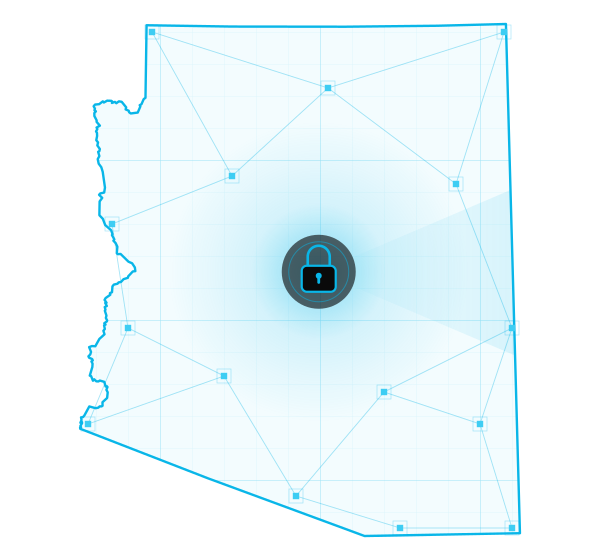
Arizona network illustration with a survey grid, schematic connections and a central lock.
Your brand at the center
Schematic connections, not site locations. We confirm your towns and service area before planning the network.

ROOFING MICROSITES

Arizona.
Start with a serviceable market.

Separate the valley from northern Arizona.

  1. Define the territory

    Choose real service areas and available capacity.

  2. Give each site a purpose

    Inspection preparation, roof system comparisons, project examples, and a clear estimate request.

  3. Keep the inquiry connected

    Branded pages, direct delivery, and an agreed lead definition.

Plan roofing microsites in ArizonaExplore the national roofing offer

Define the Arizona service boundary before adding locations.

Phoenix’s commercial and creative districts give different businesses different page priorities. The statewide planning task is to decide where the offer is deliverable and what a customer needs to know before contacting you.

Choose the first territory

Use your actual coverage, job requirements and appointment capacity to select the first territory. Review accepted work before extending that commitment to more locations.

Check the economics of your offer

Give each page its own evidence

Show original work, accurate scope limits and the information required to confirm coverage. Label examples clearly when they explain a process rather than a completed local project.

Plan a practical starting point

SEE HOW THE PIECES CONNECT

Explore the decisions
behind the plan.

THE TROJAN SYSTEMOWNERSHIP
Your brand connected to the lead journeyDiscoveryYour pagesInquiriesFollow upYOUR BRAND
  1. Discovery through your branded pages
  2. Inquiries reach your business
  3. Your team follows up
Your brand connected to the lead journey

Questions, answered.

What does an Arizona microsite network cost?

An Arizona roofing or water restoration membership costs $399 a month for 50 microsites, every qualified lead included, or $800 for year one if you'd rather pay per lead. Trades we build on request, like HVAC, get their price after the free strategy call, when your Arizona towns and scope have been agreed.

Can an Arizona network cover towns outside the Phoenix area?

Yes, as long as your crews go there. A Tucson or Flagstaff site only earns its place when you'll actually send a truck after it rings, so the town list comes straight from your job history. Each town you add gets its own site with its own wording, and the calls from all of them go to your team.

How many sites does an Arizona contractor need?

Enough to cover the towns you serve. The smallest published tier is 50 microsites, and Jeff confirms terms for smaller custom networks himself. A roofer working around Mesa and Chandler fills that list very differently from a restoration team based in the Tucson area, so the size follows your towns.

Do you have Arizona results?

We don't publish Arizona figures, so there's nothing to claim yet. The dated counts we do publish come from Indiana, where our 203 metal roofing sites logged four inquiries between June 29 and August 31, 2026, two of them full metal replacements. Your Arizona market and competition will set your own numbers, and nobody can guarantee rankings.

Who answers the calls from my Arizona sites?

Your team does, every time. We send calls and forms straight to the numbers and inboxes you choose, and we don't sell those inquiries to competing contractors. A qualified call has to run longer than 60 seconds, so a quick hang-up or a wrong number never counts as a qualified lead on your plan.

Can I stop an Arizona membership if it isn't working?

Yes, if you're on the monthly plan: you pay month by month through a 90 day proving window, and after that it runs month to month until you give 30 days notice. Use that window to watch whether the calls match the work you want, and bring any questions about quiet towns to Jeff before you decide.

What does an Arizona microsite network need from you and from Trojan?

An Arizona network splits the work: you supply the towns and the phones, and Trojan builds the Garrison sites and tests every route.

  • The Arizona towns you've had jobs in this year
  • The trade and services you want more calls for
  • The phone numbers and inboxes that should get inquiries
  • The person on your team who answers new calls
  • A site with its own wording for each town
  • Your company name and logo on every page
  • Test calls and forms before launch
  • New local articles every membership year

Should an Arizona network run as one town list or split by area?

A Garrison network for Arizona crews can run as one town list or split by area, depending on whether one office handles every call.

What you're weighingOne town listSplit by area
Works best when
One office answers every call
Separate crews cover separate areas
Where calls go
One team's phones and inboxes
Each area's calls can go to the crew that covers it
What to send us
One list of towns
A town list per area, with its phone number
Where to start
The towns closest to your office
The area where you turn down the fewest jobs

Arizona microsites should reflect the properties your team actually serves

An Arizona microsite lead generation plan begins with the project your customer is trying to solve. A homeowner comparing replacement windows needs different information from a facilities manager planning cooling equipment work. A focused, branded microsite can give each audience a useful place to understand the service and contact the business responsible for delivering it.

Read more

Trojan connects that resource with organic SEO, clear inquiry routing and an ongoing content plan. We start with your existing website and operating coverage. A new domain is appropriate only when a distinct audience or specialist resource justifies the extra work. Arizona is a wider market than Phoenix, and the plan should leave room for the communities your business can genuinely support.

Separate the Valley, southern Arizona and northern Arizona decisions

The Arizona Commerce Authority's Phoenix profile describes several distinct employment corridors and a mix of business activities. Its Tucson profile identifies university, aerospace, research and logistics activity. The Flagstaff profile describes a northern mountain setting with winter snowfall, university activity and visitor accommodation.

These are market context, not a forecast of leads for a particular trade. Our interpretation is that one Arizona content calendar cannot automatically represent every operating area. The services a contractor offers, the property types it understands and the team available to respond must determine the actual plan. An appealing state map does not establish a branch, an approved territory or a service promise.

Different Arizona operating questions
Market directionDecision before publicationEvidence to bring
Phoenix and the Valley
Which communities share one intake team, and which need separate routing or scope?
Completed project locations, accepted systems and the current appointment process.
Tucson and southern Arizona
Is the offer built for homeowners, commercial facilities or both?
Relevant property examples and the actual decision maker for each service.
Flagstaff and northern Arizona
How do the served property types and seasonal operating plans change the content?
Approved seasonal guidance, service access notes and original local project material.
Prescott, Yuma or another community
Can a useful focused resource be maintained for the real service footprint?
A delivery plan and a distinct buyer need before another domain is commissioned.

Start with HVAC, then build the right path for every trade

Phoenix HVAC microsites are a useful starting point for a business separating repair requests from replacement consultations. The questions differ: a repair visitor needs to understand systems serviced and appointment expectations; a replacement buyer may need help preparing for an assessment and comparing the scope of proposals. Maintenance information belongs in its own clear path.

Read more

The same discipline applies to the other trade plans. Phoenix roofing microsites should distinguish inspection, repair and replacement decisions. Window replacement microsites can explain opening types, installation scope and product considerations. Neither needs to claim that a website can diagnose a building or select equipment without an assessment.

For water restoration, state the actual intake and response process. For remodeling, show relevant work and clarify project readiness. For foundation repair, explain the professional evaluation and the information needed to request it. These city pages provide the detailed paths; the state plan decides which paths belong in your wider portfolio.

Build branded organic leads around a recognizable business

A branded microsite should identify your business before the visitor reaches the form. Use your approved company name, actual service scope, authorized photographs and a clear explanation of the relationship to the main website. A specialist domain can focus on a problem while still making the provider easy to recognize.

Read more

Organic leads are inquiries attributed to unpaid discovery. SEO leads describe the subset connected to search visibility and the customer journey that follows. These phrases should help explain the offer; repeating them cannot substitute for useful content. A person seeking an installer needs evidence, practical answers and a simple next step.

Exclusive leads describe the distribution arrangement for inquiries, not control of the customer's other choices. A direct routing setup sends the request to the business identified on the microsite. State that arrangement accurately, and define any territory terms separately. The prospect remains free to seek another quote.

Make ownership and maintenance part of the buying decision

Make account access explicitYourbusinessDomainWebsiteAnalyticsRecords
Domain and website
Document ownership and access.
Analytics and records
Define access and the handover.
Make account access explicitDomain, website, analytics and customer records need clear ownership and a workable handover.

Before commissioning a network, establish who registers the domains, who can access the hosting account and which commissioned materials the business can use. Identify any licensed fonts, photography or software whose rights differ from the custom content. Explain how inquiry records can be exported and how routing continues if the marketing relationship changes.

Read more

Review the microsite memberships as a scope discussion about ongoing work. A useful agreement specifies the content review process, the responsibilities of the business, the measurement available and the procedure for changing priorities. Domain registration and initial design are only part of the cost.

For example, a window product guide needs revision when the business stops offering a product. An HVAC appointment page needs correction when the intake schedule changes. A remodeling portfolio needs permission and accurate project context. These maintenance tasks protect the usefulness of the resource and help the visitor make an informed decision.

Use paid traffic and organic content for different questions

A paid campaign can test whether an offer and landing page attract relevant inquiries, but its results must be separated from organic search performance. Confirm the traffic source, the market requested and the qualification outcome. A successful form submission is a contact event; it is not automatically a sales opportunity or booked work.

Read more

Compounding organic leads is an investment idea, not a guaranteed production schedule. A growing library may create more useful entry points and continue helping people after a campaign ends. It also requires review, and some topics may not justify further spending. Judge the portfolio using actual inquiry quality and acquisition economics rather than the number of domains.

Keep a short decision record for each market. Note the customer problem, why the resource exists, what original evidence it contains, what it costs to maintain and what happened after inquiries arrived. If a page receives traffic but produces the wrong requests, change the message or qualification path before adding more similar pages.

Answer search and AI questions with useful trade detail

Google's guidance for AI Overviews and AI Mode connects eligibility to its existing search foundations. A page needs to be indexed and eligible for a search snippet; compliance does not ensure selection. AEO and GEO work should strengthen accurate, accessible answers rather than promise a particular AI citation.

Read more

Build concise answers from the knowledge your team can approve. Explain the steps before an estimate, what changes the proposed scope and which situations need a professional assessment. Include original photographs where they help a customer evaluate the work. Keep the provider identity, service statements and contact details consistent across the resource.

Arizona communities should not become interchangeable copies. Google's spam policies address pages or domains created mainly to funnel similar searches elsewhere. Our planning standard is a meaningful purpose and a complete customer path. A strong section on the existing website may serve that purpose better than another microsite.

Bring an Arizona market brief to the first conversation

Map questions to the right pageQuestionFitProofNextService AService BService C
Service A
Planned coverage: fit and next step.
Service B
Planned coverage: proof and next step.
Service C
Planned coverage: fit and proof.
Map questions to the right pageAn editorial planning example pairs a service with a buyer need. Filled cells identify planned coverage, not performance.
  • The intended work. Name the trade, accepted project types and work you do not undertake.
  • The delivery area. Explain which communities your team can serve and how inquiries are assigned.
  • The proof. Gather authorized photographs, scope examples and the person who can approve technical content.
  • The records. Share available traffic and qualification information so existing opportunities can be assessed.
  • The operating owner. Identify who responds, updates services and reviews the next content priorities.

The Arizona Commerce Authority community profiles can support early market context. Your business records and service capabilities make that context actionable. Request an Arizona microsite review to discuss the next useful resource, or compare other regions in the state microsite atlas.

Sources & further reading

YOUR NEXT MOVE

Make the next step count.

Draw your Arizona map in drive time before you draw it in town names

Start with how long a truck takes to reach a job. Towns inside an easy drive get sites first, and far towns wait until a crew is parked closer to them.

  1. Pull last year's job addresses Export every address you billed in the past twelve months. Leave out warranty trips and callbacks, since they don't show where new work comes from.
  2. Pin them on a map Drop the addresses onto any free map tool and look for clumps. You may spot a cluster you never think about, maybe near where a good salesperson lives.
  3. Draw three rings from the yard Mark the towns a truck reaches in under an hour, the ones that take up to two hours, and everything farther out. Use morning traffic, since that's when crews roll.
  4. Fill the inner ring at launch The first ring gets sites on day one. It's where you can promise a quick visit without making your dispatcher cry into the schedule.
  5. Park the far towns on a someday list Write down the distant towns you'd love to work. They get sites once a crew or a trailer sits closer to them, and not a week before.

A site for a town you can't reach fast makes you look slow. A homeowner out there calls, hears you can come Thursday of next week, and hangs up to phone someone closer. On paper that still counts as a lead. In real life it cost you a little trust, and we'd rather you start smaller and sound quick.

In a state this spread out, the rings also keep your fifty sites honest. The entry membership covers fifty microsites, and it's tempting to scatter them across the whole map so the company looks huge. We'd point them at the first ring, then the second, and hold the rest back until you can actually show up.

We also like the rings because they make the first call with us faster. Instead of a vague wish to cover the whole state, you arrive with a map, and we can talk about real towns from minute one. We think the exercise alone is worth the coffee.

Heat in the Valley, snow up north: one network, several kinds of weather

Arizona's monsoon season runs June 15 through September 30. The weeks around it feel very different in the Valley, around Tucson and up in the high country.

What each Arizona region asks of your crews through the year
RegionBefore the monsoonJune 15 to September 30October to March
The ValleyIf crews start early to beat the heat, someone should answer the phone by first lightSplit storm calls between East and West Valley crews so neither side waitsCatch up on the repair jobs that got pushed back during storm weeks
Tucson areaGather job photos for the Tucson sites while that crew has room to breatheGive the Tucson crew its own storm line, with a Valley backup named ahead of timeLook at which Tucson towns rang, then decide whether that crew can reach farther
Flagstaff and the high countryMilder summer days leave more of the afternoon open for outdoor workThunderstorms still roll through, so storm pages need a crew that can reach themSnow changes the work, so ask your crew lead which winter jobs they would take

One Arizona network can hold towns that never share a forecast. A Flagstaff homeowner who reads about blistering afternoons will wonder whether you've ever driven up the hill. So we write each region's sites around the weather its own homeowners actually get. The storm pages then point to a crew that can reach them.

Use the quiet months to gather photos, too. A storm page showing your own crew on a real Arizona roof does more for a worried homeowner than any stock picture we could find. Snap the tarp job, the torn flashing and the finished repair, then send them our way.

A 113-day heat streak and what it does to an HVAC town list

Phoenix logged 113 straight days at 100 degrees or more in 2024. For a heating and cooling shop, a stretch like that decides which pages lead and how far one crew can roam.

Long heat changes the math on reach. When every tech is booked through the afternoon, a town an hour away might as well be on the moon. So in an HVAC network we'd keep the summer town list tight. Far towns can lean on tune-up and maintenance pages, which people book ahead. Those pages keep ringing in the cooler months too, when your techs have gaps to fill.

HVAC isn't one of the published membership trades, so we build it on request. Jeff talks it through on the free strategy call and prices it once your towns and services are settled. We'd rather give you a real number for your own map than a guess made for somebody else's.

Should a no-cool page promise same-day service?
Only if your schedule really allows it on a July afternoon. If it doesn't, the page can explain how you book emergencies and when a caller should expect a callback. A promise you break in August follows you around in reviews for years.
Can one HVAC network cover the Valley and Tucson?
Yes, as long as a crew works each place. The sites for each area can ring different numbers, so a Tucson caller never waits on a Valley dispatcher. If all your crews live in the Valley, the Tucson sites wait too.

ROC plus your number: the line each Arizona site should carry

Licensed Arizona contractors already print ROC and their license number on written bids and estimates. We put that same line on each site so the web page matches the paper.

  • The footer of every town site, right beside your company name
  • The estimate request page, just above the button
  • The about page, with your license class spelled out in plain words
  • Any checklist or guide a homeowner might print and keep
  • The confirmation email a homeowner gets after sending a form

We copy the number and class straight off your actual license. Old truck wraps and business cards don't count as a source. If you hold more than one class, each site shows the one that fits its pages. A roofing site carries a roofing class such as CR-42. An air conditioning site carries one such as CR-39. That way nobody reads a promise you can't legally keep.

The same care goes into the words around the number. We won't call you certified, approved or preferred unless you can show us the paper. One made-up badge copied onto fifty sites is fifty problems, and each one has to be found and fixed by hand.

Tucson or Flagstaff next? A made-up Mesa roofer thinks it through

Picture an invented Mesa roofing company choosing its second Arizona market. The winner turns out to be the place a crew can live and work, whatever the bigger map suggests.

Hypothetical example A Mesa roofer with two crews picks a second market

Before

  • The owner wants Tucson and Flagstaff sites at once, since both look big on a map.
  • Both crews live in the East Valley, so any far job means a long drive, a hotel or both.
  • Calls from those far towns would ring the Mesa office, where nobody knows the streets.

After

  • Last year's invoices show a dozen jobs around Tucson and almost none up north.
  • The owner parks one crew's trailer near Tucson for storm season and gives that crew its own phone.
  • The Tucson-area sites launch in spring and ring that phone. Flagstaff goes on the someday list.

The invoices made this call, with help from one plain question: where can a crew sleep? It's natural to reach for the famous names first, and that's a fair instinct. A site in a town you can't serve well works against you, though, because the first caller learns you're far away.

The someday list matters too. Writing Flagstaff, Prescott or Yuma on it, each with the one change that would make it work, keeps the idea alive without spending a dime. When that change happens, say a crew lead moves north, the sites for that area can follow quickly.

Compare one monsoon with the last one when you score each region

Calls for storm trades swing hard with the seasons here. Line up the same months year over year, split by region, and the sites that earn their keep stand out.

What to count for each Arizona region, every month
CountWhy it mattersWhere it comes from
Calls and forms by town siteShows which towns ring at allThe tracking we set up at launch
Calls that reached a personA missed call costs more than a slow monthYour phone system's call log
Inspections or estimates bookedTells you the caller was a real prospectYour scheduler's calendar
Jobs signedThe number that pays for everything elseYour contracts, matched to the town site
Jobs turned down, with the reasonShows whether your far ring is really too farA one-line note from whoever answered

Seasonal trades fool people with raw totals. A quiet January can look like failure, and a wild August can look like genius, when both are mostly weather. So we'd have you compare each region's storm season with its own storm season a year earlier. Only after that should regions be compared with each other, and only on booked or signed work.

Give a far region more than one season before you judge it. On monthly billing, the opening 90 days act as a proving window, paid a month at a time. After it, the plan rolls month to month, and 30 days notice ends it. Use that stretch to learn where the rings really ring, and tell us what you're seeing.

Splitting one Arizona network between a Valley office and a Tucson crew

If your office sits in the Valley and one crew works around Tucson, settle which towns ring which phone before launch. Then decide who picks up when that crew is out.

Who answers which towns in a split Arizona network
SituationValley officeTucson crew
An ordinary weekdayAnswers the Valley town sites and their estimate formsAnswers the Tucson-area town sites on its own phone
Tucson crew out on a storm jobPicks up Tucson calls that go unanswered and books a callbackReturns those callbacks once the tarp is tied down
A town halfway between, like Casa GrandeTakes it if a Valley truck gets there faster in morning trafficTakes it if the drive from the Tucson yard is shorter
A monsoon night with both crews bookedGives every caller a straight callback timeCalls back first thing, starting with the oldest request

Picture a July evening. The Tucson crew is on a roof in Marana with a tarp snapping in the wind, and their phone rings twice. Without a plan, that caller hears nothing and dials someone else. If your phone system can roll an unanswered call to another line, the Valley office picks up instead. A calm voice books a morning visit, and the crew wraps up the tarp in peace.

We set up the routing from the split you choose, then make a practice call down every path before launch. Your part is picking the people. A phone number isn't a backup plan until someone you trust has agreed to answer it.

Edge cases worth settling before an Arizona network goes live

Most trouble in a state this big shows up at the edges of the map and the calendar. These are the questions we'd want answered before any site launches.

What happens to a Flagstaff call when every crew is booked?
It still rings the phone you picked for that site. What the caller hears next is up to you, and a plain callback time works better than a promise you can't keep in a snowstorm. If Flagstaff calls keep landing on full weeks, those sites may have come too early.
What should we send you when a crew lead moves?
Send the new home base, the towns that crew can now reach and the phone that should ring. We change the town list and the routing from that. Then we make a practice call on each route that moved.
Whose clock runs the after-hours rules?
Yours. Most of Arizona stays on Mountain Standard Time all year, while our Indianapolis desk springs forward and falls back. So the gap between us shifts by an hour twice a year. Any after-hours rule on your phone line should run on Arizona time.
Who keeps the domains if we stop?
Trojan owns and runs the Garrison sites and domains, and the monthly price covers them. Your agreement spells out what happens to the sites when a membership ends. Read that part before you sign, and ask us about anything that's unclear.

Sources