Need help?Jamie

Garrison microsite software

Garrison Phoenix Roofing Microsites for Owned Lead Generation

Your crews do good work, but Phoenix homeowners searching for a roofer keep landing on lead forms instead of on your company's name.

Trojan builds Garrison roofing microsites for contractors in Phoenix, Arizona: a branded site for each part of Phoenix your crews roof, with calls and forms going only to your office. It's for the owner who'd rather spend on sites carrying the company name than on another month of rented leads. One site could cover the Camelback Corridor, which the Biltmore Area Partnership serves.

Powered by Garrison, Trojan’s microsite software. Useful branded websites and direct inquiries for the markets your team serves.

Jot down who answers your phone when three roofing calls land at once. The first strategy call is free, and during business hours we aim to reply within five minutes.

  • One roofer per trade and market, every call to you
  • Every qualified lead included in one monthly price
  • Pages about the roofs your crew actually installs

Garrison signs one contractor per agreed trade and market, so a Phoenix roofer's sites never feed a competing crew. Jeff Clerisier started Trojan in March 2018 and it keeps more than 1,400 websites live, so a new roofing network runs on setup work that's been done many times before.

Memberships start at $399 a month for 50 microsites with every qualified lead included, or $800 for year one on the pay per lead plan.

See membership prices
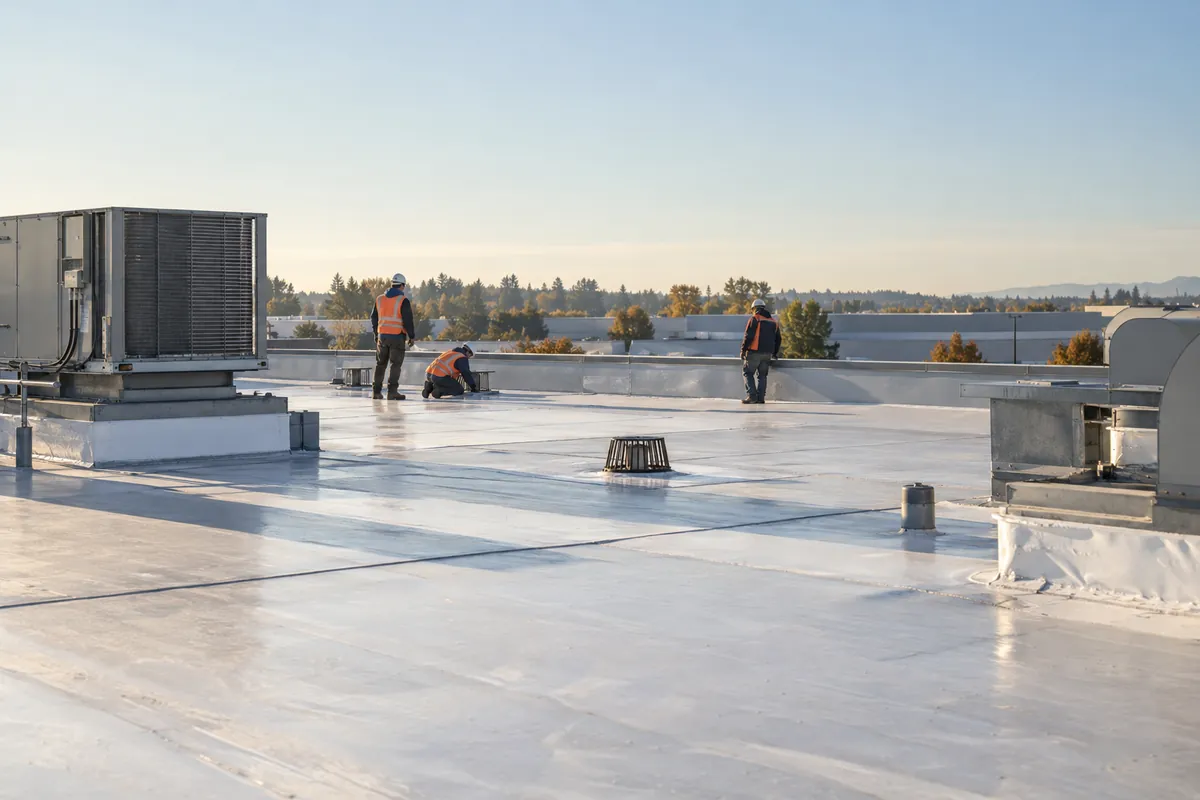
Illustrative business scene: commercial roof with rooftop equipment, illustrating roofing contractor lead generation
IllustrationProposed roofing site networkBranded resources for areas of this market, each sending inquiries straight to your team. The sites shown are a proposed plan and aren’t live.PROPOSED SITE NETWORKCamelbackCorridorDowntownCoreRooseveltRowGrandAvenueWarehouseDistrictYOUR TEAM

BEFORE ANOTHER DOMAIN

Does a microsite fit?

A microsite fits only when it has a clear job and someone to keep it useful, so check what your business already has.

Select the foundations you have in place to explore a practical starting point.

Discuss my lead strategyExplore work on your main website

SEE HOW THE PIECES CONNECT

Explore the decisions
behind the plan.

THE TROJAN SYSTEMOWNERSHIP
Your brand connected to the lead journeyDiscoveryYour pagesInquiriesFollow upYOUR BRAND
  1. Discovery through your branded pages
  2. Inquiries reach your business
  3. Your team follows up
Your brand connected to the lead journey

Trojan Digital Marketing plans Phoenix roofing microsites for businesses that want a clear, owned marketing resource and direct inquiry routing. We help define the site purpose, content, ownership, qualification and measurement around roof assessment and replacement inquiries. This page describes Trojan's marketing service. The contractor remains the service provider and makes the actual assessment, scheduling and project commitments.

Questions about roofing microsites in Phoenix, Arizona

What does a Phoenix roofing microsite network cost?

Memberships start at $399 a month for 50 microsites, with every qualified lead included and nothing billed per lead. The pay per lead plan starts at $800 for year one. Monthly members get a 90 day proving window first, and once it ends the membership runs month to month, with 30 days notice to stop.

Will another Phoenix roofer get the same leads?

No. Garrison signs one contractor per agreed trade and market, and every call and form from your sites goes to your team. The site count describes your network, and it doesn't hand you exclusive rights to every town around Phoenix, so we map sites to the areas where you actually want more roofs.

Can the sites talk about Phoenix heat and roofs?

Yes, with the roofing judgment coming from your crew. In 2024 Phoenix logged 70 days at 110 degrees or hotter, a number a page can cite from the source. What that heat means for a particular tile or foam roof is your estimator's call, so we write it in your words and leave out any lifespan figure you can't back up.

Can the sites show my license and credentials?

Yes. Arizona law already requires your ROC license number on written bids and estimates, so the sites carry it the same way, printed exactly as issued. We won't list a manufacturer program or badge you can't document, because a homeowner who looks it up and finds nothing stops trusting the rest of the page. Review counts work the same way: only the real number goes up.

Which parts of Phoenix can one roofing network cover?

Whatever parts of Phoenix your crews already roof, with a site for each. If most of your jobs sit near the Camelback Corridor, that corridor can have a site of its own, since the Biltmore Area Partnership says it serves the corridor and the greater Biltmore area. Trojan works with Phoenix businesses remotely from Indianapolis, and the map comes from your own job list.

What should I bring to the first call?

A rough count of the roofs you finished last year and the Phoenix neighborhoods where you'd like more. With those two numbers we can talk through how many sites make sense and which plan fits your cash flow. The call is free, and during business hours we aim to reply within five minutes.

Which Phoenix facts has Trojan checked for a roofing network?

We put only checked Phoenix facts on roofing sites, and each one below links to the source we read before a page repeats it.

The heat and ROC lines come from search results read on September 26, 2026, and the Biltmore line was last reviewed September 7, 2026. Reroof permit rules for Phoenix stay off the sites until someone checks them at the source.

Should a Phoenix roofer pick the monthly plan or pay per lead?

We lay out both Garrison plans for Phoenix roofers so you can pick how to pay while the sites build up calls.

What you're weighingMonthly planPay per lead plan
How leads are billed
Every qualified lead is included
A yearly allowance, then a set rate per extra qualified lead
How long you're committed
A 90 day proving window, then 30 days notice
Twelve month membership years that renew
Who it tends to suit
Owners who want one steady bill
Owners who'd rather pay as leads arrive

How does a Phoenix roofing membership run after you sign?

We start Phoenix roofers on the monthly Garrison plan with a 90 day proving window, billed monthly, and once it's over you can stay month to month or leave with 30 days notice.

Typical plan

  1. Proving windowFirst 90 days
    • Sites go live under your company name and logo
    • Every call and form path is tested against your office line
  2. Month to monthMonth four onward
    • Thirty days notice ends the membership
    • Each membership year brings a fresh batch of local articles

Memberships start at $399 a month for 50 microsites with every qualified lead included.

A roofing microsite needs its own useful job

Make account access explicitYourbusinessDomainWebsiteAnalyticsRecords
Domain and website
Document ownership and access.
Analytics and records
Define access and the handover.
Make account access explicitDomain, website, analytics and customer records need clear ownership and a workable handover.

Trojan builds and plans roofing microsites as marketing assets for the contractor that will receive the inquiries. The site should explain a particular roofing decision clearly, display the responsible business and route a suitable request directly to that business. Its reason to exist is a useful customer resource with a defined audience, not another domain that repeats the main website's homepage.

Read more

For Phoenix, a workable brief could center on property managers who need to understand how to request an assessment and what information helps an estimator prepare. The resource can explain accepted project types, show approved roofing evidence and present a clear inquiry route. The contractor remains responsible for roofing services and customer commitments. Trojan's role is the content architecture, website, tracking and handoff included in the marketing scope.

Proposed Phoenix network planning scenario

Consider a roofing business that serves Phoenix and receives both residential replacement requests and commercial property inquiries. Its main website currently treats those audiences as one. Trojan would first determine whether a stronger commercial roofing section on the main domain resolves the confusion. A separate microsite becomes a candidate only if the property manager resource has enough distinct content, a clear brand relationship and an owner who can maintain it.

Read more

The proposed resource would organize accepted building uses, assessment preparation and documented project examples. A page for an individual district would require meaningful service context rather than a renamed introduction. The network map would show the role of the main company website and any genuinely separate resource. Every destination would identify the same responsible contractor without inventing extra offices or making a project location look like a branch.

Connect acquisition to an estimating decision

Organic search can introduce the preparation resource to people investigating a roofing question, while a paid campaign can send a chosen audience directly to the relevant service explanation. Both routes need a clear offer and a functioning inquiry path. Trojan would use campaign parameters and landing page records where available to distinguish how visitors arrive.

Read more

The qualification process would collect the property and requested work, then route the inquiry to the contractor's estimating team. A submitted form would not be described as an approved estimate or scheduled inspection unless the contractor's actual system establishes that status. The marketing review would examine suitable assessments and reasons for rejected requests. That evidence can improve the service explanation and targeting without assuming that more domains automatically produce more qualified leads.

Compare the choices before committing to the scope

Change one thing you can learn fromOne question · Consistent measurementABCurrent pageOne changeObserveCompareRecord context before interpreting a difference
A: current page
Observe the starting version.
B: one change
Compare with the same measurement.
Change one thing you can learn fromKeep the goal and measurement consistent, record the change and compare the result in context.
Choices in a Phoenix roofing microsite scope
ChoiceTrade detailDecision rule
Main website resource
Roofing service and scope
Use the existing domain when it can serve the audience clearly and retain a complete inquiry journey.
Distinct microsite
Assessment preparation
Require a useful independent resource, transparent business identity and a named content owner.
Paid landing use
Roof assessment and replacement inquiries
Match the campaign message to the actual service and preserve direct routing to the business.

Define the deliverables and ownership before building

For roof assessment and replacement inquiries, Trojan would propose a scope covering the content map, page writing, visual implementation, qualification fields, direct routing and agreed tracking. The asset schedule would identify domain control, website and content rights, administrative access, analytics, phone arrangements and exportable inquiry records. Ongoing third party services and maintenance responsibilities would be explicit rather than hidden behind the word ownership.

Read more

The client would provide approved roof project descriptions that identify the property type, contractor role and completed scope, current service details and a reviewer with authority to approve them. We would work with the roofing business owner to define whether the property and requested roofing work fall within the contractor service scope. The site would then be tested against that decision. Project fit also depends on whether the business has enough distinct material and staff capacity to maintain the resource. If it does not, a focused main website improvement is a sensible scope to discuss.

Measure suitable inquiries and maintain the resource

For the proposed roofing microsite, the business outcome is roofing inquiries accepted for a suitable assessment. Trojan would distinguish search visits, paid visits, submitted contacts and inquiries accepted by the company. A click or form completion is useful evidence about a step in the journey, but it is not proof of a booked job or an economic return.

Read more

The maintenance plan would respond to a change in accepted roof systems, coverage or estimating arrangements. It would also include the agreed technical checks, content updates and routing tests. We would compare performance against a documented baseline and record attribution limits where a customer uses several channels. The next investment would follow the quality of the resource and the contacts it supports, with no fixed lead volume, ranking, citation or turnaround promise.

Use local context and search guidance accurately

Separate service coverage from an officeReal coverage · No invented office
Business
Start from the real business.
Coverage
Identify the places it actually serves.
Office
Do not turn a service area into an invented office.
Separate service coverage from an officeThis is a planning grid, not a ranking map. Publish only the areas the business actually serves.

Downtown Phoenix Inc. describes a central district with residential, retail and cultural uses. That context supports varied buyer examples without establishing roof condition or demand. Downtown Phoenix Inc. Downtown Core profile.

Google identifies doorway abuse as a risk when similar sites or pages exist mainly to funnel search visitors. A proposed resource therefore needs its own useful content and clear business identity. In this roofing scope, the test is whether the property and requested roofing work fall within the contractor service scope. Read Google search spam policies and helpful content guidance.

Discuss the resource and the first useful decision

Bring the current website, the accepted service scope and examples of inquiries the team considers suitable. Trojan can review the role of a Phoenix roofing resource and propose a bounded next step. Discuss Phoenix roofing microsites. Explore the national roofing service or review the Phoenix market hub.

Sources & further reading

YOUR NEXT MOVE

Make the next step count.

Wind-cracked tile, and a ceiling stain that waited four days to show up

Monsoon wind can crack or shift a few tiles, and the leak may not show until the next storm. Your leak page should help an owner connect those dots and book a look.

Hypothetical example A Phoenix homeowner whose tile roof took a hard gust during a July monsoon cell, before and after the roofer runs area sites

Before

  • The storm passes, the roof looks fine from the yard, and she forgets about it.
  • Four days later, after a second cell, a brown ring shows up on the bedroom ceiling.
  • She searches roof leak after storm and can't tell whether the two storms are connected.
  • By the time anyone climbs up, the underlayment below the cracked tiles has been wet twice.

After

  • The morning after the first storm, she searches for monsoon roof damage and finds your area site.
  • A page with your own photos shows cracked and slipped tiles that look normal from the ground.
  • In your estimator's words, it explains that a leak can wait for the next storm, and it offers a quick way to book a look.
  • Your crew swaps a few tiles and checks the underlayment while the ceiling is still clean.

Tile hides its damage well. A cracked or slipped piece can sit quietly until the next cell pushes water under it. A page that shows what your crew finds up there, with photos from your own jobs, gives an owner a reason to call before the ceiling does the talking.

We can't promise how often that after column happens. That depends on your market, your competition and how well each site answers real questions. What we can promise is that when it does happen, the call rings your office and nobody else's.

What should the leak page tell someone to do tonight?
Only what your crew lead signs off on. Usually that's moving belongings, catching the drip and taking photos, plus a firm line about staying off the roof in the dark. We never write climbing advice.
Should the page offer tarping?
Only if your crews really tarp after storms and you can say how soon. If tarping depends on the week, the page says your office will talk it through on the callback.

Tile, foam, shingles and metal: a page for each roof Arizona's license names

Arizona's roofing license scope names tile, shingles, metal, urethane foam and coatings. Give each roof type your crews actually install a page of its own, and skip the rest.

Roof type pages a Phoenix roofing site might carry, if your crews do the work
Roof typeWho's readingWhat the page gives them
Concrete or clay tileAn owner with a leak under tiles that look fine from the streetWhat your crew checks under the tile, with photos from your own jobs
Flat foam roofAn owner of a flat-roof house whose coating looks wornHow your team decides between a recoat and a bigger repair
Asphalt shinglesAn owner holding two reroof bids that don't matchA plain list of what your price includes and what it doesn't
MetalAn owner thinking about the next roof as a long-term buyOnly if you install it, the panel types you offer and why

A tile owner and a foam owner ask different questions, even when they live on the same street. One page trying to answer both ends up vague for each. Separate pages let your estimator's knowledge show, and they let us send the reader to the right next step.

We'd skip any roof type your crews don't touch. A metal page for a shop that never installs metal just brings calls you'll turn down, and it quietly tells readers you'll say anything to rank.

What if our license is R-42 and we only do homes?
Then every page speaks to homeowners and none of them courts strip malls or office parks. We'd rather the site match your license exactly than stretch it to grab a few extra searches.
Can one page cover tile and shingles together?
It can, but we'd split them once you have photos for each. A tile owner who sees shingle pictures up top tends to assume you're the wrong roofer and leaves.

A 113-day run of triple digits, and the install-day page it calls for

A Phoenix summer can run in triple digits for months. An install-day page should explain, in your words, how that heat shapes crew hours and the day itself.

  • What time your crew usually arrives in summer, if you start early to beat the heat.
  • How loud tear-off gets and when, so the homeowner can warn the neighbors.
  • Where the dumpster or trailer goes and how you protect the driveway.
  • What your crew does if a storm builds while the roof is open.
  • Who the homeowner calls on install day, with a name and a number.

Homeowners worry about install day more than they admit. They wonder if they'll be stuck inside with the hammering and whether the crew needs water or a bathroom. A calm page answers all that before anyone asks. It makes the whole job feel planned, which it is.

We'd write it from a short call with your production manager. If summer hours change from year to year, we keep the page general and let the office confirm times. The goal is fewer surprises, so we never print a schedule your crew can't keep.

Up to 30,000 dollars from the state, but only if the roofer was licensed

After a monsoon, unfamiliar crews knock on Phoenix doors. Arizona's recovery fund can repay a homeowner up to 30,000 dollars per home, but never for work by an unlicensed crew.

  1. Put the license on the storm page Owners comparing storm crews read that page closely, so your license number and class sit right under its call button.
  2. Point to the state lookup A short line tells readers they can look up any Arizona contractor on the Registrar's website, you included.
  3. Explain the class in plain words R-42 covers home roofs and CR-42 covers homes and commercial buildings. The page says which one you hold.
  4. Match the name on the bid The company name on the license, the site and your written estimates all match, letter for letter.
What should the page say about crews knocking on doors after a storm?
Keep it calm and factual. Owners can look up any crew on the Registrar's site before signing, and work by an unlicensed crew never qualifies for the fund. We never name or knock a competitor. The page just hands the homeowner the lookup.
Does every roofer's site get the fund line?
Only when your residential license pays into the fund. Some residential contractors post a separate bond instead, and the fund covers homes only, so a roofer who does no residential work leaves the line off.

What stays with you when a roofing lead comes from your own site

A rented lead disappears the day the bill stops. A site carrying your name keeps working, and the homeowner meets your company before anyone else gets a turn.

Four roofing moments, with a rented lead and with your own Garrison site
Roofing momentRented leadYour own site
A small repair this year that becomes a reroof next springThe seller may sell that same homeowner again next springThe owner finds your area site again and calls the crew who fixed it
A neighbor searching the name on your yard signNothing ties the search to the job they watchedYour area site shows that job in its recent roofs
A warranty question five years laterIt goes wherever the owner's search happens to landIt reaches your office through the site that sold the roof
A monsoon week when every roofer is bookedThe same owner may hear from several crews at onceThe request waits in your queue, and nobody else is calling
What does a Phoenix roofing network cost?
Our monthly plan starts at three hundred ninety-nine dollars a month for a network of 50 microsites, with qualified leads included at no extra charge. Treat the opening 90 days as your proving stretch. Past that point it runs month to month, and 30 days' notice ends it.
Is there a way to pay only when leads arrive?
Yes. The pay per lead plan starts at eight hundred dollars for year one. On either plan we sign only one roofer per market, so a rival crew never gets your Phoenix pages.

Map your first Phoenix areas from the roofs you'd gladly do twice a week

Start where your favorite jobs already happen. If tile reroofs keep your crews happy and your margins healthy, the network's first and fullest pages belong where your tile crews already work.

Most roofers can name the jobs they'd like more of without looking anything up. Maybe it's tile underlayment work in older neighborhoods. Maybe it's foam recoats on flat roofs that come back every few years. Whatever it is, that's where the network's first full pages should point, because a site pulls in the kind of work its pages talk about.

  1. Pull two years of finished jobs Address, roof type and rough job size are enough. A spreadsheet export or a stack of invoices both work.
  2. Sort by roof type first Group tile, foam, shingle and metal jobs, then spot where each group bunches up on the map.
  3. Ask your estimator which ones they'd repeat Some jobs look good on paper and wear everyone out. Your estimator knows which kind those are.
  4. Pick three to five first areas Choose the clusters of jobs you'd happily do again, close enough that crews aren't losing mornings to the drive.
  5. Leave room to grow We add areas as your crews grow, so new sites never promise work you can't reach this season.

The neighbor who watched your crew all morning

Every tear-off is a small billboard. When a neighbor looks you up that evening, your area site should show the work they just watched and make calling you easy.

Think about the retired guy across the street. He watched your crew pull old tile at dawn, noticed they cleaned up before lunch and read the name on the truck. That night he searches your company with his neighborhood tacked on. What he finds decides whether he calls you or just nods and forgets.

If he finds a generic page about roofing in Arizona, the spell breaks. If he finds your site for his area, he sees recent jobs nearby and a way to ask about his own roof. You've turned one job into a warm lead without spending another cent on ads.

  • A recent roofs section with a photo, the roof type and the month, and never a house number.
  • A short note from the crew lead about what that job involved.
  • A simple way to ask for an inspection that mentions the job they saw.
  • Yard sign wording that matches the site's name, so the search is easy.

A page for flat foam roofs, written by someone who's walked on one

Flat foam roofs raise questions a pitched-roof page never covers. If your crews spray or recoat foam, a page in your estimator's voice answers them before the first call.

How does an owner know the coating needs attention?
We'd write your estimator's own checklist, with photos from your jobs of what worn coating looks like. No stock images, and no guessing at what a stranger's roof needs.
How often does a foam roof need a recoat?
Only your crew can answer that honestly for the products you use. If your team won't name a number, the page says the answer depends on the roof and the last coat, and invites an inspection.
Can a homeowner walk on the roof to look?
That's a safety call for your company to make. If you'd rather owners stay on the ground and send a photo instead, the page says exactly that, in your words.

Foam owners are often people who already know their roof is a little different. They've heard the words recoat and coating before, and they want someone who talks about it without a sales pitch. A page that sounds like your estimator standing on the roof, pointing at a worn patch, earns that trust fast.

Roof copy that sounds great in June and haunts you by winter

Some roofing copy sounds great on day one and causes trouble by month six. We leave these lines off every site we build, and we'll gladly explain why.

  • A roof lifespan in years that your crew can't stand behind under Phoenix sun.
  • Free roof offers tied to an insurance claim.
  • Manufacturer programs or badges you can't show paperwork for.
  • Star ratings or review counts that aren't current and real.
  • Licensed and insured, written without the actual license number and class beside it.
  • A repair date for storm damage before anyone from your office has seen the roof.

Each of those lines has a way of coming back. The lifespan promise gets quoted back to you when the roof turns twelve, and a free-roof line has a way of landing on an adjuster's desk. We'd rather your sites say a little less and be right every time.

Can we mention insurance at all?
Yes, carefully. A page can say your team documents damage with photos and will talk with the homeowner's adjuster if asked. It shouldn't guess at what a policy pays or hint that the roof will cost nothing.
What if a competitor's site says all of these things?
Let them. Flashy promises have a way of aging badly. Your sites win by being the ones a careful homeowner can check line by line and find nothing off.

Questions a Phoenix roofer asks before handing over the license number

You'd be trusting us with your license number, your photos and your phone line. Here's who you'd be trusting, and what we'll need from you to start.

Have you built roofing sites for anyone in Phoenix?
Not yet. You'd be our first Phoenix roofing network, planned from our desks in Indianapolis. Our founder, Jeff Clerisier, took on his first web clients in 2016, and more than 1,400 of our sites are online right now.
What should we gather before the build starts?
Your license details, a list of recent jobs by area and roof type, a few photos you're free to share and the person who picks up the phone. We handle the building, the writing and the call routing.
Is there a quick check we can run on our own site today?
Our free scan grades the roofing site you already have and ranks what to fix. You get a list to work from, network or no network.

A tile owner reading your storm page at midnight doesn't care who built it. They care whether the license matches and whether somebody answers the phone. Those are the parts we can shape, so that's where our effort goes. Where Google places a page, and how many storms a summer brings, sit outside anyone's control.

Sources