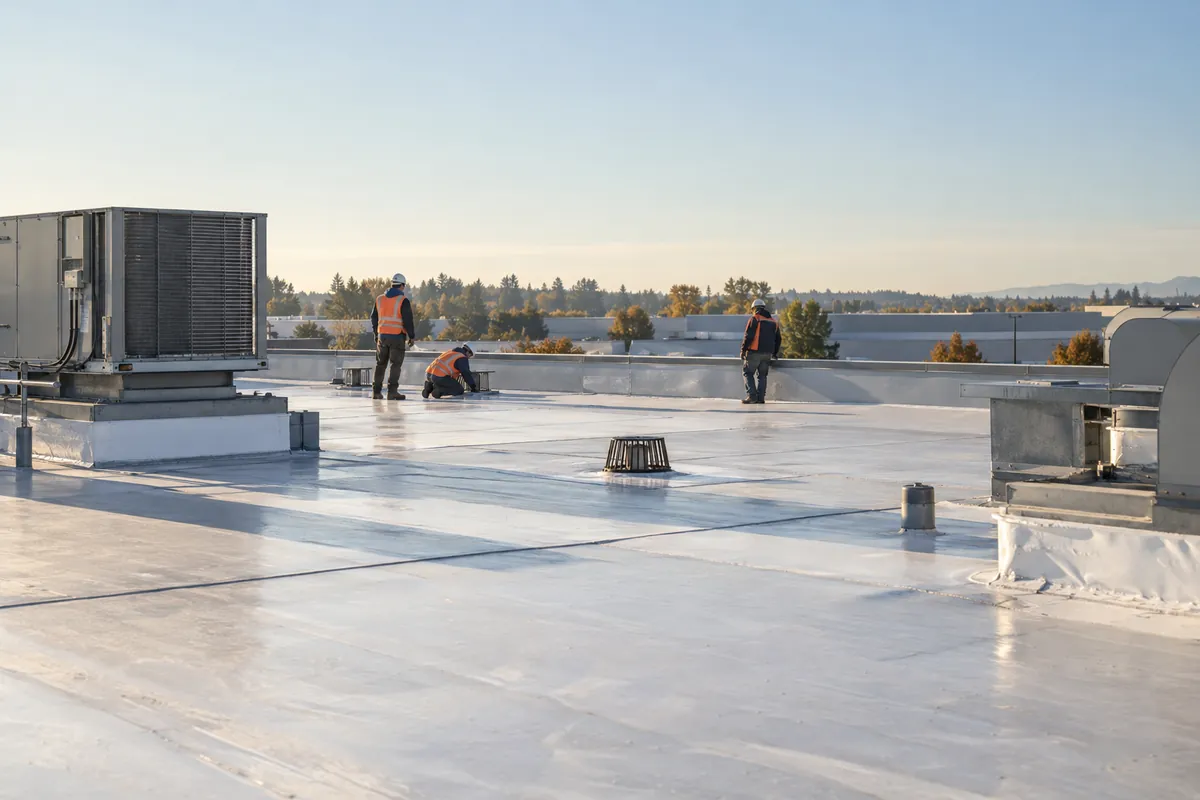
A Phoenix roofing content plan should start with one page listing the roof systems and building types you accept, then add guides and project stories. Trojan Digital Marketing builds roofing microsites that send each call and form to your office, and we check your main website first. If a better service page there would do the job, we'll recommend that. Jeff Clerisier, our founder, settles the scope with you. Tell us which roofs you won't touch: the first strategy call is free, and during business hours we aim to reply within five minutes.
Start with the roofing decision the site will own
- Domain and website
- Document ownership and access.
- Analytics and records
- Define access and the handover.
A Phoenix roofing content plan should begin with a buyer and an accepted service, not a list of domains. A property manager asking how to arrange an assessment needs different information from a homeowner comparing replacement options. We match each of those questions to a service you actually sell and decide which website should answer it.
The main roofing service page would define scope and introduce the responsible business. Supporting resources could explain preparation for an assessment, the information an estimator needs and selected project examples with approved credits. A district page would be considered only when it supplies genuinely useful coverage or access information. Copying the same roof description into many local pages would add maintenance without establishing a new customer resource.
Worked hierarchy for a property manager resource
In the proposed Phoenix example, the contractor has documented commercial roofing projects but no clear page for property managers. Our first site map has four parts: a service overview, an assessment prep guide, an inquiry page and a few approved project stories. Each project would connect to the service it demonstrates and identify the contractor's role without revealing information the client has not approved.
We'd try that structure on your main domain before assuming you need another site. If a separate resource is justified, its navigation must still be complete and usable on its own. The customer should not land on an intermediate page whose only purpose is to forward them to a generic contact form elsewhere. The site would explain who receives the inquiry and preserve the business identity at the point of submission.
Refresh the facts that affect estimating fit
The content calendar should follow changes in service and customer questions. If the contractor stops accepting a roof system or changes its assessment process, related pages and inquiry labels need review. A new project story should add a distinct example of the work rather than merely increase the article count. Photos should retain permission and accurate descriptions.
We'd line up search queries and landing page data against the assessment requests you accepted. Our original 200 Indiana residential roofing microsites logged 11 calls and form inquiries from June 29 through August 31, 2026. Those requests covered replacements, leak repairs and a same day tarp, so each page should say which kinds you want. A page attracting the wrong project type needs a scope revision before more content is added. Where the main website already serves the same buyer effectively, a focused improvement there can be the stronger investment. A microsite earns its place through a durable editorial purpose, clear ownership and a maintainable customer journey.
Compare the choices before committing to the scope
- A: current page
- Observe the starting version.
- B: one change
- Compare with the same measurement.
| Choice | Trade detail | Decision rule |
|---|---|---|
| Roofing service and scope | Whether the property and requested roofing work fall within the contractor service scope | Explain the accepted work and identify the responsible business. |
| Assessment preparation | Property location, building use, the concern the customer has noticed and a preferred contact route | Help the customer prepare without requiring a technical conclusion. |
| Approved replacement project evidence | Approved roof project descriptions that identify the property type, contractor role and completed scope | Demonstrate the actual work with accurate scope and publication permission. |
Assign a reviewer and an inquiry role to each page
The proposed Phoenix roofing content register would identify the buyer question, page purpose, evidence, reviewer and next action. The source material would include approved roof project descriptions that identify the property type, contractor role and completed scope. The roofing company's owner approves every service fact, and we publish only the photos and project notes they clear. A page should not acquire a stronger claim than its source simply because a writer wants a more persuasive headline.
The inquiry brief would capture property location, building use, the concern the customer has noticed and a preferred contact route, with the original context preserved for the contractor estimating team. Content and form labels should describe the same offer. A preparation guide that asks the visitor to gather one set of information while the form requests unrelated details creates unnecessary work. Trojan would review the complete reading and submission path before adding the next article or district destination.
Use search and inquiry evidence to choose the next revision
For the Phoenix roofing plan, query data can show how people encounter the resource, while landing behavior can show whether they reach a useful next step. Then the intake record answers what queries can't: was this property and this roofing request inside your service scope? These sources should inform each other without pretending that a separate query export proves the exact origin of every inquiry.
A review would compare the page purpose with roofing inquiries accepted for a suitable assessment and the questions staff continue to receive. A change such as a change in accepted roof systems, coverage or estimating arrangements would trigger a factual update before more coverage is added. When an existing page already answers the decision well, improve or maintain it rather than create another near duplicate destination. The content plan remains a set of useful decisions, not a commitment to publish an arbitrary quantity.
Use local context and search guidance accurately
- Business
- Start from the real business.
- Coverage
- Identify the places it actually serves.
- Office
- Do not turn a service area into an invented office.
The Phoenix roofing planning example uses Downtown Core as a geographic setting. Market coverage must follow the actual business service area and useful customer information, without presenting a district reference as an office or evidence of repair demand. Downtown Phoenix Inc. Downtown Core profile.
Google recommends useful original content and describes substantially similar search entry pages as a doorway concern. A distinct, browseable hierarchy is part of the planning test. In this roofing scope, the test is whether the property and requested roofing work fall within the contractor service scope. Read Google search spam policies and helpful content guidance.
Discuss the resource and the first useful decision
Bring the current roofing pages, approved evidence and recurring customer questions. Trojan can map a useful Phoenix content hierarchy and assess whether the main website or a distinct microsite is the more maintainable home for the resource. Discuss Phoenix roofing microsites. Explore the national roofing service or review the Phoenix market hub.
Local context behind this plan
Downtown Phoenix Inc. describes a central district with residential, retail and cultural uses. That context supports varied buyer examples without establishing roof condition or demand. Downtown Phoenix Inc. Downtown Core profile
Questions, answered.
How many pages should a trade microsite contain?
The page count should follow the decisions the resource needs to answer. For roof assessment and replacement inquiries, begin with the service scope, preparation information and approved evidence. Add a page when it has a distinct purpose and enough substance, rather than setting a volume target before examining the business.
Should every Phoenix district receive a separate page?
Only where there is genuine useful context beyond a changed place name. The roofing contractor must actually serve the stated area, and the page should add a meaningful answer. A district reference does not establish an office, local demand or the condition of any property.
What should trigger a content refresh?
Review affected pages after a change in accepted roof systems, coverage or estimating arrangements. New customer questions and qualification records can also reveal gaps. Keep approved roof project descriptions that identify the property type, contractor role and completed scope accurate and approved. A useful maintenance plan connects those changes to the pages, forms and public facts that depend on them.
How do we decide between another domain and the main site?
Compare editorial purpose, existing content and maintenance capacity. If the main site can support roofing inquiries accepted for a suitable assessment through a clear journey, improve it first. Another domain needs a substantive independent resource, visible business identity and a practical reason beyond targeting similar search phrases.