Need help?Jamie

GARRISON · MICROSITE SOFTWARE BY TROJAN

Garrison window replacement microsites.
Your brand. Your leads.

You sell and install replacement windows, and you want homeowners booking a measure with your own team instead of filling out a form other shops can see.

Garrison, the microsite software from Trojan Digital Marketing, gives you a window replacement website under your own name in each market you sell in. A homeowner who starts out reading about replacement windows can book an in-home measure with your sales team, anywhere in the US. It's for the installer who says, "Our calendar should fill from sites with our name on them." One federal rule shapes the copy: EPA bars uncertified firms from advertising lead-rule renovation work in pre-1978 homes.

Have your product lines and EPA firm certification status handy. The first strategy call is free, and during business hours we aim to reply within five minutes.

  • Consultation requests go straight to your sales team
  • Older-home pages match your EPA lead-safe status
  • Expired tax credit promises come off every page

Jeff Clerisier has built websites since 2016 and founded the company in March 2018. Before a window page goes live, we check it against EPA's lead rule for pre-1978 homes and remove any promise of the window tax credit that ended in 2025. Our own window network got five inquiries from its first 100 websites in their first five weeks live, a short look we don't stretch into a yearly forecast.

For local businesses, regional teams, and national brands. Scoped around your target markets and the work your team can deliver.

Illustrative residential exterior with windows and exterior installation details.Focused websites. Direct inquiries. Your brand.
“I had a great experience working with Jeff…”
Heather DoanGoogle review

Jeff Clerisier founded Trojan Digital Marketing in March 2018.

We have more than 1,400 live websites.

Based in Indianapolis, we serve businesses across central Indiana, including Carmel, Fishers, Zionsville, Westfield, Noblesville, Greenwood, Avon and Plainfield.

We also work with clients across the United States.

Read our Google reviews

Want the domains registered to your business?

That’s the owned-network offer, which includes every inquiry the sites produce, with a one time build fee and annual site renewal. Compare owned-network prices, content tiers and ownership terms. Roofing, water restoration and window treatment networks are available in eligible markets outside Indiana.

FROM SEARCH TO YOUR TEAM

A customer has a question.
Your brand has a useful answer.

Which windows and installer fit my project? A focused microsite connects that question to evidence, clear service information, and the right next step.

  1. 01

    The search

    Replacement windows · whole home upgrades · installation

  2. 02

    The useful website

    Explain product options, installation scope, opening types, and how an on site measurement informs a quote.

  3. 03

    The direct inquiry

    Capture the number of openings, project priorities, and decision stage before scheduling a consultation.

OWN YOUR LEAD SOURCE

Paid leads can be a channel.
Your website can be an asset.

Purchased leads depend on a provider’s terms. Paid advertising can send visitors to your own website. Organic microsite lead generation works by making useful pages discoverable for relevant searches. Each approach has costs and a role; an owned microsite can support paid and organic traffic together.

Grow a useful comparison library with current product information and real installation examples. That is the practical idea behind compounding organic growth: later improvements build on useful work already in place. It requires maintenance and does not guarantee rising lead volume or rankings.

Compare organic leads, paid leads, and ownership

THE WINDOW REPLACEMENT MICROSITE PLAN

We take window installers anywhere in the US. On the first call we check the markets you sell in and the websites you already have. Then we ask which product lines you install and how many in-home consultations your sales team can run in a week.

We judge a window network by one test: can a homeowner tell what you install, see the next step and reach your team without retelling the whole project? The sites are set up around that path, with who owns each one spelled out, and we count inquiries apart from the ones worth a sales visit.

Begin with the window business you actually operate

A replacement installer, a glass repair business, a manufacturer’s dealer, and a commercial glazing contractor may appear in overlapping searches. Their sales processes can be very different. Before writing landing pages, we document which requests your team accepts, which product lines it can supply, and what a salesperson needs before arranging a consultation.

That scope includes practical exclusions. A company focused on full window replacement may not repair damaged screens or replace one pane of glass. A residential crew may not quote a storefront system. If your crew does take broken-glass or storm-damaged window calls, we give those their own page, because that homeowner needs a fast answer more than a product comparison. A dealer may have a defined product range instead of access to every brand. Clear service language can prevent the website from creating an expectation the sales team cannot meet.

We also ask how you prefer to phase a project. Some companies welcome room by room work; others need a larger scope for the visit to be worthwhile. Those preferences belong in the qualification design. They should not become fabricated minimum prices, sweeping statements about every customer, or promises that a form submission secures a particular installation date.

Decide whether a microsite earns a separate home

Your main website may already be the right place for a replacement window resource center. A dedicated domain becomes a candidate when it supports a distinct audience, product program, or educational experience that your existing site cannot serve clearly. The ownership structure and customer facing operator identity should be understandable before launch.

A focused site could contain a replacement versus repair decision guide, a comparison worksheet using your current product range, consultation preparation, and a direct inquiry journey. It needs enough independent usefulness that a visitor can make progress there. Publishing the same offer across many city domains with minor wording changes does not create that usefulness.

Google identifies doorway abuse and scaled low value content among its spam concerns. Our architectural recommendation therefore considers purpose, substance, and the relationship to your primary brand before recommending more URLs. See Google’s spam policies. The broader microsite networks service explains how that decision fits an owned asset strategy.

What the initial engagement can deliver

A written scope can include audience research, asset and access inventory, an approved product facts sheet, the content architecture, page production, form design, CRM field mapping, and an agreed measurement dashboard. Deliverables depend on your starting point. A company with accurate product pages and working intake may need a smaller implementation than one whose assets and tracking are scattered across vendors.

Each page gets a job. A service destination explains what the installer offers and how to request a consultation. An educational article helps someone resolve a narrower question. A project example supplies approved evidence about real work. A follow up resource helps the sales team move an already qualified inquiry forward. These assets should support one another without saying the same thing in different wrappers.

AssetBuyer decisionOperational requirement
Replacement overview
Is this company suitable for my project?
Accurate scope, coverage, and product information
Comparison worksheet
Which differences should I discuss?
Current options reviewed by the installer
Consultation request
What happens after I contact the company?
Monitored routing and a realistic response process
Preparation guide
What information will make the visit useful?
Sales team agreement on essential details

Ownership should survive a vendor change

Make account access explicitYourbusinessDomainWebsiteAnalyticsRecords
Domain and website
Document ownership and access.
Analytics and records
Define access and the handover.
Make account access explicitDomain, website, analytics and customer records need clear ownership and a workable handover.

“Owned leads” is meaningful only when the supporting accounts and agreement make it concrete. We identify who controls domain registration, hosting, content rights, analytics, form records, CRM access, and tracking numbers. For accounts the installer should own, the installer should hold the appropriate owner access while granting the agency the permissions needed to work.

A handover plan should explain export formats, licensed components, renewal responsibilities, and which third party services require an ongoing subscription. Source files and written content can have different rights from stock imagery or software. The proposal should state those distinctions. Ownership of a website does not grant ownership of customers or permission to contact someone beyond their expressed preferences.

For the detailed checklist, read window lead ownership and attribution. That article helps a business owner review the asset arrangement before comparing monthly management costs.

Qualify the project before filling the calendar

The first form should gather enough information to identify fit without asking a homeowner to perform a technical inspection. Useful fields can include project location, approximate number of openings, replacement or repair interest, property type, preferred contact method, and the question the customer most wants answered. “Not sure” is often a better option than forcing an inaccurate selection.

After receipt, the CRM should preserve the original page, available source information, and the homeowner’s stated need. Staff can then confirm service fit, decision participants, access considerations, and the next appropriate step. Avoid treating an automated acknowledgement as a completed sales response or a booked appointment as an attended consultation.

Consider a hypothetical installer that receives three different requests: a fogged pane, replacement of several bedroom windows, and a property manager’s phased building project. A single generic “window lead” label conceals meaningful differences. Separate routes let the team explain a service limitation, arrange a residential conversation, or assign a commercial review without pretending all three have equal sales readiness.

Measure what the business can act on

We establish definitions before collecting attractive charts. Track received inquiries, valid contacts, service fit inquiries, consultations scheduled, consultations completed, estimates delivered, and outcomes recorded by the installer. A report should explain duplicates and exclusions. It should also show when outcomes remain unknown because follow up information has not been entered.

Source reporting has limits. Someone may research on one device, return directly on another, or call after a referral. Preserve first known source, latest known source, and the customer’s own explanation as separate fields when useful. Organic traffic and assisted content visits can inform decisions, but neither proves that a particular article caused a sale.

Maintain useful assets as the business changes

Keep useful information dependableObserveReviewUpdateRecheck
Observe → review
Check the page and its evidence.
Update → recheck
Publish the change and check the result.
Keep useful information dependableReview the evidence, update what changed and check the published result. A new date alone adds no value.

Owned organic assets can build business value when their information stays useful and their conversion process keeps working. That requires maintenance: checking product availability, reviewing service boundaries, improving confusing explanations, repairing forms, and updating evidence. Search visibility, lead volume, and commercial returns remain uncertain; no ranking or automatic compounding is guaranteed.

Expansion follows evidence. If repair only inquiries dominate a replacement page, fix its scope and routing first. If suitable prospects repeatedly ask about comparing quotations, create the missing worksheet. If consultation attendance is weak, improve expectations and reminders before adding another city destination. The maintenance guide describes a practical review process.

Choose a microsite around a useful buyer journey

The brand’s approved markets determine where the network operates. Within that scope, product questions and project roles should shape what each destination helps a buyer do. The examples below show how the content and consultation path can differ.

Buyer journeyUseful microsite contentConsultation handoff
Owner comparing replacement options
Supported products, installation approach, and a clear explanation of what an estimate includes
Property context, replacement goals, and readiness for a consultation
Owner planning a phased project
Questions for coordinating separate installation stages and keeping the scope understandable
Proposed phases and the installer’s actual scheduling options
Property manager reviewing a building
Project roles, access planning, and the documents useful for an initial scope discussion
Decision authority, property details, and a named project contact

Use these scenarios to decide which journey merits its own resource and which belongs on an existing service page. A microsite should have enough original product guidance, contractor approved evidence, and useful next steps to stand on its own. The network follows the installation brand’s approved markets and capabilities rather than a fixed list of cities.

Request a scope built around your installation team

Bring your website, current product list, service territory, consultation workflow, and any lead report you can appropriately share. Trojan Digital Marketing can use those inputs to define an initial asset plan and the responsibilities needed to operate it. The window and door installation marketing service covers the broader agency relationship.

For the planning framework, start with the owned window lead generation guide. When you are ready to discuss implementation, request a window lead generation scope that identifies the pages, ownership arrangements, qualification rules, and review decisions your business needs.

Plan the network around your brand’s next market

Connect an observation to a decisionEventRecordMeaningDecisionCheck definitions at every step
Event → record
Define the event and check the record.
Meaning → decision
Review the business meaning before acting.
Connect an observation to a decisionDefine the event, check the record, review its business meaning and choose the next action.

A market fit review is the first step toward a scoped microsite proposal. Bring the markets you want to pursue, the websites you already control, your approved service offer, and the capacity behind it. We use that brief to identify the first useful destination, the content and inquiry routes it needs, and the responsibilities that make the network maintainable. Discuss your window replacement microsite plan or explore the owned lead generation approach.

For a home improvement group with a separate HVAC business, the HVAC microsite plan shows how that audience needs its own offer and handoff. Separate the service responsibilities clearly when more than one trade shares a brand.

Questions about window replacement microsites.

How much does a window replacement microsite network cost?

Your price is set after the free strategy call, because the site count and content tier decide it. Window replacement has a current owned-network offer, where the domains are registered in your business name and every inquiry is included with no per lead charge. The tier table on our owned lead generation page shows how setup and per site pricing are built.

Can my microsites advertise window work on older homes?

Only if your firm holds EPA lead-safe certification. EPA says firms can't advertise or perform renovation covered by its RRP Rule in homes built before 1978 without firm certification, and window replacement is covered whatever the window's size. We ask for your certification status before writing any older-home page, and without it those pages leave pre-1978 work out.

Should my sites still mention the window tax credit?

Only as history. The IRS says the Energy Efficient Home Improvement Credit can't be claimed for property placed in service after December 31, 2025, and it carried a 600 dollar limit for exterior windows and skylights. We take the old 30 percent pitch off every page, so no homeowner books a consultation in 2026 expecting money back.

What happens if my window network stays quiet or I stop?

Consultation volume isn't guaranteed in any town, and the sites don't vanish if you walk away. Stop renewing an owned window network and the terms are plain: "Your domains stay yours and the sites stay live on them." The managed work ends, our payment of your renewals with it, so from that point "you renew the domains at the registrar yourself." Your inquiry records show which towns went quiet.

Which markets can a window network cover?

US markets your installers already reach. We've published window replacement market pages for Phoenix, Tampa, Dallas, Houston, Atlanta and Charlotte, and any other metro gets scoped on the call. Draw the town list around places where your team can measure and install on its normal schedule, since each site invites a consultation there.

What do you need from my sales team first?

Start with the jobs you turn down, like single-pane repairs or storefront glass. We also need the window brands you install and your EPA lead-safe firm status. We write the pages from that sheet, and your sales lead approves every product claim before launch.

Understand the model.
Then choose your next move.

Three connected guides explain the strategy, the lead economics, and the ongoing work behind your network.

YOUR BRAND. YOUR NEXT MARKET.

See your window replacement network take shape.

Explore a state, then connect the right territory, content and inquiry process. Each state survey highlights example markets to compare against your real service area.

TX

YOUR NEXT MARKET
Texas

Texas network illustration with a survey grid, schematic connections and a central lock.
Your brand at the center
Schematic connections, not site locations. We confirm your towns and service area before planning the network.

WINDOWS MICROSITES

Texas.
Start with a serviceable market.

One state. Separate metro decisions.

  1. Define the territory

    Choose real service areas and available capacity.

  2. Give each site a purpose

    Explain product options, installation scope, opening types, and how an on site measurement informs a quote.

  3. Keep the inquiry connected

    Branded pages, direct delivery, and an agreed lead definition.

Price my network.Explore the national windows offer

Explore a local microsite plan.

See how ownership, useful content, and direct inquiries fit together in a specific market.

LET’S MAKE IT YOURS

A window replacement network.
Built around your business.

Bring your website, target markets, and examples of the work you want to win. We will define the first useful destination, the ownership details, and the follow up plan.

Price my network.

The first strategy call is free, and during business hours we aim to reply within five minutes.

Plan window replacement network ownership or membership.

These guides compare window replacement network control with the questions to resolve before joining a membership.

We confirm trade scope and market eligibility before quoting a window replacement network.

Keep the homeowner's priorities visible before an option is proposed

A homeowner can describe a window goal without knowing the right product. Preserve that goal and let the installer establish which options it can actually discuss.

  1. Ask what prompted the inquiry A person may want to discuss a room's comfort, an opening they find awkward or a change in appearance. We suggest recording their account without attaching a technical diagnosis. The same stated concern may lead to different questions. The installer needs to determine what its offer covers before recommending a response.
  2. Retain the person's main preference Let the homeowner say what matters most in their own words. We can discuss a short prompt that supports that answer. A fixed menu can help staff sort requests, but it should leave room for an explanation. Avoid rewriting the concern into a product claim the customer hasn't made.
  3. Leave unknown details open A homeowner may not know the material or model of an existing window. We suggest an unsure response where that fits the field. An unanswered technical detail belongs in the installer's assessment process. Guessing it to complete a website form gives the receiving team a confident-looking answer that may be wrong.
  4. Identify the staff question Ask your sales team what it needs to answer before it can suggest a next step. We can discuss the inquiry fields around that task. A customer preference and a staff-approved option serve different roles. The website should preserve both as the business supplies them, with enough context to distinguish them.

An inquiry about several rooms may contain different priorities. The customer could value one feature in a bedroom and another in a shared space. We can discuss a field structure that preserves those distinctions when the office uses them. The initial route needn't force every opening into the same assumed product choice.

Your team's service boundary remains central. A replacement question can arrive alongside a request about a single damaged part. We suggest keeping the customer's original description available when staff explain what the business accepts. The page should avoid suggesting that every window concern qualifies for the same consultation or offer.

Can a preference menu replace a written question?
A menu can organize an inquiry, but it may not express the person's full concern. We can discuss whether a short note belongs beside the choices. The receiving team should be able to identify what needs clarification. An option selected to satisfy a required field shouldn't become a claim about the household's settled decision.
What should an owner show us first?
Bring an anonymized inquiry whose stated preference was lost or changed during follow-up. We can discuss that point in the website route from our Indianapolis, Indiana location. The aim is to identify the information staff need. It doesn't require an invented product comparison or a promise about more replacement work.

Collect an account of the opening without asking for an inspection

The homeowner's existing-window description helps staff begin a conversation. The form should distinguish observations from dimensions, conditions or product facts the business has yet to verify.

Westfield Roofer homepage and contact choices
Existing description: Westfield screen shows visible contact routes. View the project
Window option information boundary
InputInitial recordInstaller question
Customer concernThe person's own description of what prompted contact.Which part of that concern can this business assess?
Existing openingA reported room or location the homeowner recognizes.What detail needs checking before an option is discussed?
Preferred featureWhat the homeowner hopes a replacement might provide.Which current option, if any, addresses that preference?
Consultation questionThe answer the person wants from the team.Who handles that question under the actual service process?
Should the form require exact opening dimensions?
Only ask for information the team needs and the person can provide appropriately. We don't recommend asking someone to remove parts or reach an awkward opening for website intake. The installer determines its own assessment method. Our field discussion can allow a rough description without presenting it as a verified size for ordering.
What can a photograph establish?
A picture can support the customer's account of what they want to discuss. We suggest asking for the relevant context if the business accepts images. The installer still needs to assess what the image leaves unclear. A photograph doesn't establish a product's identity, installation fit or a replacement specification merely because it shows an opening.
What if the person cannot describe the current product?
Let them state that they don't know. We can discuss a plain label so staff can distinguish unknown information from a skipped field. The next conversation can address what matters for the business's assessment. It is better to retain the gap than to select a familiar product name on the customer's behalf.

The Westfield contractor screenshot shows a trade website that names its service and gives a visible contact route. We can use that design evidence to discuss the opening of your own inquiry journey. It supplies no window product information or installation evidence. The residential window business must approve the facts and options that its pages present.

Explain what an option comparison leaves for the installer to assess

An option page can help a homeowner ask a more precise question. It needs current approved product information and a clear boundary around the project details still awaiting assessment.

  • Name the source of each published product description. We suggest using material the business is authorized to publish and has reviewed for its actual offer.
  • Make the limits of a comparison understandable. A feature table should not imply that every listed option fits every reported opening.
  • Give staff a route to correct an unavailable option. We can discuss how that correction reaches the page and any related inquiry choices.
  • Keep the customer's selection attached to its page context when useful. The business needs to know which version of an option the person saw.
  • Avoid adding an assumed installation result to a product feature. Our content discussion should separate what the approved source says from an outcome needing project evidence.
Can we call every option an upgrade?
The business should explain the specific difference it can support. We can discuss plain language for that difference and the question it helps a customer ask. A broad improvement label can hide what is being compared. Performance or suitability claims need the appropriate product facts and project context rather than an appealing adjective.
Should a comparison state an installation price?
Publish a figure only under the company's approved pricing method and its stated assumptions. We don't infer a project price from a feature choice alone. Our website scope can address how a person asks for the next assessment. The installer supplies any pricing claim and the boundaries needed to understand it.

A customer may arrive from an older saved page or a shared screenshot. We suggest asking how the team handles a reference to an option that changed. The answer could require a content correction as well as a sales response. Don't rewrite the original preference as though the person had seen the revised information. Keep that context available when staff answer.

Tie a published option to the facts your team currently approves

Product information needs an identifiable source and a responsible reviewer. Keep the page connected to the business's actual offering when a feature, model or availability statement changes.

  1. Locate the approved description Identify which current material the installer uses for the option. We can discuss how that source connects to the website content. A familiar manufacturer name alone doesn't establish which product the business offers or which statements it may publish.
  2. Record the change that matters When the team corrects a feature or removes an option, note what should change on the relevant pages. We suggest including any matching form choices in that review. Updating the comparison while leaving an old selectable option can create a new inconsistency.
  3. Check the related customer wording Read the option description beside the inquiry field. Our proposed check asks whether they describe the same request. A label left over from a prior version may send staff information the customer interpreted differently.
  4. Keep open claims out of publication If the business can't establish a feature statement, leave it pending its answer. We can discuss a factual alternative that describes the available conversation. Neither an old page date nor another installer's copy resolves the missing product evidence.
Does a manufacturer name prove an installer relationship?
It doesn't establish a dealer tier, partnership or certification. We suggest using only the relationship facts the business can support and is authorized to publish. A product reference can have a narrower role. It may identify what a customer is asking about without proving that the installer holds any special status.
Can a new review date stand in for checked facts?
The date should describe an actual review. We can discuss the fields affected by the update and what the responsible person checked. A changed date without a reviewed description doesn't resolve an outdated option. Keep the underlying change clear enough for staff to know which information customers now see.

A window microsite can receive product corrections after the original project finishes. Ask which website maintenance tasks your proposed package includes. We can discuss the review and update work needed for your current offer. That question concerns an actual service task. It should remain separate from a prediction about how many homeowners will choose the revised option.

Compare a preferred feature with the request the office receives

A fictional feature inquiry can reveal whether a website preserves uncertainty. The test should inspect the saved question and the receipt language without claiming a real consultation result.

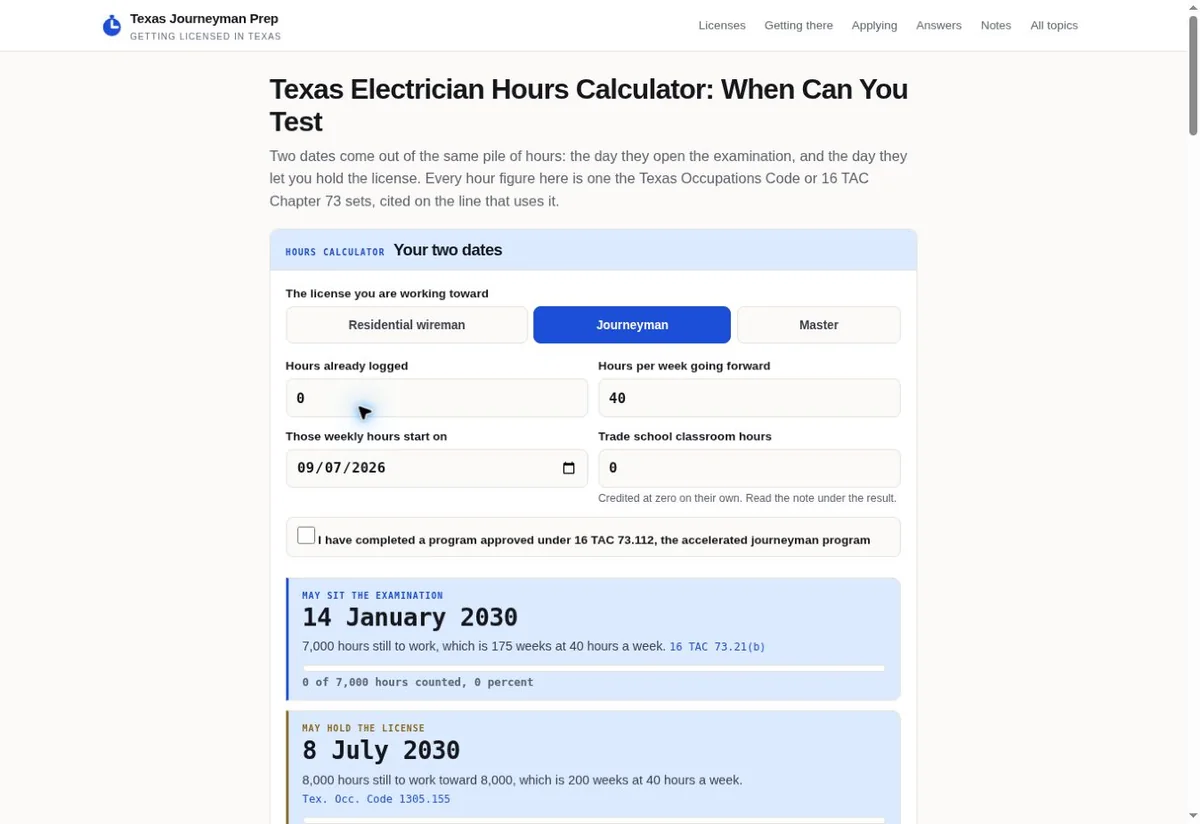
Texas Journeyman Prep calculator with labeled fields
Inquiry field example: Texas calculator presents labeled planning inputs. View the project
Hypothetical example A fictional Indianapolis homeowner describes a room preference with an unknown opening type

Before

  • In this invented example, a homeowner wants to discuss a bedroom window that is difficult to use. They select an appearance preference but don't know the current opening type. The form requires a technical category, so they choose a guess. The staff notice presents both selections as verified project details.
  • An automated reply then says the preferred option has been confirmed. No assessment in this scenario supports that claim. We would flag the required guess and the receipt wording as separate interface issues. The exercise doesn't establish the cause of the reported difficulty or the right product for the room.

After

  • The proposed form keeps the homeowner's description and lets the unknown category remain open. Staff see the appearance preference as a request to discuss. We can inspect that distinction with marked sample information. The customer's message describes the actual receipt and leaves any product recommendation to the installer.
  • The business next handles the question under its own consultation process. Our proposed test claims no scheduled visit, verified opening or completed replacement. It lets the owner decide whether the website handed staff an honest starting point. The assessment still needs the facts the fictional homeowner couldn't supply.

The Texas Journeyman Prep screenshot provides a separate real example of labeled planning inputs. We can look at how distinct fields identify an exercise's purpose. It is exam preparation design evidence. It doesn't support a window dimension, installation method or product claim. Your own labels must describe the question your customer is actually submitting.

Which two records should the owner compare?
Compare the test question as entered with the receiving record the team uses. We suggest checking the unknown category and stated preference specifically. A notice that simply arrived doesn't prove those details survived. The owner should be able to see whether staff received a question or an unsupported statement of fit.
What does the receipt need to say?
It should describe what the website did and any next step the business can actually support. We can discuss that wording with the receiving team. W3C's submission guidance distinguishes useful success and error feedback. A receipt should avoid declaring a consultation arranged when the team's process still requires a conversation.

Let the business supply the answer that turns a preference into a next step

The first website record should support an installer's response to the homeowner. Preserve the question until the business decides which assessment or conversation fits its actual offer.

How do we record a changed preference?
Keep the new preference associated with the earlier inquiry when staff need that link. We can discuss whether the receiving system preserves the change or only replaces a field. The business should still be able to explain what the person originally asked. A later option choice shouldn't erase the reason they first contacted the team.
What if the business declines this type of request?
The office should apply its actual service rule and give the customer a clear answer. We suggest checking whether the page contributed to the mismatch. An inaccurate option label may need correction even after the particular inquiry is resolved. The website should not suggest a new service just to accommodate the test.
Which website result should we accept?
Agree what the request route must preserve and inspect a marked submission in the actual receiving record. We can discuss the result with the staff who use it. Keep any unresolved behavior listed. That gives the owner a concrete delivery question without treating the sample inquiry as proof of future sales.

A scope conversation can begin with the current product page and one receiving record. Tell us which preference staff couldn't interpret and what they needed instead. We can discuss the website work that connects those two views. Your installer still supplies product availability, project suitability and any commitment it makes when it answers a homeowner.

Sources

Read more on this