
Texas microsite lead generation.
You serve part of Texas, and you're tired of paying for leads from towns your crews would never drive to.
Trojan handles microsite lead generation in Texas by putting Garrison sites with your company's name in the towns your crews already serve, sending every call and form to your team. It's for the contractor who says, "We work around Houston, but the leads we buy come from all over the state." Roofing and restoration memberships start at 50 microsites, with a 90 day proving window.
Trojan plans the content, search structure, and inquiry routing. You bring your service area, accepted work, and real project evidence. Together, we decide where a microsite adds something useful.
- Sites only in the Texas towns you serve
- Calls and forms go to your team alone
- Roofing and restoration start at 50 microsites
Jeff Clerisier has done web work since 2016, and we now have more than 1,400 live websites. We're still owner-run, so you'd size a Texas network with the founder himself, town by town, around the places your crews actually reach.
Roofing and water restoration memberships start at $399 a month for 50 microsites with every qualified lead included.
See membership pricesYOUR NEXT MARKET
Texas

One state. Separate metro decisions.
This trade is built on request. We confirm scope and timing before you purchase.
Plan this territoryOne state.
Different operating decisions.
The Texas Comptroller describes the Metroplex, Gulf Coast, and Capital as separate economic regions. Your service boundary may be much smaller. Use these planning questions to choose a first market, then check actual capacity.
| Market | Decide before building | A useful first resource |
|---|---|---|
| MetroplexDallas and Fort Worth | Which branch handles each side of the metro, and which jobs justify the travel? | A project guide with approved examples and a clear route to the responsible branch. |
| Gulf CoastHouston and surrounding markets | Does intake distinguish an immediate service request from a planned replacement? | Separate request paths for urgent assessment and scheduled work, with actual answering hours. |
| Capital regionAustin and Central Texas | Which project types have an available estimator and a relevant portfolio? | A consultation resource explaining preparation, scope, and what the team needs to quote. |
For San Antonio, El Paso, or another market, confirm delivery capacity before commissioning a site. These examples are planning recommendations, not measured demand or promised results.
Build around the job
you want to receive.
Different requests need different information. Choose the trade guide that matches your offer.
- Roofing
- Distinguish repair, replacement, and commercial assessment.
- HVAC
- Separate appointments, equipment replacement, and maintenance.
- Water restoration
- Explain answering hours and the next intake step.
- Window replacement
- Ask about openings, product priorities, and measurement.
- Remodeling
- Start with project scope and relevant work.
- Foundation repair
- Explain the assessment without diagnosing a property online.
Put ownership and delivery
in writing.
- Whose brand?
- The customer should know which business is offering the service before submitting a request. Names, services, contact details, and privacy information must agree.
- Who receives the lead?
- Document the receiving business, routing, and qualification rules. Exclusive delivery does not stop a prospect contacting another contractor or grant rights to an entire city.
- What stays yours?
- Define domain registration, content rights, account access, inquiry records, renewals, and what happens when service ends. Compare the membership options with the owned network offer.
Measure the work
that reaches your team.
Record the landing page, source, requested service, market, qualification decision, and eventual sale where available. Keep paid and organic results separate, even when both reach the same form.
Include content, hosting, renewals, tracking, and advertising in the cost review. Improve weak resources or consolidate overlap before adding domains. Older content may keep contributing; growth is not guaranteed.
What can you pay for a qualified inquiry?Work through your lead costsGive every site
a reason to exist.
Publish original project context, accurate service details, and answers approved by someone who knows the work. Changing a city name does not make a useful new resource.
Google’s AI search guidance applies the usual SEO foundations. Its spam policies address doorway pages. If the answer already belongs on your main site, improving that page may be the better first project.
Bring the service area.
We’ll work through the first territory.
Share your website, trade, accepted projects, and the person responsible for inquiries. Before launch, agree on the content reviewer, test the handoff, and set a review point for costs and lead quality.
Questions about a Texas portfolio.
What does a Texas microsite network cost?
Roofing and water restoration memberships start at $399 a month for 50 microsites with every qualified lead included, and the pay per lead plan costs $800 for year one. HVAC, remodeling, foundation repair and the other trades Garrison builds on request are priced after the free strategy call, once your Texas towns and the scope are settled.
Can one Texas network cover both Dallas and Houston?
It can, if your crews really work both metros. Each metro gets its own town sites, and calls from each side can ring the branch that handles that area. We assign one contractor per agreed trade and market, so no other contractor in your trade gets the Texas markets written into your agreement.
Should my first Texas sites go in the big cities or the smaller towns?
Start wherever your crews already take jobs, whatever the town's size. A roofer based in Fort Worth gets more from sites in the towns its trucks reach every day than from a site pulling in Austin calls it would have to turn down. Once the first sites show which calls turn into work, adding towns is a conversation for later.
Do you have Texas results to show?
We don't publish any Texas figures, so we won't claim them. Our dated counts come from our Indiana network, where 209 commercial roofing sites brought in four inquiries from June 29 through August 31, 2026, among them a strip center with leaks, and a TPO job followed on September 2. Your Texas market and town list will set your own numbers.
Where do you work from, and who visits Texas job sites?
We work from Indianapolis, Indiana, and build and update your Texas sites remotely. Your crews handle every estimate and inspection, and nobody from Trojan knocks on a customer's door. What you get from us is the sites themselves, plus the routing that puts each call and form in front of your team.
How long does a Texas membership commit me?
A Texas membership on the monthly plan opens with 90 days billed month by month as a proving window. From then on it rolls over monthly until you give 30 days notice. That gives a Texas crew a full quarter to see how the sites handle real calls before deciding whether to keep going, and Jeff will walk you through the terms on the free call.
Sources behind the regional and search guidance
The regional reports describe economic areas, not contractor coverage or a forecast of leads.
Approve the operating territory for this release
A Texas release should name the work and places your team can accept now. We would ask the operator to approve that information before publication.
- Describe the actual receiving business Identify the business that would answer each proposed site's request. We would ask how that team recognizes its own work and when it needs another person to assess a question. A shared brand doesn't establish that every branch accepts the same job. The public offer should follow the responsible operator's answer.
- Mark what is ready to publish Use the operator's current list of accepted work and coverage. We would keep a proposed destination separate from an approved one. A market may appear in an early discussion without being ready for a live customer request. Name the missing input so the next conversation can resolve it.
- Read the promise from the customer side Open the proposed page and ask what a person in that area would expect. We would check the work described and the receiving route together. If the operator's answer differs, revise the promise before releasing the site. Keep any exceptional arrangement clear enough that it doesn't look like routine coverage.
Before
- This fictional business discusses a Houston destination and another market destination. Its staff can confirm which work they currently accept in the first area. The second is a future idea, with no approved receiving team. An early draft presents both as available.
- The business wants to keep both ideas in its planning notes. We would preserve that distinction instead of assuming that a proposed domain means the second market is ready to serve.
After
- Our proposed release would use only the approved destination. The other remains a planning item with the missing operator input named. Its coverage wording would be written after the business confirms who can accept the work and which request route applies.
- The comparison tells us whether the public promise is ready. It contains no forecast about Texas demand and no claim that the fictional business acquired a customer. The operating answer remains the business's responsibility.
- Can a broad Texas label cover a smaller territory?
- It can describe the topic while the page clearly states the actual operating boundary. We would check that the inquiry route and offer use the narrower approved information. A visitor shouldn't need to read a contract to learn whether the receiving business considers their location.
- What if coverage changes while a site is being prepared?
- Ask the operator for the updated answer before release. We would identify the affected page wording and receiving path. A prior approval doesn't establish that the team can still accept the same work. Agree how that change reaches the people preparing the content.
The operating answer should be specific to the work being released. A team may accept one project type in an area while referring other questions elsewhere. We would ask which of those answers belongs on this destination. The page should let a customer identify the relevant offer without reading the business's internal notes. If the operator cannot yet provide that distinction, hold the affected wording while the team resolves it.
A release can also include only part of a proposed group. We would make the approved subset clear in the implementation record. That prevents a waiting destination from appearing ready simply because it shares the same project name. The buyer can then assess what is actually being published and which operator input is still missing.
Write down the domain responsibilities without guessing rights
A domain handoff needs agreed ownership and renewal details. We would keep those records distinct from whoever happens to hold login access during the project.

| Question or record | Business input | Acceptance check |
|---|---|---|
| Territory input | The operating business supplies its approved trade coverage for this set of sites. | We read each market promise against that answer and hold any destination whose receiving operator is unresolved. |
| Domain responsibility | The parties identify the registrant and the person responsible for renewal under their agreement. | We check the record with those parties. Login access alone does not establish ownership or content rights. |
| Trade claim | The service owner identifies who can approve the published work description and any regulated claim. | The page contains the wording that person approved, with uncertain assertions left out until supported. |
| Request route | The receiving business names the path that will handle a marked acceptance test. | We confirm the test with the receiver and keep its record separate from genuine customer activity. |
The Texas Journeyman Prep homepage shown below contains two distinct visitor choices. That image provides a real Texas project reference while we discuss site identity and purpose. It cannot tell us who legally controls a different domain. For your portfolio, the domain record should come from the parties and their agreement.
Our proposed handoff discussion would cover who renews the registration and how that person learns of an upcoming expiry. Ask how a change of supplier affects access. The contract needs to establish the rights involved. We can organize the implementation record around the agreed answer without interpreting access as legal title.
- What should the buyer be able to find in a domain record?
- The buyer should be able to identify the actual domain and the agreed party responsible for it. We would also ask where renewal notices go and how an access change is handled. Those details need to match the agreement. A vague note saying the account is yours won't explain who acts when renewal is due.
- Does an account invitation settle the ownership question?
- No. An invitation can give someone a role in a system without determining their rights to the registration or content. We would document the permitted access and ask the parties to resolve the rights separately. If the agreement is unclear, it needs clarification before the handoff is treated as complete.
- Can a single person handle all renewals?
- That depends on the arrangement the parties choose. We would ask how responsibility remains clear if that person changes roles or loses access. The public page doesn't need to expose this record. The business does need a dependable way to locate it when the portfolio changes.
Give each destination a customer task of its own
A new microsite needs an answer that its customer can use and its operator can maintain. We would request that specific business input before commissioning it.
- Write the proposed task as a customer's question. We would ask what this destination helps them learn or do that the existing site doesn't explain well. A different domain name alone gives us no answer to that question.
- Identify the actual business material behind the answer. It might be an approved preparation step or a service process for that area. Our draft should explain that material in context rather than add general trade text around a new place name.
- Check whether the same answer already belongs on a maintained service page. We would discuss improving that page when it offers a clearer route for the visitor. The portfolio count shouldn't decide where information lives.
- Ask who keeps the local detail current. A destination may begin with accurate information and become misleading after the offer changes. We would need a way to receive those changes before the same promise spreads into other pages.
Google's spam policies describe doorway abuse involving pages or sites made to rank for similar searches and funnel visitors onward. That guidance belongs in the portfolio conversation. We would examine the proposed customer value of each destination and the way it connects to the receiving business. A domain list doesn't establish that value.
A distinct page can have a modest purpose. Perhaps it explains one supported project question clearly and reaches the right team. Our concern is whether that purpose is real. Long copy that repeats the same answer in different words can still leave the visitor with no reason to choose that destination.
- What if two proposed microsites answer the same question?
- We would compare the business inputs before writing both. If the offer and customer task are identical, one maintained destination may be sufficient. A genuine difference could justify separate information, but it needs to be explained. Ask what the second site's visitor would miss if only the first existed.
- Can the business supply a different local photograph?
- A relevant photograph can add context when its origin and permitted use are clear. We would ask what it actually shows about the destination's offer. The image can't replace an explanation of the service or establish work in a market merely because it has a local caption.
- How much original material is enough?
- There is no universal amount that proves a site deserves to exist. We would start with the proposed task and read whether the answer helps a visitor continue. If the operator cannot supply the necessary detail, hold the destination while that gap is resolved. More words won't supply the missing fact.
Have the right person approve trade assertions
A trade assertion needs an accountable business source. We would ask who can approve the claim and what wording that person is prepared to support.
- Who should approve a service description?
- The person responsible for the actual offer should approve its meaning. We can help turn their explanation into clear customer wording. If the claim concerns a license or another regulated matter, the business needs the appropriate current support. We would leave it unresolved until that source is identified.
- Can an old competitor page supply the language?
- It can show which questions another site addresses, but it cannot verify your business's authority or service. We would ask the operator for its own explanation and records. Copying a familiar claim into a new market can change its meaning when the actual provider and work are different.
- What should happen when the provider declines a claim?
- Remove it from the proposed page and ask what accurate answer can be given instead. We would avoid substituting another broad promise just to keep the section full. A clear service description may be enough to help the customer ask the next question without using the disputed statement.
- Identify the statement being approved Give the approver the actual sentence and the context in which it appears. We would include the heading and call to action if they affect its meaning. Approval of a product name doesn't necessarily support a claim about all the work described nearby.
- Record the permitted wording Keep the answer the business approves in the content record. Our draft should make any required limit readable. If the support applies to only part of the offer, the sentence needs to say so rather than imply it covers every trade request.
- Check dependent pages after a change If the operator withdraws or changes the assertion, locate where it was used. We would check the live text as well as pending drafts. Our check should establish whether the changed public promise now matches the business answer.
The approval discussion can be simple when the claim is simple. Ask what work the team accepts and how a customer starts that conversation. We would make those words concrete first. More consequential assertions need their own support. A remote marketing project doesn't authorize us to make technical or legal findings about Texas work.
For a portfolio with several receiving providers, don't assume one person's answer applies to all of them. Our proposed record would identify which business supplied each assertion. That makes it possible to update the affected destination when an offer changes without rewriting unrelated pages from memory.
- Ask the approver to read the heading before the claim. We would check whether that heading widens the meaning beyond what the service owner supports. A narrow sentence can appear to cover a broad offer when its context says more.
- Keep a link to the approved public explanation when the business supplies one. Our draft should make clear which statement it supports. A link to a general product page cannot establish every provider relationship mentioned beside it.
- Check what happens when the claim is quoted alone. A customer may share a sentence without its surrounding section. We would put an essential limit close to the assertion so it remains understandable in that shorter view.
Use the Texas learning screen for the question it can answer
The Texas exam project offers a real interface reference for clear controls. We would use it to discuss input design while keeping trade lead claims separate.
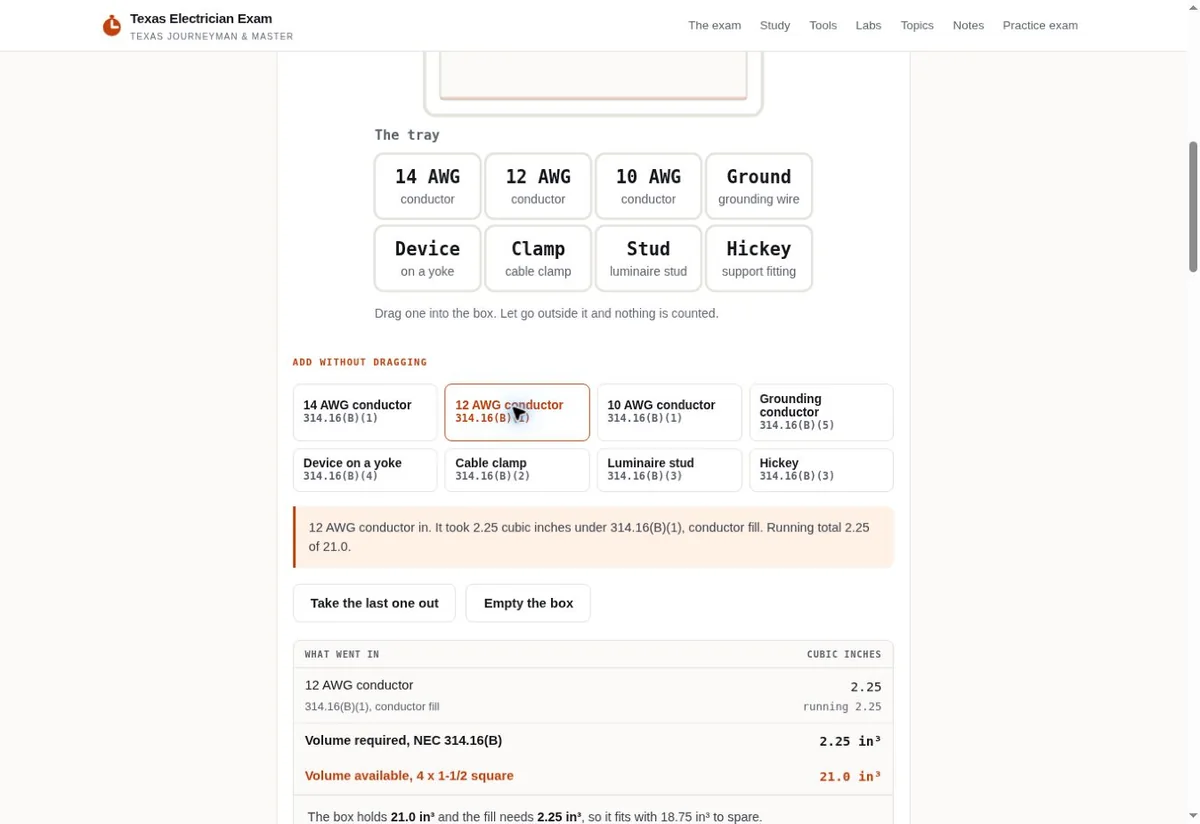
A learning interface has a defined task. Its choices give us something concrete to examine when a buyer asks how a microsite form could make a question easier to understand. We would identify which choices the operating business actually needs. Those choices should come from its intake process, not from the pictured calculator.
The screenshot doesn't demonstrate whether a calculation is accurate or a learner completes the task. It also provides no evidence of Texas trade leads. Our reference is limited to what the interface visibly presents. For your portfolio, any tool needs approved rules and meaningful checks before its answer can support a customer decision.
- Name the choice in words the customer can recognize. We would ask whether someone can select a supported request without knowing the business's internal codes.
- Show what changes when an input changes. Our form design should keep an earlier answer from appearing to describe a different selection. A visitor needs to understand which state they are looking at.
- Provide a clear route when the customer cannot choose. We would let staff resolve an uncertain trade question rather than make the person invent a technical answer to continue.
- Keep the page's authority clear. A planning tool can organize a customer's question while the business still needs to assess the work. Our copy should describe that real next step.
- Does every Texas destination need a calculator?
- No. We would add a tool only when the task and supported rules justify it. A concise explanation and a clear question route may work better. The exam project shows one kind of interface; it doesn't establish that the same feature belongs on a trade marketing destination.
- What can a buyer assess from the pictured screen?
- The buyer can inspect the visible controls and how the displayed information is arranged. We can discuss those choices directly. Measuring successful use would require an actual task with recorded conditions. A screenshot cannot supply that finding, and we would keep it out of the proposal.
- How should a proposed tool appear in the agreement?
- Describe the task it will support and who supplies its rules. We would also discuss the checks needed for its inputs and output. Leave any unapproved technical rule as a dependency. The buyer should be able to understand what is being implemented before judging whether the feature is necessary.
Check a marked request with the receiving operator
A release test should show where a marked request arrives and how staff recognize it. We would keep that test separate from genuine portfolio activity.
Before
- In this teaching example, the new destination has a working-looking form. The visible confirmation says the question has been received. Nobody has yet checked the receiving record with the operator. We would treat that handoff as unverified.
- The draft report counts the practice submission beside customer requests. That total no longer explains real interest. Our acceptance work would require a separate test label and a check with the receiving team.
After
- Before the test, we would agree on the permitted submission and the staff member who will inspect it. The marked record should carry the destination and selected request type. We would compare what arrives with what the form says it sent.
- If the route fails, the issue remains open until it is corrected and checked again. If it succeeds, the record supports that tested handoff only. It doesn't establish lead demand, ongoing delivery, or a booked job.
- Why is the visible confirmation insufficient?
- It describes what the page reports to the visitor. We also need to establish what the receiving process recorded. The two may agree, but we shouldn't assume they do. Ask the operator to inspect the marked request and identify which business context reached its staff.
- Can a test exercise a fallback route?
- Yes, when the business authorizes the case and the implementation supports it. We would agree the receiving conditions first so staff know what to expect. Record the tested path separately. An ordinary successful submission cannot establish what happens when the primary route is unavailable.
- What should the acknowledgment promise?
- It should describe the action the system actually completed and the business-approved next step. W3C's notification guidance addresses clear feedback to form users. We would apply that principle to the real receiving process without promising an appointment, quote, or human response that hasn't occurred.
Retire a destination with an approved next route
A retired microsite should leave the customer with an accurate destination or explanation. We would use the agreed access and operator-approved route for that change.
- Identify the exact domain and pages being retired. We would ask which customer task they currently support before changing where an old link leads. A broad portfolio name may conceal several different purposes.
- Confirm the route that remains appropriate. Our plan should account for the work the receiving business still accepts. A retired market page shouldn't redirect into a service promise that the operator cannot support.
- Check who is permitted to make the change. We would follow the documented account access and agreement. A prior role in creating the site doesn't establish continuing rights to its domain or content.
- Look for related public references. An old business article may still link to the retired destination. We would identify those maintained links for correction rather than assume a domain change updates them.
- Retain the business's agreed record of the handoff. Our implementation note can identify the changed route without exposing inquiry contents or implying that customer records have been transferred without authorization.
A destination may be retired because the business changed its coverage or because another page now answers the question more clearly. Those reasons matter to the replacement choice. We would discuss the customer's old task and what they can accurately do now. The same homepage redirect isn't appropriate for every removed resource.
When there is no equivalent current service, use an honest explanation through the supported website process. The visitor may have saved the old page or received it from someone else. Our wording should help them understand the present offer without pretending their original request still has a direct replacement.
- Does retiring a site mean deleting its inquiry history?
- That is a separate business and data-handling question. We would ask the responsible parties to define the permitted records and access. A public route change doesn't settle that question. The implementation should follow the agreed answer rather than quietly treating a domain retirement as permission to remove private records.
- What if the business ends its agreement with a supplier?
- Use the agreement to establish the handoff responsibilities and rights. We can help identify the technical tasks once those terms are clear. Account access, renewal control, public destinations, and permitted records need explicit answers. The website should not promise a transfer that the parties haven't agreed.
Make the next release depend on verified business inputs
A further Texas release should begin with fresh operator answers and a distinct customer purpose. We would revisit those dependencies before adding another destination.
- What should be ready before another site is approved?
- The receiving business should confirm its actual offer, coverage, and request path. We would also need the original material that gives the destination a purpose. Ask who approves its assertions and who maintains them afterward. If those answers remain open, name the dependency instead of filling the draft with assumptions.
- Can activity on one site justify every proposed market?
- One destination's activity can prompt a discussion, but it doesn't establish another market's operating fit. We would ask for the inputs that belong to the new destination. Keep the observed result attached to its own page and period. The next release needs its own business approval.
- What if the operator is ready but the domain record is unclear?
- Resolve the domain responsibilities before presenting the handoff as complete. We can continue drafting approved service information while that question is settled. The release record should show what remains open. Readiness in one part of the project doesn't supply the missing agreement in another.
- Read the proposed customer task Ask what this destination will help someone do. We would compare it with the maintained resources already available. A new site should have an explainable purpose before the team invests in its release.
- Confirm the current operator answer Recheck the offer and receiving path with the person responsible for the work. Our content should reflect the answer supplied for this release. Avoid carrying an older approval into a changed service without asking what still applies.
- Agree the acceptance boundary Name which content and handoff checks are included in the proposed work. We would distinguish those checks from later business outcomes. A released site can be inspected for its promised functions without treating the inspection as a forecast of sales.
Bring one proposed Texas destination and the operator's actual answers to the first conversation. We can discuss whether a focused release would clarify the customer's task. The starting point is the material needed to publish an accurate offer, maintain its domain responsibilities, and reach the appropriate business. The agreed project determines what work follows.
That conversation can also identify why a destination should wait. Perhaps its local answer is missing, its service assertion hasn't been approved, or the receiving team has changed. We would keep the reason specific so the business knows what to resolve. Adding domains doesn't remove those dependencies.
Sources