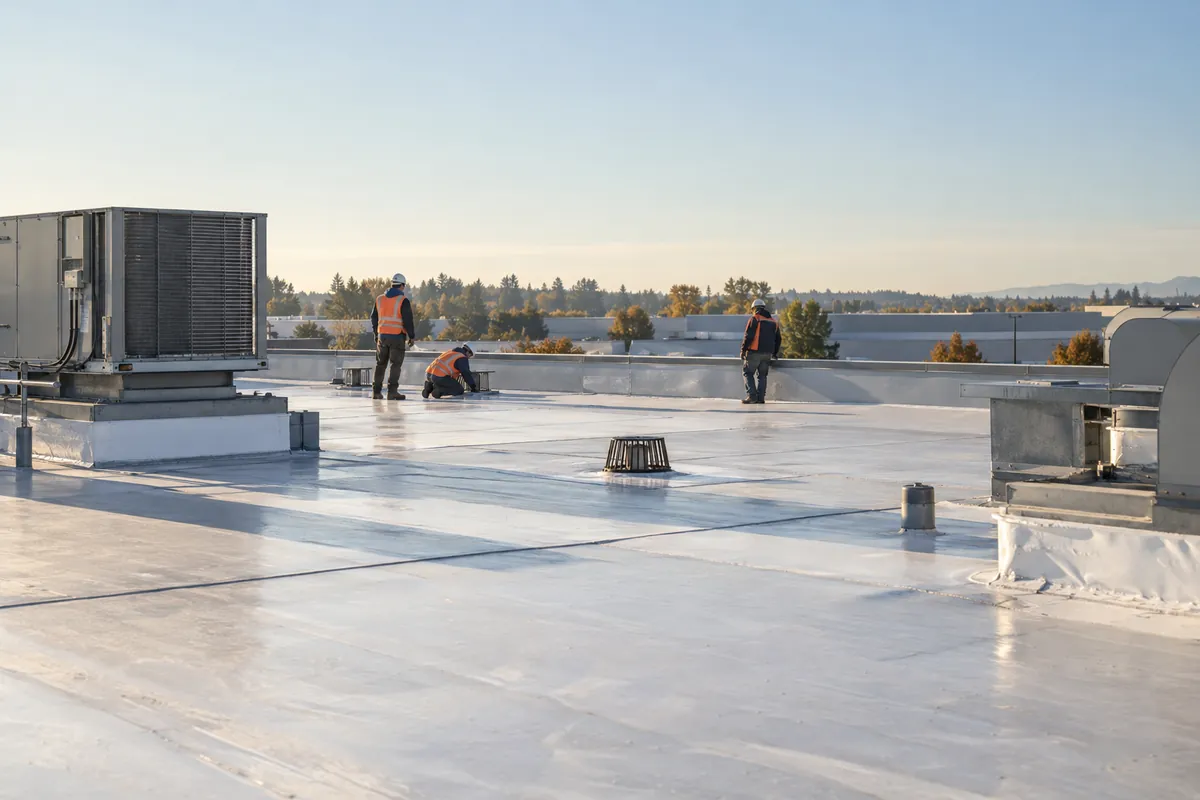
Downtown Dallas Inc.: District Guide supplies the broad Dallas context for this ownership comparison. Downtown Dallas Inc. provides business and visitor resources. The proposed roofing example is an editorial planning application, not evidence of measured demand or a local Trojan contractor operation.
Define the inquiry before comparing channels
- Relevant visit
- A person reaches the page.
- Inquiry
- The person contacts the business.
- Qualified lead
- The inquiry meets the agreed rules.
- Booked job
- The customer chooses to proceed.
For commercial roofing, the unit being compared should be an appropriately scoped inquiry rather than an anonymous contact record. Ask whether the property is in the contractor’s genuine operating area, whether the person can arrange access and whether the request concerns a service the business performs. A lead seller may offer different delivery and exclusivity arrangements; those terms must be checked individually. An owned resource changes the relationship by presenting the contractor directly, but it still needs useful content, traffic and staff response. Ownership does not turn every contact into an accepted commercial project.
The terms that change the comparison
| Term | What to examine |
|---|---|
| Domain and content control | Identify the domain registrant and the contractor’s rights to the commissioned commercial roofing material. |
| Inquiry delivery | Specify whether a purchased inquiry is exclusive, how it is qualified and which roofing business the prospect expects to contact. |
| Transfer and cancellation | Confirm whether numbers, content, analytics and inquiry records can be transferred when the working arrangement ends. |
Compare the proposed roofing asset schedule line by line. Domain registration, account administration, source files, original text, photographs and call numbers can have different owners or transfer conditions. The commercial team also needs access to the inquiry records it is entitled to retain. Ongoing SEO, hosting and advertising are services with their own scope, even when the website assets belong to the contractor. Ask how termination affects those services and the continued operation of the inquiry route. A clear handoff is part of the product decision.
A proposed Dallas ownership comparison
Imagine a Dallas roofing owner comparing two proposed options. One is an external supplier’s commercial roofing inquiry programme. The other is a contractor branded assessment resource supported by content and optional advertising. We’d set the seller’s real delivery terms next to who would own the domain, content and accounts. The owner would test how each option identifies the property and the intended service before a salesperson receives it. We won’t plug made-up lead totals into the comparison. The decision would follow the quality of the inquiry definition, the ownership terms and the team’s ability to respond through a recognizable business identity.
Follow the customer through a branded handoff
- Fit
- Explain the service scope.
- Trust
- Show supporting evidence.
- Next step
- Give a clear contact route.
For commercial roofing, an inquiry handoff should retain the property context and the prospect’s understanding of the requested service. The receiving team needs to know whether the person can arrange a conversation and what prompted the contact. A lead agreement should explain which details are delivered and how failed delivery is handled. In an owned journey, the contractor’s name should be visible before submission, with the form and acknowledgement consistent with that identity. This allows the owner to evaluate the customer relationship rather than only an entry in a spreadsheet.
The roofing business would receive the inquiry under its own brand. A property manager’s request would reach the team that scopes commercial work, with the selected building context preserved. An acknowledgement would confirm receipt without saying an inspection has been scheduled. In this ownership review, Trojan would compare that proposed direct route with the actual handoff offered by an external supplier. The point is to make the customer expectation and receiving responsibility visible before selecting a channel.
Evaluate activity using the same commercial definition
For this comparison, define a useful request through property use, project location, the reason for the inquiry and who can authorize an assessment. Then review the assessment inquiries you accepted, the page each came from and whether it reached a scoping call. We hold our own counts to fixed dates. From June 29 through August 31, 2026, our 209 Indiana commercial roofing sites drew four inquiries. A TPO inquiry came on September 2, so we left it out of that count. A call event, an incomplete form and an accepted inquiry should not be merged without explanation. Likewise, a purchased contact and an organic contact should be compared only when their service context and qualification are understood. The review would include the delivery record and staff assessment, rather than infer quality from channel labels.
Allow for maintenance and channel dependencies
Purchasing advertising that sends visitors to your own resource is a different arrangement from purchasing an inquiry supplied by another business. For commercial roof assessment inquiries, the comparison should identify which activity is proposed, which accounts the contractor controls and how the customer reaches the named provider. This distinction keeps campaign management separate from lead delivery terms.
Organic discovery would depend on the roofing resource earning useful visibility and helping property managers act. Paid traffic could support the same commercial offer through appropriately matched campaigns. The two routes would be recorded separately, and campaign changes would be reviewed against the assessment content. An owned site can become a durable resource when it stays useful, discoverable and maintained. Inquiries that build up over time are a goal to test, and owning another domain or adding roofing pages doesn’t bring them automatically. In the ownership decision, these ongoing dependencies belong beside the asset and supplier terms, so the owner can assess the complete working arrangement.
For roofing content, an owned resource requires an accountable reviewer as well as account control. Review the content when the contractor changes its service scope, the person handling commercial inquiries or the project material it has permission to publish. A change in roofing products also requires a check of any public product description. The business should know what the proposed maintenance service covers and which changes its own team must provide.
Make a gradual decision from the actual evidence
Trojan can help the business compare a concrete owned resource scope with the real lead supply terms it is considering. For commercial roof assessment inquiries, that review would include the useful content, asset control, direct routing and the staff process needed after contact. The owner can retain a suitable existing channel while evaluating another approach. The decision should not depend on invented lead totals or a claim that every provider operates the same way. A written comparison exposes the terms and responsibilities that can actually be assessed.
Google documents conversion measurement for advertising activity. Google Ads: Conversion Measurement. For commercial roof assessment inquiries, the proposed resource and measurement plan must be assessed on their actual implementation.
Make the next decision concrete
Bring the current website, the inquiry process for commercial roof assessment inquiries and the assets your business already controls. Trojan can prepare a reviewable scope around the actual channel terms, asset control and branded customer handoff. Review the ownership and inquiry scope. The national roofing lead generation service and Dallas market hub provide the wider context.
Local context behind this plan
Questions, answered.
Are purchased roofing leads always shared with several businesses?
No universal assumption should be made. Review the actual supplier terms, including exclusivity, qualification, delivery and any credit conditions. For commercial roof assessment inquiries, also inspect what the prospect was told about the service and the company that would contact them.
Does owning a microsite remove ongoing marketing costs?
No. The business still needs a usable site, current approved roofing scope, original project photographs and the contractor’s documented assessment process and a functioning inquiry route. Hosting, maintenance, content work and optional advertising may involve continuing services. Ownership describes control of agreed assets; it does not mean that useful traffic or staff response happens automatically.
What is a sensible way to compare inquiry quality?
Start with property use, project location, the reason for the inquiry and who can authorize an assessment and agree which requests the business can assess usefully. Review accepted commercial assessment inquiries, their source pages and whether they reach a useful scoping conversation. Compare similar service needs and record rejected or unsuitable contacts separately rather than treating every form submission or phone event as the same commercial opportunity.
Can an owned resource and a lead supplier be used together?
They can be evaluated as separate parts of a marketing plan when the business can manage both. Keep the brand expectations, source records and terms clear for commercial roof assessment inquiries. The contractor should decide how each route fits its operation without assuming that one channel has to replace every other source immediately.