From June 29 through August 31, 2026, our 209 Indiana commercial roofing microsites brought in four inquiries. They asked about a strip center with leaks, a rubber roof leak, a tarp over a commercial building and a commercial inspection. Those are Indiana numbers and don't predict Atlanta results. Trojan Digital Marketing plans roofing pages around requests like these, with a buyer question, a source, an approver and a next step for each page.
This guide covers the page plan for Atlanta roofing microsites. For buying leads versus owning a site, see the organic roofing leads versus paid leads comparison. Planning a roofing site for Atlanta property managers? Call us: the first strategy call is free, and during business hours we aim to reply within five minutes.
Choose the roofing conversation the site supports
Start by naming the work the contractor wants to discuss. A commercial replacement planning resource needs different explanations from a residential repair inquiry page. Combining every possible roof request under one vague promise leaves the reader unsure whether the company handles the actual situation.
For an illustrative commercial brief, the audience is a property manager preparing to discuss roof condition and future work. The contractor must supply its accepted roof systems, assessment scope and process for preparing a proposal. The microsite should explain those facts without diagnosing the roof from a visitor's description.
Build the page architecture around estimating decisions
| Planned page | Customer decision | Material required |
|---|---|---|
| Roofing service overview | Does this contractor handle this property and scope? | Approved service list and accepted roof systems. |
| Assessment process | What happens before a recommendation? | Estimator approved steps and limits. |
| Replacement planning guide | What information supports an initial discussion? | Scheduling questions and property access considerations. |
| Documented roof project | How did the company approach comparable work? | Project record, photographs and the contractor's exact role. |
| Assessment request | How can I begin a relevant conversation? | Intake fields, recipient and accurate confirmation wording. |
These are page roles, and we wouldn't build five domains to fill them. One page can cover a small topic completely. Split a page when the buyer decision and available evidence justify a distinct destination. We link each project page back to its service page, and the process page on to the assessment request.
Collect photographs that explain the actual work
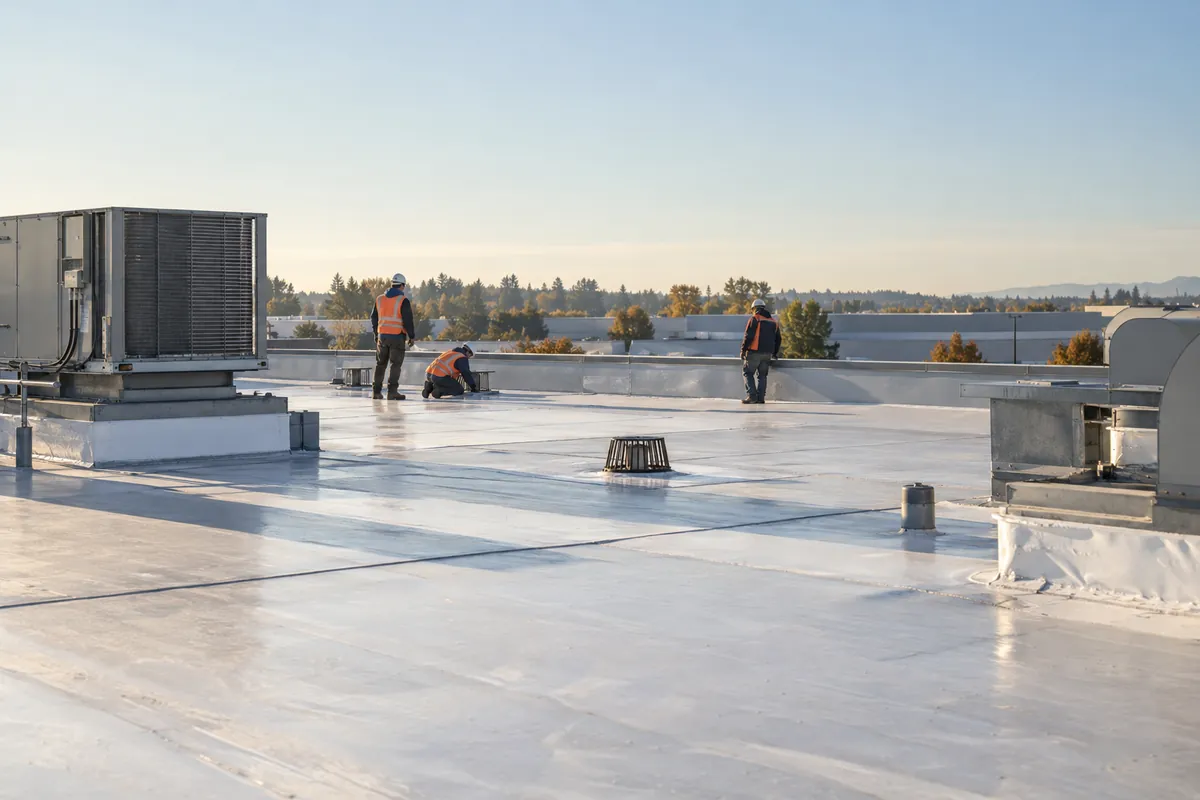
We ask the contractor for four photos per project: the property in context, the roof system, one detail and one documented stage of the finished work. The exact selection depends on what the contractor performed and has permission to publish. A roof photograph should not imply responsibility for unrelated equipment or work visible in the frame.
For every image, record the project reference, capture stage, photographer or owner, publication permission and a plain description. We have your project supervisor confirm every technical label. Our editors don't guess a defect, repair method or product from a photo.
Use the most informative photo where it explains the accompanying paragraph. Follow Google's image guidance for descriptive context and accessible image text. Prepare responsive WebP versions with defined dimensions so the site can show the evidence without unnecessary downloads.
Write one replacement planning outline in depth
- Event → record
- Define the event and check the record.
- Meaning → decision
- Review the business meaning before acting.
A strong guide can answer the questions a facilities buyer brings before a visit. Suggested sections include the contractor's accepted scope, information already available about the roof, relevant property access arrangements, the people involved in the decision and how the company presents proposed options.
Explain uncertainty where it exists. If a recommendation requires an assessment, say what that assessment is intended to establish. If pricing depends on scope and conditions, describe the information used to prepare a proposal. Do not replace an estimator's judgment with a marketing questionnaire that declares which work the property needs.
Put system specific claims in a review queue for the contractor. Product lifespan, warranty language, energy statements and insurance references need their own supporting material. The content can remain useful by explaining the process while those claims await verification.
Make Atlanta context useful to the property buyer
Downtown Atlanta Inc organizes resources around office, retail, hospitality and other district activity. Downtown also has restored older buildings, like the 1928 Switchyards Building at 151 Ted Turner Drive, where Switchyards opened a members' work club in 2016. Before writing a Downtown page, we ask which property types this roofer actually accepts, from offices and hotels to older buildings like that one.
The site's coverage section should identify genuine service decisions and useful access questions. It should not attach the company's name to a district building it has never worked on. Use a confirmed project location at the level permitted by the customer, and keep coverage maps free of invented offices or job pins.
Assign the approvals before writing begins
- The service owner confirms accepted work, systems and geographic coverage.
- The estimator approves the assessment and proposal explanation.
- The project supervisor identifies what each photograph documents.
- The office lead confirms inquiry fields and the recipient for each request.
- The publishing owner records the approved text, source material and review date.
Our production sheet holds the page title, buyer question, source folder, claim reviewer, image permission status and where the button goes. Mark unresolved items visibly in the internal brief. We'd rather leave a question open in the brief than publish a confident sentence no one approved.
Connect the request with the estimating record
The inquiry can ask for property type, service location, requested conversation and contact details. We add a roof system field only when a visitor could know the answer, and we include an unknown option. The first form should not demand information that requires roof access.
Decide where the request goes and how the office distinguishes replacement planning from repair or maintenance. The confirmation should describe a request received, unless the system truly books a specific appointment. We test the real handoff, then check that an unanswered request stays in front of the person responsible.
Publish in a sequence that leaves no dead ends
Release the service explanation and functioning inquiry path before supporting guides. Publish a project only after its facts and images are approved. If a planned page lacks evidence, strengthen the existing overview instead of filling the gap with generic roofing copy.
Revisit pages when accepted systems, staff responsibilities, coverage or the proposal process change. Use real customer questions to refine unclear passages. Bring the production sheet and approved project material to a roofing microsite content review with Trojan.
Production questions to resolve
What should the first roofing project page show?
A documented scope, the contractor’s role, approved photographs and the reasoning the company can explain. Keep unverified lifespan, savings and insurance claims out of the narrative.
Do visitors need to identify their roof system in the form?
Only if that information is useful and reasonably known. An unknown option lets the estimating team clarify the system later without making the visitor guess.
Should every roof system have a separate page?
Only when the contractor serves it and can provide a distinct explanation, relevant evidence and an appropriate inquiry path. A short approved section can be enough.
When should an assessment page be refreshed?
Review it when the assessment scope, accepted work, coverage or request process changes, and when repeated customer questions reveal information the page lacks.
Questions, answered.
What should the first roofing project page show?
A documented scope, the contractor’s role, approved photographs and the reasoning the company can explain. Keep unverified lifespan, savings and insurance claims out of the narrative.