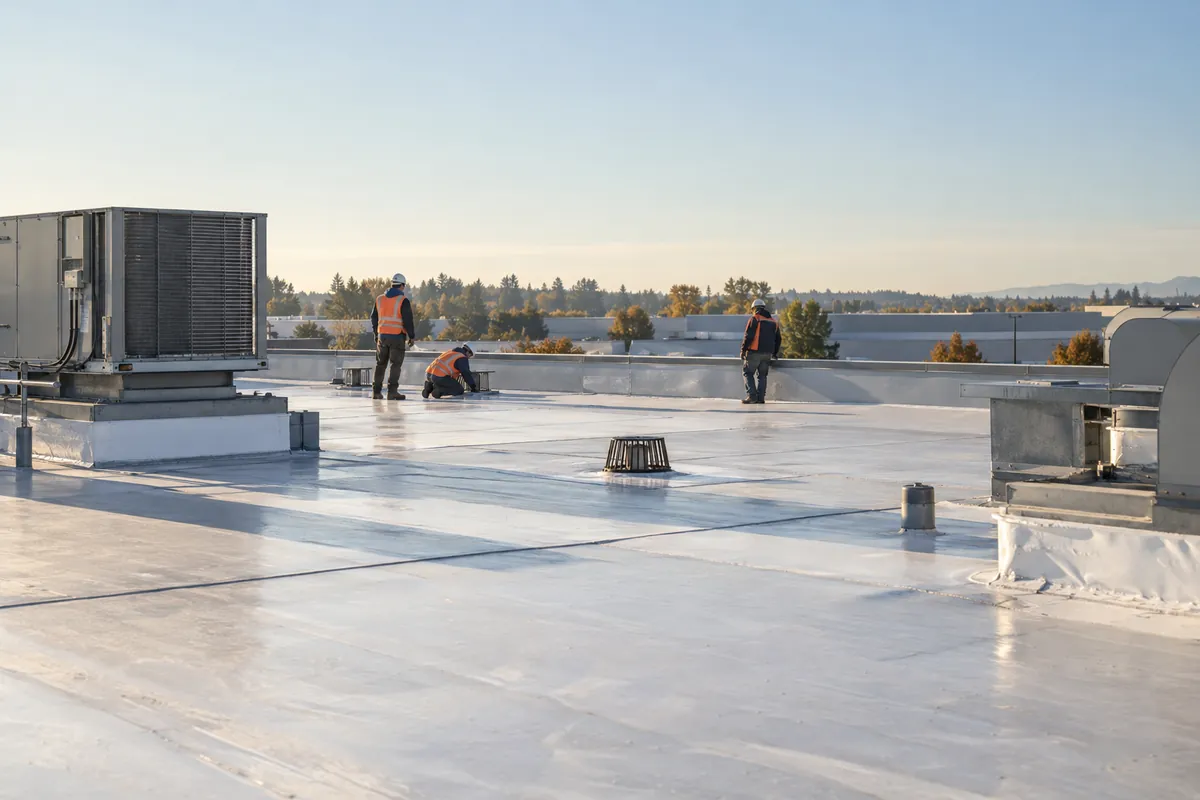
We write the pages, build the sites and point every call at your office line. Your roofing company does the inspections, estimates and roof work, and each site carries your company's name.
Questions about roofing microsites in Atlanta, Georgia
What does an Atlanta roofing microsite network cost?
Fifty microsites cost $399 a month on the monthly plan, and every qualified lead is included in that price. The first 90 days are a proving window, and after that you can stop with 30 days notice. Pay per lead starts at $800 for year one with five qualified leads, then each extra qualified roofing lead is billed at the published rate for a 50 site network.
Will my Atlanta roofing sites talk about storms?
Yes, when the storm is real and dated. The National Weather Service confirmed an EF2 tornado that tore through downtown Atlanta on the night of March 14, 2008, and that's the kind of record we'd cite. We won't invent a recent hailstorm or claim a neighborhood is full of damaged roofs, because a homeowner who checks and finds nothing stops trusting your company.
Can the sites speak to all the trees over Atlanta houses?
We can, in words your crew approves. Georgia Tech researchers found 45.7% of Atlanta's land under tree canopy in 2023, down from 46.5% in 2018, the AJC reported in August 2026. We'd write a page about overhanging limbs and clogged gutters that gives a homeowner a reason to call you for a look before the next storm drops a branch on the ridge.
What can you show an Atlanta roofer before signing?
There isn't an Atlanta roofing count yet, since your network would begin its own tally at launch. What you can check today is Trojan Digital Marketing itself: Jeff Clerisier founded it in March 2018, and more than 1,400 of our websites are live. Our original 200 Indiana residential roofing microsites logged 11 calls and form inquiries from June 29 through August 31, 2026, not counting missed calls. Atlanta will set its own numbers.
Which parts of Atlanta can one roofing network cover?
We map one site to each neighborhood or nearby town you actually roof. A Buckhead site might cover the blocks off Peachtree and Piedmont roads, and a Midtown site could speak to homeowners around Piedmont Park. If your crews also work West Midtown off Howell Mill Road, that area gets a site of its own, and since Atlanta spans Fulton and DeKalb counties, we follow where your trucks really drive.
What happens after I book the strategy call?
We aim to reply within five minutes during business hours, and the call is free. Bring a rough list of the Atlanta neighborhoods where you'd like more roofs, and tell us who picks up when the phones light up after a storm. We work from Indianapolis, so Atlanta roofers talk with us by phone.
“I had a great experience working with Jeff…”
Trojan Digital Marketing is based in Indianapolis and serves Atlanta businesses remotely.
Inside Atlanta city limits, businesses need a Business Occupational Tax Certificate through ATLBIZ. Source, checked September 25, 2026.
What Atlanta facts belong on a roofing microsite?
Atlanta roofing microsites should reflect the city's sign rules and the neighborhoods your crews work, so these facts come from the sign ordinance summary and neighborhood sources.
Atlanta, Georgia
Section 16-28A.012 of the Atlanta code limits signs in the public right of way and on other public property. Keep Atlanta Beautiful's summary says the right of way usually runs about 6 to 7 feet back from the curb, which is where yard signs and bandit signs tend to end up.
Job-site signs stay on the homeowner's side of that line, and each neighborhood site carries the rest of the marketing.
City of Atlanta Code, Sec. 16-28A.012; Keep Atlanta Beautiful, 'City of Atlanta sign ordinance' summaryChecked September 25, 2026Buckhead ranks third among Atlanta's business districts, behind Downtown and Midtown, and its towers, hotels, shops and condos cluster along Peachtree and Piedmont roads by GA 400, near Lenox Square and the Buckhead MARTA station.
A Buckhead site names the roads homeowners already use to describe where they live.
Wikipedia, 'Buckhead'Checked September 25, 2026Old Fourth Ward, just east of Downtown, is one of Atlanta's oldest neighborhoods and takes its name from the city's old ward system.
An intown site written for owners of older houses east of Downtown, in wording your crew approves.
Wikipedia, 'Old Fourth Ward'; Atlanta Journal-Constitution neighborhood guide to Old Fourth WardChecked September 25, 2026
From the research file checked on September 25, 2026, read through search results because the source sites block direct fetches. Confirm the sign rule with the City of Atlanta before a page quotes it.
What do you and Trojan Digital Marketing each handle for an Atlanta roofing network?
Your crew knows roofs and we know the build, so this split shows who handles which part before launch.
What we handle
- We build a Garrison site for each Atlanta neighborhood or town you choose
- We write storm and tree pages from your notes and cite dated sources
- We test every call path to your office line before launch
- We track which sites bring in calls, one site at a time
What your roofing company brings
- Photos of finished roofs you're allowed to publish
- The replacement and repair work you want more of
- Someone who answers when calls stack up after a storm
- Sign-off on anything that mentions insurance or damage
How long does an Atlanta roofing membership commit you?
An Atlanta roofing membership on the monthly plan opens with a 90 day proving window, then runs month to month until you give 30 days notice.
Typical plan
- Proving window
- Billed monthly while your Atlanta sites launch
- Routing checks on your office line and inbox
- Month to month
- Stop whenever you like with 30 days notice
- A fresh batch of local articles and updated FAQs keeps reaching the sites
Memberships start at $399 a month for 50 microsites with every qualified lead included.
Build a microsite with a defined business purpose
- Domain and website
- Document ownership and access.
- Analytics and records
- Define access and the handover.
The contractor should approve a network brief identifying the audience, the existing pages being retained and the evidence that makes the proposed resource useful. A microsite is a separate publishing responsibility, so the brief needs more than a preferred domain name and a traffic ambition.
Illustrative Atlanta planning scenario
Consider an illustrative Atlanta network plan for a roofing contractor that accepts both homeowner assessments and selected commercial replacement projects. The company’s main website already explains its general services. Before proposing another domain, we would compare the homeowner and facilities buyer journeys. A focused resource for commercial replacement planning might be justified if the contractor has distinct evidence, scope and an estimating process for that audience.
Read more
The proposed microsite would identify the contractor clearly, explain supported roof systems and show permission cleared project roles. A facilities buyer could review assessment preparation and submit the property context to the estimating coordinator. Homeowner inquiries would remain on the appropriate existing route rather than being forced through commercial language. The contractor’s actual coverage would determine which Atlanta properties can be considered. District business sources can help frame a commercial audience, but they do not establish that a particular building needs work. The decision to launch would depend on whether the new resource adds a maintainable customer journey beyond the main site.
Compare the choices before implementation
| Option or situation | Decision to make | Practical implication |
|---|---|---|
| Main roofing site | General company and homeowner offer | Improve existing pages where suitable |
| Focused commercial resource | Distinct assessment and replacement decisions | Consider a microsite with original evidence |
| Purchased inquiry channel | External supply under stated terms | Evaluate contract and lead fit separately |
Ownership is part of the product
The proposed delivery plan should preserve this responsibility. For a roofing microsite, ownership needs to cover the domain registration, hosting account, website content, tracking setup and inquiry destination. The contractor should be able to identify who can renew the domain and recover access if a team member leaves. Photographs and project stories need publication rights that match their use. A phone number used for campaign measurement requires a clear agreement about control and portability. Customer inquiries should reach the contractor’s approved records without requiring the owner to buy access to its own history later. We would document these responsibilities as part of the proposed scope.
Plan a useful content hierarchy
For this microsite service, the buyer journey is the organizing principle. The useful hierarchy begins with the actual roofing offer. An assessment page explains how a property owner requests review. A replacement planning page can address the decisions involved in a larger project when the contractor offers that work. A roof system guide belongs only where the company has relevant knowledge and evidence. Project pages should identify the contractor’s contribution, and a preparation page should explain the information the estimating team needs. These destinations should work as a coherent resource under the contractor’s brand, not as a row of alternate city names that all hide the same generic form.
Qualify and route the inquiry directly
The implementation should show how the estimating coordinator receives useful context. The first roofing inquiry can ask for property location, the type of concern and a contact method. It should let someone describe uncertainty without choosing a diagnosis. The selected topic should remain visible in the coordinator’s notification. A request is not a confirmed inspection, repair authorization or crew dispatch. The confirmation should explain the contractor’s real review process, and ordinary customer service should remain accessible for people already working with the company.
A marketing page cannot diagnose a roof, establish an insurance outcome or reserve a crew. This boundary matters when the visitor is a property owner considering a roof assessment.
Use genuine Atlanta coverage
Downtown Atlanta Inc provides business resources for offices, small businesses and hospitality.
The local source gives commercial context, not proof of demand for roofing work. Coverage must come from the roofing business. The proposed service plan should identify the properties and work the company actually accepts without inventing local offices, customer relationships or neighborhood conditions.
Organic discovery and paid traffic serve different roles
For the roofing business, the channel mix is part of the proposed delivery scope. Organic discovery is a strategy for helping buyers find useful roofing explanations without paying for each visit. It still requires content, technical maintenance and commercial follow through. Paid advertising can send relevant traffic to an owned roof assessment page, while purchasing an inquiry is a separate supplier arrangement. We would distinguish those models in the plan and measurement. A useful roofing resource may continue generating suitable interest when maintained, but neither age nor domain ownership guarantees compounding leads. The estimating team’s ability to handle the chosen roof and property categories remains part of channel fit.
Assign maintenance before expanding the network
The microsite handoff must account for ongoing upkeep. Roofing content needs review when accepted roof systems, service coverage, assessment procedures or project permissions change. Claims about materials must follow the contractor’s approved evidence. A dated project can remain useful if its scope is accurately described, while an obsolete availability statement should be corrected promptly. The owner should know which pages reuse a specification or operating detail so one change can be applied consistently.
Measure suitable conversations and project fit
The delivery review should use the same practical business definitions. A roofing inquiry should be evaluated by whether the property and requested work fit the actual estimating process. Separate page visits, contact attempts, successful contact, accepted assessments and later commercial outcomes. A source label can help trace the route, but it does not prove that a page caused a sale. The coordinator’s reason for declining an unsuitable request can reveal a useful content improvement, such as clarifying an unsupported roof type.
Bring the evidence your team can approve
The starting material is the approved roofing scope, documented project roles, genuine service coverage, estimator intake questions and the actual process for reviewing an assessment request. A useful example is a permission cleared roofing project explanation that distinguishes observed conditions, the contractor’s scope and the work approved by the customer. We can organize the material and identify missing explanations, while the estimating coordinator confirms the actual process. For the service discussion, the approved scope needs to cover the roof systems, property types and assessment work the contractor actually accepts.
Scope the first useful resource
We would begin with the commercial assessment journey, then document account control, content responsibilities and the real estimating destination. A limited useful architecture can be reviewed before any wider network is considered. The first acceptance check is that a facilities buyer can understand the scope and submit the right inquiry under the contractor’s brand.
Read more
We would turn the approved brief into content, design, routing and measurement work that can be reviewed before launch. The company should know who owns each account and who approves each public claim. The scope discussion also determines whether a main website improvement should come first. The discussion should use a roof assessment inquiry as a concrete customer action, with responsibilities appropriate to the roofing business.
Search guidance and related planning resources
Google addresses doorway and scaled content abuse.