Need help?Jamie

Market service plans

Park 100 AI SEO, AEO and GEO for Industrial Evidence

You've asked ChatGPT about your own company and got an answer that lists products you don't carry and skips the service work you're known for.

AI SEO, AEO and GEO from Trojan helps industrial suppliers in Park 100, Indianapolis, Indiana get described correctly when a buyer asks ChatGPT or Google's AI who can handle a job. It's for owners who say, "The AI answer called us a manufacturer, and we're a distributor." Indiana registers companies on INBiz, and that filing is the record your public name should match.

Send the form with the AI answer that got your company wrong, copied word for word, and the page it should have quoted. The first strategy call is free, and during business hours we aim to reply within five minutes.

  • A fact register your engineers sign off on
  • Maker, distributor and service roles spelled out
  • Answers written for the questions buyers type

For a Park 100 supplier, publishing only what can be verified is the method itself: every capability claim on your pages traces to a source your team approved. Trojan dates to March 2018, when Jeff Clerisier founded it, and on your pages each claim is read against its source before it goes up.

Illustrative content research workspace.
IllustrationFacts behind an answer about Park 100Facts and sources this page takes from public bodies and guidance, drawn as inputs to one answer. It isn’t AI output and cites no business.FACTS TO ANSWERGoogle Search Central: Optimizing for generative AI features · developers.google.comSOURCE · developers.google.c…Google Search Central:Optimizing for generative…ANSWER1 SOURCE

YOUR WORKING BRIEF

Choose where to start

Select the parts you want to discuss. Your choices carry into the inquiry form.

Discuss this service0 priorities selected

SEE HOW THE PIECES CONNECT

Explore the decisions
behind the plan.

THE TROJAN SYSTEMANSWERS
A question connected to an answer and its evidenceA customer’s questionA clear, useful answerSUPPORTING EVIDENCE
  1. A customer’s question
  2. A clear, useful answer
  3. Supporting evidence
A question connected to an answer and its evidence

Trojan’s Park 100 AI SEO, AEO, and GEO service organizes industrial capabilities into clear, evidence based public information. We work with your subject experts to explain applications, service boundaries, supplier roles, and the next technical review without inventing unsupported claims.

Link Logistics: Park 100 Industrial Center 13: Link Logistics lists industrial property at Park 100 in the Northwest Indianapolis market, including distinct office and industrial space. The local source supports the industrial context only. Your technical team supplies the evidence for equipment, product roles, certifications, and the services represented on the site.

Questions about AI SEO, AEO and GEO in Park 100, Indianapolis, Indiana

What does AI SEO cost for a Park 100 supplier?

Pricing comes after the free strategy call, when it's clear how many product lines or capabilities need an approved fact set. Checking your starting point costs nothing: the free auditor inspects a page's crawl rules, headings and answer structure without an account, and Jev's free scan reads 100 pages. The $99 audit stretches to 3,000 pages when the catalog is deep.

Can AI tools confuse us with other companies in Park 100?

They can, when the park is better documented online than your business is. Link Logistics publishes a leasing listing for Park 100 Industrial Center 13, and a park name shared by every tenant gives a model little to tell them apart. Your own pages should state your legal name, your building and the work done there in plain sentences a model can quote back.

Do we need an llms.txt file or special markup for AI search?

Not for Google. Google says its AI features need no special AI text file or extra markup, so the effort goes into accurate pages plus ordinary structured data that names your business, address and services. An llms.txt file is optional for other tools, and it gets added only if you want one. Clear, checkable facts on crawlable pages matter far more.

How do you keep technical answers accurate?

Your subject expert approves every technical claim before it's published. We draft answers to the questions buyers actually type, such as whether you'll run a small batch, and anything uncertain goes back to your team instead of being guessed. Each answer cites its source, like your own spec sheet or a maker's public page, so whoever edits it next knows where it came from.

What happens after we run the free audit?

You'll see which checks your capability page passes, and you can bring those results to the free strategy call. On that call, pick the one product line or process where AI answers get your role wrong most often, and it becomes the first fact set. The call costs nothing, and during business hours we aim to reply within five minutes.

What if AI tools keep describing us wrong?

Then you'll have dated evidence, and the work moves to wherever the wrong fact comes from. We record the question, the date and the answer each time, then trace the bad claim to its source, which may be an old directory listing or a distributor's page still showing a line you dropped. No one controls what a model says, so no specific answer is promised.

Which public records should a Park 100 supplier's AI facts match?

AI SEO for a Park 100 supplier in Indianapolis, Indiana starts from public records a model can cross-check, beginning with how Indiana registers a business.

  • Indiana doesn't issue one statewide business license. Companies register with the Secretary of State on INBiz, a one-stop state portal that also connects to the revenue and workforce departments, and anything beyond that varies by business.

    Your registered legal name is a public record anyone can look up, so your site, profiles and structured data should state it the same way every time.

    IN.gov Business Owner's Guide; INBizChecked September 25, 2026
  • The governor's office announced that Corteva, a Fortune 500 company already headquartered in Indianapolis, picked Indianapolis as headquarters for its new crop protection company.

    When a large company announces a new business, public descriptions of who makes what have to catch up, and a supplier that adds a division or a sister company meets the same problem when AI answers still describe the old setup.

    State of Indiana, 'Gov. Braun Celebrates Major Win as Fortune 500 Corteva Picks Indiana for Crop Protection HQ'Checked September 25, 2026

These are a statewide rule and a citywide announcement, and neither describes a Park 100 company or a Trojan client.

Where should each claim on a supplier's page come from?

AI SEO for a Park 100 supplier in Indianapolis, Indiana sorts every public claim by who approves it and which source backs it, as in this hypothetical distributor's fact register.

Kind of claimWho approves itSource the page cites
We make this part in house
Operations or the plant manager
Your own spec sheet or process page
We distribute this maker's product
Purchasing, under the supplier agreement
The maker's public product page, where its terms allow
We service or repair this equipment
The service manager
A service page listing the models your techs work on
We meet this quality standard
Quality, with the audit record on file
The registrar's public lookup or the registration number
We deliver to this area
Dispatch or logistics
A delivery section naming the counties you cover

How does a Park 100 AI SEO project run?

A Park 100 AI SEO, AEO and GEO project in Indianapolis, Indiana follows each answer from the question back to its source, with your experts approving every change.

  1. Ask the buyer questionsWe ask ChatGPT, Perplexity and Google the questions your buyers type and save each answer with its date.Trojan
  2. Build the fact registerYour team confirms what you make, what you distribute, what you service and what you hold on paper.Your team
  3. Rewrite the pagesWe put each approved fact in a plain sentence near the top of the page it belongs on and link its source.Trojan
  4. Add structured dataOrganization markup names the legal entity and its Park 100 address, and service markup uses the same words as the page text.Trojan
  5. Ask again and compareThe same questions are asked later, and the answers are set side by side with the first round.Together

Start with a controlled record of capabilities

Industrial language can be precise, and a small wording change can alter the meaning of an offer. We begin with the capabilities your team has approved, their applicable limits, and the source of the supporting information. The fact register distinguishes equipment owned, services performed, products distributed, and work completed through another party.

This record gives editors a reference for service pages and FAQs. It also identifies who must approve a statement when a capability changes. The process is more useful than copying a broad industry description into every page and assuming it accurately represents your operation.

Explain the relationships behind the product or service

A distributor may supply a manufacturer’s product without manufacturing it. A service firm may inspect equipment without certifying a whole facility. A supplier may arrange an external process without performing it internally. These distinctions matter when a buyer evaluates responsibility and suitability.

Trojan can write clear relationship language and connect it with the relevant source. Google’s generative search guidance does not require special AI files or a prescribed answer formula. The AI SEO scope concentrates on accurate technical meaning, readable explanations, and implementation that reflects the visible approved facts.

Develop a proposed industrial distributor answer set

Imagine a hypothetical distributor whose pages list several product families alongside maintenance support. Generated descriptions and customer messages increasingly treat it as the original manufacturer. We would review the approved supplier relationships and revise the company introduction, category pages, and service explanation to distinguish those roles.

Useful answers could explain how to submit a part inquiry, what information helps identify a product, and when the original manufacturer’s documentation must be consulted. The business’s technical reviewer approves the limits. The content would not promise compatibility from a photograph or imply an authorization the distributor has not established.

Connect technical answers with evidence and uncertainty

Connect an answer to its evidenceUsefulQuestionAnswerEvidence
Question
Identify what the customer needs to know.
Answer
Explain it clearly.
Evidence
Support the answer with a source.
Connect an answer to its evidenceA useful answer explains the question, supports the claim and identifies the source.

An answer can be direct without pretending every situation has a universal solution. We can explain the information needed for assessment, the categories accepted, and the next review step. When the answer depends on a specification or operating condition, that dependency belongs beside the explanation.

Source material may include approved product documentation, internal capability records cleared for publication, or an accurately described project. The client determines what can be public. We do not convert private technical material into marketing content without review, and a generated draft should not fill an unknown value to make a table look complete.

Build a workflow for technical content changes

A scoped engagement can include interviews, the capability register, revised pages, answer briefs, and a review of repeated facts across the site. Your team supplies the source material and the qualified approvers. We identify shared facts that should have a central owner and application details that belong on a specific page.

When a service is withdrawn or a product line changes, the workflow should find the affected descriptions and inquiry choices. The handover documents those dependencies. This turns the content program into an operating resource for sales and technical staff rather than a one time batch of articles nobody knows how to maintain.

Review accurate representation and useful requests

We can record selected AI search descriptions with their questions, dates, and sources. Those observations are checked against the approved capability record. An inaccurate summary may reveal ambiguous source wording; an omitted company does not by itself establish a defect in the website.

Commercial review considers whether requests identify the correct product or service and arrive with suitable context for assessment. The next content task follows the recurring uncertainty. The service is a defined evidence and implementation engagement, with no guaranteed citation, technical acceptance, traffic level, or revenue result.

Put the first scope in order

  1. Document equipment, supplier roles, and the limits of each public capability claim.
  2. Have the technical owner approve answer content and its supporting sources.
  3. Track dependent pages when product lines, processes, or qualifications change.

Explore Park 100 marketing planning for the wider district approach, or return to Indianapolis marketing services. The full AI SEO service explains the broader engagement.

Discuss Park 100 AI SEO and business facts with Trojan. Bring the current website and the customer decision you want the project to address so we can define the relevant work, approvals, and review evidence.

Sources & further reading

YOUR NEXT MOVE
Make the next step count.

Add a branded lead source to your search plan.

For contractor growth beyond Indiana, we can scope an exclusive Garrison network alongside your existing search work.

Roofing and water restoration offers serve eligible markets outside Indiana. We confirm territory and routing before you commit.

Explore branded exclusive roofing leads or branded exclusive water restoration leads for your service area.

Ask about window replacement lead options when that’s the trade your team serves.

Discuss your trade and service area.

Name the outside reference the supplier wants to explain

A third-party reference needs an exact source and a clear reason for appearing on the page. We can write the supplier's approved relationship to that source in plain language.

  • Identify the document, organization, or product page being mentioned. We can ask for the exact name so the public answer does not rely on a vague industry label.
  • State why the reference matters to the selected service explanation. Our brief should name the fact it supports and the buyer question it helps answer.
  • Keep the supplier's own service claim beside the source statement. We would compare what the business offers with what the outside material actually says.
  • Identify who may approve the supplier's relationship wording. We can ask that person whether the source is cited for information or supports another specific status claim.
  • Retain an uncertain relationship as an open question. Our draft should leave any unverified authority claim out until the business supplies matching support.
  • Choose one reference for the first writing task. We can develop a clear account of that relationship before extending the work across unrelated source mentions.
What makes a reference specific enough to discuss?
The writer should be able to identify the source and the exact passage or item being used. We can ask what the buyer should learn from that reference. A familiar organization name alone leaves the relationship unclear. The supplier needs to explain whether the page points to a document, describes a product, or claims a separate verified status. Our writing brief should preserve the fact the business actually wants to publish.
What if the current page uses a broad badge or heading?
Ask what the business can support behind that visual or phrase. We would compare the approved claim with the actual source. A heading can imply a wider relationship than the body explains. Our project can propose precise wording near the relevant reference once the supplier confirms the fact. Any permission for a mark or asset needs to come from its own appropriate source and agreed use.
Can a document link carry the whole explanation?
The link gives readers a route to the source, while the nearby words should explain why it is relevant. We can write a short relationship statement that the supplier approves. A reader should understand what the reference supports before following it. The page should also retain an important limitation when the linked material concerns only one product or a specific service condition.
How does this fit a Park 100 supplier page?
Link Logistics publishes a West 85th Street listing for Park 100 Ind Ctr 13 in Northwest Indianapolis. That provides the local industrial setting used here. We would write the selected supplier's explanation from its own approved relationship facts. The area reference supplies no authority claim for a company or its products, so the source task remains tied to the real offer being commissioned.

A supplier may use outside material to help a buyer understand a product or process. We can make that connection clear without broadening the source's role. The page needs to explain what is being referenced and which fact the business is prepared to stand behind. That is a concrete writing task a buyer can commission from Trojan using the source and an authorized supplier reviewer.

Obtain the supplier's approved relationship statement

The supplier must explain how the outside reference relates to its own work. We can draft a public statement after the business confirms the relationship and the claim it may support.

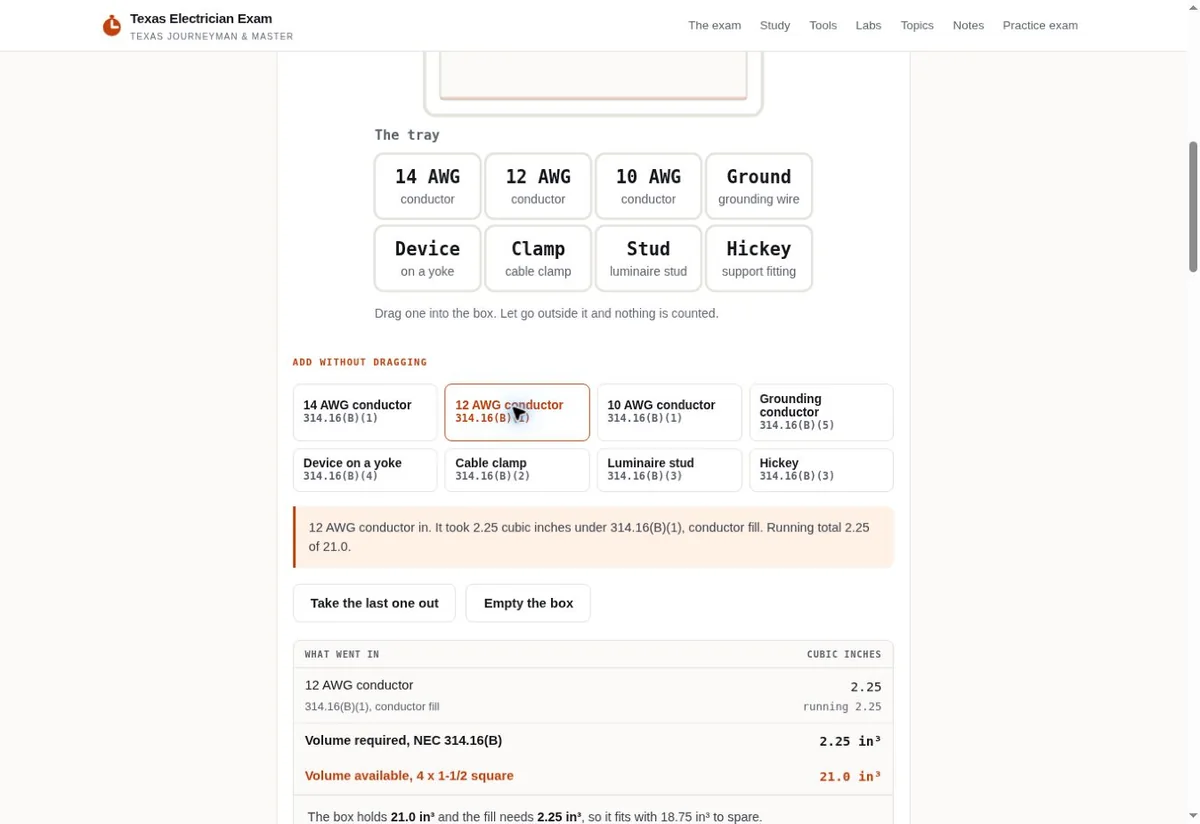
Texas Electrician Exam box fill calculator controls
Third-party reference claim boundaries: Exam controls and displayed output. View the project
Third-party reference claim boundaries
Reference useSupplier-approved inputPublic claim boundary
Named sourceThe exact document or organization and the passage being cited.The page explains which fact the reference supports.
Supplier relationshipThe business's approved account of why that source concerns its offer.The wording stays within the relationship the supplier can verify.
Reused statementThe source condition beside each relevant summary or answer.The short version preserves the limited subject of the claim.
Final approvalThe accepted public wording and support for any stated status.The reference adds no unverified authority or credential.

In the Texas Electrician Exam picture, the labels sit with calculator controls and displayed results. We can read those task words while discussing a clearer reference label. On the supplier page, the reference label should likewise identify what the reader will find. The relationship statement itself comes from the supplier's approved facts and the source it permits us to use.

What should the supplier statement say?
It should explain the actual relationship the page is describing. We can draft that fact in a short sentence using the approved source name. If the relationship concerns only one product family or process, retain that subject. A broad company introduction may need different wording. Our project should avoid letting a narrow document reference become a general claim about everything the supplier provides.
What if staff describe the relationship differently?
Show the conflicting versions to the person who may settle the claim. We can identify the expectation each version creates for the buyer. One may describe a source consulted for information while another implies formal approval by the outside organization. The business needs to decide what it can verify before the writer chooses the public words. Keep that factual question visible in the brief.
What if the source changed after the old page was written?
Ask the supplier which current reference and version it wants used. We would compare the affected statement with that source before drafting an update. The project can identify a changed condition that now limits the claim. An old link may still work while pointing to material with a different meaning, so the source check should concern the actual passage the answer relies on.
Can the writer summarize a supplied agreement?
The writer can work from the statement the supplier approves for public use under the agreed content task. We would not supply a legal interpretation of private terms. The business should identify what may be said and who can check the summary. Our draft can express that approved relationship plainly while leaving any disputed status or permission question with the appropriate source.

Keep a cited standard separate from a supported status claim

A document citation identifies material used in the explanation. We can describe that use accurately and require its own verified support before drafting a stronger status statement.

What if the page cites a standard?
Ask which part of the explanation the standard supports and which use the supplier approves. We can write that narrow reference without implying a broader verified status. If the business wants a separate claim that it is certified, ask for the matching record and authorized statement. The content task should keep those facts distinct so a reader understands what the page actually establishes.
What if a maker's manual is the reference?
Explain which item or task the manual concerns using the supplier's approved wording. We would avoid implying that referencing the manual creates a formal relationship with the maker. The business may have a separately supported relationship, but that claim needs its own source. Our answer can remain useful by identifying the material the buyer should consult and the service question the supplier can discuss.
What should support a certification claim?
The business needs a record that supports the particular status, holder, and subject it wants to publish. We can draft from the verified statement its responsible person approves. The writing task should not invent an issuing body or imply that every service is covered. The specific record and any current conditions need to match the final words before the supplier treats the claim as ready.
What if there is no supporting status record?
Keep the explanation within the confirmed source use. We can describe the document the supplier cites and why it helps this buyer question. A missing status record should stay an input gap if the business wants a stronger claim. The page does not need that unsupported addition to provide a clear account of the actual reference.
How should an unclear qualified heading be handled?
Ask what fact the supplier intends it to communicate. We can propose wording that names the supported relationship or document use more precisely. If the heading implies a credential, bring that claim to the responsible approver. The published line should state the verified meaning plainly. We can put the limit within the sentence the supplier approves, keeping its relevant subject visible to a later reader.

The strongest-looking phrase may be the least clear about what is actually supported. We can help the supplier choose words that describe its real reference use and explain a separate status only when it is verified. The content brief should identify the exact public claim and the record behind it. That gives the business a factual acceptance question for our draft.

Retain the reference's limited subject when the claim is reused

A reused answer can lose the condition that keeps a source claim accurate. We can trace the statement and draft corrections where its limited subject has disappeared.

  1. Locate the source-linked statement Choose the exact passage the supplier wants corrected. We would keep its reference and approved relationship together in the content brief. The task concerns this supported claim, with unrelated source mentions left for their own questions.
  2. Find relevant shorter uses Look for the same relationship in service summaries or FAQs. We can inspect the uses that inherit the changed statement. A matching organization name in another context may describe a different claim and should retain its own source.
  3. Check the subject retained in each version Ask whether the short form still names the relevant product, process, or condition. We would identify a summary that now sounds companywide when the approved statement concerns one item. The correction should restore that limited subject in ordinary language.
  4. Return a changed implication for approval Show the proposed sentence beside the approved source statement. We can ask the supplier whether it preserves the actual relationship. If it introduces a new status, that addition needs its own support before the writer treats it as accepted.
  5. Check the destination label Read the public link text against the resource it opens. We would make clear what the reader can find there. A link to technical guidance should be described according to that material, with a separate verified status claim named accurately if one exists.
What if a reused answer drops the source link?
Ask whether the visible wording still preserves the essential context. We can restore a clear reference where it helps the buyer verify the claim. The short answer should not depend on an absent link to reveal that it concerns only one product. Our proposed update can retain the approved subject directly and use the source route for further detail.
Can one central statement serve several pages?
Yes, when the same fact genuinely applies and the supplier approves its use. We would identify any page-specific condition that needs its own wording. A shared statement should not erase differences between references or products. The project can write a common fact once while keeping each answer's actual subject clear to its reader.
What if an outside directory uses the broader claim?
Record the actual wording and its source when available. We can provide the supplier-approved correction for a route the business controls or can properly use. The website writing project should state any outside dependency. Our draft can establish the supported wording without promising that every independent publisher will adopt it.

Use exact interface wording to discuss the public reference label

A clear label can help a person understand what a linked reference is for. We can write that label around the actual source and the supplier's approved explanation.

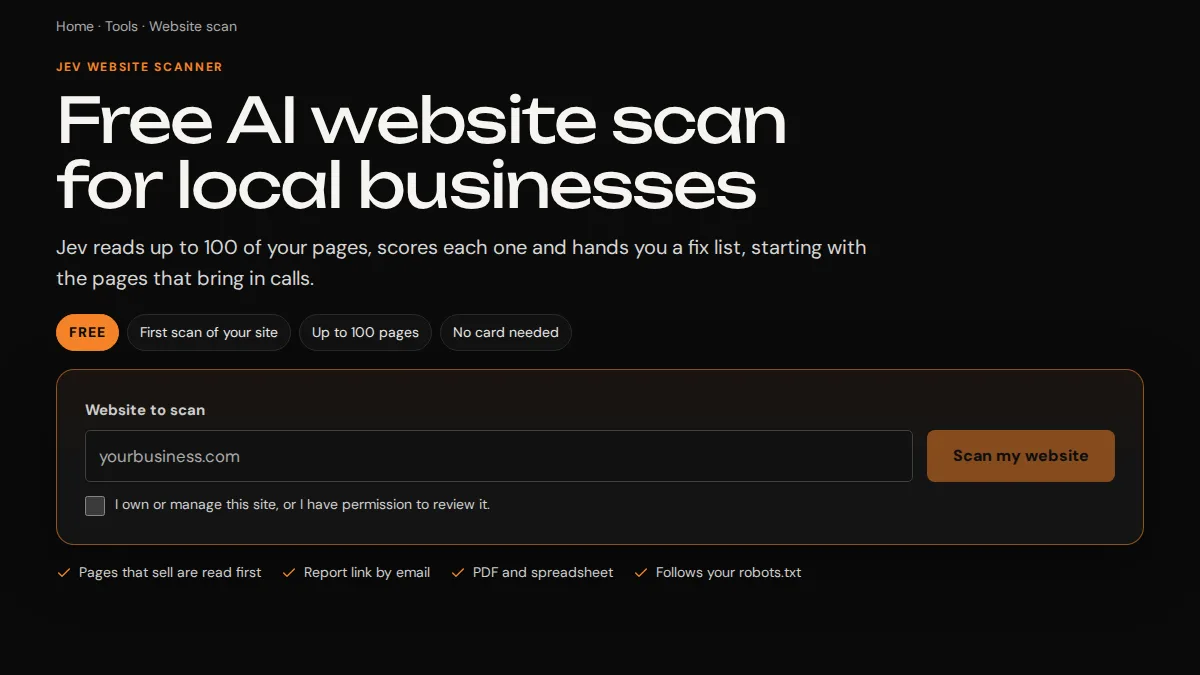
Jev scanner website input and scan action
Third-party reference claim boundaries: Scanner website input and button. View the project

The Jev scanner screen includes a website field and a button that names a scan action. We can use that visible specificity when discussing a source link: what does the label tell the reader they will find? For the supplier's document, the label should identify the relevant reference and keep its actual use clear. The page then needs an approved statement connecting that reference with the offer.

A technical document can have a short internal code that buyers do not recognize. We can pair that code with an approved plain description when the supplier confirms the match. The link remains traceable while the buyer gains enough context to choose it. The writer should avoid giving the document a stronger authority label merely because its original name seems difficult to read.

What does the form labels source support here?
W3C explains that labels identify a control's purpose and should be associated with the control. We can consult that guidance when the project includes an input related to a reference. Our document-link wording is a separate content choice, based on the source it names. The actual page implementation needs its own agreed checks if it is part of the engagement.
What if the buyer must provide a document reference?
Use the supplier's approved name for the information needed. We can write a label and brief instruction that explain the expected value. A buyer may have a document title but no internal code, so ask which alternatives staff can use. The content should make that real process clear without inventing a reference lookup service the supplier has not confirmed.
Can a badge replace the source explanation?
Ask what the visual is intended to say and whether its use is approved. We would keep an important relationship statement in readable words where the buyer needs it. A recognizable mark may still leave the subject or holder unclear. The writing project can clarify the supported claim, with any asset permission and actual status verified through their proper sources.
How should the label be checked after editing?
Read it with the final destination and nearby statement. We can ask whether a buyer would expect the resource the link actually provides. If the source title or relationship has changed, retain the current approved meaning. The completed content check should identify the exact label and page version inspected.
What if the reference title is difficult for buyers to recognize?
Use the exact title where it is needed for traceability and ask the supplier for a plain description of its subject. We can pair those words in the proposed link label. The description should identify the material without adding a status it does not support. If several documents have similar names, include the distinguishing fact the supplier approves. A clear label can help a buyer choose the right resource while the source remains identifiable. Our acceptance check should read the proposed description against the document itself and the approved relationship statement. If the business cannot confirm that match, keep the label question open before publication. The project can then ask for the specific fact needed to complete a truthful reference.

Approve the reference description against the claim it actually supports

The supplier should accept the named source, relationship, and limited subject together. We can complete that writing task without adding an unverified credential or borrowed authority.

Hypothetical example A hypothetical Park 100 supplier cites a document

Before

  • An unnamed supplier has a page referencing an outside technical document. Its draft summary places that reference beneath a heading that suggests a certified company status. The supplier has approved the document mention but has supplied no record supporting that broader status. This fictional situation provides a bounded writing question.

After

  • The supplier confirms the actual source use and permits a public statement about that reference. Trojan would draft the statement with its relevant product or process subject intact. The unsupported status wording would remain open for the required record or be removed from the accepted copy. The sample claims no real certification, client project, or observed technical result.
What can the final approval establish?
It can establish that the approved words describe the supported relationship and source use. We would compare the final passage with the supplier's accepted statement and relevant reference. Any pending status question remains separate until its matching record is verified.
What should we commission from Trojan?
Commission the specific source explanation and dependent answer corrections your page needs. We can write from the material the supplier approves and identify the relevant claim checks. Bring the reference, the current public statement, and the person who may settle its business meaning.
What if the reference relationship changes later?
Identify the affected source and ask the supplier for its current approved account. We can scope the related writing updates and inspect the shortened uses that inherit the fact. The new statement should be accepted before the old words are treated as replaced.
What remains outside this content result?
A future search appearance or commercial outcome needs its own observation. We can accept the writing for the accurate claim it publishes. A technical or credential conclusion should remain with the verified record and the supplier's authorized review.

Sources

From the businesses we've worked with

“It’s been 2 years; I couldn’t imagine going anywhere else.”
Vanessa WilliamsBujeesummer

KNOW YOUR NEXT STEP

Let’s talk about
Indianapolis.

Based in Indianapolis, we serve businesses across central Indiana, including Carmel, Fishers, Zionsville, Westfield, Noblesville, Greenwood, Avon and Plainfield, and clients across the United States.

Talk with Trojan

Indianapolis, Indiana

Service area map

Explore Indianapolis on OpenStreetMapArea reference; this is not an office pin. Map © OpenStreetMap contributors.