Need help?Jamie

Market service plans

Google AI Overviews Tracking for Park 100 Suppliers

Your buyers now get a Google summary before they see any links, and it names suppliers across town while your company doesn't come up.

Trojan Digital Marketing, based in Indianapolis, checks Google's AI Overviews for industrial suppliers in Park 100 on the northwest side. We save each summary for the questions your buyers search, list the pages it cites and fix the page of yours that should be quoted. It's for owners asking, "Why does Google's summary quote a competitor and never us?" The federal Indianapolis metro covers 11 counties, so a buyer's "near Indianapolis" can reach well past Marion County.

Send the form with two questions your buyers ask Google before they ever call you. The first strategy call is free, and during business hours we aim to reply within five minutes.

  • A dated log of every Overview checked
  • Cited sources traced back and verified
  • Page fixes aimed at the questions buyers ask

We report our own search work in dated numbers. For one local Indianapolis-area business, website clicks from its Google profile rose 45.9% to 334 in August 2026 against August 2025. That's a single business. Your Overview checks get logged the same way, date against date. On the free call with Jeff Clerisier, who founded the company in March 2018, you pick the first buyer questions to track.

Illustrative creative production workspace.
IllustrationAnswer preview for Park 100An AI answer panel drawn with this page’s public and guidance references as source chips. It isn’t a real AI Overview and cites no business.ANSWER PREVIEWAsk about Park 100AI ANSWERGoogle Search Central: AI features and your website · developers.google.comAI features and your website

YOUR WORKING BRIEF

Choose where to start

Select the parts you want to discuss. Your choices carry into the inquiry form.

Discuss this service0 priorities selected

SEE HOW WE CONNECT THE PIECES

Explore the decisions
behind our plan.

A plan moving from scope to delivery and review01Define the scope02Build the work03Review the result
  1. Define the scope
  2. Build the work
  3. Review the result
A plan moving from scope to delivery and review

For a Park 100 supplier, we start with the question a buyer asks before requesting a quote, like whether you stock a part locally or deliver to Hendricks County. We check first whether your answer sits in a plain sentence near the top, since that's the line we want a summary to quote. Broad spec questions a maker's site already answers well go to the bottom of our list.

Link Logistics: Park 100 Industrial Center 13: Link Logistics lists industrial property at Park 100 in the Northwest Indianapolis market, including distinct office and industrial space. Since that listing separates office from industrial space, a buyer's question may be about your sales office, your dock or both. Before we write an answer page, your team names the capability and the source that backs it.

Questions about AI Overviews in Park 100, Indianapolis, Indiana

How much does AI Overviews tracking cost for a Park 100 company?

It's priced after the free strategy call, depending on how many buyer questions you want tracked and how many pages need rework. Seeing where you stand is free, since Jev reads up to 100 of your pages at no charge. If you'd like a comparison, the $99 audit grades as many as three named competitors by the same checks, which shows how your pages stack up against theirs.

Can you get us into an AI Overview?

No one can promise that, because Google decides when an Overview appears and which pages it links. The work makes your page the clearest answer to the question, confirms Google is allowed to crawl it and show a snippet from it, and records every check with its date. Google's guidance is that a page must be indexed and allowed to show a snippet before it can appear as a link there.

Should our pages name the counties we deliver to around Indianapolis?

Yes, when you really deliver or send technicians there. The federal Indianapolis-Carmel-Greenwood metro counts 11 counties, Boone and Hendricks among them, so a buyer searching near Indianapolis could sit in any of them. A plain delivery section naming the counties you cover gives Google something exact to work with when a summary describes who serves an area.

How does the work start?

You list the questions buyers ask before they call, and we search each one on a set date and save the Overview text, the cited links and where your page shows up. On the free strategy call you pick the handful of questions that matter most. There's no charge for that call, and during business hours we aim to reply within five minutes.

What if Google cites a manufacturer instead of us?

That's often the right source for a spec question, so it isn't treated as a loss. Your page can own a different part of the answer, like local stock and lead times, or the service work you do on that product, which the maker's page won't cover. We check that your page says those things clearly and links to the maker's spec sheet where it helps.

What if no Overview appears for our questions?

Then the log records that, and the page work still stands on its own. A question with no Overview today may get one later, and the fixes that make a page easy to quote, like a direct answer near the top and a spec sheet link that works, help ordinary results too. We log AI feature findings apart from routine repairs.

Has Trojan Digital Marketing worked with Park 100 companies before?

We don't list any Park 100 clients, so no Park 100 results are shown here. We're an Indianapolis service-area business without a storefront, working with companies across central Indiana and the United States. For outside proof, one Google reviewer, Heather Doan, wrote, "I had a great experience working with Jeff..." That's her experience, and your results will depend on your pages and your competitors.

“I had a great experience working with Jeff…”
Heather DoanGoogle review
“…drove a noticeable uptick in leads within just a few weeks…”
Mike BamosiGoogle review

We have more than 1,400 live websites.

We’re based in Indianapolis, where the city and Marion County share one government, Unigov.

We also work with clients across the United States.

Read our Google reviews

Which metro facts shape AI Overview work for a Park 100 supplier?

AI Overviews research for a Park 100 supplier in Indianapolis, Indiana has to account for how far the region stretches and where it's growing, using these sourced facts.

These are metro and county figures with no Park 100 breakdown, and they don't show demand for any one supplier.

How is an AI Overview check run for a Park 100 supplier?

Each AI Overviews check for a Park 100 company in Indianapolis, Indiana follows the same dated routine, so any change in Google's summary can be traced to a day.

  1. Choose the buyer questionsYour sales team names what buyers ask before requesting a quote, like minimum order sizes or delivery to a certain county.Your team
  2. Search and save on a set dateWe search each question, note the date and save the Overview text and every cited link as they appeared.Our team
  3. Trace each cited claimEvery statement about your field or your company is checked against its source and against the facts your team approved.Our team
  4. Fix the destination pageWhere your page should be the answer, it gets a direct reply near the top and a working link to any spec sheet it mentions.Together
  5. Repeat and compareThe same questions are searched again later, and the log shows what changed and what stayed put.Our team

What does each AI Overview finding mean for your page?

AI Overviews findings for a Park 100 supplier in Indianapolis, Indiana each point to a different fix, shown here with hypothetical results for one buyer question.

What the Overview showedWhat gets checked nextLikely change on your site
It cites a competitor's page
Whether their page answers the question more directly
A plainer answer near the top of your page
It cites the manufacturer
Whether the question is really about the spec
Your page covers stock, lead time or service instead
It says something wrong about you
Which public source the wrong claim traces to
Correct that source, then restate the fact on your page
No Overview appears
Whether ordinary results show your page
Regular search fixes, logged apart from AI work

Select an industrial question with a clear business role

Start with the decisionYour serviceFitTrustNext stepScopeEvidenceContact
Fit
Explain the service scope.
Trust
Show supporting evidence.
Next step
Give a clear contact route.
Start with the decisionOne service can lead to different questions about fit, evidence and the next step.

Some questions concern general engineering concepts, while others ask how to find a supplier or prepare a quotation request. A business should not treat every technical topic as an appropriate sales page. We select the observation sample around the capabilities you offer and the decisions your team can help a buyer review.

The research brief records the audience, relevant service, and evidence expected on the destination page. Staff questions and available search observations can inform the sample. We do not infer a market opportunity or assign keyword difficulty simply because the topic contains equipment terminology.

Inspect the answer and the authority behind its details

For each observation, we retain the exact query, date, answer context, and cited URLs when visible. The review identifies whether a statement concerns a general concept, a product specification, or your company’s capability. Those claims need different sources and different reviewers.

Google’s AI features documentation uses indexed and snippet eligible pages as the technical baseline for supporting links. We check access when it affects a relevant page. That baseline does not establish a guaranteed source position or mean that an accurate industrial page will be cited for every related query.

Prepare a destination that respects technical review

A useful service page can explain accepted applications and the information needed to assess a request. A supporting guide can teach the buyer how to prepare that information. Neither should imply that a summary or form result establishes technical suitability. The page needs a clear route to the team responsible for review.

Trojan Digital Marketing can organize an answer section, a practical comparison, and links to approved documents. The client validates specifications and operating limits. We keep important conditions visible alongside the answer instead of hiding them beneath a broad statement that the business can handle any application.

Examine a proposed supplier capability mismatch

Suppose a hypothetical industrial supplier handles a defined range of materials, but an observed AI answer describes it as suitable for a wider process. The cited page uses a broad category heading and does not explain exclusions. We would compare that wording with the approved capability record and ask the technical owner to define the public boundary.

The proposed change could include a clearer service introduction, an accepted application table, and a guide to the information needed for review. The inquiry would route the buyer to a person rather than confirm compatibility. A later observation can document whether the selected source or wording changes, while preserving uncertainty about causation.

Scope an investigation with technical acceptance checks

The first engagement can include a question inventory, observation log, source comparison, proposed answer content, and specific page repairs. We identify the technical reviewer for each claim and the sales owner for the inquiry route. The client supplies approved capabilities and the public documents that can support them.

Acceptance checks include whether the revised page accurately describes the service, whether the linked documents are current, and whether a test request reaches the correct team. If the relevant misinformation comes from an outside source, the report identifies that dependency rather than assuming we can edit it through your website.

Measure useful discovery through the industrial sales process

A citation, a website visit, a request for quotation, and an accepted order require separate records. Industrial opportunities may remain open while specifications are reviewed. We preserve those stages and avoid assigning revenue to a search interaction that has not produced accepted work.

The observation program can reveal a missing buyer guide or an ambiguous capability description. Those findings support practical content work even when no direct AI traffic can be isolated. The scope states the research and implementation tasks, without promising search selection, quotation volume, or a commercial result.

Put the first scope in order

  1. Select supplier research questions connected to a capability the business supports.
  2. Compare observed technical claims with approved documents and the cited destination.
  3. Repair ambiguous content and verify the route to a qualified human review.

Explore Park 100 marketing planning for the wider district approach, or return to Indianapolis marketing services. The full AI Overviews service explains the broader engagement.

Discuss Park 100 AI Overviews research with us. Bring the current website and the customer decision you want the project to address so we can define the relevant work, approvals, and review evidence.
Sources & further reading

Talk with Trojan Digital Marketing

Name the quantity question before drafting the answer

A specification answer needs the exact quantity the buyer is asking about. We can write that answer from the supplier's approved reference with its unit and conditions still visible.

A Park 100 supplier may receive a question about a quantity after a buyer reads a short product description. The number alone can leave the question unclear: it may describe a package count or another specified value. We would ask which figure the buyer means and which approved document contains it. That gives the writing task a source the technical reviewer can inspect.

The page should name the question the answer settles. We can distinguish what the document states from what the buyer wants to use on a particular project. Those are separate facts to check with the supplier. Our copy should preserve the value's actual meaning and leave a project-specific choice to the appropriate review when the approved source does not settle it.

What should the buyer question include?
The item or service reference and the quantity they want explained. We can ask whether the question concerns a count, dimension, or another stated value. The supplied source should identify which interpretation applies. A broad question about the right amount may need clarification before the writer can draft a truthful answer. Our first brief can retain that open question so the supplier knows which fact still needs its technical review.
What if two documents use the same number differently?
Keep the document names and units beside each value in the comparison. We would ask the supplier which source applies to the answer being written. A repeated number may have a different meaning in each record. The draft should not select one because it looks familiar. The authorized reviewer needs enough source context to settle the exact statement the public page should make.
Can we answer with a general industry value?
Use a value only when the supplier approves its relevance and the matching reference supports it. We can write the question more narrowly if the available source explains only a particular item. A broad industry statement may imply a fit the business has not confirmed. Our content project should begin from the supplier's supported meaning, with any further research task agreed and checked separately.
What can Trojan Digital Marketing write for this task?
We can draft the selected answer and the nearby source explanation under the agreed writing scope. The supplier provides the approved value, unit, and conditions. Its technical reviewer confirms the meaning before publication. The project can also identify a reused summary that has lost that context. Bring one quantity question and the record it should rely on so the work begins with a specific buyer need.
  • Choose a single figure to explain in the first answer. We can keep several quantities separate when their units or conditions differ.
  • Name the item that the value belongs to. Our draft should avoid letting a nearby product heading supply the only identifying context.
  • Ask what the buyer intends to do with the answer. We would retain a project question as open when the source only states a document value.
  • Preserve the supplier's approved term for the quantity. We can explain an unfamiliar term without silently replacing it with a different technical meaning.

Keep the authorized reference beside its unit

The source needs to identify both the figure and what it measures. We can preserve that relationship in the short answer so the quantity remains understandable after copying.

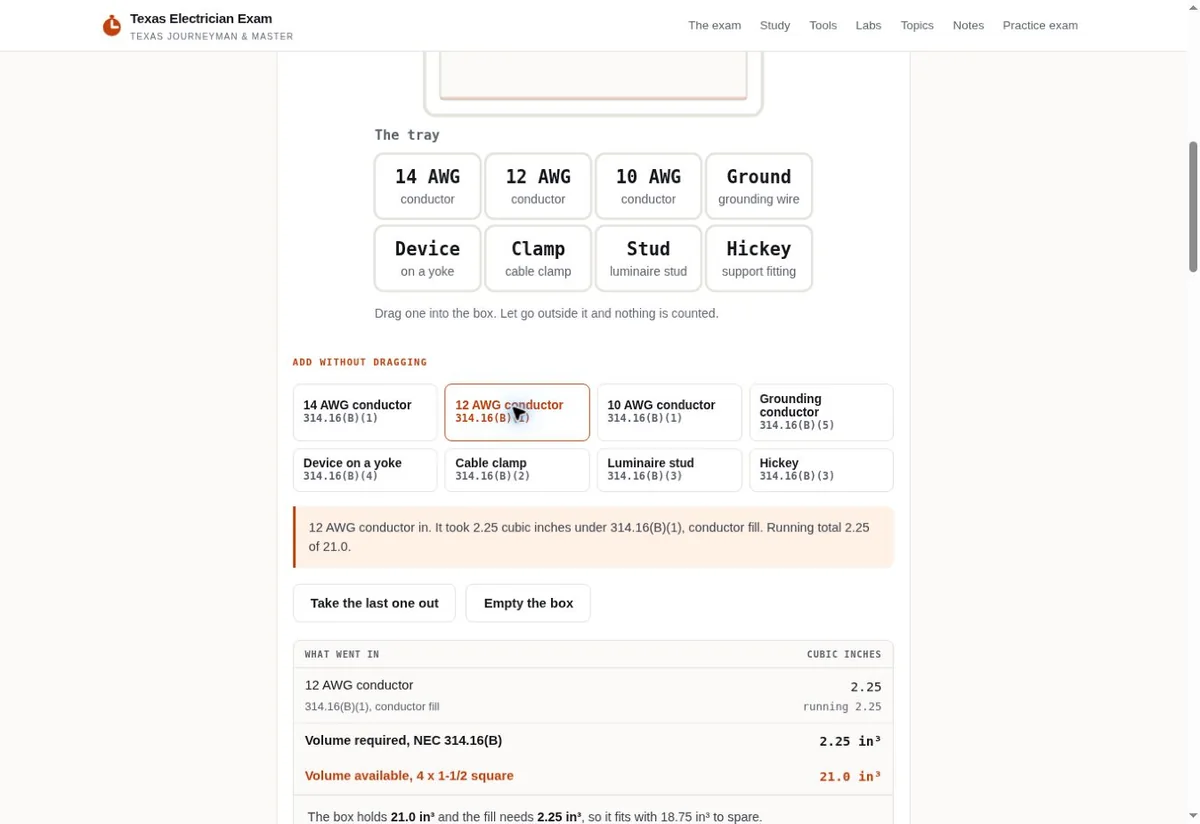
Texas Electrician Exam box fill calculator controls
Specification quantity context record: Exam controls and displayed output. View the project
  • Use the exact document or public reference the supplier has approved for this claim. We can identify its relevant item and version in the writing brief.
  • Read the unit with the figure before drafting. Our explanation should preserve the word that tells the buyer whether the number describes pieces, length, or another quantity.
  • Ask whether the value is stated per item, package, or another named basis. We would keep that basis in the answer when it changes the quantity's meaning.
  • Retain a relevant source condition near the value. We can ask the reviewer whether the stated quantity applies only to a named configuration or service situation.
  • Identify the person who can confirm the reference's use. Our content task should leave an unapproved document or uncertain version open until the supplier settles it.

The Texas Electrician Exam screen contains calculator inputs and a displayed output. We can examine the value beside those controls when discussing which context a reader needs. For the supplier's answer, the source and unit must come from the approved reference. The writing brief can state how those details will appear together on the page.

How should the source be named in the answer?
Use a label that helps the reader identify the relevant reference. We can include the document title or approved item name when a generic view details link would be unclear. The supplier decides which material may be public. Our draft should explain what the linked source supports and retain essential context in the answer itself, since the reader may see only the short passage.
What if the approved source is not public?
Ask the supplier which facts it permits in the public answer. We can write from an approved excerpt or verified statement without exposing the underlying private material. The content task should identify who confirmed the value and its intended use. It should avoid implying that a public document link exists when the source remains internal. Any handling promise needs its own agreed terms.
What if the unit is missing from the supplied excerpt?
Return the question to the technical owner before inserting one. We would keep the value incomplete in the internal brief. A likely unit is still a guess until the source or authorized reviewer confirms it. The public answer can wait for that fact or describe the information needed to assess the question when the supplier approves that approach.
Should a unit be converted for easier reading?
Confirm the proposed conversion and its intended use with the technical reviewer before publishing it. We can preserve the original unit alongside an approved alternative when that fits the content task. The writer should avoid making an unverified calculation merely to fill a table. Our acceptance check should compare the actual public value with the source meaning the supplier approved.

Leave missing conditions visible in the short answer brief

An incomplete condition can change the meaning of a quantity. We can flag the missing fact and write the approved part without pretending the source answers every situation.

  1. Locate the incomplete clause Identify the phrase that depends on a condition absent from the supplied material. We would ask whether it concerns the item version or the basis of the count. The question should name the specific gap so the reviewer can answer it from the appropriate source.
  2. Ask the authorized reviewer Bring the source passage and the proposed short answer together. We can make clear which detail the writer needs confirmed. A general approval of the page may overlook the missing condition. The reviewer should inspect the exact quantity statement before it is treated as ready.
  3. Keep the draft within settled facts Retain the confirmed figure and context only where their approved meaning is clear. We would leave the unsettled application out of a finished claim. The public explanation may instead state what the supplier needs to review if that is accurate for the service.
  4. Recheck the shortened passage Read the answer with surrounding headings removed. We can ask whether the unit, item, and meaning-changing condition still remain attached. A short excerpt needs enough context to be true on its own. The project can propose that check before publication and record its actual completion separately.
  5. Trace any inherited summary Find the specific summaries that repeat the same quantity. We would identify where the missing condition affects the meaning and define those corrections in the agreed task. A related page with a different source should keep its own approved context.
What if the firm wants a finished answer before the condition is known?
Explain the input gap and offer a draft that states the settled information accurately. We can mark the unresolved clause for its owner. The writing project should avoid inventing a condition to meet a publishing date. A clear question for the technical reviewer may be the most useful immediate output because it identifies exactly what the supplier needs to confirm.
Can we write that a value depends on review?
Use that wording when it accurately reflects the supplier's approved process. We would ask what review is available and what information it needs. The answer should not invent a technical approval service or imply an automatic result. Its purpose is to tell the buyer which fact remains open and where the supplier can discuss the applicable source.
What if the source uses a short unit abbreviation?
Ask the technical owner what the abbreviation means in that specific reference. We can write a plain explanation beside the approved term when the business confirms the match. Do not assume that a familiar abbreviation has the same meaning in every document. The public answer should preserve the source notation where it helps trace the value, with enough context for a buyer to understand it. Our draft can leave an unresolved abbreviation open until the supplier provides the matching fact.
Can the displayed answer use a rounded value?
Confirm the proposed display with the supplier's technical owner before publishing it. We can keep the original source value available in the writing comparison and ask what precision the approved answer needs. A visual preference should not quietly change the quantity's meaning. The business decides what it can support for this use. Our task is to preserve that accepted meaning in the page, with any unverified calculation or adjustment left out of the final claim.

Distinguish a document figure from a project recommendation

A source may state a quantity without deciding what a particular buyer should use. We can keep the document fact clear and route the project question to the supplier's approved review.

What does the source figure actually establish?
It establishes only the stated value within its documented context. We would ask the technical reviewer to confirm that context for the public wording. The buyer may still need to explain an application before the supplier can advise on it. Our answer should preserve both facts: what the reference says and what the business still needs to know for the requested use.
What if the buyer asks whether the figure is suitable for their project?
Identify the information the supplier actually needs to assess that question. We can write a preparation explanation and a clear request route when that is part of the agreed content work. The page should leave the suitability answer open until the relevant review occurs. A quoted value alone cannot supply the buyer's missing project facts.
Can a page compare two source figures?
It can compare approved figures when their units and bases are stated clearly. We would ask the reviewer whether they describe comparable items or different conditions. A simple side-by-side table can be misleading when one value is per package and another is per individual item. Our writing should retain the context that makes the comparison understandable before the business approves it.
What if the source is a maker's public page?
Use the supplier-approved reference and explain the claim it supports. We can keep the maker's stated figure distinct from the supplier's own service offer. The supplier still needs to approve any statement about what it sells or how it handles a project question. Our draft should avoid converting a referenced product detail into a broader company capability.
How does the Park 100 context affect this task?
In Link Logistics' Park 100 listing, the property name is Park 100 Ind Ctr 13. Its address is on West 85th Street and its location is Northwest Indianapolis. That gives a concrete local industrial reference. We would still obtain the selected supplier's own item facts and technical approval. The quantity answer is commissioned for the actual business offer, with local setting kept separate from any inferred product capability.

The buyer question and the source answer may use different terms for the same item. We can ask the supplier to confirm that match and then write a clear explanation. If the match is uncertain, preserve it as a question. The content should help staff obtain the needed reference without pretending a similar label establishes the applicable product or project choice.

Use a pictured output to discuss what context travels with a value

A technical screen can show how inputs and outputs are presented together. We can use that reference to plan the supplier's wording around its own approved quantity.

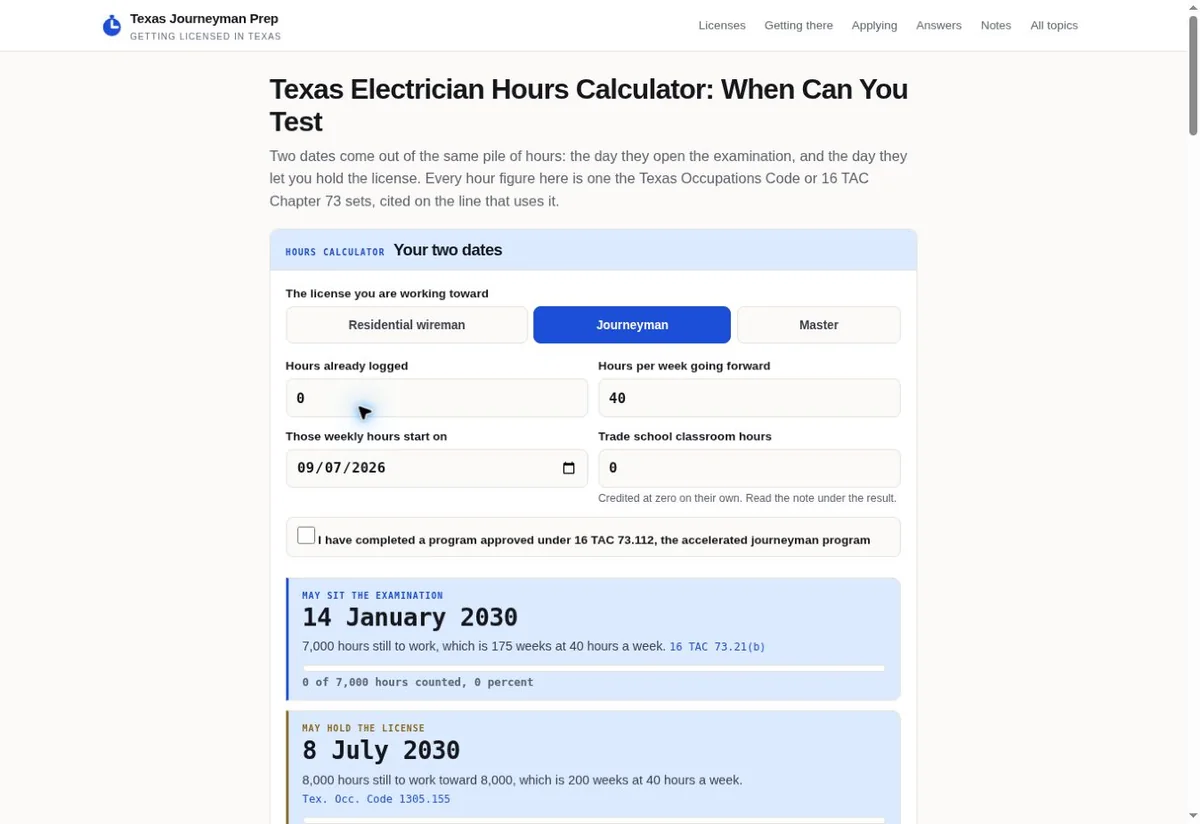
Texas Journeyman Prep calculator with labeled fields
Specification quantity context record: Texas planning inputs with labels. View the project
Hypothetical example A fictional Park 100 supplier receives a unit question

Before

  • An unnamed supplier in Park 100 has an approved source stating a fictional package count. A short draft retains the number but drops the per-package basis. A fictional buyer asks whether that figure describes individual pieces or a complete order. The sample illustrates missing source context without representing an actual technical finding.

After

  • The supplier's reviewer confirms the original basis and approved item reference. We would draft an answer with the quantity, unit, and relevant condition together. A proposed reading check would ask which count the passage describes. The example supplies no real product value, compatibility conclusion, or completed test outcome.

The Texas Journeyman Prep planning image displays labelled fields. We can use those visible labels to discuss what a reader must understand before interpreting a value. On the supplier page, the selected source provides that context. The proposed copy should name the unit and basis where the quantity appears, with a separate route for an unresolved project question.

What should the planned reading question ask?
Ask the reader what the quantity measures and which item or condition it concerns. We would compare that answer with the supplier's accepted source meaning. This remains a proposed exercise until it is carried out. The project should report the actual passage inspected and the response given if a completed check becomes part of acceptance.
What if the reader supplies context from memory?
Ask which part of the page provided the needed fact. We can identify a missing unit or basis when the reader had to add it. Staff knowledge can help locate the gap, but a new buyer may not share that knowledge. The revised copy should make the approved context available in the answer itself.
How much of the original document should appear nearby?
Include the context necessary for this quantity answer and link the approved reference where useful. We would avoid copying unrelated technical material to make the page look substantial. The supplier decides what may be published. Our writing task should explain the selected fact clearly and retain the condition the reviewer identifies as essential.

Approve the quantity answer against its matching source

The supplier should accept the published value, unit, and conditions together. We can finish that writing check without claiming technical certification or a future AI appearance.

Specification quantity context record
Quantity detailApproved source inputMeaning retained in answer
Exact questionThe item reference and the quantity the buyer wants explained.The answer addresses that selected value with a clear subject.
Unit and basisThe matching reference with its unit and per-item or package basis.The number retains what it measures and the relevant condition.
Project useThe buyer's application question and the supplier's actual review route.A source figure stays distinct from an unverified recommendation.
Content approvalThe technical owner's acceptance of the final public passage.The published wording agrees with the authorized source.
What should the final reviewer inspect?
The actual answer beside its source and relevant link. We can ask whether the unit and condition still match after editing. Approval should concern the final passage a reader sees, including any shortened summary used elsewhere.
What if the source later changes?
Identify which published answers use that value and ask the supplier to approve the current replacement. We can scope the dependent wording updates from that fact. The technical owner needs to confirm what changed before the writer treats a new figure as applicable.
What can Trojan Digital Marketing deliver under an agreed scope?
We can write the chosen quantity explanation and its preparation context, then check the approved wording in the specified page locations. The engagement should name the source inputs, technical reviewer, and completion tasks so the buyer commissions a clear content project.
What remains a separate observation?
Any actual AI appearance or project suitability decision needs its own record. We can accept the page answer for the accurate source meaning it publishes. A proposed reading exercise stays open until its actual result is known.

Sources

From the businesses we've worked with

“Sales have been better the last few months thanks to some additional marketing efforts. Way to go, Jeff!”
Andrew MontiethGeorgetown Market · Jeff was its marketing director, 2023 to 2025

Marketing help for Indianapolis businesses

Based in Indianapolis, we serve businesses across central Indiana, including Carmel, Fishers, Zionsville, Westfield, Noblesville, Greenwood, Avon and Plainfield, and clients across the United States.

Request a free strategy call

Indianapolis, Indiana

Service area map

Explore Indianapolis on OpenStreetMapArea reference; this is not an office pin. Map © OpenStreetMap contributors.