Need help?Jamie

Market service plans

AI Overviews for Castleton Stores: Pages Google Can Cite

You searched a product question your staff answers every day, and Google's AI summary cited a national site or another store instead of your page.

Trojan Digital Marketing works on this for stores and appointment businesses in Castleton, on the northeast side of Indianapolis. We save Google's AI Overview for each shopper question with its date and the pages it cites. Then we rewrite the page you want quoted so it answers plainly. A quick test: ask Google which stores Castleton Square has, and see if it knows Primark opened there in July 2026.

Send the form with one product question your staff answers every week and the page you'd want Google's summary to cite. The first strategy call is free, and during business hours we aim to reply within five minutes.

  • Each AI summary logged with its date and sources
  • Comparison pages you approve before anything changes
  • A free code check of the page you want cited

We won't edit a page until the first round of summaries is saved. Without that dated starting point, nobody can tell whether a later citation came from our change or from Google's own refresh. Jeff Clerisier founded the company in March 2018 and still runs it.

Illustrative business planning tools.
IllustrationAnswer preview for CastletonAn AI answer panel drawn with this page’s public and guidance references as source chips. It isn’t a real AI Overview and cites no business.ANSWER PREVIEWAsk about CastletonAI ANSWERGoogle Search Central: AI features and your website · developers.google.comAI features and your website

YOUR WORKING BRIEF

Choose where to start

Select the parts you want to discuss. Your choices carry into the inquiry form.

Discuss this service0 priorities selected

SEE HOW WE CONNECT THE PIECES

Explore the decisions
behind our plan.

A plan moving from scope to delivery and review01Define the scope02Build the work03Review the result
  1. Define the scope
  2. Build the work
  3. Review the result
A plan moving from scope to delivery and review

For a Castleton store, we start with the questions shoppers ask before they make the trip to the center, like whether you carry a line or what a fitting includes. We read Google's summary, the pages it cites and the page a shopper lands on after clicking, then pick which page to fix first.

Simon: Castleton Square: Simon presents Castleton Square as an Indianapolis shopping destination with store, dining, product, and visitor information. We haven't measured how often shoppers ask Google to compare products sold at the center, so we don't assume it. Your question list comes from what your staff hears at the counter and the offer you approve.

Questions about AI Overviews in Castleton, Indianapolis, Indiana

What does AI Overviews work cost for a Castleton store?

Tracking and page fixes are priced after the free strategy call, because ten product questions take less work than fifty. Two checks cost nothing: the free audit reads one page's code, and the Jev scan scores up to 100 pages. The $99 audit adds up to three competitors you name, scored the same way, which helps when a rival store keeps getting cited.

Why does Google's summary cite a national site instead of our Castleton store?

Often because the question is about the product itself, and the manufacturer's page answers that better than any store can. Your page earns citations on questions only you can answer, like what a fitting at your store includes or whether you carry a line in Castleton. Those questions come first in the log, since that's where a local page has a fair shot.

Will Google's AI summary name our store once the pages are fixed?

It might, and nobody can promise it will, because Google decides which pages each summary draws from. Google's documentation says a page has to be indexed and eligible to show a snippet before its AI features can use it, so those basics get checked first. After that, the dated log shows whether your page starts appearing as a source.

Who keeps the approved answers current when our stock or appointment rules change?

Your staff flags the change, and we update the page and log the edit. When a line is dropped or an appointment rule changes, the approved answer on your page has to change quickly, or a summary may keep quoting the old version. Each update is dated in the same log as the summaries, so you can see when Google's answer caught up with your page.

Where does an AI Overviews project start?

With the product family or appointment service that matters most to your sales, plus a short list of questions real shoppers ask about it. We run each search, save the summary with its date and the pages it cites, and read those pages beside yours. Your first call about it is free, and in business hours we aim to respond within five minutes.

What if our page gets fixed and the summary still skips us?

Then the log shows it, and the next job is working out why. Sometimes Google cites a forum thread where shoppers describe their own experience, and your page can answer that same question more directly, in the words those shoppers used. Other times a competitor's page simply answers more directly, and your page needs a clearer opening. Either way you'll see the dated evidence behind each change.

When a new store opens at Castleton Square, does Google's summary notice?

Not always right away, and the dated log is how you'd know. Hobby Lobby opened at Castleton Square on June 20, 2025 and Primark on July 23, 2026, so asking Google which stores the center has shows how current its sources are. If a summary misses a change that public, a new appointment rule at your store needs a clear page of its own before Google can repeat it.

“…drove a noticeable uptick in leads within just a few weeks…”
Mike BamosiGoogle review
“I had a great experience working with Jeff…”
Heather DoanGoogle review

We have more than 1,400 live websites.

We’re based in Indianapolis, where the city and Marion County share one government, Unigov.

We also work with clients across the United States.

Read our Google reviews

What about Castleton and the region changes AI Overviews work for a store there?

A regional growth figure and two recent Castleton Square openings shape AI Overviews work for a Castleton store in Indianapolis, Indiana, from who's searching to how current Google's sources are.

The growth figure is regional, and the two openings are public news about the center, so none of them says anything about our own work or a client of ours.

How does an AI Overviews check run for a Castleton store?

AI Overviews work for a Castleton store runs from a dated log, so every page change can be checked against what Google showed before it.

  1. Pick the questionsYou name the product family or appointment service that matters most, and we draft the shopper questions about it for your approval.Together
  2. Save each summaryEvery search is logged with its date, the summary text and the pages it cites.Our team
  3. Read the cited pagesThe cited pages get read beside yours to see what they answer that yours leaves out.Our team
  4. Approve the factsProduct specs and service details get your staff's sign-off before any page changes.Your team
  5. Search againThe same questions are rerun later and logged the same way, so you can see what moved.Our team

Select a question that a retail page can answer well

A broad request for a product recommendation can involve manufacturers, retailers, reviews, and user preferences. A question about arranging a demonstration or preparing for a consultation is more directly connected to the store’s own expertise. We define the intended audience and the reason each question belongs in the research sample.

The owner helps identify which product families and services are commercially relevant. Available search data and staff questions contribute evidence, but we do not infer demand from the presence of nearby retail. The question set should reflect a supported offer, not merely an attractive phrase containing Castleton.

Capture the source behind a generated comparison

Change one thing you can learn fromOne question · Consistent measurementABCurrent pageOne changeObserveCompareRecord context before interpreting a difference
A: current page
Observe the starting version.
B: one change
Compare with the same measurement.
Change one thing you can learn fromKeep the goal and measurement consistent, record the change and compare the result in context.

The observation register records the exact query, date, context, visible answer, and cited destinations. We note whether the answer discusses a product specification, a store service, or current availability. These statements require different evidence and may originate from different websites.

Google’s AI features documentation identifies indexed, snippet eligible pages as the baseline for supporting links. Meeting that baseline does not secure a citation. We separate access findings from factual errors and from cases where another source was selected, because each calls for a different response.

Make the supporting page useful after the summary

A comparison page should explain the criteria and link to the actual offer. It can help a customer identify what to ask or measure before a visit without pretending to make a final suitability decision. Product specifications need their proper source, and branch availability needs the store’s current process.

Trojan Digital Marketing can draft a focused comparison and revise the nearby service content so conditions remain visible. A short answer should not imply that every model can be demonstrated or collected immediately if the destination requires staff confirmation. The supporting page must carry that distinction where the customer is likely to act.

Investigate a proposed demonstration mismatch

Suppose a hypothetical electronics retailer offers demonstrations by request for selected equipment. An observed AI answer describes demonstrations as available for the whole catalog. We would inspect the cited page and the store’s approved demonstration policy before recommending a change. The issue might be a broad headline that omits the actual selection process.

The revised section would explain how a request is reviewed, what information the visitor should send, and how the store confirms the arrangement. A supporting guide could help customers compare use cases without making unsupported performance claims. Later observations would record the source and wording rather than promise a corrected answer across all searches.

Use a clear implementation brief for each finding

Map questions to the right pageQuestionFitProofNextService AService BService C
Service A
Planned coverage: fit and next step.
Service B
Planned coverage: proof and next step.
Service C
Planned coverage: fit and proof.
Map questions to the right pageAn editorial planning example pairs a service with a buyer need. Filled cells identify planned coverage, not performance.

The proposed scope links every issue to evidence, an owner, and a destination. Some findings need a wording correction. Others need a usable comparison, a better internal link, or an update to branch information. The client provides current specifications and operating facts; Trojan Digital Marketing defines the content and technical changes that fall within the engagement.

We also identify external dependencies. If a manufacturer or directory supplies an inaccurate fact, the business may need a separate correction process. The audit should not imply that publishing a new article gives us authority over those external sources or over Google’s choice of evidence.

Review commercial usefulness beyond the citation

A cited comparison can introduce a customer to the store, but the subsequent action may occur through a different channel. We review available search reporting, destination interactions, and appointment records with their limits intact. A product view, an inquiry, and an accepted demonstration are not interchangeable conversions.

The next recommendation might focus on a missing preparation answer or a repeated availability misunderstanding. Those are concrete opportunities even when the AI observation sample is limited. The engagement delivers a defined investigation and approved page improvements, while future search selection and sales remain uncertain.

Put the first scope in order

  1. Choose a supported product comparison or demonstration question.
  2. Inspect the cited specification and the store’s actual local service conditions.
  3. Revise the comparison and inquiry destination, then review later source observations.

Explore Castleton marketing planning for the wider district approach, or return to Indianapolis marketing services. The full AI Overviews service explains the broader engagement.

Discuss Castleton AI Overviews research with us. Bring the current website and the customer decision you want the project to address so we can define the relevant work, approvals, and review evidence.

Sources & further reading

Talk with Trojan Digital Marketing

Find out which two items the shopper means

A useful pairing answer begins with the exact products and the proposed use. We ask the showroom to identify those details before drafting a comparison that could imply confirmed fit.

Someone asking whether two items work together may be comparing names that cover several versions. A familiar product family is only a starting clue. We need the showroom's accepted way to identify each item. The buyer may have one at home and be considering another from the display. That difference belongs in the question brief. It can affect which supplier statement staff must obtain before they can answer responsibly.

Ask what the shopper hopes the pairing will do. A question about a physical connection differs from a question about a supported feature. We can help the retailer make that distinction readable without supplying product advice ourselves. The person who owns the technical answer should define the relevant condition. A comparison page then has a clear job: explain the known boundary and identify the question that still needs review.

Information that changes a proposed pairing answer
Shopper clueQuestion for the showroomPublic explanation
A family nameWhich editions does that name include, and how can staff identify the buyer's edition?We can ask for an available model clue. The wording should allow uncertainty rather than force the customer to choose a guessed version.
A displayed combinationDid the supplier confirm this exact pairing for the intended use?Describe the picture's role accurately. A display photograph can illustrate a discussion while leaving the buyer's own combination unconfirmed.
An older itemWhich part of the current statement applies to a previously sold version?Our answer should preserve the relevant version boundary. The date of a new webpage alone cannot settle which products the advice covers.
A requested functionWho can confirm that this combination supports the feature the customer means?Keep that function beside the pairing question. A vague works together statement may promise more than the reviewed evidence establishes.

What if the customer cannot find a model number? Give them the identification route the retailer actually supports. A photograph may be useful if staff approve that method. We can explain what detail helps them inspect it. The page should still let the person say the item is unidentified. Marketing copy must not choose a likely model and build a confident answer around that guess. The review may remain open until the right person can establish what the buyer owns.

  • Bring the words the buyer used, with their name removed. We can read that question before turning it into a page title. A staff term may differ from the words the shopper knows. Keep both meanings clear when the question is set.
  • Ask whether the item is already owned or still being chosen. We need that distinction because the page may show a newer edition. The customer's old item should not disappear from the brief when the writer describes the current display.
  • Keep the proposed use in plain text. A short note about what the buyer wants to do can help the right reviewer frame an answer. We should not turn that note into a claim that the pairing can do it.

Read the supplier statement for the specific combination

A supplier explanation needs to match the items and use under discussion. We can organize the question while the retailer obtains an answer from the person authorized to confirm product fit.

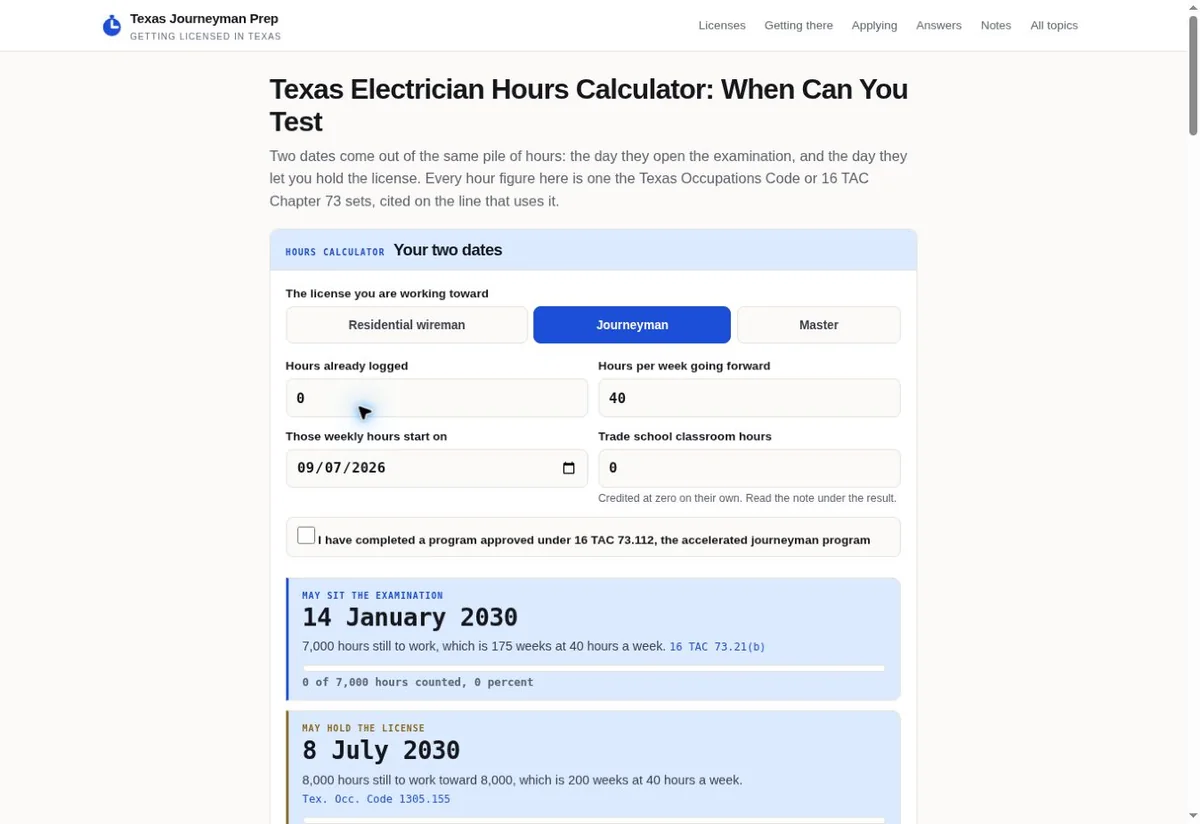
Texas Journeyman Prep calculator with labeled fields
Showroom compatibility answer boundaries: Texas planning inputs with labels. View the project
  1. Locate the applicable document Ask for the source the showroom uses when answering this pairing question. We can record its subject and relevant edition. A broad product landing page may describe features without addressing the proposed combination. Staff should identify the passage that actually settles the point, or say that another answer is needed. The evidence should remain connected to the buyer's question instead of being reduced to a general brand link.
  2. Keep the condition attached Read what the statement requires before drawing a public conclusion. An answer may apply only to a named version or a defined use. We ask the retailer to approve how that condition is expressed. Removing it for a shorter opening could change the promise. The page should make the limited meaning clear even for someone who reads only the first paragraph of the proposed comparison.
  3. Name the missing confirmation If the source leaves the question open, record precisely what still needs an answer. We can help the showroom write an inquiry to the appropriate supplier contact. The retailer controls that relationship and the response it receives. A marketing draft should not convert silence into permission. The proposed content can remain useful by describing the information a customer needs to provide while the technical point is unresolved.

The Texas Journeyman Prep calculator pictured here separates its planning inputs with visible labels. We can discuss that arrangement as a way to keep a pairing question's context readable. The image shows an existing education interface. It supplies no technical judgment about a showroom product. Your retailer's reviewers must still identify the actual information needed for this proposed comparison.

A supplier reply might address a narrower question than the one staff sent. We should read its stated scope before using it. Keep any clarification request visible in the writing notes. The public answer can explain what has been established without pretending every intended use has been checked. That care makes the page easier for the showroom to approve and easier for a shopper to interpret.

Can the agency interpret an unclear technical instruction? We can flag the unclear phrase and show the retailer where it changes the proposed answer. The business should obtain the technical explanation from its appropriate checker. The writer's job is to present that approved meaning clearly. If the response remains incomplete, the proposal should allow a bounded answer or a question route. A polished sentence does not add authority to a claim the supplier has not settled.

Put the unresolved fit condition beside the answer

The opening should show which part of the question still requires confirmation. We can keep that dependency near the comparison so a short extract does not read like an unrestricted recommendation.

Write the answer around what the showroom can currently establish. That may be the identity of the proposed products and the next information needed. A yes headline followed much later by a condition can mislead someone who skims. We suggest an opening that contains the actual answer boundary. The reader should understand why staff need another detail before describing the pair as suitable for their intended task.

The customer-facing explanation should use words the retailer can defend. Compatible can refer to different kinds of fit. We ask what it means in this particular question and whether staff can approve that meaning. If the business cannot make a complete statement yet, the page can explain the open question. That is still useful preparation for a conversation. It avoids making the shopper decode a broad label before reaching a qualified reviewer.

Does the condition need to appear in every paragraph?
Place it wherever removing it would change the reader's understanding. The main answer and any comparison card deserve a close check. We can also read the caption when the picture appears by itself. Repeating the full statement everywhere can make the page hard to use. The retailer should approve a concise version that keeps the essential boundary visible on the surfaces that invite a decision.
What if a short summary leaves the condition out?
Preserve the actual observed wording when such a summary is available. We would compare it with the controlled page and the source it names. An omission may reveal a sentence that separates its claim from its condition. The proposed correction can bring those details closer together. It cannot make us responsible for another publisher's text or promise that a search system will produce the same answer for every shopper.
Should the page recommend another item while fit is unknown?
Only if the retailer can support that recommendation for the stated need. We should not fill the unresolved space with a convenient product suggestion. The next step may simply be to ask the appropriate staff member. Explain what they will need to discuss and which decision remains open. A useful comparison can help the shopper prepare without naming a substitute the business has not assessed.

Describe an illustration without confirming the shopper's pair

A product image can show an example while the buyer's combination still needs review. We ask the showroom to approve the caption and the meaning of any nearby comparison claim.

Hypothetical example A fictional Castleton showroom receives an incomplete pairing question

Before

  • A hypothetical shopper sees two products together in a display photograph. They own an older item with a similar name and ask whether the displayed addition will provide a particular function. The public caption names only the product family.
  • The proposed answer says the products work together before staff have identified the older edition. A link leads to a general manufacturer page. The shopper could reasonably read that wording as confirmation of their own pairing, although the required supplier condition remains unknown.

After

  • We would ask the retailer to identify the buyer's edition and the intended function. The picture would be described as a displayed example. Staff would obtain the supplier statement relevant to the actual proposed combination before approving a final fit claim.
  • The page could explain what details the shopper should provide and how the question reaches the relevant reviewer. Any unresolved condition would stay beside the answer. This is a hypothetical content method; it claims no showroom client, completed test or technically accepted pairing.

A picture can remain helpful after its limitations are clear. It may let someone recognize the general kind of item they are asking about. We can support that task with a caption that explains the pictured context. The business decides which product facts it can publish. The image should not carry a hidden all-models promise simply because it looks like a finished setup.

Check small cards and image descriptions as carefully as the full article. A longer explanation may be accurate while its teaser turns the example into a universal claim. We would identify that mismatch in the proposed edit list. The showroom can then approve which copies need correction. Readers arriving from a shared picture should still have a route to the conditions that matter for their own question.

  • Ask who supplied the pictured combination and what the image is intended to illustrate. We need that context before drafting a stronger statement about fit.
  • Keep an unidentified shopper item visibly unresolved. Our caption should not quietly replace it with the current display model.
  • Read the comparison action beside the photograph. We can check whether it invites a question or suggests the pairing has already been accepted.
  • Ask the retailer who approves a changed caption. A later product edition may require a different explanation even when the photograph itself is unchanged.
What should we do with a picture that lacks its edition detail?
Ask the showroom what it can establish about the pictured item. We can keep the image out of a fit claim until that answer is clear. A general caption may still describe its display role. The reader should not have to guess whether the photo shows their own model. If the business cannot name the edition, the page can explain that limit and offer its approved question route.
Does a polished comparison card settle the issue?
Its visual style cannot answer the open supplier question. We should read the card's actual words and the action it invites. A visitor may see that small card before reading the full article. The retailer needs to approve its meaning at that size too. The card should point to the relevant explanation without implying a confirmed pairing that the longer page still asks staff to review.

Ask for missing context with labels the shopper understands

A pairing inquiry should make the needed information easy to provide. We can plan labeled fields around the showroom's assessment task while leaving room for customers who lack an exact identifier.

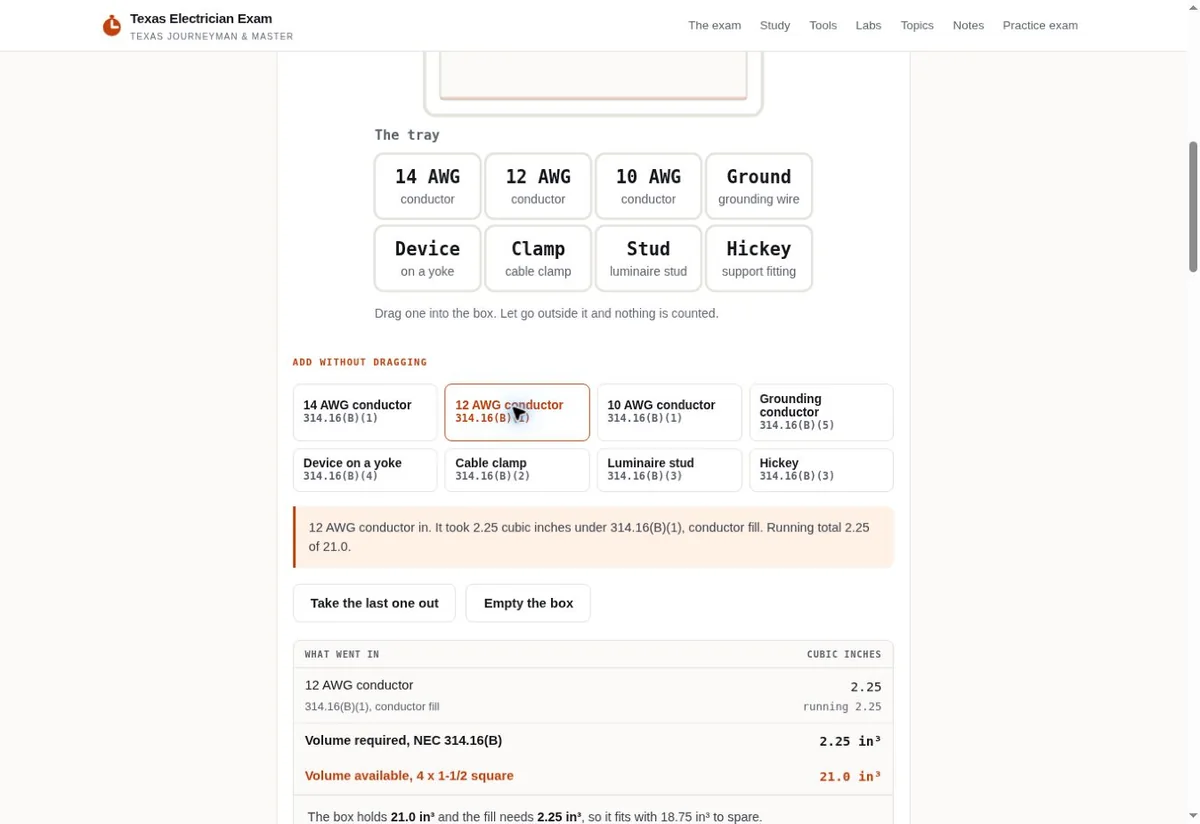
Texas Electrician Exam box fill calculator controls
Showroom compatibility answer boundaries: Exam controls and displayed output. View the project

The Texas Electrician Exam screen beside this section shows calculator controls and displayed output. It offers a reference for discussing how an input label relates to an answer on a technical interface. We use its visible labels to plan the showroom's own pairing questions. The showroom supplies its own questions and confirms which information is needed. The design discussion stays within the screen's visible organization.

Avoid a form that requires a definitive pairing choice before the business has established fit. A shopper might select the nearest-looking option just to continue. We can instead label the known item and the item being considered separately. The receiving message should keep those roles recognizable. Staff then have the context required for their actual review, without treating a selected option as a technical conclusion.

Should a photograph be required?
Ask the showroom what it can learn from one and what happens when a customer cannot supply it. We can provide an optional upload when it supports identification. The public instruction should explain the requested view in ordinary words. Avoid implying that a picture always settles the question. Staff may still need a label detail or another conversation before they can confirm the product edition and its relevant conditions.
How should an unknown answer be handled?
Use a choice or text route that lets the person state what they do know. We can discuss the receiving team's next step for incomplete context. A form should preserve the uncertainty rather than translate it into a default model. The receipt can say the pairing question was sent when the system confirms that event. It should not say the products are suitable or that staff have accepted the proposed use.
  1. Check the prompt on its own Read each label without relying on surrounding design. We ask whether a shopper can tell which product detail belongs there. A placeholder that disappears during typing may leave the field unclear. The approved wording should explain its task.
  2. Inspect the received context Use marked sample item details and review what reaches staff. We can compare the sent question with the received message. The proposed check should show whether the two items and open condition remain distinguishable.
  3. Read the incomplete state Try the permitted route for an unidentified edition. Our test should preserve that status for the receiving reviewer. An error message should request useful information without pretending the customer already knows the technical answer.

Buy a bounded answer review with supplier approval built in

The first proposal should identify the pairing question and the person who can approve its answer. We can price the research and page edits once those factual dependencies are understood.

Which pairing details help with the initial call?
Bring a pairing question your staff has actually received and the page that currently addresses it. Remove personal customer details. We can also discuss the supplier material staff use together with the staff reviewer responsible for that meaning. The initial strategy call is free. A small, real question gives the conversation a more useful basis than a broad wish to appear in every product comparison.
Which work should the proposal name?
Ask for the question brief, the specific page passages and any related form or caption checks. We can separate writing work from the supplier clarification the retailer must obtain. The proposal should state what happens if that answer remains open. A bounded explanation may still be publishable. The proposal should not assume that a marketing agency will resolve technical fit or approve the store's advice.
How can we inspect the result?
Read the proposed answer as a shopper with an older unidentified item. We should be able to tell what is known and where the question goes next. The retailer then checks that the supplier condition remains accurate. Later search observations can be recorded when available. They are a separate review of displayed wording, rather than evidence that a pairing is technically suitable or that the page caused a sale.

Compare quotes by the actual approved work and its unresolved inputs. A supplier response may arrive after the first draft, so ask how revisions are handled. We can describe that dependency before agreeing a larger answer collection. The finished controlled page should make the retailer's current meaning easier to inspect. It remains the business's responsibility to approve product advice and any later change to its applicable conditions.

Castleton retail questions can involve a shopper's existing item alongside a product shown in a local showroom. Our proposal should preserve that practical situation rather than flatten it into a general brand comparison. Start with the combination staff can discuss and the detail they still need. Once those boundaries are clear, the page can give the customer a useful route to the next factual answer. We can note which question the supplier still needs to settle.

Sources

From the businesses we've worked with

“It’s been 2 years; I couldn’t imagine going anywhere else.”
Vanessa WilliamsBujeesummer

Marketing help for Indianapolis businesses

Based in Indianapolis, we serve businesses across central Indiana, including Carmel, Fishers, Zionsville, Westfield, Noblesville, Greenwood, Avon and Plainfield, and clients across the United States.

Request a free strategy call

Indianapolis, Indiana

Service area map

Explore Indianapolis on OpenStreetMapArea reference; this is not an office pin. Map © OpenStreetMap contributors.