Trojan’s Castleton AI SEO, AEO, and GEO service connects product information, branch facts, and service expertise. We help retailers and appointment businesses explain what they provide, which details need confirmation, and what a customer should do next.
Simon: Castleton Square: Simon presents Castleton Square as an Indianapolis shopping destination with store, dining, product, and visitor information. The context makes branch and product relationships worth examining. The retailer must still approve its own manufacturer relationships, service scope, and availability wording.
Questions about AI SEO, AEO and GEO in Castleton, Indianapolis, Indiana
What does AI SEO cost for a Castleton retailer?
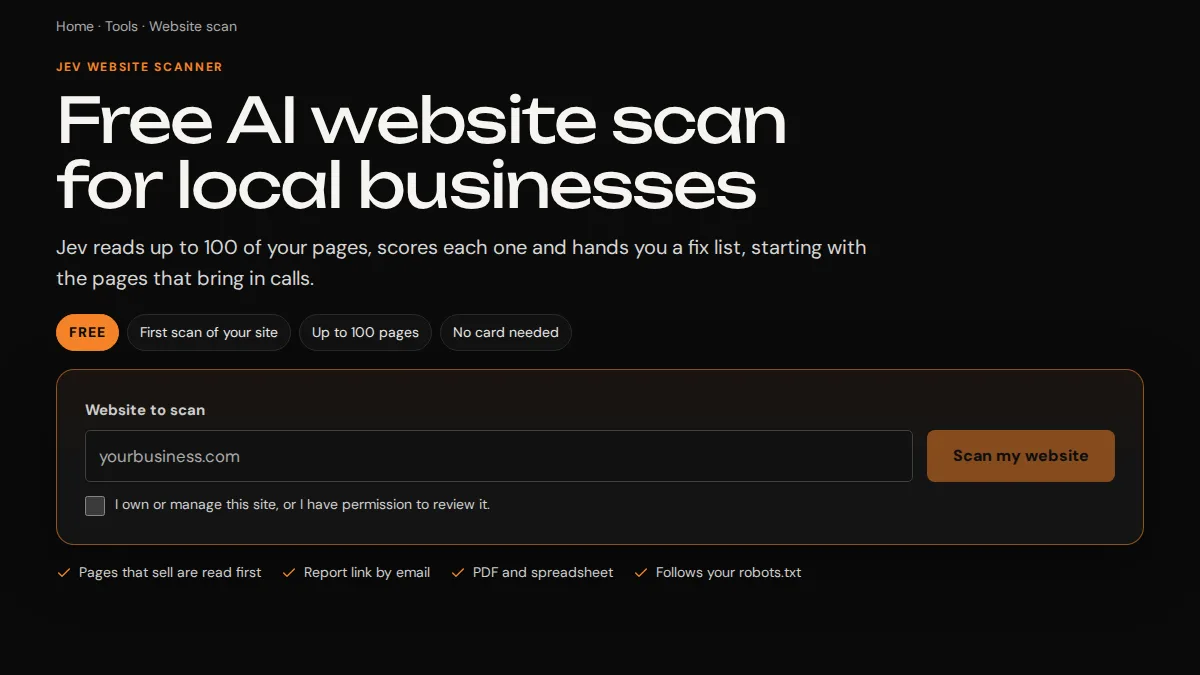
It's priced after the free strategy call, since a store carrying dozens of brands has more facts to straighten out than a studio with one service. If you'd like evidence before that call, the Jev scan scores up to 100 pages free, and the $99 audit covers up to 3,000 pages with one rescan included. Extra rescans after later fixes cost $19.
Why does ChatGPT say we make products we only sell?
Usually because your pages reuse the manufacturer's wording without saying you're the retailer. AI tools piece answers together from your site, brand pages and listings like the Castleton Square directory, and when your page is vague, the brand's page tends to fill the gap. The fix is one plain sentence on each product family page saying who makes it and what your store handles.
Does the Castleton Square listing affect what AI tools say about us?
It can, because it's a public page describing your store, and AI tools read public pages. Simon publishes that listing, so you can't edit it yourself, but you can make sure your own hours and services agree with it and ask the center to update anything out of date. Two sources that match give an AI tool one story to repeat.
Should our product pages say which items we only special-order?
Yes, in one plain line on each product family page. When a page shows a product without saying whether it's on the shelf or ordered in, an AI tool may tell a shopper you stock it, and that shopper drives over for nothing. Say which lines you keep in the store and which ones you order in, in the words your staff uses at the counter.
What happens first in an AI SEO project?
You send the questions you've asked ChatGPT or Perplexity about your store, along with what they said back. We compare those answers with your site and your public listings, then list every fact that conflicts, from brand relationships to booking rules. That first call costs nothing, and in business hours we aim to get back to you within five minutes.
How soon will ChatGPT describe our store correctly?
There's no reliable date, because each AI tool refreshes what it knows on its own schedule and nobody outside those companies controls it. What you can check right away is whether your robots.txt lets AI answer tools read your pages, which the free Jev scan flags. After the fixes, we ask the same questions again on a set schedule and log what changes.
Will ChatGPT start recommending our store over others?
Nobody can promise that, since the companies behind these tools decide what their answers say. The work controls whether every public page describing your store agrees on the facts, which gives the tools a consistent account to draw from. If an answer stays wrong, we trace which page it seems to lean on and fix that page or ask its owner to.
Which Castleton facts should AI answers about your store get right?
For AI SEO at a Castleton store, start with one sourced fact: Simon, which publishes the Castleton Square store listing, is a Fortune 500 company based in Indianapolis.
Castleton, Indianapolis, Indiana
Fortune 500 companies headquartered in Indianapolis include Elevance Health, the largest in Indiana, Eli Lilly and Company, Corteva and Simon Property Group.
Simon also publishes the Castleton Square page listing stores in the center, so an AI tool can find your details there as well as on your own site, and the two should agree.
'What Fortune 500 Companies Are Based In Indiana?', elevateventures.comChecked September 25, 2026Castleton began in 1852, when Thomas Gentry laid out nine lots 12 miles northeast of the Circle, and it grew into a town before Unigov made it part of Indianapolis in 1970. The Encyclopedia of Indianapolis now calls it a congested commercial district.
The name Castleton covers an old town and a busy retail area, so writing Castleton, Indianapolis in full gives an AI tool one clear place to attach your store to.
Encyclopedia of Indianapolis, 'Castleton'Checked September 26, 2026Sears pulled out of Castleton Square in 2018, leaving a large space at the center empty until new tenants signed on.
Store lists written before a change like that can stay online for years, so when an AI answer places you beside a store that's gone, look for the old directory it leaned on.
IndyStar via Yahoo News, 'Hobby Lobby signs lease for part of former Sears home at Castleton Square Mall'Checked September 26, 2026
Simon's listing is Simon's own page, and the history and the Sears closing are public facts about the area. Trojan itself works from Indianapolis as a service-area business with no storefront, and none of these facts describes a Trojan client.
Which source should state each fact about a Castleton store?
Before any page changes, decide which source should state each fact a shopper asks about a Castleton store, shown here for a hypothetical store that sells and installs one brand.
| Fact a shopper asks about | Who should state it | Where your site confirms it |
|---|---|---|
| Model specifications | The manufacturer | Your product page links to the maker's own specs |
| Whether this store carries the line | Your store | A category page naming the lines you stock |
| Who installs or services it | Whoever actually does the work | A service page saying what you handle and what you refer out |
| Your hours at Castleton | Your store, matching the center's listing | The branch page, checked against Simon's Castleton Square page |
What goes into a Castleton store's fact register?
Everything runs from one register of approved facts about your Castleton store, split between what you supply and what Trojan checks.
You supply
- Which lines you stock and which you special-order
- The brands you carry and your role with each
- Services you perform and ones you refer elsewhere
- Questions customers ask staff before they buy
Trojan checks
- What ChatGPT and Perplexity say when asked about you
- Robots.txt rules that could block AI answer tools
- Your public listings against your own pages
- Whether each page opens with a plain answer a tool can quote
Separate the roles behind the offer
A retailer may sell a manufacturer’s product, offer its own consultation, and refer installation to another provider. Those roles need to remain distinct in the website’s text. A loose description can imply that the store manufactures an item or performs every service associated with it.
We document the relationship for each important offer: who supplies the product information, who approves advice, who accepts the order, and who performs the service. The resulting fact register becomes the reference for page introductions, FAQs, branch information, and any proposed structured data. It prevents a catchy sentence from changing the commercial arrangement.
Turn product questions into useful answer content
Customers may ask whether a model suits their use, what to measure before visiting, or whether an appointment includes a particular service. The answer should state what the store can establish and what requires inspection or confirmation. Trojan can interview the relevant staff and build a source backed answer brief.
AI SEO and AEO do not require inventing a special language for these explanations. Google’s generative AI search guidance says special AI files and writing formulas are unnecessary. Our scope focuses on factual clarity, useful content, and implementation that reflects the approved visible information.
Create a proposed specialty fitting evidence set
Imagine a hypothetical retailer offering specialist fittings alongside ordinary product sales. Its public descriptions suggest every sale includes an appointment, while the actual process requires a separate request. We would document the service stages, accepted product categories, staff review, and confirmation process with the owner.
The resulting content could include an appointment explanation, preparation questions, and a comparison between browsing and a fitting session. Product claims remain tied to their proper source. A staff biography would describe only approved experience, and a customer story would not become a guarantee that another visitor receives the same result.
Keep branch differences visible in the fact system
- Question
- Identify what the customer needs to know.
- Answer
- Explain it clearly.
- Evidence
- Support the answer with a source.
A brand’s locations may differ in services, hours, assortment, or appointment process. We identify which facts are shared and which belong to an individual branch. A central description should not silently override a location’s real operating limits. Conversely, ordinary brand facts should not be rewritten inconsistently across every page.
The content plan assigns fields and approval owners. A changed service at one branch triggers review of its local page, relevant FAQs, and booking links. That makes maintenance practical for staff and reduces the chance that an old promotional page continues to describe an offer no longer available there.
Define the work and the evidence supplied by the client
A scoped engagement can include a product and service relationship map, approved answer drafts, revised branch content, an evidence register, and implementation checks. The business supplies current specifications, operating policies, image permissions, and a subject expert who can resolve unclear claims.
We identify factual disagreements before polishing the copy. If the manufacturer documentation and a store description differ, the appropriate reviewer needs to decide what can be published. The proposal separates research and editing from product advice that belongs to the business’s qualified team. No marketing label replaces that review.
Track representation alongside real inquiry quality
We record public inconsistencies corrected and the questions newly addressed. When reviewing generative search, observations include the exact question, date, answer, and cited source if visible. Being named in one response is not proof that the brand is understood consistently across every system.
The commercial review asks whether customers request the correct appointment, understand availability, and reach the right branch. We use recurring confusion to prioritize the next content change. The service covers evidence and page work; AI citations, traffic, and sales are not promised consequences of completing the fact register.
Put the first scope in order
- Identify the manufacturer, retailer, and service provider behind each claim.
- Create approved product answers with clear availability and review conditions.
- Check branch differences and update repeated facts when the service mix changes.
Explore Castleton marketing planning for the wider district approach, or return to Indianapolis marketing services. The full AI SEO service explains the broader engagement.
Discuss Castleton AI SEO and business facts with Trojan. Bring the current website and the customer decision you want the project to address so we can define the relevant work, approvals, and review evidence.
Related projects

Yahweh House of Prayer
A website for an Indianapolis church that brings worship information, ministry introductions, faith articles and contact options into one place.

Georgetown Market
More than 30 bilingual signs for the grocery section of Georgetown Natural Foods Market in Indianapolis, in the store’s signature brand colors.
Sources & further reading
YOUR NEXT MOVE