Need help?Jamie

Market service plans

Fountain Square Website Design for Events and Studios

A private party request lands in your ticket form, and the next email asks about a class date that passed weeks ago.

Trojan Digital Marketing designs websites for Fountain Square studios and venues in Indianapolis, Indiana that sell tickets and take private bookings. Each visitor gets one clear path, whether they're buying a ticket, booking the room or signing up for a class, with the booking status shown beside the button. With the Virginia Avenue and Prospect Street intersection expected to stay closed for storm drain repair through October 2026, a dated getting-here page belongs in your menu.

Send the form with your current site and one request that reached you through the wrong form. The first strategy call is free, and during business hours we aim to reply within five minutes.

  • One clear path for each visitor task
  • Booking status shown right beside the button
  • Directions that change when the street does

We're owner-run, so you'd talk directly to Jeff Clerisier, who founded the company. With more than 1,400 live websites behind us, we build your site so your own staff can mark a show sold out on a Friday night without calling us.

Illustrative creative production workspace.
IllustrationThis page drawn as a wireframeThe headline, highlights and button from this page, redrawn in desktop and phone layouts. It’s an illustration of page structure and isn’t a client site.PAGE WIREFRAMEtrojandigitalmarketing.com/indianapolis…Fountain SquareWebsite Design forEvents and StudiosOne clear path for each visitor taskBooking status shown right beside the…Directions that change when the street…Book a free website strategy…010203FountainSquareWebsiteDesign for…One clear path…Booking status…Directions…Book a free…

YOUR WORKING BRIEF

Choose where to start

Select the parts you want to discuss. Your choices carry into the inquiry form.

Discuss this service0 priorities selected

SEE HOW WE CONNECT THE PIECES

Explore the decisions
behind our plan.

A website built around the next customer decisionMESSAGE · EVIDENCE · ACTION
  1. A clear offer
  2. Evidence for the customer
  3. An action that works on mobile
A website built around the next customer decision

A website for a Fountain Square studio has two jobs: show the work, and get each visitor to the right sign-up. We give public events, private hire, classes and commissions their own paths, and we'd skip effects like autoplay sliders that hide which dates are still open.

Visit Indy: Fountain Square Cultural District: Visit Indy identifies vintage shops, working artists, restaurants, and live performances around the Fountain Square cultural district. That mix means one site may need to sell a ticket, take a commission and book a room. Before any design starts, we walk through each of those steps with your team using your real events.

Questions about website design in Fountain Square, Indianapolis, Indiana

How much does a website cost for a Fountain Square studio or venue?

A custom site is priced after the free strategy call, once we know how many event types and portfolio pieces it has to carry. The published option is the Marketing Startup Kit at $7,997 or three monthly payments of $2,799. That covers a custom 15-page website and Google Business Profile work, with twenty blog posts and three months of consulting on top.

How long does a new website take to build?

The Startup Kit's example schedule gives design and build weeks 2 to 4, with weekly iterations and two formal revision rounds, then content in weeks 5 to 8 and launch in weeks 9 to 12. A standalone redesign gets its schedule after scope review, since page count and how quickly your photos and copy arrive both move the date.

How does the site keep visitors from the wrong door in a shared building?

Give your entrance its own short section with a street-side photo and the door to use, and repeat it in every booking confirmation. It comes up in Fountain Square, where the Theatre Building alone is known for both duckpin bowling and swing dancing. Put the note on your contact page too, so nobody has to scroll through the calendar to find it.

Can our staff update event dates without breaking the design?

Yes. Event entries get their own fields for the date and the status, so someone on your team can mark a show sold out or close registration without touching the layout. Before launch we walk through it using your real events, and we write down who controls the ticket and inquiry systems so nothing's left without an owner.

What if the new website doesn't bring more bookings?

If bookings don't rise after launch, the first check is where visitors stop. When private hire questions still arrive through the ticket form, the labels and the path need work, and those change before anyone touches colors or photos. Nobody can promise that a better-looking site sells more, so the review after launch looks at what visitors actually did on it.

Can the site show performance video without slowing down on phones?

Yes, as long as each video loads only when someone taps play, with a poster image and a few lines of text shown first. Video is familiar work for us. We edit every video on the Jerry Super YouTube channel, which went from 8,380 subscribers in January 2023 to 119,000 in September 2026 while we did.

“…drove a noticeable uptick in leads within just a few weeks…”
Mike BamosiGoogle review
“I had a great experience working with Jeff…”
Heather DoanGoogle review

Jeff Clerisier founded Trojan Digital Marketing in March 2018.

We’re based in Indianapolis, where the city and Marion County share one government, Unigov.

We also work with clients across the United States.

Read our Google reviews

Which Fountain Square facts should your website plan around?

A Fountain Square site has to cope with street closures and shared buildings, and a studio that sells goods online has a state rule to meet as well, as these checked facts show.

  • A storm drain repair project began on March 9, 2026 and closed the intersection of Virginia Avenue and Prospect Street, which was expected to stay closed through October 2026. HI-FI kept its Annex entrance and the LAZ parking lot open from Woodlawn and St. Patrick streets.

    Put a dated getting-here note on your site that names the approach reaching your door, and take it down when the street reopens.

    HI-FI Indy, '2026 Road Construction Updates - Fountain Square'Checked September 25, 2026
  • The Fountain Square Theatre Building is one of the district's anchors, known for duckpin bowling and swing dancing.

    When one address holds several activities, give yours its own page and entrance photo so visitors head to the right door.

    Visit Indy, Fountain Square neighborhood page; Fountain Square Theatre Building siteChecked September 25, 2026
  • A studio that sells goods in Indiana, such as prints or class kits, registers with the Department of Revenue through INBiz as a retail merchant before it collects the state's 7% sales tax. The registration lasts two years and renews on its own at no cost while returns and payments are current.

    If your new site will sell prints or kits, have that registration sorted before the shop page goes live.

    Indiana Department of Revenue, Sales Tax pageChecked September 25, 2026

The closure dates come from HI-FI's own update, so confirm the street's status before publishing directions, and ask your accountant how sales tax applies to what you sell online.

How long does a Fountain Square website take to build?

The Marketing Startup Kit's published example schedule shows the order of a Fountain Square build, and a standalone redesign follows a similar order after scope review.

  1. Discovery and strategyWe map your offers and the searches that reach them before any design starts.Week 1Together
  2. Photos and program factsYou send the event types and portfolio work you're happy to publish, and name who approves changes.Week 1Your team
  3. Design and buildYour 15-page custom site takes shape through weekly iterations and two formal revision rounds.Weeks 2 to 4Our team
  4. Content and profile workTwenty blog posts are published while the Google Business Profile and schema get finished.Weeks 5 to 8Our team
  5. Launch and consultingLaunch day opens three months of consulting, adjusted to what visitors actually do on the site.Weeks 9 to 12Together

Let the visual identity come from the work

A venue, artist, and vintage shop should not share the same generic gallery treatment. We begin with the material that makes the business recognizable: a stage, a medium, a distinctive collection, or a recurring creative format. The opening design introduces that identity while keeping the current action visible.

Our creative brief sets the role of photography, type, color, and movement. A short image sequence may explain a performance atmosphere. A detail viewer may suit a crafted object. The format follows the content instead of adding the same animated panels to every page regardless of purpose.

Make the calendar readable before making it elaborate

Customers need to distinguish what is happening now, what can be booked, and what has already ended. We prototype event filters and cards with date, format, status, and an understandable action. Filters should not hide the only route to an event or reset unexpectedly when someone returns from a detail page.

The calendar must also preserve a direct route to private hire or studio services. Those visitors are not selecting a public performance. The navigation and page headings should make that difference clear without requiring them to scroll through every upcoming event.

Design a proposed class and commission studio

Suppose a hypothetical print studio offers public classes and commissioned artwork. Its current contact button mixes student questions with commercial briefs. We would propose separate course and commission journeys, each with its own information and intake. The course page would explain the session and link to confirmed availability; the commission page would request project context.

An interaction could compare class formats using real owner approved differences such as preparation and materials. A portfolio sequence could show an actual project from brief to finished work. Neither feature needs invented prices, outcomes, or a complicated animation library to be useful.

Treat missing and changed availability as designed states

A full class needs a clear message and an accurate next option. A changed event needs a visible update near the action. An unconfirmed commission needs a receipt that says the studio will review the request, rather than a celebratory screen claiming the project is booked. We include these states in the design review.

The forms ask only for information needed at the current stage. Optional uploads and longer project details can follow when appropriate. We test the receipt, staff notification, and editing process so the visual experience remains connected to the actual business workflow.

Keep expressive pages usable on ordinary phones

Give each part of the page a jobOfferEvidenceAction
Offer
Explain what the customer can get.
Evidence
Support the offer.
Action
Make the next step easy to use.
Give each part of the page a jobThe offer, evidence and contact route should work together on a small screen.

Performance work includes responsive images, intentional media loading, stable image dimensions, and motion that does not block reading. Google’s Core Web Vitals documentation covers loading, responsiveness, and visual stability. Our implementation checks connect those concerns to the real calendar, gallery, and form rather than reporting only a homepage score.

A reduced motion setting should retain the story and controls. Important details cannot depend on a hover effect. A video needs a useful poster and supporting text so the visitor can understand the offer before deciding whether to play it.

Give the editor practical control of the program

The CMS brief defines event states, portfolio fields, image guidance, and permission notes. Staff can update a date or close registration without breaking the layout. The handover includes a walkthrough using the content types your business actually publishes, with ownership of the ticket and inquiry systems recorded.

We review task completion, incorrect inquiries, and staff editing friction after release. If customers still mistake private hire for a ticket purchase, the next revision should address the labels and journey. Design work is assessed through specific behavior and observed problems, not an unsupported promise that a more expressive site automatically sells more.

Put the first scope in order

  1. Separate the calendar, portfolio, class, and commission tasks in a prototype.
  2. Design meaningful status changes and accurate booking or request confirmations.
  3. Have staff publish an update and trace a visitor request to its destination.

Explore Fountain Square marketing planning for the wider district approach, or return to Indianapolis marketing services. The full website design service explains the broader engagement.

Discuss Fountain Square website design with Trojan Digital Marketing. Bring the current website and the customer decision you want the project to address so we can define the relevant work, approvals, and review evidence.

Sources & further reading

Talk with Trojan Digital Marketing

Let the organizer explain the group activity they hope to arrange

A group request should describe the proposed activity before it asks for a date. We can plan that screen around the studio's review, preserving the details its staff still need to confirm.

A person planning for a group may have an idea rather than a finished event brief. They might know the purpose of the gathering but still need the studio to explain what it can offer. We can give that person a place to describe the idea in their own words. The screen should preserve it as a proposal. A menu of polished event options should not suggest that every format is already available for the chosen group.

Ask the studio which first question helps staff understand the intended activity. A preferred day may be useful later, while the opening choice should help the organizer find the relevant offer. We can connect that choice with the description that staff approve. The receiving message should keep the group's purpose recognizable. Otherwise, the team may know a date was requested without knowing what the person hoped to arrange.

Keep the group organizer's role clear. They may be asking on behalf of people whose participation questions remain unresolved. We can make room for those questions without treating the organizer's message as everyone's approval. The studio decides which details it needs from the requester and which conversations belong with a participant. The proposed interface should reflect that process rather than assume one form settles every condition.

Early meanings in a proposed group request
Organizer clueWhat the studio needs to decideHow we can label the screen
Purpose of the gatheringWhich supported activity might fit the idea, and what remains to discuss?Invite a description of the proposed activity. The label should not make the organizer choose a confirmed event package.
Preferred dateCan the team consider that date for the proposed activity?Call it a preference or request according to the actual process. A date entry should not appear to reserve the studio.
Proposed group sizeWhat do staff need to understand about the people expected?Use the business-approved measure and allow an uncertain count where the team can handle it. Avoid inferring a confirmed attendance total.
Open participant questionWho can address the question and what information is needed first?Keep a route for that discussion. We should not turn an organizer's selection into a personal suitability finding.

Should the opening ask for a complete plan? Only request the detail staff genuinely need for the initial assessment. We can ask the studio which answer affects its next decision. An organizer may not know the exact activity length or final attendee count yet. The form can preserve those open items. Requiring guessed answers makes the message look complete while giving the receiving team misleading information. A useful opening helps the business start the right conversation.

Collect the group context the actual receiving team can use

Each field should serve the studio's initial assessment of the proposed group activity. We can organize the questions with staff so an unfinished idea remains understandable after it is sent.

Yahweh House of Prayer public church homepage
Group activity inquiry meanings: Public church information layout. View the project

The Yahweh House of Prayer homepage presents public church information in a clear page structure. Its image beside this section offers context for presenting an explanation and a next action. It does not show a studio group-inquiry process. Your staff supply the questions needed for this screen. The design reference should remain tied to its actual named project. We can place the relevant activity question near the proposed action.

A general comments box can be useful, but it may leave staff guessing which detail the organizer meant. We can write a focused prompt that explains the requested context. For example, the business may want the purpose of the gathering before suggesting an activity. The actual prompt should follow the receiving team's decision. The form should not ask for a long list of details merely because another venue collects them.

  1. Name the receiving decision Ask staff what they must decide after reading the first request. We can tie the relevant fields to that task. It may be whether the proposed activity belongs with this studio at all. Keep that decision visible in the design brief. The screen should not skip ahead to a payment or a reservation state the team has not approved.
  2. Define an uncertain answer Agree how the team handles a date range or an approximate group count. We can label that uncertainty clearly. A single required number may force a false precision the organizer cannot provide yet. The business decides which incomplete details are acceptable for its initial assessment. The received message should show that state accurately.
  3. Set the contact meaning Ask who should receive the staff reply and what authority that person has for the proposed gathering. We can keep that role distinct from each participant. The studio supplies its real approval process. A primary contact field should not imply that the organizer can accept every personal condition or decide every participant's needs.
  4. Review the complete message Use a marked sample to see how the selected activity and open questions appear together. We can ask the team whether the request makes sense in their receiving view. Labels that are clear on the webpage may be shortened or lost in an email. The proposed check should include that actual destination.

Should participants be named in the first request? Ask what the studio needs at this stage and who should provide it. We can avoid collecting a roster when an initial group estimate is enough. If later arrangements require participant information, the business defines that process and its purpose. The opening screen should explain its own task. It should not imply that naming someone means their place has been accepted or their participation conditions have been reviewed.

  • Ask whether the proposed count includes the organizer. We can clarify that unit when it matters to the studio's initial assessment. A number without its meaning can send staff down the wrong path. The business supplies the relevant question. The page should not infer a capacity or a price from the count unless the actual approved process supports that result.
  • Keep a choice about the activity separate from the group's aim. We can let someone explain why they are gathering even if they do not know the studio's format names. Staff may need that purpose to discuss a suitable offer. A required package choice can hide the open question. The screen should allow the idea to reach a real reviewer.
  • Read the contact field with the person receiving the reply. We can ask whether they are the organizer or just helping collect ideas. The studio approves what that role can do next. The form should not assume the named contact can settle every participant's question. A useful receiving message keeps that role clear without requesting personal details the team does not need yet.
  • Check the wording used when the preferred day is unknown. We can preserve a broad date question if the studio can handle it. Forcing a random day may make the message appear ready for scheduling when it is still about the activity. The actual process decides how that open request moves forward. Keep its state visible for the staff who reply.

Keep the preferred date and open conditions visibly provisional

The proposed gathering may still depend on a studio reply. We can show that state near the date choice and preserve each unanswered condition when the request moves to staff.

Does a calendar control imply a reservation?
It can if its label or nearby message suggests that a displayed date is available to book. We can discuss a plain preferred-date field when the team still needs to inspect the activity. The control should fit the supported process. If a live availability feature is proposed, its real data source and acceptance behavior need their own scope. A calendar design alone cannot hold the studio's time.
What if the organizer can offer several dates?
Use the option staff approve for a range or alternatives. We can label those choices as proposed dates and keep their priority clear. The receiving person should know which date the organizer prefers and which ones might work instead. The message should not create several implied bookings. The studio's reply determines what it can offer after considering the activity and the other required conditions.
How should a participation question appear?
Give it a readable place alongside the proposed activity. We can ask which staff contact reviews it and what the organizer can provide now. The studio supplies the factual answer. A generic attendance checkbox may hide an unresolved question about the activity. The page should permit uncertainty where that is the actual state, rather than translate every selection into a yes that staff have not given.
Can a price appear before the date is accepted?
The business can publish an approved price with a clear explanation of what it covers. We can help preserve its stated conditions. An example price should not become a binding quote for a group whose activity is still being reviewed. Ask the studio which decisions remain before it offers terms. The screen and its receipt should reflect that approved sequence, including any later quote step.

A page can make an open request feel orderly without making it look accepted. We can keep a short state explanation beside the action. The organizer should understand what information they are sending and which answer the studio still owes. Read that explanation without the rest of the design. A strong visual treatment should not be doing the work of an unstated approval rule.

When the studio replies, its message may settle one part while leaving another part open. We ask how the website can describe that real process if it includes a later review screen. A possible date and a suitable activity are different questions. The interface should not combine them into confirmed unless the underlying decision actually supports that meaning.

Make the receipt report the inquiry that was actually sent

The first result should describe the proposed group request and its known sending state. We can write that message around the system's response while leaving event acceptance with the studio.

Hypothetical example A fictional Fountain Square studio receives a revised group idea

Before

  • A hypothetical organizer asks about a creative activity for a group and gives a preferred date. The studio still needs to confirm the format and answer a participation question. The form's first receipt says the event is booked.
  • The organizer later changes the intended group count through the same screen. The revised request arrives without its connection to the earlier idea. Staff see two messages that look like separate confirmed gatherings, although they have accepted neither.

After

  • We would ask the studio to approve the meaning of the first submission and the amendment route. The initial result would describe an inquiry received, preserving the preferred date and the open activity condition. It would not announce a reservation.
  • The proposed amendment would identify the earlier request and the detail being changed. A marked receiving check would show whether staff can follow those versions. This is a hypothetical interface brief with no real studio policy, accepted event or completed client result.
  1. Identify the proposed request Include the activity context in the receipt the business approves. We can check whether the organizer can tell which idea was sent. If the system provides a reference, its meaning should be explained in the way staff actually use it.
  2. State the sending result accurately Use the known system event rather than a festive booking claim. We should inspect what the message says when sending succeeds and when it fails. The visitor needs to know whether the team received the question.
  3. Give the approved next contact Ask the studio what the organizer should do if another detail changes. We can make that route clear in the receipt. Any reply-time statement comes from the business. The message should not promise a decision or an event date it cannot confirm.

W3C's user-notification guidance describes clear feedback about form results. We use that guidance to plan a readable account of the inquiry state. It does not establish that this proposed form has been tested or that the event is approved. The quote can include the actual sample checks needed. Their observed results should be recorded after the agreed work is performed.

Inspect the recipient's copy as well as the organizer's receipt. We can ask the receiving team whether the question and its uncertainty arrived together. A public message may correctly say request received while the staff email loses the preferred-date label. That gap can create confusion in the next reply. The planned acceptance check should cover both views of the same marked sample.

Use a clear screen layout to keep each requested detail distinct

The group form should show what is being asked and which details remain uncertain. We can design the field sequence around staff assessment and check it with realistic proposed requests.

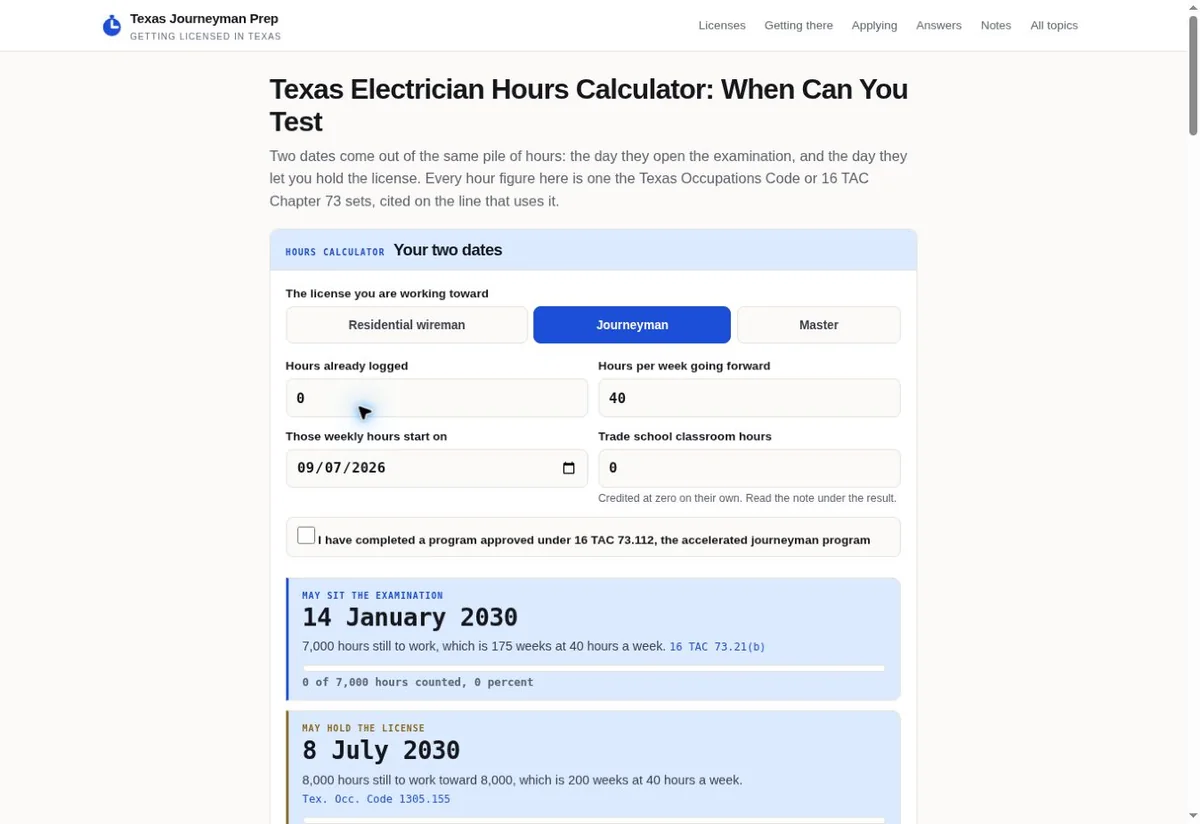
Texas Journeyman Prep calculator with labeled fields
Group activity inquiry meanings: Texas planning inputs with labels. View the project

The Texas Journeyman Prep calculator pictured here keeps its planning inputs separately labeled. We can discuss that visible pattern when arranging a group's proposed date and count. The screen comes from an education project and performs a different task. It does not supply a studio capacity or event price. Your actual form needs the questions and states the business approves.

A clear order can begin with the proposed activity, then the context staff need to review it. We can keep optional details visibly optional. If the team allows an approximate count, the label should not demand a final attendance list. The interface should match the stage of the conversation. A screen that looks like checkout can create a commitment the receiving process does not yet support.

How do we check the form on a phone?
Use an agreed sample whose date and participation condition are still open. We can inspect whether the field labels remain visible during entry and whether the result preserves those states. The organizer should be able to inspect the meaning before sending. A phone check should follow the whole request route, including the receiving message. It should not end merely when the submit button appears in a screenshot.
What if the visitor leaves a needed detail blank?
The error should identify that field and explain the information staff need. We can check whether already entered context remains available. A missing required answer should not cause the screen to choose a default event option. The business may approve another contact route for a question the form cannot handle. The page should describe that alternative without treating the incomplete request as an accepted gathering.
  • Read the preferred-date label after an option is selected. We can check whether the screen still describes a request rather than a held date.
  • Use a sample approximate count when the studio permits it. The received value should retain its meaning instead of becoming a claimed final attendance.
  • Inspect any copied summary above the action. Our review can catch a confirmed word that contradicts the open state of the actual request.
  • Ask the receiving team which detail they would use to find an amendment. The screen should preserve the approved connection with the earlier idea.

Test the changed request before expanding the feature

A useful first scope includes the original inquiry and a later amendment. We can plan those checks with the studio so the quoted interface preserves its actual review and approval responsibilities.

What should be brought to the first call?
Bring your current group-request screen and one anonymized example of an idea staff had to clarify. Identify who approves the activity and who receives changes. We can discuss the proposed date and the detail that usually remains open. The initial strategy call costs nothing. A real question gives the design a concrete task before a larger booking feature is proposed.
What should an amendment feature preserve?
It needs to identify the earlier request and show the detail the organizer wants changed. We can ask whether the original date or group count remains in effect until staff reply. The studio decides that rule. The proposed interface should express the current state clearly. A form edit should not silently replace an arrangement that the business has already accepted through another process.
How should the quote be compared?
Ask whether it includes request labels, receipt states and a staff receiving check. We can name any connection to the studio's record system and the access it needs. A visual screen and a working amendment route are different amounts of work. Compare those named tasks and their approval inputs. The proposal should not imply that every group idea will become a confirmed event.

Use a fictional request to walk through the original message and the proposed change. We can ask staff to identify what is still open at each step. A later result should say which change was received and what remains for assessment. The check gives the team a practical way to assess the feature. It claims no reservation or accepted activity unless the actual business process establishes that state.

The finished interface should let the organizer explain an idea and let the studio respond on its own terms. We can keep the participant question and date preference readable as the conversation develops. Begin with that group task and the receiving team's real responsibilities. The design can then support the proposed gathering without inventing a policy or making an unfinished idea look like a booked event.

Sources

From the businesses we've worked with

“Trojan Digital Marketing gave our website a complete make over. The board members and I are absolutely thrilled!”
C. Teague McClendonAmerican Veteran Service Corp

Marketing help for Indianapolis businesses

Based in Indianapolis, we serve businesses across central Indiana, including Carmel, Fishers, Zionsville, Westfield, Noblesville, Greenwood, Avon and Plainfield, and clients across the United States.

Request a free strategy call

Indianapolis, Indiana

Service area map

Explore Indianapolis on OpenStreetMapArea reference; this is not an office pin. Map © OpenStreetMap contributors.