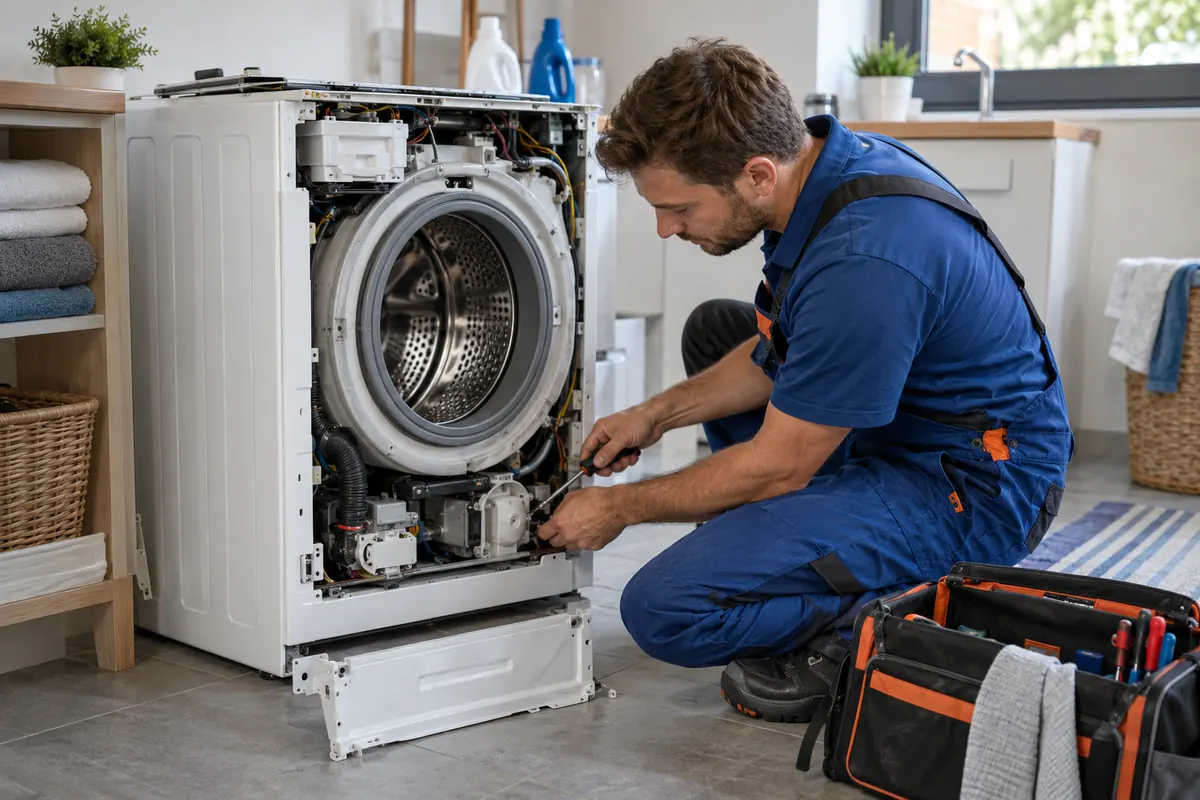
A refrigerator call can still be a dead end. The house may sit outside your area, the brand may be one you don't stock parts for, or the unit may still be under the maker's warranty. We'd answer those questions on the page, so your office only talks to people you can help.
What we check first is your last month of calls. How many ended with "we don't do that brand" or "we don't come out there"? Those reasons tell us which pages and form questions to build first, and we count booked visits instead of raw calls.
Appliance repair marketing questions
What does appliance repair marketing cost?
Ongoing work is priced after the free strategy call, since a one-tech shop covering a single county needs far less than a company dispatching across several. If you're opening a new repair business, the Marketing Startup Kit is $7,997, or three monthly payments of $2,799. Its published scope includes a custom website and twenty blogs, with a twelve-week launch.
Should we publish our service call fee?
If you charge one, yes, and say whether it's credited toward the repair. Callers ask about it anyway, and hearing it for the first time on the phone can feel like a surprise. Put the fee on the booking page, and if it varies by county or appliance type, say what changes it.
Should we create a page for every brand?
Only for brands you really fix and people really search for. We'd start with the appliance types that fill your schedule, like washers or refrigerators, and add a brand page once your parts and training back it up.
Can we say we are manufacturer authorized?
We use that claim only when your business provides current evidence of the relevant authorization. General brand repair capability should be described separately.
How do we reduce inquiries for unsupported appliances?
Make service scope visible, ask a short category question, and review campaign search terms. Measure mismatch reasons so the next improvement addresses a recurring issue rather than an isolated call.
Do we need the model number before accepting a request?
Not necessarily; requiring the model number is an operational decision. We can make it optional initially and explain how the office follows up, keeping the first step usable for customers who do not have the information ready.
What should the agency deliver first?
First, a list of what you fix and where you go, checked against last month's calls. Then the service pages, a booking form with a ZIP check and an appliance question, and tracking that counts booked visits. Ads and blog posts come after that, once we can see which calls turn into jobs.
Talk with Trojan Digital Marketing about your appliance repair marketing. Our website design services and paid campaigns can support the booking path. Compare the related garage door marketing approach to see how another trade separates urgent service from planned project demand.
Should we list the appliance brands we repair?
Yes, and keep the list current, since it's the first thing many callers check. Watch the wording, though. Servicing a brand isn't the same as being its authorized service provider, and warranty customers may have to go through the manufacturer's network. If you hold a current authorization, show it with proof, and if you don't, “we repair” says enough.
How do we cut down on calls from outside our service area?
Name the counties and ZIP codes you cover, and check the ZIP on the form before the booking step. The Indianapolis-Carmel-Greenwood metro spans 11 counties, from Boone and Hamilton to Johnson and Shelby, and a shop covering part of it should say which part. A ZIP check that says “we don't come there yet” saves your office a callback.
Do landlords and property managers need their own page?
If you take that work, yes. The Downtown Indy Alliance wants 20,000 more people living downtown over the next decade, and in a rented unit the landlord often books the repair. A property manager page that explains billing and how your tech gets into the unit speaks to the person who actually makes the call.
What if our ads bring in people who just want parts?
Say plainly whether you sell parts, then shape the ads around that answer. If you don't, a line on each repair page and a negative keyword for parts searches keep those shoppers off your form. If you do, give parts their own page and form, so your techs' schedule fills only with real repair visits.
How soon will we see more booked repairs?
Wrong-fit calls drop first, because the brand list and ZIP check work from launch day. More booked visits from search takes longer and depends on your Google reviews and the repair shops around you. Read those numbers month by month, and don't trust anyone who pins a date on rankings nobody controls.
“I had a great experience working with Jeff…”
“…drove a noticeable uptick in leads within just a few weeks…”
Jeff Clerisier founded Trojan Digital Marketing in March 2018.
Based in Indianapolis, we serve businesses across central Indiana, including Carmel, Fishers, Zionsville, Westfield, Noblesville, Greenwood, Avon and Plainfield.
We also work with clients across the United States.
A PRACTICAL MARKETING WORKSHOPCheck service fit before the customer starts a booking
Open this walkthroughClose this walkthrough
Most visitors want to know three things before they call: do you fix this appliance, do you come to my address, and do you take home or business jobs. A blanket “We fix everything” line makes that harder and sets up calls your office has to turn down. We would build an approved service fit directory and connect it with the actual appointment process. Brand, warranty, authorization, and availability statements need to come from the business’s verified information, while diagnosis and repair recommendations remain with its qualified team.
Worked example · hypothetical planning scenario
Imagine a hypothetical repair business serving selected household appliances but receiving many commercial equipment and parts only inquiries. A service selector could ask for appliance category, broad location, and whether the customer wants a service visit or to purchase a part. The result would display the company’s approved service policy and contact route; it would not diagnose the issue or confirm a booking. If model information helps the office, the form explains where to submit it without making it mandatory for someone who does not have it. The team records supported requests, out of area contacts, parts questions, and appointments actually confirmed in the scheduling system. That exposes service fit problems before more advertising spend is committed.
| Customer question | Website answer | Next useful action |
|---|---|---|
| Do you service this appliance? | Approved category and brand information | Confirm service fit with the office |
| Can I buy a replacement part? | Actual parts sales policy | Use the appropriate contact if offered |
| Can I reserve a visit? | Accurate scheduling process | Request or confirm a slot according to the real system |
Build the directory from the service desk
- Create a maintained list of supported appliance categories, geographic coverage, and any engagement limitations the office needs callers to understand.
- Verify any authorized service or warranty wording with the business before publication; a logo alone does not establish that relationship.
- Collect common customer questions about booking, visit fees, and information needed, using only current approved policies.
- Record the difference between a submitted request, a confirmed appointment, a completed visit, and a repair outcome.
Bring us your service fit rules
Share the appliance categories you accept and the questions your office repeatedly answers. Trojan Digital Marketing can turn that information into clear local service pages and an inquiry path that helps customers reach the right conversation sooner.
What should an appliance repair company know about the Indianapolis area it covers?
Appliance repair marketing in Indianapolis, Indiana starts with territory, because the metro's county map and downtown's growth plans decide which service pages are worth building.
Indianapolis, Marion County, Indiana
Eleven counties make up the Indianapolis-Carmel-Greenwood, IN Metropolitan Statistical Area: Boone, Brown, Hamilton, Hancock, Hendricks, Johnson, Madison, Marion, Morgan, Shelby and Tipton.
Your service area page can list the counties you cover from this set and leave the others off, so callers can check at a glance.
Indiana Business Research Center, InContext, The 2023 metro landscape for IndianaChecked September 25, 2026The consolidated city of Indianapolis had an estimated 910,638 residents on July 1, 2025, according to the Census vintage 2025 estimates that STATS Indiana reposts.
A city of more than 900,000 people is too big for one service page, so split it into the areas your techs reach fastest, each with its own ZIP list.
STATS Indiana, 2025 City and Town Population EstimatesChecked September 25, 2026Downtown's new Economic Enhancement District covers about two square miles, and the Downtown Indy Alliance has set a goal of 20,000 new downtown residents over the next decade.
If you take property manager work, a page for apartment and condo buildings speaks to the people who'll be booking repairs for downtown units.
WTHR, State of Downtown report shows signs of strength in IndyChecked September 25, 2026
These are public figures, and we name no appliance repair clients here. The counties and brands on your pages come from your own service records.
How does Trojan Digital Marketing build an appliance repair company's service-fit pages?
Appliance repair marketing for shops in Indianapolis, Indiana starts from your office's call log, because the questions callers repeat show which pages and form fields come first.
- Log a week of callsYour office notes each caller's brand and ZIP code, and whether the call became a booked visit.
- Map service fitTogether we list what you take and what you refer out, using the reasons calls fell through.
- Build the lookup pagesEach appliance type gets a page listing the brands you repair, with your service area and fee near the top.
- Add the ZIP checkThe booking form checks the ZIP code first, and callers outside your area get a clear message instead of a callback.
- Review confirmed visitsEach month you see confirmed appointments by page and brand, and pages that bring wrong-fit calls get fixed first.
What should an appliance repair booking page ask and show?
An appliance repair website for customers around Indianapolis, Indiana books fewer wrong-fit visits when the booking page settles brand and area questions before offering a time slot.
Your office decides
- Appliance types and brands you repair, and any you refer out
- Counties and ZIP codes your techs cover
- Your service call fee and whether it counts toward the repair
- Whether you sell parts or install new units
- Who can book for a rental unit, and how billing works
We build
- A brand and appliance lookup on each service page
- A ZIP check before the booking step
- Separate forms for homeowners and property managers
- Reports that count confirmed appointments apart from inquiries
Start with a service capability map
- Business
- Start from the real business.
- Coverage
- Identify the places it actually serves.
- Office
- Do not turn a service area into an invented office.
We begin by documenting the work your business accepts. Separate appliance types, supported brands, residential and commercial equipment, installation or maintenance offers, and any limitations the office routinely explains. A capability map makes it easier to decide which pages deserve attention and which searches should not consume campaign budget.
Brand language needs particular care. Repairing a brand is different from being an authorized provider for that brand. If your business has a current authorization, we can represent it accurately with the evidence you provide. If it does not, the page should describe supported service without implying a manufacturer relationship.
| Information | Why it matters to intake |
|---|---|
| Appliance category | Routes the request to the relevant service offer. |
| Brand and model, when available | Helps the office assess fit and prepare the conversation. |
| Service address | Confirms territory and scheduling context. |
| Customer’s description of the problem | Provides context without requiring a diagnosis. |
| Warranty or service plan context | Helps identify the appropriate next step. |
Build pages customers can use under pressure
Someone searching for refrigerator repair may be trying to resolve a disruptive problem quickly. The page should make your service area, supported work, contact options, and booking process visible before asking them to read a long company history. Clear language can explain what your office needs and whether the next step is a call, a request form, or a scheduling review.
Read more
Other jobs have a different pace. A customer considering appliance installation or planned maintenance may need to understand the scope, what information to supply, and what affects an estimate. We give those offers their own explanation rather than relying on one emergency style message for every appliance service.
Forms should accept incomplete technical knowledge. Make model information helpful when available, not an obstacle that blocks a customer who cannot readily find it. Your team can request more detail later. The website should never encourage risky disassembly or troubleshooting just to complete an inquiry.
Target the brands and categories that fit the business
Appliance repair SEO can connect a category, brand, and location when your business genuinely supports that combination. A useful page explains the scope and booking process in a way that answers the customer’s question. Dozens of thin pages that merely change the logo or brand name can create more content maintenance without improving the information.
We prioritize categories based on operational demand, technician capability, and the work you want to grow. That might mean giving dishwasher repair a stronger page before expanding into a new brand. The order should come from your service records and business goals, not a generic checklist of every appliance name someone could search.
Make geographic coverage clear
- Question
- Identify what the customer needs to know.
- Answer
- Explain it clearly.
- Evidence
- Support the answer with a source.
Travel matters when the job requires a visit and may require a follow up. We define the areas your operation can serve consistently, then align pages and campaigns with that territory. A city name should signal actual coverage. It should not suggest a staffed office or immediate availability that does not exist.
Google provides separate service area settings for eligible businesses. We keep the profile and website consistent with your operating model, then review whether inquiries from each area become useful bookings. A larger map is not automatically a better market.
Use SEO, AEO, and GEO to answer service fit questions
Search engine optimization makes the important repair pages accessible and understandable. Answer engine optimization addresses questions such as “Do you service this dishwasher brand in Carmel?” and “What information should I have when I request a repair?” A short, accurate answer can lead directly to a better prepared conversation.
Read more
Generative engine optimization uses the same underlying business facts in coherent service descriptions, company information, and useful answers. Google says established SEO practices remain relevant to its AI features. We build evidence a search system can interpret without treating AI inclusion as a promised result.
A practical content example is a page explaining the appointment request process for a supported appliance category. It can describe the information your office collects and how scheduling is confirmed. That is useful to the buyer without trying to diagnose a fault remotely or publish repair instructions outside the page’s marketing purpose.
Show competence through accurate evidence
Use real team information, relevant service photography, current training credentials, and customer feedback that reflects the work performed. The United Appliance Servicers Association maintains a member directory. If your company appears in a legitimate directory or holds a relevant credential, we can connect that proof clearly rather than claiming a relationship you do not have.
Explain service fees or estimate arrangements in the language your business actually uses. If a charge depends on location or scope, say how the customer will confirm it. Unsupported “free repair estimate” messaging can create a poor conversation when the office must explain a different process.
Improve the inquiry to booking handoff
- Relevant visit
- A person reaches the page.
- Inquiry
- The person contacts the business.
- Qualified lead
- The inquiry meets the agreed rules.
- Booked job
- The customer chooses to proceed.
We separate paid campaigns by meaningful service intent and review mismatched searches such as parts shopping, repair training, employment, or unsupported commercial equipment. Landing pages and ad text should agree about the offer. Capacity and actual booking availability guide the message; the campaign should not imply that submitting a request reserves a technician.
Reporting can distinguish inquiry, serviceable request, booked visit, completed visit, and the reason a job did not proceed. That makes a brand mismatch visible instead of burying it in a conversion count. We can use those patterns to improve targeting, add a missing explanation, or simplify a form that asks the wrong questions too early.
A hypothetical 90 day plan for a repair operation
Consider a hypothetical appliance repair company that supports several residential brands and wants to improve booking quality in its existing territory. The plan below illustrates possible marketing work. It does not describe an actual client, predict appointments, or assume that the company should expand its service list.
Read more
The first month would establish the capability map with the office and technicians. We would document supported appliance categories, brand limitations, actual authorizations, service area, and the way visits are arranged. Recent inquiry records would help identify recurring problems such as unsupported equipment, warranty confusion, or location mismatches.
We would then review the website against that map. A page that broadly advertises every major appliance may need clearer scope. A brand page may need to distinguish service capability from manufacturer authorization. The deliverable would be a prioritized set of corrections and pages, plus a shared definition of a serviceable request.
In the second month, we would improve the most useful appliance category pages and the booking inquiry. The form would accept a plain description of the problem, offer optional model information, and confirm how the office responds. Approved technician and service imagery could support the pages without presenting a stock photograph as work your company completed.
The third month would connect selected campaigns and supporting answers to these routes. We would examine which categories attract relevant requests and where the office still has to correct expectations. A repeated misunderstanding about service fees might call for clearer process language. A repeated unsupported brand inquiry might call for a targeting change or a more visible scope statement.
Track the reason a request is useful or unsuitable
At minimum, distinguish new repair inquiries from existing appointment questions, parts requests, sales inquiries, and employment contacts. Within new service requests, record whether the appliance, brand, location, and requested work fit. This produces a more honest picture than treating every form and call as a possible repair booking.
Read more
A suggested service fit rate is the number of reviewed requests meeting the agreed capability and territory criteria divided by all reviewed new service requests. Booking rate then compares confirmed visits with serviceable requests from the same group. These are proposed definitions, not claims about typical appliance repair performance.
Suppose, purely as an example, that a campaign produces many relevant refrigerator inquiries but a large share are outside the core travel area. The next decision is not necessarily to rewrite every refrigerator page. Review location targeting, the coverage explanation, and how the address is collected. The pattern points to a territory problem rather than proving that the category is unprofitable.
Keep the final repair outcome separate from marketing qualification. Parts availability, the condition of an appliance, a customer's decision after assessment, and operational scheduling can affect what happens after a useful booking. Marketing reporting should help expose those stages without pretending it can determine the technical result of every visit.
Create content the office can confidently refer customers to
An original appointment preparation page can explain what information is helpful, how to update a request, and how a booking is confirmed. The page should stay within the customer's ordinary knowledge. It can invite an existing model number or service record without telling someone to move heavy equipment, remove panels, or perform troubleshooting.
Read more
Another useful deliverable is a maintained capability summary that staff can reference when a customer asks whether a brand or appliance category is supported. The public version should be understandable, while the internal version can record who confirms changes. That reduces the chance that a retired offer remains prominent in paid ads or old service copy.
We agree who approves fee language, warranty references, and manufacturer claims before publishing. A current relationship can change, so proof and review dates belong in the content process. The aim is a website that prepares a useful booking conversation and continues to reflect the repair business accurately as its capabilities evolve.
Sources & further reading
Talk with Trojan Digital Marketing
Based in Indianapolis, we serve central Indiana and clients across the United States.