Need help?Jamie

Garrison microsite software

Garrison Charlotte Roofing Microsites That Send Calls to Your Office

You roof houses around Charlotte, and the leads you buy reach other roofers the same minute they reach you.

Garrison roofing microsites from Trojan Digital Marketing give you a branded site for each Charlotte, North Carolina town your crews roof in. Every call and form on those sites goes to your office. It's for the roofer who hears, "You're the third company I've called today," and wants to be the first. No US city added more residents from 2024 to 2025 than Charlotte, which gained 20,731.

Powered by Garrison, the microsite software from Trojan Digital Marketing.

List the towns your crews roof in, including any across the South Carolina line. The first strategy call is free, and during business hours we aim to reply within five minutes.

  • A site for each town your crews roof in
  • Town sites your yard signs can point neighbors to
  • Each flagged lead checked before any charge

Jeff Clerisier founded Trojan Digital Marketing in March 2018, and our count of live websites has passed 1,400. On the pay per lead plan, we check each flagged call or form against your written lead definition before billing anything, so a Charlotte caller who wanted a different trade never turns into a charge just because the phone rang.

Memberships start at $399 a month for 50 microsites with every qualified lead included, or $800 for year one on the pay per lead plan.

See membership prices
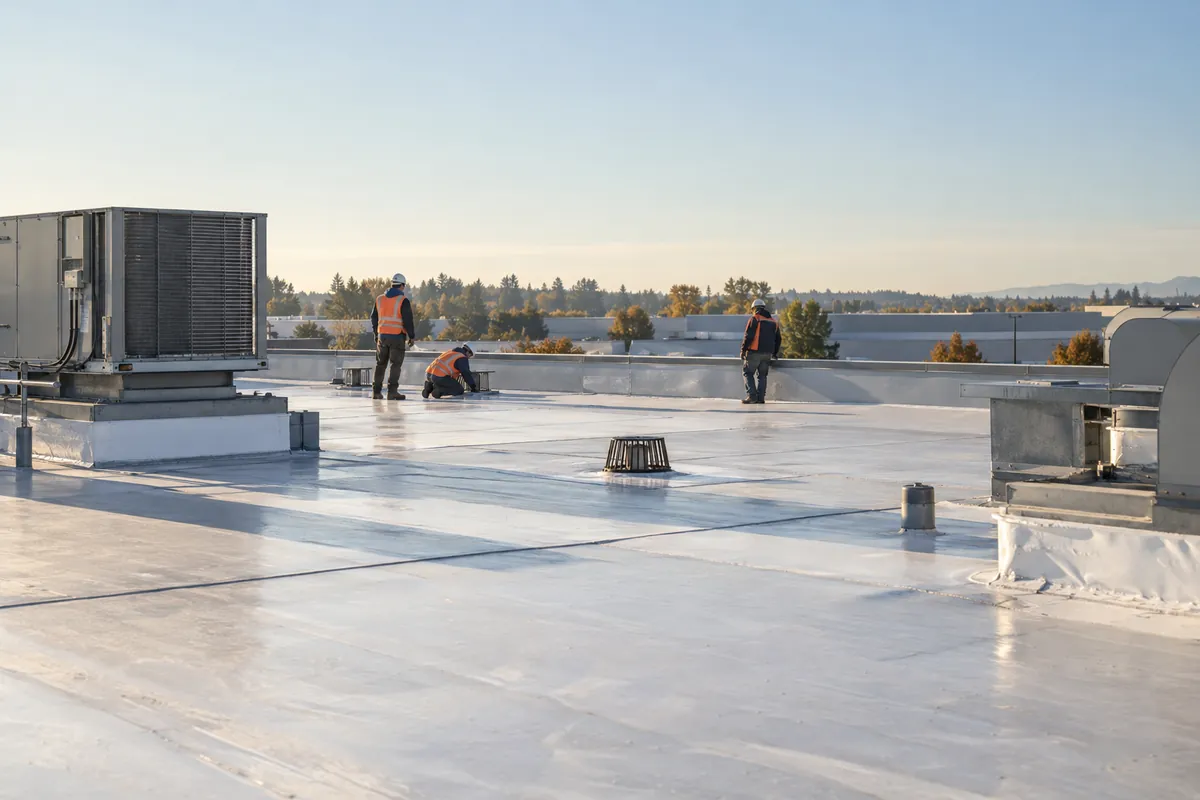
Illustrative business scene: commercial roof with rooftop equipment, illustrating roofing contractor lead generation
IllustrationProposed roofing site networkBranded resources for areas of this market, each sending inquiries straight to your team. The sites shown are a proposed plan and aren’t live.PROPOSED SITE NETWORKSouth EndUptownNoDaPlazaMidwoodUniversityCityYOUR TEAM

BEFORE ANOTHER DOMAIN

Does a microsite fit?

Check whether your microsite has a distinct purpose and someone responsible for keeping it useful.

Select the foundations you have in place to explore a practical starting point.

Discuss my lead strategyExplore work on your main website

See how I'd approach this

Choose a question
to look at with me.

Your brand connected to direct inquiriesDiscoveryYour pagesInquiriesFollow upYOUR BRAND
  1. Discovery through your branded pages
  2. Inquiries reach your business
  3. Your team follows up
Your brand connected to direct inquiries

We start with your lead definition, since pay per lead charges are checked against it. Then you tell us the towns your crews roof in and the work you turn down, like flat commercial roofs if you only do houses. We write a site for each town and put your company's name on it. Before launch, someone in your office confirms that our test calls and forms reached them. Your company still does every inspection, estimate and roof.

Questions about roofing microsites in Charlotte, North Carolina

What does a Charlotte roofing microsite network cost?

On the monthly plan, 50 microsites run $399 a month with every qualified lead included, and the pay per lead plan costs $800 for year one. That 50-site pay per lead roofing plan includes five qualified leads a year, and each approved lead past those five is billed at the roofing rate shown on the membership prices page, which also lists the renewal price and the larger networks.

Can my Charlotte yard signs point people to the microsites?

Yes, as long as the sign follows Article 22 of Charlotte's development ordinance. For a single-family lot under construction, that allows 6 square feet of sign plus a 2-square-foot rider, placed only with the homeowner's permission and gone within seven days after the building permit expires. Ask the city whether a given reroof counts, then print that town site's address on the sign.

Can the network cover Fort Mill and other towns across the state line?

It can, when your crews already work there. The Census Bureau's 2024 to 2025 estimates made Fort Mill, South Carolina, about 20 miles from downtown Charlotte, the metro's fastest-growing city of 20,000 or more, up 6.8% to 38,673 people. We're based in Indianapolis and plan Charlotte networks over the phone. A Fort Mill site goes only where your crews already work. Any South Carolina licensing is yours to confirm.

What has a Garrison roofing network actually brought in?

Eleven inquiries across 200 Indiana residential roofing sites from June 29 through August 31, 2026, ranging from replacements and leak repairs to a same day tarp. The 88 later additions are outside this original inquiry cohort. It's an early, out-of-state number, and a Charlotte network would keep its own.

Is there a Charlotte business license to get before the sites launch?

No, there isn't one. North Carolina took away cities' power to levy the privilege license tax, so since July 1, 2015 neither Charlotte nor Mecklenburg County has required a general business license, though industry-specific licenses still apply. If you roof under an assumed name, it's filed with the Register of Deeds in each county where you do business, and the name on every town site should match.

What if some of my Charlotte sites stay quiet?

You're not stuck with them. The monthly plan opens with a 90 day proving window billed month by month, and once it ends you can cancel with 30 days notice. On pay per lead, each included lead the network misses turns into a renewal credit at your locked roofing rate, so getting four of five knocks one lead's worth off your next renewal, capped at the renewal price.

“I had a great experience working with Jeff…”
Heather DoanGoogle review

Trojan Digital Marketing is based in Indianapolis and serves Charlotte businesses remotely.

Mecklenburg County DBA certificates are notarized and filed with the Register of Deeds. Source, checked September 25, 2026.

Read our Google reviews

Which Charlotte facts shape a roofing microsite network?

These Charlotte facts come from Census estimates, county growth figures and local rules, and each one changes something a roofing microsite network would say or where its town sites would go.

  • Mecklenburg County added 26,554 residents from July 2024 to July 2025, one of the 10 largest gains of any US county.

    New town sites follow the neighborhoods filling in fastest, as long as your crews already roof there.

    QCity Metro, 'Census 2025: Charlotte region ranked among top U.S. population gainers'Checked September 25, 2026
  • Fort Mill, South Carolina, about 20 miles from downtown, was the fastest-growing city of 20,000 or more in the Charlotte metro from 2024 to 2025, up 6.8% to 38,673.

    A Fort Mill site for roofers whose crews already cross the state line.

    U.S. Census Bureau press release, 'Population Growth Holds Steady in Midsized Cities Amid Widespread Slowdown'Checked September 25, 2026
  • For single-family lots under construction, Charlotte's UDO sign rules allow a temporary ground sign of 6 square feet with a 2-square-foot rider, removed within seven days after the building permit expires.

    Yard signs sized to that cap, printed with the address of the town site for that street.

    Charlotte UDO, 'Article 22. Signs'Checked September 25, 2026
  • Each county where a business trades under an assumed name gets its own Assumed Business Name Certificate at the Register of Deeds, and Mecklenburg County's must be notarized.

    A check that the company name on every town site matches your filings in each county the network covers.

    Mecklenburg County Register of Deeds, 'Assumed Names Information'Checked September 25, 2026
  • A Charlotte home business can't serve as a dispatch point, where workers report to the house and get sent out to jobs.

    Worth checking if crews meet at your house each morning, before any site lists that address as your shop.

    Charlotte UDO, 'Article 15. Use Regulations'Checked September 25, 2026

Read from QCity Metro, Census Bureau, Charlotte UDO and Mecklenburg County Register of Deeds pages, checked September 25, 2026. Confirm current rules with the city or county before a site repeats them.

How does a finished Charlotte roof turn into the next call?

We tie the roofs your crews finish on one Charlotte street to neighbors who search for a roofer in the same town, and we review each flagged lead before any charge.

  1. The job gets a yard signWith the homeowner's permission and within the city's size cap, the sign shows your name and that town site's address.Your team
  2. A neighbor looks you upThe search brings them to the site for their own town, with your company's name and logo on every page.Our team
  3. They call or send the formEvery call rings your office and every form reaches your team. We don't sell those inquiries to other roofers.Our team
  4. Your office answersYour staff picks up under your company's name and books the estimate like any other call.Your team
  5. Leads get checked before billingOn pay per lead, we review each flagged inquiry against your lead definition, and only approved ones count toward a charge.Billed monthly, after reviewOur team

Define the roofing work the microsite represents

Replacement planning, repair concerns and commercial roof management can require different questions and different staff. We identify which work the business accepts and which requests should be excluded from the proposed offer. The page brief records supported systems, customer type, geographic coverage and the information an estimator needs first. Unknown roof details should be allowed in an inquiry. The visitor should not have to diagnose a problem or identify a material accurately before asking the contractor for an assessment.

Give the Charlotte network a real organizing idea

University City Partners describes business parks and activity connected with UNC Charlotte and the Blue Line. That provides context for an illustrative commercial planning scenario, not proof of roofing demand. Imagine a roofing brand evaluating commercial roof assessment requests in its confirmed Charlotte coverage. A focused destination could explain how property managers prepare a scope discussion, while a different section addresses homeowners considering planned replacement. The business would confirm whether those audiences fit its services before either becomes a published offer.

A proposed commercial roof inquiry journey

In that scenario, a property manager considering roof work around University City needs to understand the contractor's assessment process and the information to gather. The proposed microsite would introduce the roofing brand, explain the commercial service and show permission approved project evidence. A preparation guide could ask about the decision maker, building use, known roof information and access arrangements. It would avoid technical diagnosis, unsupported safety instructions and assumptions about the condition of nearby buildings.

Read more

The request would go directly to the roofing company's named commercial contact or agreed customer system. The confirmation would describe the actual review process rather than promise a visit or estimate by a fixed time. A visitor seeking residential replacement would follow a clearly different route. This is a proposed network plan, not a claim that Trojan Digital Marketing or a client already operates roofing sites or crews in University City.

Compare the destinations before choosing another domain

Roofing destination decisions
DecisionMain website sectionFocused roofing microsite
Audience
Existing visitors need one clearer service explanation
A distinct approved audience needs its own coherent journey
Evidence
Available material supports a substantive page
There is enough original service and project material for a standalone destination
Ownership
Existing account and editorial process apply
Domain, hosting, content and inquiry records need explicit ownership terms
Maintenance
A service update improves the current site
The business can support an additional publishing and measurement process

We review the current site and original URLs before recommending expansion. Google's spam policies address doorway abuse and scaled content without useful value. Our scope therefore requires a genuine audience purpose and substantive content rather than many similar city pages pointing to one generic form.

Build a content hierarchy around project decisions

Map questions to the right pageQuestionFitProofNextService AService BService C
Service A
Planned coverage: fit and next step.
Service B
Planned coverage: proof and next step.
Service C
Planned coverage: fit and proof.
Map questions to the right pageFilled cells show which buyer questions each service page would cover. Performance needs separate measurement.

The pillar could explain the approved roofing service and its assessment process. Supporting pages might compare planning questions for replacement and maintenance, explain estimate preparation and present documented work. Each page needs a distinct reason to exist and a relevant link to the next decision. District pages are considered only where the business has genuine coverage and useful local information. We do not create fake office locations, invented project galleries or repeated roof descriptions with a different neighborhood name at the top.

Define ownership and the lead handoff in writing

The scope should identify who controls the domain registration, hosting, content, analytics and inquiry records. It should also explain access, exports and what happens if the engagement ends. An owned lead asset is meaningful only when those terms are concrete. The website identifies the roofing business receiving the request, and the intake route is tested through its actual destination. Lead qualification concerns project fit and the information needed for the next conversation; it is not a promise that every submission becomes suitable work.

Plan organic leads and paid traffic as different inputs

Organic leads can arrive through useful content over time, but content maintenance and demand remain necessary. Paid traffic can reach the same relevant destination when the campaign and page are aligned. We label sources where possible and compare suitable inquiries, completed handoffs and later business outcomes separately. Compounding leads is a conditional strategy goal: retained useful content may support future discovery if the business continues to maintain it and serve the market. Ownership does not make that progression automatic.

Scope a maintainable Charlotte roofing asset

Keep useful information dependableObserveReviewUpdateRecheck
Observe → review
Check the page and its evidence.
Update → recheck
Publish the change and check the result.
Keep useful information dependableReview the evidence, update what changed and check the published result. A new date alone adds no value.

Bring the current website, approved coverage, roofing services and examples you can publish. We can review whether a main site improvement or microsite is appropriate and define content, routing and measurement work. The Charlotte roofing ownership guide explains the acquisition comparison, and the Charlotte roofing content plan develops the hierarchy. Explore national roofing lead generation and the Charlotte market hub for the wider scope.

Sources & further reading

Talk with Trojan Digital Marketing

Storm damage a Charlotte homeowner can't see from the driveway

After a storm, plenty of roofs look fine from the ground and aren't. Pages that show what an inspection really finds, with your own photos, turn that shrug into a booked visit.

Picture a homeowner the next morning, coffee in hand, squinting up at the roof from the driveway. The shingles look fine. The neighbor two doors down has a blue tarp, but that tree was bigger. So they decide to wait, and the small lift along the ridge lets water in all summer.

Your town site can change that morning. A page with side-by-side photos from your own jobs, one taken from the driveway and one from the roof, shows what they can't see. It explains what your inspector checks and how long the visit takes in your company's experience. It ends with a button that rings your office. That's the job we build Garrison sites to do, and it's why we spend more time on your photos than on fancy design.

Does a town site replace our main website?
No. Your main site stays the home of the company. Town sites are smaller front doors for the areas you roof most, each one pointing calls and forms at the same office. We link them to your main site so a homeowner can always find the whole story.
Will homeowners think the town sites belong to someone else?
Not if we do our job. Every site carries your company's name, logo, license line and phone number. There's no made-up brand in the middle, so the name on the flyer, the truck and the site all match.

What the S(Roofing) card covers, from flashing to gutters

North Carolina's S(Roofing) class, one kind of the general contractor license a job needs at forty thousand dollars, names the materials it covers. Your service pages can follow that list.

Materials the S(Roofing) class names, and the town site page each one can support
What the class listsPage it can supportWhat the page should show
Composition shingles, cedar and wood shakesShingle repair and replacementYour own tear-off photos and the shingle lines your crews actually install
All types of metal coveringsMetal roofingOnly jobs your crews installed, so skip the page if you don't do metal
Single-ply, built-up roofing and roof coatingsLow-slope porch and addition roofsThe flat back porch or sunroom roof most homeowners forget they have
Sheet metal valleys, flashings and gravel stopsLeak repair around chimneys, walls and valleysClose shots of flashing your crew replaced, with the old piece beside it
Gutters and downspoutsGutter workOnly if your own crews hang them

The class list doubles as a map for a roofing network. Homeowners often search by the part that's failing, like a leaking valley or a gutter pulling away from the fascia. Each item your crews really handle can get its own page on the town sites, with your photos and your license number in the footer. Anything your company doesn't do stays off our drafts, so nobody books you for work you'd have to pass along.

The five business days after a denied claim, explained before anyone signs

Since October 2024, North Carolina lets homeowners cancel a residential roof contract within five business days after an insurer denies the claim. Your insurance page should say that in plain words.

Why would a roofer want this rule on the website?
It makes you look like the company with nothing to hide. A storm chaser won't bring it up. When your page explains it first, the homeowner relaxes, and the canvasser from out of town suddenly looks like the risky choice.
What can the page say happens during those five days?
The law says the seller can't start the work or take payment during that window. So the page can say, in your company's voice, that nothing starts and nothing gets billed during that stretch. We'd match the exact wording to your contract.
Should the insurance page promise help with the claim?
No promises about outcomes. It can describe what your team really does, like photos, measurements and a written inspection the homeowner can share with the carrier. The carrier makes the call on coverage, and the page should say that too.
Who writes the exact wording about cancelling?
Your contract does, and ideally your lawyer. We mirror what your contract says so the site and the paperwork never disagree. If the contract changes, we update the page to match it.

Replacement, repair or new roof area: permit talk in plain words

Lots of single-family work at forty thousand dollars or less can skip a North Carolina building permit, but adding new roofing isn't one of them. Let your estimator handle permit questions case by case.

How a Charlotte roofing site can talk about permits for each kind of job
JobState law in shortWhat the page should say
Tear-off and replacement on a houseReplacement is carved out of the new-roofing exception, so cost and the rest of the job decide itThe estimator confirms at the visit whether your job needs a permit and who pulls it
New roof over a porch or an additionAdding roofing is one of the listed jobs that still needs a permitPlan on a permit, and ask how it fits the schedule
Rotted rafters or trussesWork on load-bearing parts is another listed exceptionStructural repairs get their own check before any work starts
Any job over forty thousand dollarsThe small-job exemption doesn't reach itExpect permit talk as part of the estimate

Two years of invoices, sorted by town, pick your opening sites

Your past jobs already show where a network should start. Sort two years of invoices by town, then keep the towns with finished roofs, pleased customers and a sane drive from the yard.

  • Export every job address from the last two years, repairs included.
  • Count jobs per town and mark the ones with photos you're allowed to use.
  • Cross off towns your crews reached once because a cousin lived there.
  • Flag towns where a customer is happy to be quoted by first name.
  • Circle the three to five towns with the most finished roofs and the shortest drive.
  • Park the rest until those first sites have real job stories on them.

A town site is only as good as the roofs it can show. A site for a subdivision where you've done eleven tear-offs can name the street style, show three finished jobs and quote a neighbor. A site for a town you've never roofed in can only guess. Homeowners notice the difference, and so do search engines, which don't reward pages that swap one town name for another.

Drive time matters more than it looks on a map. An inspection that takes forty minutes each way eats a morning, and a cluster of jobs in one area lets your estimator stack visits. A tight cluster of five sites keeps your trucks close to the yard and your estimator's calendar full.

Repair calls this year, replacement contracts later

A town site can welcome small repair calls as warmly as full replacements. Handle those repairs honestly, and some of those homeowners come back when the whole roof is due.

Hypothetical example A Charlotte homeowner with one missing shingle, on a site that only sells replacements and on one that also welcomes repairs

Before

  • The site's headline pushes full replacements and financing.
  • The homeowner figures you won't want a small job and calls a handyman instead.
  • Two years later the roof needs replacing, and nobody in the house remembers your name.

After

  • A repair page says your crew fixes small leaks and missing shingles, and how that visit works.
  • Your tech patches the spot and tells the homeowner plainly how much life the roof has left.
  • The homeowner keeps a card with the town site's address on the fridge.
  • When the roof is truly done, they call the company that didn't try to upsell them.

A good repair page tells people what the visit covers before they call. Your tech checks the spot the homeowner is worried about, looks over the flashing and valleys around it and leaves them photos to keep. Then comes the harder talk about how much life the roof has left. We'd write that part with your tech, in their words, so it sounds like what they'd tell their own neighbor.

The bigger difference shows up later. Bought leads stop the day you stop paying, and nothing is left behind. A town site keeps its job stories, its photos and whatever local search footing it has earned, as long as the membership continues. The repair customer from this spring can find the same site, with your name on it, when the whole roof finally needs replacing.

Turn the questions your estimator hears on the ladder into pages

Homeowners ask your estimator the same handful of things on every visit. Each of those answers can become a short page that does the explaining before the truck even pulls up.

  • How long will the crew be at my house, and will I need to be home?
  • What happens if you find rotten decking once the old shingles come off?
  • Can you match the color of my neighbor's roof, or of the one we have now?
  • Where do the dumpster and the old shingles go, and what about my plants?
  • Do I have to deal with my HOA before you start?
  • What does the warranty cover, and who do I call if something leaks later?

We'd get these by sitting in on one of your estimator's calls or a short phone interview with them. They know the questions by heart, and their answers already sound like your company. We turn each answer into a page with a photo from your own jobs and a clear way to book. Then your estimator can spend the visit up on the roof, where they're most help to the homeowner.

The pages also quietly help the town sites stay different from each other. A question about HOA approval reads differently in a newer subdivision than on an older street with no association. When your estimator mentions those differences, we write them into the right town site.

The shot list that turns one finished roof into a page

A job story needs pictures from the whole day, starting long before the neat ridge line at the end. Hand your crew a short shot list and we'll turn each finished roof into a page.

Homeowners can't see most of what makes a roof last. They see shingles from the driveway. The parts that matter, like decking, underlayment and flashing, disappear by lunchtime. A page that shows those middle steps does something a sales pitch can't. It lets a stranger watch your crew work carefully on a house like theirs, and that's what earns the inspection.

Your crew doesn't need a fancy camera for this. A phone and thirty extra seconds at each stage is plenty. What matters is taking the shots every time, so we can pick the clearest ones. We sort the photos, write the story around them and send the page to your office before anything goes up.

  • The house from the street before work starts, house number out of frame.
  • Old shingles up close, showing the wear or damage that started the job.
  • Bare decking after tear-off, including any boards your crew replaced.
  • New underlayment and the flashing around a chimney or wall.
  • Cleanup in the yard, like the magnet sweep or tarps over the flower beds.
  • The finished roof from the street, at the same angle as the first shot.

Give cancelled insurance contracts their own column

Count inspections booked, contracts signed and contracts cancelled, split by town site. With a five-day cancel window on insurance jobs, that last number deserves its own column.

Why track cancellations by site?
A town that books lots of insurance jobs may also see more contracts cancelled after denials. Reading its signed count with the cancel column right beside it keeps a busy storm town from looking better than it is.
Should repair calls and replacement contracts be scored on separate lines?
Yes. Give each town site a repair line and a replacement line, then mark it whenever a repair customer later signs for a whole roof. That jump is the reason the repair page exists, so it deserves its own tick mark.
What should we ignore early on?
Anything you can't trace back to a roof. Your call log, tagged by site, shows inspections, signatures and cancellations by the time the monthly plan's opening 90 days wrap up. Search screenshots swing week to week, so we don't steer by them.

The cancel column also keeps your office honest with itself. When a denial wipes out a signed job, it's tempting to just delete the row. Leave it in, with the date and the reason. After a season, you'll see which towns bring insurance work that holds and which bring work that falls apart. We'll help you set up the columns once your sites launch. We have been at this since March 2018, with over 1,400 of our sites still live.

Who builds, who approves and who answers the phone

Garrison work splits cleanly. We build and look after the sites, your office approves what they say, and every call and form goes to the people who already answer your phone.

  1. You send the raw material License details, your job list, photos with permission and the name of whoever answers new calls. Nothing fancy, and we'll chase the gaps.
  2. We draft the sites Town pages, job stories and the insurance and permit pages, all in plain words and under your company's name and logo.
  3. Your office signs off Someone on your side reads every page before launch. Anything about contracts, warranties or insurance waits for that yes.
  4. We test every route Each phone number and form gets a test call or test message, so we know it reaches your office before a homeowner tries it.
  5. We keep it current New job stories, updated rules and fresh local articles over the membership year. If your license or phone setup changes, tell us and we update every site.

Sources

From the businesses we've worked with

“The leads have been a useful addition to my roofing business. It's nice not having to rely on just one way of finding customers. I'd recommend them.”
Yadav S.Facebook recommendationResults vary by market, and we don't guarantee lead counts.