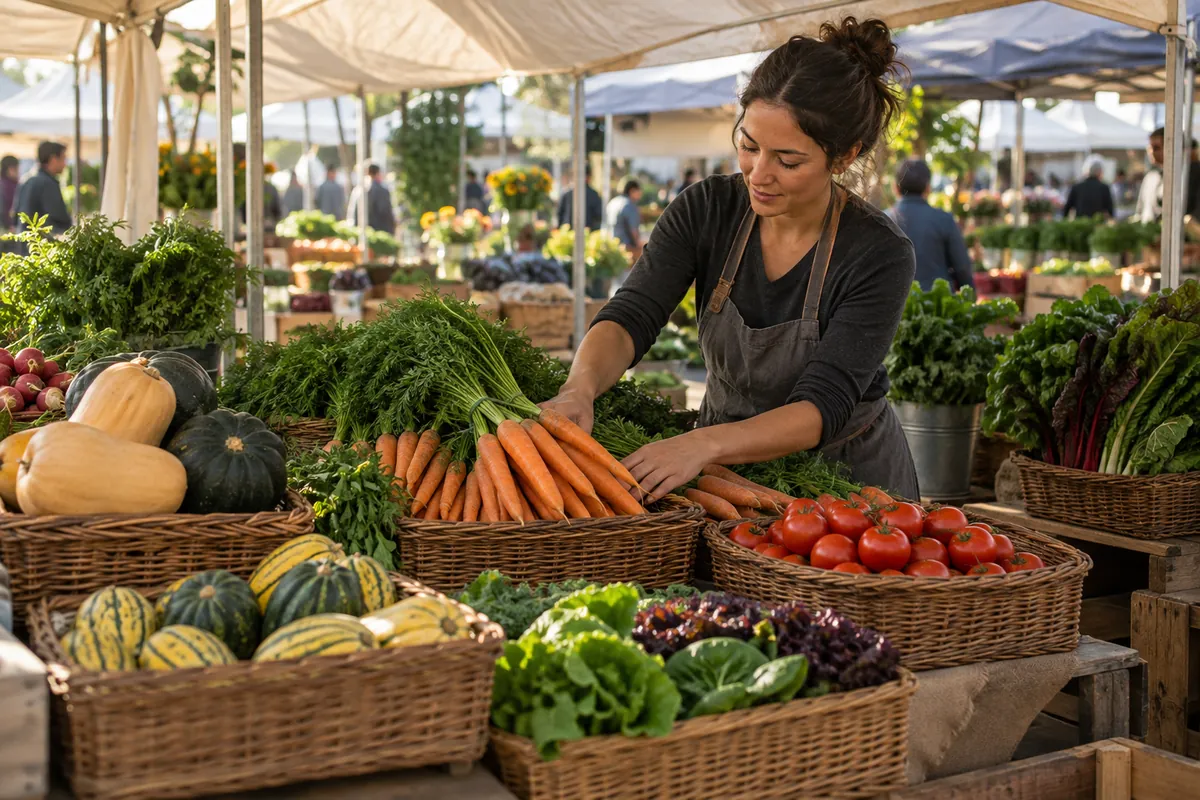
Someone spending a day in Over-the-Rhine may have several stops in mind and only a rough memory of your name. Findlay Market's guide describes fresh and specialty food merchants alongside outdoor and farmers market activity, so it helps when a shopper can tell your stand from the next one. That's why we put your name, a photo of your counter and your own selling days right at the top.
Trojan Digital Marketing works with businesses nationally through digital strategy, content, website, and measurement services. This guide focuses on market merchants, specialty food businesses, independent retail, and the commercial providers that support them, with current information and practical inquiry paths at the center of the plan.
Questions Over the Rhine businesses should resolve
Local context
- Findlay Market places itself in Over the Rhine near downtown Cincinnati. Findlay Market: Official market guide
- Its official guide describes fresh and specialty food merchants together with outdoor and farmers market activity. Findlay Market: Official market guide
What does a strategy like this cost a merchant?
The strategy is priced after the free strategy call. With no website yet, a merchant could start from the Marketing Startup Kit: $7,997, or three monthly payments of $2,799, with a custom 15-page website and a fully optimized Google Business Profile on its published schedule. A merchant who already has a site may only need a few pages reworked.
Should our page use the market’s hours as our own?
No. Post the days and hours you're actually selling, then say plainly whether they match Findlay Market's schedule, if you sell there. A shopper checking on a weeknight wants to know if you'll be there, whatever the market's hours say.
Can an inquiry form be described as online ordering?
Only if paying or confirming happens right there on the page. If you still check stock or pickup days first, label the button as an order request and say when you'll reply to confirm.
Does neighborhood interest prove merchant demand?
No. Busy market days show people are around, but only your own sales, orders and messages show what they want from you. We read your recent order texts and messages first, since they show what people ask before they buy.
What should we bring to an initial review?
Bring what you sell most, how you tell customers which days you're open, your website or market listing link, and a few real questions customers sent you.
Tired of regulars asking whether you're there today? Book the free strategy call with Trojan Digital Marketing, and bring your market listing so we can start from it.
Isn't Findlay Market's own website enough for our stand?
Link to it, and keep your own selling days and special-order rules on your own page, since you're the one who can confirm them. Put your days and hours near the top and repeat them word for word on your Google Business Profile. If there are market days you skip, say which ones plainly, so nobody makes the trip for nothing.
How should we take bigger orders from restaurants or event planners?
Give them their own request path, separate from shopper questions. Ask for the quantity and the date they need it, then say plainly that you'll confirm before anything is accepted. Keeping those requests apart also lets you count them, and that count tells you whether wholesale deserves more of your attention.
What do we do before the first call?
Write down the questions you answer most often at the counter, since those become the page. On the free strategy call we go through them alongside your market listing and any website you have, and pick the one question that loses you the most sales when nobody can find the answer online.
What if people keep sending special orders by text anyway?
That's fine as long as the page tells them what to include. Put the text number on the page next to the details you need, such as the item and the pickup day, and more requests should arrive complete. If they still don't, the prompt is asking the wrong questions, and that's the part we'd rewrite next.
Can you work with an Over-the-Rhine merchant from Indianapolis?
Yes. Calls and edits to your site are how the work gets done from our base in Indianapolis, so nobody has to visit your stand. What helps most is a handful of photos of your counter and products taken by you, since regulars want to recognize the real thing.
“…drove a noticeable uptick in leads within just a few weeks…”
“I had a great experience working with Jeff…”
We have more than 1,400 live websites.
Based in Indianapolis, we serve businesses across central Indiana, including Carmel, Fishers, Zionsville, Westfield, Noblesville, Greenwood, Avon and Plainfield.
We also work with clients across the United States.
PUT THIS PAGE TO WORKGive a market merchant a page beyond the market listing
Open this walkthroughClose this walkthrough
Consider a specialty food merchant operating in the Over the Rhine area. A shared destination directory may help someone discover the merchant, but the customer still needs the merchant’s own offer, schedule and request process. This example describes a hypothetical business page, not the operations of a named stall or a claim about current market hours.
Start with the merchant’s exact identity and approved operating details. Distinguish the merchant’s availability from the broader destination’s schedule. Explain the product categories actually offered and use current photographs with clear captions. If the assortment changes, describe how shoppers can check a particular item rather than imply every pictured product is available.
Provide different routes for an ordinary product question and a larger special request. A shopper might need help identifying an item; a coordinator might ask whether the business can consider a group order. Preserve the requested product or category in the inquiry. Where staff confirmation is required, label the action honestly and explain the next step without implying an accepted order.
Build one useful resource around the merchant’s expertise, such as selecting an ingredient for a cooking task or storing a purchased product according to approved guidance. Link that explanation to the relevant product category or inquiry. A resource with specific merchant knowledge can remain useful between appearances and promotions. Measure product questions, accepted orders and repeat requests through the business’s own evidence rather than treating general market interest as merchant sales.
| Decision | Working example | Usable output |
|---|---|---|
| Identity | Merchant facts separate from destination facts | Correct current merchant page |
| Product question | Specific item or category retained | Staff can answer without restarting |
| Special request | Scope needs operator confirmation | Clear inquiry rather than implied order |
Use vendor marketing support and the department content playbook to organize the merchant’s own expertise.
Where should each kind of customer question go?
Here's a hypothetical Over-the-Rhine stand where each customer question gets its own route and asks only what the merchant needs to reply.
| Customer question | Where it goes | What it asks for |
|---|---|---|
| Are you selling today? | A days-and-hours line at the top of your page | Nothing, since the answer is already there |
| Can I order for a party? | A special order form | What they want and the day they need it |
| Do you sell to restaurants? | A separate wholesale request | Rough quantities and who to call back |
| Is this item in this week? | A product question by text or form | The product name, with a photo if they have one |
What goes on an Over-the-Rhine merchant's page first?
Start with what customers ask at your counter every week, since those answers belong on an Over-the-Rhine merchant's page before anything else.
What you confirm
- The days and hours you actually sell, including seasonal changes
- Products you carry most weeks, and the ones that come and go
- Whether you take special orders, and how much notice you need
- Photos of your own counter and products
What we set up
- A merchant page that links to your market's listing without copying its schedule
- A special order form that keeps the product name with the request
- Google Business Profile hours that match your page
- A way to count special orders apart from shopper questions
Begin with a verified local business context
Findlay Market’s official site places the market in Over the Rhine near downtown Cincinnati. It describes merchants selling fresh and specialty foods, along with outdoor and farmers market activity. That establishes a useful local anchor and a varied merchant context without proving a particular seller’s demand or revenue opportunity.
For marketing, the useful distinction is between planning a market visit and selecting a specific business. The market may supply the occasion, while each merchant needs to explain what it offers, when the offer is available, and how customers can ask a relevant question.
Choose between a visit, an order, and a business inquiry
- Relevant visit
- A person reaches the page.
- Inquiry
- The person contacts the business.
- Qualified lead
- The inquiry meets the agreed rules.
- Booked job
- The customer chooses to proceed.
A customer checking where to find a product has a different task from someone arranging a special order or asking about a commercial supply relationship. Give those actions clear destinations. A general contact form can work for some requests, but its explanation should tell the person what the business can handle.
Read more
For a hypothetical specialty food merchant, the website might distinguish everyday shopping, advance order questions, and larger event inquiries. The page should describe the actual process rather than imply online ordering or delivery that the business does not provide.
Use the same language in the website and the staff workflow. If the page calls an action a confirmed order while the team treats it as a request for review, the customer can leave with the wrong expectation.
Make merchant information specific
Explain the product categories, service focus, and current contact options. Help a visitor understand whether the business is a permanent shop, a periodic vendor, or another type of operation when that distinction applies. The customer needs to know where and when the offer can be found.
Read more
Keep the business’s details separate from the market’s general schedule. A merchant’s availability may require its own confirmation. Link to current official destination information when useful, while maintaining the facts the merchant is responsible for.
The farmers market vendor marketing page provides a useful framework for periodic sellers. Its emphasis on availability, product explanation, and repeat customer communication can be adapted to the merchant’s actual operating model.
Explain products with practical detail
Customers may need to understand ingredients, preparation, storage, size, or the intended use of an item. Publish only information the business can verify. Keep claims about dietary suitability, health effects, or special handling within appropriate expertise and evidence.
Read more
A useful product explanation can describe how the item is made or selected and how a customer can confirm details. It should not turn a broad food category into an unsupported health promise. When availability varies, the next step can invite a specific question rather than imply guaranteed stock.
Use approved photographs that accurately represent the product or process. If an image is illustrative, its role should be clear. A district photograph can establish context but should not be presented as a merchant’s actual work or one of our clients relationship.
Build useful content around preparation and selection
- Service A
- Planned coverage: fit and next step.
- Service B
- Planned coverage: proof and next step.
- Service C
- Planned coverage: fit and proof.
A merchant can answer recurring questions through a product selection guide, a preparation explanation, or a resource for planning a larger request. The content should help someone make a decision before it asks them to buy or inquire.
Read more
The guide to content that builds authority and converts buyers connects these resources with a clear offer. A useful article can show expertise without inventing a dramatic outcome or copying a general neighborhood guide.
Give each article a distinct task. An evergreen explanation of a product and a current availability announcement should not be treated as the same page. Separating them can make both the customer journey and the maintenance process clearer.
Keep events connected to current merchant information
An event or market appearance should identify the actual occasion, date, location, and participation details. Explain whether the business will offer its usual products or a specific event selection. Assign someone to review the page before promotion begins.
Read more
Plan what happens after the event. An old listing can remain useful as an accurately labeled archive, but it should not imply that the same offer is available now. Direct a visitor to current information when the earlier action is no longer possible.
The retail event content playbook provides a practical lifecycle for temporary pages. It can help a small team avoid leaving expired dates or booking instructions in search facing content.
Use answer content to reduce uncertainty
AEO and GEO work can begin with the questions staff already answer: how to check an item, how a special request is handled, where the business operates, and what information helps the team respond. Provide a direct answer followed by the conditions that matter.
Read more
SEO and AI SEO work should keep those answers accessible and connected to the appropriate page. Google’s generative AI guide links its AI search features with SEO fundamentals. Treat AI Overviews as a possible discovery context while writing useful source material for the customer.
Do not claim that an FAQ section guarantees a search appearance or assistant recommendation. Record observed visibility through the evidence available and keep it separate from the accuracy of the content itself.
Make arrival and location information trustworthy
- Business
- Start from the real business.
- Coverage
- Identify the places it actually serves.
- Office
- Do not turn a service area into an invented office.
Publish the actual merchant location or the verified event location. Explain any relevant distinction between the market destination and the individual business. A customer should not have to infer which entrance, counter, or meeting point the page means.
Read more
Link to current official arrival resources when they help. Avoid copying parking or transport details that the team cannot maintain. If the business has no customer facing office at a district address, do not create one in the page’s wording or map presentation.
Trojan Digital Marketing provides digital services nationally. Area references on this strategy page describe the market context and do not represent an Over the Rhine office or a claimed local customer.
Design the special request handoff
| Information | Purpose |
|---|---|
| Product or service of interest | Identifies the relevant offer |
| Requested date | Supports an availability conversation |
| Approximate scope | Helps the team understand the request |
| Questions or requirements | Highlights details that need confirmation |
| Response contact | Creates a clear next step |
Ask only for information the business uses at that stage. Make clear whether submission creates an inquiry or confirms an order. The customer should understand which details remain subject to review.
Use the next step guide and the inquiry design playbook to connect the explanation, form, and response process.
Measure the merchant’s action, not just destination interest
A page view about the neighborhood does not establish a visit to a particular shop. A click on a product inquiry does not establish a completed purchase. Define the action the business can observe and keep later outcomes in the systems that record them.
Read more
For a hypothetical merchant, a customer might read a product guide, check current availability, and send one special order request. The content can contribute to the journey while the inquiry count remains one. Use the content assisted measurement guide to preserve that distinction.
Keep repeat customer activity visible when it matters to the decision. A resource that helps existing buyers use a product can be useful even when it does not generate new customer inquiries.
Support commercial buyers with a separate explanation
Some businesses sell to other operators as well as individual shoppers. A commercial buyer may need information about product scope, ordering process, scheduling, or the person responsible for account questions. Give that buyer a clear route without making the ordinary shopping page difficult to use.
The B2B distribution marketing framework addresses this type of purchasing process. A supplier serving food businesses can also review the commercial kitchen services marketing page for assessment and service scope principles.
These are relevant strategy connections, not claims that any named district merchant uses those services or works with us. Confirm the actual buyer and service relationship before writing a local case study.
Make the website useful between market appearances
A periodic seller can use the website to preserve the relationship between events. Keep the core product explanation available and provide an accurate way to find current appearances or ask a question. Avoid letting the entire online presence become a sequence of expired announcements.
Read more
Use recurring customer questions to choose evergreen resources. A product care explanation or a guide to preparing a special request can remain useful while the event calendar changes. Link those resources to the current action rather than a retired date.
Assign a practical maintenance cadence that the business can sustain. A small, accurate set of pages is easier to trust than an ambitious schedule that leaves essential facts outdated.
A focused first project for an OTR merchant
Choose one customer task and review the page that should support it. Verify the offer, location, availability process, and next step. Gather approved product information and identify the recurring questions that remain unanswered.
Create one useful supporting resource, connect it with the current destination, and test the inquiry handoff. Review the questions received and the outcomes the business can actually measure. Expand when another distinct task needs a better answer.
For a related but different creative retail setting, the NuLu strategy guide focuses on maker stories, browsing, and planned experiences. Use the comparison to sharpen the business’s own journey rather than assume all districts share the same behavior.
Make the business identity clear in shared settings
A market visitor may remember a product more clearly than the merchant’s name. Use consistent branding, product descriptions, and contact information so the person can identify the right business later. Explain the merchant’s relationship to a shared destination without implying that it operates every service there.
Review confirmation messages and receipts where the business controls them. A useful website can still lose continuity if the follow up uses an unfamiliar name or gives no clear route for a product question.