Need help?Jamie

Market service plans

Greenwood Website Design for Grocery and Retail Orders

When your Greenwood store's website doesn't say what can be ordered ahead or how much notice a party tray needs, shoppers call to ask instead.

Trojan Digital Marketing designs websites for Greenwood, Indiana grocers and retailers that take pickup or catering orders. Each orderable item shows its notice time, and the request form says staff will call to confirm before anything is final. Greenwood's 69,349 residents are about 40% of Johnson County.

Bring a list of what shoppers can order today and how much notice each item needs. The first strategy call is free, and during business hours we aim to reply within five minutes.

  • Order requests that match what staff can fill
  • A tap-to-call number beside every order form
  • Specials and hours your staff can edit

Jeff Clerisier spent July 2023 to July 2025 at Georgetown Market in Indianapolis as its assistant store manager, and he ran the store's marketing too. A Greenwood grocer's order pages get planned by someone who's stood where your staff stand. Jeff founded our company in March 2018, still runs it and works out each scope with you himself.

Illustrative business scene: technician servicing filters in a stainless restaurant extraction hood
IllustrationThis page drawn as a wireframeThe headline, highlights and button from this page, redrawn in desktop and phone layouts. It’s an illustration of page structure and isn’t a client site.PAGE WIREFRAMEtrojandigitalmarketing.com/greenwood-we…Greenwood WebsiteDesign for Grocery andRetail OrdersOrder requests that match what staff can…A tap-to-call number beside every order…Specials and hours your staff can editBook a free strategy call010203GreenwoodWebsiteDesign forGrocery and…Order requests…A tap-to-call…Specials and…Book a free…

YOUR WORKING BRIEF

Choose where to start

Select the parts you want to discuss. Your choices carry into the inquiry form.

Discuss this service0 priorities selected

See how I'd approach this

Choose a question
to look at with me.

A website built around the next customer decisionMESSAGE · EVIDENCE · ACTION
  1. A clear offer
  2. Evidence for the customer
  3. An action that works on mobile
A website built around the next customer decision

Questions about website design in Greenwood, Indiana

What does a website for a Greenwood grocery or retail store cost?

We price a standalone site after the free strategy call, when it's clear whether a simple request form will do or you need full checkout. For a store starting close to scratch, there's the Marketing Startup Kit at $7,997, or three monthly payments of $2,799. It includes a custom 15-page website and Google Business Profile optimization.

Do we need online checkout, or is a request form enough?

For many independent grocers, we start with a request form, and it's often all a store needs at first. Checkout means keeping prices and stock accurate every day. Taking payment for a party tray you can't make that Saturday costs you a customer. A request form tells the shopper that staff will call to confirm, which is how many stores already handle catering and special orders.

How should the site handle sales tax on order requests?

Let the confirmation carry the final total. Indiana's sales tax rate is 7%, and your register already knows which items it applies to. A web form that tries to guess will be wrong somewhere. We word the request page so it says staff confirm the total, tax included, when they call back. The confirmation email repeats it.

Many of our Greenwood regulars would rather call. Should the site push online orders?

No, and in Greenwood that's worth planning around. Census QuickFacts puts 15.3% of Greenwood residents at 65 or older, and plenty of shoppers at any age would rather talk to a person. We put the phone number beside every order form, large enough to tap on a phone, so calling takes one step. Both routes end the same way, with your staff confirming what was asked for.

Have you designed for a grocery store before?

Jeff Clerisier has, though not in Greenwood and not for a client. We're based in Indianapolis, and Greenwood is on our list of central Indiana towns served. While he worked at Georgetown Market, a natural foods store in Indianapolis, Jeff designed more than 30 bilingual signs. Each one placed the English category above its Spanish name, like SOUPS above SOPAS. The store's Andrew Montieth wrote, 'Sales have been better the last few months thanks to some additional marketing efforts. Way to go, Jeff!'

How long does a new store website take?

The Startup Kit's published schedule sets aside week one for discovery and weeks two to four for the website build. Content and profile work follow in weeks five to eight. For a standalone site, we set the timing after the free call. Much of it depends on how fast product photos and department lists come back from the store.

Can our staff update weekly specials without calling you?

Yes, when we build the site for it. We set up specials and hours as simple fields your staff edit, each with an end date so last week's deal disappears on schedule. Photos get their own slot with a size limit, so a quick phone picture of the deli case won't slow the page for everyone else.

“…drove a noticeable uptick in leads within just a few weeks…”
Mike BamosiGoogle review
“I had a great experience working with Jeff…”
Heather DoanGoogle review

We have more than 1,400 live websites.

We work from Indianapolis and serve Greenwood, in Johnson County, as part of central Indiana.

We also work with clients across the United States.

Read our Google reviews

Which Greenwood facts matter when a store website takes orders?

Website design for a Greenwood, Indiana grocer or retailer has to fit who shops there and the state tax rules behind every order total.

  • Greenwood's 69,349 residents in the July 2025 estimates are about 40% of Johnson County's 174,262.

    A store here can draw on a big share of the county, so hours and pickup details should be the easiest things to find on a phone.

    Calculated from Daily Journal and STATS Indiana 2025 estimatesChecked September 25, 2026
  • 15.3% of Greenwood residents are 65 or older.

    A tap-to-call number beside every order form lets any shopper who'd rather talk reach your staff in one step.

    U.S. Census Bureau, QuickFacts: Greenwood city, IndianaChecked September 25, 2026
  • Indiana sales tax is 7%, collected under a Registered Retail Merchant Certificate that lasts two years and renews at no cost when returns and payments are current.

    An online estimate should leave the final total to staff, who know which items the tax applies to.

    Indiana Department of Revenue, Sales TaxChecked September 25, 2026

Which grocery items are taxed wasn't researched, so the page leaves that to each store. The age share is a Census estimate. We don't describe any Greenwood store as our client.

What does a Greenwood store settle before its website takes orders?

Before a Greenwood grocery or retail website takes pickup or catering requests, your store and our team each settle a part. That way the form never promises more than staff can deliver.

  • Which items can be requested online and which need a call
  • How much notice a catering or party tray order needs
  • Who calls the customer back to confirm, and by when
  • Department names, written the way they appear on your signs
  • A request form that says staff confirm before anything is final
  • A tap-to-call number beside every form
  • Specials and hours as fields staff can edit, each with an end date
  • Pages tested at phone size, including form error messages

Design the shopping experience you can actually operate

A supermarket or specialty retailer does not need to copy every feature of a national delivery platform. It needs a website that accurately explains what customers can do with this business. Our Greenwood website work starts by sorting what a site offers into four kinds: information, reservations, order requests and confirmed transactions. Those are different promises to a shopper and require different systems behind the interface.

The Greenwood Park Mall operator documents shops and dining in the city, while Aspire supplies regional community context. We do not infer your customer preferences from those references. Store staff, current customer questions and the actual fulfillment process shape the design brief.

Give the store a recognizable visual identity

A food store's strongest visual material may be its produce display, prepared foods, staff knowledge or a distinctive department. Trojan Digital Marketing can build a design around approved original photographs and editorial details that explain the offer. A generic kitchen image repeated across categories tells a shopper very little about the business they are considering.

Read more

The homepage can reveal the store's range through a clear sequence: what is available, how to shop, what requires confirmation and how to contact the relevant team. A department selector or an expandable ordering checklist can add useful interaction. It should remain readable with a keyboard and on a small screen. Effects earn their place by helping a shopper explore, not by delaying access to the information.

An illustrative supermarket catering request

Consider a Greenwood supermarket that accepts requests for prepared food platters. This is a design scenario, not a statement about a specific store. A customer needs to understand the available categories, portion information approved by the store and how an order is confirmed. A form that instantly displays order confirmed would be misleading if staff still need to check capacity or ingredients.

Shopping stageUseful interfaceWhat staff must maintain
Explore the offer
Department photographs and approved descriptions
Current range and relevant exclusions
Describe the request
Date, collection preference and product questions
Which details are required for review
Confirm the arrangement
Clear staff response or verified checkout flow
Availability, price and acceptance process

Dietary questions should reach a knowledgeable staff member when the website cannot verify them. A design should not make blanket allergen or suitability claims to shorten the form.

Build a product information model before adding a cart

We help decide what information needs to exist for each product or department. A full transaction system requires maintained pricing, availability and fulfillment rules. A simpler inquiry model may be appropriate when the range changes frequently or staff must confirm the request. The website should clearly identify which model it uses.

Read more

We ask who updates the content, how quickly store changes reach that person and which information comes from an existing system. A promotion needs a defined end condition. A product photograph needs the correct label and rights. A substitution policy needs owner approval. These decisions affect the design because the interface should only display certainty the underlying process can support.

Make mobile shopping tasks comfortable

Give each part of the page a jobOfferEvidenceAction
Offer
Explain what the customer can get.
Evidence
Support the offer.
Action
Make the next step easy to use.
Give each part of the page a jobThe offer, evidence and contact route should work together on a small screen.

A shopper may be checking information while planning dinner or comparing a collection option. Navigation should use familiar department labels, contact controls should be easy to use and important information should not be trapped inside a large image. We test forms and content at realistic phone sizes, including validation errors and the path back to the relevant product details.

We prepare responsive image versions, including WebP where suitable, and consider loading priority separately for the opening image and deeper galleries. Google's experience metrics provide a reference for performance review. We measure the actual build and report the conditions rather than attaching an untested speed claim to the design.

Plan the handoff between website and store

The inquiry destination matters as much as the form layout. A catering request should reach the person who can assess it, and the visitor should understand whether staff will confirm the arrangement. If a connection fails, the form needs a helpful error and an appropriate alternative. If an item is unavailable, the response should not leave the shopper believing it is reserved.

Read more

We can document the workflow and test representative requests with the store team. We also define the routine content edits the owner can make in the CMS. Department descriptions, photographs and ordering instructions should have clear fields and review responsibilities. This reduces ambiguity when the staff member who originally approved the website is unavailable.

Evaluate the project through completed shopping tasks

The design review should include finding a department, checking how a request works and contacting the store with a specific product question. We examine whether the shopper receives an accurate next step and whether staff receive enough context. Page traffic alone does not establish that the shopping journey works.

Our website design service can be scoped around your actual retail process. The image converter helps prepare photographs, while the Greenwood SEO plan addresses discovery and page relationships. Bring a shopping task customers currently find confusing. It provides a useful basis for a distinctive design that serves both the customer and the people operating the store.

Sources & further reading

Talk with Trojan Digital Marketing

What has the shopper actually done when they send a special-order request?

Describe the request as the action the system receives. We can build a special-order path that keeps product questions and proposed pickup details open until staff approve them.

A special-order page can help a Greenwood, Indiana store understand an unusual product request. The visitor may want a particular package size or an item outside the usual range. That first message needs enough context for a staff answer. It shouldn't appear to reserve something the business hasn't checked. We begin with the store's actual approval process and the information its receiving role can use.

The page can make the limits clear without overwhelming the customer. Explain which details they are proposing and which the store must settle. We can keep the requested item, quantity and pickup preference together in the receiving copy. The business decides what is required for its first response. A new form shouldn't invent a special-order service beyond what staff can actually consider.

  1. Identify the item question Ask what the customer wants staff to check about the item. A brand or package clue may be more helpful than a broad department choice. We can make an optional image available if the store can use it. Keep an open field for someone who lacks the exact name. The receiving role should recognize which part of the request remains uncertain.
  2. Set the requested quantity Use a prompt the store understands for its actual products. A quantity may mean packages, weight or another unit, depending on the item. Your staff approve that wording. We can leave space for a question when the customer doesn't know the right unit. A bare number field can look precise while leaving the request impossible to interpret.
  3. Keep pickup as a preference If staff must approve a pickup date, label it as requested. We can explain that state beside the control and again in the receipt. The business supplies any actual date rules. A website should not announce a slot is reserved merely because a customer selected a day. The proposed pickup remains attached to the item question until it is settled.
  4. Agree on the first response route Ask who receives the request and how that person obtains missing details. The store chooses the contact arrangement. We can connect the page to it once the needed access exists. The customer should see an accurate description of the next step. If reply timing varies, use approved wording instead of an invented countdown to confirmation.

Which item words should the request carry into the store?

Keep the customer's wording alongside the store-approved item description. Our content work can help staff recognize a request without replacing an uncertain name with a guess.

Georgetown Market bilingual functional beverages department sign
Store approved terms: Store beverage labels pair English and Spanish. View the project
Special-order wording acceptance
FieldStore approvalReceiving check
Item descriptionIdentify the public wording staff can understand and any useful package clue. The business approves the terms that actually fit its product range.We compare the entered description with the message received. If the customer says the name is unknown, that uncertainty remains visible to the staff member.
Quantity unitConfirm which unit belongs with the selected item type and how staff handle a missing or uncertain amount. Avoid assuming one unit suits every department.The unit appears beside the number in the receiving copy. A request should not change meaning when a label is omitted from the message.
Alternate itemDecide whether the store accepts a request to discuss alternatives and what that permission means. Staff still need to approve any actual replacement.The message preserves the customer's preference without treating it as acceptance of an unidentified substitute. The receipt reflects the limited question sent.
Store destinationName the represented store and the role that can assess this request. A brand may have several locations with different arrangements.The selected store stays visible through the form and receipt. We inspect the destination rather than relying on a brand-wide contact label.

The Georgetown beverage sign beside this section is a department-label design reference from Indianapolis. It shows how two language lines share a clear hierarchy. It doesn't establish a Greenwood store's item names or special-order range. We can discuss that visual relationship while writing the actual prompts from your own approved product information.

A store glossary can help the editor keep the page and receiving message consistent. It should include only terms your team has settled. We can mark questions that still need an answer rather than choose a plausible product name. If a supplier changes a package description later, the responsible staff role needs to tell the editor which entries are affected.

Who can approve the pickup instructions for a settled order?

Identify the store role that owns pickup information before publishing it. We can show staff-approved instructions while keeping proposed collection preferences distinct from accepted arrangements.

What pickup information belongs on the request page?
Publish the information the store can accurately maintain before an order is accepted. That may include where to ask a pickup question or how staff confirm the arrangement. We need the business to supply its actual wording. Details that depend on the individual order can wait for the approved confirmation. A general page shouldn't imply a ready item or a collection time the store hasn't settled.
Who approves a change to the pickup location?
Choose someone who knows the store's current customer route and can authorize the wording. A department move may affect several messages beyond the main page. We can identify the controlled copies that need attention. Staff confirm the actual entrance or desk. The website editor should not infer the pickup point from a product photograph or a shopping-center directory.
Can a receipt include the requested pickup date?
Yes, if it is clearly described as the customer's preference and the system retains it accurately. We can place that date beside the request status. The business separately decides how an accepted date is communicated. A reader should be able to recognize whether they are looking at the original preference or the settled arrangement. Those two records may differ.

A pickup instruction is useful only if it matches what the customer is being told elsewhere. Ask how the store confirms an accepted special order and who can update that message. We can inspect the agreed communication path during the design task. A change on the public page may leave an older template untouched in another provider's system.

The project can start with one clear request and confirmation sequence. We don't need to design a complete store operations platform to make that sequence understandable. Your approving role defines the information needed at each stage. We then discuss the interface and connected work our quote includes. Any separate system responsibility should remain visible in that discussion.

How should a customer ask to change an accepted special order?

Keep the proposed amendment separate from the settled order details. Our page design can help staff identify the change while leaving acceptance with the store's actual process.

A customer may need to change the quantity or preferred pickup after staff have replied. That action should identify the original request and the proposed difference. We can provide a clear amendment route if the store wants one. The receiving person should see both the current arrangement and what the customer is asking to alter. The website shouldn't silently overwrite the settled details.

The store decides which reference a customer can use to identify the order. We need to know how staff find it and what information is safe to request. An amendment form should have a route for someone who lacks that reference. The public wording can explain the limitation without making the person guess an order number just to continue.

  1. Locate the original arrangement Ask for the store-approved reference or an alternative clue staff can use. We can label that field around its purpose. Keep the identifying information in the receiving message. The system needs to preserve enough context for the staff member to find the original record. Any uncertainty about the match should remain visible until the business resolves it.
  2. Describe the proposed difference Give the customer space to say what they want changed. If the form offers a quantity or date field, the unit and status need to be clear. We can show that these are requested replacements. The store decides whether they can be accepted. A changed field on the screen alone should not alter the already settled arrangement.
  3. Confirm only the amendment request Identify the proposed amendment in the sending receipt. Explain which staff role receives it next. We can inspect this message using fictional order details. It must not announce that the order has changed unless the approved system provides that result. The staff reply then follows the business's process. The customer should understand which version of the arrangement is currently in effect.
Should customers reply through the original message instead?
That may suit the store better than another form. We can discuss the practical route your staff already maintain. If the reply keeps the reference and context together, a clear instruction on the page may be enough. Ask which option the quoted work assumes. The goal is an understandable amendment process, so added interface complexity should have a real purpose.
What if the requested change cannot be accepted?
The business supplies the answer and any available next step. We can make the route for that answer clear. Don't invent a substitution, cancellation or refund policy during the website work. The page can explain that staff must assess the amendment. Any rule about the result needs the store's actual approval before it becomes public wording.

What would a practice order reveal before the page launches?

Use fictional item and customer details to check the agreed request path. We can inspect the public wording and receiving message without placing a live special order.

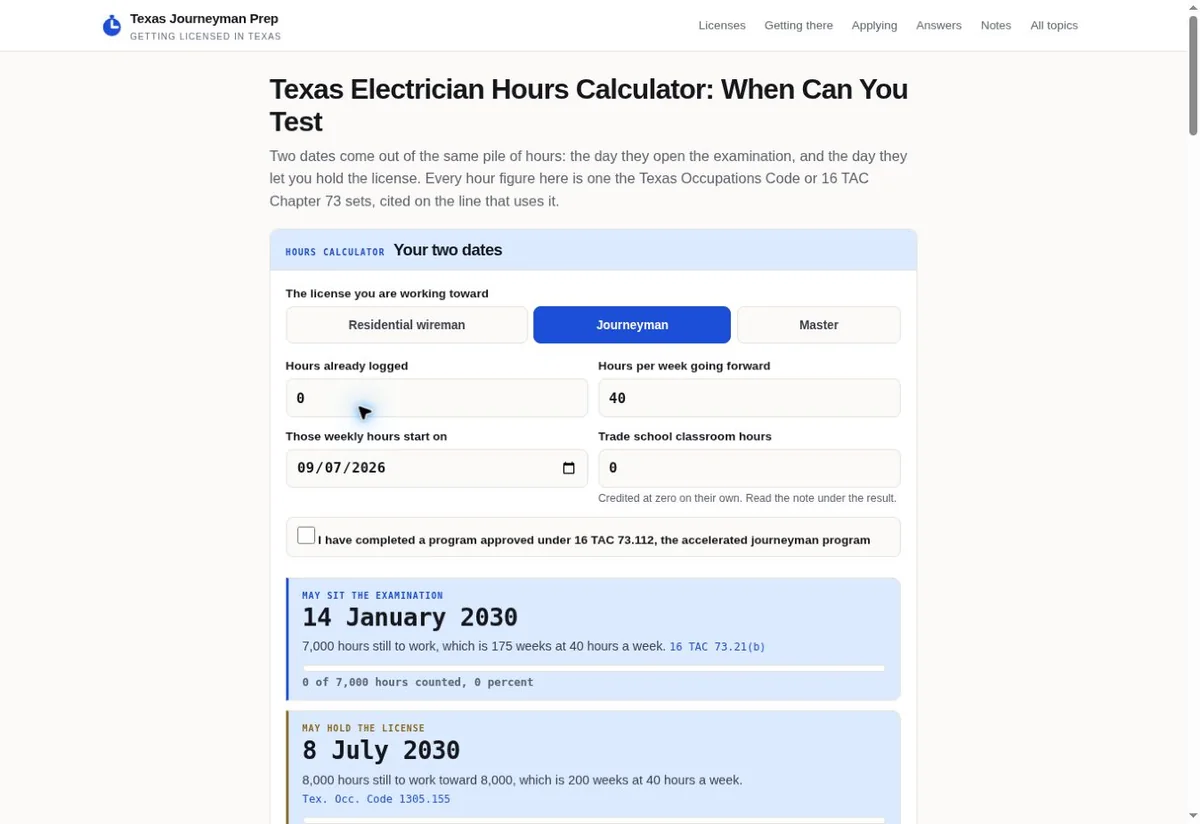
Texas Journeyman Prep calculator with labeled fields
Special order test: Texas calculator separates a recorded total from a proposed pace. View the project
Hypothetical example An imaginary Greenwood grocer tests a request for a package size that staff have not yet confirmed.

Before

  • The fictional shopper enters an item name and asks for a larger package. The page shows a pickup selector, and the receipt calls the choice confirmed. The store has no basis in this exercise to accept either the package size or the day.
  • A later practice amendment changes the quantity. The receiving message omits the unit and original request reference. Staff can see the new number but can't determine which arrangement the customer wants to change.
  • The old error state clears the entered item description after a failed send. The tester must start again and may leave out the clue that made the original question understandable.

After

  • Our proposed receipt describes the item and pickup date as requested information. Staff inspect the fictional message for the clues needed to respond. The accepted arrangement remains a separate store decision.
  • The amendment carries the approved reference and a clearly labeled quantity unit. The receiving tester can compare the proposed change with the fictional original. The test checks that relationship without actually modifying an order.
  • The sending-failure path explains the problem and preserves the agreed fields where the implemented system supports it. We verify that behavior with the practice data and check the alternative contact route.

The existing Texas calculator image here shows labeled planning fields. It is a visual reference for how a prompt relates to an input. It doesn't show a grocer's order system or prove the behavior described in our fictional exercise. Your page requires its own check with the agreed product wording and receiving process.

W3C's validation tutorial discusses identifying required information and helping a user handle invalid input. We apply that guidance to the implemented request fields. Staff also check whether the received unit and product clue make sense. A form can pass a technical validity check while still asking an unclear business question. Both parts belong in acceptance.

How does an expired pickup notice leave the customer journey?

Assign a business owner and a verified end condition to the notice. We can identify the controlled copies and check the current request route after the message is removed.

  • List the public pages and confirmation fields that use the temporary wording. We can inspect those locations during the task. A notice removed from the homepage may still appear inside the request form.
  • Ask the approving store role what ends the exception. It may be a confirmed date or a staff decision. Avoid using an automatic return to normal when the actual arrangement remains uncertain.
  • Keep the current alternative route accurate while the exception remains active. The store supplies the contact and the reason for the change. We can design the placement so the relevant customer sees it.
  • After removal, follow the complete request path. Inspect the receipt and any connected destination your agency can access. Another provider may own a copy that needs a separate correction.
  • Make the later maintenance responsibility clear in the buying discussion. We can explain which fields staff can edit and which changes require further technical work. The store needs to know where the next notice belongs.

A special-order form deserves a defined first engagement. Ask which product fields, pickup states and amendment route the price includes. We can discuss that set using your store's current process and an anonymous example. The quoted work should make its assumptions clear. Future notices and connected-provider changes may require a different task.

The page is ready for your acceptance when its language and receiving path reflect the arrangement your business approved. We can show the tested fictional request and the relevant released fields. The store confirms their meaning. That is a concrete website result, separate from any later sales or service outcome. It gives the next improvement discussion a clear starting point.

Which special-order tasks belong in the website quote?

Name the customer states and receiving checks you want to buy. We can estimate the work after your store settles how a request becomes an accepted arrangement.

A quote for one form can mean very different things. It might include only the visible fields, or it might cover a connected receipt and an amendment path. We ask which customer tasks you need. The business supplies its current process and the contact roles. Our proposal can then identify the page work and the connections involved. That makes the price easier to compare than a broad promise of online ordering.

The amount of staff approval also matters. A page built from unsettled item units will need more answers before it can be accepted. Bring a small set of representative product questions and the terms your staff use for them. We can discuss that material before estimating a larger range. The first release should match the information your business can maintain. Our task list follows those chosen first-release states.

Do we need payment in the first release?
Only if the business wants a supported transaction task and can supply its actual rules. A request for staff confirmation may be enough for the chosen starting point. We can discuss the distinction using your real process. Payment would introduce another system and different customer expectations. The quote should explain whether it includes that work. Avoid assuming a payment button completes the product and pickup approvals the store still needs to make.
What access will the agency need?
Identify the website fields, receiving destination and any separate provider involved in the agreed task. We can inspect the available connections without asking you to send passwords in a message. The business should nominate the people who can authorize access. A provider may own the receipt or order record. That boundary needs to be clear before the agency estimates a change it may be unable to make directly.
How much should staff test before accepting the page?
Choose a few fictional requests that reflect the approved item types and pickup states. Include an unknown item and a requested change so the less tidy paths receive attention. We can compare the entered details with the receiving copy. Your staff check that they can interpret the message. The acceptance concerns those paths and their actual wording. It doesn't require placing a real order or contacting a customer.
What work might follow the first release?
A changed pickup instruction or a new product type may need a content edit. A different receiving provider may need another connection task. We can explain which routine fields the store will control and where to ask for technical help. Keep those responsibilities clear in the agreement. The first price should not be treated as unlimited work for every later special-order arrangement your business may introduce.

Sources

From the businesses we've worked with

“I love the way it scrolls better. Thank you so much, Jeff.”
Alexa MahaberRedefined Body skincare

Marketing help for Greenwood businesses

Based in Indianapolis, we serve central Indiana and clients across the United States.

Request a free strategy call

Greenwood, Indiana

Service area map

Explore Greenwood on OpenStreetMapArea reference; this is not an office pin. Map © OpenStreetMap contributors.