Need help?Jamie

Measurement Playbooks

Track Which Searches Turn Into Paying Customers

You pay for SEO or ads and can't tell which one brought the customers who paid. Trojan Digital Marketing links search reports, site data and sales records, and shows where each number came from. Bring one sale you can't trace: the first strategy call is free, and during business hours we aim to reply within five minutes.

Illustrative practical business toolkit.

See how I'd approach this

Choose a question
to look at with me.

From a useful page to a relevant searchUseful websiteRelevant discoveryCRAWL · UNDERSTAND · CONNECT
  1. Useful website
  2. Crawl and understand the page
  3. Connect it to a relevant search
From a useful page to a relevant search

Search to sales attribution connects available discovery and website evidence with the business process that turns a request into a customer. It shows which pages and channels play a part before people buy, where inquiries get stuck and which decisions your data can support.

We won’t promise a perfect history of every customer contact. Search reports, analytics and sales records each see a different part of the path to a sale. A defensible system preserves those differences, reconciles the records where appropriate, and avoids counting the same opportunity several times.

Choose the decision the attribution work should inform

A customer may meet you more than onceSearchGuideReturnInquiryIllustrative steps before an inquiry
Search → guide
First discovery and useful reading.
Return → inquiry
A later visit can lead to contact.
A customer may meet you more than onceAn illustrative sequence of touchpoints shows why one click does not explain an entire buying decision.

We start by asking which decision the report should help you make. The team may need to decide whether a service page needs clearer qualification information, whether a content cluster helps suitable prospects prepare, or whether a campaign deserves further investment. These decisions require different evidence and different levels of confidence.

Separate a page improvement from a channel budget decision. A confusing form can justify repair through direct testing. A budget shift needs a broader view of qualified demand, cost, capacity, and outcomes. We keep attribution tied to that decision, and we don’t let a report claim one channel caused all the growth.

Write the intended decision at the top of the review. It gives the analyst a scope and gives the owner a way to judge whether the report answers a useful business question.

Map the actual sales stages

List the stages the business uses after contact. A professional service might go from request to fit review, consultation, proposal and signed agreement. Ours runs from an inquiry, to a follow-up from Jeff Clerisier, our founder, to a free strategy call. A retail appointment business may use request, confirmation, attendance, and completed service. A commercial contractor may need an assessment and several approvals before a sale.

Give each stage a clear definition and a date. We don’t mark a request as a qualified opportunity just because someone sent a form. A proposal should not be recorded as revenue while it remains unresolved. Include pending and unsuitable statuses so the report describes the process honestly.

The owned lead measurement playbook establishes the inquiry record and duplicate rules. Use that operational foundation before adding more complex channel attribution.

Assign each system a specific job

How the evidence sources fit together
SourceUseful evidenceBoundary
Search reporting
Reported exposure and search activity under selected filters
Does not identify the complete sales journey
Assistant observation log
Saved responses and cited sources
Represents the recorded questions and contexts
Website analytics
Available visits, events, and source attribution
Depends on configuration and observable activity
Inquiry system
Received requests, qualification, and follow up
Needs consistent staff maintenance
Sales or accounting record
Documented commercial outcomes
May occur well after initial discovery

Keep the original source files available. A combined report should identify where each number came from and which calculation produced the displayed result. This makes discrepancies easier to investigate and protects the team from relying on an unexplained dashboard total.

Use the correct attribution scope

A first user source describes initial acquisition under the system’s method. A session source describes a visit. Event attribution assigns credit to an important action according to the selected model. Google’s traffic source scope documentation explains these distinctions.

Choose the scope that matches the question. If the team wants to understand the arrival associated with a particular visit, a first user field may answer a different question. If the team wants to understand assigned credit for an important event, a session report should not be presented as an equivalent model.

Record the exact field names in the reporting notes. Plain language labels are useful for the owner, but the analyst should still be able to identify the underlying dimension and its scope.

Select an attribution model with a stated purpose

An attribution model assigns credit among available interactions. Google’s attribution introduction describes the supported approaches in its reporting. A model is a way to analyze contribution under a method; it should not be described as revealing every cause of a purchase.

Keep the selected model and lookback window in the report. If those settings change, annotate the series. A different credit allocation can change a channel comparison even when the underlying customer actions are unchanged.

For a small business, a transparent initial method can be more useful than an elaborate model nobody can explain. Start with reliable events and inquiry stages, then add sophistication when it resolves a specific decision.

Verify the contact event and business handoff

Test the important form or booking process. Confirm that the event corresponds to the intended action, that the request arrives, and that the business assigns a response. A button tap, a sent form and a qualified inquiry are different events on the way to a sale.

Use clearly labeled tests and keep them separate from customer reporting. Recheck after changes to the form, website routing, or analytics setup. A measurement improvement can alter the reported trend, so the change belongs in the review notes.

The service inquiry design playbook connects the page experience with the operational response. Attribution only helps when the form and follow-up behind it work every time.

Connect records without multiplying opportunities

Use the business’s inquiry identifier to connect follow up, qualification, proposals, and outcomes. Several website interactions can belong to one request. A content report may show several assisting pages while the unique opportunity total remains one.

We never give every page that helped the full sale value and then add those up as revenue. A page level association can be useful, but overlapping rows need a clear label. The article on content assisted inquiries explains that distinction.

When we can’t connect two records with confidence, we leave the gap showing. A speculative join can create a more complete looking report while making the underlying conclusion less reliable.

Respect the time between inquiry and sale

Choose whether the analysis follows an inquiry cohort or outcomes completed during a calendar period. An inquiry cohort groups requests by when they began and follows their later progress. A completion period report describes sales that closed during the period, including older inquiries.

Both help, but they answer different questions. Our Indiana commercial roofing microsite network logged four inquiries from 209 sites from June 29 through August 31, 2026. A TPO roof inquiry on September 2 came after that window, so we didn’t count it. A recent cohort may contain many pending proposals. Comparing its completed sales with an older cohort before allowing a comparable development period can make recent marketing look weaker than the evidence supports.

Show the unresolved stages and the review date. A business with a longer purchasing process needs a reporting rhythm that reflects that process rather than demanding immediate revenue from every recent visit.

Keep AI search evidence correctly labeled

SEO, AEO, GEO, and AI SEO work can support discovery through several experiences. Keep reported Google AI impressions, sampled assistant citations, attributed referrals, and qualified inquiries separate. The AI visibility baseline guide provides the evidence structure.

Google’s Generative AI performance report provides impressions in supported Google Search features. It does not measure the entire customer journey or every assistant. A saved ChatGPT response belongs in an observation log, while available ChatGPT referral activity belongs in the website analysis.

Use the AI referral workflow when connecting those arrivals with requests. Unknown source data should remain unknown instead of being reassigned to AI because that explanation seems plausible.

A hypothetical service journey

Imagine a facilities manager reads a maintenance planning article through search, returns later to a service page, and submits a request after discussing the project internally. The website may observe some of those interactions, while the inquiry record captures the requested service and the team’s qualification decision.

The request becomes an assessment, then a proposal, and later a signed engagement. A useful report shows one opportunity with its stages and the available discovery evidence. It may also show the planning article as part of the recorded content journey, without claiming that the article alone caused the sale.

If the manager reports that an AI answer helped with research, preserve that as self reported context. It can enrich the understanding of the journey while remaining distinct from a measured referral. This example illustrates a workflow and is not a claim about a Trojan client’s results.

Use the review to choose a practical improvement

Look for a problem the evidence can support. Suitable visitors may reach a service page that does not explain the next step. Inquiries may lack a detail needed for qualification. Proposals may stall because the offer is unclear. Each finding points to a different part of the process.

Assign an action, an owner, and a completion check. A page clarification can be verified in the published copy. A form repair can be tested. A sales process change needs operational follow up. Keep the expected observation separate from a promised commercial result.

The guide to authority and conversion content helps improve the educational part of the journey. Trojan’s search optimization services can connect those page improvements with the broader discovery work.

Prepare a concise owner’s report

  • State the decision and the reporting period.
  • Show unique inquiries, qualification, pending stages, and completed outcomes.
  • Describe available channel and content contribution under the chosen method.
  • Identify missing data and material measurement changes.
  • List the few actions that the evidence supports.
  • Set the next review around the actual business process.

Keep a technical appendix with field names and source configuration when the owner does not need those details in the main view. The summary should remain understandable without sacrificing the ability to trace an important conclusion.

Reconcile one journey before automating the report

Select a clearly identified test or an appropriately reviewed real inquiry and trace the available records from the destination page through the operational stages. Confirm which identifiers connect, which timestamps use different conventions, and where source information is lost. This small exercise often reveals a definition problem before it spreads across a larger report.

Write the reconciliation as a short example for the team. Explain which facts are observed, which values are assigned by a model, and which parts remain unknown. Another reviewer should be able to follow the same record without relying on the analyst’s memory.

Automate only the steps that are understood and repeatable. A scheduled report can save time, but it also repeats an incorrect rule consistently. Keep a human review of unusual changes, missing stages, and totals that no longer align with the business’s actual process.

Questions about attribution

Will attribution identify the single source of every sale?

It can assign credit or describe available interactions under a method. Some journeys remain incomplete, and customers can be influenced by conversations or experiences outside the observable data.

Why do two reports credit different channels?

Check scope, model, dates, event definitions, and lookback windows. Reports can answer different questions while using similar labels. Reconcile the definitions before treating one result as an error.

Should a content article be judged only by final click inquiries?

Review its intended role and available contribution. A preparation guide may help a buyer earlier in the process. Keep that contribution separate from the unique inquiry total.

What should we do when data is limited?

Use reliable operational records and direct journey testing first. Report the limits, keep the comparison consistent, and choose reversible improvements that address confirmed problems.

Request a search to sales measurement review with your important pages, contact workflow, and sales stages. Trojan Digital Marketing can help create a report that supports decisions your team can actually act on.
Sources & further reading

Need our help with this on your own site?

Request a free strategy call

The first strategy call is free, and during business hours we aim to reply within five minutes.

Open a discrepancy ticket before changing a channel total

A discrepancy ticket preserves the two conflicting counts and the question behind them. Keep the original records available until someone can explain the difference.

Proposed reconciliation notes for conflicting inquiry records
Record disagreementEvidence to inspectCorrection ownerDecision limit
Event without accepted inquiryTest result and actual destination record.Website maintainer with the person receiving requests.An event alone cannot establish an accepted request.
Two forms for one opportunityRequest details and the business duplicate rule.Person maintaining the inquiry register.Contacts may exceed the number of distinct opportunities.
Sale after reporting periodReceived date and later completed outcome.Sales record owner.A recent total may still have pending outcomes.
Missing identifierAvailable arrival and receipt details.Record owner who can assess a proposed match.Leave the connection unresolved if it cannot be supported.
Changed goal configurationSaved settings and the dated change note.Account maintainer.A changed count can reflect a measurement change.

Give the ticket a plain title such as submitted request missing from inbox. Save the affected report filters and the period used. We suggest keeping a screenshot or export of each original total with the ticket. A later correction should still leave the earlier gap easy to understand. Our investigation can then start with a fixed question rather than a moving dashboard.

Assign the ticket to a person who can inspect the affected system. An owner may authorize the work without knowing why a particular event fired. We can discuss which specialist needs to check the website or account. Put an unresolved status beside the total until that check happens. A persuasive explanation should still show how the original records support it.

Does every mismatch mean tracking is broken?
Different counting rules can produce a gap even when each system is functioning as configured. A contact event may include activity the business later declines. We suggest inspecting the definition before labeling the gap a fault. The ticket should state which reported number needs explaining and which operational record it is being compared with.
Should we replace the larger total with the smaller one?
Changing a total without understanding it can hide a real delivery problem. Keep both amounts in the ticket and identify what each one counts. Our aim is an explanation someone else can follow. Use the agreed rule for the final business total. Keep the original system count so someone can check why it differs.

Inspect a small sample with its status labels intact

A labeled sample helps explain a gap. It can expose a lost request, a repeated contact or a changed status. Include unresolved requests so the sample reflects the business's actual recording problems.

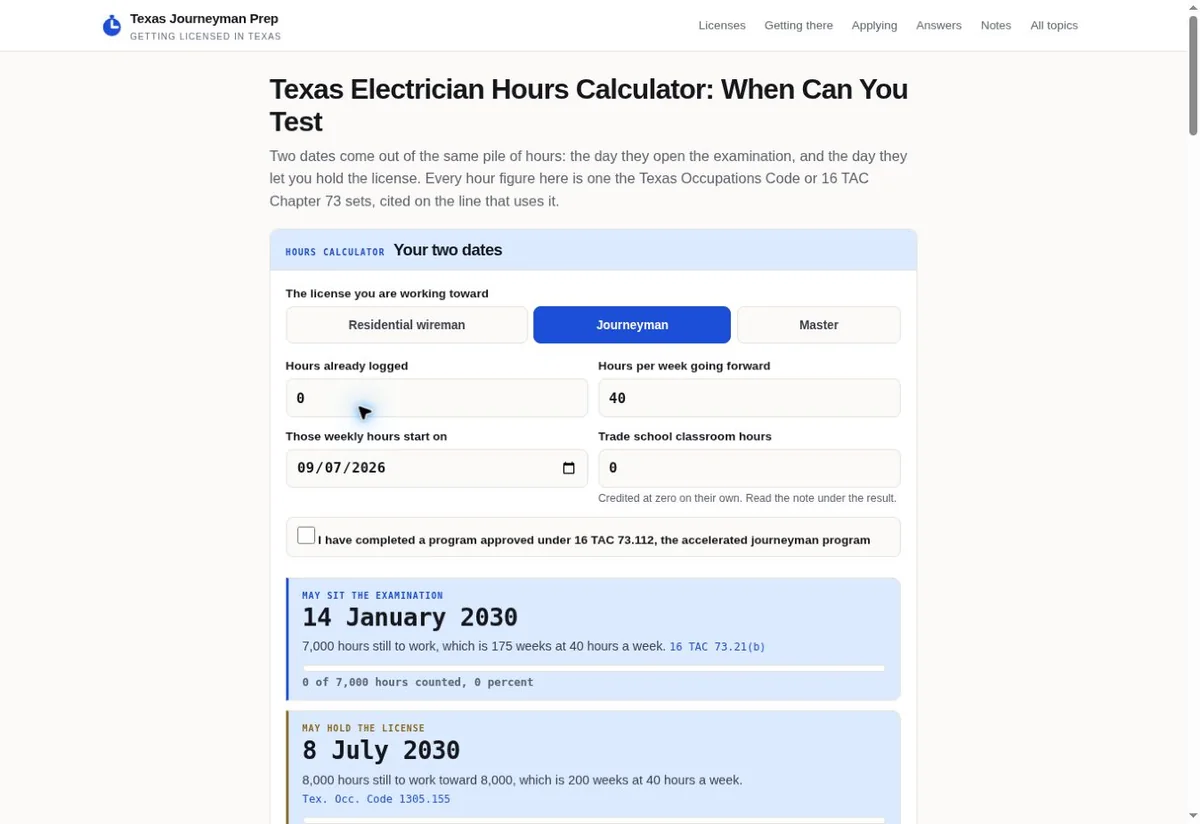
Texas Journeyman Prep calculator with license choices and planning fields
The calculator shows distinct user inputs. Separate interface completion from a verified business outcome when planning measurement. View the project
  1. Choose records for a stated reason Include examples that help test the ticket's question. If submissions exceed received requests, inspect a submitted test and a known received request. We suggest stating how the sample was chosen beside the results. A selection of easy matches can make a faulty connection appear reliable. Our first pass should include the case the team finds hard to explain.
  2. Carry the original status into the sample Keep labels such as accepted, declined and awaiting details visible. Add the date and person responsible for that status. We can discuss how staff apply the labels. A submitted form can still need checks before it becomes a sales opportunity. A sample stripped of its status history can hide a qualification change that explains the apparent disagreement.
  3. Inspect the receiving path Find the destination record and check whether a person could actually act on it. An email arriving in a monitored inbox is different from a notification left in an unused queue. Our question is whether the request reached its intended handoff. Record the observed path before assigning blame to a channel whose visitors used the form correctly.
  4. Retain the exception If a record cannot be connected, keep its unknown status and name the missing detail. We suggest retaining that case alongside confirmed matches. Otherwise the sample may imply a complete chain while excluding its failures. Ask whether the missing detail affects this ticket. It may belong to a later change in how records are kept.

A sample is a way to inspect a mechanism. It doesn't establish the same error rate across every inquiry. We can discuss a wider count after the underlying issue is understood. Keep the source period and selection rule attached to the findings. If the sample included only records handled by one employee, say so before treating it as a picture of the whole team.

The Texas Journeyman Prep calculator screenshot shows distinct planning fields. It gives our discussion a concrete interface reference. The image doesn't tell us whether an entry was submitted, accepted or tracked. For your own form, inspect the received record behind the screen. That operational check is what makes a submission count meaningful to the person handling requests.

Can we use a test record in the sample?
Yes, if it is clearly labeled and excluded from customer totals. A test can show how a path behaves at the time it is run. We suggest retaining its time and destination so a maintainer can find it. It doesn't explain an older customer record unless the team can establish the same conditions applied then.
What if staff disagree about qualification?
Ask them to explain the reason using the same request details. Our discussion can identify a missing rule or a changing business offer. Keep the disagreement visible until the authorized person resolves it. The correction should state whether earlier records need reclassification. Avoid moving chosen records into a better status to favor one channel.

Find the date convention behind an apparent missing sale

A date mismatch can make a connected inquiry appear absent from a report. Inspect what each timestamp represents before changing the source assigned to the outcome.

A system can record the instant a form was submitted while another records when staff entered the request. Those values describe different actions. We suggest writing their meanings beside a disputed record. A gap may be ordinary staff delay, or it may reveal a handoff that needs attention. Our analysis should preserve the actual sequence instead of replacing it with one convenient date.

Ask whether an export uses the account's local time or another time convention. A record near the reporting boundary can fall on a different day after conversion. We can inspect that case using the original timestamp and its known convention. Guessing a time zone to make totals match can create a new error. Keep the original value alongside any derived date used in reporting.

How do we handle a late sales entry?
Record the actual outcome date separately from the date someone entered it. If the outcome date is unknown, retain that gap. We suggest showing the correction in the next reconciliation notes. A late entry may require an earlier period to be restated. Entering the sale in a later month doesn't mean that month's marketing caused it.
What if a request was reopened later?
Preserve the first request date and the reopened date if both are known. Ask the sales owner why the status changed. Our channel totals shouldn't gain another opportunity just because the record became active again. A genuinely new request may need its own record under the business rule. The date alone cannot settle that distinction.
When can a newer cohort be compared fairly?
Check how much time each group has had to reach the outcome being counted. Keep pending cases visible at the comparison date. We can discuss equal time windows. There isn't one sales cycle that fits every business. The business's own stage history should guide the interval. An early group can look stronger simply because more of its requests have finished.
  • Keep the received time in its original form until the convention is confirmed. Note who verified it and which source supplied it.
  • Place the sales outcome date beside the inquiry link so a boundary check can follow one record without guessing its history.
  • Record the date the discrepancy was checked. A pending outcome may be resolved after that point and require another pass.
  • Flag a period whose entries are still being completed by staff. Our comparison should show that limit while the records catch up.

Keep follow-up contacts without multiplying the opportunity

A repeat contact can be useful history even when it belongs to an existing opportunity. Preserve the interaction and document why the business groups it with another record.

What proves two contacts belong together?
Use details the business can verify, such as the same requested project and a confirmed conversation history. Similar names or arrival times can be clues, but they aren't enough by themselves. We suggest having the inquiry owner confirm ambiguous cases. Keep the reason for linking the records so someone else can inspect it later. A forced match creates a falsely tidy total.
Can one person have two genuine requests?
Yes. A person can ask about a second project after the first is resolved. The business needs a rule for when that creates another opportunity. We can discuss examples with the staff who handle the requests. Give the customer and the opportunity their own records. A repeated person doesn't always mean the same project.
Should a duplicate record be deleted?
The total may exclude it. The business may still keep it in the contact history under its record policy. We suggest preserving enough context to explain the grouping. Deleting the only record of a follow-up call can hide what staff actually handled. Ask the owner how to retain the linked contact. It should remain findable without counting as a new opportunity.
What if two staff members open separate records?
Ask the authorized owner to choose the record that carries the opportunity's status and outcome. Preserve the other contact's original details where appropriate. Our investigation can then check whether separate records led to conflicting follow-up. A duplicate count may also reveal a work assignment problem. Correcting the total alone leaves that problem unresolved.
  1. Write the grouping reason State the verified relationship between the contacts in plain words. We suggest a reason that describes the project rather than a vague duplicate label. If the relationship remains uncertain, mark it pending and let the record owner investigate.
  2. Keep the surviving link visible Identify the opportunity that carries later stages. We can follow that link when checking an outcome. A grouped contact should still be traceable to the original receipt so the receiving path can be inspected if another mismatch appears.
  3. Recount both kinds of activity Show contacts and distinct opportunities separately after grouping. Explain which cases changed the total. Our comparison can then distinguish a busier contact workload from growth in new demand. Staff may have handled more calls even though the opportunity count remained the same.

A grouping rule can affect different sources unevenly. One channel may prompt more follow-up calls because its page leaves a practical question unanswered. We can inspect that pattern without labeling every call a new lead. Keep the business count stable while considering whether the page needs clearer information. A corrected count can reveal a useful customer question as well as an accounting difference.

Annotate the change that made the count jump

A change log ties reporting differences to known website and account changes. Preserve enough detail to test whether collection changed before describing a jump as new demand.

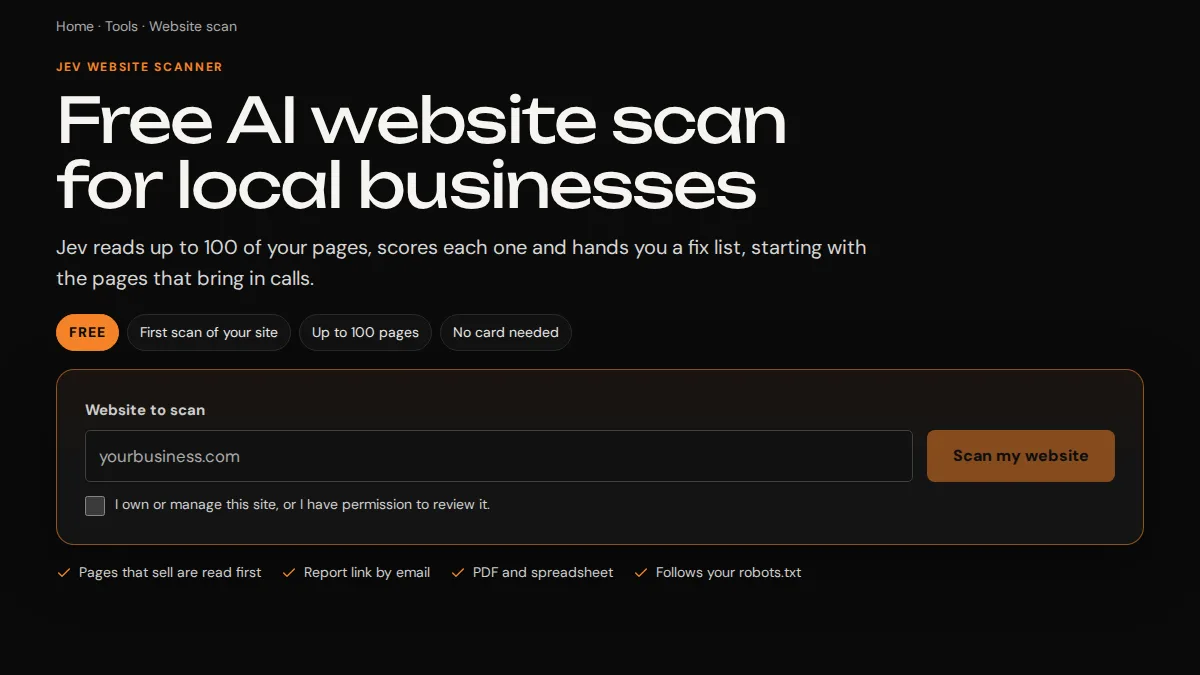
Jev scanner interface with a website input and scan action
The scanner project has a visible web action. Its screenshot does not prove the action was tracked or attributed. View the project

Log the change in terms someone can test. A note saying tracking updated is hard to investigate later. A note identifying a replaced form and the changed completion trigger gives our discussion a concrete task. Save the relevant earlier settings if they are available. If the old configuration can't be recovered, say so instead of inventing what it must have counted.

The Jev scanner screenshot displays a website input and an action to begin a scan. It illustrates a visible web action whose behavior could be tested. Our use of the image makes no claim about its analytics installation. For your own site, connect a changed interaction with a labeled test and the expected receiving record before drawing a trend from it.

  • Record whether a form's success state changed. A click can occur even when the user cannot finish the task. We suggest testing the completion path after a replacement.
  • Name the person who changed the goal configuration and the date it became effective. Our investigation needs the implemented change rather than a planned update.
  • Keep a staff recording change in the same log. Staff may start entering calls they didn't record before. That can change the total while traffic stays steady.
  • Show a changed status apart from a new request. We can then inspect whether the jump came from backfilled history or current demand.
  • Mark an interval that spans different collection methods. Avoid treating its totals as directly comparable until someone assesses the effect of the change.
Can we restore the old count for comparison?
Only if the saved records support a reliable recalculation. We can discuss which inputs remain available. A guessed adjustment makes the totals look comparable without proving they are. If recalculation isn't possible, show the change boundary and describe which observations can still be compared on the same terms.
Does a successful form message prove delivery?
It confirms what the interface told the user. The destination record still needs checking. W3C guidance calls for clear feedback about submission results, including success and errors. We use that guidance for the user experience. It doesn't replace a test showing where the completed request actually arrived.

Keep an unknown link visible while fixing a known problem

Incomplete journey records can still support a specific repair. Separate the confirmed failure from the missing source link so the repair does not depend on a guessed attribution.

What can we do when an inquiry has no source?
Handle the inquiry through the normal business process and retain unknown in the source field. We can inspect a broken form or an unassigned request without naming the channel that brought the person. If the business later receives a reliable link, record how it was established. An investment in a channel is insufficient reason to assign unknown requests to it.
Can a customer answer fill the source gap?
A customer's account can add context when the business has a suitable way to ask. Preserve it as the person's reported experience. We suggest keeping that answer distinguishable from a recorded website arrival. Someone may recall a friend's advice. The recorded referral could describe a later visit. Both observations can matter without forcing them into the same label.
Should we match records by a probable pattern?
Use a proposed match as a question for an authorized record owner. Keep the link unconfirmed until the available details support it. Our report can show that work is pending. An apparent pattern can link unrelated requests. Several people may ask about the same common service. A larger connected dataset can be less reliable if its joins are guesses.
How much personal detail should reach a reporting sheet?
Ask the business which details the task requires and who is authorized to see them. Use internal references where those are sufficient. We suggest leaving the full record with its proper owner. Wider reports should use only the context they need. Comparing channels rarely calls for every personal detail from a service call.

A confirmed receipt failure can justify a website correction while the affected user's source remains unknown. Record the fault and the test that shows it is repaired. We can discuss a later measurement improvement separately. This gives the owner a useful action without making an unsupported claim about which channel lost a sale. Keep the sales outcome unknown until the business record supports it.

Bring the missing record into the conversation early. An analyst may need a receipt export while staff expect the dashboard to contain it already. Our investigation is easier when access owners can identify what exists. Show which records are missing and which nobody has asked for yet. That distinction helps choose the next check without implying the entire customer history can be recovered.

Trace a department question through an Indianapolis shop exercise

A hypothetical department question can expose gaps between a web action and a staff record. Keep the exercise labels explicit so it cannot be mistaken for client results.

Hypothetical example An Indianapolis, Indiana shop compares a department question with a staff record

Before

  • An unnamed shop has a page explaining a department. In this invented exercise, a visitor presses the contact action and then sends a question. The website report lists an action while the staff register contains a later inquiry entry. The records lack a shared identifier, so the connection remains unconfirmed at the start.
  • The staff member recalls answering a similar question by telephone. That memory may be relevant, but the available record doesn't confirm whether it involved the same person. We would keep the possible relationship as an open question. Counting the call as another new opportunity would need a business rule. It would also need details that support that count.

After

  • The proposed ticket records the action label and the staff entry date. The receiving owner checks the actual request and any available reference. We can then discuss whether the match is supported. If it remains unknown, the staff request stays in the business total while its connection to the website action stays unresolved. No source is assigned merely to close the ticket.
  • The next labeled test checks the form's completion message. It also checks whether the inquiry reaches the right place. The shop can fix that tested path while retaining the old gap. Our exercise claims no measured sale or channel uplift. It shows how an owner can authorize a concrete repair without pretending an incomplete journey has become complete.

The photographed Georgetown Market signs are in Indianapolis, Indiana. They show actual department words. SOUPS appears above SOPAS in the installed sign. We use that observable label as creative context for a department page, without claiming the shop exercise occurred there. Jeff worked at Georgetown as its marketing director. The sign photo supplies no inquiry records. Jeff's role there doesn't establish any sale in this exercise.

Keep the exercise's category wording separate from its invented record trail. We can verify a sign label while having no record of a related inquiry. That distinction matters when an owner brings real creative work into a talk about tracking. A familiar place can make an example feel credible, but it doesn't supply the missing business observations.

Close with the correction and the remaining limit

A reconciliation report should state what was corrected and what remains unresolved. Tie any proposed action to the inspected records so the owner can assess it.

  1. Describe the explained difference Show the two original counts and the rule or fault that accounts for their disagreement. We suggest enough detail that another person can repeat the check. If part of the difference remains open, retain it in the same note. A partly explained gap should not be presented as a fully reconciled result.
  2. Name the applied correction Identify the person who changed the record or repaired the collection path. Keep the effective date with the correction. Our report can distinguish a completed repair from an instruction waiting for implementation. Advice alone doesn't change the records. Confirm what happened before showing a revised total.
  3. Show the remaining business question A corrected total may still leave the owner unsure about a channel budget. State what additional outcome history would help assess that choice. We can discuss a smaller action supported by the current records. The ticket's closure means its stated discrepancy was resolved; it doesn't establish that one channel caused the later commercial outcome.
  4. Leave a checkable next task Use a concrete task such as confirming the receiving record after the form update. Assign its owner and the observation that would close it. We suggest a task the responsible person can actually carry out. Name the exact gap in the next task. It may involve one missing ID or a form path nobody has tested.
What should an owner bring to a reconciliation conversation?
Bring the disputed report with its selected period and the corresponding inquiry records you are authorized to share. Describe the count you expected and why. We can discuss which records or access owners are needed next. Label each example. We need to tell tests apart from customer activity during the call.
When should we stop investigating one ticket?
Stop when the stated question is answered well enough for its intended use or when a known information limit prevents further progress. We suggest recording that limit explicitly. A closed ticket can say the link is unknown. It can also assign a repair for future requests. Continuing to invent links doesn't improve the reliability of the original period.

Ask us about the discrepancy that is blocking a practical marketing choice. A specific example gives our discussion a sharper starting point than a request for a more complete dashboard. We can examine the collection path and the business definitions involved. The work should leave the owner able to explain the corrected figure and the uncertainty that remains around it.

Sources