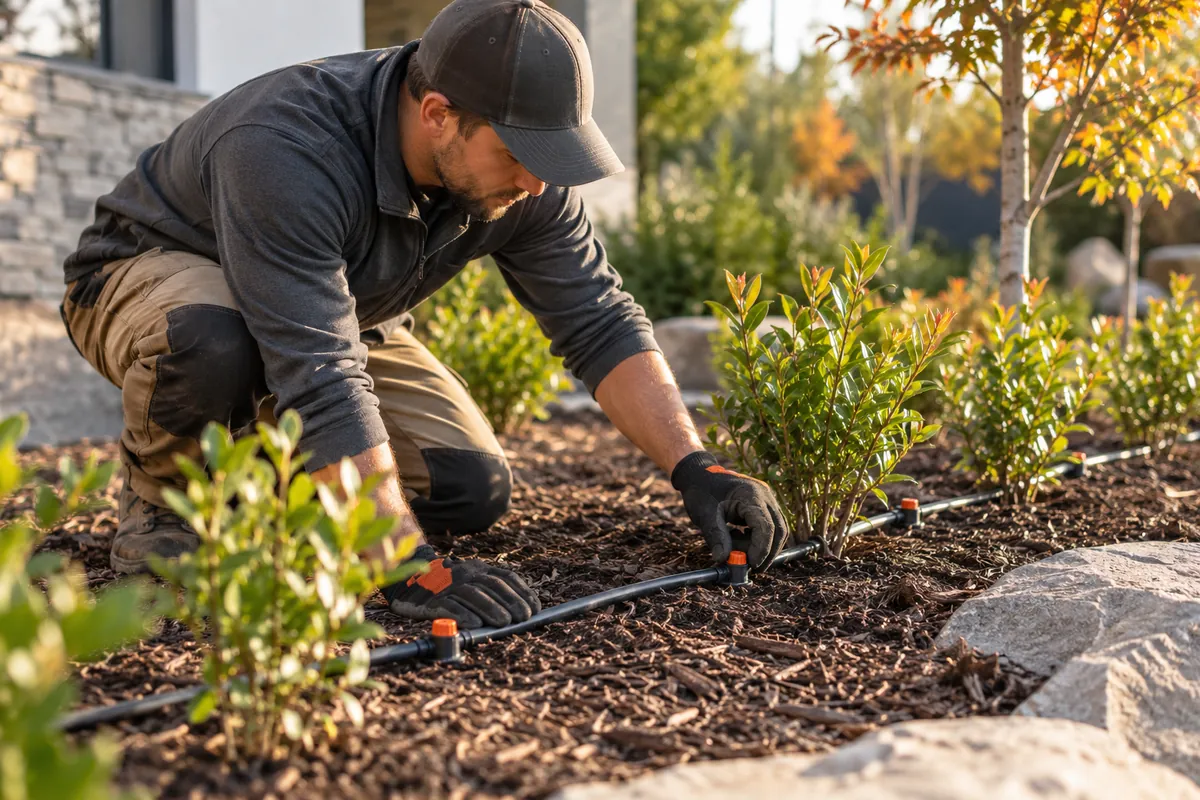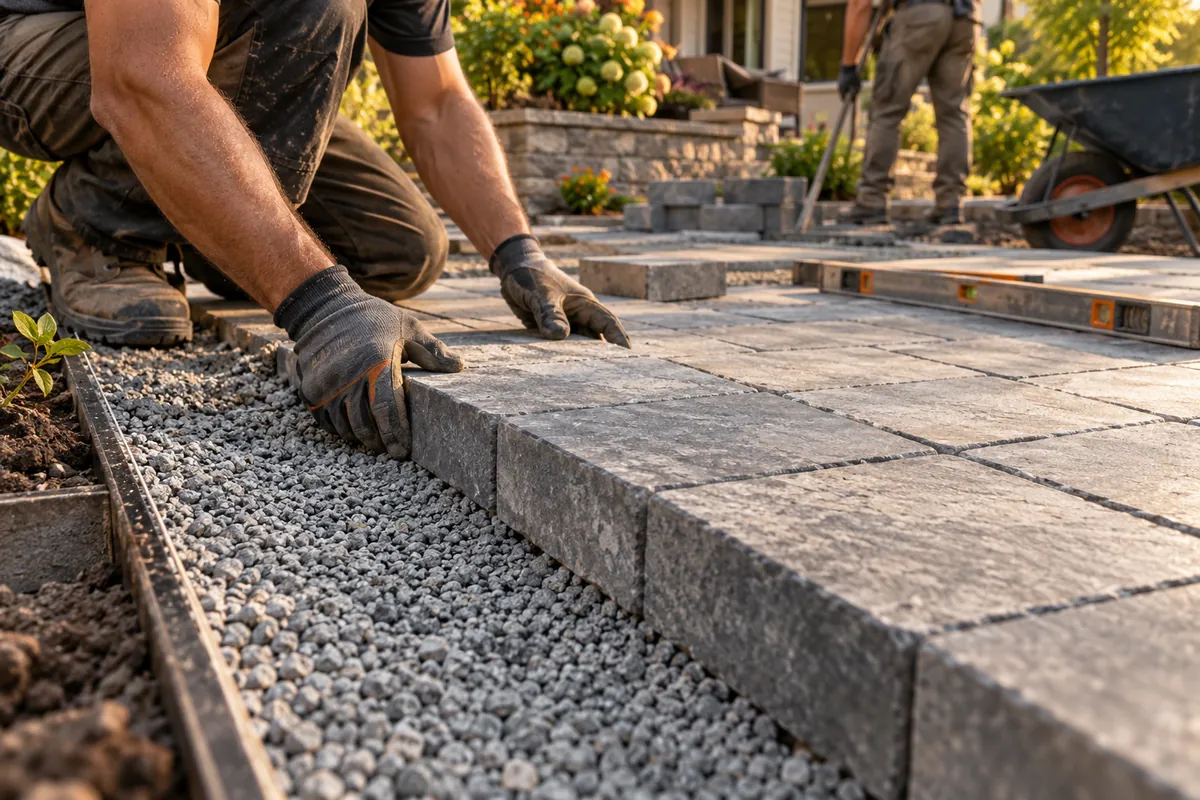
Many patio buyers start with a saved photo before they know what the build involves. Your gallery has to close that gap, so each finished job we write up says what the owners wanted to use the yard for, the materials and the town.
We start with that gallery, since it's where a shopper decides whether to call. Next, the consultation form asks whether it's a new build or a repair and roughly how big the space is.
Then search and ads point at the job types you want, and we count booked consultations apart from repair calls. Installers outside Indiana get the same setup, built around the areas their crews really cover.
Hardscape marketing FAQs
What deliverables can the first scope include?
Usually your service pages, one or two project stories from finished backyards, a consultation form that sorts new builds from repairs, and a Google Ads campaign if you want one. Jeff works out the exact list with you on the free call.
Request a free hardscape marketing audit to review the journey from outdoor inspiration to suitable projects. Or contact Trojan Digital Marketing to discuss the work you want to build next.
How much does hardscape marketing with Trojan Digital Marketing cost?
Ongoing SEO, Google Ads and project story pages for a hardscape installer are priced after the free strategy call, once we know your service radius and the jobs you want. One published package that may apply is the Marketing Startup Kit at $7,997, a launch package for new businesses covering a custom 15 page website, Google Business Profile optimization, twenty blog posts and three months of consulting.
Can you help us attract a particular kind of outdoor project?
Yes. Tell us the jobs you want more of, like paver patios with seat walls or outdoor kitchens. We build the gallery, the service page and the ad keywords around those. You still decide which consultations to take.
What if our prospects are still gathering ideas?
Then give them something to plan with: a page on how your design visit works and what to have ready, like rough yard size and how they'll use the space. We tag those early inquiries apart from people ready to book, so each gets the right follow-up.
Do we need a large portfolio before starting?
No. Three or four well-photographed jobs with a few lines each beat a gallery of fifty unlabeled patios. We'll tell you which finished jobs to photograph first.
Can marketing work when the installation schedule is full?
Yes, but we'd change the ask. If you're booked through summer, the page says so and offers fall or next-spring design visits, and we pause ads for jobs you can't take.
How long does a new hardscape website take to launch?
The Marketing Startup Kit's published example schedule runs twelve weeks, with strategy in week one, the website build in weeks two to four, content and your Google Business Profile in weeks five to eight, then launch with consulting from week nine. The kit page says the real schedule is agreed after scope review, and we won't guess a ranking date.
Do we have to sign a long contract for hardscape marketing?
There's no standard contract length we publish for custom hardscape work. Jeff Clerisier scopes each project with you directly, and a crew that goes quiet in winter needs a different setup from one booked solid by spring, so length and timing get worked out around your season.
What happens on the free strategy call?
You'll talk through the outdoor projects you want more of, the towns your crews will drive to and where your calls come from today. Bring photos of a couple of finished backyards you're proud of. The call costs nothing. During business hours we aim to reply within five minutes.
What if the ads bring in repair calls instead of new builds?
Then we change what the ads and the form ask for, because the tracking will show it within the first weeks of spend. We'd tag every inquiry as a new build or a repair, so you can see which campaign sent which kind of call, and we'd tighten keywords and the form question before spending another dollar on that campaign.
How would you aim hardscape ads in suburbs like Fishers?
We'd start where most homes are owner-occupied, since the owner is the one who approves a patio. Fishers is 76.2% owner-occupied with a 2024 median property value of 391,000 dollars, so it's a sensible first test area if your crews already work there. We'd compare booked consultations by town before widening the radius.
Do you work with hardscape installers outside Indianapolis?
Yes. From our Indianapolis base, our service area covers Noblesville, Westfield, Fishers, Zionsville, Greenwood, Avon and Plainfield, and we take clients in other states. Your pages should name only the towns your crews really drive to, so we build them around your actual radius, whether that's one county or a metro several states away.
“…drove a noticeable uptick in leads within just a few weeks…”
“I had a great experience working with Jeff…”
We have more than 1,400 live websites.
Based in Indianapolis, we serve businesses across central Indiana, including Carmel, Fishers, Zionsville, Westfield, Noblesville, Greenwood, Avon and Plainfield.
We also work with clients across the United States.
A PRACTICAL MARKETING WORKSHOPTurn a finished patio into a project planning story
Open this walkthroughClose this walkthrough
Hardscape buyers may admire a patio photograph without understanding the design decisions, project scope, or contractor’s role behind it. We would build project stories around what the client wanted to use the space for and how the business approached the approved engagement. The website should help a prospect describe a project rather than choose technical construction details from an online quiz. Design, site assessment, and installation responsibilities need to match the actual service offered.
Worked example · hypothetical planning scenario
Suppose a hypothetical hardscape installer wants larger outdoor living projects but its gallery gives equal emphasis to small repair requests. We would create a featured project showing the starting use problem, an approved plan or concept if available, and the completed space from more than one viewpoint. The inquiry could ask whether the homeowner is planning a patio, a connected outdoor area, or another accepted scope, and whether a design already exists. A separate path handles repair inquiries according to the company’s actual policy. When reviewing results, the business can distinguish consultations for a new project from requests to fix someone else’s installation, and assess which project stories help buyers arrive with useful context.
| Buyer’s stage | Portfolio material | Appropriate conversation |
|---|---|---|
| Exploring outdoor uses | Project story organized by how the space is used | Discuss goals and the design process |
| Has a concept or design | Evidence of relevant installation scope | Review the project and company role |
| Existing hardscape issue | Honest repair service boundary | Confirm whether the request is accepted |
Photograph how the space works
- Show the complete setting, connections between areas, and details that illustrate the project’s stated purpose, with the owner’s permission.
- Gather the client’s original brief and the contractor’s verified role in design, sourcing, and installation; do not imply responsibility for another designer’s work.
- Collect the project questions that establish readiness, including property location, intended use, existing design, and the next decision maker.
- Keep any displayed price or timeline tied to a documented specific project and clearly separate it from a prospective quote.
Build one project story that qualifies the next
Bring a completed outdoor project and explain why it suited your business. Trojan Digital Marketing can create a planning story and inquiry journey around those qualities so the portfolio does more than provide visual inspiration.
Where are central Indiana's patio buyers?
Hardscape installation marketing in central Indiana works best when pages and ads follow owner-occupied, growing suburbs, and these public figures show where those are right now.
Hamilton and Johnson counties, Indiana
Fishers had a 2024 median property value of 391,000 dollars, and 76.2% of its homes were owner-occupied.
A patio ad reaches the person who can approve it more often in an owner-heavy suburb, so Fishers makes a fair first test area for crews already working there.
Data USA, Fishers, IN (Census ACS)Checked September 25, 2026Hamilton County added 7,351 residents in 2025, the largest numeric gain of any Indiana county and more than twice runner-up Johnson County.
New households choose an outdoor contractor with no neighbor's referral in hand, and that's when Maps photos and finished project pages do the selling.
IU News / Indiana Business Research Center, 'Indiana population estimates: Strong growth continued in 2025'Checked September 25, 2026Johnson County's 2025 growth came mostly from people moving in: net in-migration of 2,876, with 2,497 of them arriving from elsewhere in the U.S.
Newcomers south of Indianapolis don't know which installer their street used, so a project page that names the area gives them something real to go on.
Daily Journal, 'Johnson County again among fastest growing in state, 2025 Census estimates show'Checked September 25, 2026
These are public figures for aiming pages and ads. They say nothing about our own clients, and your crews' real service radius decides which towns belong on your site.
What does an example hardscape launch schedule look like?
For a new hardscape installation company in central Indiana, the Marketing Startup Kit's published example schedule runs twelve weeks with four milestones and one job for you, and the real dates are agreed after scope review.
- Your finished project photosYou send photos of backyards you're proud of with a line on each about what the homeowner wanted, since every project story on the site is built from them.
- Discovery and strategyWe map your market and competitors, then lock the outdoor project searches worth chasing before any design starts.
- Brand and website buildA custom 15 page site is designed and built, with weekly iterations and two formal revision rounds.
- Content and Business ProfileTwenty blog posts are published and your Google Business Profile is fully optimized, with schema and technical SEO finished alongside.
- Launch and consultingThe site goes live, and three months of strategy consulting start right away, adjusted to the consultations that actually come in.
Help an idea become a useful conversation
A prospect may not know the final materials, dimensions, or project components when they first visit the site. They can still have a clear goal: a different way to use the space, a particular appearance, or a project they want to explore. The website should help them describe that goal without pretending the idea is already an estimate ready scope.
Read more
Explain the company's own consultation process. Tell people what they can prepare, what your team will discuss, and which decisions come later. If the business offers a separate design or planning service, describe that actual arrangement and any approved terms.
The first action can be a project conversation rather than a promise of an immediate final quote. That sets a more accurate expectation and gives the office a better basis for deciding the next step.
Make the hardscape offer specific
Patios, walkways, outdoor living features, and other project categories should appear only where they are genuine services. The website should distinguish the work your company performs from adjacent services that may be provided separately or by another party.
A broad “dream backyard” message can be appealing while leaving scope unclear. The buyer needs to understand your role in the project. The business should approve claims about capabilities, credentials, product relationships, and the work shown in the portfolio.
| Project question | Useful marketing answer | Business decision supported |
|---|---|---|
| Do you do projects like this? | Defined service categories and relevant approved examples | Initial scope fit |
| How do we begin planning? | The company's actual consultation process | Readiness for the next conversation |
| What do you handle? | Clear role and service boundaries | Expectations about the engagement |
| When should we contact you? | Accurate planning and scheduling information | Alignment with available capacity |
What changes when a patio photo becomes a project page?
This hypothetical hardscape installation page for one finished Fishers backyard shows how a single gallery photo turns into a story a homeowner can picture and a request an estimator can use.
Hypothetical example
A hypothetical hardscape installer's page for one finished backyard patio
Photo grid only
- Twenty patio photos in a grid with no captions, town or scope
- Nothing says who designed the space and who built it
- One contact form that asks only for a name and a message
- Paver repair requests and full builds land in the same inbox looking identical
One backyard, told start to finish
- A featured project that opens with how the family wanted to use the yard and ends with the finished space from two angles
- A caption stating the installer built it from the homeowner's own design, so the role is honest
- A single form question up front: new outdoor space, or repair to existing pavers?
- The town named in the caption, so nearby homeowners know the crew already works close by
Qualify without asking the homeowner to design the project
An inquiry can identify the property location, broad goal, desired service category, current planning stage, and preferred way to continue. Optional images or references may help when the business has a clear review process. The form should allow the customer to say what is still undecided.
Do not demand technical project answers merely to start a conversation. Marketing gathers context; your qualified team determines what needs assessment and how the scope should be developed. The confirmation should explain the next step without implying that the project has been accepted.
A hypothetical consultation brief
A homeowner wants to explore a patio and connecting walkway but has not selected a final design. The brief records the location, intended use, project category, and planning window. The office confirms that the request fits the company's services and assigns the next conversation.
The record can remain an early stage opportunity until enough information exists for a proposal. This helps the business preserve suitable future work without pretending that every idea is ready to book.
Connect adjacent outdoor services clearly
Hardscape projects can involve several related activities, but marketing should not blur who provides them. If irrigation is a separate offer, the irrigation services marketing approach can support its own service and scheduling journey.
Likewise, excavation marketing addresses a different capability and project review process. Clear crosslinks can help customers explore genuine related services while the page explains the boundaries of the hardscape engagement.
This is especially important in project imagery. A prospect should not assume every visible element is included because several services appear in one finished scene. Accurate captions and scope statements can prevent that confusion before quoting begins.
Hardscape SEO, AEO, and GEO with useful planning answers
Search content can address the questions your team repeatedly answers: what information helps a first conversation, which project categories you accept, how your planning process works, and what the customer should expect from a consultation. These answers should reflect your business's actual practice.
Read more
Our SEO, AEO, GEO, and AI SEO work connects those explanations with service pages and project evidence. A person researching an outdoor project should find useful information without being pushed immediately into a generic quote form.
Google links generative search to useful SEO foundations. We focus on substantive, understandable business information. AI Overviews and other answer systems may be included in visibility observations, but their recommendations cannot be guaranteed.
Build local coverage from real work and real operations
A hardscape company can serve several communities through one website. The content should explain genuine coverage and any project conditions that affect the territory. It should not imply an office in every area where the business accepts work.
Read more
Local project stories can be valuable when they are accurate and approved. They should explain the work itself and why it helps a similar customer evaluate your company. Generic neighborhood descriptions do not replace that evidence.
For businesses considering several sites, the microsite quality guide starts with customer purpose. The separate site decision test helps compare a dedicated destination with a stronger main site section. The goal is useful coverage, not domain count.
Use paid campaigns to support a chosen project category
Hardscape PPC should identify the kind of work the business wants, the territory it can support, and the next step the prospect is being invited to take. A campaign aimed at a planned installation project should not be evaluated solely by the number of people browsing inspiration images.
Read more
A paid campaign scope can define the offer, audience intent, exclusions, landing page requirements, spending boundary, and qualification feedback. Media and management costs should remain visible to the owner.
Creative can show real project decisions and approved examples. It should not promise that every property can achieve the same appearance, scope, price, or schedule. The campaign starts a useful conversation; the company develops the actual project.
Plan around research, quoting, and installation windows
The time when customers explore outdoor ideas may differ from the window when your team can quote and deliver them. Use your own inquiry history, open proposals, and production commitments to plan promotion. Local operating conditions may influence the schedule, but they do not justify a universal calendar for every market.
Read more
If consultations are the bottleneck, qualification and clearer preparation may help first. If production is full, the objective may be a later planning window or a preferred project mix. Marketing should reflect that decision rather than keep increasing immediate demand automatically.
Public availability messages need an approval owner. The website should not continue implying near term installation after the business has committed that capacity elsewhere.
Measure progression from idea to booked project
Track relevant inquiries, consultation ready opportunities, planning conversations, proposals, booked work, and completed projects separately. Record the service category and the reason an inquiry does not fit. Those details help distinguish weak targeting from a normal early stage research audience.
Read more
In a hypothetical review, a portfolio article attracts several planning inquiries, while a focused service campaign produces fewer but more defined consultations. The business can value both appropriately without counting every visit as a lead or every conversation as a booking.
Keep quoted value separate from accepted work. Open projects should retain their stage and age so the owner can understand the decision cycle. The contextual linking guide can also help connect the content journey without turning navigation events into customer outcomes.
A hypothetical first 90 days
Days 1 to 30: define preferred project categories, genuine territory, planning capacity, and the consultation process. Review portfolio evidence and identify where images or service language create incorrect expectations.
Days 31 to 60: publish approved project stories and priority service explanations, improve the inquiry route, and establish opportunity stages. Begin a focused campaign if the offer and response process are ready.
Days 61 to 90: review consultation fit, planning progression, proposals, and the effect on production capacity. Choose the next project category or content priority from the evidence. This sequence is a work plan example, not a promised outcome.
Sources & further reading
Talk with Trojan Digital Marketing
Based in Indianapolis, we serve central Indiana and clients across the United States.