A natural food store can offer a distinctive selection without asking shoppers to decode broad wellness language. Someone looking for a particular pantry brand, organic produce, bulk ingredients, or a prepared food counter needs specific information about the store. Useful marketing helps that person understand the selection and plan a visit.
The first thing we check on a health food store's website is whether the menu uses your aisle words. If the site says "Wellness" where the sign says "Supplements," a shopper who knows that aisle won't find it online. So we rename web categories to match the signs and list each department's weekly brands. Product lines come only from the label and the supplier sheet, and in-store signs can use the same wording.
Explore product discovery, organic terminology, and an illustrative first 90 days. Our marketing approach does not turn a product category or customer story into an unsupported health claim.
Health food store marketing questions
How much does health food store marketing cost?
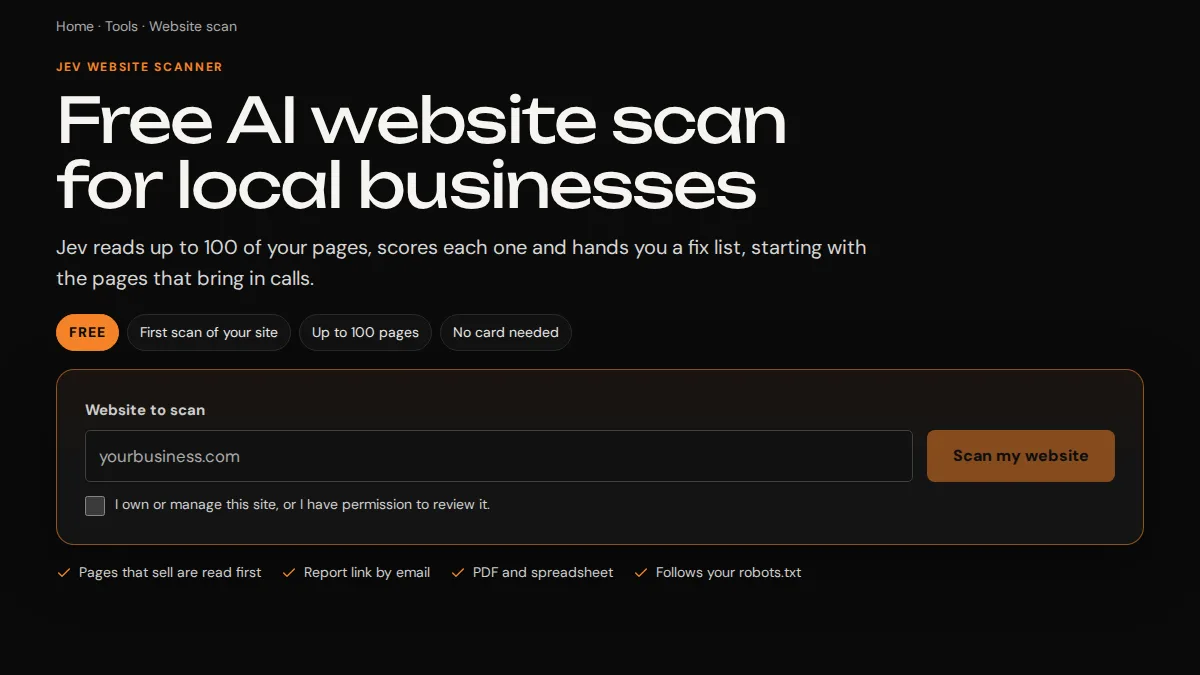
It's priced after the free strategy call, since a single store with a bulk room needs different pages than a market with two locations and a juice bar. You can test one of your own pages first at no cost. When you want the whole site read, the $99 Jev audit reads up to 3,000 pages and includes one rescan, and any later rescan is $19.
Can you market an organic focused store without making health claims?
Yes. Selection, sourcing information the store can verify, culinary uses, convenience, service, and the shopping experience provide useful material. Organic wording should follow the relevant product information. Marketing does not need to promise a medical benefit to explain the store's value.
Will you describe our entire store as certified organic?
Only if the store supplies verified documentation that supports that exact statement and its scope. Carrying organic products does not by itself establish a storewide certification claim. We can instead describe the actual organic selection accurately.
Can category pages include product availability?
They can describe the usual selection and explain how to confirm a specific item. Live stock statements require a reliable data source and update process. The proposal should distinguish a representative assortment page from an inventory connected product catalog.
Does the Georgetown Market project show relevant experience?
Yes, for signs and department names. It's in-store signage from Jeff Clerisier's staff role at that store, written up as a case study on our site. It reports no search or sales results, so we don't offer it as proof of either.
How do we start if our product information is inconsistent?
Begin with a few important departments and their most common customer questions. Gather current labels, supplier materials, and store photographs. We can help establish a reviewable content process before expanding the website or a product feed.
Can our product pages say what a supplement does?
They can say what the package and your supplier's sheet confirm, such as the ingredient list and any certification seal. We won't write that a product treats or prevents a condition. When a shopper asks about their health, the page points them to a doctor or pharmacist, and your staff can still talk about flavor and what's on the shelf.
How do we cut down on “do you carry this?” phone calls?
Give each department a page listing the brands you stock every week, and add a short product question form for everything else. Say plainly that stock changes and how soon someone replies. The phone won't go quiet, and you wouldn't want it to. But the shopper who only needed a yes about a brand you always carry gets it without waiting on hold.
Why should the website use the same category names as our signs?
Matching names mean a shopper who read “functional beverages” on your site finds the same words over the aisle. The Georgetown Market case study shows how. Its brief called for more than 30 bilingual grocery signs in the store's three brand colors. Each English category sits above its Spanish name, like SOUPS over SOPAS, and FUNCTIONAL BEVERAGES runs across two large lines. Test your longest names in the web menu the same way.
What happens first if we hire Trojan Digital Marketing?
It starts with the free strategy call, where we ask which departments bring people in and what shoppers ask your staff most. If you go ahead, Jeff Clerisier agrees the scope and dates with you, and nothing starts before that. For a store opening from scratch, the Marketing Startup Kit's illustrative schedule runs twelve weeks. Week one is discovery, weeks two to four build the site, and weeks five to eight add blog posts and your Google Business Profile. Launch fills weeks nine to twelve.
What if shoppers still don't find us after the changes?
Then your Google Business Profile numbers will show it, and the plan changes. Each month we compare searches and website clicks with the same month a year earlier, because shopping swings with the seasons. If a department page draws no visits, we rename it with the words shoppers actually type. After your audit, a $19 rescan through our website scan, powered by Jev, checks the renamed page.
Do you work with health food stores outside Indianapolis?
Yes. We're based in Indianapolis, with a service area from Marion County out to Carmel, Fishers, Zionsville and Greenwood, and we work with stores elsewhere in the United States remotely. A store in another town brings its own local details to the strategy call, and the pages get built from those. Nothing about your town goes on a page until someone has checked it against a public source.
“I had a great experience working with Jeff…”
“…drove a noticeable uptick in leads within just a few weeks…”
We have more than 1,400 live websites.
Based in Indianapolis, we serve businesses across central Indiana, including Carmel, Fishers, Zionsville, Westfield, Noblesville, Greenwood, Avon and Plainfield.
We also work with clients across the United States.
A PRACTICAL MARKETING WORKSHOPBuild discovery around real departments and product questions
Open this walkthroughClose this walkthrough
A health food store can be distinctive through its assortment, local suppliers, prepared foods, knowledgeable staff, or other services it genuinely offers. We would make those differences visible without turning retail content into unsupported health advice. A shopper should be able to find the relevant department, understand the usual selection, and know how to check a specific item. The store’s actual strengths provide better content material than repeatedly claiming to be the healthiest choice in town.
Worked example · hypothetical planning scenario
Consider a hypothetical independent store with an organic produce section, bulk pantry department, and a prepared food counter. We would create a practical discovery page for each department using approved current photographs, representative categories, and useful shopping questions. A “Build your first visit” feature could let a shopper select departments of interest and reveal their store floor locations and any distinct service hours. It would not prescribe foods or supplements for a medical condition. Product pages or stories would distinguish verified product attributes from broad wellness claims. The store can review department interest, availability questions, directions actions, and actual transaction evidence where provided. Jeff's Georgetown Market signs, made while he was the store's marketing director, can support a design conversation. They don't establish a sales or search result for this hypothetical plan.
| Shopper task | Useful content | Fact to verify |
|---|---|---|
| Explore the assortment | Distinct department pages and current photographs | Actual categories and typical selection |
| Find a specific item | Honest availability check route | Whether inventory data supports the answer |
| Plan a first visit | Hours, actual store location, and department guide | Current operating and service information |
Create a store specific editorial shelf
- Interview department staff about recurring shopping questions and useful explanations they can approve without making individualized health recommendations.
- Collect verified supplier, sourcing, and product attribute information before using those claims in articles or promotional signs.
- Photograph the real departments and representative items, distinguishing current selection from a historical or illustrative image.
- Choose content that helps a shopping decision: how the bulk department works, where to find a category, or how to confirm a product.
Show what makes your store worth a visit
Bring three departments or services customers value and the questions your staff answer most often. Trojan Digital Marketing can connect those strengths with local discovery, useful editorial content, and a store guide that encourages an informed visit.
Which Indianapolis details belong on a natural foods store's pages?
Two trails and a commute shorter than the national average shape how an Indianapolis natural foods store should give directions and post its hours online.
Indianapolis, Indiana
The Monon Trail is one of the busiest urban greenways in the country, with more than 1.3 million users a year. It was inducted into the Rail-Trail Hall of Fame in 2009.
A store near the trail can post its bike parking and the closest trail access point on its location page.
Rails to Trails Conservancy, Indiana's Monon TrailChecked September 25, 2026The Indianapolis Cultural Trail is an 8-mile urban bike and pedestrian path downtown that links neighborhoods, cultural districts and entertainment venues. It was paid for with local philanthropy and federal transportation grants.
A downtown store can give walking directions from the nearest trail segment right beside its driving route.
Indianapolis Cultural Trail, HistoryChecked September 25, 2026In 2024, 14% of Indianapolis workers worked from home and 71.8% drove alone. The average commute ran 24.6 minutes.
Shoppers who work from home can stop in midday, so weekday restock or tasting times are worth posting.
Data USA, Indianapolis city (balance), IndianaChecked September 25, 2026
Public facts from our research, checked September 25, 2026. We name no health food store clients here.
What can a natural foods store's website say about a product?
On a health food store's website in Indianapolis, each common shopper question can get a plain answer, as long as one named person at the store confirms it.
| Shopper question | What the page can say | Who confirms it |
|---|---|---|
| Do you carry this brand? | The brands stocked every week, with a note that sizes and flavors change | Your buyer, once a month |
| Is this organic? | Only the certification printed on the package | A label photo kept on file |
| Will this help my condition? | Nothing about the condition, plus a line pointing to a doctor or pharmacist | Store policy, set once |
| Is the bulk section open? | Department hours whenever they differ from store hours | The store manager |
| Where is it in the store? | The aisle sign name, spelled the same way online | Whoever updates the signs |
What should a health food store gather before product pages are written?
Before we write product pages for an Indianapolis health food store, the store pulls together material its team already keeps, so the site and the aisle signs agree.
Your store gathers
- Your category list exactly as the aisle signs print it
- Label photos and supplier sheets for featured products
- The questions staff hear most at the register
- Brands you stock every week, kept apart from seasonal ones
- Hours for any counter that keeps its own schedule
We build
- Department pages that use the sign names word for word
- Product copy drawn from the label and supplier sheet only
- A product question form that states your reply time
- A location page with walking and parking directions
Help a shopper recognize the store's actual selection
The words natural food store can describe very different businesses. One may emphasize groceries and produce; another may offer bulk ingredients, personal care products, or a substantial prepared food department. Your website should make its particular mix clear before a shopper arrives.
Read more
We begin with an assortment interview and a department inventory. Which categories are central to the store? Which brands generate regular availability questions? Which departments have their own hours? What do employees explain to first time visitors? The resulting content structure reflects those answers rather than presenting every possible health food keyword as an offering.
A category page can introduce the selection, show current representative photographs, explain where to find it in the store, and offer a contact route for a specific product. It can identify seasonal changes or limited assortment without creating a false impression of permanent stock. The same category names should help a visitor navigate the website and recognize the department on arrival.
For a hypothetical shopper seeking a particular organic baking ingredient, the useful journey might be search, pantry category page, exact item confirmation, and directions. Another shopper may want a current deli menu and its service hours. These are different tasks and should have different destinations.
Use organic language at the right level
Product terminology matters because shoppers may use it to make a specific choice. USDA explains that organic identifies production under its organic standards. Its consumer and retailer guidance is an appropriate reference when a store explains the label. It is not evidence that every product in a natural food store is organic.
Read more
USDA also distinguishes among organic labeling categories. Its labeling overview treats a product labeled organic differently from one described as made with specified organic ingredients. Our content should preserve the applicable product wording rather than casually upgrade it to a broader claim.
We ask the store for the current product label or supplier approved information behind a relevant description. A product's status should not be expanded into a claim that the retailer itself holds a certification unless the retailer has verified documentation for that exact statement. Department headings, website filters, shelf messages, and promotional copy should use the same confirmed terminology.
This is a content discipline, not a certification service. The store remains responsible for confirming the claims attached to its assortment and operations. Where an explanation would require a technical or regulatory determination, the marketing copy should use the approved source and responsible reviewer rather than improvise.
Build useful product information without health promises
A good product description can be persuasive through concrete detail: name, brand, format, package size, flavor, intended culinary use, and where the item fits within the store's selection. A photograph can show the actual package. A department article can explain how staff organize ingredients or how a customer can ask about availability.
We do not infer that a food prevents disease, that an organic label proves a health outcome, or that a supplement is suitable for an individual. A customer's enthusiasm is not evidence for a medical claim. If the store provides educational programming, the page can accurately describe the event, speaker, topic, and registration process without promising a health result.
Product filters also need careful definitions. A broad lifestyle tag should not be treated as proof that a product meets someone's allergy needs. FDA's food allergy information emphasizes reading the product label. Website content can preserve current label information and direct a shopper to it; a marketing category should not replace that check.
| Field | Source to keep | Publication rule |
|---|---|---|
| Product and package | Current package or supplier record | Match the exact variety and size |
| Organic description | Applicable label and supporting supplier information | Preserve the confirmed scope |
| Availability | Inventory data or staff confirmation | State how current the information is |
| Department or use | Store's assortment and merchandising decision | Describe shopping context without unsupported health benefits |
Connect local discovery to a useful store page
- Business
- Start from the real business.
- Coverage
- Identify the places it actually serves.
- Office
- Do not turn a service area into an invented office.
We review the store's public name, location, contact route, regular hours, and special schedules. When a department closes before the main store, its page should make the difference clear. A visitor should be able to find directions without waiting for a heavy embedded map to load.
Read more
Google's local business guidance recommends complete and accurate information. We turn that into a practical maintenance task: confirm which details appear on the store website and its managed profiles, name an owner, and define how changes reach each place.
Search engine optimization can connect category and location pages to relevant shopping questions. Answer engine optimization helps those pages give concise answers about the selection, visit, and ordering process. Generative engine optimization adds attention to clear identity and source backed public facts. Our search service supports that work without promising that a particular AI system will recommend the store.
A useful page can answer whether the store generally carries a category while explaining that exact stock changes. It should not claim every brand is always available merely because the brand is popular in search. When a shopper needs an exact answer, a clearly labeled availability inquiry is more credible than an unsupported in stock badge.
Use the store's character in digital and physical design
Independent markets often have recognizable departments, colors, product displays, and staff expertise. We can build a visual system from the actual store rather than applying a generic wellness aesthetic. The website should help a new visitor recognize the storefront, entrances, and useful landmarks inside.
Read more
The Georgetown Natural Foods Market case documents grocery signs Jeff designed as the store's marketing director, including bilingual work in its established brand colors. It demonstrates that design work; it does not establish SEO growth, increased traffic, or sales performance.
For your project, a design brief can cover department signage, shelf or promotional messages, event materials, and the corresponding digital pages. Each application needs its own reading hierarchy. An aisle sign helps orientation at a distance; a product page can explain details; an event poster needs a date, location, and clear registration or attendance instructions.
We also identify which visual assets the store owns or has permission to use. Supplier imagery can be useful when authorized and current. Original store photographs are particularly valuable for showing a selection or experience that cannot be understood from a manufacturer image alone.
Choose a maintainable marketing scope
This service fits a store that wants shoppers to better understand its assortment, a natural food market with inconsistent information across channels, or a retailer whose promotional materials need a clearer connection to the in store experience. The first scope should address a specific customer problem and have a staff owner who can maintain the facts.
- An assortment and content map that separates departments, brands, individual products, and store services.
- Location and visit pages with accurate hours, department exceptions, directions, and contact routes.
- Category content based on verified assortment and current store photography.
- A product claim review worksheet with sources and responsible reviewers.
- Reusable promotion or event templates with dates, conditions, and expiration rules.
- Coordinated digital and in store design for the applications agreed in the proposal.
- A reporting plan that connects observed digital actions to store evidence when available.
Our website design service can implement the agreed structure. For a store with a broad grocery operation, the grocery marketing approach adds detail on weekly specials and recurring publication.
An illustrative first 90 days
The sequence below is an example for planning, not a guaranteed timetable. It assumes the store can supply current product information and identify reviewers. A large catalog or a new data integration may need a different scope.
Days 1 to 30: identify discovery gaps and verify language
Review the departments customers ask about most often. Compare the website with the actual store layout and assortment. Select a small set of categories for the first phase, gather current photographs, and identify product descriptions that need verification. Confirm store and department hours, and record which questions arrive through phone calls or messages.
Days 31 to 60: publish a clear path to the selection
Create the location page and agreed category pages, with exact item inquiries routed to the appropriate staff. Apply the approved terminology consistently across headings, descriptions, and promotional materials. Test the phone experience, including directions and contact actions. Prepare any agreed signage and keep its department naming aligned with the website.
Days 61 to 90: learn from actual shopper questions
Review whether inquiries now contain more useful product detail and whether staff still encounter the same misunderstandings. Check which categories attract relevant interest and whether the content remains maintainable. Correct stale imagery or availability wording. Decide whether the next improvement should involve another department, better product data, or a recurring promotion workflow.
Measure shopping clarity and commercial activity honestly
Useful digital measures include visits to relevant category pages, exact item inquiries, clicks to call, directions actions, and event registrations. They show different kinds of interest. A directions action is not a verified visit, and a page view is not a sale. We keep those distinctions visible in reporting.
Read more
When the store can provide reliable aggregate transaction or redemption data, we can compare activity within a defined period and note changes in stock, promotions, and seasonality. The review should not infer a customer's medical condition from the products they browse or introduce sensitive profiles into ordinary retail marketing.
We also measure the publishing process itself. Are category claims traceable to current information? Can the team correct a product description? Do event pages expire appropriately? A marketing system that staff can maintain is more useful than a large catalog that quickly becomes unreliable.
Make your store's real selection easier to discover
Contact Trojan Digital Marketing to discuss your store, assortment, and current website, or request a free audit. We can define a focused project around accurate product discovery, useful local information, and a recognizable shopping experience.
Related projects

Sources & further reading
- USDA Certified Organic: Understanding the Basics, USDA Agricultural Marketing Service
- Labeling Organic Products, USDA Agricultural Marketing Service
- Food Allergies, U.S. Food and Drug Administration
- Tips to improve your local ranking on Google, Google Business Profile Help
- Affordable In Store Signage for Georgetown Natural Foods Market, Trojan Digital Marketing
Talk with Trojan Digital Marketing
Based in Indianapolis, we serve central Indiana and clients across the United States.