Need help?Jamie

Market service plans

Get Found in Google AI Overviews in Downtown Atlanta

You're a short walk from the aquarium or the park, yet Google's summary keeps sending the visitors searching on their phones somewhere else.

Trojan Digital Marketing prepares pages for Google AI Overviews for Downtown Atlanta businesses, including those near Pemberton Place, home of the Georgia Aquarium. We rewrite the page visitors land on so its first line says how to walk to you and when you're open. That plain first line is what a summary can quote.

Send the form with the question visitors ask you most and the page that answers it. During business hours we aim to reply within five minutes, and the first strategy call is free.

  • Answers for walk-from-the-aquarium questions
  • Hours and prices stated in plain text
  • Test searches recorded by date

Jeff Clerisier has run Trojan Digital Marketing since founding it in March 2018, and we work from Indianapolis with no Downtown office. Jev, the tool behind our free website scan, has an Answers first check that scores whether a page's opening answers the question behind it, and it reads your page code without running JavaScript. A page near the aquarium gets that score before we touch it and again after.

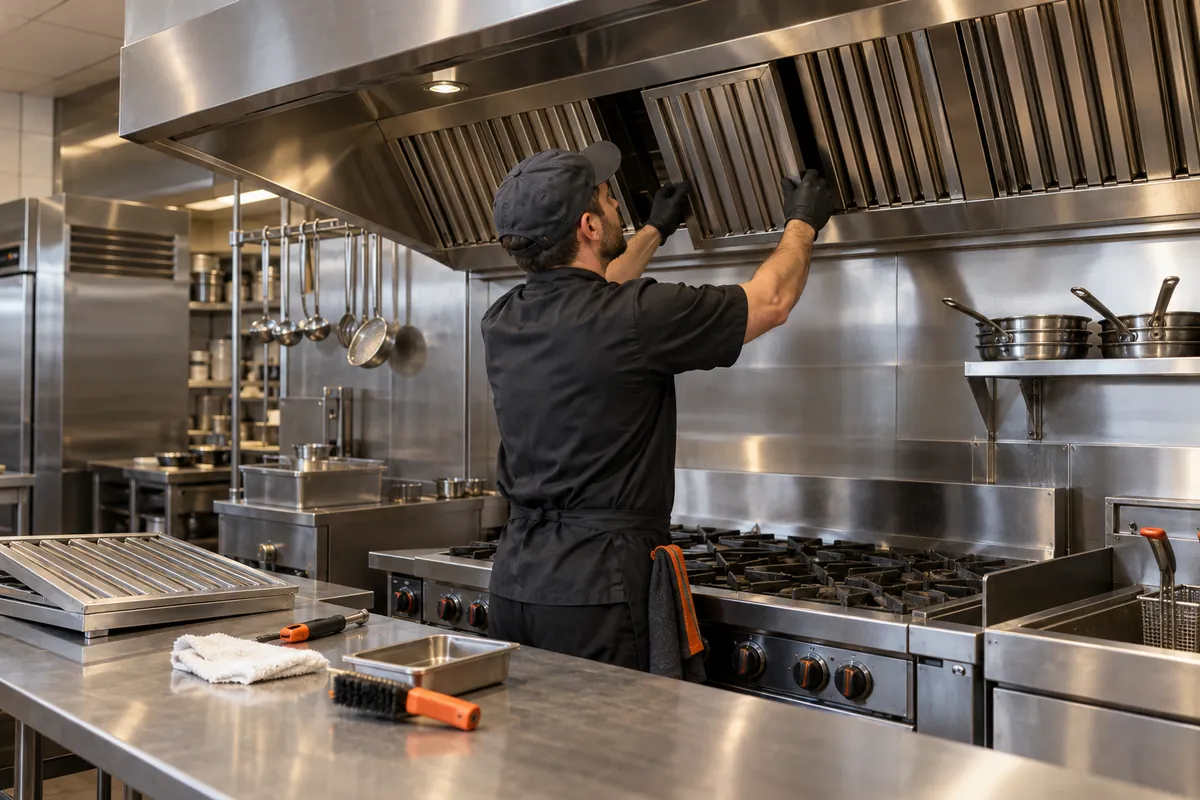
Illustrative business scene: technician servicing filters in a stainless restaurant extraction hood
IllustrationAnswer preview for DowntownAn AI answer panel drawn with this page’s public and guidance references as source chips. It isn’t a real AI Overview and cites no business.ANSWER PREVIEWAsk about DowntownAI ANSWERDowntown Atlanta Inc business and district resources · downtownatlantainc.comDowntown Atlanta Inc…Google Search Central AI features and websites · developers.google.comGoogle Search Central AI…

YOUR WORKING BRIEF

Choose where to start

Select the parts you want to discuss. Your choices carry into the inquiry form.

Discuss this service0 priorities selected

See how I'd approach this

Choose a question
to look at with me.

A plan moving from scope to delivery and review01Define the scope02Build the work03Review the result
  1. Define the scope
  2. Build the work
  3. Review the result
A plan moving from scope to delivery and review

Take a hypothetical Downtown caterer. An organizer planning an office lunch wants to know whether delivery includes setup or whether staff stay to serve. We'd put that answer on the catering page itself instead of a catch-all FAQ, then search the organizer's question on set dates to see if an AI Overview cites it.

Choose an Atlanta Downtown catering question your sales team can answer from the approved event scope. We compare any observed Google summary with its cited pages and record the date; inclusion can change.

Questions about AI Overviews in Downtown, Atlanta, Georgia

What does AI Overviews work cost for a Downtown Atlanta business?

It's priced after the free strategy call, and the number of questions and pages you want covered drives most of it. One page that answers what visitors ask near your door costs far less than rewriting every page you have. The free Jev scan is a sensible first step, since it shows which of your pages already open with an answer.

Which Downtown visitor questions get an AI Overview?

Mostly practical ones typed on a phone a few blocks away, like what's open near Centennial Olympic Park or how to walk somewhere from Five Points station. Google decides when an overview appears, so we search your real questions and record what shows up before writing anything.

Can you guarantee my business appears in an AI Overview?

No one can guarantee a spot, since Google chooses which pages each summary links. Google's own guidance sets the floor: the page must be indexed with snippets allowed, and the answer has to sit in the visible text. Google also says no special schema is needed, so we won't sell you markup as a shortcut.

What should a page near the Georgia Aquarium say first?

How far you are and how to get there, in one sentence with a real landmark, and then your hours. Pemberton Place has large parking decks for visitors, so if your customers park there, say which deck and how long the walk takes. A summary can only repeat a walking time or an opening hour that your page states plainly.

How do you measure AI Overviews results?

With a dated log and your own analytics. We search your chosen questions and note whether an overview appeared and linked you, then line that log up with Search Console, which counts AI feature clicks inside ordinary web search totals. Calls and forms decide whether the work continues. Our own results get the same dated treatment: searches showing the Google profile of a local Indianapolis-area business hit 1,357 in July 2026, up 89.5 percent on July 2025.

Do stadium event days change what I should publish?

They can. Mercedes-Benz Stadium hosted eight 2026 World Cup matches, and on days like those, people near the stadium look up what's open and how to get around. If you open early or close late, publish those hours on the page ahead of time. Atlanta's Section 16-28A.008 lets a sign inside the building skip the sign permit when it meets the rest of the chapter, so an hours notice inside your door can match the page.

How long before an AI Overview picks up a rewritten page?

There's no date anyone can promise, because Google has to recrawl the page before a summary can draw on the new wording. Search Console's URL Inspection tool shows when Google last crawled it. Once that date falls after the rewrite, we run the saved searches again and log whether an overview appeared and linked you, right beside the first round.

“I had a great experience working with Jeff…”
Heather DoanGoogle review
“…drove a noticeable uptick in leads within just a few weeks…”
Mike BamosiGoogle review

We have more than 1,400 live websites.

Trojan Digital Marketing is based in Indianapolis and serves Atlanta businesses remotely.

Inside Atlanta city limits, businesses need a Business Occupational Tax Certificate through ATLBIZ. Source, checked September 25, 2026.

Read our Google reviews

Which Downtown landmarks and rules shape an answer block?

Visitor questions in Downtown, Atlanta, Georgia usually start from a landmark and end with your hours, so these sourced facts shape the reference points and posted hours an AI Overviews answer block should use.

  • Next to Centennial Olympic Park, Pemberton Place holds the Georgia Aquarium (opened 2005), the 92,000-square-foot World of Coca-Cola (2007) and the National Center for Civil and Human Rights (2014). The area has large parking decks for visitors.

    A walking time from one of these doors, or from the deck your customers use, gives a summary a concrete answer to repeat.

    CityPASS, 'Things To Do Near the Georgia Aquarium'Checked September 25, 2026
  • Centennial Olympic Park is a 22-acre park left from the 1996 Summer Olympics, and its Fountain of Rings runs water shows through the day.

    The park is a meeting point visitors already know, so directions that start there are easy to follow and easy to quote.

    Discover Atlanta, 'Best Things to Do at Centennial Olympic Park'Checked September 25, 2026
  • MARTA rail runs four lines, Red, Gold, Blue and Green, over about 48 miles, and Five Points is the only station where riders can transfer between all four.

    Directions from a station riders already know give an answer block a fixed starting point.

    Wikipedia, 'MARTA rail'Checked September 25, 2026
  • Section 16-28A.008 of Atlanta's code says a sign inside a building doesn't need a sign permit, as long as it meets the rest of the sign chapter.

    An hours notice inside your door can go up without that permit, so it can show the same event-day hours your answer block states.

    City of Atlanta Code of Ordinances, Sec. 16-28A.008 Signs not requiring a permitChecked September 25, 2026

These facts describe landmarks. Whether an AI Overview appears for your questions gets checked by searching them, and it can change from week to week.

How should a Downtown page answer a visitor's question?

This hypothetical table shows how a page for a Downtown, Atlanta business could answer common visitor questions in a form Google's AI Overviews can cite.

Visitor questionAnswer block to writeFact you supply
Is it walkable from the Georgia Aquarium?
One sentence with the walking time and the street to take
Where your door is and a timed walk
Open late after a game?
Event-day hours stated as plain text near the top
Your real hours on stadium event days
How do I get there from Five Points?
The station, which way to head and the walking time
The route you'd give a customer on the phone
What does it cost?
A starting price or range in the first lines
Prices you're willing to publish

How does a Downtown page get ready for AI Overviews?

Getting a Downtown, Atlanta page ready for Google AI Overviews takes four steps, from a dated record of today's results to a second look after Google recrawls the page.

  1. Save the test searches with datesWe search the questions visitors type near your door and log, with the date, whether an AI Overview appeared and which pages it linked.FirstOur team
  2. Rewrite the answer blockThe page opens with one sentence naming a landmark and the walking time from it, followed by your hours.Our team
  3. Confirm hours and pricesYou check every hour and price in the block, event-day hours included, before the page goes live.Your team
  4. Run the saved searches againOnce Search Console's URL Inspection shows Google has recrawled the page, the same searches get run and logged beside the first round.After Google recrawlsTogether

What we’d deliver

The AI Overviews service includes an answer brief, a responsibility comparison, linked service improvements and a dated observation process. It is narrower than the ongoing business facts maintenance in the AI SEO plan.

Read more

A useful answer review would ask the caterer to follow the comparison as if they were the organizer. Can they identify who receives the food, who manages service and what the venue must confirm? We would keep those responsibilities visible in the table and supporting paragraphs. The observation report would not combine menu queries with service model comparisons simply because both relate to catering. Those searches can represent different intentions. Keeping the question set coherent makes the result easier to interpret and helps the team choose the next answer that customers actually need.

Proposed scenario: explain delivery versus staffed catering in practical terms

A proposed answer page asks whether a company event needs delivered catering or staffed service. The opening explains that the choice depends on the event format, who will handle food service and what the venue permits. A comparison table separates food delivery, setup, serving responsibilities and cleanup according to the caterer’s approved scope. Any item that needs event review remains clearly conditional.

Read more

We would include a short preparation list for the organizer: a tentative date, group estimate, venue status and the service responsibilities they want covered. The answer would connect to the appropriate catering page, preserving the buyer’s route into an inquiry. After checking the page’s accessibility to search, we would record how selected comparison questions appear in Google. The observation would include the displayed feature and source links rather than an invented visibility score. If the answer attracts unsuitable requests, the coordinator’s feedback would help refine the responsibility explanation. The work remains valuable as a sales resource even when a query produces ordinary results instead of an AI Overview.

Decisions the page and service need to support

Customer situationUseful decisionWorking destination or deliverable
Delivered catering
Who receives and manages food
Delivery scope
Staffed service
Who provides event support
Staffing responsibilities
Uncertain format
What must be confirmed
Event inquiry

Guidance behind this approach

Google says no special AI markup is required.

Sources & further reading

Talk with Trojan Digital Marketing

The off switches to check before anyone rewrites a word

Make sure nothing on your site tells Google to keep out. Until Google has indexed a page and may quote a snippet from it, no AI Overview can link there.

Settings that can bench a page, where they hide and what they do
SettingWhere it usually hidesWhat it does
noindexA robots meta tag in the page head, often left behind by a staging site.Keeps the page out of Google's index, so no overview can link it.
nosnippetThe same robots tag, or a header added quietly by a plugin.Blocks text snippets, and with them any place in an AI Overview.
max-snippetA robots value with a number attached to it.Caps how much text Google may quote, so a tiny number leaves a summary almost nothing.
data-nosnippetAn attribute wrapped around one part of a page.Hides that part from snippets, and sometimes it's wrapped around the very answer you want quoted.
robots.txt DisallowA line in the robots.txt file at the root of your site.Stops Googlebot from crawling the page in the first place.
Search generative AI controlA switch under Settings in Search Console.Opts the whole site out of AI Overviews, AI Mode and AI Overviews in Discover, while regular results stay on.

We check all six before we write a single sentence. It sounds fussy, and it is. But one leftover tag from a site rebuild can cancel out every word we'd write, so ten minutes of checking comes first. If something is switched off on purpose, we'll ask why before we touch it, since some owners have a good reason.

Once a stray tag is gone, we ask Google to recrawl the page through Search Console and write down the date. That gives every later check a clear starting line, so nobody has to wonder whether a change landed before or after the fix.

What someone wearing a convention badge searches at 11:40 a.m.

Trade show visitors search in quick bursts between sessions. They want distance, hours and a sense of whether they can get in and out before the next talk starts.

Downtown visitors, the questions worth answering for each and what the page should say first
Who's searchingQuestions worth answeringSay this near the top
Convention attendeeCan I grab lunch and be back in half an hour? Do you take cards?Walking time from the congress center and your lunch hours.
Stadium crowdWhat's open before the game? Where can I wait out the traffic?Event-day hours and how far you sit from the stadium.
Aquarium familyIs there food nearby the kids will eat? Will a stroller fit?Distance from Pemberton Place and whether strollers fit through the door.
Office worker near Peachtree CenterCan I pick up an order on a short break?Pickup steps and how long a weekday order takes.
Hotel guestAre you open late? Do I need a reservation?Closing time and whether walk-ins are welcome.

None of these people is sitting at a desk comparing ten tabs. They're standing in a hallway with a few minutes to spare and a phone at 30 percent battery. The first sentence on your page either answers them or loses them. We write that sentence for the visitor you actually get most, because a page that tries to greet all five groups at once ends up greeting nobody in particular.

Families leaving the Georgia Aquarium or the World of Coca-Cola ask a different kind of question. They've got tired kids, a parking ticket ticking and maybe an hour to spare. If your page says how many minutes' walk you are from Pemberton Place and whether there's room for a stroller, you've answered them before they finish typing.

Rewriting one answer, line by line

Put the answer in the first sentence, then add the one detail that proves it. Here's the difference on a hypothetical Downtown print shop's page.

Hypothetical example A Downtown print shop's page about same-day business cards

Before

  • Same-day service is mentioned once, in the fourth paragraph.
  • The rush cutoff for business cards sits inside a PDF price sheet.
  • Nothing warns an exhibitor that the cutoff moves earlier during big shows at the congress center, when the presses are already full.
  • Directions say Downtown Atlanta and stop there.

After

  • The first line reads: Yes, we print business cards the same day if you order by 11 a.m. on a weekday.
  • The second line gives the show-week rule with its dates written in: during [show name], [first day] to [last day], the rush cutoff is 9 a.m.
  • A price range for a standard run and the pickup time come next, and the PDF stays as a backup.
  • Directions name the nearest streetcar stop and the walking time from it.

Why the streetcar? The Atlanta Streetcar loops 2.7 miles through 12 stops, from Centennial Olympic Park out to the King National Historical Park on Auburn Avenue. It links with MARTA at Peachtree Center, and a car comes by about every 15 minutes. For a visitor who doesn't know Downtown's grid, a named stop is a fixed point they can find on a map in seconds.

Look at what carries the weight in the rewrite: a clock time and a named stop. An exhibitor who finds an empty card box at 8 a.m. needs the show-week cutoff more than anything else on the page. If a summary lifts only one line, we want it to be the line with the time in it. The streetcar stop then walks that same person from the booth to your counter without a second search.

How long should that first answer be?
One or two sentences, usually under 40 words. Long enough to carry the fact that proves it, like a time or a price range. Anything longer starts to bury the answer again.
Should the question itself appear as a heading?
Often, yes, written the way customers actually say it. A heading like Can I get cards printed today? followed by a straight answer is easy for people to scan. Just make sure the answer sits right under it.

Write the date inside every event-day sentence

Put the date inside each event-day note itself. A summary may lift one line without the heading above it, so that line has to carry its own date.

Event notes rewritten so a quoted line can't outlive its truth
Vague noteRewritten with its dateWhat the date prevents
We open early on game days.On game Sundays in fall 2026, we open at 10 a.m.A summary telling a Tuesday visitor in March that you open at 10.
Extended hours during the convention!During [show name], [first day] to [last day], we stay open until 9 p.m.Late hours quoted to someone who shows up the week after the halls empty.
Closed for the holiday.We're closed on Thursday, November 26, 2026, for Thanksgiving.A reader guessing which holiday you meant, or assuming you close for all of them.
Walk-ins only this weekend.Walk-ins only on Saturday, October 3, and Sunday, October 4, 2026.A line that sounds current on every weekend of the year.
  1. List the answers that change when a crowd arrives Opening time, walk-in policy and how long an order takes can all shift on a big day. Write down which ones actually change for you.
  2. Write each change as one dated sentence Put the day, month and year in the same sentence as the new hours. If you don't know the exact dates yet, name the season and the year.
  3. Publish early enough for a recrawl Google has to recrawl a page before any summary can use the new wording, and that isn't instant. We'd post a show-week note a few weeks ahead.
  4. Take the note down the day after Old event notes make a page look abandoned. Delete them once the date passes, or move them into a short list of past events.
  5. Check what Google shows Search your main question a few days later and note whether an overview appears, and whether it picked up the new hours.
Isn't a date in every sentence clunky to read?
A little, and we think that's fine. Visitors scan for one fact, and a date tells them at a glance whether the note applies to their trip. Keep it to one or two dated lines and the page still reads smoothly.
Should I build a separate page for each big event?
Rarely. A short dated block on your main page does the job for most shops. A separate page only earns its keep if the event changes what you sell, like a special menu or a pop-up service.

How many questions one page should try to answer

Give each page one main question and a few close follow-ups. A page that answers everything tends to answer nothing clearly, for people and summaries alike.

Think of a page like a counter clerk. One clerk can handle can I pay by card and do you have this in blue. Ask that same clerk about parking, catering and a lost umbrella all at once, and the line backs up. We map each real customer question to one page, then link the pages together so nobody gets stranded halfway.

Linking matters more than it sounds. If your hours page mentions catering, one line should send people to the catering page instead of repeating it there. That keeps each answer in one place, so when a price changes you fix it once and nothing contradicts it later.

  • Answers trapped in images, like a photo of the menu board or the hours sign.
  • Hours or prices that load only after someone taps a widget.
  • Question headings with a sales pitch underneath where the answer should be.
  • The same paragraph pasted onto every location or service page.
  • Pricing hidden behind a contact button with no range at all.
  • An answer that changes between the page, the PDF and the Google profile.

Shortcuts people will try to sell you, and what Google says about them

You don't need special AI files, special AI markup or a secret format. Google says the usual search basics are what count for AI Overviews and AI Mode.

  • An AI text file at the root of your site, sold as a way into overviews.
  • Special schema pitched as AI markup that Google never asked for.
  • Dozens of near-identical pages, one for every phrasing of a question.
  • Hidden text written for robots that visitors never see.
  • Monthly packages promising a guaranteed spot in AI answers.

Structured data still has a job. It helps with rich results in regular search, and we'll add it where it fits. Google's rule for it is simple: everything in the markup has to be visible on the page too. So we treat schema as a tidy copy of what the page already says, and we never use it to slip in claims the page doesn't make.

Our advice here is dull on purpose. We fix the off switches, answer the question in plain words and keep your facts matching everywhere they appear. If we can't explain how a tactic helps a real customer standing outside the aquarium with a phone, we won't sell it to you.

Is schema worth adding at all, then?
Yes, for its regular jobs. Marking up your business details, hours and address helps search engines read them cleanly, and it can make you eligible for rich results. It just isn't a secret door into AI Overviews.
A salesperson swears their package guarantees AI placement. Now what?
Ask them to show you where Google offers that guarantee. It doesn't, because Google alone decides which pages an overview links. Anyone selling certainty here is selling something Google never gave them.

Reading the AI report page by page, beside a log of who got cited

Search Console's generative AI report, added in June 2026, shows which of your pages turned up in AI Overviews and AI Mode, and on what devices. Read those two views closely.

We'd start with the page list, and it can be a surprise. You might expect the homepage to lead and find your directions page on top instead, or an old post about getting to the stadium drawing more appearances than your menu. Whatever sits at the top is the page Google already trusts to answer someone, so its facts get checked first.

Then we'd flip to devices. If nearly every appearance comes from phones, that page is being read on a sidewalk or in a hotel lobby, and its first two lines carry the whole load. If a group-order page draws desktop appearances, office planners may be reading it at their desks. They want head counts, lead times and how to pay, so write that page for them.

Last, we set the page list beside our dated log of test searches. When the report shows a page the log never caught, somebody is asking a question you haven't tested yet. Ask whoever works your counter what visitors have been asking lately, then add that question to the log.

Can the report show which rival got the link instead of me?
No. Search Console only reports on your own site. To see who else gets cited, you'd search the question yourself and note the linked pages, which is exactly what our dated log is for.
What if the report shows nothing at all for my site?
Then either no overview is showing for the questions your pages rank for, or one of the off switches at the top of this page is on. We'd check the switches first. If they're clear, we pick one question from the log and work on that page's opening together.
Why does a page I never worked on keep showing up?
Google picks whichever page answers the question, whatever you meant that page for. If an old post keeps appearing, update its facts before you think about deleting it, since it's already doing a job for you.

Your share of the work, and ours

Your part is mostly confirming facts only you know. We handle the searching, the writing, the technical checks and the dated log of what Google shows.

Who does what on an AI Overviews project
TaskWhoWhen
Pick the questions to chaseBoth of us.At the start, from real customer calls and emails.
Confirm hours, prices and policiesYou.Before anything goes live, and whenever they change.
Check the off switchesUs.Before the first rewrite.
Write and place the answersUs, with your sign-off.Once the facts are confirmed.
Run and log the test searchesUs.Before the rewrite, and again after Google recrawls.
Watch calls and bookingsYou, with our help reading them.Every month.

The slowest step on most projects is the facts. Owners know their regular hours by heart, but event-day hours, rush fees and group policies often live in one person's head. We'd rather wait a week for the right answer than publish a guess that a summary then repeats to strangers all season.

Most of your effort lands at the start, during that fact check. After that, your part shrinks to a quick okay whenever something changes. We'll nudge you before busy seasons, since that's when hours tend to drift from what the page says.

What do you need from me on day one?
Access to Search Console, a list of the questions customers ask most and a person who can confirm hours and prices. That's it. We'll ask for anything else as it comes up.
Who signs off before anything goes live?
You do. Every answer that names a price, a time or a policy gets your okay first, since you're the one customers will hold to it.

Straight answers for Downtown owners on the fence

Right before signing, Downtown owners ask us some version of these. Here are honest answers, including a few that might talk you out of hiring anyone at all.

Is this worth it if most of my visitors are only in town once?
It can be. One-time visitors don't have a favorite spot yet, so they look things up. If a summary answers them with your page as a source, you're in the running before anyone's cousin recommends a rival.
Will an AI Overview answer so well that nobody clicks?
Sometimes, yes. Someone checking your closing time may never visit your site, and that's fine if they walk in. The page's real job is to make the next step obvious for people who need more, like booking a table or ordering ahead.
Can I do this myself?
Yes. Check the off switches, rewrite the opening of your top page so it answers one question plainly, and log a few test searches with dates. If that works and you want more pages done, that's when a hand from us makes sense.
What does it cost to have you do it?
Our fee gets set on the free strategy call, and it grows with the number of questions and pages in play. Want a deeper look first? The full Jev audit costs 99 dollars, covering as many as 3,000 pages plus up to three rivals you pick, all scored on one yardstick.

We work from Indianapolis, and the agency has been owner-run since Jeff founded it in March 2018. We don't have a Downtown office, so every step happens over video, email and shared screens. For this kind of work that's no handicap. What matters is that we search your questions the way your customers type them and keep an honest, dated record of what comes back.

Ten minutes tonight with the overview for your top question

Search the question customers ask you most, open the pages the overview links and read their first two sentences. Then hold your own page up against them.

  1. Search your top question on your phone Type it the way a visitor would, ideally from near your block. Note whether an overview appears at all, then screenshot it and write the date on it.
  2. Open each page the overview links Read only the first two sentences of each one, and note whose page it is: a rival shop, a visitor guide or a hotel blog. Those openings are the bar yours has to clear.
  3. Read your own opening next If their first lines answer faster, rewrite yours so the time, the price or the yes lands in sentence one.
  4. Check the overview's facts about you If the summary mentions your hours or address, compare them with your page. A mismatch usually means it borrowed from an older page somewhere else.
  5. Confirm every event note carries its own date Scan your page for phrases like this weekend or on game days with no date beside them. Add the date, or delete the note if its day has passed.
  6. Try the follow-up question Search the next thing a visitor would ask, like whether the shop stays open after the game. A new question can pull in a whole different set of links.

If you find a problem, fix the biggest one and stop there for the night. One corrected opening on your busiest page is worth more than ten half-finished edits. Then search the question again in a week or two and compare it with the screenshot you dated tonight.

Sources

From the businesses we've worked with

“I appreciate the help, and he did a good job.”

Marketing help for Atlanta businesses

Trojan Digital Marketing is based in Indianapolis and serves Atlanta businesses remotely.

Request a free strategy call

Atlanta, Georgia

Service area map

Explore Atlanta on OpenStreetMapArea reference; this is not an office pin. Map © OpenStreetMap contributors.