The gap we look for first on an excavation website is a services page that lists machines and stops there. A builder needs the work behind the machine, such as basement digs, utility trenches or lot clearing, plus your role on the job and the counties you'll travel to.
We handle SEO, AEO and GEO, the site copy and paid search, and judge each by one test: did it bring a builder or developer with a real project? Paid ads, for example, can exclude homeowner phrases like backyard pond digging.
If you bid work outside Indiana, we add a state to the ads only after you confirm your crews will go there. A wider radius that brings bids you'd turn down just costs you ad money and estimator time.
Excavation marketing FAQs
What does excavation marketing cost?
It's priced after the free strategy call, because a company chasing builder relationships in two counties needs a different build than one bidding municipal work across the state. A newer excavation company that needs a whole site can start with the Marketing Startup Kit at $7,997, or three monthly payments of $2,799. If you'd like an outside read first, the $99 Jev audit comes with a rewritten opening for your weakest page and one rescan once your fixes are in.
Can you help us attract professional project inquiries?
Yes. We start with what a general contractor checks before inviting a sub: your scope, your counties and photos of finished sitework. The form then asks whether they want a budget number or a formal bid, so a rough idea isn't handled like a bid package.
Should we show our equipment on the website?
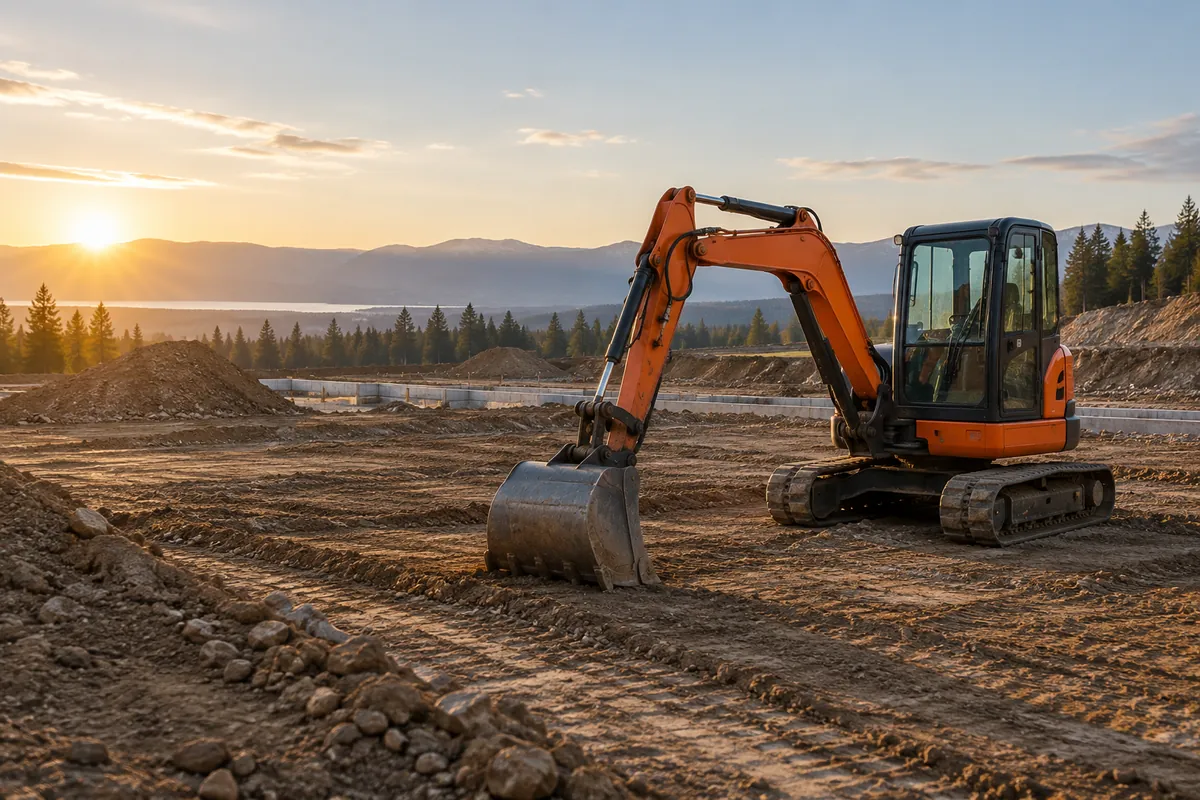
Yes, with captions. A photo of an excavator tells a builder little until the caption names the job and the county it was on. Put a line about the work you take next to the gallery, so the equipment isn't the whole pitch.
How do you reduce unrelated excavation inquiries?
We go through the calls your office turned away last month and look for the words they share. Those words go into the ads as exclusions, and the services page gets a plain line about the work you refer out.
Can we promote work outside our immediate area?
Yes, when the business has a genuine plan to evaluate and deliver that work. We define the territory and suitable project types with your team. The content should explain real coverage without inventing local offices or a history of projects in the new area.
What does a first project with Trojan Digital Marketing include?
Usually a rewritten capability page, service pages for the work you want more of, a project form and a paid search setup. The free audit shows which comes first, and Jeff agrees the final scope with you, including the facts you'll sign off on.
Start with the free audit on your capability page.
Should an excavation company's website talk about Indiana 811?
Yes, and if your crews request locates before every dig, say so plainly. Indiana's Call Before You Dig law, Indiana Code 8-1-26, was amended in 2009 to add civil penalties of up to 10,000 dollars for certain violations. A builder choosing a sub reads a clear locate policy as a sign of a careful job site, and it costs you one sentence.
How do we stop getting small residential dig requests?
Say what you take and what you refer out, near the top of the services page. Then make the first form question about project stage, such as plans in hand or out for bid, and ask for the county. Requests too small for your equipment can get a polite referral note instead of a callback from your estimator.
Can we show public projects we worked on as a subcontractor?
Yes, with the prime contractor's permission and your role stated exactly. A public project's name doesn't establish that your company worked on it. Your portfolio should identify the approved scope, the firm you worked under and any access constraints your own crew handled. Leave out project-wide figures that describe other contractors' work.
What should a builder see first on our website?
They should see the kind of work you want and where you'll take your equipment. Name the counties you cover and the job sizes you prefer on the home page, then link to a capability page with photos of finished sitework. A builder who can answer “can they do this, and will they come out here?” in one visit is ready to call.
What if the website brings more calls, but they're the wrong size?
Then we trace each one back to the page and search that sent it. A broad term like excavation near me can pull in homeowners, so narrowing the ad terms and adding a minimum job note on the page both help. Your office marks each call as a fit or not, and that list steers the next round of changes.
“…drove a noticeable uptick in leads within just a few weeks…”
“I had a great experience working with Jeff…”
Based in Indianapolis, we serve businesses across central Indiana, including Carmel, Fishers, Zionsville, Westfield, Noblesville, Greenwood, Avon and Plainfield.
We also work with clients across the United States.
A PRACTICAL MARKETING WORKSHOPCreate a project introduction that makes sitework requests reviewable
Open this walkthroughClose this walkthrough
Excavation buyers can arrive with anything from a rough idea to a defined package of site documents. A contractor’s website needs to explain accepted scopes and help each buyer reach the appropriate project review. We would build capability pages around actual services and project settings, supported by photographs with clear captions. The website’s job is to prepare a useful conversation; it should not infer subsurface conditions, equipment suitability, or a construction method from a handful of online inputs.
Worked example · hypothetical planning scenario
Imagine a hypothetical excavation company seeking builder and commercial sitework relationships while receiving mostly isolated small digging requests. We would first make the preferred work visible through a capability page describing the engagements the company accepts. A project introduction could ask for the site location, broad scope, decision maker, planned timing, and whether documents are available for review. The form would provide a safe document handoff later rather than require every visitor to upload plans immediately. A portfolio entry could explain the company’s role within a larger project and identify coordination responsibilities without taking credit for the entire development. The team then records requests ready for discussion, requests awaiting documents, and projects outside its operating scope.
| Project state | Useful public content | Qualification decision |
|---|---|---|
| Early idea | Service boundaries and the first review process | Is this a scope the company will discuss? |
| Defined sitework package | Relevant capability and document contact | What information is needed for pursuit? |
| Repeat builder relationship | Account route and approved project examples | Who owns the next project conversation? |
Capture the context that equipment photographs miss
- Identify the contractor’s exact scope, the type of project, and the approved description of its role in coordination with other participants.
- Collect photographs that show the project setting and completed scope, removing identifying details the owner has not authorized for public use.
- Ask the estimator for a redacted example of a reviewable request and distinguish required starting information from documents needed later.
- List work the company does not offer and common mistaken inquiries, so service pages and advertising can set more accurate expectations.
Build a capability page your estimator would share
Bring a project your excavation company wants to repeat, its approved photographs, and the information needed before your team reviews a similar request. Trojan Digital Marketing can make that material work as a search landing page and a practical introduction for project partners.
What Indiana rules and projects should an excavation website mention?
Excavation marketing in Indianapolis, Indiana can point to the state's dig law and to public jobs, from interstate rebuilds to street storm drain repairs, that show what underground work here involves.
Indianapolis, Marion County, Indiana
Indiana amended its Call Before You Dig law in 2009 to add penalties for certain violations, including civil penalties up to a maximum of 10,000 dollars.
A safety page saying your crews request locates before every dig speaks to the risk a builder weighs when hiring a sub.
IURC, Call Before You Dig LawChecked September 26, 2026In 2003 the Indiana General Assembly revised the Call Before You Dig law to require all owners and operators of underground facilities to become members of Indiana 811.
A page on how your crew starts a job can explain Indiana 811 in plain words for property owners who have never requested a locate.
IURC, Call Before You Dig LawChecked September 26, 2026INDOT lists the North Split among its completed major projects.
A sub on large transportation work can describe its own scope on a job like this, with the prime contractor's permission.
INDOT, Major Projects: completed projectsChecked October 20, 2026Storm drain repair work that began March 9, 2026 closed the Virginia Avenue and Prospect Street intersection in Fountain Square, with the closure expected to last through October 2026. Access to HI-FI's Annex entrance and the LAZ parking lot was kept open from Woodlawn and St. Patrick streets.
If your crews work in the public right of way, a page on how you keep business entrances reachable during a dig answers what a property owner will ask.
HI-FI Indy, 2026 Road Construction Updates, Fountain SquareChecked September 25, 2026
We didn't work on these projects and name no excavation clients here. Your scope on any public job needs the prime contractor's approval before it's published.
Which excavation buyer is this, and what do they need first?
An excavation website serving builders and owners around Indianapolis, Indiana should route each buyer by project stage, so your estimator sees ready work before early ideas.
| Buyer | What they check first | First form question |
|---|---|---|
| Homeowner planning a basement or pool dig | Whether you take residential jobs at all | Address and rough size of the dig |
| Home builder with lots to clear | Crew capacity and the counties you cover | Number of lots and target start month |
| General contractor with a bid package | Similar sitework and your locate practice | Bid date and where to send plans |
| Town or utility with public work | Public job history and who you worked under | Solicitation number and deadline |
What goes on an excavation company's capability page?
An excavation capability page for contractors around Indianapolis, Indiana earns builder calls when it names the work you want and shows how your crews start a dig.
Your company provides
- Jobs you want more of, and jobs you refer out
- Equipment you run, described by the work it does
- Counties your crews will travel to
- Finished project photos you have the rights to use
- Your locate and site safety routine in your own words
We build
- A capability page organized by job type
- A project intake form that asks stage and county first
- Portfolio entries naming your exact scope on each job
- Tracking that sorts requests by buyer type
Lead with the work, then explain the capability
Equipment photographs can communicate scale, but they do not explain the service by themselves. A visitor needs to know which project categories the company accepts and what role it takes. Site preparation, selected excavation work, grading related services, or other capabilities should appear only where they are part of the actual offer.
Read more
We start with an approved capability map. It identifies the work you want to pursue, the work you consider selectively, and the requests you decline or refer elsewhere. That map gives the website a clear purpose and helps advertising avoid broad terms that attract unrelated demand.
The page should also distinguish equipment rental, material sales, hauling, and contractor services where those offers differ. If your business provides some of them, explain the relationship. If it does not, avoid language that encourages customers to assume otherwise.
Adjacent services deserve their own scope. A genuine concrete service line can use a distinct concrete marketing plan, while the excavation page explains the role of the excavation business. Broad construction language should not imply an all inclusive project offer that the company has not approved.
Create a route for each kind of buyer
A property owner may know the intended result but have limited project detail. A builder or general contractor may be evaluating a specific package with documents and a decision date. The website can serve both audiences while asking different questions and setting different expectations.
| Audience | What helps the first review | Appropriate next step |
|---|---|---|
| Property owner | Location, requested outcome, project stage, and a plain language description | A conversation about whether the request fits the company's services |
| Builder or contractor | Project category, requested role, available scope information, and review timing | A professional project inquiry directed to the responsible person |
| Repeat business contact | Existing relationship, new project reference, and the information that has changed | A documented continuation of the established account process |
If the company also positions itself as a broader general contractor, the general contractor marketing framework can support that separate offer. The business should decide which role it wants to be known for before the website attempts to speak to every construction buyer.
Define project readiness without overloading the inquiry
A useful form collects enough context to determine the next action. It can identify the property location, the requested service, the buyer's role, the current project stage, and the preferred way to continue. Where documents or photographs are relevant, the business can specify an appropriate route for providing them.
Do not require a prospect to answer technical questions they cannot reasonably resolve. The marketing system should identify what is known and what needs discussion. It should not represent a form submission as a completed site assessment or a confirmed quote.
A hypothetical project readiness brief
- Request: what does the buyer want the company to do?
- Role: is the company being approached as the lead contractor, a specialist, or another defined participant?
- Location: is the project within the territory the business is prepared to review?
- Stage: is the inquiry exploratory, being scoped, or ready for a formal project discussion?
- Available information: what can the buyer provide now, and what remains unknown?
- Decision owner: who in the business will choose the next step?
This is a business development brief. Your qualified team remains responsible for technical evaluation, estimating, and acceptance of the work. The marketing page supports that process by setting accurate expectations and gathering useful starting information.
Build a capability page that stands up to a closer look
- Offer
- Explain what the customer can get.
- Evidence
- Support the offer.
- Action
- Make the next step easy to use.
Project evidence should explain your actual contribution. A photograph of a worksite can involve many companies; the caption should identify the service your business performed. Where a project cannot be named or shown publicly, use an approved description that respects those limits.
Read more
Useful evidence can include relevant project categories, the company's role, a factual process explanation, and genuine team information. Credentials and capacity claims require current business approval. A list of equipment or a broad phrase such as “full service” should not substitute for a clear offer.
A capability website project can organize this information into service pages, project stories, and separate owner and professional inquiry routes. The pages should work for someone checking the company after a referral as well as for someone discovering it through search.
We also consider the material used after the first contact. A concise capability summary and the website should use consistent terminology. That helps the business continue a conversation without sending mixed messages about scope or territory.
Excavation SEO, AEO, and GEO with specific buyer intent
Search content needs to distinguish contractor demand from equipment rental, employment, training, products, and broad research. A phrase containing “excavation” does not by itself establish that the searcher wants the service your business sells.
Read more
Our SEO, AEO, and GEO work connects the intended service with a substantive destination. Useful answer focused topics include which information your company requests before reviewing a project, what kinds of inquiries it accepts, and how its own project contact process works.
The content should stay within approved business information. It does not need to become unreviewed construction instruction to be useful. Google's people first guidance supports content that helps the intended audience. For an excavation company, that can mean clear capability information and specific next steps rather than a large volume of generic articles.
AI search observations can be included in the review where useful, but they should not be confused with awarded work. We cannot control every answer generated by an outside system. We can improve the information your business makes available and measure how suitable opportunities progress.
Use local strategy to support real operating territory
Excavation territory decisions can involve more than distance from the office. Project category, resource availability, travel, and mobilization can affect which opportunities are worth reviewing. Your company should define those boundaries; marketing should apply them consistently.
Read more
Local pages can explain real coverage and show approved project evidence where available. They should not imply a permanent location or established local history that the business does not have. A regional capability page may be more useful than many area pages with little distinct information.
Google's representation guidelines are a useful reference for accurate business identity. We keep genuine locations, service territory, and campaign targeting understandable. A paid campaign can reach a new area without presenting that targeting choice as an office address.
Connect opportunity quality with equipment and crew capacity
A project that looks attractive in a lead report may fit poorly with the current operating schedule. The business may have committed equipment time, a limited window to review new work, or a preferred project category that makes better use of available resources. Marketing needs those facts to set a useful objective.
Read more
The capacity planning framework helps identify whether the immediate constraint is review time, estimating, equipment, staffing, or another stage. The objective may be a later pipeline rather than immediate volume.
Consider a hypothetical choice between two inquiries with similar potential contract value. One fits an existing territory and planning window; the other requires a different resource arrangement and substantially more pursuit effort. Marketing should record the difference in fit rather than treat the inquiries as interchangeable. The business decides how to value those constraints.
Seasonal planning should use your own work history and operating conditions. We can distinguish when buyers begin conversations from when work can be scheduled, and keep public availability messages tied to approved business decisions.
Use paid search for a defined capability
An excavation PPC campaign should have a clear service objective, genuine coverage, and an appropriate landing page. We review search intent, exclusions, and the project details needed for qualification. The campaign should not send every construction related query to a homepage that leaves the company's role unclear.
Read more
A paid advertising engagement can document the offer, spending boundary, destination, and review process. The office's feedback on unsuitable inquiries becomes part of the evidence for adjustments. Media cost remains separate from management and website work so the owner can understand the investment.
The first test should be narrow enough to learn from. If an inquiry type consistently lacks the information needed for review, the next change may be the page or intake process rather than a broader reach.
Keep the handoff and the business result visible
Record valid requests, qualified opportunities, projects under review, quotes or bids pursued, booked work, and completed work separately. Add the requested role and project category so the owner can see which sources match the intended position.
Read more
The lead response handoff guide can help define who owns each stage. A project inquiry should not sit between an office inbox and an estimator without a named next action. Professional bid conversations and owner questions may need different review routes.
Search reporting provides a different kind of evidence. Search Console reports search performance metrics, while the CRM records opportunity progression. We connect those views where possible and keep their limits clear. An impression is not a project, and a quote is not yet completed revenue.
A hypothetical first 90 days
Days 1 to 30 establish fit. Review capabilities, genuine territory, buyer types, project evidence, and the current handoff. Agree on which opportunities the business wants to pursue and what information is needed for an initial review.
Read more
Days 31 to 60 improve the route. Publish priority capability content, refine the owner and professional inquiry paths, and set up usable stage reporting. A focused campaign can begin where the budget, offer, and response process support it.
Days 61 to 90 evaluate the pipeline. Review suitability, pursuit effort, quote progression, and the effect on available resources. Decide which capability or territory deserves the next investment. This is an example sequence, not a forecast of rankings or booked work.
Sources & further reading
Talk with Trojan Digital Marketing
Based in Indianapolis, we serve central Indiana and clients across the United States.