Need help?Jamie

Market service plans

Fishers Website Design That Works on a Phone

On an Indy Fuel game night at the Fishers Event Center, some fans look up dinner nearby on their phones. If your site makes them dig for hours or a booking link, some will book somewhere else.

Trojan Digital Marketing designs websites for Fishers, Indiana restaurants, shops and other businesses people visit, with hours, directions and booking near the top of the phone screen. The Event Center opened at The Crossing at Fishers District in November 2024.

Send your current site address and the questions callers ask most. The first strategy call is free, and during business hours we aim to reply within five minutes.

  • Hours and directions a phone finds fast
  • Booking and inquiry forms tried with real entries
  • Pages for event nights and ordinary weekdays

Trojan Digital Marketing has more than 1,400 live websites, so before you hire us you can open real ones on your own phone and try the forms. Jeff Clerisier, who founded the company in March 2018, works out each site's scope with you. We check first how many taps a phone visitor needs to reach your hours and booking button, and we cut that before touching colors or photos.

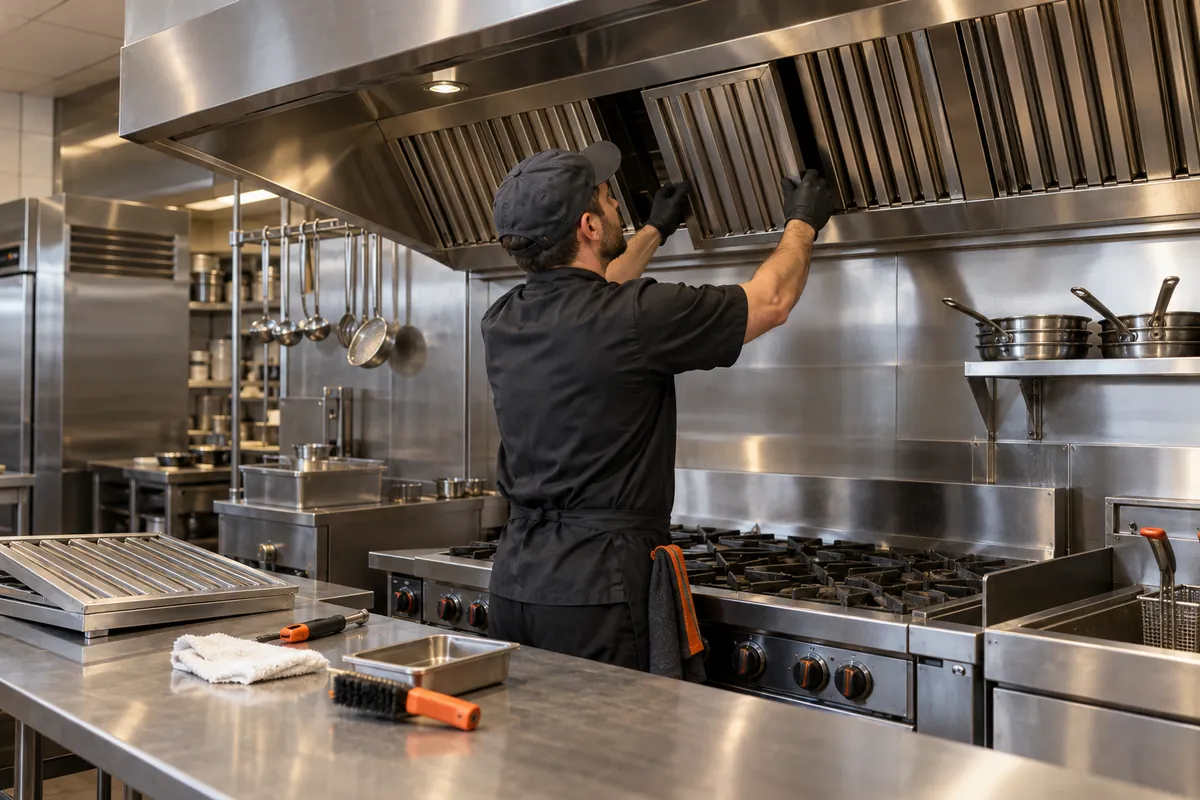
Illustrative business scene: technician servicing filters in a stainless restaurant extraction hood
IllustrationThis page drawn as a wireframeThe headline, highlights and button from this page, redrawn in desktop and phone layouts. It’s an illustration of page structure and isn’t a client site.PAGE WIREFRAMEtrojandigitalmarketing.com/fishers-webs…Fishers Website DesignThat Works on a PhoneHours and directions a phone finds fastBooking and inquiry forms tried with…Pages for event nights and ordinary…Book a free strategy call010203FishersWebsiteDesign ThatWorks on a…Hours and…Booking and…Pages for…Book a free…

YOUR WORKING BRIEF

Choose where to start

Select the parts you want to discuss. Your choices carry into the inquiry form.

Discuss this service0 priorities selected

See how I'd approach this

Choose a question
to look at with me.

A website built around the next customer decisionMESSAGE · EVIDENCE · ACTION
  1. A clear offer
  2. Evidence for the customer
  3. An action that works on mobile
A website built around the next customer decision

Most visitors arrive with one task, like checking whether you're open or booking a time. We plan each page around that task, so a nice photo never pushes the hours or booking link down the screen. Fishers workers average a 26.7-minute commute, and someone planning a stop on the drive home wants your hours without hunting. After launch, your staff can switch event-night notes on and off themselves.

Questions about website design in Fishers, Indiana

How much does a new website cost for a Fishers business?

A full build usually runs through the Marketing Startup Kit, which is $7,997, or three monthly payments of $2,799. Along with a custom 15-page website, it includes Google Business Profile optimization, twenty blog posts, schema and technical SEO, and three months of consulting. A smaller redesign, or a fix to one part of your current site, is priced after the free strategy call.

How long until a new website is live?

In the Startup Kit's example schedule, design and build happen in weeks two through four with two formal revision rounds, and launch support starts around week nine. Real dates get agreed after the scope review, since how quickly your photos and feedback arrive moves everything. If summer concerts at the Nickel Plate District Amphitheater drive your busiest nights, plan the launch ahead of them.

Should our site mention Fishers Event Center nights?

Yes, if those crowds reach your door. The Indy Fuel's first game at the Fishers Event Center, on December 6, 2024, sold out, and Current reported more sellouts that season. A restaurant or shop nearby can run a short, dated event-night note with hours and the easiest way in, set up so your staff can switch it on and off themselves.

Does a downtown Fishers business need walking directions on its site?

Often, yes. The downtown stretch of the Nickel Plate Trail runs through a pedestrian tunnel under 116th Street, so people can walk or ride from 106th Street to 146th Street without crossing 116th at street level. If you're in the Nickel Plate District, one line saying which cross street you're nearest helps someone on foot find you.

What if the new site doesn't bring more bookings?

Then we find where people drop off before anyone redesigns again. Each form and booking button gets tried with a real test entry, and we confirm it lands where your staff will see it. The Startup Kit's three consulting months exist to adjust pages from what visitors actually do, and if the gap turns out to be traffic, a free website scan shows which pages to fix first.

Do we need anything from the state before selling online?

If you sell goods, yes. Indiana businesses that sell goods register as retail merchants with the Department of Revenue through INBiz so they can collect the 7% sales tax, and each registration lasts two years. We can build the pages you sell from, but have your accountant confirm the tax setup before online orders start.

“…drove a noticeable uptick in leads within just a few weeks…”
Mike BamosiGoogle review
“I had a great experience working with Jeff…”
Heather DoanGoogle review

We work from Indianapolis and serve Fishers, in Hamilton County, as part of central Indiana.

We also work with clients across the United States.

Read our Google reviews

What should your website tell visitors before they arrive?

Website design for Fishers, Indiana starts with how people actually reach you, and these sourced facts show where many of those visitors come from.

  • The Fishers Event Center opened at The Crossing at Fishers District in November 2024 as the home arena of the Indy Fuel, an ECHL hockey team.

    Nearby businesses can plan an event-night banner with late hours and entrance notes that staff switch on and off.

    Thompson Thrift, 'Fishers Event Center Opens at The Crossing at Fishers District'; Current in FishersChecked September 25, 2026
  • A pedestrian tunnel under 116th Street lets Nickel Plate Trail users travel from 106th Street to 146th Street without crossing 116th at street level.

    A downtown business can give trail directions by cross street, which suits people arriving on foot or by bike.

    Nickel Plate Trail FAQs; Fishers Parks DepartmentChecked September 25, 2026
  • Hotel Nickel Plate, a boutique hotel in Hilton's Tapestry Collection, sits on the Nickel Plate Trail in downtown Fishers.

    Hotel guests searching on a phone need walking distance and opening hours near the top of your page.

    Visit Hamilton County, Fishers Nickel Plate DistrictChecked September 25, 2026
  • Visit Hamilton County says the county draws about 5 million visitors a year.

    Out-of-town visitors don't know local shorthand, so pages spell out street names and districts in full.

    Visit Hamilton County, About Hamilton CountyChecked September 25, 2026

No Fishers client site is shown here. Parking rules and event-day road closures near the Event Center weren't confirmed, so a design would check them before publishing any.

How does a website project run from the free call to launch?

A website design project for a Fishers business follows the Startup Kit's example schedule, and each step below says who's doing the work and roughly when.

  1. Free strategy callYou walk us through what customers ask before they visit or book, and we look at your current site together.Before kickoffTogether
  2. Discovery and page mapPages get planned around what a visitor needs first on a phone, such as hours, directions and a booking link.Week 1Our team
  3. Design and buildYour 15-page site takes shape in weekly rounds of changes, and two formal revision rounds are built into that stretch.Weeks 2 to 4Our team
  4. Photos and contentYou send real photos of your entrance and staff while the twenty blog posts and Google Business Profile work get finished.Weeks 5 to 8Together
  5. Launch and adjustForms and booking links are tried with real entries, then three months of consulting adjust pages from what visitors do.Week 9 onwardTogether

What does each kind of visitor need from your site?

In Fishers, website design has to serve people who arrive in very different ways, and each of them opens your site looking for something else first.

VisitorWhat they open the site to findWhat the page puts first
Crowd heading to the Fishers Event Center
Whether you're open late and how close you are
Event-night hours and a short walking note
Walker or rider on the Nickel Plate Trail
Which cross street you're near
Trail directions and a tap-to-call button
Guest at a downtown hotel
Opening hours and whether to book ahead
Opening hours next to a booking link
Regular customer from a Fishers subdivision
A quick way to book or reorder
The booking link near the top of the page

Give each visitor an understandable starting point

We begin by identifying the tasks that bring people to your website. A new customer may need an introduction; a returning customer may want opening information or a booking link. A business buyer may need a proposal rather than a consumer checkout. The navigation should make those choices recognizable without forcing people to decode internal department names. We sketch the routes before designing detailed screens, so the visual work has a clear purpose and the client can review the logic early.

Let Fishers context inform the experience

The city identifies Fishers District and the Nickel Plate District as different commercial and cultural settings. A practical design inference is to treat a planned visit differently from an exploratory service inquiry. A restaurant's visitor may need a group dining option and current menu; a nearby consultant's visitor may need a meeting request and evidence of relevant work. We use local detail only where your business can confirm it, and never use a district reference to imply an office or venue relationship.

A proposed group dining journey

Consider an illustrative independent restaurant near Fishers District that offers ordinary reservations and private group dining. Its proposed homepage could open with real food and interior photography, then provide clear routes for viewing the menu, reserving a table and discussing a group event. A room gallery might use selectable views with captions about the arrangement shown. The gallery would support a decision instead of making the visitor wait through a slideshow.

Read more

The group inquiry page would explain the information staff needs, such as the occasion, preferred date and approximate party size. It would distinguish a request from a confirmed booking. The confirmation would reflect the restaurant's actual process, without an invented response deadline. Dietary questions could be routed for staff discussion rather than answered with broad assurances the restaurant has not approved. This example is a proposed design brief and makes no claim about an existing restaurant's results.

Make mobile navigation and content work together

Give each part of the page a jobOfferEvidenceAction
Offer
Explain what the customer can get.
Evidence
Support the offer.
Action
Make the next step easy to use.
Give each part of the page a jobThe offer, evidence and contact route should work together on a small screen.

Long pages can be useful when their structure is clear. We group related details, write descriptive section headings and use in page navigation where it helps. Touch controls need space, visible states and predictable behavior. Important menu or service information should not be trapped inside an image that is difficult to read on a phone. A visual layout that works in a wide desktop mockup needs a deliberate mobile content order, especially when photographs, comparisons and forms appear together.

Specify the complete form path

  1. Define the request types and the staff member or system that receives each one.
  2. Write a concise form with labels that make sense to the customer.
  3. Provide useful validation and preserve entered information after a correctable error.
  4. Test the actual destination and the confirmation shown to the visitor.
  5. Document how booking rules and notification details are changed later.

If a third party system is involved, we review its available integration and account access before making it part of the approved scope. We also distinguish embedded functionality from an external link so the experience does not surprise the visitor.

Use effects where they explain something

A selected menu category, a change in a gallery view or a revealed process detail can give the site a responsive feel. Motion should not delay access to the information. We design for reduced motion preferences and keep essential actions independent of animation. Images receive a display and loading plan, including suitable dimensions and compressed formats. Google's page experience guidance supports evaluating the experience as a whole. We use that principle while testing the site's particular navigation and booking tasks rather than promising a universal score.

Keep changing information easy to maintain

Keep useful information dependableObserveReviewUpdateRecheck
Observe → review
Check the page and its evidence.
Update → recheck
Publish the change and check the result.
Keep useful information dependableReview the evidence, update what changed and check the published result. A new date alone adds no value.

We identify what your team updates frequently: menus, services, photographs, availability or project examples. Those items can be structured in an editable content system where appropriate. A content model needs clear fields and ownership, not just an administrator login. We define how to preview a change, replace an image and check that a link still works. For a migration, the existing page inventory and valuable URLs are part of the work plan, with any route changes explicitly reviewed.

Review the site through a real customer task

The finished experience should be assessed by following an actual journey, such as finding a suitable offer and submitting the correct request on a phone. We review available analytics and staff feedback to identify remaining friction. Share your current site and the actions it needs to support with us. Fishers SEO strategy covers the surrounding page structure; Fishers Google Maps optimization covers the public profile and visit information. Compare the full offering through the Fishers market hub.

Sources & further reading

Talk with Trojan Digital Marketing

Who can approve a change to the visit details?

A Fishers appointment website needs a named staff contact for changing visit details. We can design the fields once you establish who can approve each kind of change.

  1. Start with the last changed detail Bring one recent change that affected a booked visit. It might concern a room or the way a customer contacts your team. Describe what changed and who learned about it first. We can use that real sequence to find the places where a website edit needs an approval.
  2. Assign authority by field The person who edits a page may lack authority to change an appointment rule. Separate those roles before giving access. A receptionist could correct the contact extension while a manager approves a late cancellation term. Our page structure should reflect the business authority behind the wording.
  3. Give the change a stopping point A temporary instruction needs a way to end. State what event makes it expire and who checks that event. A notice tied to a room change could stay up until staff approve the return. We can provide a field for that trigger rather than inventing an automatic deadline.
  4. Check the customer message After a change, open the public page that a booked customer would use. Compare its wording with the message staff send. Our check should follow the actual customer path, including saved links. A correct edit on the homepage may leave an older appointment message with conflicting information.

The first task is a small content audit. Ask staff to list the facts that changed during their last few appointments. Keep names and private appointment details out of the sample. We look for a field that can hold each fact and a person who can confirm it. That gives the build a basis in your operation.

Access should match the work a person handles. Someone who changes a notice may need no access to private bookings or payment settings. Ask the system owner what permissions are available. Our proposal can distinguish public content work from account administration. Your team can then approve access for the specific task.

Write the district name for someone who has never visited

Spell out Nickel Plate District beside Fishers, Indiana when that is your actual setting. Our place wording should help a customer recognize the destination they have booked.

A district name is helpful when it explains a real destination. It cannot settle which building entrance a customer needs. We ask your business to approve the address and the name it uses with visitors. Put that information near the appointment detail so a customer can compare it with their confirmation.

For a visitor unfamiliar with Fishers, a local nickname may create another question. Use the full place name on the first mention. Later wording can be shorter if it stays clear. Our content pass looks at the page from the booked visitor's point of view, including the name shown on an outside booking service.

Can the page assume that a visitor is already downtown?
No. A visitor could be reading at home or helping someone else prepare. Write directions from a named reference point only when your business has checked them. We avoid location guesses in the headline. If the site offers a map, explain which destination it shows and keep the appointment address available as ordinary text.
Should every page repeat the cultural district history?
Usually a brief place label does the job. The district designation can explain why the name appears, but it adds little to a change request. Our design gives the history space only when it helps a visit choice. The appointment page can instead carry the facts that matter at the time of the request.
What if our appointment address differs from the place customers know?
Explain the actual appointment destination and ask staff to approve the distinction. A business name, a mailing address and a meeting place can have different jobs. We would check the page labels against the confirmation your customer receives. Avoid calling a meeting place a branch unless the business can support that public claim.

A request to move a visit needs its own status

A customer should know whether a changed time is pending or accepted. We design that message around the appointment system and the staff process your business actually uses.

Hypothetical example A hypothetical Fishers appointment business receives a request to move a visit

Before

  • A customer with a booked visit finds a general contact form. They type a preferred replacement time and assume the visit has moved. The form shows a vague thank-you message. Staff receive the message later and cannot tell which appointment it concerns. The website has left the booking status unclear.

After

  • A clearly labeled change path asks for the minimum details staff need to find the existing booking. The message explains that the request awaits confirmation. The current visit remains visible in the booking system until an authorized person changes it. We would agree the exact language with the business before building this path.
  • The customer sees a contact option for a change the website cannot accept. The page explains when that option applies without promising a reply interval. Staff can compare the request with current availability and respond through the approved channel. This is a proposed workflow, with no assumed reservation software or customer outcome.
Does a change form need to show available times?
Only if the connected system supplies availability that the business trusts. A free text preference field may fit a staff-confirmed process better. We first ask which system controls the booking. Showing a calendar creates a clear expectation that its dates mean something. The page wording and system behavior must agree about what happens after selection.
Can the form accept a cancellation as well?
It can if the business approves that path and the system supports the required action. Moving a visit and cancelling one may have different terms. Our form should present the relevant rule before submission. If staff handle cancellations directly, give the customer that route rather than a button whose effect remains unclear.

Test a change while another staff member is checking availability. That reveals whether a web request can clash with a phone request. We can identify the conflict in a test setting before real customers use the page. The system owner then decides how booking changes are accepted and recorded. The website should describe that choice plainly.

Keep confirmed facts and temporary notes in separate fields

An editable visit page should distinguish its lasting details from short-lived instructions. Our content fields can make that difference visible to staff before an update reaches customers.

Yahweh House of Prayer homepage displaying public church information
The church project shows location-related public information. It is a design reference rather than a Fishers client example. View the project
Draft responsibility fields for a Fishers visit page
Customer questionPerson who confirms itReason to check again
Which district name describes this visit?A business manager confirms the actual destination and approved place wording. We can store the full district label beside the address.A move or a new appointment venue changes the destination. Staff then check the public label against the booking message.
Can I move my booked appointment?The booking owner approves which requests the system can accept. Our form copy follows that process.A changed booking policy or a new tool may alter whether a submitted preference is accepted immediately.
Which entrance should I use?The business obtains the entrance detail from the person responsible for the premises.A door change needs a new instruction and an updated image if the old view no longer helps.
Does this temporary note still apply?A named editor checks the event that ends the notice. Our draft can include that stopping condition.The condition has ended or its expected end has changed. Staff confirm the next public wording before removing the note.

Separate fields make change tasks easier to understand. A staff editor could update the temporary visit note without touching the main address. A preview can show how both appear together. We would check whether the chosen content system supports those permissions before including them. A screenshot of another project cannot establish what your account allows.

The church website image beside this section is a public information reference. Its screen shows how an organization presents place-related material. It does not supply your Fishers appointment details. Our discussion should use your approved content and a sample edit in your proposed system. That lets you judge whether your staff can maintain the page.

Approve the door photograph and the words as one item

An entrance image should match the door described in the visit instructions. We ask your team to approve both together so a customer gets one consistent arrival reference.

  • Ask the premises contact which entrance an appointment customer should use. Record their approved wording before choosing a photo. A familiar door may serve a different purpose outside reception hours. Our page should reflect the actual visitor instruction your business can confirm.
  • Photograph the approach that makes the door recognizable. Obtain permission to publish the image and check it for private information. A keypad code or a personal notice should stay out of a public picture. We can discuss a tighter crop when the wider scene contains details customers do not need.
  • Compare the photo with the text while viewing the page on a small screen. A caption should name what is visible rather than promise that a route is accessible. Our content check flags any claim that needs confirmation from the premises contact.
  • Keep the original image and its approval contact with the content record. When the entrance changes, the editor can find the right person to ask. We can then replace the picture and its accompanying instruction as a single content update.

Some buildings have more than one entrance that looks much the same. Your photo may need a visible sign or another permanent feature to help the visitor. Staff should check that feature from the actual approach before approving the caption. We can test whether the chosen image still makes sense when the page crops it for a phone.

A photo alone may leave a visitor with an unanswered access question. Give them a clear way to ask your business about their needs before the visit. We avoid a broad access assurance based on what a picture appears to show. Your premises contact can supply accurate details that the website then explains.

Do we need a new photograph whenever a note changes?
Only if the picture no longer matches the instruction or helps identify the door. A short-lived room change may leave the exterior view valid. We can keep the photo while changing the dated note. Staff should check the combination so an old caption does not contradict the current route.
Who approves a route if several tenants share the door?
Ask the contact responsible for that entrance to confirm the route for your visitors. A tenant's recollection may leave out a shared building rule. We can draft the instruction once your business obtains the approved detail. Include a contact for questions the public page cannot settle.

Show a person how to correct a failed change request

A failed submission needs a clear correction beside the affected field and a readable overall message. We test both parts before accepting a change-request form for launch.

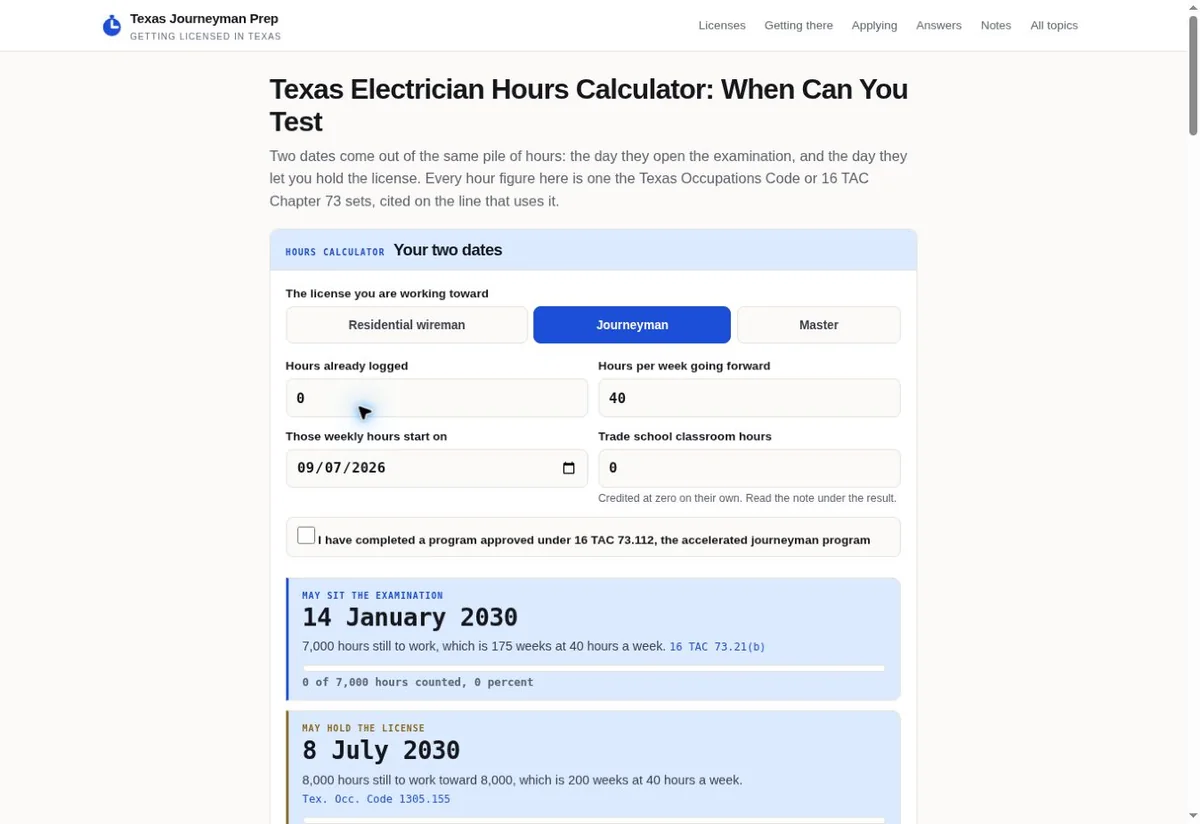
Texas Journeyman Prep calculator with license choices and planning fields
The existing calculator places labeled inputs in one screen. Its appearance supports a discussion of understandable form choices. View the project
What should a missing booking reference message say?
Tell the customer which detail is missing and how to supply it. Explain where to find the reference if your actual confirmation includes one. We avoid blame in an error message. If the business can locate a booking another way, give that option after staff approve which information they need.
What should success wording confirm?
It should state the action that has actually completed. A sent request can confirm receipt while a booking change may still await staff acceptance. Our copy needs that distinction at the moment of submission. Any later message should come from the business process you have approved, with no invented response promise.
How can we test the correction path?
Use approved test details and deliberately omit one required field. Check whether the message names that field and whether the entered text remains available. We then correct the input and submit again. The receiving staff member checks the test request so the visible feedback can be compared with what arrived.
  1. Try the form without a mouse Move through the controls with a keyboard and check that each field has a clear label. We should be able to follow the task without guessing where focus moved. Include the outside booking tool if the customer has to use it.
  2. Read the feedback in context Check the error beside its field and the message for the whole form. Our test should confirm that a person can find the next correction. A color change alone may leave the problem hard to understand.
  3. Compare completion with the actual record Send a test request through the proposed path. Ask staff to find the resulting record and identify its status. We can then correct any wording that suggests an accepted change when the system has merely received a request.

Accept the page by performing a change your staff will make

Before launch, have the intended editor change one approved visit detail and test its public result. We can use that task to check the handover your business needs.

Choose a change small enough to test safely. A temporary note for an approved test appointment is one option. Staff should find the field, see the preview and publish through the agreed process. We then open the public page as a customer would. The check should include any linked booking message affected by the edit.

The work agreement should identify which account the business controls and what support covers later content changes. A new appointment tool can require work beyond a text update. Our first conversation can establish whether you need content editing help or a separate integration. We set the project terms after learning those requirements.

  • Ask the editor to locate the visit note without help from the designer. If the field name is unclear, we can change its label before handover. An editing task should make sense to the person who will repeat it later.
  • Have the appointment owner check the revised public message. Confirm that the page status agrees with what staff can see in the booking system. Our acceptance task can use a safe test record rather than exposing a real customer's details.
  • Check an older confirmation link after publishing the change. A saved message may open a route that the homepage no longer shows. We should account for that path when assessing how a booked customer reaches current instructions.
  • Agree who handles a failed edit or a booking-tool outage. Publish only the fallback contact your staff can support. Our website work can provide the route, while your business confirms the operational instruction behind it.
What should we bring to the first Fishers website discussion?
Bring the public page used by booked customers and one anonymized example of a change that confused someone. Tell us which person controls booking rules. We can trace that narrow task together before considering a larger rebuild. Your current tool and account access will help establish what the proposed work can include.
Can we add later changes to the original build agreement?
Ask us to identify the change before assuming it fits the original work. Updating a public note differs from replacing the booking service. Our conversation should cover which account supplies the information and what the requested change affects. We can discuss project terms after those details are clear.

Sources

From the businesses we've worked with

“They are amazing. Working with them makes life so easy when it comes to SEO and web design”
George B.Google review

Marketing help for Fishers businesses

Based in Indianapolis, we serve central Indiana and clients across the United States.

Request a free strategy call

Fishers, Indiana

Service area map

Explore Fishers on OpenStreetMapArea reference; this is not an office pin. Map © OpenStreetMap contributors.