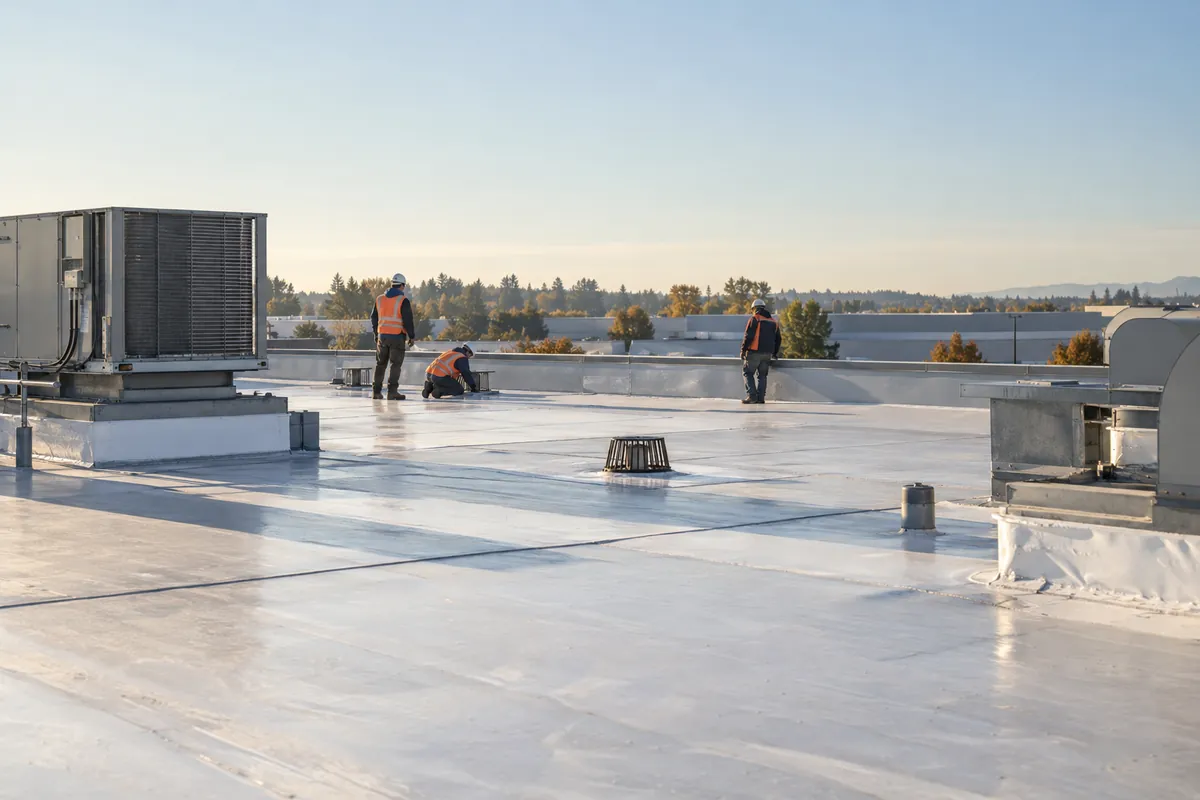
We plan a Phoenix roofing network around the parts of town your crews already roof. We write the pages, print your ROC number the way your estimates show it and keep heat claims to sourced figures. Your company still does every roof inspection, quote and schedule.
Questions about roofing microsites in Phoenix, Arizona
Local context
What does a Phoenix roofing microsite network cost?
Memberships start at $399 a month for 50 microsites, with every qualified lead included and nothing billed per lead. The pay per lead plan starts at $800 for year one. Monthly members get a 90 day proving window first, and once it ends the membership runs month to month, with 30 days notice to stop.
Will another Phoenix roofer get the same leads?
No. Garrison signs one contractor per agreed trade and market, and every call and form from your sites goes to your team. The site count describes your network, and it doesn't hand you exclusive rights to every town around Phoenix, so we map sites to the areas where you actually want more roofs.
Can the sites talk about Phoenix heat and roofs?
Yes, with the roofing judgment coming from your crew. In 2024 Phoenix logged 70 days at 110 degrees or hotter, a number a page can cite from the source. What that heat means for a particular tile or foam roof is your estimator's call, so we write it in your words and leave out any lifespan figure you can't back up.
Can the sites show my license and credentials?
Yes. Under A.R.S. 32-1124, your written bids and estimates already carry your ROC license number, so each site prints that same number exactly as issued. We won't list a manufacturer program or badge you can't document, because a homeowner who looks it up and finds nothing stops trusting the rest of the page. Review counts work the same way: only the real number goes up.
Which parts of Phoenix can one roofing network cover?
Whatever parts of Phoenix your crews already roof, with a site for each. If most of your jobs sit near the Camelback Corridor, that corridor can have a site of its own, since the Biltmore Area Partnership says it serves the corridor and the greater Biltmore area. We work with Phoenix roofers remotely from Indianapolis, and the map comes from your own job list.
What should I bring to the first call?
A rough count of the roofs you finished last year and the Phoenix neighborhoods where you'd like more. With those two numbers we can talk through how many sites make sense and which plan fits your cash flow. The call is free, and during business hours we aim to reply within five minutes.
“I had a great experience working with Jeff…”
Trojan Digital Marketing is based in Indianapolis and serves Phoenix businesses remotely.
Which Phoenix facts has Trojan Digital Marketing checked for a roofing network?
We put only checked Phoenix facts on roofing sites, and each one below links to the source we read before a page repeats it.
Phoenix, Arizona
The Biltmore Area Partnership describes its work as serving the Camelback Corridor and the greater Biltmore area.
A Camelback Corridor roofing site can use the area names the district group and locals already use.
Biltmore Area Partnership, home pageChecked September 7, 2026In 2024 Phoenix logged 70 days at 110 degrees or hotter.
Summer pages can cite the heat in plain numbers while your estimator explains what it means for a roof.
azfamily, Phoenix reaches 110 degrees or hotter for 70 days this yearChecked September 26, 2026Under A.R.S. 32-1124, an Arizona contractor's written bids and estimates carry its license number with the letters ROC in front.
Each roofing site prints the same ROC number your estimates carry, so a homeowner who checks sees the two match.
Arizona Revised Statutes 32-1124, License issuance; required posting and placement; license suspensionChecked September 26, 2026
The heat and ROC lines come from search results read on September 26, 2026, and the Biltmore line was last reviewed September 7, 2026. Reroof permit rules for Phoenix stay off the sites until someone checks them at the source.
Should a Phoenix roofer pick the monthly plan or pay per lead?
We lay out both Garrison plans for Phoenix roofers so you can pick how to pay while the sites build up calls.
| What you're weighing | Monthly plan | Pay per lead plan |
|---|---|---|
| How leads are billed | Every qualified lead is included | A yearly allowance, then a set rate per extra qualified lead |
| How long you're committed | A 90 day proving window, then 30 days notice | Twelve month membership years that renew |
| Who it tends to suit | Owners who want one steady bill | Owners who'd rather pay as leads arrive |
How does a Phoenix roofing membership run after you sign?
We start Phoenix roofers on the monthly Garrison plan with a 90 day proving window, billed monthly, and once it's over you can stay month to month or leave with 30 days notice.
Typical plan
- Proving window
- Sites go live under your company's name and logo
- Every call and form path is tested against your office line
- Month to month
- Thirty days notice ends the membership
- Each membership year brings a fresh batch of local articles
Memberships start at $399 a month for 50 microsites with every qualified lead included.
A roofing microsite needs its own useful job
- Domain and website
- Document ownership and access.
- Analytics and records
- Define access and the handover.
We build and plan roofing microsites as marketing assets for the contractor that will receive the inquiries. The site should explain a particular roofing decision clearly, display the responsible business and route a suitable request directly to that business. Its reason to exist is a useful customer resource with a defined audience, not another domain that repeats the main website's homepage.
Read more
For Phoenix, a workable brief could center on property managers who need to understand how to request an assessment and what information helps an estimator prepare. The resource can explain accepted project types, show approved roofing evidence and present a clear inquiry route. The contractor remains responsible for roofing services and customer commitments. Trojan Digital Marketing's role is the content architecture, website, tracking and handoff included in the marketing scope.
Proposed Phoenix network planning scenario
Consider a roofing business that serves Phoenix and receives both residential replacement requests and commercial property inquiries. Its main website currently treats those audiences as one. We would first determine whether a stronger commercial roofing section on the main domain resolves the confusion. A separate microsite becomes a candidate only if the property manager resource has enough distinct content, a clear brand relationship and an owner who can maintain it.
Read more
The proposed resource would organize accepted building uses, assessment preparation and documented project examples. A page for an individual district would require meaningful service context rather than a renamed introduction. The network map would show the role of the main company website and any genuinely separate resource. Every destination would identify the same responsible contractor without inventing extra offices or making a project location look like a branch.
Connect acquisition to an estimating decision
Organic search can introduce the preparation resource to people investigating a roofing question, while a paid campaign can send a chosen audience directly to the relevant service explanation. Both routes need a clear offer and a functioning inquiry path. We would use campaign parameters and landing page records where available to distinguish how visitors arrive.
Read more
The qualification process would collect the property and requested work, then route the inquiry to the contractor's estimating team. A submitted form would not be described as an approved estimate or scheduled inspection unless the contractor's actual system establishes that status. The marketing review would examine suitable assessments and reasons for rejected requests. That evidence can improve the service explanation and targeting without assuming that more domains automatically produce more qualified leads.
Compare the choices before committing to the scope
- A: current page
- Observe the starting version.
- B: one change
- Compare with the same measurement.
| Choice | Trade detail | Decision rule |
|---|---|---|
| Main website resource | Roofing service and scope | Use the existing domain when it can serve the audience clearly and retain a complete inquiry journey. |
| Distinct microsite | Assessment preparation | Require a useful independent resource, transparent business identity and a named content owner. |
| Paid landing use | Roof assessment and replacement inquiries | Match the campaign message to the actual service and preserve direct routing to the business. |
Define the deliverables and ownership before building
For roof assessment and replacement inquiries, we would propose a scope covering the content map, page writing, visual implementation, qualification fields, direct routing and agreed tracking. The asset schedule would identify domain control, website and content rights, administrative access, analytics, phone arrangements and exportable inquiry records. Ongoing third party services and maintenance responsibilities would be explicit rather than hidden behind the word ownership.
Read more
The client would provide approved roof project descriptions that identify the property type, contractor role and completed scope, current service details and a reviewer with authority to approve them. We would work with the roofing business owner to define whether the property and requested roofing work fall within the contractor service scope. The site would then be tested against that decision. Project fit also depends on whether the business has enough distinct material and staff capacity to maintain the resource. If it does not, a focused main website improvement is a sensible scope to discuss.
Measure suitable inquiries and maintain the resource
For the proposed roofing microsite, the business outcome is roofing inquiries accepted for a suitable assessment. We would distinguish search visits, paid visits, submitted contacts and inquiries accepted by the company. A click or form completion is useful evidence about a step in the journey, but it is not proof of a booked job or an economic return.
Read more
The maintenance plan would respond to a change in accepted roof systems, coverage or estimating arrangements. It would also include the agreed technical checks, content updates and routing tests. We would compare performance against a documented baseline and record attribution limits where a customer uses several channels. The next investment would follow the quality of the resource and the contacts it supports, with no fixed lead volume, ranking, citation or turnaround promise.
Use local context and search guidance accurately
- Business
- Start from the real business.
- Coverage
- Identify the places it actually serves.
- Office
- Do not turn a service area into an invented office.
Downtown Phoenix Inc. describes a central district with residential, retail and cultural uses. That context supports varied buyer examples without establishing roof condition or demand. Downtown Phoenix Inc. Downtown Core profile.
Google identifies doorway abuse as a risk when similar sites or pages exist mainly to funnel search visitors. A proposed resource therefore needs its own useful content and clear business identity. In this roofing scope, the test is whether the property and requested roofing work fall within the contractor service scope. Read Google search spam policies and helpful content guidance.
Discuss the resource and the first useful decision
Bring the current website, the accepted service scope and examples of inquiries the team considers suitable. We can review the role of a Phoenix roofing resource and propose a bounded next step. Discuss Phoenix roofing microsites. Explore the national roofing service or review the Phoenix market hub.