
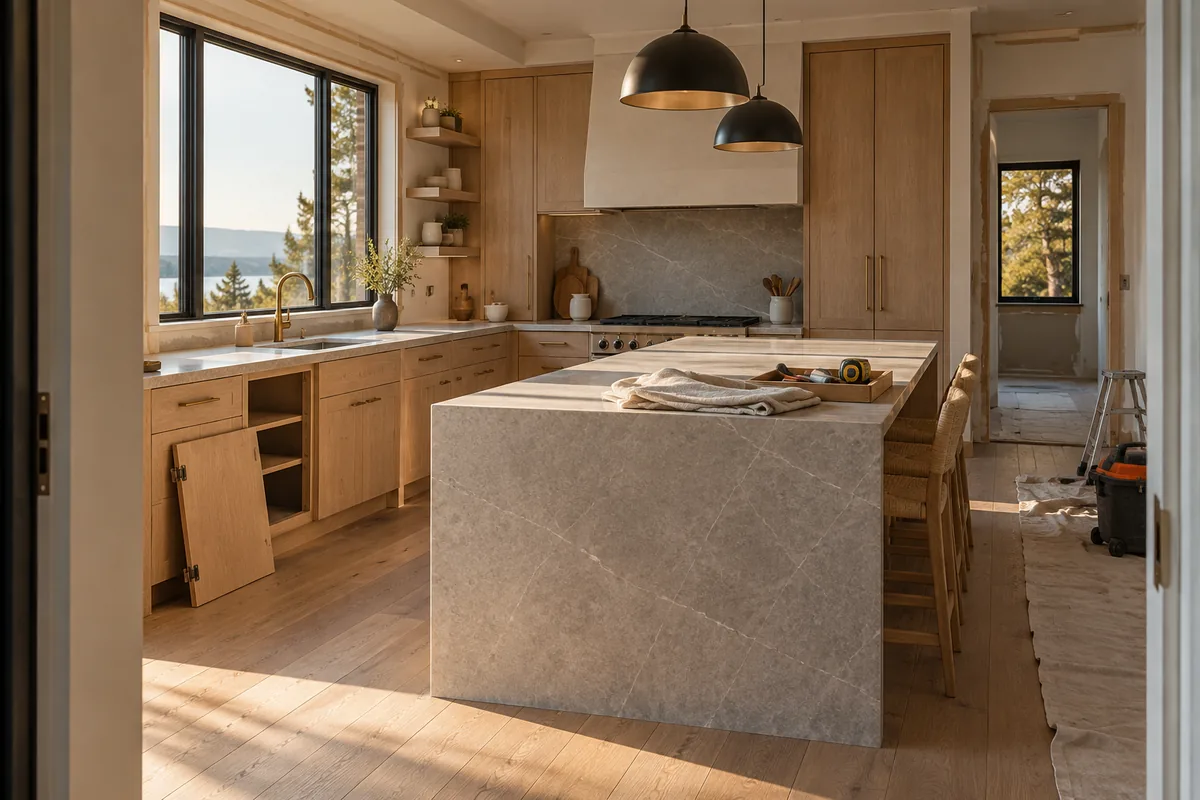
On a remodeler's site we'd rebuild the estimate form before touching the design. A form that loses the address or phone number can cost you the job, however good the photos look. The project centers on a website journey that helps the right visitor complete an appropriate next step. For a business offering residential remodeling consultations, that means helping a prospective customer understand whether the project scope and property are suitable for an initial assessment and how to request a remodeling consultation. The proposed examples below show how the work can be scoped around a real operating process.
Questions about website design in West Tampa, Tampa, Florida
Local context
What does a new website cost for a West Tampa remodeling company?
A custom build is priced after the free strategy call, once we know how many services and project galleries it has to carry. There's one published option, the Marketing Startup Kit at $7,997 or three monthly payments of $2,799, which covers a custom 15-page site plus Google Business Profile work. Before any of that, the free Jev scan scores up to 100 of your current pages.
What if the new site doesn't bring more estimate requests?
Then the form data shows where it breaks, because we'd set each request to note the page it came from. If people open the form and quit, we shorten it, and if they never reach it, the service page above it gets reworked first. The $99 Jev audit includes one rescan after fixes, extra rescans are $19, and the Startup Kit's consulting months cover this tuning.
Can you fix our current site instead of starting over?
Sometimes, and the free scan is the quickest way to tell. When the pages are sound but the estimate form loses people, we'd rebuild the form and the pages that feed it and leave the rest alone. When the platform can't deliver a form reliably or the layout falls apart on a phone, a rebuild can end up cheaper than patching the same problems twice.
Should the site treat West Tampa homeowners and business owners differently?
Yes, if you take both kinds of work. The City of Tampa describes West Tampa, which sits between Downtown and Westshore, as residential and commercial, so one form might get a kitchen remodel from a homeowner and a storefront refresh from a shop owner. Asking which one is writing, before anything else, lets each person see only the questions that apply and sends commercial requests to whoever prices them.
How long before the new site goes live?
In the Startup Kit's example schedule, the site is designed and built in weeks 2 to 4, with weekly iterations and two formal revision rounds, and launch falls in weeks 9 to 12. A standalone redesign gets its own schedule after scope review, and it moves with how quickly your project photos and approvals arrive.
Can homeowners send photos with their request?
They can, if you want them. An optional upload on the estimate form lets a homeowner show the room before you visit, and keeping it optional means nobody quits because they're standing in a store without the pictures. Before launch we'd send a test request from a phone to confirm the photos arrive where your team will actually see them.
Do you need to visit West Tampa to build the site?
No. We're based in Indianapolis and would build it remotely. A website build runs on shared screens and your notes about the jobs you want. We'd ask for an hour with whoever answers estimate calls today, because that person knows which questions come up before a homeowner agrees to a visit.
“I had a great experience working with Jeff…”
“…drove a noticeable uptick in leads within just a few weeks…”
Jeff Clerisier founded Trojan Digital Marketing in March 2018.
Trojan Digital Marketing is based in Indianapolis and serves Tampa businesses remotely.
Why does West Tampa's mix of homes and businesses matter for your site?
Will one form hear from homeowners and shop owners alike? For a West Tampa remodeler it can, and the City's own description of the district explains why.
West Tampa, Tampa, Florida
City of Tampa material describes West Tampa as a residential and commercial area.
A remodeler here may hear from a homeowner and a shop owner through the same form, so the first question on it should ask which one is writing.
City of Tampa West Tampa Community Redevelopment AreaChecked September 8, 2026
The source describes the district's mix of uses in general terms. It doesn't count homes or businesses, so this page gives no numbers for either.
What should the estimate form ask a homeowner versus a business owner?
Worried a longer form will scare people off? A West Tampa remodeler's form can split at the first question, so each visitor sees only what fits their project.
| Form step | Homeowner remodel | Business or storefront job |
|---|---|---|
| First question | Which room or part of the house? | What kind of space, and is it open for business now? |
| Where the job is | Street address or nearest cross street | Business name and street address |
| Photos | Optional upload of the room as it looks today | Optional photos, plus any landlord rules they already know |
| Timing | When they'd like work to start | Hours when crews can and can't be on site |
| Who receives it | Whoever prices home remodels | Whoever prices commercial work |
What does your team send, and what does Trojan Digital Marketing build?
How much of this lands on your plate? For a West Tampa remodeler it's mostly photos and answers you already have, and we handle the build.
Your team sends
- Photos of finished jobs you have permission to show
- The services you want more of, in order
- The questions you ask on every estimate call
- Who should receive each kind of request
We build
- A page for each service on your list
- An estimate form that asks homeowner or business first
- Photo galleries sized to load quickly on a phone
- A phone test of every form and call button before launch
Proposed scenario: a residential remodeling contractor
For the proposed West Tampa remodeling contractor, we would design the website around a homeowner's first useful decision: whether to request an assessment of the intended project. Service pages would show the types of work accepted, explain how the initial conversation works and provide approved project examples with clear scope descriptions.
Read more
The worked inquiry form would ask for property location, project type and the changes the owner is considering. It would allow an uncertain scope and avoid presenting an initial form submission as a binding estimate. If photographs are useful, we would agree on a suitable way to collect them without making the form unnecessarily difficult on mobile. Confirmation copy would explain the review process and distinguish an inquiry from a scheduled site visit. We would test phone links, form delivery and the path from a project example to the relevant service. The contractor would have a practical editing workflow for coverage, service availability and current business details.
Collect enough project context for a sensible next step
We would supply a homeowner journey, service and project page designs and a tested consultation request flow. The contractor would decide which details are required before the team can assess a potential project. The website would distinguish a general inquiry, a scheduled visit and a later proposal.
Read more
Implementation would begin with the path from an approved example to the relevant service and form. We would then test incomplete project ideas, optional photographs when in scope and mobile phone links. The contractor would review the resulting inquiry summary and confirmation wording. Handoff would include instructions for updating service coverage and current business facts. The acceptance review would ask whether the homeowner knows what happens next and whether the contractor can evaluate the request without first correcting a misleading expectation created by the website.
Related projects

Westfield Roofer
A Westfield, Indiana roofing website that pairs call and inspection routes with five before-and-after project comparisons.

Redefined Body
A skincare shop redesign with clear product pages that show benefits and ingredients alongside a purchase button.

Moto Supreme
A cabin retreat website that connects the stay and guest activities with a practical route to booking.