Need help?Jamie

Market service plans

Westfield Website Design for Products and Appointments

People hear about your Westfield shop, look it up on a phone to check what you carry or book a time, and end up calling because the site won't tell them.

Trojan Digital Marketing designs websites for Westfield, Indiana shops and studios that sell products and take appointments, so a phone visitor can see what you carry and request a time. It's for owners whose customers love the shop while the site shows half of what you sell. If you're downtown near Grand Junction Plaza, where the city places The Union, the site should say so before anyone has to ask.

Bring two phone screenshots: your product page and the spot where people book. The first strategy call is free, and during business hours we aim to reply within five minutes.

  • Browse and book on the same phone screen
  • Every request form tried with a real entry
  • Room for your own product and staff photos

Our founder, Jeff Clerisier, has built websites since 2016 and started the company in March 2018. More than 1,400 of our websites are live. Ask for examples that sell and book, then try their product pages and request forms on your own phone first.

Illustrative business planning tools.
IllustrationThis page drawn as a wireframeThe headline, highlights and button from this page, redrawn in desktop and phone layouts. It’s an illustration of page structure and isn’t a client site.PAGE WIREFRAMEtrojandigitalmarketing.com/westfield-we…Westfield WebsiteDesign for Productsand AppointmentsBrowse and book on the same phone screenEvery request form tried with a real entryRoom for your own product and staff photosBook a free strategy call010203WestfieldWebsiteDesign forProducts and…Browse and…Every request…Room for your…Book a free…

YOUR WORKING BRIEF

Choose where to start

Select the parts you want to discuss. Your choices carry into the inquiry form.

Discuss this service0 priorities selected

See how I'd approach this

Choose a question
to look at with me.

A website built around the next customer decisionMESSAGE · EVIDENCE · ACTION
  1. A clear offer
  2. Evidence for the customer
  3. An action that works on mobile
A website built around the next customer decision

We plan a Westfield shop or studio site around two kinds of visitor. One knows the product category and needs help choosing, so each product page shows the options with a price or stock status. The other needs a time, so the request button stays on every page. Before launch we send a test request through each form and confirm it reaches the right inbox. What we'd usually skip is a booking app that sends visitors off to another site when a form on your own page does the job.

Questions about website design in Westfield, Indiana

How much does a website cost for a Westfield shop or studio?

A full build can go through the Marketing Startup Kit at $7,997, which can also be paid as three monthly payments of $2,799. That covers a custom 15-page website along with Google Business Profile optimization, twenty SEO blog posts and three months of consulting after launch. Adding appointment requests to the site you have now, or reworking only the product section, is priced after the free strategy call.

How long does a Westfield website build take?

The Startup Kit's example schedule runs about twelve weeks. Strategy is set in week one, the site is designed and built in weeks two to four with two formal revision rounds, content and profile work fill weeks five to eight, and launch follows. Your real dates get set after the scope review, and how quickly photos and product details arrive moves them most.

Should we sell online or just take appointment requests?

Start with whatever your staff already handle well. If a fitting or consultation usually comes before a sale, a browse-then-request path is simpler to run and skips online checkout until you need it. If you do add checkout, Indiana has you register as a retail merchant with the Department of Revenue through INBiz before collecting the 7% sales tax.

Does a downtown Westfield shop need its own visit page?

Yes, if customers come to you. The city treats downtown, where The Union sits near Grand Junction Plaza, as a separate area from the Grand Park sports campus, and visitors don't always know which part of town you're in. A short visit page showing your entrance and parking details you've confirmed saves people a phone call before they set out.

What if the new site doesn't bring more appointment requests?

First we make sure requests aren't getting lost, since a form that emails an old inbox looks exactly like a slow month. Test requests go through every form before launch. After that, the Startup Kit's consulting runs weekly in the first month and every other week through month three, and that's when pages get adjusted based on where visitors actually leave.

What do past clients say about working with Jeff?

Heather Doan's Google review starts, 'I had a great experience working with Jeff,' and Mike Bamosi's mentions 'a noticeable uptick in leads within just a few weeks.' Neither review says where they're based or which service they bought, so we don't present them as Westfield results. You can also ask to see some of the 1,400+ live sites we run.

Does Trojan Digital Marketing need to visit our Westfield shop?

Not for the build itself. We're based in Indianapolis and work as a service-area business with no public office, so design reviews happen remotely. What helps most is photos your staff take of the storefront and the door customers actually use, since no stock photo can show a visitor which entrance is yours.

“I had a great experience working with Jeff…”
Heather DoanGoogle review
“…drove a noticeable uptick in leads within just a few weeks…”
Mike BamosiGoogle review

We work from Indianapolis and serve Westfield, in Hamilton County, as part of central Indiana.

We also work with clients across the United States.

Read our Google reviews

Which Westfield details belong on a shop or studio website?

A Westfield shop's website fields the same questions your counter staff hear, like where you are and whether people can order online, so its design should answer from city and state sources.

  • A City of Westfield announcement describes The Union as a downtown development near Grand Junction Plaza with retail and restaurant uses, and the city treats downtown activity as separate from the Grand Park sports area.

    If you're downtown, say so on your visit page and use the plaza as a landmark people already know.

    City of Westfield, news announcement about The UnionChecked September 13, 2026
  • The city's locations list names the Monon Trail and the Cool Creek Trail among Westfield's trails, along with Asa Bales Park and Quaker Park.

    If customers really arrive on foot or by bike, name the trail they'd use on your visit page.

    City of Westfield, Locations listChecked September 21, 2026
  • Indiana businesses that sell goods register through INBiz with the Department of Revenue as retail merchants to collect the 7% sales tax, and each retail location displays its own copy of the registration.

    Settle this before a Westfield site adds online checkout, and ask your accountant to confirm the setup.

    Indiana Department of Revenue, Sales Tax pageChecked September 25, 2026

Check the city's own pages before quoting downtown or trail details, since they change as projects open.

What should the button say on each product page?

Before a Westfield shop's site gets a new look, sort each thing you sell by the button it needs.

What you offerWhat the visitor needsThe button on that page
Items people buy as they are
The price and whether it's in stock
Buy or reserve for pickup
Items that need a fitting or sizing
What the fitting involves and how long it takes
Request a fitting time
Services booked by the hour
Open times and what to bring
Pick a time
Custom or special orders
The options you offer and your usual lead time
Send an order request

How does a Westfield product and booking site come together?

Building a new site for a Westfield studio or shop follows the Startup Kit's example schedule, and your staff check the details only they know.

  1. Free strategy callWalk through what you sell and how people book today, including the questions staff answer most on the phone.Together
  2. Strategy and page listKeyword and content choices are settled before design starts, so every product group gets a page with a job.Week 1 in the example scheduleOur team
  3. Design and buildThe custom site is built with weekly iterations and two formal revision rounds.Weeks 2 to 4 in the example scheduleTogether
  4. Content and profile workBlog posts and Google Business Profile updates are finished while your staff confirm hours and stock notes.Weeks 5 to 8 in the example scheduleTogether
  5. Launch and test requestsEvery request form gets a real test entry before launch, then consulting starts and pages change based on what visitors do.Week 9 onward in the example scheduleOur team

Plan the product or service decision first

Connect an observation to a decisionEventRecordMeaningDecisionCheck definitions at every step
Event → record
Define the event and check the record.
Meaning → decision
Review the business meaning before acting.
Connect an observation to a decisionDefine the event, check the record, review its business meaning and choose the next action.

We identify what a visitor should be able to understand before contacting your team. That may include the available service types, the products you actually carry or the information required for a consultation. We organize those choices before creating a detailed visual treatment. A page that presents everything at equal weight can be difficult to use even when its individual elements look polished. The first design review therefore focuses on the hierarchy and the customer task, not just the color palette.

Use the Westfield setting without implying a partnership

The city describes activity around Grand Junction Plaza and The Union, alongside the Grand Park sports setting. These contexts suggest different possible visitor journeys, which we would validate with the business. A local retailer might serve residents and visitors, but its website should not imply official venue status or access. We separate useful area context from claims about the company, and confirm every public visit arrangement with the owner.

A proposed specialty sports retailer experience

Imagine an independent sports equipment retailer in Westfield that also offers equipment fitting appointments. The proposed site could organize products by activity, with original detail photography and a concise explanation of what a fitting involves. A comparison control could let visitors select the characteristics they want to understand, such as intended use or maintenance needs. It would reveal approved information rather than generate an unsupported product recommendation.

Read more

The appointment page would explain what to bring and ask which activity and product category the customer wants to discuss. It would make clear whether the request is confirmed immediately or reviewed by staff. A visitor needing only current opening information would have a shorter route. This is an illustrative design concept. It does not establish a relationship with a retailer, product brand or sports facility, and the final content would depend on the business's real inventory and process.

Make visual variety part of a consistent system

A useful site can combine a large editorial photograph, a compact product comparison and a detailed process section without making every page look identical. Typography, spacing and control behavior provide consistency. Images should show the actual product, team or work when that material is available. Captions can explain why a detail matters. We avoid requiring visitors to interpret decorative symbols without labels, and keep important content readable when visual effects are unavailable or reduced.

Build interactions with a clear job

  1. Define the choice the visitor needs to make within a product or service section.
  2. Use a visible control with a descriptive label and a clear selected state.
  3. Reveal information that genuinely changes with the choice.
  4. Keep a direct route to the relevant inquiry or appointment.
  5. Check keyboard use, touch use and reduced motion behavior.

The interaction plan is reviewed alongside performance. Large image sequences, embedded widgets and unnecessary scripts can create costs that a design mockup does not reveal. We scope the experience around the information needed rather than assuming more movement makes a better page.

Prepare the content and its editing workflow

Your inputs may include current product categories, original photographs, fitting or consultation procedures and access to any booking system. We decide which information belongs in an editable collection and how staff will preview changes. Product availability and service arrangements need an owner. If the site links to an external inventory system, that relationship must be clear to both the editor and visitor. A migration also includes the existing page inventory so useful content and established URLs receive explicit treatment.

Test practical mobile tasks

Give each part of the page a jobOfferEvidenceAction
Offer
Explain what the customer can get.
Evidence
Support the offer.
Action
Make the next step easy to use.
Give each part of the page a jobThe offer, evidence and contact route should work together on a small screen.

We review the route from discovery to action on relevant screen sizes, including what happens when an image loads later than expected. Images receive suitable dimensions and compressed versions, and essential details remain written text. Google's page experience guidance encourages an overall experience perspective. Our checks focus on the actual site's reading, selection and form tasks. We report observed performance and unresolved dependencies rather than promising every device will behave identically.

Connect the design with the wider marketing plan

Share your current website and the task customers struggle to complete. We can scope the design, content and implementation needed to address it. Westfield SEO strategy can define the page architecture, and Westfield Google Maps optimization can align public visit details with the website. The Westfield market hub brings the options together. A useful proposal should explain both what the visitor sees and how your team keeps it accurate.

Sources & further reading

Talk with Trojan Digital Marketing

What resource question should the website let someone send?

Define the question your organization can receive before building the loan interface. We can design an inquiry around the requested resource while leaving borrowing approval and actual availability with your responsible team.

A resource-loan page can help a person ask about an item without committing the organization to lend it. For a Westfield, Indiana website brief, we would ask what staff need to understand at that first stage. The answer guides the fields and the receiving message. It should also guide the words around the action so the person recognizes that they are sending an inquiry.

Which resource should the customer be able to identify?
The organization supplies the actual names and descriptions approved for the page. We can make the requested item recognizable through those words. A photograph can help identify it when permission and context support that use. The image should not replace a name that staff need to understand the request.
Should the interface show every resource?
Ask the organization which resources can be discussed through this route. We can plan a focused list when that matches its process. A full public inventory may need ongoing work that belongs in another brief. The first inquiry interface should include the approved options it can maintain, with an appropriate question route for an unlisted item.
Does a resource card mean the item is available?
The card should express the status the organization actually approves. We can identify it as an inquiry option where availability needs staff review. A visible item name alone does not establish a lending arrangement. The action and receipt need to carry the same meaning.
  • Bring the resource name your staff currently use. We can compare it with the terms a person would recognize before they ask.
  • Identify the first question the team can answer about borrowing. The interface should collect information for that stage.
  • State who receives the inquiry and who may approve a loan. Our design can preserve those different responsibilities.

How should the requested item stay tied to its intended use?

The receiving team needs to understand which resource the person means and why they are asking. We design that context into the request without deciding whether the proposed use can be approved.

Yahweh House of Prayer public church homepage
Resource-loan enquiry meanings: Public church information layout. View the project
Resource-loan enquiry meanings
Request detailOrganization answer neededInterface meaning to preserve
Resource namedWhich approved item description the team uses.The requested subject remains recognizable in the message.
Intended useWhat information staff need to assess that purpose.The person can describe their proposal in ordinary words.
Requested periodHow the organization wants a proposed period expressed.The requested dates do not imply confirmed availability.
Person contactingWhich details staff need for the next exchange.The identity field serves contact without granting borrowing authority.
Approval stageWho decides whether a loan can proceed.Submission remains an inquiry until that decision is supplied.

The Yahweh House of Prayer name and Contact link share the top bar of its homepage screen. Both appear above the large welcome message. We can apply that visible identity-to-action relation to a resource page. Name the organization and the purpose of its inquiry route before asking for details. The receiving team then gets the resource question in a context the person could understand.

  1. Choose a resource reference the visitor can use The option can use the organization-approved item name or another maintained reference. We can avoid an internal code being the only recognizable label. If staff need the code, keep its public meaning understandable beside it.
  2. Ask for the purpose staff actually assess Use the organization answer to define this field. We can include a plain-language prompt when a free response is appropriate. Do not turn the field into a technical qualification the business never asked customers to supply.
  3. Preserve both details in the receiving layout The message should keep the resource beside the proposed use. We can specify that relation in the design brief. If a receiving system has its own format, its actual constraints need inspection before implementation is priced.

Does a contact identity establish permission to borrow?

A person supplying a name is asking to be contacted about their request. We keep that identity separate from whatever authority your organization needs before it can approve a borrowing arrangement.

What should the first form ask about the person?
Ask the organization which contact information is needed for the next response. We can design those fields around that purpose. A first inquiry need not collect every detail required at a later approval stage. The receiving team should be able to ask for further information through the actual process it maintains.
What if a person writes on behalf of a group?
Let the organization define the detail it needs to understand that relationship. We can describe the field clearly without assuming the sender can commit the group. If authority matters later, staff need their approved way to establish it. The page should not turn a supplied group name into borrowing permission.
Can a known contact skip approval?
The organization decides whether an existing relationship changes its process. We can publish the rule it approves, but the interface should not infer an exception from a familiar email address. Staff may need to identify the particular arrangement behind the request. The design needs the actual rule before it can express that status.
  1. Name the initial contact purpose State what happens after the inquiry is sent. We can help phrase the next staff step in the words the organization approves. Avoid describing a conversation request as a completed loan.
  2. Keep later authority questions identifiable If another role approves borrowing, name that dependency in the brief. Our proposed receiving message can make the pending step clear. The first contact record should not silently stand in for approval by that role.
  3. Inspect the status carried forward When a test is included, check what state the receiving record assigns to the inquiry. We can identify a mismatch between a requested loan and a message that describes it as confirmed. Any new status logic belongs in the actual implementation task.

What should the receipt say while availability is unresolved?

The receipt should acknowledge the inquiry and preserve the unanswered availability question. We write that feedback from the organization account so a successful send does not become a promised resource allocation.

Can the success message say the item is reserved?
Use that meaning only when the real system and organization support that result. We can draft an inquiry receipt when staff still need to assess it. The message should say what was sent and the next approved action. A submitted date field does not establish that the requested period is available.
What if the requested resource is not currently shown?
The organization supplies the route for that question. We can include a help option if the business wants staff to receive unlisted-resource inquiries. That option should retain the unresolved item reference. It should not generate an available substitute or an approved loan from a general message.
Can we state a response time?
Ask the organization for the commitment it can actually approve. We can publish that statement when it belongs in the task. An interface should not invent a staff deadline to make the receipt feel complete. The next action can remain clear without a promised turnaround that nobody has accepted.
How should an error be worded?
Explain which detail needs attention and what the person can do next. We can plan feedback that preserves the other request information where the implementation supports it. The error should relate to an actual input requirement. Avoid rejecting a person because they lack an approval the first inquiry is intended to request.
  • Retain the requested resource and period in the inquiry receipt where the organization wants that context shown. We can state their requested status clearly.
  • Identify the staff action the organization approves after receipt. The page should not add a promised handover at this stage.
  • Name any unresolved availability condition in the brief. Our feedback design should preserve it through the receiving route.

How can named fields make the resource request readable?

Use explicit labels and a layout that keeps the item question connected to the next action. We can plan those relationships from a real tool screen while using your organization facts for the loan interface.

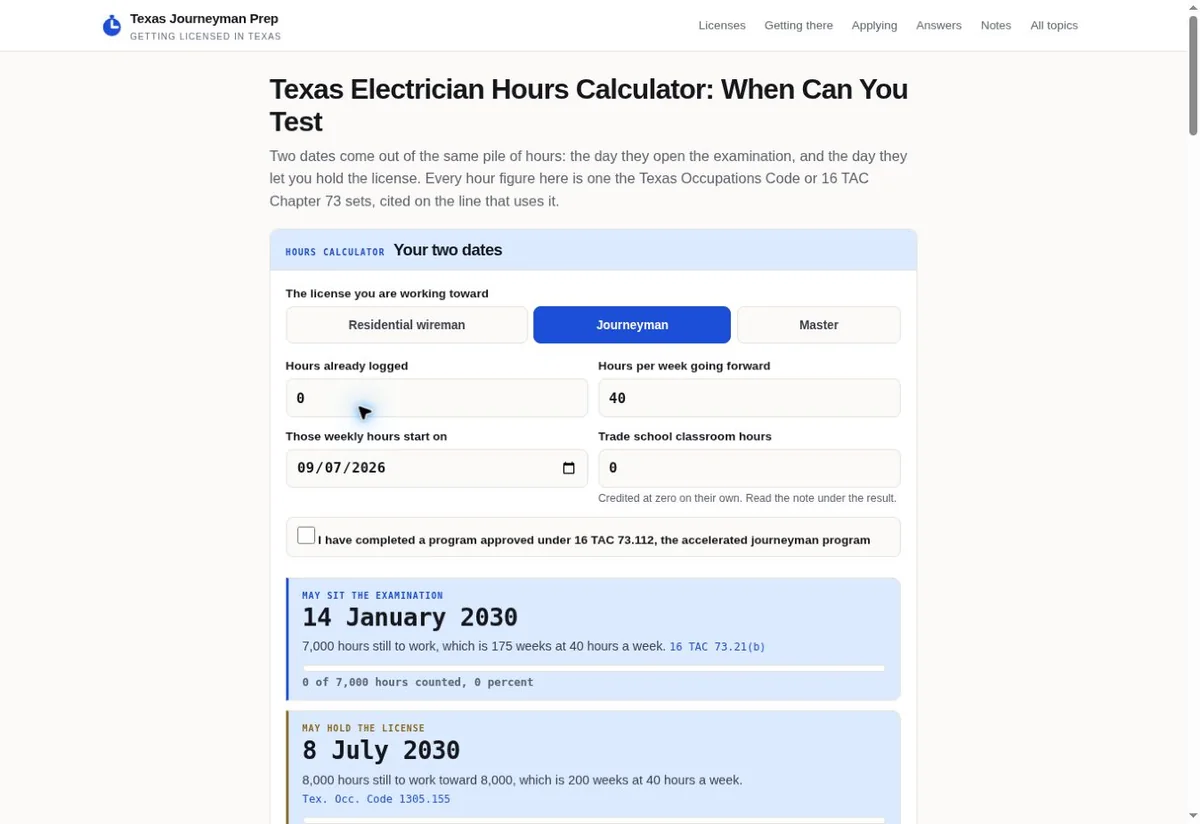
Texas Journeyman Prep calculator with labeled fields
Resource-loan enquiry meanings: Texas planning inputs with labels. View the project

The Texas Journeyman Prep calculator places "Hours already logged" beside "Hours per week going forward". The first label asks about past hours; the other asks about an expected weekly pace. Those visible labels let us discuss how a person understands what information to enter. For a resource inquiry, we can keep the item reference separate from its requested period and purpose. Staff supply the meaning of those fields before the interface gives them labels.

  1. Read the labels without the surrounding sales copy A person should recognize what the resource field asks for. We can inspect the label and any necessary help text as a small task. A visitor may arrive directly at the form without reading every introduction.
  2. Follow the request on a phone-sized layout Inspect whether the resource context remains visible while the person enters details. We can specify an appropriate reading order in the design brief. The final page needs its own implementation check under the agreed access.
  3. Compare visible information with the message staff receive Marked sample details can help inspect that relation when testing is included. We can see whether the resource and requested purpose survived the handoff. A starting screenshot supplies the layout reference, while an actual message check supplies the receiving observation.
Do we need a calculator for a loan request?
Choose an interaction only when the organization has a real customer task and approved logic for it. We can design a plain inquiry without calculation. The existing tool screen helps discuss named inputs; it does not require the loan page to imitate the tool.
What should the proposal identify about this check?
Name the fields and receiving route it covers. We can distinguish visible-label inspection from an end-to-end submission check. The buyer should know which observations will be retained when the work is accepted.

How should a requested amendment preserve the original inquiry?

Let the person describe a proposed change without silently replacing an accepted arrangement. We can specify that distinction using fictional details before the organization approves its actual amendment process.

Hypothetical example A fictional Westfield organization receives a resource-loan question and a later amendment

Before

  • In this exercise, a person asks about a resource for a proposed period. The organization has not approved the loan. The person later wants a different period and another intended use. A draft interface replaces the first values and shows a loan-updated message.
  • The draft has no basis for calling either version an approved borrowing arrangement. No real organization, resource allocation or test is described. We would retain the earlier inquiry and ask staff how the new request should be assessed before the message announces a change.

After

  • Our proposed amendment route identifies the original inquiry and the new requested details. The receipt acknowledges the amendment question while keeping availability pending. Staff can compare the two versions under the process the organization actually approves.
  • The planned check uses marked fictional details to inspect the reference and message meaning. It does not invent loan terms or claim a performed test. The buyer can use that example to decide what the implementation quote needs to include.
Can a reply to the original message be enough?
That may fit the organization better than a second form. We can explain a maintained reply route when staff approve it. The important context is the original inquiry and the proposed difference. A new interface should have a reason tied to that actual receiving task.
Who decides whether the amendment is accepted?
The organization supplies that role and the decision process. We can preserve the request state in the interface and receiving message. A customer editing a field should not itself change an arrangement that required staff approval.

Who keeps the resource descriptions fit for an inquiry?

Give changing resource information an organization owner before adding it to the page. We can write stable guidance around the options approved for inquiry while the business maintains their actual descriptions.

  • Name the staff role that approves an item being shown on this route. We can retain that responsibility in the editing handoff.
  • Keep the purpose of an illustrative photo clear. The organization should approve the current description before a past image is used beside an inquiry action.
  • Identify what changes when a resource is no longer an inquiry option. Our page task can remove the controlled choice without inventing a substitute.
  • Give an unresolved item question a maintained staff route where the organization supports one. A removed card should not leave its old form option promising availability.
Can a past photo remain on the page?
Ask the organization whether its description and rights still support that use. We can label a past example where that is the approved role. The action beside it must remain accurate about what the person can ask for now.
Does the request option need a stock count?
That depends on the actual system the organization can maintain. We can design a request path without publishing a live count. The page should still make clear when availability requires staff confirmation.

What should we inspect before accepting the loan interface?

Accept the named inquiry task against the organization meaning it was built to express. We can show the checked fields and message states alongside any remaining staff or system dependency.

What belongs in the first design brief?
Bring one approved resource description and the initial question your team can receive. We can define the item and purpose fields, then the receipt meaning. Identify who approves borrowing separately. Those inputs make the interface task concrete enough to price. Ask us to name the controlled page and the receiving message the proposal will inspect, so both parts have a clear completion point.
What proves this first task is complete?
Inspect the actual requested resource and the status carried into the named receiving route. We can retain marked test observations when those checks are included. A correct layout alone does not establish that staff got the same details. The acceptance note should show the part actually performed.
How does the organization approve the public meaning?
Have its responsible role read the form prompts and receipt together. We can identify which sentence describes an inquiry and which depends on later approval. The buyer should see any unanswered rule before treating the design as ready for release.

Commission the resource question your organization can support today. We can design a clear route from item context to a readable inquiry, then inspect the handoff agreed in the quote. Your team supplies borrowing terms and approval. The first website task should leave both the person asking and the staff responding able to recognize the state of that request.

Sources

From the businesses we've worked with

“Trojan Digital Marketing gave our website a complete make over. The board members and I are absolutely thrilled!”
C. Teague McClendonAmerican Veteran Service Corp

Marketing help for Westfield businesses

Based in Indianapolis, we serve central Indiana and clients across the United States.

Request a free strategy call

Westfield, Indiana

Service area map

Explore Westfield on OpenStreetMapArea reference; this is not an office pin. Map © OpenStreetMap contributors.