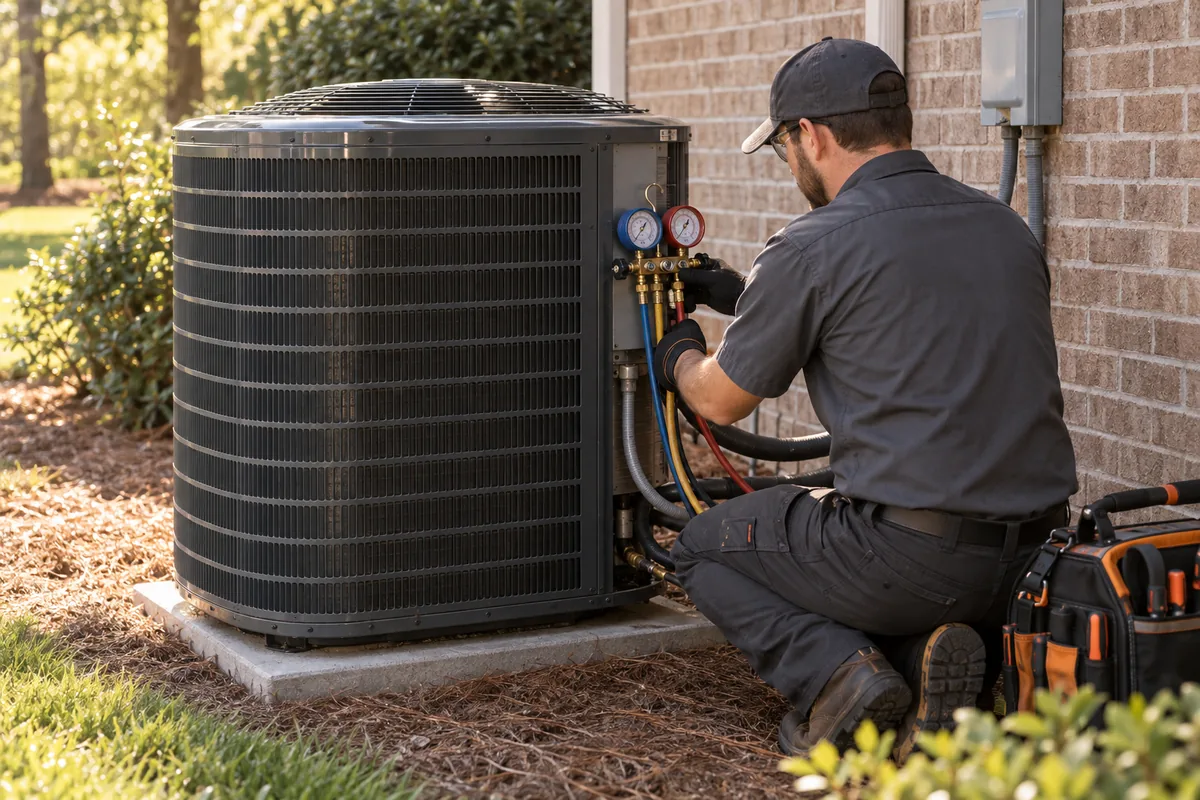
An HVAC microsite should make it easy to recognize the right service path. A repair inquiry, a replacement discussion and a commercial maintenance request may all mention the same equipment category, but they require different information and different follow up. The production brief should preserve those differences.
This guide turns Atlanta HVAC microsite strategy into a page, evidence and handoff plan. The companion organic HVAC leads versus paid leads article covers channel choices. Here the focus is what the office, technical reviewer and publishing team need to build.
Define the request types with the office
Ask the people answering calls to identify the categories they actually use. They may distinguish an existing customer's service question, a new repair request, a replacement consultation and a business maintenance discussion. Use the business's own categories rather than imposing a software menu that no one recognizes.
For each category, record accepted equipment, property types, coverage and the person responsible for the next step. If one team handles residential scheduling and another handles commercial proposals, the public journey should reflect that distinction. A visitor should not need to understand internal departments to reach the right route.
Map content to the service and sales workflow
| Page role | Information it should establish | Next destination |
|---|---|---|
| HVAC service overview | Accepted work, equipment and property scope | The relevant service route. |
| Service request explanation | How to describe a concern and contact the team | Office approved inquiry path. |
| Replacement consultation guide | What is discussed before options are proposed | Sales or assessment request. |
| Commercial maintenance page | Contract scope questions and property information | Commercial account contact. |
| Documented equipment project | The company’s actual role in one job | Related scope and consultation page. |
The architecture is a production map, not a quota. Combine topics when a single page can answer them clearly. A separate equipment page needs approved technical material and a customer reason to exist. Repeating the same availability statement under several model names does not create a useful resource.
Prepare a replacement discussion outline
A replacement guide can explain what the company considers before presenting options, which information the customer can supply and what will be reviewed during the consultation. It can discuss preferences such as comfort concerns, current system history or the intended use of the property when the contractor confirms those questions belong in its process.
Technical descriptions require an HVAC reviewer. Do not let marketing copy select equipment capacity, diagnose performance or promise a particular saving from a few online answers. Where product ratings or incentives are mentioned, preserve the current source, eligibility conditions and review responsibility.
Make the handoff visible in the outline: what the visitor reads, what they can ask and which person confirms the next conversation. This gives the writer a useful end point without turning the guide into an unsupported remote assessment.
Give commercial maintenance its own brief
- Service A
- Planned coverage: fit and next step.
- Service B
- Planned coverage: proof and next step.
- Service C
- Planned coverage: fit and proof.
A facilities contact may need to explain property use, existing equipment records, access coordination and the scope of a proposed maintenance agreement. The contractor should identify which details are useful before a site conversation and which can wait. Do not imply that a standard agreement covers every system or service condition.
Midtown Alliance's business resources describe an office environment alongside hotels, institutions and other activity. That setting suggests audience specific questions for an HVAC content brief. It does not establish that the contractor serves a named building or maintains its equipment.
If the company has a permissioned commercial example, explain the property context, confirmed scope and coordination decisions. A property type label is more useful when the page shows what the team actually needed to understand about that job.
Request equipment photographs with technical labels
Collect a context image, a relevant equipment view and a detail that supports the approved explanation. Record whether the photo shows existing equipment, a stage of the company's work or the completed scope. A technician should identify what can be stated from the image.
Check for customer details, access information and visible serial data before publication. Avoid decorative photographs that imply the company installs or services equipment outside its offering. If an illustrative image is used, label its role honestly and do not present it as a documented local project.
Prepare appropriately sized images for mobile screens. Google's image SEO reference supports descriptive presentation. The production goal is a useful view with an accurate caption, not an image title packed with every HVAC search phrase.
Specify routing before adding a form selector
Each request choice needs a destination the company can support. Record whether the information reaches scheduling, a commercial account manager or another named role. Confirm what happens to an incomplete request and how the office can identify an unanswered inquiry.
Useful fields can include contact information, service location, property type and the customer's description. Ask for equipment information only when it helps and allow unknown answers. The form should not encourage a visitor to inspect inaccessible equipment or guess a diagnosis.
Test the confirmation for each route. A received request, a scheduled appointment and an agreed maintenance meeting are different states. The page should describe the action that actually occurred.
Create a review record for every technical page
- Home → service
- Link the service to project proof.
- Home → guide
- Link the guide to the next useful question.
- Record the accepted service and request category.
- Assign a technical reviewer for equipment and process statements.
- Attach approved images with project and permission notes.
- Identify any product, efficiency or incentive source requiring updates.
- Confirm the receiving team and public response wording.
- Review the complete page and its inquiry path before publishing.
Keep editorial questions separate from technical decisions. The writer can improve structure and clarity while the contractor confirms service facts. A short unresolved claim should not hold up an otherwise useful explanation if it can be omitted accurately.
Refresh when service operations change
Revisit content when equipment coverage, maintenance scope, staffing or response arrangements change. New customer questions may justify an additional explanation within an existing page. A new URL is appropriate only when the question and supporting evidence are distinct.
Bring the office request categories, approved technical material and one project example to an Atlanta HVAC content planning review. Trojan can use those inputs to connect the site with the way the business serves inquiries.
Production questions to resolve
Should repair and replacement requests share the same form?
They can use one form if the business can route and interpret the categories reliably. Separate destinations are useful when different teams or information requirements justify them.
Can an online guide recommend equipment size?
The content should explain the contractor’s assessment process rather than choose equipment from incomplete information. Technical recommendations belong with the qualified professional reviewing the project.
What makes a commercial maintenance page distinct?
It should explain the actual agreement scope and information relevant to a property representative, including how the business discusses equipment records, access and coordination.
Who reviews HVAC photographs before publication?
A technical or project reviewer should confirm what the image shows, the company’s role and any sensitive details. The publishing team then applies the approved description and image formats.
Questions, answered.
Can an online guide recommend equipment size?
The content should explain the contractor’s assessment process rather than choose equipment from incomplete information. Technical recommendations belong with the qualified professional reviewing the project.
Who reviews HVAC photographs before publication?
A technical or project reviewer should confirm what the image shows, the company’s role and any sensitive details. The publishing team then applies the approved description and image formats.