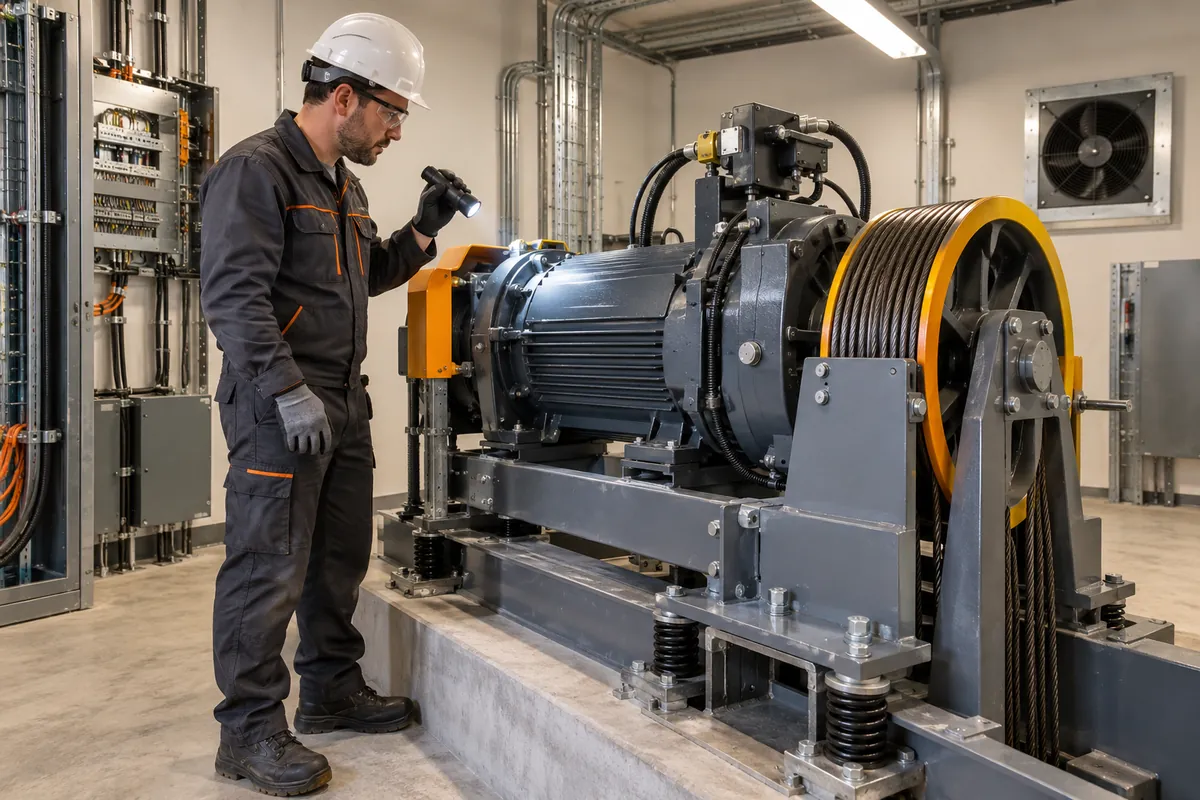
A building owner reviewing elevator service needs to understand the provider's actual capabilities, service territory, and process for evaluating the equipment. A maintenance relationship, a modernization project, and a new installation discussion are different decisions. The website should help the buyer identify the appropriate route without promising technical suitability before review.
We'd put the early work into maintenance pages, because a maintenance contract is often how a building gets to know your mechanics before a modernization is bid. Repair calls get your dispatch number at the top of every page, and contract renewals get a form asking the number of cars and the contract end date.
Elevator services marketing questions
How much does marketing an elevator company cost?
It's priced after the free strategy call. A contractor servicing hydraulic units in low-rise buildings needs a smaller site and ad budget than one bidding modernizations on downtown towers. Our fixed-price launch package, the Marketing Startup Kit, is $7,997, or three monthly payments of $2,799. It suits a company getting its marketing started from the ground up.
Should maintenance and modernization share one inquiry route?
They can land in one inbox, but each needs its own form. A modernization request should ask the building's age and the budget year, which a maintenance form never needs.
Can the form ask for technical equipment information?
It can invite information the property representative already knows. Detailed assessment and restricted area information should follow the qualified service process.
Should a marketing form handle urgent service requests?
No. A stuck car belongs on your dispatch line, and the form is for questions that can wait a day. Promise a response time only if your crews can keep it.
How should portfolio inquiries be handled?
Give the buyer a way to describe several locations and the broad service need. The team can review each property's fit through the appropriate commercial process.
What should an audit examine first?
Whether your site keeps repair calls apart from contract and modernization work. The order after that is the maintenance page and forms, then pages for the building types you want, then search ads. On the Marketing Startup Kit's example schedule, the site is built in weeks two to four and launch comes in weeks nine to twelve.
Should our site explain Indiana's inspection and testing schedule?
Yes, because the state inspection and the tests your crew performs are easy to confuse. Indiana says a state inspector checks each elevator or lift every 12 to 18 months. Annual and five-year safety tests, where required, are done with the owner's lift service provider. We'd write a page on how you schedule those tests and what paperwork the owner receives. It gives a property manager a reason to call before a deadline.
How do we win buildings already on another company's maintenance contract?
Be the easiest company to evaluate when that contract term ends. Publish what your maintenance visits cover and how callbacks are billed. Name the equipment brands your mechanics service and how you source parts for proprietary controllers. A facility manager building a comparison sheet pulls from sites that answer those questions. A page on switching providers reaches owners reading a renewal notice.
Should we list our mechanics' licenses on the website?
List them, because a license is something a building owner can check. Indiana licenses elevator mechanics individually. The state's written competency exam is a four-hour, 160-question closed book test with a 70% passing score. We'd put the number of licensed mechanics on your staff, and the counties they cover, on your team page. That gives a facility director a real line for a vendor comparison.
How long does it take marketing to bring in modernization work?
Longer than repair calls, because owners plan modernizations around a capital budget. The aim is to be on the shortlist when that budget gets written. A modernization page covering typical phases, and how long a car is out of service, gives an owner something to plan with. We track modernization inquiries apart from service calls, so you can watch them build.
What if most calls are one-off repairs from buildings we don't want?
Then we narrow the pages and ads to the buildings you do want. We'd start with the searches that sent those calls. If those searches came from ads, they go on the excluded list. If they came from a page, that page gets rewritten around the buildings you'd rather serve. Each service page can name the building types and counties you serve. The form can also ask how many cars a building has.
Does downtown construction matter to a smaller elevator contractor?
Yes, because it adds buildings you could maintain later. The Downtown Indy Alliance's 2025 report lists more than 4 billion dollars in downtown development. That includes IU Health's new campus and the Signia hotel with the Convention Center expansion. Each new building adds lifts that will need a maintenance provider for years. A page on new construction handoffs puts your company in that conversation early.
“I had a great experience working with Jeff…”
“…drove a noticeable uptick in leads within just a few weeks…”
We have more than 1,400 live websites.
Based in Indianapolis, we serve businesses across central Indiana, including Carmel, Fishers, Zionsville, Westfield, Noblesville, Greenwood, Avon and Plainfield.
We also work with clients across the United States.
A PRACTICAL MARKETING WORKSHOPGive a building owner a clear route from equipment context to service review
Open this walkthroughClose this walkthrough
Elevator service prospects may be building managers, ownership representatives, project consultants, or existing customers. We would organize the website around the verified engagements the company accepts and explain who reviews each request. An account discussion and a defined project invitation need more context than an undifferentiated callback form. Public content should establish the company’s actual role and process while keeping equipment evaluation and technical recommendations with its qualified personnel.
Worked example · hypothetical planning scenario
Imagine a hypothetical provider wanting more building account conversations while its website is dominated by a single project gallery. A property introduction could ask for broad building type, location, the requested engagement, and the contact’s role. It could also distinguish an existing customer from a new account. A separately approved project page would explain how a defined modernization or installation discussion begins if those services are actually offered. An owner reviewing several properties can request one account conversation instead of submitting each as unrelated sales interest. Reporting then separates account introductions, project pursuits, and existing customer service, making the acquisition report reflect new commercial opportunities rather than all inbound activity.
| Visitor role | Content to make visible | Record created |
|---|---|---|
| Building manager | Verified service scope and account introduction | Property account discussion |
| Project representative | Actual project capability and review route | Defined project opportunity |
| Existing customer | Appropriate customer contact process | Service event under the existing account |
Create a property owner evidence packet
- Document approved services, territories, credentials, and company responsibilities, with a named business owner who maintains those facts.
- Prepare a factual project story identifying the company’s specific role and the setting without implying responsibility for unrelated work.
- Collect the information the account team needs to distinguish a broad relationship discussion from a project ready for review.
- Ensure any public equipment, availability, or performance statement reflects verified business information rather than generic industry copy.
Map the building relationship you want to develop
Share your accepted service engagements and one redacted property inquiry. Trojan Digital Marketing can build a clearer account introduction and capability structure that helps owners, managers, and project contacts begin the appropriate conversation.
What should an Indiana elevator company's website say about state rules?
Elevator services marketing in Indianapolis, Indiana is stronger when pages explain the state inspection cycle. They should also name the licenses your mechanics hold.
Indianapolis, Marion County, Indiana
Indiana has about 20,000 regulated lift devices, a count that also takes in escalators and amusement rides, overseen by the Elevators and Amusement Rides Section of the Department of Homeland Security's Division of Fire and Building Safety.
A service area page can speak to how many buildings in your counties depend on the same state program your mechanics work within.
Indiana Department of Homeland Security, Elevators and Amusement RidesChecked September 26, 2026A state inspector checks an elevator or lift device every 12 to 18 months, and the cost is included in the device's operating permit. Annual and five-year safety tests, if required, are completed with the owner's lift device service provider.
A testing page can explain how your crew schedules those tests and what paperwork the building owner receives afterward.
IN.gov, How does a state inspection for an elevator or lift device work?Checked September 26, 2026Indiana's elevator mechanic written competency exam is a four-hour, 160-question, closed book multiple choice test with a passing score of 70%.
Stating how many licensed mechanics you employ gives a facility director a credential to verify, where 'certified technicians' gives them nothing.
Indiana Department of Homeland Security, Indiana Elevator Mechanic Written Competency Examination OverviewChecked September 26, 2026Downtown development tops 4 billion dollars in the Downtown Indy Alliance's 2025 State of Downtown report, with the Signia hotel, the Convention Center expansion and IU Health's new campus on the list.
New buildings downtown will need maintenance providers, so a page on taking over service after construction speaks to owners and developers early.
FOX59, 2025 State of Downtown Indy report lists Mile Square progressChecked September 25, 2026
These are public rules and projects, and none of them involve our clients. License counts and service counties should come from your records. We're based in Indianapolis and serve businesses across central Indiana, plus clients across the United States.
How should an elevator company's site sort incoming requests?
An elevator services website for buildings around Indianapolis, Indiana should route emergencies, testing, contract renewals and modernization bids differently, since each has its own sender and deadline.
| Request | Who tends to send it | Where it should go |
|---|---|---|
| Car stuck or out of service | Building engineer or front desk staff | A phone number at the top of every page |
| Annual or five-year test coming due | Property manager tracking the building calendar | Testing page with a scheduling request form |
| Maintenance contract up for renewal | Owner or facility director comparing bids | Contract page listing what each visit covers |
| Modernization of an aging controller | Owner planning a capital budget | Modernization page with phases and downtime |
Separate maintenance, modernization, and project work
Document the services your company provides and the equipment categories it supports. Ongoing maintenance, service assessment, modernization, installation, and related work may involve different qualification and sales processes. The site should describe the real scope rather than use one broad promise for every elevator related request.
Read more
Clarify whether the business reviews existing equipment, particular platforms, selected building types, or specific project roles. Where compatibility or scope requires assessment, explain that step. Marketing should not imply universal support for every system or an immediate solution to an individual technical condition.
The National Elevator Industry represents elevator and escalator businesses. Your company's memberships, qualifications, and capabilities still require specific evidence. We do not invent credentials or turn general industry information into a claim about the operation.
Give facility buyers useful early questions
- Fit
- Explain the service scope.
- Trust
- Show supporting evidence.
- Next step
- Give a clear contact route.
A practical inquiry may include the property location, building type, broad service need, known equipment information, project timing, and the appropriate contact. The business decides which details are needed initially. A buyer without a complete equipment record should still have a clear way to ask about fit.
Detailed technical records can be reviewed later through the company's appropriate process. The public form should not require a property representative to inspect equipment, enter restricted areas, or perform troubleshooting. It collects known context and routes the request to qualified staff.
A property portfolio inquiry may need to discuss several locations and decision makers. Give that buyer a way to explain the broader scope rather than forcing every property into a form designed for one service call. The page can prepare the conversation without promising that every location is serviceable.
| Buyer need | Page emphasis | Useful conversion |
|---|---|---|
| Maintenance relationship review | Supported equipment, territory, assessment process | Qualified service scope conversation |
| Modernization project | Project review, roles, evidence, planning steps | Relevant project assessment |
| New installation discussion | Actual installation capability and project coordination | Supported project inquiry |
| Multiple property review | Location scope and commercial coordination | Portfolio discussion |
Keep current service communication separate
Existing customers need to find the correct service contact through the company's actual process. A marketing inquiry form should not be presented as an emergency response channel unless that is a verified, supported arrangement. Use the business's approved instructions and contact information for current service needs.
Read more
New commercial inquiries can then follow a clear scope review route. This separation helps facility teams reach the appropriate person and prevents routine service communication from inflating acquisition reporting. The navigation should reflect the operational importance of both routes.
We test the internal handoff as well as the page. The receiving team should know whether the request concerns a maintenance relationship, a project, or an existing customer. A useful form loses value if the message reaches an unmonitored inbox without a defined owner.
Explain the assessment and proposal sequence
A buyer should understand what happens after the initial conversation. The company may review scope, arrange a professional assessment, discuss responsibilities, and develop a proposal. Describe the process that actually applies to the offer, including which details are confirmed later.
Read more
Do not use the website to interpret an individual building's technical requirements or promise a compliance outcome. The page can explain the professional review process and the information needed to begin. Suitability, detailed scope, and applicable requirements belong to the qualified project conversation.
For modernization, useful content can explain the planning questions the company discusses with an owner or facility team. It should not provide repair instructions or imply a universal timeline. The buyer needs a credible route to assessment, not a predetermined technical answer based on a short description.
Build SEO around actual equipment and service scope
Elevator services SEO should connect supported work with real building and buyer needs. A maintenance page and a modernization page deserve distinct explanations when the company provides both. A project example can support a specific capability, while a general company page establishes identity and contact.
Read more
Geographic coverage should match the operation. Project travel may differ from ongoing service coverage, and the page should explain how the team confirms fit. A service area statement should not imply a staffed office in every city or immediate attendance at every property.
We prioritize pages that add useful information. Repeating the same service paragraph across many city names can create a large content inventory without helping a facility buyer evaluate the provider. A clear, maintained service hierarchy gives both buyers and the sales team a stronger reference.
Use AEO and GEO for professional review questions
Answer engine optimization can address “What information is useful before a maintenance review?” or “How does this provider begin a modernization discussion?” Generative engine optimization and AI SEO should keep the business's scope, identity, and evidence consistent across the site.
Google retains SEO foundations for generative search. We improve useful answers without guaranteeing a ranking or AI Overviews citation. A concise answer should preserve the need for professional assessment where it materially affects the service.
Show evidence without exposing sensitive property details
Approved project summaries can describe the general building context, the company's role, and the work scope. Use accurate captions and permissions for photographs. Avoid publishing private access arrangements, detailed security information, or customer records merely to make a portfolio seem more technical.
Read more
Credentials and company relationships should be current and described at the correct level. A team member's qualification, a manufacturer relationship, and an association membership are different facts. Each can be useful when accurately presented; none should be implied through an unsupported badge.
A process overview can also help a facility buyer. Explain who participates in the initial review and how a proposal discussion is arranged. That gives the buyer a practical sense of the relationship without making a universal performance or response guarantee.
Align campaigns with commercial and operational priorities
A modernization campaign should lead to project information, while a maintenance relationship campaign needs its own scope and inquiry language. Review searches and contacts for employment, unrelated residential products, unsupported equipment, or requests outside the company's service model.
Discuss actual capacity and priorities before writing availability claims. The campaign can invite a professional review without promising a specific outcome or timeline. A buyer should encounter the same service boundaries in the advertisement, landing page, and first conversation with the team.
A hypothetical 90 day plan for a service provider
Imagine a company that wants more relevant commercial maintenance reviews and selected modernization discussions within its established capabilities. This is an illustrative plan, not a client case study or a contract forecast. Actual service coverage, staffing, and project evidence would determine the work.
Read more
The first month would document supported equipment, services, territory, buyer roles, and the current inquiry process. We would review public claims and recent request outcomes with the commercial and operations teams. The output would be a prioritized page plan and shared definitions for useful maintenance and project inquiries.
During the second month, we would improve the core service routes and organize approved evidence. The form would collect broad building and scope context, while current customers would have a clear service contact path. Staff would test the notification and confirm responsibility for reviewing each type of inquiry.
The third month would connect focused search activity and useful preparation content to those pages. Review would follow requests into relevant conversations, assessments, and proposals. If inquiries repeatedly concern unsupported equipment or areas, the next change would clarify targeting and scope before expanding promotion.
Measure the facility pipeline at meaningful stages
Suggested stages include new inquiry, building and equipment fit, scope conversation, professional assessment, proposal, decision pending, and accepted arrangement. Maintenance and modernization may require different timelines. Preserve those differences instead of forcing every opportunity into the same short reporting window.
Read more
A fit rate can compare reviewed requests within the supported scope with all reviewed new commercial inquiries. Assessment progression can compare completed assessments with qualified conversations. These are proposed definitions, not elevator industry benchmarks. Open proposals and portfolio discussions should remain visibly unresolved until the business records a decision.
Record known reasons for mismatch or loss without guessing. Unsupported equipment, geography, timing, customer postponement, and a documented decision are different categories. Current service contacts and duplicate messages should remain separate so the acquisition view reflects actual new opportunities.
Maintain the connection between marketing and operations
Assign responsibility for service boundaries, equipment claims, credentials, and public contact information. A page can become inaccurate when the operation changes. The update process should keep advertisements, service pages, and office explanations aligned.
A practical audit can follow a maintenance inquiry and a modernization request through the site. Ask whether each buyer can understand the scope and whether the receiving team gets useful context. Compare the page with the first review conversation and identify what belongs in public content versus later technical discussion.
Deliverables for a clearer facility buyer journey
- A verified equipment, service, and territory map.
- Distinct maintenance, modernization, and supported project pages.
- Accurate credentials and permissioned project evidence.
- Clear new business and current service contact routes.
- Campaign alignment with actual scope and capacity.
- Reporting definitions for conversations, assessments, proposals, and decisions.
We agree on factual review and outcome recording before publication. That makes the work concrete and gives the business a maintainable way to connect search visibility with facility conversations it is prepared to handle.
Build the next part of your marketing plan
For practical detail, explore B2B Lead Generation for Industrial Service Companies, Build Service Pages Around Equipment and Scope Fit, How Capability Pages Support Supplier Shortlists. Each guide expands a decision in the inquiry and sales process.
Related industry approaches include Industrial Equipment Repair Marketing Agency and Fire Protection Services Marketing Agency. Use the differences in scope and customer decisions to evaluate the approach that fits your operation.
Talk through how building managers describe the equipment and service work they need.
Related services: website design and SEO and AI search.
Sources & further reading
Talk with Trojan Digital Marketing
Based in Indianapolis, we serve central Indiana and clients across the United States.