A brand evaluating fulfillment support needs to understand more than the size of a warehouse. Its products, inventory pattern, order profile, systems, and customer expectations must fit the provider's operation. A useful website helps both sides identify whether a discovery conversation is worthwhile.
Trojan builds warehouse and fulfillment marketing around that operational fit. We translate verified capabilities into clear pages, practical answers, and inquiry paths that prepare commercial review. The goal is a relevant opportunity that can progress into scope, proposal, and onboarding planning, with reporting that reflects the longer decision process.
Warehouse and fulfillment marketing questions
One practical audit exercise is to walk through a hypothetical customer with uncertain volume and another with established operating records. The first may need a discovery conversation about fit and assumptions. The second may need a clear route to share more developed requirements. The page and form should support both stages without promising a proposal before the operation has the information it needs.
Another exercise compares the language of a service page with a typical proposal outline. If the page emphasizes a capability that is conditional or outside the usual arrangement, clarify it. If the proposal repeatedly explains an important responsibility that prospects do not understand, consider adding a useful public explanation. These reviews help the website prepare commercial discussions and reduce avoidable confusion before the more detailed onboarding work begins.
What does marketing a 3PL or fulfillment warehouse cost?
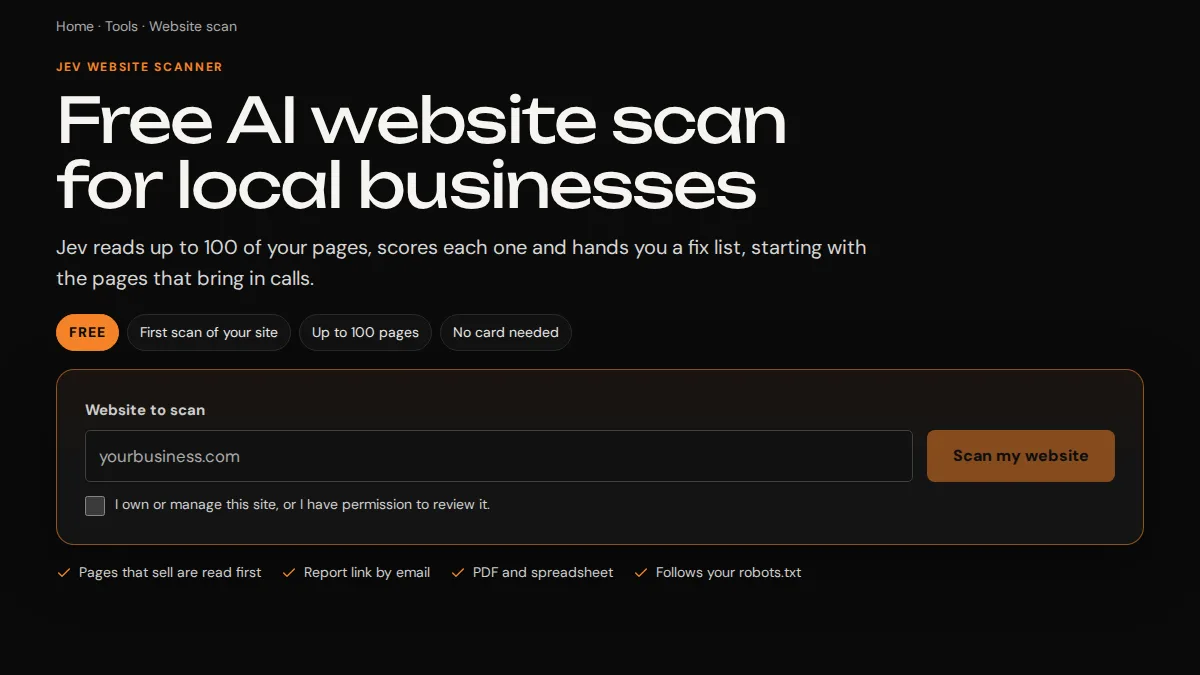
It's priced after the free strategy call, because a single-building operator renting pallet space needs a different site and budget than a fulfillment center courting ecommerce brands nationwide. If you'd like an outside read before that call, a $99 Jev audit scores every page up to 3,000 and lines you up against as many as three competitors you pick.
Should a 3PL publish its prices?
Publish how your pricing works, even if you keep rates for the proposal. Brands want to know whether you charge for receiving, how storage is billed by pallet or bin, what pick and pack costs per order and whose shipping rates apply. A page that lays that out, along with your monthly order minimum, saves your sales team from quoting sellers who were never a fit.
What should our quote form ask?
Monthly order volume, SKU count, average units per order, storage needs in pallets or bins, sales channels and a target start date. That's enough for your team to price a real proposal, and letting a brand answer not sure yet on each field keeps early planners from abandoning the form halfway through.
Should the first form request complete order data?
Collect enough context for discovery and explain how detailed information is reviewed later. A prospect should not need a finished implementation package to ask about fit.
Can one page cover storage and fulfillment?
It can introduce both, but distinct service paths help when scope and buying questions differ. Use the structure that explains your actual offer clearly.
How should facility locations be represented?
Use verified locations and accurate capabilities for each. Avoid implying that broad service reach means the company operates a warehouse in every named market.
Can we promise immediate onboarding?
Only if that is a dependable, clearly scoped offer. Otherwise, describe the review and planning steps that establish timing and responsibilities.
What should an audit measure first?
Customer profile clarity, service evidence, discovery usability, internal routing, and progression to operational review. Those foundations support a more useful commercial pipeline.
How do ecommerce brands choose a fulfillment warehouse?
They tend to shortlist on location and platform integrations, then check minimums and billing structure before asking anyone for a quote. Your site should answer in that same order: where your buildings sit, which storefronts and marketplaces you connect to, what volume you need and how you bill, so a brand can rule you in before it calls.
How does the tight Indianapolis warehouse market affect our marketing?
It gives open space real value, so say plainly when you have it. Colliers reported Indianapolis industrial vacancy fell to 6.5% in the second quarter of 2026, its lowest level since late 2022. A page that lists open pallet positions or a start date you can meet speaks directly to brands that are still looking for room.
What if most of our leads are tiny sellers?
Usually that means your minimums aren't visible enough. We'd put the monthly order minimum on the pricing page and inside the form, stop ads from showing on startup and dropshipping searches, and check which pages sent the small inquiries so the copy on those pages can be tightened.
Do you market 3PLs outside the Indianapolis area?
Yes. Trojan is based in Indianapolis and is open to warehouse operators across central Indiana, from Plainfield and Avon on the west side to Greenwood in the south, as well as 3PLs in other states. Pages for an out-of-state operator follow the same rule: name the buildings you run and the storefronts you connect to.
A PRACTICAL MARKETING WORKSHOPHelp a brand explain its fulfillment operation before the sales call
Open this walkthroughClose this walkthrough
A fulfillment buyer is evaluating an operating relationship, not just warehouse space. The website should help the brand understand the provider’s actual engagement and supply the context needed for a useful discussion. We would explain supported services and the review process using verified business information. A useful introduction distinguishes a storage request from a fulfillment program and avoids suggesting that every product, integration, or order pattern fits simply because the homepage lists broad capabilities.
Worked example · hypothetical planning scenario
Consider a hypothetical fulfillment provider receiving an inquiry from a brand with twenty product lines, variable monthly order volume, and an upcoming channel expansion. The website need not calculate a binding price. Instead, a planning brief could ask for product category, approximate SKU and order context, sales channels, inventory location, and the intended start window. The form can allow “not yet known” where the brand is still planning. A capability page explains which services are reviewed in the proposal and how data exchange begins. Sales records separate early discovery, operational information received, fit review, proposal, and onboarding decision. A pure space rental request follows a different route if that service exists.
| Buyer’s situation | Content to provide | Useful review input |
|---|---|---|
| Growing ecommerce operation | Actual fulfillment scope and account process | Product, order, and channel context |
| Changing providers | Explanation of the transition discussion | Current operation and intended timing |
| Storage only need | Truthful storage service boundary | Inventory context and requested engagement |
Prepare an operational capability brief
- Verify offered storage, handling, fulfillment, returns, and integration services individually rather than presenting a universal capability list.
- Collect the inputs the operations team uses to review fit and explain why those fields are requested.
- Create a factual engagement example showing the provider’s responsibility and process without inventing accuracy, speed, or cost improvement figures.
- Identify which details belong in the initial inquiry and which commercial or inventory information should follow through the agreed exchange.
Build the brief your operations team wants
Bring the information that makes a fulfillment opportunity reviewable. Trojan can turn it into a stronger capability page and a planning introduction that helps brands arrive prepared while preserving the distinction between early interest and an accepted account.
What is the warehouse market like around Indianapolis right now?
Warehouse and fulfillment marketing in Indianapolis, Indiana plays out in a tightening industrial market where national 3PLs already compete for the same ecommerce brands.
Indianapolis and Whitestown, Indiana
Colliers reported that overall Indianapolis industrial vacancy fell 449 basis points over the year to 6.5% in the second quarter of 2026, its lowest level since the fourth quarter of 2022.
Space is tighter than it was, so a page that states open capacity and a realistic start date answers the first question a growing brand asks.
Colliers, Indianapolis Industrial Market Report Q2 2026Checked September 26, 2026The same Colliers report says Indianapolis posted a record 13.6 million square feet of net absorption in the second half of 2025, and midyear 2026 absorption reached 5.7 million square feet.
Large users are taking space quickly, so a smaller operator's pages should lead with service details and fit.
Colliers, Indianapolis Industrial Market Report Q2 2026Checked September 26, 2026A Nevada-based logistics firm picked Whitestown, in Boone County, for its first Midwest location, with nearly 200 jobs announced.
National 3PLs already market central Indiana buildings, so a local operator's pages need specifics a brand can compare, like building locations and supported platforms.
Boone EDC, Nevada-Based Logistics Firm Picks Whitestown for First Midwest Location, Nearly 200 JobsChecked September 26, 2026
These market figures are public and describe no Trojan client. Capacity, start dates and integrations on your pages should come from your own operation.
What belongs on a fulfillment warehouse's pricing and quote pages?
A warehouse and fulfillment website near Indianapolis, Indiana converts better leads when its pricing page and quote form answer what a brand checks before calling.
Your operations team confirms
- How each charge is billed, from receiving through pick and pack, even without rates
- The monthly order minimum and any setup fee
- The storefronts and systems you connect to today
- Products you won't store, like hazardous or temperature-sensitive goods if that applies
- Open capacity and the earliest realistic start date
Trojan turns it into
- A pricing page that explains each charge in plain language
- A quote form asking orders per month, SKU count and channels
- Integration pages that match how brands search for a 3PL
- Ads that skip dropshipping and startup searches
- Tracking that separates quote requests from job applicants and vendor pitches
Explain the services your operation actually provides
Storage, fulfillment, distribution, returns handling, kitting, cross docking, and related work should be described according to your actual offer. A business may provide several of these services while setting different conditions for each. The website should make those differences understandable rather than hide them behind a general logistics headline.
Read more
We document the scope with operations and the commercial team. Product categories, handling needs, order characteristics, inventory arrangements, and supported systems can all affect the initial fit review. The purpose is to create a reliable public description, not to disclose confidential operating details.
The International Warehouse Logistics Association serves warehouse based logistics providers. Your company's particular capabilities and relationships still need their own evidence. We only represent memberships, certifications, facilities, and system connections that the business can substantiate.
Build the page around a customer's operating profile
- Fit
- Explain the service scope.
- Trust
- Show supporting evidence.
- Next step
- Give a clear contact route.
A prospective customer may need to discuss the broad product category, number of product lines, expected inventory, order pattern, channels served, and desired transition timing. These details help establish the conversation. They do not need to become a complete implementation specification in the first web form.
Explain which information is useful at discovery and which is reviewed later. A growing brand may have estimates rather than stable historical figures. A mature shipper may have records ready to share through an appropriate process. The site should accommodate both without presenting uncertain forecasts as confirmed operating requirements.
| Profile area | Why it matters to the conversation |
|---|---|
| Product and handling context | Helps determine whether the operation supports the goods. |
| Inventory and order pattern | Frames storage and fulfillment scope. |
| Sales channels and systems | Identifies integration and workflow questions. |
| Additional services | Clarifies returns, kitting, or other requested work. |
| Transition timing | Prepares a realistic onboarding discussion. |
Separate discovery from onboarding
A first inquiry should establish broad fit and a contact route. A later review can develop volume assumptions, service details, systems, responsibilities, and the proposed transition. The page should explain that sequence so a customer understands why a proposal may require further discussion.
Read more
Do not present form submission as reserved capacity or an accepted service arrangement. A useful confirmation can explain that the commercial team reviews the request and identifies the next step. The actual business process determines when scope and availability are confirmed.
Existing customers need a distinct route for inventory, order, or account questions. Those interactions matter, but they should not be mixed into a new business lead count. Clear navigation helps current customers reach the appropriate team while prospects follow the discovery path.
Make location and facility information accurate
A facility page should describe a real operation and the services available there. If capabilities differ between locations, explain the distinction. A broad geographic service area should not imply a warehouse in every market named in a headline.
Read more
We can organize pages around meaningful customer needs, such as a supported distribution arrangement or a fulfillment service at an actual facility. Each page should add useful information. Repeating the same warehouse paragraph across many city names gives a buyer little basis for evaluating the operation.
Photographs should be accurately identified. Use approved images of your facilities when they support a factual claim. Illustrative photography can help explain a topic, but it should not imply that a pictured building, team, or piece of equipment belongs to the company.
Show how customers evaluate the relationship
Useful evidence can include an accurate process overview, relevant team roles, supported system descriptions, and permissioned project summaries. A prospect should understand who participates in discovery and how questions move toward scope review. Avoid generic performance claims that cannot be connected to your records.
System language deserves specific review. A business may support a particular integration through a defined arrangement rather than offer an unlimited plug and play connection. The page should describe what is actually available and how compatibility is confirmed. Marketing should not promise implementation details before the relevant team reviews the request.
Connect SEO, AEO, and GEO with operational questions
Search engine optimization should make important service and facility pages understandable. Answer engine optimization can address questions such as “What information is needed for a fulfillment proposal?” or “Does this provider review returns handling as part of the service?” The answer should clarify scope and point to the actual discovery route.
Generative engine optimization and AI SEO keep those facts consistent across the site. Google retains SEO foundations for generative search. We improve clarity and evidence while avoiding promises about AI Overviews inclusion or a specific search position.
Use campaigns to reach a supported customer profile
A fulfillment campaign should lead to fulfillment information, while a storage or distribution offer may need a different explanation. Review search terms and inquiry outcomes for requests such as consumer self storage, employment, or unsupported product handling. Those mismatches should inform targeting and page scope.
Capacity and commercial priorities guide the campaign plan. If the business wants a particular type of customer relationship, the page should explain the relevant service fit. Broad claims about unlimited space, instant onboarding, or universal system compatibility should be replaced with the actual review process.
A hypothetical 90 day plan for a fulfillment provider
- Event → record
- Define the event and check the record.
- Meaning → decision
- Review the business meaning before acting.
Imagine a provider that wants more relevant conversations with brands whose products and order profiles fit its current operation. This is an illustrative planning example, not a client case study or a growth forecast. Actual facility capability, systems, and available resources would determine the final scope.
Read more
The first month would establish the customer profile with commercial and operations staff. We would document supported products, order characteristics, service categories, facility facts, and inquiry reasons. Existing pages would be checked for unsupported claims and gaps in the proposal preparation process.
In the second month, we would improve a core fulfillment page, relevant facility information, and a concise discovery form. The page would explain the stages from initial conversation to scope review. Approved evidence would support the claims, and the team would test how the inquiry reaches the appropriate commercial owner.
The third month would connect selected campaigns and useful supporting articles to that path. We would review whether inquiries fit the agreed profile and progress into meaningful discussions. If prospects repeatedly misunderstand an integration or additional service, that explanation would be corrected before expanding the acquisition effort.
Measure the pipeline through proposal and onboarding decisions
Suggested stages include inquiry, profile fit, discovery completed, operational review, proposal delivered, decision pending, accepted arrangement, and onboarding underway. The business should decide which events it can record consistently and which belong in commercial reporting.
Read more
A profile fit rate can compare reviewed inquiries matching the agreed criteria with all reviewed new business requests. Proposal progression can compare proposals with qualified discussions. These are proposed definitions, not warehouse industry benchmarks. Preserve open opportunities because a transition decision may take time and involve several stakeholders.
Record known reasons for mismatch: product category, volume assumptions, required service, timing, systems, or location. Do not label every unresolved prospect as a price objection. A clear unknown category is more useful than a guessed explanation that sends the team toward the wrong change.
Make the content useful during sales
A proposal preparation guide can explain the broad information your team needs and how assumptions are refined. A capability page can help a purchasing contact share the offer with colleagues. A process overview can clarify which questions belong in discovery and which are addressed during onboarding planning.
These resources should remain aligned with operations. Assign a factual owner for facility details, system descriptions, and service scope. If a capability changes, update the relevant pages and campaigns together. The website should be a dependable reference during the sales process, not a separate version of the business.
Deliverables for a clearer customer fit process
- A verified service, facility, and customer profile map.
- Focused warehousing and fulfillment pages with useful scope explanations.
- A discovery form and internal commercial handoff.
- Approved evidence and proposal preparation content.
- Campaign targeting tied to supported profiles.
- Reporting stages that connect inquiries with proposal and onboarding decisions.
Before beginning, we agree who supplies facts, who approves claims, and how inquiry outcomes will be reviewed. That makes the work concrete and maintainable. The next marketing decision can then follow the opportunities the operation is genuinely prepared to evaluate and serve.
Build the next part of your marketing plan
For practical detail, explore B2B Lead Generation for Industrial Service Companies, Build Service Pages Around Equipment and Scope Fit, A B2B Inquiry Form That Qualifies Without Friction. Each guide expands a decision in the inquiry and sales process.
Related industry approaches include Trucking And Logistics Marketing Agency and B2B Distribution Marketing Agency. Use the differences in scope and customer decisions to evaluate the approach that fits your operation.
Talk with Trojan about your marketing priorities, or request a free audit of your current pages and inquiry path. We can connect the plan with website design and SEO and AI search services.
Sources & further reading
YOUR NEXT MOVE
Make the next step count.
Based in Indianapolis, we serve businesses across central Indiana, including Carmel, Fishers, Zionsville, Westfield, Noblesville, Greenwood, Avon and Plainfield, and clients across the United States.