Need help?Jamie

Market service plans

Greenfield SEO Strategy With a Page for Each Service You Sell

You get hired for one specific thing you do well, but your site only lists industries, so buyers call just to ask whether you handle their job.

Trojan Digital Marketing plans SEO for Greenfield, Indiana companies like that. We give each service you're hired for its own page, so a buyer searching for that exact work lands on it. If buyers keep asking, 'I found you, but do you actually do this?', that service needs a page. Greenfield's population grew about 12% from 2020 to an estimated 26,268 by July 2024.

Bring the list of capabilities behind your best jobs, plus two recent quote requests. The first strategy call is free, and during business hours we aim to reply within five minutes.

  • A page for each capability buyers search for
  • Spec sheet basics summarized on the page
  • Search Console queries checked against real inquiries

We run more than 1,400 live websites. On yours, we first check whether each service you quote has a page a buyer could land on from a search. The work you're best known for gets its page first, and the rest link from it. Our founder, Jeff Clerisier, works out that order with you directly.

Illustrative website design workspace.
IllustrationSearch snippet preview for “seo greenfield”A preview built from this page’s title tag and meta description for that search. It isn’t a live search result and shows no ranking.SNIPPET PREVIEWseo greenfield|Trojan Digital Marketingtrojandigitalmarketing.com › greenfield-seo…Greenfield SEO Strategy for SpecificBusiness CapabilitiesSEO strategy for Greenfield, Indiana firmsknown for one capability: a page for eachthing you do, planned by a team with 1,400+…

YOUR WORKING BRIEF

Choose where to start

Select the parts you want to discuss. Your choices carry into the inquiry form.

Discuss this service0 priorities selected

See how I'd approach this

Choose a question
to look at with me.

From a useful page to a relevant searchUseful websiteRelevant discoveryCRAWL · UNDERSTAND · CONNECT
  1. Useful website
  2. Crawl and understand the page
  3. Connect it to a relevant search
From a useful page to a relevant search

Questions about local SEO in Greenfield, Indiana

  • Hancock EDC identifies Greenfield as its county seat and describes Depot Street Park. Plans connect business specific information with verifiable local context. Hancock EDC Greenfield community profile

What does an SEO strategy cost for a Greenfield business?

We price it after the free strategy call, because a company with four capabilities needs far less mapping than one with twenty. For a site that has to be built or rebuilt, twenty SEO blog posts and a custom 15 page website come with the Marketing Startup Kit, which is $7,997, or three monthly payments of $2,799. The website scan is free, and a full scan audit covering up to 3,000 pages is $99.

Should our pages be organized by industry or by capability?

We lead with capability and add an industry page only where the industry changes what the buyer needs. Someone searching for a specific process or material wants proof you do that exact thing before reading who else you've done it for. An industry page earns its spot when, say, food packaging carries requirements that auto parts don't, and we write that difference out plainly.

Should our Greenfield pages mention Hancock County and Indianapolis too?

Yes, where it's accurate and useful to the buyer. Greenfield is the county seat of Hancock County and sits inside the Indianapolis metropolitan area, so a buyer might search by any of those names. We put them in your contact and service area details, and on capability pages where location changes the job, like delivery range or on-site work. Headings that only repeat the town name add nothing, so we leave them out.

Can our technical details stay in PDF spec sheets?

Keep the PDFs, and we'll add a plain summary of each one to the matching capability page. A buyer arriving from a search usually wants sizes or minimum order basics before downloading anything, and a few sentences on the page are the easier place for them to find it. Our summary says what the sheet covers and who it's for, then links to the file.

What happens first if we go ahead?

We start by reading recent quote requests and emails to find how your buyers describe the capabilities you sell, then check which of those questions your current pages already answer. The first gap we look for is a capability that only shows up as one line in a services list, with no page a buyer could land on from a search. New pages are proposed only where a capability has real buyers and something you can show.

What if the new pages bring the wrong inquiries?

Then the inquiries tell us which page to fix. Search Console shows the searches each capability page appears for, and your inbox shows whether the people writing in actually need that capability. When a page draws views but mismatched requests, we usually tighten its scope statement or add a first form question that sorts buyers, and that's the next change we make.

Does Trojan Digital Marketing need an office in Greenfield to do this?

No. SEO work happens on your website and in Search Console, so it doesn't depend on an office down the street. We're based in Indianapolis and run as a service-area business with no public street address. You'd work directly with Jeff Clerisier, who started freelance web work in 2016 and founded the company in March 2018.

“…drove a noticeable uptick in leads within just a few weeks…”
Mike BamosiGoogle review
“I had a great experience working with Jeff…”
Heather DoanGoogle review

Jeff Clerisier founded Trojan Digital Marketing in March 2018.

We work from Indianapolis and serve Greenfield, in Hancock County, as part of central Indiana.

We also work with clients across the United States.

Read our Google reviews

What do the numbers say about buyers in Greenfield, Indiana?

SEO strategy in Greenfield, Indiana starts from two checked facts: the town has grown about 12% since 2020, and buyers can find it by town or by county.

  • The Census Bureau estimated Greenfield's population at 26,268 on July 1, 2024, about 12% above its April 2020 base of 23,461.

    Newcomers have no referral to go on, so a clear capability page may be the first thing they read about you.

    U.S. Census Bureau, vintage 2024 city and town population estimates for Indiana (GitHub copy)Checked September 25, 2026
  • Greenfield is the county seat of Hancock County and part of the Indianapolis metropolitan area.

    A buyer searching by county or by the Indianapolis area should still find you, so your coverage details name both where that's accurate.

    Wikipedia, 'Greenfield, Indiana'Checked September 25, 2026

These are community facts. They don't measure demand for any search term, and no Trojan Digital Marketing client in Greenfield is described here.

Which page should answer a Greenfield buyer's question?

An SEO strategy for a Greenfield, Indiana business matches each buyer question to one page type, so a capability page and an industry page never chase the same search.

Buyer questionCapability pageIndustry page
Do you do this exact process or material?
Answers yes or no first, then states the limits
Links over to the capability page
Have you done it for a business like mine?
One or two examples you're cleared to share
What changes for that industry's buyers
What do you need from me to quote?
The drawings and quantities to send
Any extra paperwork that industry requires
How far do you deliver or travel?
Delivery range or on-site coverage, stated plainly
Leaves coverage to the contact page

How does a capability SEO plan come together?

Capability SEO for a Greenfield, Indiana company runs in four steps, and it starts with your own quote requests before anyone opens a keyword tool.

  1. List the work you want more ofYou name the capabilities behind your best jobs and the ones buyers keep asking about, even if they aren't on the site yet.Your team
  2. Pull the questions buyers really askWe read recent quote requests and emails for the exact phrases buyers use, since those phrases become page headings.Our team
  3. Give each question one homeExisting pages keep the questions they already answer well, and we propose new pages only where a capability has no page at all.Together
  4. Compare searches with inquiriesWe read Search Console queries beside the requests you receive each month, to see whether buyers now ask for the right work.Together

Show the capability a buyer is trying to find

Start with the decisionYour serviceFitTrustNext stepScopeEvidenceContact
Fit
Explain the service scope.
Trust
Show supporting evidence.
Next step
Give a clear contact route.
Start with the decisionOne service can lead to different questions about fit, evidence and the next step.

A business can serve many industries while being chosen for one specific capability. A buyer may need a particular material, production process, customization option or support arrangement. If the website only lists industries, that buyer still cannot tell whether the work fits. Trojan Digital Marketing's Greenfield SEO strategy begins with the capability that matters to the purchasing decision and the information needed to evaluate it.

The Hancock EDC Greenfield profile identifies Greenfield as the county seat. That is a verified community fact, not proof that a particular commercial keyword has demand. We use your actual offer, customer requests and search evidence to select topics rather than treating a location reference as a market study.

Build a capability and question matrix

We can map each important service to the questions a buyer asks before requesting a quote. The matrix distinguishes technical fit, available options, project preparation and the process for approval. It also records where the website already answers those questions and where useful information exists only in a staff email or an internal document.

Read more

This makes the initial content decision more precise. A material guide may need a separate role from a production service page. A frequently asked technical question may belong inside an existing page rather than becoming a short blog. The client identifies which capabilities are commercially important and which claims need a specialist reviewer. We do not expand the offer simply because related terms appear in a search tool.

An illustrative custom label supplier plan

Consider a Greenfield business that produces custom labels for commercial customers. This is a proposed SEO scenario. A buyer may need to understand material options, artwork requirements and the approval process. The page should not imply that every label suits every environment or that a material carries a certification the supplier has not verified.

Buying questionContent purposeUseful inquiry information
Which material should we discuss?
Explain available options and assessment factors
Intended use and relevant conditions
What artwork is required?
Describe approved file and review requirements
Current artwork and the requested specification
How is a proof approved?
Explain the actual production approval process
The person authorized to review the proof

We would interview the supplier and request approved examples. The content should prepare a productive technical discussion, not make a suitability determination without the facts of the customer's application.

Use original examples to explain constraints

Specific work material can make a capability page more useful than a broad marketing statement. A supplier might show an approved artwork preparation example, explain why a request needs clarification or illustrate a feature with a labeled photograph. The content can describe the decision involved without publishing a customer's confidential design.

Read more

Trojan Digital Marketing requests permissions, technical review and a clear distinction between completed work and an illustrative example. If the business cannot substantiate a performance claim, the page should describe the process or request the missing evidence. The aim is practical specificity: what a buyer can ask for, what the business needs to assess it and which conditions affect the scope.

Organize the path from discovery to specification

The website should let a reader move from a general capability to relevant details and then to a suitable inquiry. We review navigation, page headings, search titles and contextual links against that path. Google's SEO Starter Guide covers discoverable content. Our technical brief identifies issues on the actual pages, including inaccessible details, inconsistent destinations or a sitemap that does not reflect the intended inventory.

Read more

We also review downloads and retired product information. A specification sheet can be useful, but the page introducing it should explain its scope and version. An old product page should not continue suggesting an unavailable capability. Existing URLs are assessed deliberately so changes preserve useful content and provide understandable destinations for older links.

Track the quality of the purchasing request

Search activity is one part of the review. A technical supplier also needs to know whether inquiries contain the information required for a useful response. We can propose measurement that distinguishes capability page visits, specification downloads and actual quote requests. Staff feedback then identifies whether those requests concern work the business can provide.

Read more

For the label supplier example, a useful observation might be whether customers provide intended use and artwork details. It would be misleading to count every download as a sale. If a page attracts requests for unsupported materials, the scope explanation may need revision. Changes in product availability, sales activity and production capacity should remain part of the interpretation.

Scope the work around a meaningful capability

A Greenfield SEO engagement can begin with one commercially important capability, a review of related pages and a set of prioritized content briefs. The deliverable identifies required evidence, technical approval and the next action a buyer should take. It should make the proposed work reviewable without attaching a ranking or revenue promise to the plan.

Read more

Our SEO service explains broader support, while the search opportunity finder can organize available query data. The Greenfield AI SEO plan addresses consistency in business facts and reusable answers. Bring a capability your sales team often has to explain from scratch. It provides a concrete starting point for useful content and a clearer inquiry route.
Sources & further reading

Talk with Trojan Digital Marketing

Add a branded lead source to your search plan.

For contractor growth beyond Indiana, we can scope an exclusive Garrison network alongside your existing search work.

Roofing and water restoration offers serve eligible markets outside Indiana. We confirm territory and routing before you commit.

Explore branded exclusive roofing leads or branded exclusive water restoration leads for your service area.

Ask about window replacement lead options when that’s the trade your team serves.

Discuss your trade and service area.

Ask what the customer wants changed before comparing service names

A service comparison should start with the customer's stated goal. We ask the provider which offered tasks address that question and which part still needs a direct discussion.

Two service names can sound like ways to achieve the same result while describing different work. A customer may ask for a finished change when one option only begins a staff discussion. We start by asking the provider what each offered task actually includes. The public comparison needs that meaning before it can help someone decide which question to ask.

Use the customer's goal as the subject of the answer. It may be a broad change they want to discuss rather than a technical task they can name precisely. We can ask the receiving team how people describe that goal during a first call. Remove private details from the account and have the service owner approve the wording used for the public explanation.

What does a comparison heading need to tell the reader?
It should name the question the page can answer. We can use a plain description of the intended change and connect it to the provider's approved options. A heading that promises the customer's finished result may overstate an option's scope. Ask the service owner to read that heading by itself and explain what it would invite a visitor to expect.
Can customers choose while their goal is still broad?
Give them a reasonable next question route when staff need more context. We should not force a precise service choice simply because the form expects one. The provider can approve a broad subject option and the receiver responsible for it. Our page should explain what the customer can learn now and which detail staff need next.
Should the page compare price before the service meaning?
The provider supplies any public price terms it can support. We first need to know what each option describes, because a price comparison without that scope can leave the reader comparing different tasks. The page can explain which facts staff need before discussing terms. We should avoid inventing a common price basis for services whose work differs.

Describe what each option asks the provider to do

A useful comparison states the approved task behind each name. We organize those descriptions around the work offered so the customer can see what their requested result leaves unresolved.

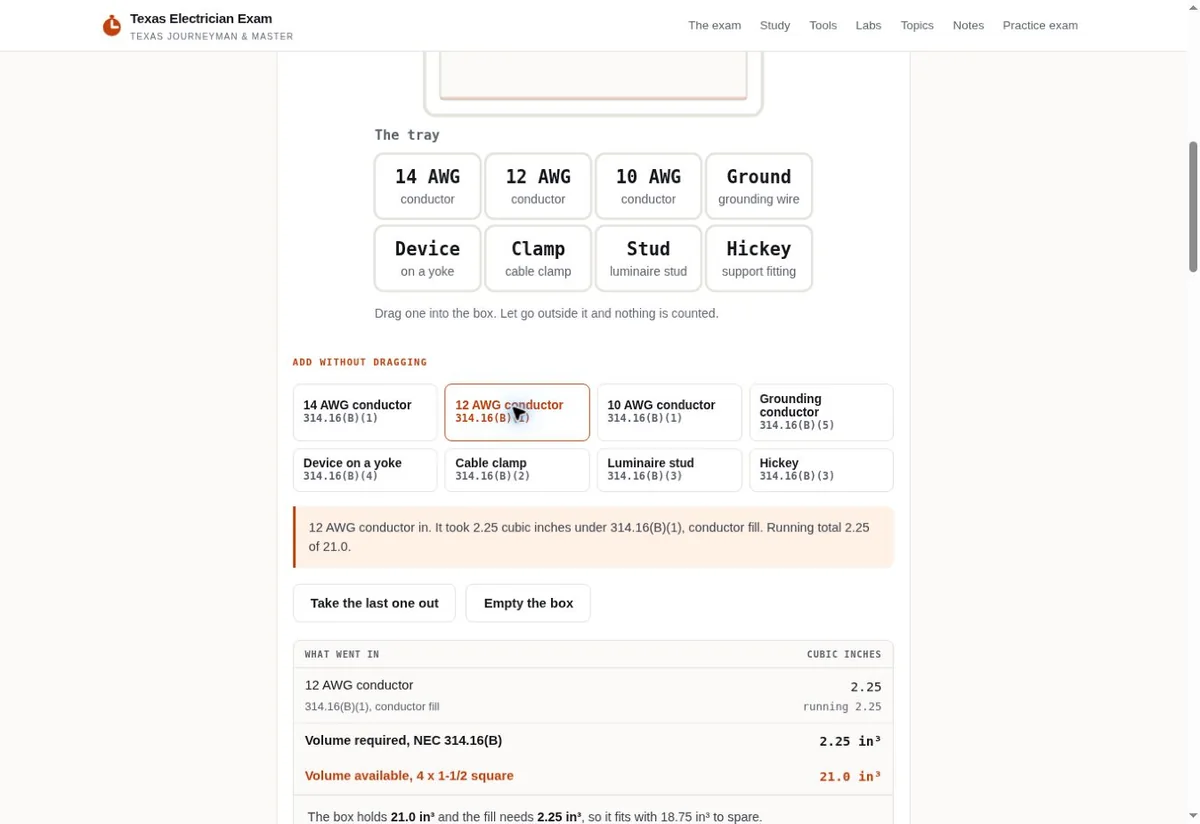
Texas Electrician Exam box fill calculator controls
Visible exam controls provide a reference for describing the subject of an offered task. View the project
Service comparison meaning checks
Comparison subjectProvider-approved task detailBoundary the reader needs
Stated goalThe receiving team supplies the broad change customers ask about and explains which words may conceal several different needs.Our introduction should retain that customer meaning. A reader can identify the subject without being pushed into a technical label.
Offered taskThe service owner describes the actual work under each option, including the stage it reaches and any condition attached to it.Read each description alone. It should state the same task the provider approved without adding a guaranteed finished result.
Missing contextStaff identify the first fact needed to compare the options for a particular request. We ask how a customer can explain it.The page supplies a clear next question when that fact is unknown. A chosen label should not hide the uncertainty from the receiver.
Excluded workThe provider approves the task outside the offer that customers may confuse with one option. Its words need to remain precise.The relevant boundary stays near that option. A person can recognize when the requested result requires a separate discussion or another route.

The box-fill reference from Texas Electrician Exam has named technical controls and calculation information on its screen. We can discuss how those visible labels distinguish inputs. They offer no basis for judging a Greenfield provider's services. The public comparison must use the meanings your business approves for its own offered work.

Keep the comparison language at the same level across options. A precise task description beside a broad promise creates an uneven decision. We can ask the owner to explain both in ordinary words that a customer can repeat. The aim is to preserve the real scope while making the difference understandable, including a condition that means the reader still needs staff help.

Show which customer detail is needed before an option can be discussed

A broad goal may leave a fact missing that changes the comparison. We help the provider name that fact and explain the next enquiry without making an unsupported recommendation.

  1. Use a question the receiver already handles Ask which detail staff need when a customer names the broad goal. We can compare it with the public page's current choices. A service label may be clear internally while leaving the visitor's situation too broad. The receiver should approve the question that makes the first discussion useful.
  2. Explain why that detail matters The provider can describe the relevant difference between the offered tasks. We turn that explanation into plain customer wording. Avoid asking the visitor to settle a technical issue themselves. The page should identify what to describe and where to ask when the person cannot yet answer it.
  3. Keep the unsure state visible A visitor may know what they want changed while being unable to name the required task. We can include the approved uncertainty route in the proposed form. The receiving record should show that status with the supplied context. Staff then decide the next question through their own process.
  4. Check what the selected option starts Ask the business what happens after someone chooses the label and sends an enquiry. We should describe the reached stage accurately. A selection can route the question without accepting the work or guaranteeing the requested result. The provider supplies its later assessment and confirmation steps.
Can the comparison name a preferred option for every reader?
Only recommend an option whose basis the provider can substantiate for the stated conditions. If a customer detail remains unknown, the comparison can explain why staff need it. We can give the person a useful question to ask. The public page should leave the individual service decision open until the business has the information it needs.
What if the customer changes their goal after choosing?
The receiver should explain how that changed request is handled. We can discuss the task label and a clear way to supply the new context. The interface should indicate whether the person is editing unsent details or following up after a message arrived. The business decides what later reassessment the changed goal requires.

Keep an unsupported task visible where the customer might confuse it with an option

A comparison can explain the relevant limit without deciding the entire request. We place the provider-approved boundary beside the option so the customer can identify the next question it affects.

Hypothetical example An unnamed Greenfield provider receives a hypothetical comparison question that combines offered and unsupported work

Before

  • The fictional customer asks which option produces a finished change. One offered task begins a discussion, while another covers a different defined action. The page uses broad result language for both, and the request also includes work outside the provider's offer. This is an invented content problem, with no real service performance or customer behind it.

After

  • The provider approves a separate plain description for each task and names the relevant exclusion. We would test the revised comparison with a marked fictional request. The reader should find the missing-context question rather than assume either option delivers the entire goal. The receiver checks the task selected and the remaining uncertainty. The exercise establishes no recommendation, contract or finished result.

An exclusion belongs where its meaning helps the reader. We can ask the service owner which specific part of the comparison would otherwise invite the unsupported request. Put the approved boundary close enough to be read with that option. A distant catch-all note can leave the main answer sounding broader than the business intended.

Keep a reasonable contact route for someone whose circumstances remain unclear. The provider chooses what that route can handle. We should explain its purpose before requesting more information. A person may have a relevant question even when part of their original goal needs another service, and staff retain the ability to assess that mix through their actual process.

Give the question fields the same meaning as the comparison

A planning screen can show how separate inputs are presented. We use that reference to discuss the customer's goal and the approved task choice, then check the provider's own receiving route.

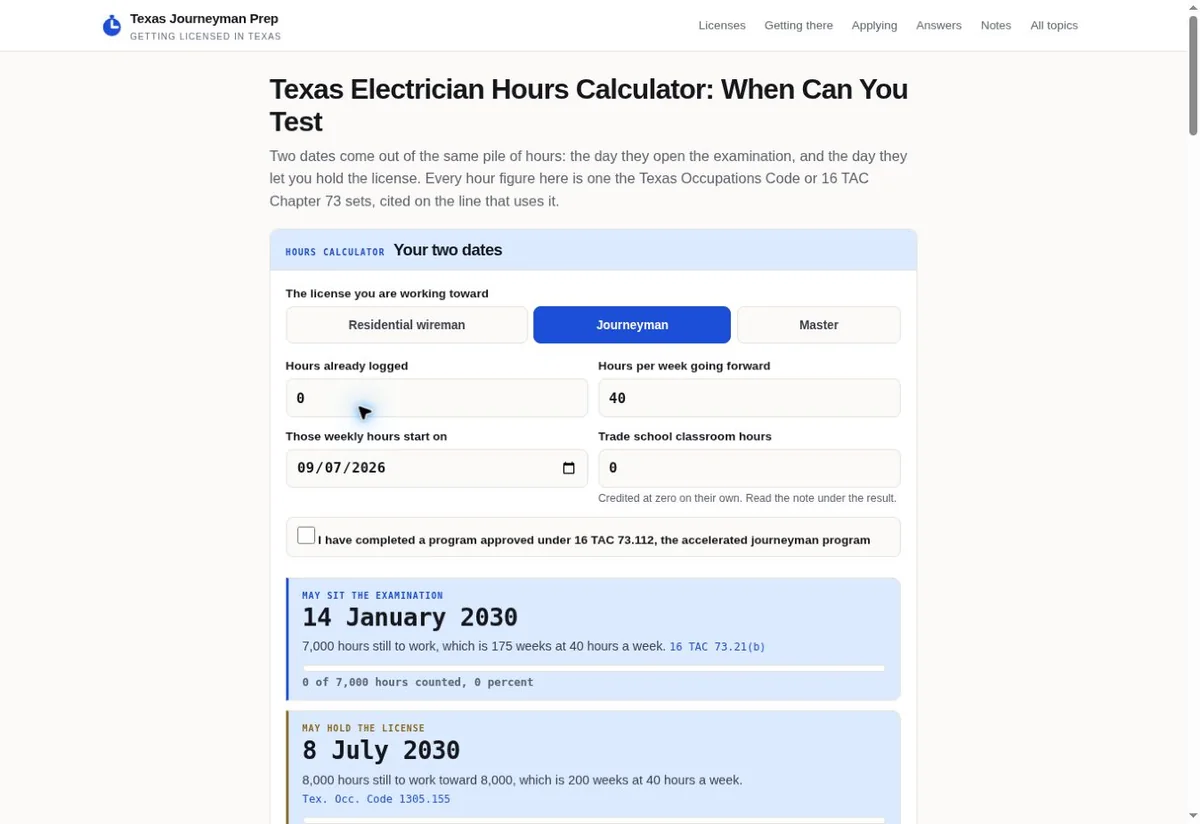
Texas Journeyman Prep calculator with labeled fields
Planning labels help distinguish a customer goal from the task selected. View the project

Visible labels introduce the planning fields in this Texas Journeyman Prep calculator image. We can discuss their arrangement when your comparison needs both a customer's goal and the task they selected. Those two questions have different meanings. Your provider decides whether both details help staff understand the request. We can then place the approved explanations beside their fields so the distinction remains clear while the person enters an answer.

A goal field and an option field answer different questions. We can explain the first as what the customer wants to discuss and the second as the offered task they selected. Ask the receiver whether both values help the first conversation. The provider should decide what to collect rather than keep an extra field because another project used one.

  • Keep the customer's stated goal in their own words when the receiving process needs it. We can show a safe sample to the staff member. The record should preserve the context that led to the question.
  • Explain what choosing an offered task means. Our label should reflect the business's approved next stage. A choice that routes an enquiry should not appear to confirm that the requested work has been accepted.
  • Provide the agreed route for someone unsure of the task name. We should follow that sample to its actual receiver. The visitor needs to understand who handles the question and which broad detail may help.
  • Read the correction message beside the input it concerns. We can test with a fictional missing detail. The page should explain what can be corrected without adding a result the provider has yet to assess.

Have the provider approve the meaning before judging search feedback

The owner should assess what a reader could conclude from the comparison. We can then discuss available search and enquiry observations without treating an option choice as a delivered service result.

Which local statement can this page support?
Greenfield appears as a city in the Census place records for Hancock County, Indiana. We can use that identity to clarify the business context. It supplies no evidence of a particular service need or customer behavior. The provider's own approved offer determines which comparison answers the page may give.
What should the owner check in the title?
Ask what result the title appears to promise when read by itself. We can compare that interpretation with each offered task underneath it. The title should identify the question accurately and retain any limit essential to its meaning. A reader arriving from a shared link may encounter that isolated wording before the full page.
How do we assess an enquiry that uses the wrong task name?
Ask the receiver what the customer meant and which public phrase they referred to. We can inspect the named wording with the service owner. The issue may concern an unclear option label or a missing question about the goal. Keep any conclusion tied to the actual record rather than assume every mismatch has the same cause.
Can clear descriptions guarantee a search result?
The descriptions can be inspected for agreement with the approved offer. Search visibility needs separate observations after publication. Google explains how descriptive content and links help people understand pages, while its guidance offers no guarantee of indexing. We should keep the content acceptance task and any later discovery conclusion tied to their own records.

Keep the comparison accurate when one option changes

A changed service task can alter the meaning of a shared comparison. We ask the provider which answer depends on it and inspect the named supporting instructions before presenting the updated page as current.

  1. Describe the change in the owner's terms The provider states which task has changed and what the public option may now describe. We need the approved replacement meaning before editing. A new service name alone may leave the original promise in the explanatory paragraph underneath it.
  2. Check both sides of the comparison Read the revised option beside the one that remains unchanged. We should preserve the actual difference the customer needs to understand. An update to one task can leave the other description sounding broader or narrower by accident.
  3. Follow the linked question path Open the enquiry route used by the comparison. We can check the task names and any field that still requests information for the former offer. The receiver approves the current context needed for its first action.
  4. Read any permitted short summary A preparation page or public excerpt may contain a shorter version of the comparison. We should inspect the summaries named by the business. Keep the relevant limit attached when the owner approves a revised short answer.

Have the editor identify who can authorize a later comparison change. We can discuss how the service owner supplies the facts and how the editor recognizes the current version. The work should cover the named destinations involved, with another system's changes handled through its own authorized owner. That keeps routine writing connected to the task the business actually offers.

An old phrase may remain in a question from someone who saved the page earlier. Staff should be able to recognize which option the person refers to. We can ask the provider whether its public answer needs a route for that clarification. The business decides what the earlier request means for its own service process and any terms already discussed.

A comparison can also need a clearer starting question when two options appear to suit the same goal. We ask which fact would lead staff to describe one offered task instead of the other. That fact might still be unknown to the customer. Our proposed answer can name the missing detail and explain how to ask about it. The page shouldn't require the reader to choose a task they can't yet tell apart. A short route to clarification can keep the stated options accurate while the person obtains that answer.

Check what a person means when they repeat the goal in their own words. A broad result may contain several steps, while your offered task covers only one. We can help name the part your business handles and keep the remaining part visible in the comparison. The provider decides whether it can answer the wider question or needs to leave it open. This gives the reader a clear boundary to discuss before treating a service label as agreement to all the work they have in mind.

Bring the goal customers keep confusing with an offered task

A comparison project can begin with one public option and the result people assume it provides. We discuss the writing needed to explain that difference using the provider's approved service information.

Which comparison details help us begin the discussion?
Bring the comparison page and an anonymized account of the request staff have to clarify. Tell us who approves the offered task descriptions. We can use a fictional customer goal to examine the answer. A private project history is unnecessary for identifying the public phrase that creates a broader expectation than the service supports.
How will the writing scope be set?
We need to see how many options need clarification and which linked answers depend on them. A label correction differs from preparing a fuller conditional explanation or changing an enquiry route. Our discussion can identify those requirements with their owners. Pricing and project timing follow the agreed writing and implementation involved.
What can be checked before real outcomes are available?
Have the owner read each option and a marked request that leaves an important detail unknown. We can ask a reader which question they would bring to staff. If the receiving route is included, inspect its safe sample as well. These direct tasks check the approved meaning and route under the observed conditions.

We can discuss your service comparison on the first free strategy call. Describe the customer's goal and the offered task it keeps being mistaken for. Our Greenfield SEO discussion can then focus on the phrase that needs clarification with the provider who can confirm that comparison's exact meaning. The business retains responsibility for the service decision and any later result.

Sources

From the businesses we've worked with

“Getting help with search visibility made sense for my business. I'm glad I decided to work on it”

Marketing help for Greenfield businesses

Based in Indianapolis, we serve central Indiana and clients across the United States.

Request a free strategy call

Greenfield, Indiana

Service area map

Explore Greenfield on OpenStreetMapArea reference; this is not an office pin. Map © OpenStreetMap contributors.