Need help?Jamie

Market service plans

Mass Ave Website Design: Shop Sites Built for Phones and Orders

Your shop looks great when people walk in off Mass Ave, but your website still looks like it did the year you opened.

Trojan Digital Marketing designs and rebuilds websites for Mass Ave shops and galleries in Indianapolis, Indiana. The first screen on a phone shows your best photos, today's hours and how to reach your door, and we add online ordering if you sell that way. That's the screen someone a few blocks away checks before deciding to walk over.

Send your current site's link and a few photos of your space. The first strategy call is free, and during business hours we aim to reply within five minutes.

  • Your storefront's look, quick on a phone
  • Parking and cross streets one tap away
  • Checkout set up for Indiana sales tax

We have more than 1,400 live websites running, and Jeff Clerisier, who founded Trojan Digital Marketing in March 2018, stays your contact while yours is built. For a Mass Ave shop, that means a question about your photos or your checkout goes straight to the person making the decisions.

Illustrative creative production workspace.
IllustrationThis page drawn as a wireframeThe headline, highlights and button from this page, redrawn in desktop and phone layouts. It’s an illustration of page structure and isn’t a client site.PAGE WIREFRAMEtrojandigitalmarketing.com/indianapolis…Mass Ave WebsiteDesign: Shop SitesBuilt for Phones and…Your storefront's look, quick on a phoneParking and cross streets one tap awayCheckout set up for Indiana sales taxBook a free website strategy…010203Mass AveWebsiteDesign: ShopSites Built…Your…Parking and…Checkout set…Book a free…

YOUR WORKING BRIEF

Choose where to start

Select the parts you want to discuss. Your choices carry into the inquiry form.

Discuss this service0 priorities selected

See how I'd approach this

Choose a question
to look at with me.

A website built around the next customer decisionMESSAGE · EVIDENCE · ACTION
  1. A clear offer
  2. Evidence for the customer
  3. An action that works on mobile
A website built around the next customer decision

On a Mass Ave shop site, we keep browsing and custom requests on separate paths, since someone buying a print and someone asking about a commission need different pages. We'd skip a full-screen intro video, because it slows the first screen on a phone and pushes your hours out of view. Your staff can update hours and new arrivals themselves.

Visit Indy: Mass Ave: Visit Indy describes galleries, boutiques, restaurants, and bars along Mass Ave, with Bottleworks at the northern end. That mix means visitors arrive to browse, to order something made or to plan a night out. Which of those your site puts first depends on how your own shop makes its sales.

Questions about website design in Mass Ave, Indianapolis, Indiana

How much does a new website cost for a Mass Ave shop?

A custom site is priced after the free strategy call, once the page count and any online store are clear. If you're opening a new business, the Marketing Startup Kit is $7,997, or three monthly payments of $2,799. It includes a custom 15-page website, Google Business Profile optimization, 20 SEO blog posts and three months of strategic consulting.

Can my Mass Ave shop sell online, and what about sales tax?

Yes, the site can take orders, and Indiana businesses that sell goods collect the state's 7% sales tax once they're registered as retail merchants. You register with the Indiana Department of Revenue through INBiz. Your accountant confirms how checkout's tax settings should read, and we build to what they tell us before anything goes live.

What should my website tell visitors about getting to Mass Ave?

Put parking and your nearest cross street on a visit page one tap from the homepage. When ParkIndy raised downtown and Mass Ave meter rates on February 1, 2025, meters ran Monday through Saturday from 7 am to 11 pm and were free on Sundays and select holidays. Check parkindy.info before publishing any rule, since those details can change.

What do you need from me before design starts?

Bring the photos you'd hang in your front window and a list of the questions your staff answer at the counter every week. Those counter questions turn into page copy, which is why a site built this way reads like your shop and nobody else's. Logins for your domain and current site help too, if you have them.

Will a photo-heavy site be slow on phones?

It doesn't have to be. Images get resized for each screen and saved in a lighter format like WebP, then the page is checked on a phone before launch. A gallery can still lead the homepage, because the first image loads right away and the rest follow as the visitor scrolls down.

What if the new site doesn't bring more visits or orders?

You'll see it, and the fix starts with whichever page is falling short. With analytics and Search Console connected, calls and form fills trace back to specific pages, so a weak page is easy to find. We don't promise sales figures, because your stock and the season move them as much as any website does.

“I had a great experience working with Jeff…”
Heather DoanGoogle review
“…drove a noticeable uptick in leads within just a few weeks…”
Mike BamosiGoogle review

We’re based in Indianapolis, where the city and Marion County share one government, Unigov.

We also work with clients across the United States.

Read our Google reviews

What on Mass Ave should a shop website account for?

Website design for a Mass Ave shop has to keep up with a street that's planning its future and, for stores selling online, with Indiana's sales tax rules.

  • Mass Ave Next is a year-long, community-driven vision plan for the district, led by the Mass Ave Cultural Arts District, funded by the Indianapolis Foundation and planned by Proformus. It covers land use, connection, open space, and arts and experience, including streetscape and storefront recommendations.

    If the street around you changes, your photos and directions should change with it, so your team needs to be able to swap them without calling a developer.

    Mass Ave Cultural Arts District, Mass Ave Next site; ProformusChecked September 25, 2026
  • Businesses that sell goods register through INBiz with the Indiana Department of Revenue as retail merchants to collect the 7% sales tax. Registrations last two years and renew automatically at no cost 30 days before expiring if returns and payments are current.

    Your store's tax settings should match that registration, so they come from your accountant before launch.

    Indiana Department of Revenue, Sales Tax pageChecked September 25, 2026

Plans and tax rules change, so the source pages get checked again before your site quotes any of them.

Which page does each Mass Ave visitor need?

This illustrative map shows how website design for a Mass Ave shop could give each kind of visitor a page built for what they came to find.

VisitorWhat they need firstPage that serves them
Deciding whether to walk over now
Today's hours and the nearest cross street
A visit page linked from the top of every page
Buying a gift from home
What's in stock and how to order it
A shop or collection page with a working checkout
Planning a custom piece
How a commission request works
A commission page with a short request form
A regular checking what's new
New arrivals and upcoming events
A homepage section your staff can update themselves

Who brings what to a Mass Ave website project?

A Mass Ave website design project moves faster when the shop brings its own material and we handle the build around it.

  • Photos of your space and your best pieces
  • The questions staff answer at the counter most weeks
  • Domain and current site logins, if you have them
  • Regular hours and any event day changes
  • Maker names you have permission to publish
  • Page layout designed for phones first
  • Image sizing so galleries load quickly
  • Forms that land in an inbox someone checks
  • Checkout tax settings from your accountant's notes
  • Analytics and Search Console connected before launch

Design the opening around the signature offer

Give each part of the page a jobOfferEvidenceAction
Offer
Explain what the customer can get.
Evidence
Support the offer.
Action
Make the next step easy to use.
Give each part of the page a jobThe offer, evidence and contact route should work together on a small screen.

A storefront has texture, scale, and a point of view. Its website should communicate those qualities through your own objects, spaces, and people. We begin with a visual inventory and select an opening sequence that introduces the offer without making a phone download an entire gallery before it can respond.

The design brief identifies the strongest photograph, the essential opening text, and the action that deserves emphasis. A custom studio might lead with a finished piece and a short project explanation. A retailer may need a current collection and a plainly labeled route to browse available products.

Make browsing and commissioning visibly different

Navigation should offer choices that match the business. Available pieces, custom work, and a visit page should not all lead to the same contact form. We map the details required at each stage and prototype their placement before completing the visual design. That reveals where a button sounds like a purchase but only sends a message.

A commission request can be short while still purposeful: the type of project, intended use, an optional reference, and contact information. The confirmation explains that the request reached the business and that scope still requires review. It should not present an unapproved price or reserve production time.

Use interaction to reveal detail instead of hiding it

A useful product comparison can expose dimensions, materials, or available finishes alongside images. A process viewer can show how a commission moves from an initial idea to an approved brief. These interactions deserve a place when they make a decision easier; repeating decorative motion across every section adds little to the offer.

We specify keyboard behavior, visible selection states, and a readable alternative when motion is reduced. Important details remain accessible without hover. On a phone, the selected image and its explanation stay together so the visitor does not lose the relationship while scrolling.

Prototype a proposed appointment studio experience

Imagine a hypothetical jewelry studio that sells finished items and accepts appointment requests. We would prototype a calm product gallery with a persistent collection label, then a separate commission sequence that shows the type of work and asks what the visitor wants to discuss. An appointment request ends in an honest receipt, not a claim of confirmed availability.

For validation, a reviewer follows three tasks: identify an available collection, understand what a custom consultation covers, and submit a labeled test request. The staff member receiving it checks whether the message contains useful context. This tests the operation behind the design as well as the appearance.

Prepare images for the places they actually appear

We produce responsive image sizes, preserve meaningful crops, and check that text remains legible against the photograph. A close product detail needs different treatment from a broad interior image. WebP assets can reduce transfer size, but the finished result still needs visual inspection at the displayed dimensions.

Google’s Core Web Vitals guidance distinguishes loading, interaction responsiveness, and layout stability. We use those concerns to shape acceptance checks, while recording the device and test conditions. A performance target guides implementation; it is not an unconditional speed or sales promise for every visitor.

Hand over a design the shop can keep current

The CMS plan defines which fields the team edits for a collection, a product highlight, and a custom service. We include image guidance and examples of good labels so future updates retain the same visual hierarchy. The scope also records who controls the domain, hosting, commerce, and form destinations.

After publication, review completed requests, messages about missing details, and abandoned actions where measurement supports that observation. A visually polished page may still need a clearer availability note or a different next step. That review turns the design into an ongoing business resource rather than an untouchable launch presentation.

Put the first scope in order

  1. Select approved product imagery and define browsing versus commission actions.
  2. Prototype the chosen gallery, comparison, and request states with real content.
  3. Test mobile controls and confirm that the receiving team gets the project context.

Compare Mass Ave planning, the Indianapolis directory and website design.

Let’s trace a browse-to-purchase or custom-request path through your Mass Ave website.

Sources & further reading

Talk with Trojan Digital Marketing

Which custom-order stage is the visitor agreeing to?

Name the action at the stage your studio actually offers. We can design a request journey that keeps the customer's idea separate from the maker's later acceptance.

  1. Map the first exchange Ask the studio what it needs to understand a proposed piece. The first page may only collect an idea and a contact route. We can keep that step short while explaining its purpose. If staff must assess feasibility, the page needs to say so. A visitor should know what their action sends before pressing the button.
  2. Describe the maker decision Identify the role that can accept the proposed work and the facts that person needs. Your business supplies the actual sequence. We can then give each stage a clear name on the website. Don't place a production status beside an unassessed request just to make the process look complete. The interface should display the certainty the studio can support.
  3. Set the customer checkpoint Confirm which later action the customer must take to approve a proposed version. The website may display an illustration or collect a reply, depending on the agreed task. We need to know what that reply authorizes. If payment or another agreement sits in a separate system, its role needs to be explained accurately by the business.
  4. Decide the first website purchase Choose the stages you want the initial project to support. We can build a focused request path without adding a complete production portal. The quote should identify the states the visitor sees and the message staff receive. Later stages may require their own system connection. Ask which parts of the proposed sequence can operate with your current tools.

For a shop or maker on Mass Ave in Indianapolis, Indiana, custom-work requests can contain several unresolved choices. The website should help the person describe an idea without presenting it as an approved order. We begin with the terms your studio already uses. A request, a proposed design and a production commitment need clear relationships even when all three appear in the same conversation.

The maker's real process determines how much the first message needs to contain. We can ask what information makes a first exchange productive and what can wait. A form that demands a finished specification may deter someone who needs help forming the idea. The opposite problem is a bare name field with no place to describe the idea. The business chooses the boundary with us before implementation.

What should a reference image explain?

Ask what the visitor wants us to notice in the reference. Our upload design can preserve that explanation and leave ownership or reuse questions for the appropriate approval.

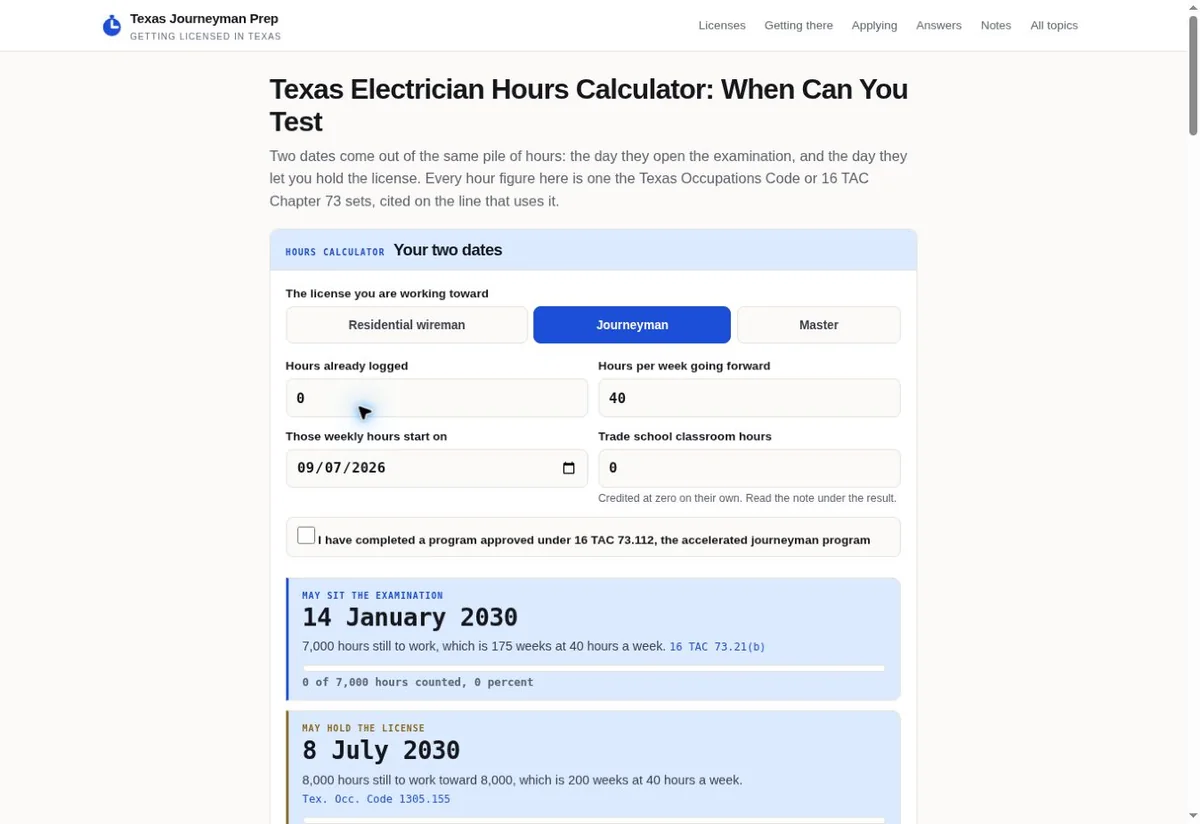
Texas Journeyman Prep calculator with labeled fields
Reference image: Texas calculator presents labeled planning inputs. View the project

A picture may show a color, a shape or an overall mood. Those are different instructions. We can add a short explanation field beside an optional upload so the reference doesn't travel alone. The receiving maker should see which feature the customer meant. A file name such as inspiration gives little help when several images are attached to one request.

The Texas calculator capture here illustrates labels near planning inputs. It is an existing interface image rather than a custom-order system. We can discuss that close relationship between a prompt and its control. Your upload field needs a purpose specific to the maker's request, alongside an honest explanation of any file limit the implemented system actually has.

Reference-image questions for the proposed request
Reference detailAsk the customerMaker approval
Intended featureWhich aspect of this image relates to the proposed piece? We can give examples such as a broad color preference without treating those examples as selectable production specifications.The maker decides whether that aspect can be discussed and whether more detail is needed. The website preserves the customer explanation beside the image.
Image originWhere did the supplied reference come from, and what use is the customer asking for? Avoid collecting an ownership assertion whose meaning the studio has not defined.The business settles any permission needed for the proposed work. Our form wording follows its approved requirement rather than offering legal conclusions.
Several referencesExplain whether each image concerns the same proposed version. Give the customer a place to identify a conflict instead of assuming the references fit together.The maker chooses how to resolve competing directions. The receiving message keeps the images and the relevant notes associated.
Missing imageLet someone describe the idea in words when an upload is unavailable or unnecessary. The next contact route should still be understandable.The studio confirms whether the description is enough for a first conversation. Our page should never imply that uploading an image itself reserves a production slot.

How should a proposed proof invite the right response?

State what the displayed version is ready for the customer to judge. We can show a proposed proof with clear choices that preserve questions still awaiting the maker's answer.

Can the customer approve just one part of the design?
Yes, if your process supports that limited approval. We need the maker to define what the action means. A color choice may leave dimensions unresolved. The button and receiving message should preserve that limit. Our design can show the selected part and the questions that remain open. It should not turn a partial reply into permission for the whole piece.
What happens if the customer wants to discuss a detail?
Provide a route that identifies the displayed version and the relevant question. We can keep the proof visible while someone writes their note. A general contact form may lose that relationship unless it carries the right reference. The maker chooses who receives the discussion request. The customer should know that asking a question leaves the proposal open.
Should the proof be visible only as an image?
A visual proof can be important, but key details need a readable explanation too. We can place the maker-approved version label and decision prompts beside it. That helps someone distinguish two similar images and gives the receiving team clearer context. The page should remain understandable when the image fails to load. An image-only approval button leaves too much meaning hidden.
Does pressing approve start production immediately?
That depends on the studio's agreed process and connected systems. We need a direct answer from the business before writing the action label. Other requirements may remain outside this page. We can explain them using the approved sequence. A website shouldn't announce a production start because it received one favorable comment about a draft.

A proposed proof is a conversation object with a version. It should be clear which detail the customer can inspect and what they can do next. We can arrange the interface around that decision instead of surrounding it with unrelated products. Your maker supplies the actual choices. If the image shows something that isn't available, that boundary belongs beside the proof before the visitor replies.

Ask the agency to show the different response states in its proposal. A requested change, an unanswered question and an approved choice each affect the handoff differently. We can discuss those states using fictional content before the real customer material is loaded. The discussion helps you judge the interface without treating a visual mockup as a working production connection.

Which design note belongs to which proposed version?

Keep a change request attached to the version the customer saw. Our website task can make that relationship visible so the maker doesn't have to reconstruct it from loose messages.

Hypothetical example An invented Mass Ave print studio discusses a custom piece through two proposed versions.

Before

  • In this fictional situation, the studio sends a first proof with a dark border. The customer asks about a lighter edge, then opens a later image from another email. Their reply says make this smaller without identifying which feature they mean.
  • The studio's website stores only the latest image. A staff member reading the reply sees the second proof and assumes the customer commented on it. The request could concern an earlier version, but that fact is no longer visible.
  • A confirmation calls the revised piece approved before the maker has interpreted the note. The exercise provides no support for that status. The customer has sent a question about size, and the intended change remains unresolved.

After

  • Our proposed interface displays a version label with the proof. A change request carries that label into the receiving message. The customer can describe the feature in their own words while the maker retains the original note.
  • The maker can inspect the prior proof associated with the request. The design may link that version or present it within the agreed system. We ask the business which arrangement it can maintain before promising a full project history.
  • The receipt describes the action as a requested change. The maker confirms the interpretation through the studio's actual process. A later approval belongs to the settled version, so the earlier question does not silently become a production instruction.

Version handling is useful even when the studio uses an ordinary inbox. We can put the approved reference in the subject or message body if that suits the connected tool. The business decides what staff can reliably maintain. A complex history screen won't help if it requires data nobody enters. The first design should follow the real handoff rather than an imagined back office.

Old notes also need context when a customer changes direction. Keep the original request distinct from the maker's interpretation and the final settled choice. We can label those pieces within the agreed interface. That makes it easier to ask a focused follow-up question. It doesn't establish that the website provides a legal approval record or resolves every disagreement about the finished work.

What should the receipt say after a customer sends a request?

Confirm the action that the system actually completed. We can make the receipt clear while leaving design acceptance and production decisions with the studio's approved process.

Georgetown Market bilingual functional beverages department sign
Confirmation copy: Store beverage labels pair English and Spanish. View the project
  • State which request or version the receipt concerns. We can show the customer-entered subject and the relevant reference without adding a production status that the system hasn't obtained.
  • Give the next contact route the studio has approved. If a reply time is unknown, avoid inventing one. A clear way to ask about the request can be more honest than an attractive countdown.
  • Explain a failed send where it occurs. The visitor should know whether to try again or use another contact route. We need the system behavior to support any statement that the request was received.
  • Keep the receipt understandable after the visitor closes the form page. A copied or emailed message should retain the same action description and version reference where the agreed system can provide them.
  • Check every language version the studio offers for this task. A translated button and an English-only receipt may leave a visitor unsure what happened. Your language approver settles the final wording.

The Georgetown department-sign image beside this section shows paired wording arranged within one design. It's an existing store-signage reference. It doesn't prove that a custom-order receipt has been translated or tested. We can discuss how related language lines retain their hierarchy, then check the studio's actual confirmation separately with its approved language reviewer.

The project should include the failed-send wording as well as the receipt. We can test both using marked fictional information and the agreed receiving system. The approving person checks whether the messages match the real process. If a third-party provider controls the receipt, ask how it can be changed. That dependency needs to be settled before the agency promises a particular message layout.

What does the maker need before the request moves forward?

Agree on the minimum information for the next studio decision. We can shape the handoff around that information and keep unresolved choices visible for staff.

Custom-work handoff acceptance
StageInformation to preserveWho settles the next step
Initial ideaKeep the customer description and the reason for any supplied image together. The maker should be able to identify the broad request without assuming a finished specification.The studio decides whether it can discuss the idea and what extra details it needs. Our page wording reflects that limited first exchange.
Proposed versionInclude the version reference and the details the customer was asked to judge. A later message should remain associated with that proposal.The maker confirms which choices are open. We avoid presenting unavailable options as ready for production merely because they appear in a mockup.
Requested amendmentCarry the customer's original note beside the relevant version. Staff need to see whether it asks a question or proposes a change.The studio interprets the amendment with the customer. The website preserves the request and supports the contact route agreed for clarification.
Settled handoffIdentify the version and conditions the business has actually accepted. Any separate payment or agreement needs its real place in the process explained.The authorized studio role decides that the project can advance. The interface displays a status only when the agreed process supplies it.

A handoff check asks the maker to inspect the message as they would during ordinary work. Use a fictional request that contains an ambiguity and see whether the relevant clues arrive together. We can compare the entered fields with the receiving copy. The check may reveal a missing version reference or an unexplained image. Those findings belong in acceptance before real customer requests use the path.

Ask about export and ownership when discussing the build. The studio should understand where its request records and assets will sit and which provider controls them. We can inspect the available route for the agreed handover. That is different from promising a complete production-management system. Price the actual states and connections you need, with the maker's approval responsibility kept clear.

How do we price the custom-request path you actually need?

Compare the named request states and connected tools in each proposal. We can discuss a focused build once the studio has settled what each customer action means.

A request page with an optional image is a smaller task than a version portal linked to production software. The visual mockup may make both look similar. Ask the agency to identify the connections behind the screen. We can explain the work our proposal includes and where another provider must cooperate. Your budget discussion should also cover the time your maker needs to approve content and inspect practice messages.

The first release can stop at a clear handoff to a person. That may be enough if the studio already manages later decisions through its own system. We need to know how the customer recognizes that transition. A separate quote can cover later interface work when its purpose and data are clear. Buying every possible stage at once can make the initial task harder to approve. Our estimate follows that agreed first release boundary.

What changes the price besides page count?
The number of connected systems and distinct request states can affect the work. A version reference, an upload and a receipt may each need different handling. We also ask how much approved content exists already. A clear process supplied by the studio can reduce uncertainty in the build. We can discuss those inputs before estimating the task. The quote should describe what it assumes so you can compare it with another proposal.
Can we test the wording before building the connection?
Yes. Use a fictional idea and read the proposed prompts as a customer would. The maker can then explain what they think the resulting message means. We can correct the language before adding the technical connection. This early exercise doesn't prove the final system works. It gives you a practical way to judge whether the proposed states match the process the business wants to operate.
Who checks the final receipt?
The studio should nominate someone who can approve its meaning. We can inspect where the message appears and whether the version reference is present. The approving person confirms that the description matches the actual next step. If the receipt belongs to a separate provider, check that access during the buying discussion. A promised wording change is hard to deliver when nobody can edit the relevant field.
What happens when the maker changes the process?
Treat the changed step as a content and system question. It may affect a button label, the receiving copy or a connected status. We can discuss which fields staff can update and which require more work. Ask the proposal to make those responsibilities understandable. The business should know where to send a future change, especially when the original project has ended.

Sources

From the businesses we've worked with

“Trojan Digital Marketing gave our website a complete make over. The board members and I are absolutely thrilled!”
C. Teague McClendonAmerican Veteran Service Corp

Marketing help for Indianapolis businesses

Based in Indianapolis, we serve central Indiana and clients across the United States.

Request a free strategy call

Indianapolis, Indiana

Service area map

Explore Indianapolis on OpenStreetMapArea reference; this is not an office pin. Map © OpenStreetMap contributors.