Need help?Jamie

Market service plans

Noblesville SEO Strategy for Commercial Service Buyers

You sell to other businesses from Noblesville, and buyers still phone to ask whether you handle their kind of job, even though it's somewhere on your website.

Trojan Digital Marketing plans SEO strategy for Noblesville, Indiana companies that sell to other businesses, deciding which capability pages a commercial buyer should find before asking you to quote. It's for the owner who says, 'Buyers call to ask if we do their kind of job, and it's already on our site.' The city describes Innovation Mile as a 600 acre district.

Bring a list of the capabilities you quote, starred where you'd most like more requests. The first strategy call is free, and during business hours we aim to reply within five minutes.

  • Capability pages matched to what buyers ask
  • A quote-prep guide your estimators can link to
  • Requests sorted by fit, month against month

Jeff Clerisier has owned and run Trojan since March 2018, and a Noblesville SEO strategy gets judged here by the quote requests your estimators would actually price. Each request is tied to the page it came from, and a page that brings requests nobody can price gets another pass.

Illustrative content research workspace.
IllustrationSearch snippet preview for “seo noblesville”A preview built from this page’s title tag and meta description for that search. It isn’t a live search result and shows no ranking.SNIPPET PREVIEWseo noblesville|Trojan Digital Marketingtrojandigitalmarketing.com › noblesville-se…Noblesville SEO Strategy forCommercial Service BuyersSEO strategy for Noblesville, Indianacompanies that sell to other businesses:capability pages that answer buyer questions…

YOUR WORKING BRIEF

Choose where to start

Select the parts you want to discuss. Your choices carry into the inquiry form.

Discuss this service0 priorities selected

SEE HOW THE PIECES CONNECT

Explore the decisions
behind the plan.

THE TROJAN SYSTEMSEARCH
From a useful page to a relevant searchUseful websiteRelevant discoveryCRAWL · UNDERSTAND · CONNECT
  1. Useful website
  2. Crawl and understand the page
  3. Connect it to a relevant search
From a useful page to a relevant search

A commercial buyer often needs more than a broad claim that a company can handle the job. Trojan Digital Marketing offers Noblesville SEO strategy focused on explaining capabilities, preparing useful service pages and connecting them with the questions that arise before a quote request. We review the business and its existing content before recommending new pages. The result is an implementation plan that identifies what a buyer needs to know and what evidence your team must supply.

Questions about local SEO in Noblesville, Indiana

How much does an SEO strategy cost for a Noblesville company?

It's priced after the free strategy call, once we know how many capabilities you sell and how many pages already exist. If the website itself needs rebuilding, the Marketing Startup Kit is $7,997, or three monthly payments of $2,799, and it pairs a custom 15-page site with twenty SEO blog posts. The $99 Jev audit scores up to 3,000 pages and up to three competitors you name.

How long before an SEO strategy brings better quote requests?

Plan on months, and be wary of anyone who names a date. The page map comes first, then pages get rebuilt one capability at a time, and search engines recrawl them on their own schedule. We compare each month with the same month a year earlier, so a seasonal swing in buying reads as seasonal.

What if the new capability pages don't bring better quote requests?

Then the monthly fit count shows it, and the pages that aren't pulling their weight get changed. Your team marks each request as a fit or a miss, and we look at which page it came from and what it was missing. A page that brings visits but no usable requests gets rewritten or merged, and we won't call a website visit a sale.

Should a Noblesville supplier build a page for Innovation Mile or Washington Business Park?

Only when you really work there and have something specific to say about it. Noblesville Economic Development features both districts, but a page that repeats a district name and nothing else gives a buyer no reason to call. One solid capability page that mentions the park where a job happened, with your own photos, does more for a buyer than several thin district pages.

Does the free call lock us into a contract?

No. The free strategy call doesn't commit you to anything, and if another approach suits your buyers better, you'll hear that on the call. Jeff Clerisier founded Trojan in March 2018 and still runs it himself.

Where does Trojan work from, and does that matter for a Noblesville company?

Trojan is based in Indianapolis and serves businesses across central Indiana, Noblesville included, as a service-area business with no public storefront. Both cities sit in the 11-county Indianapolis-Carmel-Greenwood metro area. STATS Indiana counted 55,848 Hamilton County residents working in Marion County in tax year 2020, so your capability pages shouldn't assume every buyer is searching from Noblesville.

Which Noblesville facts shape an SEO plan for commercial buyers?

An SEO strategy for Noblesville, Indiana companies that sell to businesses starts with where those buyers work and the district names they already use.

  • The city's 2025 year in review describes Innovation Mile as Noblesville's 600 acre innovation, tech, sports and entertainment district.

    A supplier that has done real work there can say so on the capability page, with the job and the photos to back it.

    City of Noblesville, 2025 Year in Review (news flash)Checked September 21, 2026
  • Noblesville Economic Development features Innovation Mile, Washington Business Park and Campus Center, and describes commercial activity around the 146th Street corridor.

    These are the names a local buyer uses for your location, so they belong in directions and delivery-area copy where they help someone find you.

    Noblesville Economic Development (choosenoblesville.com), featured districtsChecked September 13, 2026
  • For tax year 2020, STATS Indiana counted 55,848 Hamilton County residents who work in Marion County, out of 71,792 who commute out of the county.

    The person comparing suppliers may be at a desk in Indianapolis, so each capability page should state plainly where you deliver.

    STATS Indiana, Annual Commuting Trends Profile: Hamilton County (2020)Checked September 21, 2026
  • Noblesville is part of the Indianapolis-Carmel-Greenwood metro area, which covers 11 counties under the 2023 federal delineation.

    Delivery-area copy can name the counties inside that metro you really serve, which reads as more credible than a claim to cover the whole state.

    Indiana Business Research Center, InContext, 'The 2023 metro landscape for Indiana'Checked September 25, 2026

Innovation Mile's boundaries and tenants weren't confirmed, and the commuting figure is county-wide. No Trojan project in Noblesville is described here.

Which page should answer each commercial buyer question?

A Noblesville SEO strategy for commercial service buyers gives each buyer question one home page, so two of your pages never compete to answer the same thing.

Buyer questionPage that answers itWhat your team supplies
Can you handle our material or spec?
A capability page for that one service
Approved limits and real project photos
What do you need from us to quote?
A quote-prep guide linked from the capability page
The checklist your estimators already use
Do you deliver to our site?
A delivery-area section naming real places
Where you've actually worked, in your words
Who else have you done this for?
Approved examples, unnamed if a client prefers
Written permission for each example
How soon could you start?
A short process note on the capability page
Your usual lead time, kept current

What happens between the free scan and a Noblesville SEO strategy?

SEO strategy work for a Noblesville company that sells to businesses moves from a free scan to a monthly fit check, and each step names who does it.

  1. Free website scanJev scores up to 100 pages and emails the report link, so the call starts from what your site says today.Trojan
  2. Free strategy callYou explain which capabilities bring your best jobs and which ones you'd rather stop quoting.Together
  3. Capability inventoryYour team lists the work you take on and the questions estimators field every week.Your team
  4. Page mapEvery buyer question gets one page, and existing URLs stay wherever they still earn their place.Trojan
  5. Monthly fit checkRequests are marked fit or miss, and search data is set against the same month a year earlier.Together

Translate capabilities into customer questions

Start with the decisionYour serviceFitTrustNext stepScopeEvidenceContact
Fit
Explain the service scope.
Trust
Show supporting evidence.
Next step
Give a clear contact route.
Start with the decisionOne service can lead to different questions about fit, evidence and the next step.

Your staff may describe the company through equipment, departments or internal terminology. A buyer may search through the problem, material or service they need. We compare those perspectives and map the relevant questions to the actual offer. A capability page should explain what the company can assess, what information affects suitability and how to start a discussion. Supporting content can explain preparation or comparisons without pretending to provide a complete technical specification for every possible situation.

Recognize the Noblesville commercial settings

Noblesville Economic Development identifies Innovation Mile, Washington Business Park and the 146th Street corridor in its development materials. The chamber describes the Noblesville Square as a community destination. Our planning inference is that procurement and consumer visits can require different content even within the same market. We validate the connection to your business rather than treating a development listing as proof of demand, a completed project or a customer relationship.

A proposed industrial supplier architecture

Imagine an illustrative fabrication supplier evaluating business customers around Washington Business Park and the wider region. Its proposed website could separate material capabilities, project review and production services, if those are genuine parts of its offer. A capability page would explain the information needed to assess a request rather than claiming every material or tolerance is available. A preparation guide could identify the drawing, quantity and intended use details that the quoting team needs.

Read more

The service page would link to that guide and to approved work examples. The inquiry would identify the project type before requesting more detailed files through the agreed process. Claims about certification, capacity or technical performance would require evidence from the supplier. This proposed structure helps a buyer prepare an informed conversation and avoids inventing industrial credentials or a Noblesville client result.

Audit the old pages before adding new ones

Give each part of the page a jobOfferEvidenceAction
Offer
Explain what the customer can get.
Evidence
Support the offer.
Action
Make the next step easy to use.
Give each part of the page a jobThe offer, evidence and contact route should work together on a small screen.

We inspect the URL inventory, page roles, internal links and available search history. A broad capability page may need better sections, while another question may justify a separate destination. We distinguish those cases before writing. The existing Noblesville SEO company page can remain the broader introduction. This deeper strategy defines how the service pages, preparation guides and examples support one another. Any consolidation or route change is documented so useful material is not lost in the expansion.

Deliver a brief the business can approve

  1. Identify the buyer and the service decision each priority page supports.
  2. List the approved capability details and the questions requiring a specialist response.
  3. Resolve access and linking issues on the existing priority pages.
  4. Draft service explanations and supporting preparation content with distinct purposes.
  5. Test the route from that content to a suitable quote or consultation request.

We favor understandable structure and descriptive links, as reflected in Google's SEO Starter Guide. The work list also names the reviewer, required source material and dependencies. A technically accurate service page needs a different approval process from a general introduction to the company.

Gather material that represents actual work

Useful inputs include approved capability statements, original photographs, redacted scope requests and questions the quoting team answers repeatedly. We ask which details are confidential and which can be shared publicly. Where examples cannot name a customer, they can still describe a process if the business approves the wording and the example is presented honestly. We do not turn a sample drawing or hypothetical job into a case study. The editorial plan should work with the evidence available rather than demand invented proof.

Measure commercial fit as well as discovery

Connect an observation to a decisionEventRecordMeaningDecisionCheck definitions at every step
Event → record
Define the event and check the record.
Meaning → decision
Review the business meaning before acting.
Connect an observation to a decisionDefine the event, check the record, review its business meaning and choose the next action.

We group available search queries around the relevant capabilities and examine which landing pages support appropriate inquiries. An impression for a general manufacturing definition means something different from a visit to a specific capability page. Your team can record whether a request fits the service scope and which information was missing. That helps determine whether the content should be clearer, deeper or aimed at a different decision. We avoid attributing a procurement outcome to SEO when the evidence only shows a website interaction.

Choose a priority capability to discuss

Share the website, one commercially important service and examples of the information your team needs before quoting. Trojan can scope the research, page inventory and content work around that capability. Noblesville website design addresses the inquiry experience, and Noblesville AI SEO, AEO and GEO addresses business facts and evidence. The Noblesville market hub connects those services. The proposal should make the next useful page clear before a large content program begins.

Sources & further reading

YOUR NEXT MOVE
Make the next step count.

Add a branded lead source to your search plan.

For contractor growth beyond Indiana, we can scope an exclusive Garrison network alongside your existing search work.

Roofing and water restoration offers serve eligible markets outside Indiana. We confirm territory and routing before you commit.

Explore branded exclusive roofing leads or branded exclusive water restoration leads for your service area.

Ask about window replacement lead options when that’s the trade your team serves.

Discuss your trade and service area.

Ask about the observed condition before naming a repair

A person may know what an item does without knowing what is wrong. We write the first condition question around that observation and the shop's approved next conversation.

Consider a Noblesville shop explaining how to ask about an item that behaves differently at different times. A customer may describe a sound or a change they noticed. They may also guess at a cause. Our writing can preserve their observation while leaving that guess open. The shop supplies what it can discuss publicly and the information it needs before commenting on the item.

We begin with one condition question your team can answer in its own terms. That is narrower than rewriting every capability page. Our proposed page would explain how to ask about the condition and what remains unknown. It would connect the question to the service your shop actually offers without calling a pictured item a job you've accepted.

  1. Identify the customer observation We ask the shop which condition description helps start the conversation. The wording should let a person report what they noticed without choosing a technical cause. We also ask how the shop handles a description it cannot interpret. That answer helps us write the first contact clearly.
  2. Keep the cause open Our draft separates the customer's account from any conclusion the shop might reach later. A sentence can say that staff need to discuss the item before commenting. We use the shop's approved wording for that point. We won't put diagnostic instructions or a repair promise into an introductory page.
  3. Name the approved next contact We ask what the person should do after reading the answer. The shop may want a question first or a particular kind of information through its agreed channel. We write that actual route. We leave visit and item receiving details to the shop to confirm, rather than assume a person should bring the item in.
What should we bring to the writing discussion?
Bring a condition question that staff can describe without sharing private customer details. Tell us which service the question concerns and what the shop still needs to know. We can propose a page answer and its contact wording from those inputs. If the condition requires a specialist response, your team chooses that person. Our role is to make the approved public explanation clear enough for someone to begin the right conversation.
Can the page help if the customer has no technical name for the item?
We can write a route that leaves the name uncertain if the shop can handle that question. A person might describe how they know the item or where its name appears. The shop decides what detail to request. We won't supply identification methods or tell someone to handle equipment to find a label. The page can stay welcoming by explaining how to ask about the gap.

Let the shop approve what the first answer means

A clear condition answer states what staff can discuss and what they still need to assess. We prepare that wording with the person responsible for the shop's public service claims.

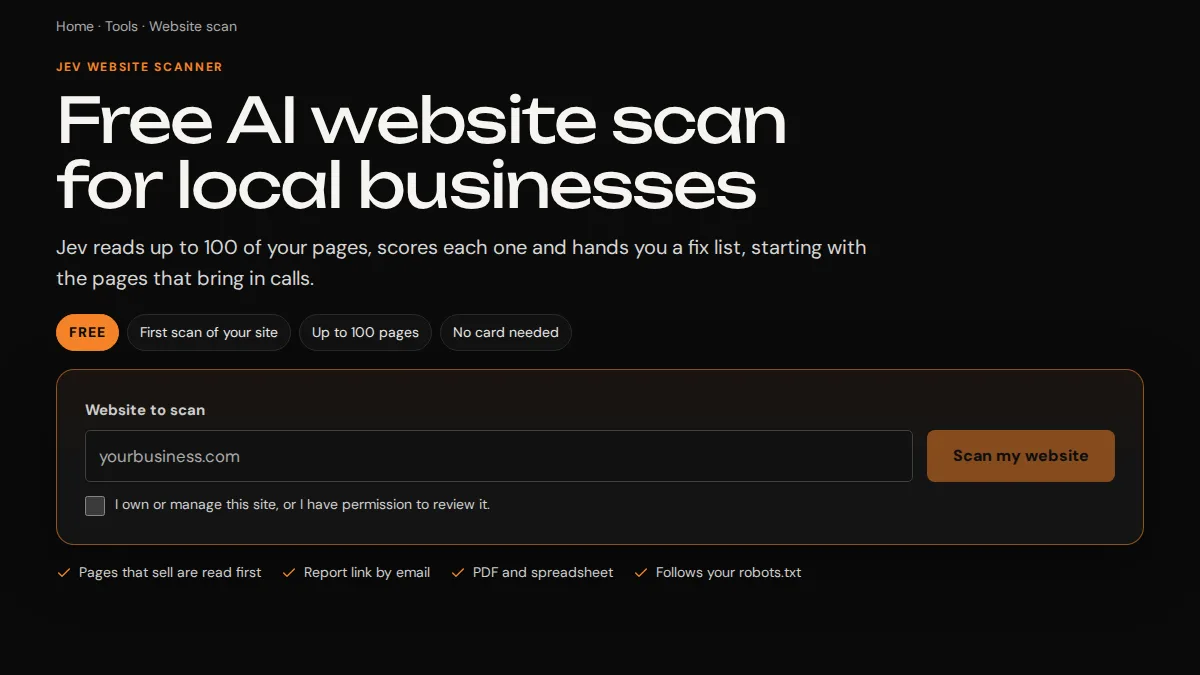
Jev scanner website input and scan action
Item-condition enquiry explanations: Scanner website input and button. View the project
From a reported condition to a shop question
Customer descriptionShop clarificationAnswer we would draft
The item behaves differently at timesWhat detail can staff ask about before commenting?A plain question that preserves the customer's account and leaves the cause open.
The customer names a suspected causeCan staff discuss that suspicion, and how?Wording that records it as the customer's guess.
The item name is incompleteWhat is the agreed route to clarify its identity?A way to ask about the missing name without assuming the shop handles it.
A picture accompanies the questionWhat can staff say before any further assessment?A description of the next exchange, with no job acceptance implied.

The Jev starting screen labels a website field and places Scan my website beside it. The action names the subject the visitor has just supplied. We can apply that connection to your shop's condition question. Our writer would name the item detail your team needs, then give the action a label that describes the initial request. The shop can review those short messages together and decide whether they prepare the reader for the actual staff conversation.

Our draft would name the shop's approved topic in the heading and keep the next question close to it. If the shop needs more information before answering, that should be stated where a reader expects the answer. We don't replace the shop's technical judgment with confident sounding website copy.

Who should approve a condition explanation?
The shop should choose someone who can confirm what its staff may say about that subject. We can make a technical sentence easier to read, but the meaning needs that person's approval. We also ask them to check the example and contact label. A careful paragraph can be undermined by a button that promises a repair. Our handoff presents those short messages alongside the longer explanation.
What if staff disagree about the right answer?
We keep the point open and identify who must settle it. The writing can continue on the parts the shop has approved. We wouldn't choose the most confident answer or turn an old message into the current rule. If the issue depends on the item, the page can explain the need for a conversation. The shop decides whether that is an accurate public answer for its service.

Keep the unknown item description visible

An incomplete item name should stay incomplete until it is clarified. We write the question and response so a customer description does not quietly become a confirmed service match.

How do we write about an uncertain model?
We can describe the model as unknown in the proposed contact wording. The shop tells us which details it can request through its normal channel. Our copy should not make the person choose a nearby model from a list simply to continue. If a known model name is required for the next stage, the initial answer can explain how the shop wants to discuss that gap. We leave the individual match for staff to settle.
Can a picture replace a condition explanation?
That depends on what the shop can responsibly learn from it. We ask the shop how to explain that limit. The page could invite an initial question and say that staff may need further detail. We don't state that a photograph proves a cause or that any pictured item is accepted for work. Our proposed image request should also follow the shop's approved handling route. A general website message need not collect every file at once.
How should a response repeat the customer's account?
It can identify the description received in the customer's terms. We keep it clear that this is what the person reported. If staff have only received the question, the message should say that. We would avoid a heading that converts an unassessed condition into a confirmed fault. The shop's later response can give the individual answer it is ready to provide. That exchange doesn't automatically become a claim to publish on a service page.
What if the customer adds a detail after sending the first question?
We ask the shop how that addition should reach the person handling the question. The page can explain the agreed way to identify the earlier message and add the new description. Our draft would keep the earlier account separate from the later detail. That lets staff see what changed without treating the addition as a confirmed cause. We won't decide whether the new detail changes the shop's answer. The shop handles that individual point. The public copy simply gives the customer a clear route to add information, with no acceptance of work implied by sending it.
Can we use the same photograph to explain several condition questions?
We would ask what each use needs to show and whether the image supports that point. A picture can illustrate an interface or a visible item description when its purpose is clear. It shouldn't stand in for an assessed fault. If the same image sits beside several answers, our copy should avoid giving it a different technical meaning in each place. We would also ask who approved its public use. A real shop example needs accurate context that the shop can support. This proposed page can instead use a plainly described format reference without claiming an actual repair.

A condition can also be uncertain because the person cannot say when it happened. We would ask the shop how to explain that gap in a first question. The public page should not invent a timeline or require the person to recreate the condition. Our writing stays focused on describing the uncertainty and the approved contact route.

The Census Indiana table identifies Noblesville as a city. Its part record refers to Hamilton County. That establishes the place named in this service plan. It gives us no information about a shop's capabilities or the number of people seeking repairs. We confirm the business offer directly with your team.

Use an example to show how a question stays open

A proposed example can explain the wording without inventing a repair result. We keep the item condition unassessed and let the shop's next conversation carry the question.

Hypothetical example A proposed Noblesville shop inquiry about an intermittent condition

Before

  • Imagine a customer asking about an item that sometimes behaves differently. They have a picture and a partial name, but the shop has not assessed the item. The page calls the pictured item suitable for repair before asking any question. This invented situation is a writing example only. It describes no customer served by Trojan and no service your shop is assumed to supply.
  • The customer then receives a message that sounds like a work acceptance. The form has only collected their account of the condition. Its wording has moved beyond what the shop knows. A photograph and a description alone do not let our writer decide what the shop can do with this particular item.

After

  • We'd propose a first question that lets the person describe what they noticed and mark the item name as uncertain. The shop would approve which details belong in that initial exchange. The page would name the service being discussed and explain that staff still need to answer the individual question. It would provide no technical procedure for recreating the condition.
  • The receipt would say which question was received and identify the shop's approved next contact. Any description of the item would remain the customer's account. A later staff answer could then say what further discussion is needed. Our example would end at that point, with no diagnosis, accepted work, completion date or claimed local result.

The writing check is whether each short message means the same thing as the main answer. We read the heading and the first response together with your team. A pleasant confirmation phrase may sound harmless while suggesting the shop has agreed to take the item. We can rewrite that phrase to reflect the actual stage of the conversation.

You can commission this narrow answer without publishing an invented story of a repair. If you later have an approved example of actual work, we can discuss it separately. Its condition and outcome would need their own support and permission.

Use input labels to explain the question, not the answer

A label can help a person report a condition clearly. We plan that language around the shop's question while leaving its technical answer for an appropriate assessment.

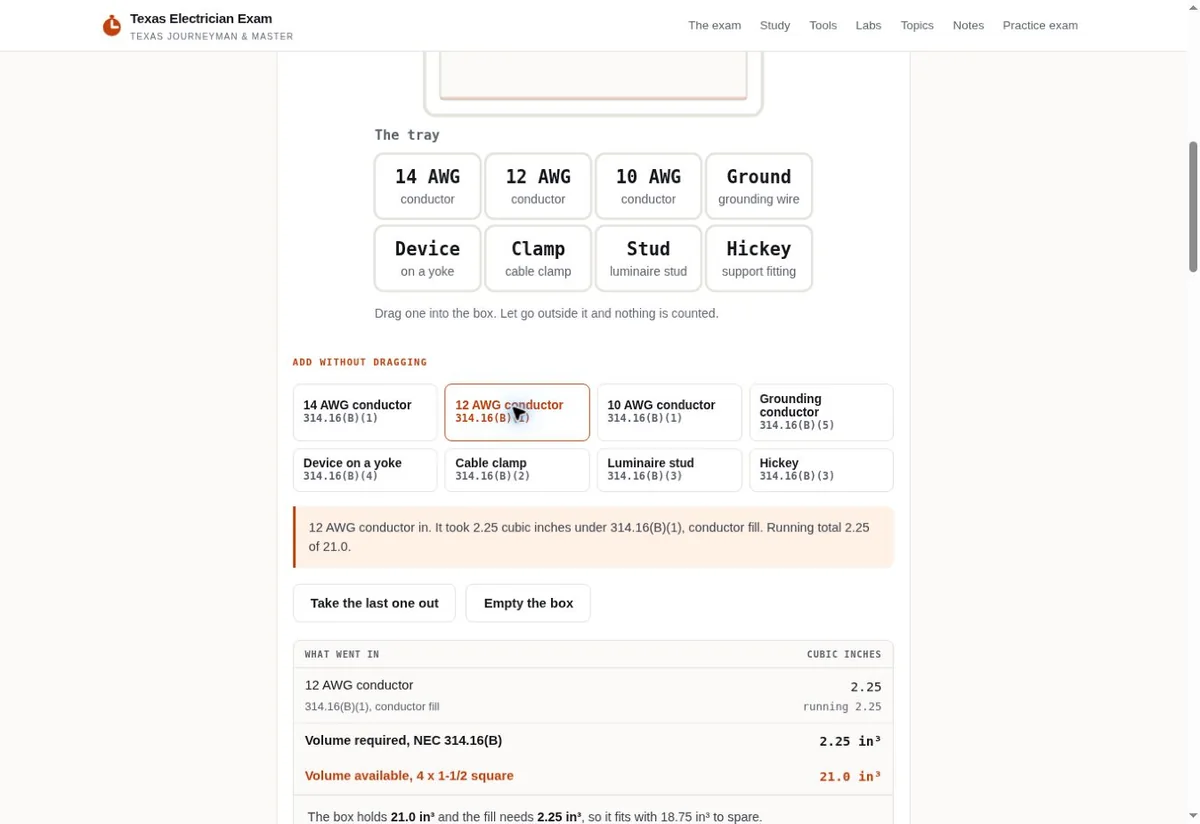
Texas Electrician Exam box fill calculator controls
Item-condition enquiry explanations: Exam controls and displayed output. View the project
  • We name the subject the shop needs discussed first. The label should make sense to someone who doesn't use the shop's internal terms.
  • Our help text explains the detail the person can provide. It should leave an unknown answer open rather than force a guessed value.
  • We identify what a submitted description means. The receipt can record a reported condition without calling it an assessed fault.
  • Your shop approves any next step that involves the item. Our writing does not supply inspection methods or instructions for operating equipment.

In the Texas Electrician Exam image, a 12 AWG conductor control appears near the calculation area. That arrangement keeps a named input close to the place where the tool explains its output. We can use the visible label to plan your shop's own item question. Our proposed field would identify the detail the customer can describe. Nearby help would explain how staff use that detail when considering the request. The shop supplies the meaning and approves the next contact action.

W3C's labeling guidance explains that a control needs a label identifying its purpose. Our proposed wording applies that principle to the first condition question. The exact label still comes from the shop's service and the detail it wants to discuss. We would also write help beside an unfamiliar term if your team agrees it needs explanation.

Should the form calculate whether we can repair an item?
We would not assume that in this writing task. The shop first needs to explain how it assesses the service question. A calculated result would require a separate set of reliable rules and actual checks of the implemented tool. Our proposal can start with the public answer and the route for an uncertain item description. The adjacent calculator shows a labeled interface, not a repair method we can reuse.
Can we show an example description beside a field?
Yes, if the shop approves it and the page makes its purpose clear. We can write a short sample that demonstrates the level of detail expected. It should not name an actual customer's item or imply that the shop has already repaired the example. The surrounding explanation can say the entry is a model of wording only. We also check that a person can leave an unknown detail unresolved when that fits the shop's route.

Commission the answer around one unresolved condition

Send us the question your shop is ready to explain and the point it cannot settle from a message alone. We can propose the writing that connects those two parts.

  1. Agree the narrow page subject We identify the condition question and the service it belongs to. Your shop confirms which statements can be made publicly. We mark the points that need a further conversation before any individual answer.
  2. Draft the answer and inquiry together Our writer prepares the page explanation and the proposed question labels. We also include the response after submission. The shop can then assess whether all three parts keep the condition open at the right point.
  3. Settle the remaining wording We ask your chosen approver to resolve each unclear service claim. A partial approval can leave the draft in progress. We would not publish a broad acceptance sentence while waiting for the technical meaning to be settled.
How would you price this writing task?
We would quote it after seeing the current page and the condition question. The proposal would identify the answer to be drafted and any related message copy. If your existing form needs changes, those implementation tasks would be stated separately. You can begin with one question that staff can approve. A large page program isn't needed merely to establish how that first question should be explained.
What can staff feedback improve afterward?
Your team can share a question that the new wording still left unclear, with private details removed. We can then examine the specific sentence or field involved. A person might be unsure whether to name the suspected cause or simply describe what they noticed. That is a concrete writing issue. It does not show a completed repair or tell us that search traffic caused a service outcome. Further copy work can follow the actual gap your staff identify.
Can this answer stay on an existing service page?
We would inspect the current page before proposing another address. A focused section may give the condition question a clear place beside the service it concerns. If the answer needs more room, we can explain that choice in the plan. The new wording should add information the page lacks, not repeat its broad capability introduction. Your shop's actual offer and customer question determine the page role.

Our initial proposal names the condition question we will write about and the shop input it requires. You can assess that concrete task before commissioning any broader content work.

Sources

From the businesses we've worked with

“Oh my gosh! This is perfect! Thank you! You can always count on Trojan Digital Marketing!”
J. HollandSho.Lux Lifestyle Centre

KNOW YOUR NEXT STEP

Let’s talk about
Noblesville.

Based in Indianapolis, we serve businesses across central Indiana, including Carmel, Fishers, Zionsville, Westfield, Noblesville, Greenwood, Avon and Plainfield, and clients across the United States.

Talk with Trojan

Noblesville, Indiana

Service area map

Explore Noblesville on OpenStreetMapArea reference; this is not an office pin. Map © OpenStreetMap contributors.