Need help?Jamie

Plumbing Marketing Agency

Plumbing Marketing Agency for More Booked Jobs

Plenty of plumbing calls came in last month, so why didn't revenue move? Usually it's which calls they were and how the office handled them. At Trojan Digital Marketing, based in Indianapolis, we offer Google Ads, SEO and service pages to plumbers across the United States.

We keep burst pipe calls apart from water heater, sewer and repipe estimates and judge each by booked jobs. The first strategy call is free, and during business hours we aim to reply within five minutes.

Emergency and planned project lanes managed separately
Water heater, sewer, and repipe economics reflected in strategy
Booking rate and call quality measurement built into reporting
We don't promise rankings or win rates
Core riskMixing burst pipe calls and replacement shoppers in one campaign raises your cost per lead and lowers how many you close.
Speed metricDuring a freeze, when burst pipe calls pile up, a callback within five minutes usually matters more than another ad group.
Sales frictionRepipe and water heater buyers close more often when the page explains financing and what the job includes.
Operating goalKeep same day slots open for emergencies while your own pages bring in more water heater, sewer and repipe work.
“…drove a noticeable uptick in leads within just a few weeks…”
Mike BamosiGoogle review
“I had a great experience working with Jeff…”
Heather DoanGoogle review

Jeff Clerisier founded Trojan Digital Marketing in March 2018.

Based in Indianapolis, we serve businesses across central Indiana, including Carmel, Fishers, Zionsville, Westfield, Noblesville, Greenwood, Avon and Plainfield.

We also work with clients across the United States.

Read our Google reviews

How should plumbing companies structure marketing across emergency and planned work?

Run them as two separate setups. Emergency ads should ring a phone that gets answered, and only inside the distance your techs can reach fast. Water heater, sewer and repipe ads need pages that explain options and financing, plus a few screening questions before a truck goes out.

  • Separate campaign goals and scripts by demand class
  • Route urgent calls differently from estimate requests
  • Judge each channel by the completed jobs it brings in
Why do many plumbing accounts show leads but still miss revenue targets?

Usually the gap is at the phone and on the service page. Unanswered calls, broad match keywords that pull in unrelated searches and vague pages bring inquiries that never become paid jobs. So before suggesting more ad spend, we check answer and booking rates by source.

  • Track answer rate and booking rate by source
  • Score calls for qualification and appointment ask quality
  • Align campaign radius to real dispatch economics

What content actually helps close higher ticket plumbing projects?

Pages that help a homeowner choose between repair and replacement. Someone weighing a repair against a new water heater asks how long each lasts, whether venting limits the choice, if a permit applies and how financing works. Vague promises answer none of that.

  • Publish repair versus replace frameworks
  • Explain variable cost drivers transparently
  • Use job type pages instead of one broad service page

Can AI answer visibility help plumbing lead quality?

Yes, when answers are practical and qualified. Structured explanations for sewer backups, tankless sizing, and water heater failure signs can attract better informed callers who are more ready to book and less likely to ghost estimates.

  • Use clear question led sections with schema support
  • Avoid fake fixed pricing and overpromises
  • Keep visible copy and structured data aligned

Quick answer

What does a plumbing marketing agency actually change?

Owners usually ask this after paying for leads that looked busy but did not turn into stable margin.

What is the practical benefit of a specialized plumbing marketing agency?

We split urgent calls from planned work, tighten how your office books calls and match ad spend to the trucks you can send. We run more than 1,400 live websites, and each plumbing page we build starts from the jobs you want more of.

Demand classes
Emergency, planned replacement, maintenance
Primary KPI
Booked and completed job quality by source
Typical friction
Slow callbacks and weak qualification
High ticket pages
Water heater, sewer, repipe, trenchless
Control lever
Service radius and intake scripting

Executive points

Key takeaways for plumbing operators

Here's what we'd tell a plumbing owner before they raise the ad budget.

  1. Urgent no water and leak events should not share budget logic with planned replacement projects.
  2. Coaching your office to book more calls often pays back faster than more ad spend.
  3. Water heater and sewer pages need decision detail to improve estimate quality.
  4. Service area discipline protects margin more than broad geographic visibility.
  5. Financing wording should make the cost easier to follow, without pushing urgency on a planned job.
  6. Track every lead source through to completed jobs, past the first phone call.

Demand split

Emergency plumbing demand and planned plumbing demand behave differently

Treating both as one funnel usually creates poor scheduling and weak close quality.

Emergency lanes

  • Dayparted call first ads for burst pipes, no hot water, and sewer backups
  • Tight radiuses based on technician availability and travel windows
  • After hours routing and missed call recovery configured as core workflow
  • Message clarity around response process rather than vague speed claims

Planned project lanes

  • Decision content for repair versus replace questions
  • Water heater and repipe pages with realistic scope factors
  • Financing explanation integrated into estimate prep expectations
  • Follow up timed for buyers who take several days to decide

Service mechanics

How plumbing service lines require different acquisition mechanics

Each lane below needs distinct targeting, messaging, and intake handling to avoid wasted spend and dispatch bottlenecks.

Emergency Service

Leak detection and active water events

People with a leak want to trust you fast, so keep leak pages short and clear. Campaigns should emphasize process, diagnosis, shutoff guidance, and arrival workflow, while filtering non serviceable distances. Offices that confirm access details and probable source category before dispatch usually reduce unproductive truck rolls and protect technician time.

Equipment Replacement

Tank and tankless water heater projects

Replacement demand has higher ticket potential but more hesitation around sizing, venting, electrical scope, and financing. Strong pages explain those variables and set realistic timelines. That context produces better estimate readiness and fewer calls where homeowners expected a same day flat price without an on site assessment.

Drain and Sewer

Hydro jetting, camera inspections, and line repair

Sewer and drain leads vary from routine clogs to major line failures, so keyword and page intent must be tightly segmented. Publishing clear symptom based pathways helps route callers into the right service tier. This improves close quality while reducing friction caused by mismatched expectations at intake.

Infrastructure Upgrades

Repipe and whole system modernization

Repipe buyers move slower and evaluate disruption risk, material choices, and home age factors. Marketing should support consultation quality calls with project education and phased scope framing. Agencies that skip this depth often generate cheap leads that are difficult to close because trust and planning questions are unresolved.

Code and Compliance

Fixture relocations and permitted plumbing scope

Projects involving layout changes or permit requirements trigger higher homeowner caution. Effective acquisition content addresses code pathway expectations under IPC or UPC interpretations used by local jurisdictions and explains inspection sequencing. That transparency improves confidence without pretending every job has identical permitting complexity.

Commercial and Property

Property management and light commercial service

Commercial plumbing demand depends on response reliability and communication standards as much as price. Campaigns should reflect service level expectations, documentation needs, and recurring relationship value. Treating these accounts like one off residential calls usually depresses retention and creates margin eroding coordination overhead.

Planning priorities

Plumbing marketing priorities

Use this checklist to review your own business and its customer journey.

Method · Review your own inquiry records, staff input, and completed work. These are planning questions, not measured client benchmarks.

Intake

Review urgent request handling.

Check whether the business can answer and route the jobs it advertises, and make the next step clear when a request cannot be accepted.

Job fit

Separate inquiries by requested service.

Compare calls about leaks, drains, replacement projects, and other work against the services and areas your team accepts.

Scope

Explain the replacement decision.

Show what information is required for a water heater estimate and describe only financing options the business actually offers and approves.

Follow up

Assign the next step after an estimate.

Agree on a contact process with the customer, record what information remains outstanding, and track whether the conversation progresses.

Routing

Inspect missed inquiry handling.

Review missed calls and form delivery. Use an approved follow up process that respects the customer’s contact preferences and applicable requirements.

Shared language

Terms plumbing owners should actually align on

When teams define these terms differently, reporting becomes noisy and channel decisions become guesswork.

Service Area Business
A company that travels to the customer’s location rather than relying on walk in traffic. Marketing must align visibility with practical dispatch radiuses.
Also called: SAB
Booked Job Rate
The share of qualified inbound calls that become scheduled work orders. It is a tighter operating metric than raw lead volume.
Qualified CAC
Acquisition cost divided by customers who match your scope, geography, and margin targets. It excludes low fit inquiries that consume office time.
Hydro Jetting Intent
Search behavior from users seeking line cleaning or severe drain remediation rather than basic snaking. Intent segmentation improves route to service accuracy.
Trenchless Consideration
A decision stage where homeowners compare less invasive sewer options against open trench replacement, often requiring education on constraints and suitability.
Map Pack
The local Google result block that captures high intent service searches and strongly influences call behavior for urgent categories.
Call Attribution
Process of connecting inbound calls to the channel, keyword, and page that generated them so budget can be governed by completed job outcomes.

Strategy options

Plumbing growth models compared

Most operators run some blend of these models, but one usually deserves priority investment.

Shared lead marketplacesDIY in house marketingOwned demand system
Lead control
Low
Medium
High
Margin predictability
Volatile
Inconsistent early
Improves with governance
Emergency call handling fit
Variable quality
Depends on staffing
Built around intake process
Long cycle project support
Limited
Often underdeveloped
Structured education and follow up
Data transparency
Platform limited
Tool dependent
Source to job visibility
Scalability across markets
Costly dependency
People dependent
Architecture driven

Budget planning

How plumbing marketing is priced

Plumbing tiers are priced after the free strategy call, based on the scope and channel depth your shop needs. No price buys a guaranteed outcome.

Foundation

Priced after the free strategy call

BEST FOR · Single market teams tightening intake and local visibility

  • Local SEO and GBP operations
  • Core emergency/planned campaign split
  • Call tracking and monthly scorecards
  • Service page and conversion fixes

Growth

Priced after the free strategy call

BEST FOR · Operators scaling replacement and sewer lines across multiple zones

  • Advanced paid search segmentation
  • Decision content production
  • Booking rate review and coaching loops
  • CRM source quality integration
  • Financing path messaging support

Multi Market

Priced after the free strategy call

BEST FOR · Brands managing several metros with dispatch and staffing constraints

  • Multi location architecture
  • Cohort rollout governance
  • Territory level reporting
  • Cross market budget reallocation cadence
  • Expanded conversion and retention systems
Service line breadth
More lines require deeper page architecture and campaign segmentation.
Emergency coverage hours
After hours call workflows and surge handling increase operational complexity.
Market count
Each added metro multiplies QA, localization, and reporting needs.
Content depth
Higher ticket work needs stronger decision content and maintenance updates.
CRM maturity
Weak source to job tracking creates extra implementation and cleanup workload.
Competitive pressure
Dense markets usually require tighter iteration cycles and stronger conversion operations.

We don't publish a monthly number for plumbing programs. Your services, footprint and operating readiness set the scope, and we price it after the free strategy call.

Execution plan

Six step plumbing growth execution sequence

Sequence matters because each step improves the quality of the next one.

STEP 01

Audit emergency versus planned demand mix

Classify leads and calls by service type and urgency so campaigns stop blending unlike intent classes.

STEP 02

Rebuild intake scripts and booking scorecards

Align CSR call flow to service line realities, including screening questions for access, symptom severity, and scheduling constraints.

STEP 03

Segment campaign and page architecture

Separate water heater, sewer, drain, leak, and repipe pathways with intent specific messaging and conversion goals.

STEP 04

Deploy decision content cluster

Publish cost variable and repair versus replace pages that support higher ticket estimate decisions without using fake fixed pricing.

STEP 05

Integrate source to job reporting

Connect channel data to booked and completed outcomes so media decisions reflect job quality and margin contribution.

STEP 06 · Ongoing

Run monthly reallocation loop

Shift budget toward the lanes producing profitable completed work while throttling high noise, low fit sources.

Rollout phases

What plumbing operators should expect by phase

This timeline reflects typical operating cadence, not a guaranteed schedule.

Phase 1

Diagnostic and intake stabilization

Baseline demand classes, booking leakage, and dispatch fit issues before scaling spend.

Phase 2

Campaign and page segmentation

Launch separated emergency and planned pathways with tighter geo and keyword controls.

Phase 3

Content depth and follow up systems

Ship decision assets for water heaters, sewer, and repipe while tightening estimate follow up loops.

Phase 4

Performance governance

Use source to job data to rebalance spend and refine qualification standards by service line.

Ongoing

Scale with control

Expand market coverage and channel depth only where operations and job economics support sustainable growth.

Mid page Q&A

Questions plumbing owners ask before committing

These are practical concerns we hear from operators managing call volume and field capacity.

Should we keep lead marketplaces while rebuilding owned demand?

Usually yes, in a controlled bridge role. Cut dependency gradually as owned channels prove replacement capacity and acceptable qualified CAC.

How much should we spend on emergency keywords?

Spend should be constrained by service radius and available crews. Buying urgent calls you cannot serve quickly damages both close rates and reputation.

Do plumbing pages need financing language?

For replacement and project work, yes. Clear financing context reduces abandonment during estimate review and helps homeowners compare options responsibly.

What is the first reporting fix to make?

Connect source data to booked and completed jobs. Without that connection, optimization usually chases volume instead of profitable outcomes.

Can one service page rank for everything?

It can appear, but it rarely converts well across all intents. Distinct high value services need their own decision ready content and conversion flow.

How often should campaign settings change?

At least monthly, and more frequently during weather events, staffing shifts, or seasonal demand spikes that alter job mix quality.

Coverage model for plumbing operators

Demand for plumbing work moves differently by metro size, weather cycles, permit friction, and competition density. We plan territory coverage around where calls convert profitably, not just where search volume looks big on paper.

Great Lakes

Chicago, IL, Detroit, MI, Cleveland, OH, Columbus, OH, Milwaukee, WI, Grand Rapids, MI, Cincinnati, OH, Pittsburgh, PA

Southeast

Atlanta, GA, Nashville, TN, Charlotte, NC, Raleigh, NC, Tampa, FL, Orlando, FL, Jacksonville, FL, Birmingham, AL, Louisville, KY

Texas & Gulf

Houston, TX, Dallas, Fort Worth, TX, Austin, TX, San Antonio, TX, New Orleans, LA, Baton Rouge, LA, Oklahoma City, OK, Tulsa, OK

Mountain West

Denver, CO, Colorado Springs, CO, Salt Lake City, UT, Boise, ID, Albuquerque, NM, Phoenix, AZ, Tucson, AZ, Las Vegas, NV

Pacific

Los Angeles, CA, San Diego, CA, San Francisco Bay Area, CA, Sacramento, CA, Portland, OR, Seattle, WA, Spokane, WA, Fresno, CA

Northeast & Mid Atlantic

New York City, NY, Philadelphia, PA, Boston, MA, Washington, DC, Baltimore, MD, Northern New Jersey, NJ, Providence, RI, Buffalo, NY, Richmond, VA

Indianapolis Metro

Indianapolis

Northwest Indy

Zionsville

Wabash Valley

Lafayette

Coverage plans are reviewed against travel time, crew capacity, and lead handling speed so growth does not outrun operations.

Location strategy pages

If you run plumbing routes across multiple territories, market pages should mirror route logic, not county lines. These references show how we localize intent and page structure by market maturity.

Indiana markets

National footprint planning

  • U.S. multi market rollout · Framework for sequencing expansion markets before paid spend scales.

Why microsite networks work for multi market service operators

For plumbing companies entering several metros, one giant page usually blurs intent. Microsites let each market carry its own proof, offers, and conversion flow while keeping operations centralized.

Market Architecture

Separate demand capture by service line and metro maturity

A mature market with referral depth needs different landing depth than a new market buying early awareness clicks. A microsite network allows each territory to run the right page depth, call routing, and conversion goal without forcing one compromise structure across every city.

Operational Fit

Align pages with dispatch reality, not a generic sitemap

When page clusters follow how crews are actually scheduled, close rates improve because expectations are clearer at intake. Copy can set travel windows, appointment patterns, and scope boundaries that match your office process instead of creating calls your team can’t serve profitably.

Measurement

Read channel performance by territory with less noise

Blended reporting hides what is truly working. Breaking properties by market makes it easier to compare cost per qualified lead, booked job rate, and average ticket by location. That gives owners a cleaner basis for deciding whether to push SEO, LSA, paid search, or retention in each region.

Brand Control

Keep standards consistent while localizing proof

You can preserve the same core voice, trust framing, and compliance language while swapping in location specific reviews, project photos, and service priorities. That balance protects brand credibility and still gives local buyers the confidence that you understand their neighborhood conditions.

Next step

See where your plumbing funnel is leaking margin

We start with call quality, channel structure, and source level economics before recommending expansion.

Get a practical plumbing growth plan

Bring your current lead mix, booking data, and service footprint. We’ll map the fixes that pay off first.

Owner audit

Plumbing marketing readiness checklist

If these are weak, scaling spend usually magnifies operational problems.

Emergency and planned demand are separated

Campaigns, scripts, and KPIs differ by urgency class and service line.

Answer rate and booking rate are reviewed weekly

Call handling is scored with coaching loops tied to real booking outcomes.

Service radius reflects dispatch reality

Geographic targeting is constrained by travel time, crew availability, and job fit.

Decision content exists for high ticket jobs

Water heater, sewer, and repipe pages answer buyer questions without fake certainty.

Source data reaches completed job reporting

Budget decisions rely on qualified CAC and margin contribution instead of vanity metrics.

Follow up cadence is defined for estimate work

Planned project opportunities get structured communication before they go cold.

Method stance

How we approach plumbing growth

We do not chase cheap calls. We build a plumbing demand system that protects dispatch quality and improves completed job economics over time.
Trojan Digital Marketing

Related strategy pages

Keep channel decisions connected. Don’t optimize in silos.

FAQ

Questions we hear before kickoff. Direct answers, no guarantees.

Do you guarantee plumbing rankings or lead volume?

No. We do not offer ranking or volume guarantees. We focus on disciplined execution, transparent reporting, and operational fit.

Can you help both emergency and replacement plumbing services?

Yes. We typically separate those lanes because conversion behavior, call handling, and budgeting requirements differ.

How quickly can we see useful signal from changes?

Initial signal often appears in booking quality and call handling metrics first, before broader visibility improvements mature.

Should we advertise every service in every city we can drive to?

Usually no. Broad coverage can increase low fit calls and reduce margin. We align targeting with realistic dispatch economics.

Do plumbing pages need separate content for sewer and drain?

In most markets, yes. Intent and job economics differ enough that separate service pathways improve qualification and close quality.

How do you treat after hours calls?

We review routing, missed call recovery, and script quality so urgent demand has a clear booking path outside standard office hours.

Can we keep our current CRM?

Usually yes. We work with existing systems and improve source tagging so channel decisions tie back to completed work.

Is financing content really necessary for plumbing?

For higher ticket replacement and infrastructure work, financing context often reduces hesitation and improves estimate progression.

Do you support multi location plumbing brands?

Yes. We build market architecture that reduces cannibalization and improves territory level reporting and accountability.

What do you need from us to start?

Access to current campaign data, call recordings, service mix, and dispatch constraints is enough to begin a practical audit.

What does plumbing marketing cost?

We quote plumbing ads and SEO after the free strategy call, once we know your radius, trucks and target jobs. Ad spend is separate. New plumbing companies can start with the Marketing Startup Kit: $7,997, or three monthly payments of $2,799.

Planning call

Talk through your plumbing growth plan

Bring your current lead mix, close rate reality, and capacity goals. We’ll map what to fix first and what can wait.

  • A practical read on where your current leads break between click, call, and booked work.
  • Channel priorities tied to margin and crew capacity, not vanity traffic targets.
  • Clear next actions your internal team can execute even if you move in stages.
  • No ranking guarantees, no pressure close, and no requirement to switch vendors immediately.

The first strategy call is free, and during business hours we aim to reply within five minutes.

Explore plumbing campaign plans by market

Local demand shapes the plan. Review the area resources below, then we'll discuss the services and customers your business wants to reach.

From the businesses we've worked with

“It’s been 2 years; I couldn’t imagine going anywhere else.”
Vanessa WilliamsBujeesummer

Based in Indianapolis, we serve businesses across central Indiana, including Carmel, Fishers, Zionsville, Westfield, Noblesville, Greenwood, Avon and Plainfield, and clients across the United States.

Request a free strategy call

The first strategy call is free, and during business hours we aim to reply within five minutes.

Explore practical toolsRead related insights

Let customers point to the wording they want explained

A question about an earlier plumbing service begins with the description the customer is reading. We can give that question a named route and preserve the words that prompted it.

Hypothetical example An unnamed plumbing office receives a question about wording on a prior service record.

Before

  • A fictional customer wants to know what a line on an earlier service description means. The contact page offers only a quote request.
  • The office receives a message marked as new work, though the customer has asked for an explanation of work already discussed.

After

  • Our proposed text can describe a prior-service wording question beside the contact route. The customer can name the line they want explained.
  • The proposed office handoff retains that question and the accepted reference to the earlier conversation. Any correction or new work still needs its own agreement.

Your plumbing page may already explain repairs and planned installations. A person reading an earlier service description has another task. They need the business to explain its own wording. We can write a short contact path for that purpose, using the record names your staff accept. That lets an owner commission a defined addition without rewriting the current service offers.

What if the customer cannot name the record?
We can allow a description of where they saw the wording. Staff may need to ask another question before finding the earlier conversation. The page should explain that possibility without requiring a guessed document title.
Should the route describe a dispute?
Use the purpose the provider has approved. A person may simply want a term explained. We can let the customer describe their concern in their own words, then leave its handling to the office. The page shouldn't decide that a complaint or correction has been accepted.

Choose the reference staff can use for the earlier conversation

A provider-approved reference connects the wording question to an earlier exchange. We can explain what staff need and avoid making private records part of a public page.

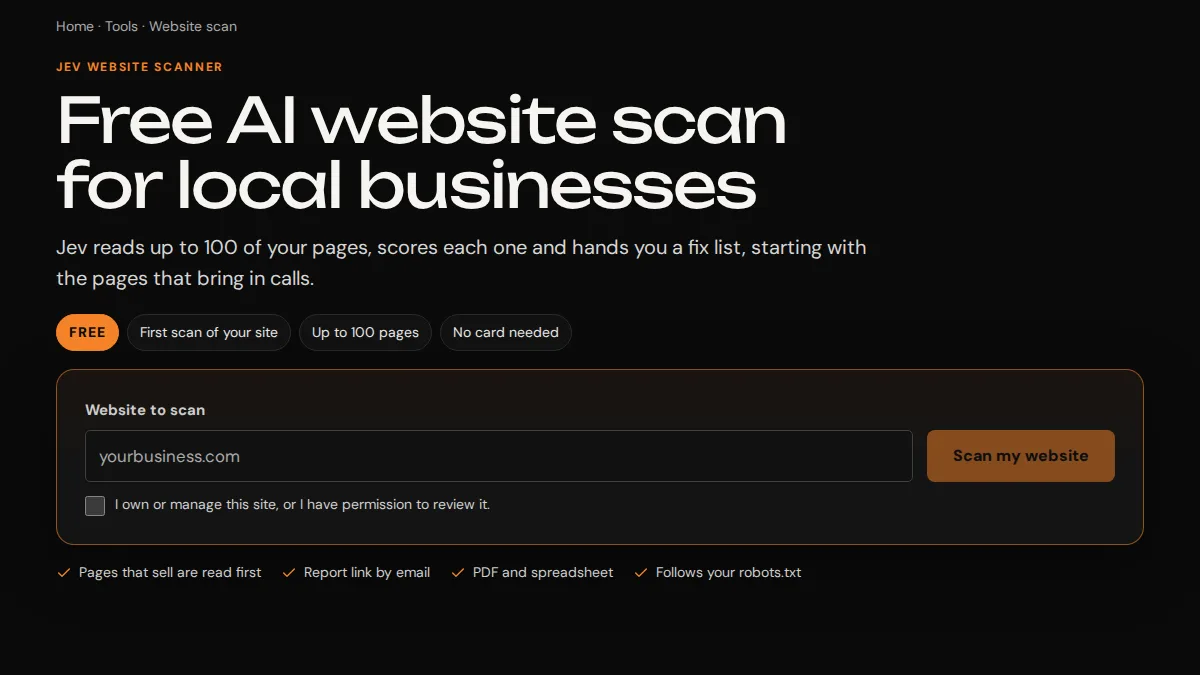
Jev scanner website input and scan action
A named website field with its action. View the project
  • Ask the office which reference it can find in its records. We can use that name in the page instructions instead of inventing a new customer number.
  • Allow a short account of the prior contact when no reference is available. Our wording can say that staff may need more detail before locating it.
  • Keep the exact wording question separate from the record reference. We can label each field so the office knows which text is the customer's concern.
  • Use a fictional example when approving the page. We can check its labels with staff while leaving real names and service documents in the provider's own process.

The scanner screen connects a named input with the action beside it. We can write your starting area around the earlier service reference and the wording a customer wants explained. Your staff supply the terms they use for those records. A short instruction can say why the reference helps the office find the earlier exchange, without requiring the person to interpret its contents first.

Can the page retrieve the old record automatically?
That would require a separate agreed feature and checks on access. This writing task can explain how to ask the office. We can keep the first contact simple while the business decides whether any account or record service is appropriate.
What if the reference names another business?
Ask your office how it handles that question. We can describe an approved referral or clarification step. The page should avoid suggesting your provider holds records for a separate company merely because the customer supplied its name.

Keep an added question separate from a changed record

A customer's new question can be linked to prior service wording without changing that wording. We can describe the distinction until the provider decides what its answer or correction should say.

Prior plumbing-service question record
Wording questionPrior-service contextOffice answer needed
Line in questionThe customer describes the line they want explained. We can preserve its meaning without publishing the private record.The office has a question about its wording. No correction has yet been agreed.
Earlier exchangeStaff name the accepted reference for finding the prior contact. Our page can explain where that reference goes.The earlier conversation and today's added question remain distinct.
Requested changeThe customer says whether they seek an explanation or want the business to consider a correction. We can ask plainly.A request to amend a record isn't an office-approved amendment.
Office answerThe provider decides who explains the wording and how the answer is sent. We can describe the approved reply route.The eventual answer must come from the responsible business. A form receipt doesn't supply it.

Keep the customer's question available beside the earlier record once the office takes it up. If staff change a description, the business needs to decide how it records that change. We can write the public explanation of this process after approval. The website should avoid silently treating the first message as permission to rewrite an earlier service description.

Explain how private service records reach the responsible office

A public explanation can say which question the business accepts without displaying customer records. We can direct the actual record exchange through the provider's approved process.

  1. Ask for the question first We can let the customer state which wording needs an answer. The office decides whether it needs the full record after that contact. This keeps the first message focused on the question.
  2. Name the approved exchange Ask staff how they receive private documents when needed. We can describe that method only after the provider approves it. A writing addition alone doesn't create an upload service or account access.
  3. Assign the responder Choose the office role that can explain the earlier description. We can align the page's next-step wording with that person's actual responsibility.
  4. Handle a missing record Decide what staff say when they cannot locate the earlier conversation. Our copy can explain the business's next contact without implying that the record has been found.
What belongs in a sample brief?
Use a made-up line such as a service description the office wants to discuss. We can draft around that example. Leave actual addresses, payment details and full customer records in the business's approved record system.
What if a customer asks for new work too?
Staff can identify the additional work question and ask whether the customer wants a separate conversation. We can make that possibility clear. The wording enquiry remains connected to the prior record, even if a new request later follows.

For an Indianapolis plumbing business, local service information and a customer's old record serve different purposes. Our page can keep the earlier wording question easy to find without adding a new offer for each town. The office should approve the handling route for every area it actually serves. Staff can use the same record question wherever their approved service information applies.

Use field names that keep the prior-service context intact

Each field should explain why the office needs that detail. We can carry the earlier service reference and the customer's wording question together through the proposed contact screen.

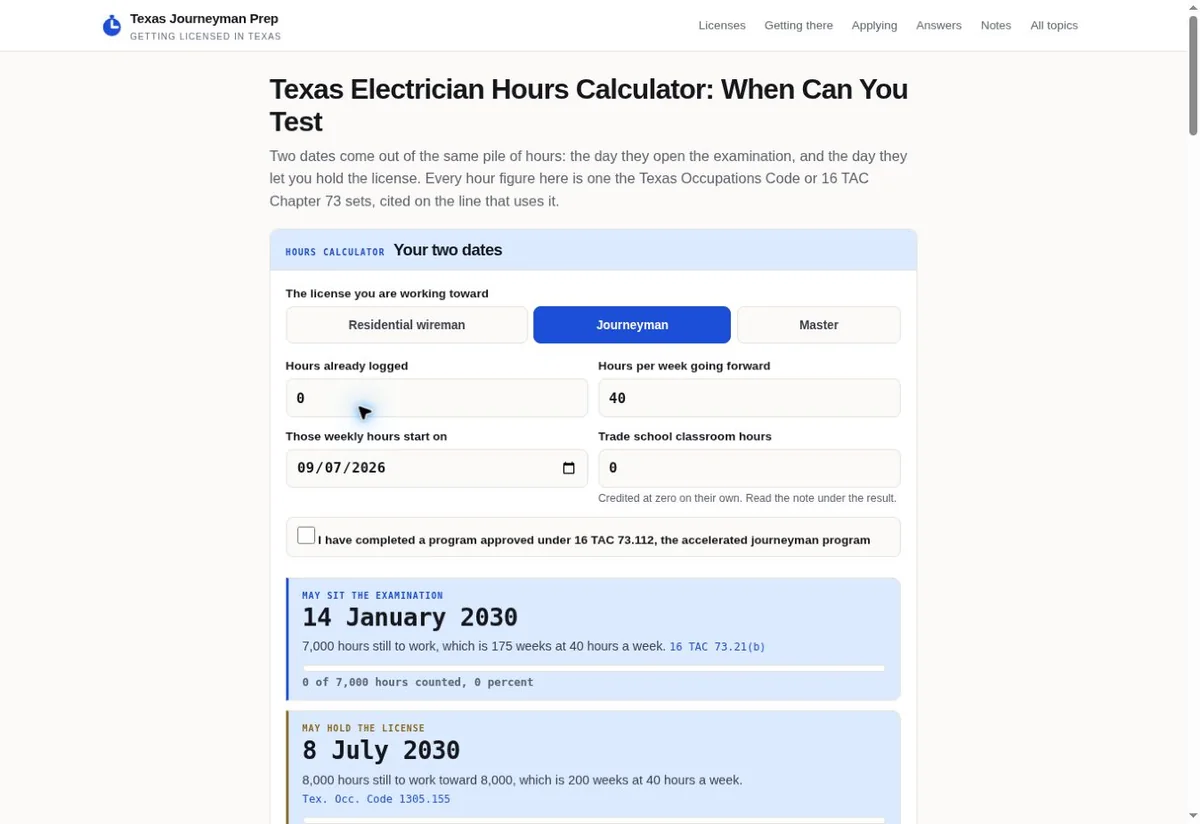
Texas Journeyman Prep calculator with labeled fields
Two calculator inputs with separate meanings. View the project

The calculator's two labels give different pieces of context their own places on the screen. We can discuss that arrangement for the prior-service reference and the customer's added wording question. One identifies the earlier exchange; the other explains what still needs an answer. Your staff can check the proposed labels against the record names they actually recognize before we write the public instructions.

  • Use the provider's accepted name for the earlier service reference. We can explain what a visitor may enter if that reference is missing.
  • Name the wording question separately. Our help text can ask which part of the description the customer wants staff to explain.
  • Keep the question in place if another field needs correction. We can include that behavior in the agreed form checks so the visitor needn't write it again.
  • Describe the button as the start of the wording enquiry. We can choose its label with the office after agreeing who receives the question.

Read the receipt as an office handoff

The acknowledgement should describe the question the office has received and the next contact it has approved. We can check those words before adding the route to the service page.

What does a successful first contact mean here?
It means the office has received the customer's wording question, if actual delivery has been established. We can phrase the receipt around that event. It doesn't establish that staff agree with the customer's interpretation or have changed a prior document.
How can an owner approve the addition?
Read a fictional message with the staff member who answers earlier-service questions. We can compare their expected reply with the page instructions. Adjust any wording that sends the question to new-sales handling or implies a completed answer.
What should future upkeep include?
Tell us when the office changes its record reference or reply process. We can update the contact explanation and its field help within an agreed maintenance task. The business approves new facts about its handling before they appear.
  1. Compare the labels Our check can confirm that the service description question retains its name on the first screen and the receipt.
  2. Follow the office assignment Ask the responsible staff member whether the message contains enough context to begin. We can revise the public instructions around their answer.
  3. Inspect the unfinished request Read a question that staff cannot answer yet. Our acknowledgement should remain accurate while the provider locates or explains its record.

Sources

Read more on this

Explore related industries